.avif)

Introduction
Hiring a mid-level engineer and hiring a chief financial officer are not the same job scaled up. They're different work entirely. One draws from people actively looking. The other means persuading someone who's performing well, isn't looking, and is already being courted by three other companies to take your call.
That's the heart of the executive recruitment process: a structured, confidential, proactive method for identifying and securing senior leaders, usually vice president level and above. It relies on direct outreach and deep assessment rather than job postings and applications, because the people you want aren't reading job postings.
This guide walks through the full process, the stages, the fee models, realistic timelines, and how top candidates are actually evaluated, so you understand what a serious executive search involves and why it's built the way it is.
TL;DR
- Executive recruitment is a proactive, confidential process for hiring senior leaders, typically VP-level and above, including C-suite and board roles.
- It targets passive candidates through direct outreach and market mapping, not job ads, because the best leaders aren't actively looking.
- The process runs roughly seven stages, from intake brief to onboarding, and commonly takes three to six months.
- The main fee models are retained (upfront, exclusive) and contingency (paid on placement), with retained fees often 25% to 35% of first-year pay.
- The stakes are high: a failed executive hire can cost two to three times the role's annual salary, so rigorous assessment is the whole point.
What is the executive recruitment process?
The executive recruitment process, often called executive search, is the specialized practice of finding, assessing, and placing senior leaders. Think CEOs, CFOs, CHROs, VPs, and board members, the roles that set a company's direction.
What separates it from standard recruiting is the approach. Instead of posting a role and waiting for applications, executive search proactively identifies specific individuals, maps the market, and reaches out directly. Much of it happens confidentially, sometimes without even naming the hiring company until a candidate is genuinely engaged.
It's also deeply consultative. A good search starts by understanding the company's strategy, culture, and the actual problem the new leader needs to solve, not just a list of qualifications. The output isn't a pile of resumes. It's a short list of qualified, assessed, and interested leaders.
That difference in method exists for a reason, which is worth understanding before the stages make sense.
Why executive hiring is different
Executive roles carry outsized consequences, and the process is shaped around that reality.
The first factor is the candidate pool.
- The people best qualified to run a function or a company are usually already doing so somewhere else.
- They're passive, performing well, and fielding multiple approaches at once.
- You can't wait for them to apply. You have to give them a reason to move.
The second factor is the cost of getting it wrong.
- A failed executive hire is one of the most expensive mistakes a company can make.
- Replacement costs routinely run two to three times the role's annual salary once you count lost productivity, team disruption, the time leaders spend covering the gap, and the cost of restarting the search.
- For a C-suite role, that's a material business risk, not a recoverable inconvenience.
The third factor is fit.
- At this level, capability alone isn't enough.
- Leadership style, values, and the ability to align with the company's direction matter as much as the resume.
- That's why the assessment goes far deeper than a standard interview loop.
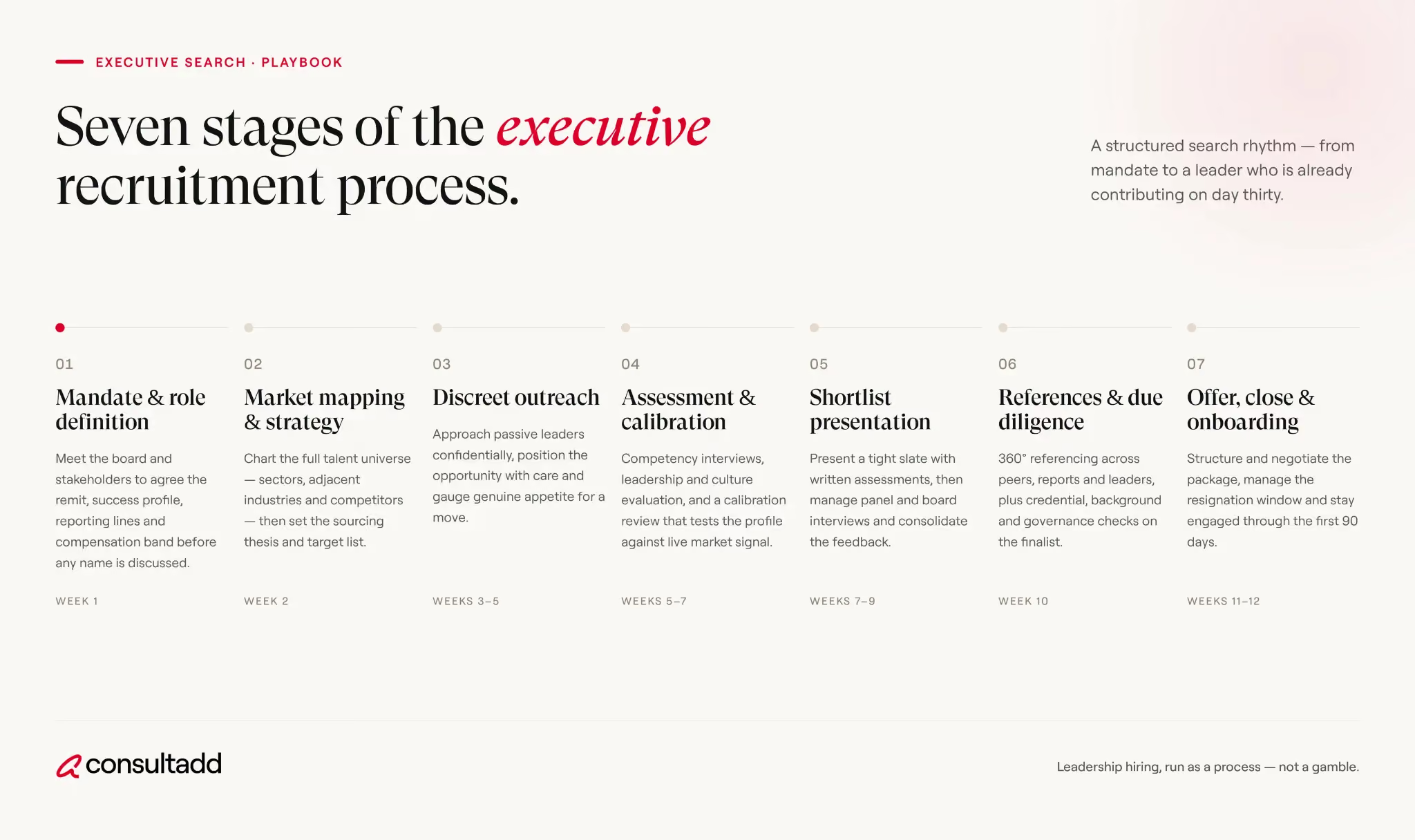
The seven stages of the executive recruitment process
While firms describe it slightly differently, a rigorous executive search follows the same core arc. Here are the seven stages that structure most engagements.
- Intake and discovery. The firm meets with stakeholders to understand the company, the strategy, and what success in the role actually looks like. This deep briefing shapes everything downstream.
- Position specification. The team turns that discovery into a detailed success profile: the competencies, experience, and leadership qualities the role genuinely requires.
- Market research and talent mapping. Researchers map the market to identify specific target individuals, including people at competitors and adjacent industries.
- Candidate outreach. The firm approaches those targets directly and discreetly, describing the opportunity compellingly while protecting the client's confidentiality until candidates are qualified.
- Assessment and evaluation. Interested candidates go through structured interviews, competency assessment, and often psychometric testing and case work.
- Shortlist and client interviews. The firm presents a short list of vetted candidates, and the client interviews them, frequently across multiple stakeholders.
- Offer, negotiation, and onboarding. The firm advises on compensation, helps close the offer, and supports the executive's transition into the role.
The best firms don't stop at placement. Support through onboarding and integration is part of why executive-search hires tend to have stronger retention.
Retained vs contingency: choosing a model
The most important structural choice in executive recruitment is the fee model, because it shapes how the search is run.
Retained search means the firm is engaged exclusively and paid upfront, usually in structured installments, and works the assignment until it's filled.
Contingency means the firm is paid only when a placement is made, with no exclusivity. The right choice depends on the seniority, confidentiality, and strategic weight of the role.
Retained search usually includes a replacement guarantee, commonly around 12 months, which reflects the firm's commitment to the outcome rather than just the placement. For the most senior and sensitive roles, that exclusivity and confidentiality are exactly what you're paying for.
How long does executive recruitment take?
Executive search takes longer than standard hiring because thoroughness is the point. A typical engagement runs three to six months from brief to accepted offer, though it varies with seniority and difficulty.
Industry benchmarks in 2026 give a rough guide by level. Treat these as planning ranges, not promises, since a confidential or highly specialized search can run longer.
There's a tension worth naming here. A thorough 90-to-180-day process is built for completeness, but the strongest candidates typically have two to four active conversations at any moment.
Move too slowly and you lose top-of-pool people to faster competitors. The best searches balance rigor with momentum rather than treating speed and quality as opposites.
How executive candidates are assessed
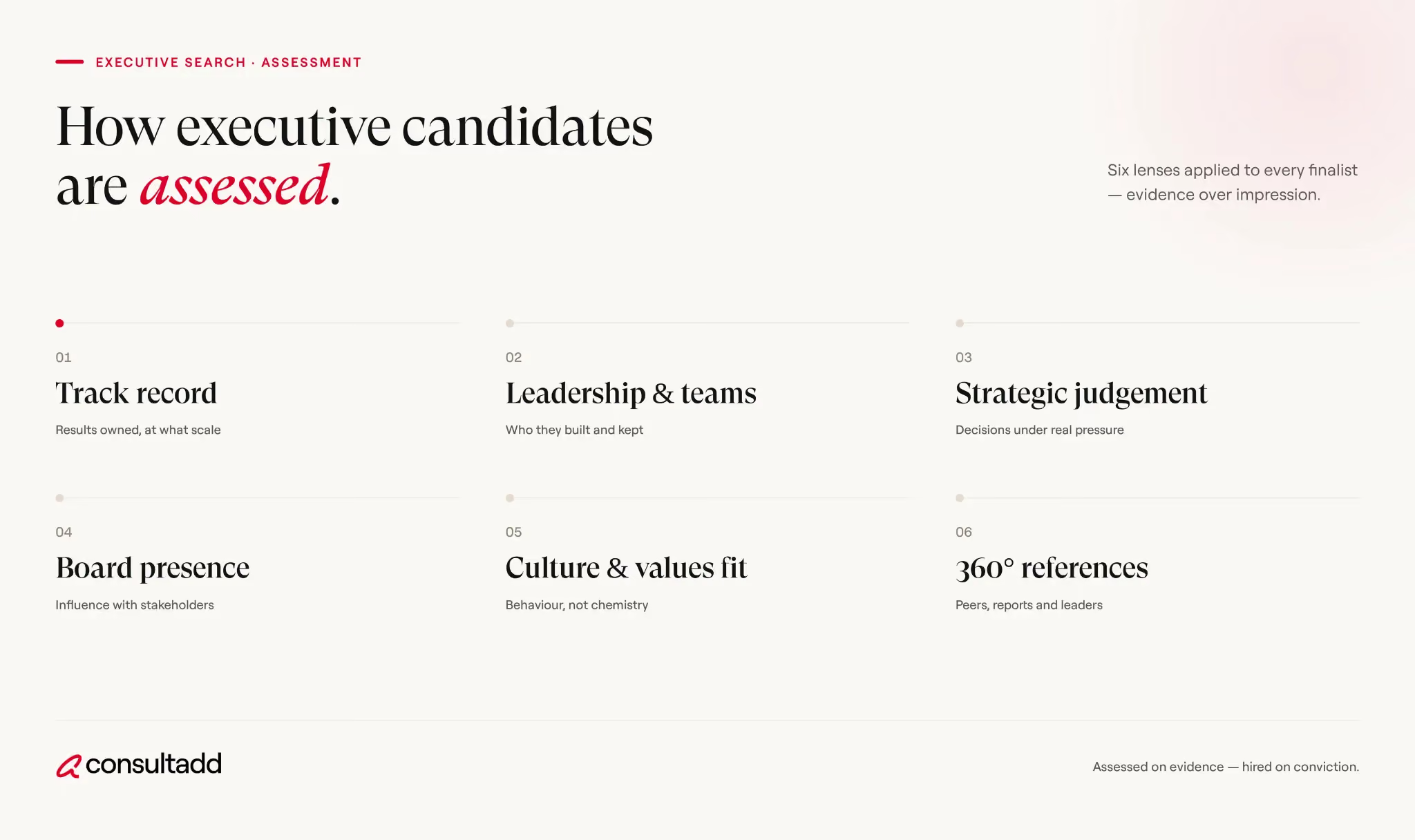
Assessment is where executive search earns its fee. Because the cost of a wrong hire is so high, evaluation goes well beyond a resume review and a few interviews.
A strong process combines several methods.
- Behavioral and panel interviews probe how a leader actually operates.
- Case or scenario work tests strategic thinking and judgment under pressure.
- Psychometric testing adds a structured read on leadership style.
And in-depth reference checks, often 360-degree, gather perspectives from people who've worked above, alongside, and below the candidate.
The aim is to validate three things: proven capability, leadership behavior, and alignment with the company's culture and direction.
This kind of rigor isn't unique to the C-suite, though. The same discipline applies to any high-stakes hire.
For senior technical leadership specifically, our technical recruitment guide covers how to assess depth rather than surface credentials.
According to guidance from SHRM, quality of hire and consistent, structured evaluation are among the strongest protections against an expensive hiring mistake, and that logic only intensifies at the executive level.
What's changing in executive search in 2026
The fundamentals of executive recruitment are stable, but the operating environment has shifted, and it's worth knowing how.
Leadership turnover is up. Research reported by Harvard Business Review, citing Conference Board and Egon Zehnder data, put CEO succession at 12.5% in 2025, a notable jump from the prior year. More succession means more organizations need a disciplined approach to leadership hiring at once.
AI has also entered the sourcing side. The strongest results in 2026 pair relationship-driven headhunting with AI-powered market mapping and research. That combination has compressed timelines: some firms using AI-assisted sourcing reported average C-suite search times dropping toward nine weeks, down from around fourteen a year earlier. The human relationship still closes the hire, but the research that feeds it is faster.
Candidate expectations have risen too. Senior leaders being approached weigh the credibility of the firm, the quality of the relationship, and the strength of the opportunity before they even engage. A sloppy or impersonal approach doesn't get a callback at this level.
The throughline is simple:
Executive recruitment rewards preparation, discretion, and rigor. Get the brief right, assess deeply, and keep the process moving, and you give a new leader the best chance to succeed. Rush it or cut corners, and you risk the most expensive hiring mistake a company can make.
Start Strong With Consultadd
With 15 years in business and 5,000+ successful staffing engagements, we don't just fill roles, we build reliability into your process. We've supported 65 staffing companies in the past year alone and maintain MSAs with industry leaders like Robert Half and TEKsystems.
Here's what working with Consultadd looks like:
- Talent sourced in under 24 hours
- Ready-to-deploy candidates, vetted for experience and compliance
- Lower turnover risk: we match long-term goals, not just short-term needs
- Seamless compliance: visa, documentation, onboarding? Handled.
- Dedicated 1:1 account managers for responsive, personalized support
- Top 100 candidate matches delivered in the past year
- Strong partnerships with universities to tap into fresh, committed talent
- Post-placement support so your investment grows beyond day one
For candidates, your next opportunity is more than just a job title, it's a chance to build skills, gain experience, and move your career forward. At Consultadd, we connect technology professionals with projects and employers that align with their goals, whether they're looking for contract, contract-to-hire, or long-term opportunities.
The tech job market moves fast, but the right guidance can make all the difference. Ready to take the next step in your career journey? Explore Opportunities >>
Key takeaways
- The executive recruitment process is a proactive, confidential method for hiring senior leaders through direct outreach and deep assessment, not job ads.
- It exists because top leaders are passive, heavily pursued, and expensive to get wrong, with bad hires costing two to three times annual salary.
- The process runs about seven stages, from intake and talent mapping to assessment, offer, and onboarding.
- Retained search suits strategic and confidential roles, while contingency fits less senior ones, with retained fees often 25% to 35% of first-year pay.
- Executive searches typically take three to six months, and the strongest ones balance rigor with enough speed to keep top candidates engaged.
FAQs
What is the executive recruitment process?
It's a structured, confidential method for hiring senior leaders such as C-suite executives, VPs, and board members. Rather than posting jobs, it proactively identifies and approaches specific individuals, then assesses them deeply. The process typically runs seven stages from an intake brief through to onboarding.
How long does executive recruitment take?
Most executive searches take three to six months. Industry benchmarks in 2026 suggest roughly 90 to 120 days for VP-level roles, 120 to 180 days for C-suite, and 90 to 150 days for board positions. Specialist boutiques with warm talent networks can move faster, sometimes closing in 30 to 60 days.
What is the difference between retained and contingency executive search?
Retained search means the firm is paid upfront and works exclusively on the role until it's filled, which suits senior, confidential, or strategic hires. Contingency search means the firm is paid only when it places a candidate, often competing with other firms. Retained is the standard model for C-suite roles.
How much do executive search firms charge?
Retained firms commonly charge 25% to 35% of the placed executive's first-year total compensation, usually paid in structured installments. Many also include a replacement guarantee, often around 12 months. Contingency firms charge a percentage of salary but only collect it upon a successful hire.
How is executive recruiting different from regular recruiting?
Executive recruiting targets passive senior leaders through direct, confidential outreach rather than job postings, and the candidate pool is thin and heavily pursued. The assessment is far deeper, often including psychometric testing and 360-degree references. The stakes are also higher, since a failed executive hire is disproportionately costly.
How are executive candidates assessed?
Assessment combines behavioral and panel interviews, case or scenario work, psychometric testing, and in-depth, often 360-degree reference checks. The goal is to validate capability, leadership behavior, and cultural alignment, not just experience on paper. This rigor exists because the cost of a wrong hire at this level is so high.



.webp)