

Introduction
What is a direct hire? It's when a company hires someone directly onto its own payroll as a permanent employee, with no staffing agency or third party sitting between the worker and the employer once the placement is made.
The person becomes a full employee from day one, eligible for the company's benefits, subject to its policies, and expected to stay on indefinitely rather than for a fixed contract term.
That's different from contract work, where a staffing agency employs the worker and places them at a client site, or contract-to-hire, where the arrangement starts temporary and converts later. Direct hire skips the trial period entirely.
Below is what the process actually looks like, how it compares to the alternatives, and when it's the right call.
TL;DR
- A direct hire is a permanent employee hired straight onto the employer's payroll, no agency in between.
- It differs from contract and contract-to-hire roles mainly in who employs the worker and how long the role is expected to last.
- Direct hire recruiters usually charge a one-time placement fee instead of an ongoing markup.
- It works best for core, long-term roles where retention and institutional knowledge matter.
- It's a slower process than contract staffing, since employers vet for long-term fit, not just immediate availability.
How direct hire actually works
The mechanics are simpler than the terminology suggests. A company has an open permanent role. It either recruits directly or works with a recruitment agency to source candidates.
Once someone accepts the offer, they go straight onto the employer's own payroll, receive the employer's benefits package, and are treated the same as any other full-time employee at the company.
If a staffing agency was involved in sourcing the candidate, its role ends once the placement is made. The agency typically earns a one-time fee, often a percentage of the new hire's first-year salary, and then steps out of the relationship.
This is different from contract staffing, where the agency stays involved as the employer of record for the length of the assignment.
Direct hire versus other staffing models
The confusion around this term usually comes from mixing it up with contract or contract-to-hire arrangements. The table below lays out the practical differences.
A contract-to-hire arrangement exists precisely because some employers want the trial period direct hire skips.
If neither party is confident about long-term fit, starting on contract and converting later reduces the risk on both sides.
Some companies also work through Corp-to-Corp arrangements for specialized project work, which is a different structure again from direct hire.
The C2C model puts a business entity, not an individual, between the worker and the client, which changes how payroll, taxes, and compliance are handled.
When direct hire makes sense
Direct hire isn't automatically the "better" option. It fits certain situations more than others.
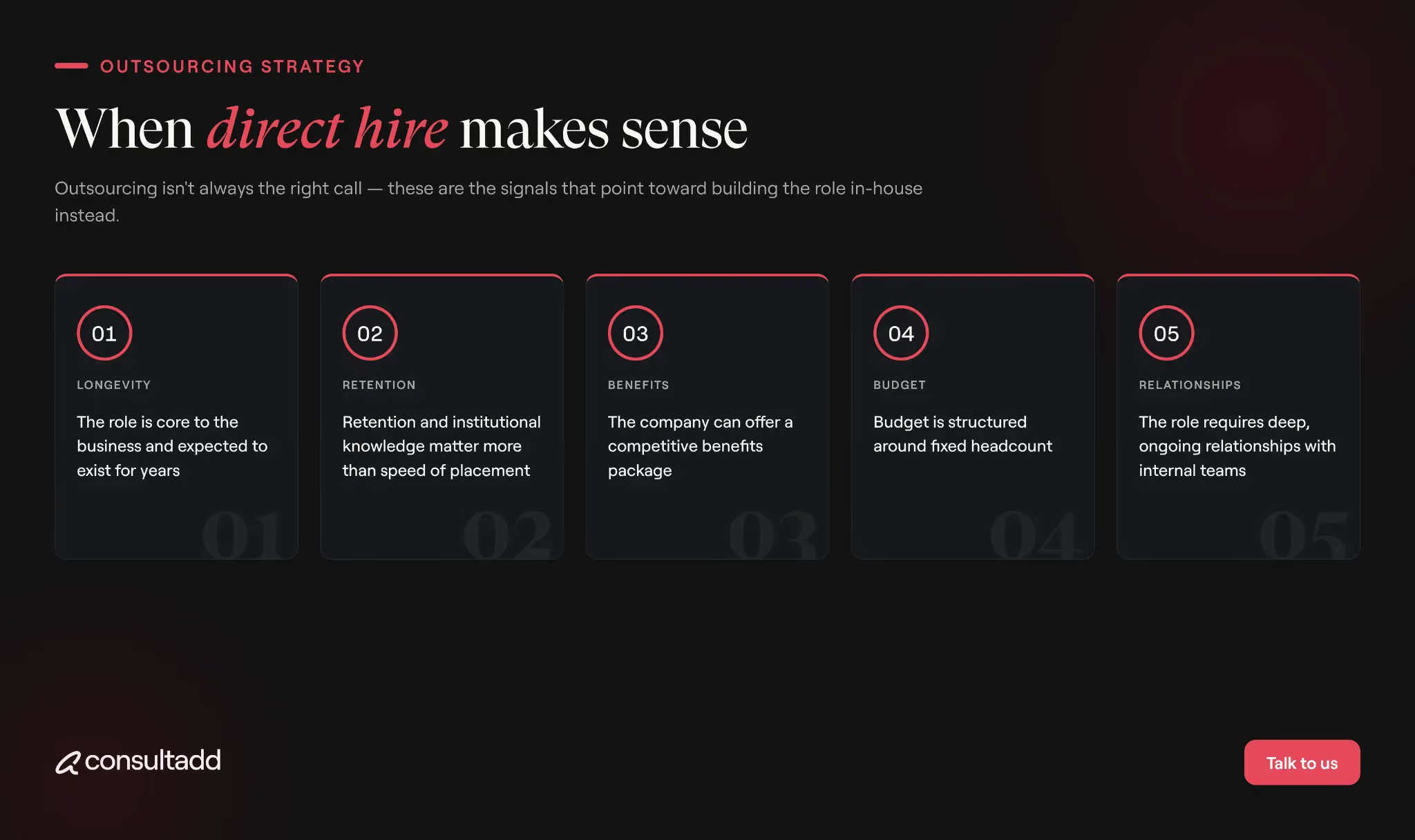
- The role is core to the business and expected to exist for years, not months
- Retention and institutional knowledge matter more than speed of placement
- The company can offer a competitive benefits package and wants to attract candidates who value that
- Budget is structured around fixed headcount rather than a flexible project spend
- The role requires deep, ongoing relationships with internal teams or clients
Roles like engineering leadership, core product management, or long-term finance positions almost always go through direct hire, because the cost of turnover and lost institutional knowledge outweighs the appeal of contract flexibility.
This is also why understanding worker classification differences like W-2 versus 1099 matters early, since misclassifying a direct hire as a contractor creates real compliance risk under U.S. Department of Labor rules.
What the direct hire process looks like
A direct hire search generally moves through the same stages, whether it's run internally or through a recruiter.
This process tends to take longer than contract staffing, because employers are evaluating for long-term fit, not just immediate availability. A candidate who can start Monday but isn't a strong long-term match usually loses out to someone who takes a bit longer to onboard but fits the role for years.
Direct hire from the candidate's side
For job seekers:
- A direct hire offer usually means full benefits, job security that isn't tied to a contract end date, and a clearer path to internal growth.
- It also tends to come with a more thorough interview process, since employers are screening for fit beyond just technical skill.
- Candidates weighing a direct hire offer against a contract role should think about which trade-off matters more right now: the stability and benefits of direct hire, or the flexibility and often higher hourly pay of contract work.
Start Strong With Consultadd
With 15 years in business and 5,000+ successful staffing engagements, we don't just fill roles, we build reliability into your process. We've supported 65 staffing companies in the past year alone and maintain MSAs with industry leaders like Robert Half and TEKsystems.
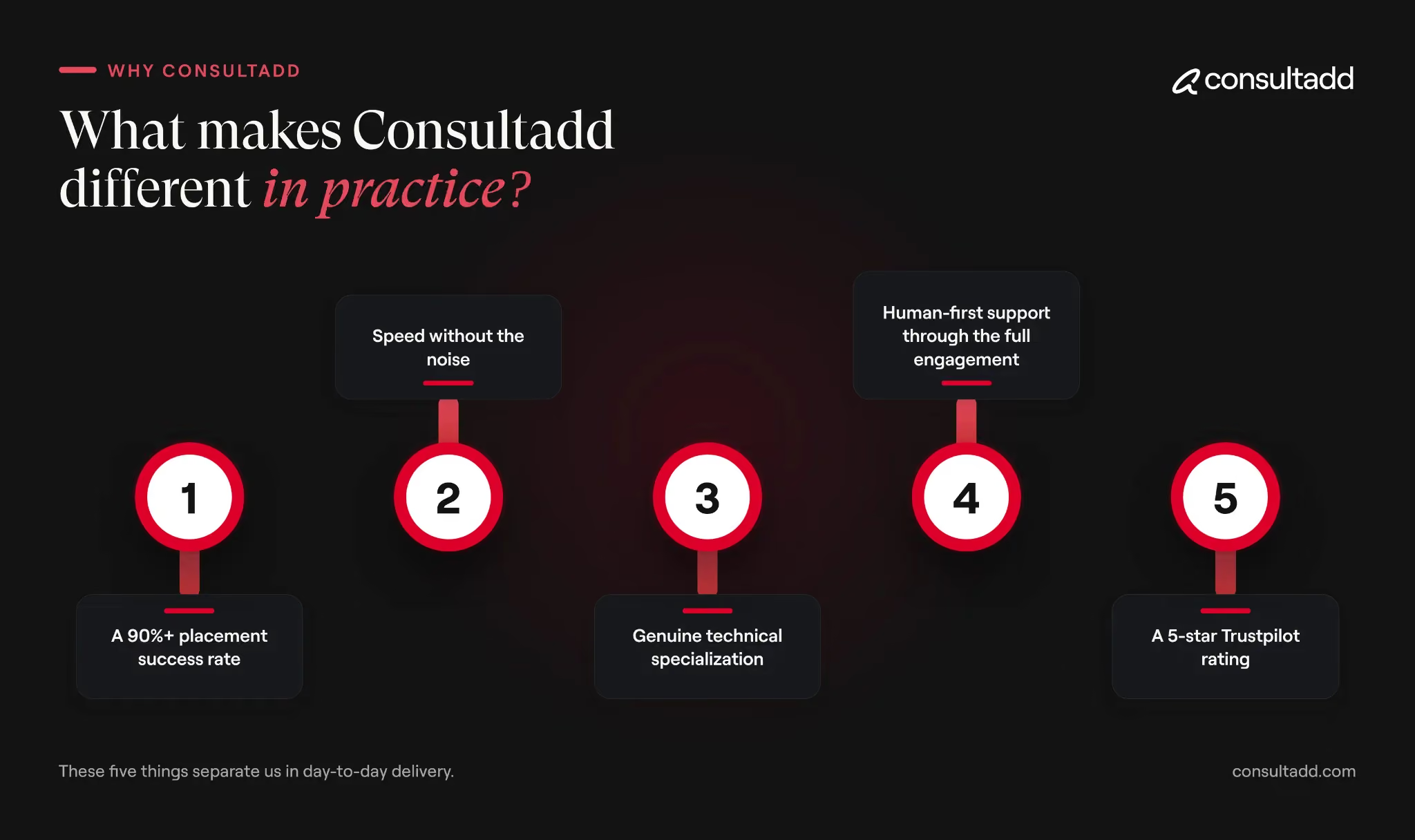
Here's what working with Consultadd looks like:
- Talent sourced in under 24 hours
- Ready-to-deploy candidates, vetted for experience and compliance
- Lower turnover risk: we match long-term goals, not just short-term needs
- Seamless compliance: visa, documentation, onboarding? Handled.
- Dedicated 1:1 account managers for responsive, personalized support
- Top 100 candidate matches delivered in the past year
- Strong partnerships with universities to tap into fresh, committed talent
- Post-placement support so your investment grows beyond day one
For candidates, your next opportunity is more than just a job title, it's a chance to build skills, gain experience, and move your career forward. At Consultadd, we connect technology professionals with projects and employers that align with their goals, whether they're looking for contract, contract-to-hire, or long-term opportunities.
The tech job market moves fast, but the right guidance can make all the difference. Ready to take the next step in your career journey? Explore Opportunities >>
Key takeaways
- A direct hire goes straight onto the employer's payroll as a permanent employee, with no agency staying involved after placement.
- It's distinct from contract and contract-to-hire arrangements, mainly in who employs the worker and for how long.
- Direct hire recruiters typically charge a one-time fee, not an ongoing markup.
- It suits core, long-term roles better than short-term or highly specialized project work.
- The process usually takes longer than contract staffing because employers screen for long-term fit.
FAQs
Is a direct hire the same as a full-time employee?
Usually, yes. Direct hire almost always means full-time, permanent employment, though the term specifically refers to how the person was hired, directly onto the employer's payroll, rather than the hours they work.
How much does a direct hire recruiter typically charge?
Placement fees commonly range from 15 to 30 percent of the new hire's first-year salary, paid once, when the hire is made. This differs from contract staffing, which charges an ongoing markup for the life of the assignment.
Can a direct hire be let go like any other employee?
Yes. Once hired, a direct hire employee is subject to the same employment laws and company policies as anyone else on the payroll, including the U.S. Department of Labor's guidance on employee rights and classification.
Why would a company choose contract-to-hire instead of direct hire?
Contract-to-hire lets both sides evaluate fit before committing to permanent employment, which reduces the risk of a bad long-term match. Direct hire skips that trial period, which works well when the employer is confident in the role and candidate.
Do direct hire roles usually pay more than contract roles?
Not necessarily in take-home terms. Contract roles often have a higher hourly rate to offset the lack of benefits, while direct hire compensation includes the value of benefits, retirement contributions, and job security that contract work doesn't.
Is direct hire more common in certain industries?
It's especially common for core, ongoing roles across most industries, including tech, healthcare, and finance, where retention and institutional knowledge carry real weight, according to SHRM's talent acquisition resources.
.webp)