.avif)

Introduction
A hiring freeze is a temporary pause on recruiting, where a company stops filling open positions and posting new roles, usually to control costs or wait out some uncertainty before committing to a new headcount.
It's not the same as a layoff. Current employees keep their jobs. It just means the company isn't bringing anyone new on board for a while, and that "while" can range from a few weeks to close to a year depending on why the freeze started.
If you've had an offer delayed or a recruiter go quiet on you, or if you're a hiring manager trying to figure out what a freeze actually requires of your team, here's what it means in practice.
TL;DR
- A hiring freeze is a temporary halt on new hires, not a reduction of the existing workforce.
- Companies use freezes to control costs, wait out economic uncertainty, or pause during a merger, restructuring, or budget review.
- Freezes come in different forms: total, partial (with exceptions for critical roles), or department-specific.
- Freezes typically last a few months, though this varies a lot depending on what triggered it.
- Contract or contract-to-hire staffing is a common workaround companies use to get work done without technically breaking the freeze.
How a hiring freeze actually works
When a company announces a freeze, a few things usually happen at once. Open requisitions get put on hold. Recruiters stop actively sourcing. Offers already in the pipeline may get paused, delayed, or in worse cases, rescinded. What doesn't happen: current employees don't lose their jobs because of the freeze itself. That's the core distinction that trips a lot of people up.
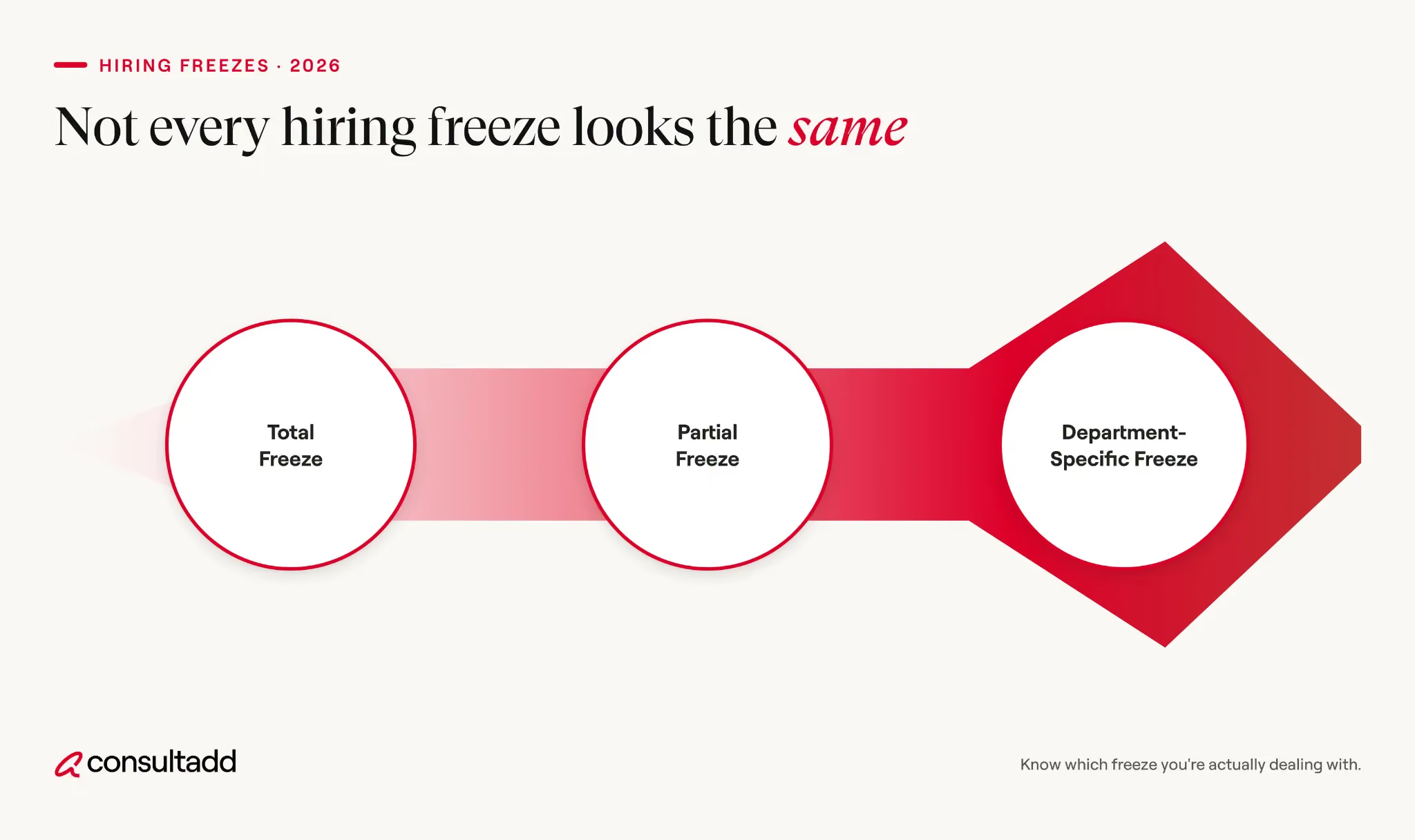
Not every freeze looks the same. There are generally three flavors:
- Total freeze. No new hires at all, across the entire company, no exceptions.
- Partial freeze. Non-essential roles are paused, but critical or revenue-generating positions can still move forward with approval.
- Department-specific freeze. Only certain teams or business units are affected, often tied to a specific budget or project being paused.
Most freezes lean partial rather than total. A company rarely wants to stop hiring for a role that's directly bringing in revenue, even during a broader cost-cutting push.
Why companies freeze hiring
The reasons usually fall into a handful of categories, and the reason behind a freeze tells you a lot about how long it's likely to last.
A freeze tied to routine budget planning is a very different signal than one announced right after a rough earnings call. Context matters more than the freeze itself.
Hiring freeze vs. layoff: what's the actual difference
These two terms get used almost interchangeably in casual conversation, but they're not the same thing, and the difference matters if you're trying to figure out where you stand.
A hiring freeze pauses new hiring. Nobody currently employed loses their job because of it.
A layoff is an involuntary reduction of the existing workforce, current employees are let go.
Companies sometimes use a freeze specifically to avoid getting to the point of layoffs, since attrition (people leaving on their own, retiring, or not being replaced) can shrink headcount naturally without anyone being terminated.
That said, a freeze can also come right before or during a round of layoffs, particularly when a company is cutting costs from multiple directions at once. Seeing a freeze alone isn't a reliable signal either way.
It's worth paying attention to what else is happening around it, like whether leadership is also talking about restructuring or missed targets.
Signs a hiring freeze might be coming (or already in effect)
- Job postings that were live for weeks suddenly disappear without being filled
- Recruiters go quiet mid-process, or interviews get pushed with vague timelines
- Internal transfers or promotions get more scrutiny than usual
- Leadership starts talking publicly about cost discipline or "doing more with less"
- Approved headcount from earlier in the year quietly doesn't get filled
None of these on their own confirms a freeze. Together, especially paired with a slowdown in company growth or a rocky earnings report, they're a reasonable signal to ask directly rather than guess.
What candidates should do during a hiring freeze
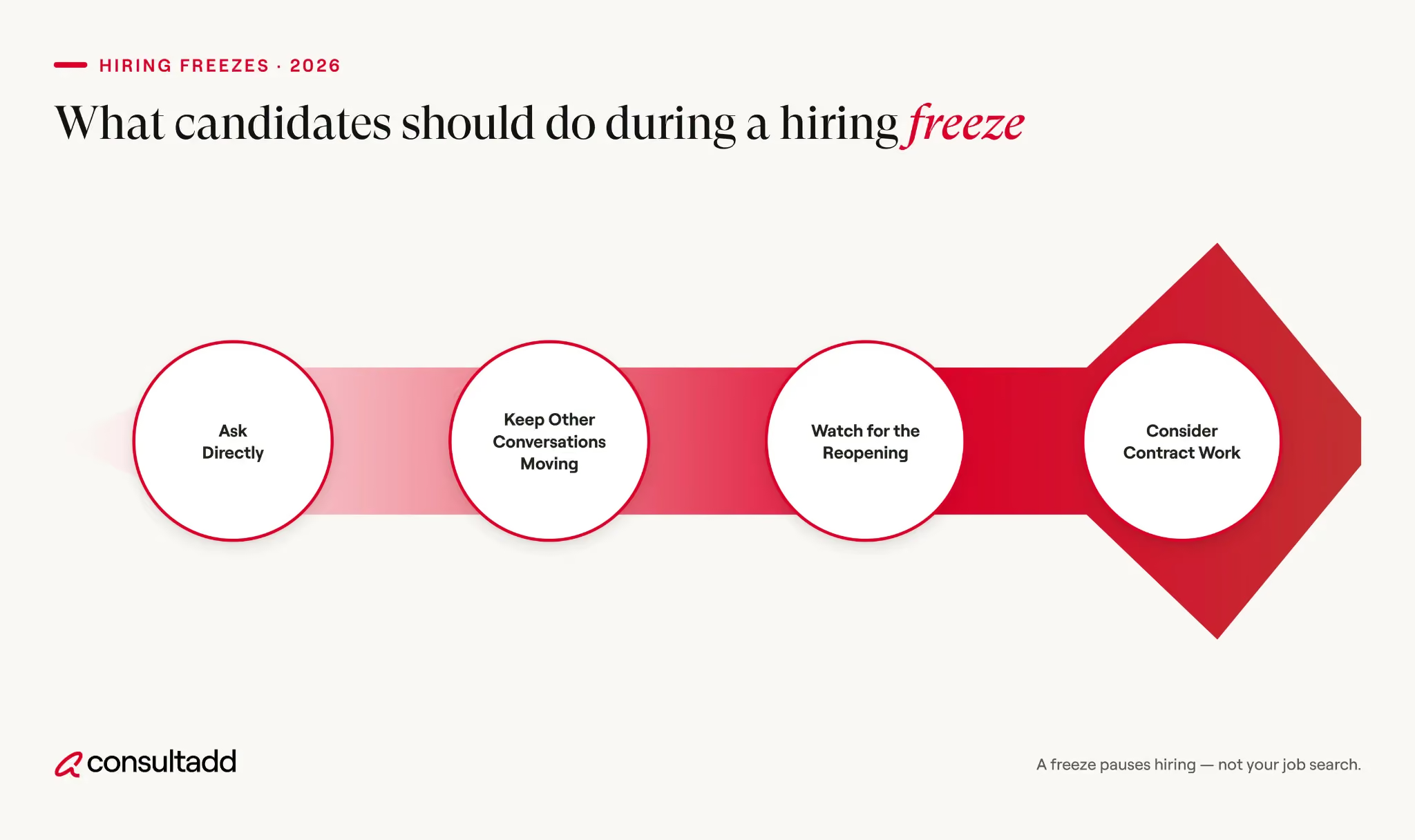
If you're mid-process with a company that just announced a freeze, the honest answer is that your options are limited, but not zero.
- Ask directly.
A short, polite note to your recruiter asking about the status of your application is reasonable. You're not being pushy by asking for a timeline.
- Keep other conversations moving.
Don't pause your own search waiting on one company. Freezes can run longer than anyone expects going in.
- Watch for the reopening.
Companies coming out of a freeze often move fast once it lifts, since the backlog of unfilled roles doesn't go away. Staying on a recruiter's radar can put you ahead of a fresh wave of applicants.
- Consider contract work as a bridge.
Some companies that won't approve a full-time hire during a freeze will still bring someone on as a contractor, since contract budgets sometimes sit outside the frozen headcount line.
If that's a route you're open to, it's worth understanding how contract-to-hire compares to a full-time offer before you say yes to one.
What employers should consider before calling a freeze
- A freeze feels like a quick, low-risk lever to pull, but it has real costs that don't always show up in the budget line it's meant to protect.
- Existing employees absorb the extra workload from unfilled roles, which can push burnout and turnover higher right when the company can least afford to lose people.
- Candidates who were mid-process often don't come back once the freeze lifts, especially if the communication during the freeze was vague or nonexistent.
- If the goal is cost control without stalling every project that depends on new capacity, contract or contract-to-hire staffing is worth a look before committing to a blanket freeze across the board.
- It lets teams bring in specific skills for a defined period without adding to permanent headcount, and it's a common approach among companies navigating budget uncertainty without wanting to lose momentum entirely.
Our breakdown of when it makes sense to use a staffing agency for tech roles goes through the trade-offs if this is a route you're weighing.
It's also worth being clear internally, before the freeze is announced, about what kind of contract arrangement makes sense for the roles you still need filled.
Start Strong With Consultadd
With 15 years in business and 5,000+ successful staffing engagements, we don't just fill roles, we build reliability into your process. We've supported 65 staffing companies in the past year alone and maintain MSAs with industry leaders like Robert Half and TEKsystems.
Here's what working with Consultadd looks like:
- Talent sourced in under 24 hours
- Ready-to-deploy candidates, vetted for experience and compliance
- Lower turnover risk: we match long-term goals, not just short-term needs
- Seamless compliance: visa, documentation, onboarding? Handled.
- Dedicated 1:1 account managers for responsive, personalized support
- Top 100 candidate matches delivered in the past year
- Strong partnerships with universities to tap into fresh, committed talent
- Post-placement support so your investment grows beyond day one
For candidates, your next opportunity is more than just a job title, it's a chance to build skills, gain experience, and move your career forward. At Consultadd, we connect technology professionals with projects and employers that align with their goals, whether they're looking for contract, contract-to-hire, or long-term opportunities.
The tech job market moves fast, but the right guidance can make all the difference. Ready to take the next step in your career journey? Explore Opportunities >>
Key takeaways
- A hiring freeze pauses new hiring, it doesn't reduce the existing workforce, which makes it fundamentally different from a layoff.
- Freezes come in total, partial, and department-specific forms, with partial freezes being the most common.
- The reason behind a freeze (budget cycle vs. cost-cutting before layoffs) matters more than the freeze itself when judging how worried to be.
- Candidates mid-process should ask directly for status rather than guess, and shouldn't pause their broader search while waiting.
- Contract or contract-to-hire staffing gives employers a way to keep critical work moving without adding to frozen permanent headcount.
FAQs
Does a hiring freeze mean layoffs are coming?
Not necessarily. Some freezes are routine, tied to annual budget cycles, and resolve on schedule. Others do precede layoffs, especially when paired with public statements about cost-cutting or missed financial targets. Context matters more than the freeze alone.
How long do hiring freezes usually last?
It varies widely by cause. A budget-cycle freeze might last a few weeks to a couple of months. Freezes tied to restructuring or a merger often run six months to a year.
If a company has a hiring freeze, can they still extend an offer to me?
It depends on the type of freeze. A total freeze typically means no, at least until it lifts. A partial freeze may allow exceptions for critical or revenue-generating roles with leadership approval.
Can a company hire contractors during a hiring freeze?
Often, yes. Many freezes apply specifically to permanent headcount, and contract or corp-to-corp arrangements sometimes fall outside that budget line, which is part of why contract staffing tends to pick up during freeze periods.
Is a hiring freeze legal?
Yes. There's no law requiring a company to hire, so a freeze itself isn't a legal issue. If a freeze leads into layoffs, separate laws around notice periods and severance may apply depending on the situation and location.
What should I do if my job offer gets delayed because of a freeze?
Ask your recruiter directly for a realistic timeline, and keep pursuing other opportunities in the meantime. Freezes can lift faster or slower than anyone expects, and it's not worth pausing your entire search on one uncertain outcome.
.webp)