
.avif)

Introduction
If you've searched "what is C2C" before, you've probably already found the basic answer: corp-to-corp means a company pays your business entity instead of paying you directly.
That part is simple. What most explanations skip is the part that actually affects your paycheck and your risk: the chain of vendors sitting between you and the company that's really paying for your work.
This isn't another rundown of C2C versus W2 versus 1099. It's what happens after you understand the definition and start seeing job postings that mention "prime vendor," "sub-vendor," or a bill rate that seems to shrink every time you ask about it.
TL;DR
- C2C means the hiring company contracts with your registered business entity (LLC, S-corp, or similar), not with you as an individual.
- In practice, most C2C placements run through a vendor chain: end client, prime vendor, and sometimes one or two sub-vendors below that.
- Each layer in the chain takes a margin, so the rate you're offered can be well below what the end client is actually paying.
- More layers usually means more risk, since accountability and payment reliability tend to weaken the further you are from the prime vendor.
- Knowing how many layers you're behind, and asking directly, is one of the few ways to protect your rate and your risk exposure.
The part everyone explains: what C2C actually means
Corp-to-corp is a contracting arrangement where a company pays another registered business, not an individual, for a worker's services.
To operate C2C, the contractor needs an actual LLC, S-corp, or similar entity. A sole proprietorship doesn't qualify.
The entity signs the agreement, sends the invoice, and receives payment, while the person still shows up and does the work.
That's the version most guides stop at. It's accurate, but it describes a two-party relationship that rarely exists in IT staffing the way it's described.
The part nobody explains: how the chain actually works
Here's what a typical C2C placement looks like once you follow the money all the way up:
- The end client has a project and a budget. They rarely hire contractors directly; instead, they work through an approved vendor list or an MSP (managed service provider) that controls who's allowed to submit candidates.
- The prime vendor, sometimes called a Tier 1 vendor, holds the actual staffing contract with the client or MSP. This is the company closest to the real rate and the real requirement.
- Sub-vendors sit below the prime vendor. They get requirements passed down through hotlists, recruiter networks, or messaging groups, then submit candidates upward. There can be one sub-vendor layer, or two, or occasionally three.
- You (or your entity) sit at the bottom, often without a direct relationship with the prime vendor or the end client at all.
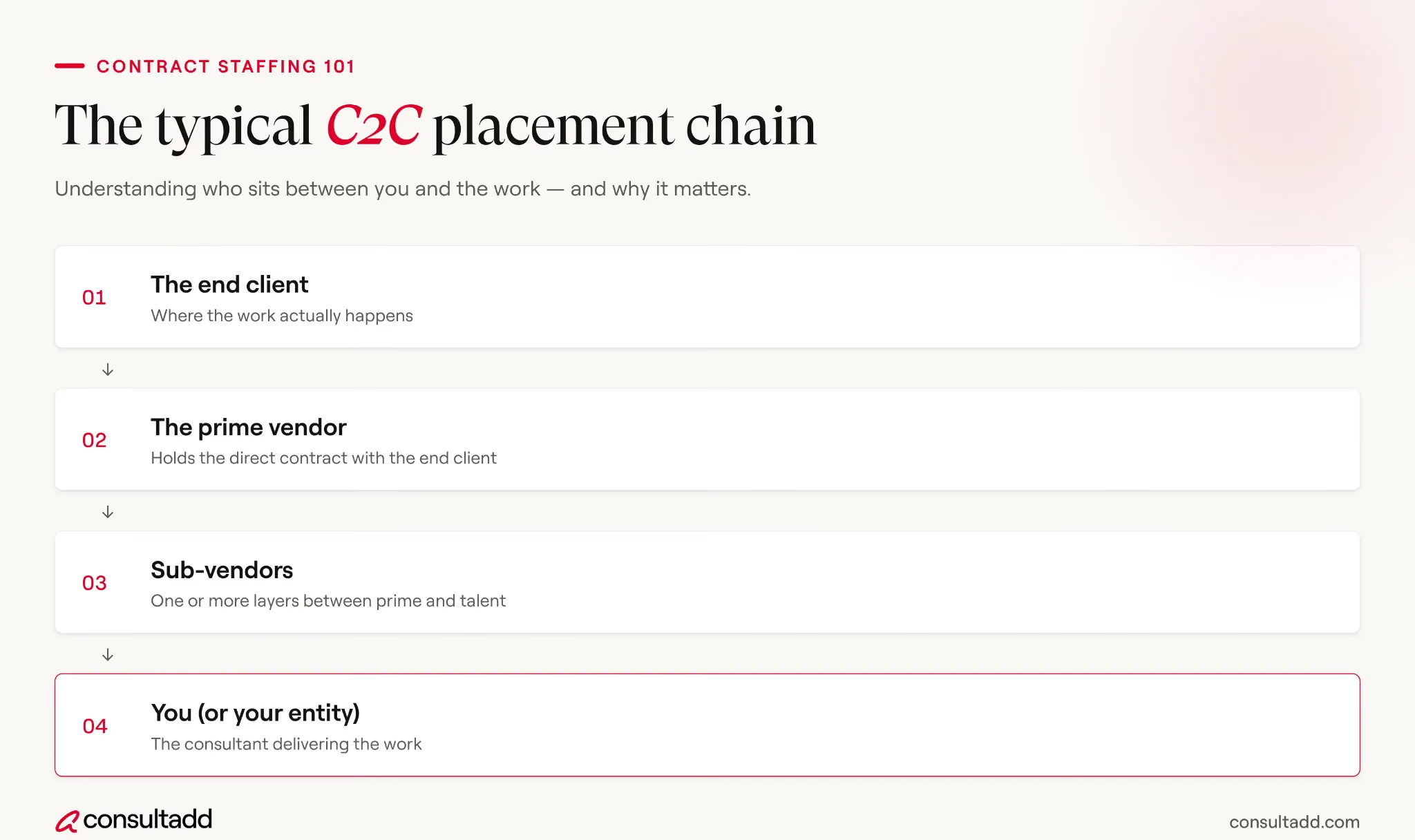
Every layer between you and the end client takes a cut, usually somewhere in the range of 8% to 15% off the top. That's not a hidden fee; it's how staffing margins work.
But it means the rate quoted to you can look very different from what the client is actually paying. A role billing at $95 an hour at the client level can land at $68 an hour by the time it passes through two sub-vendor layers.
Why this matters more than the C2C-vs-W2 question
Most people researching "what is C2C" are really trying to answer one of two questions: how much will I actually take home, and how much risk am I taking on.
The vendor chain answers both, and it's a bigger factor than the C2C label itself.
- Pay compression. The number of layers between you and the prime vendor has more effect on your rate than almost anything else, including your skill level. A senior consultant three layers deep can earn less than a mid-level consultant working one layer from the prime vendor on the same requirement.
- Payment risk. If a sub-vendor two or three layers down runs into cash flow problems, your invoice can sit unpaid even though the end client already paid the prime vendor. The further you are from the top of the chain, the less visibility you have into whether that's happening.
- Speed and stability. Requirements move fast through hotlists and can close within hours. Layers add delay and miscommunication, which is part of why roles closer to the prime vendor tend to be more stable, not just better paid.
How many layers is normal, and when it's a red flag
The compliance risk that sits underneath all of this
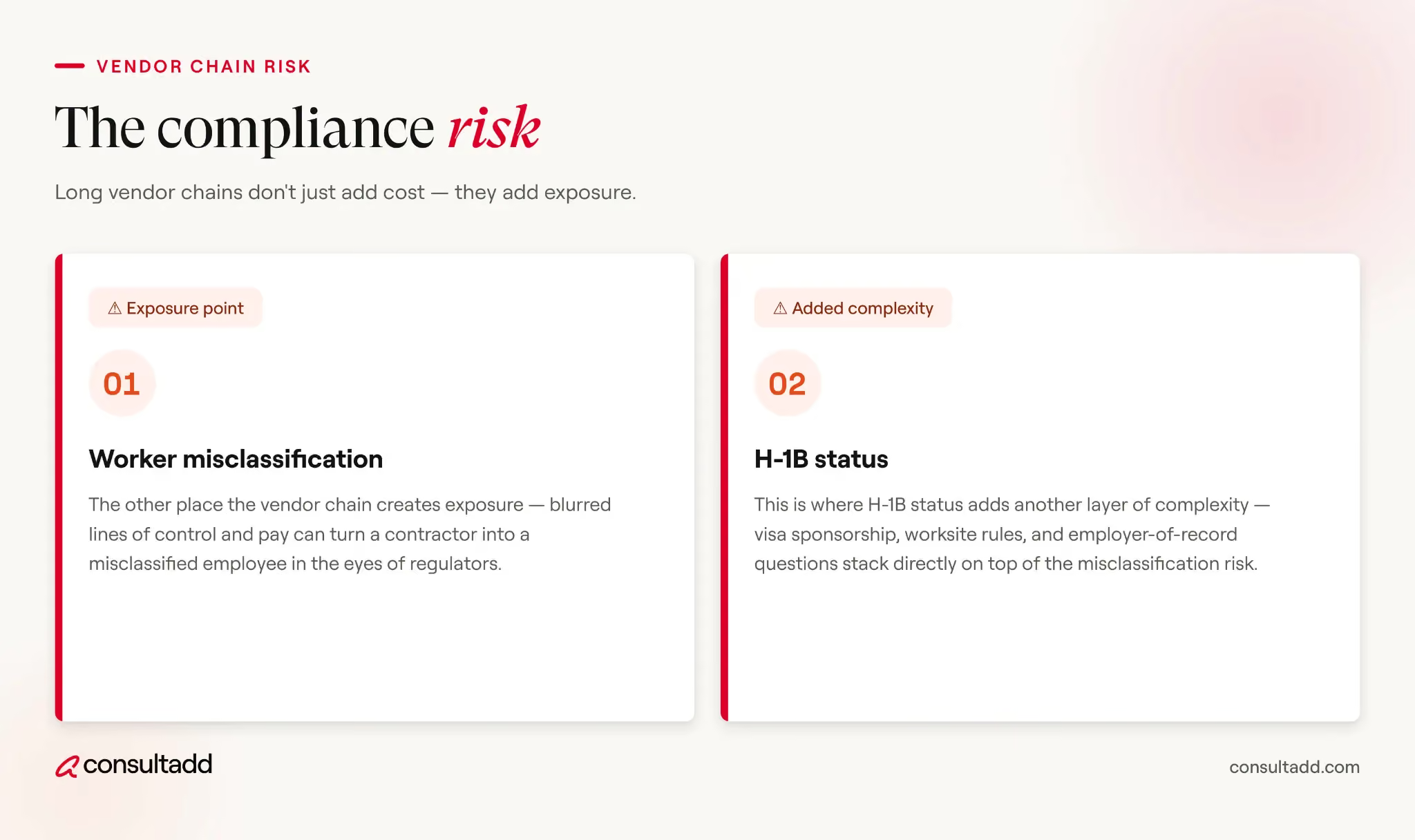
Worker misclassification is the other place the vendor chain creates exposure.
Even when a contract is labeled C2C, the IRS evaluates the actual working relationship, not just the paperwork, looking at behavioral control, financial control, and how the parties actually operate day to day.
A worker treated like a full-time employee, set hours, company-provided equipment, ongoing supervision, can be misclassified regardless of what the contract says, and that risk doesn't disappear just because there's a vendor chain involved.
If anything, longer chains make it harder to trace who's actually responsible for getting the classification right.
This is also where H-1B status adds another layer of complexity.
- H-1B workers can't contract independently through their own entity; the visa requires a sponsoring employer.
- In practice, H-1B professionals on "C2C" projects are W2 employees of a staffing or consulting firm, and that firm is the entity actually doing the corp-to-corp billing further up the chain.
If you're navigating C2C alongside visa sponsorship, our breakdown of corp-to-corp visa sponsorship for H1B roles covers how that structure actually works.
What this means if you're evaluating a C2C offer
- Ask how many vendor layers sit between the role and the end client, not just what the rate is.
- Get payment terms in writing, including how quickly the sub-vendor pays after invoicing, before you start.
- Compare the offered rate against what similar roles pay closer to the prime vendor, since that gap tells you how much margin is being taken above you.
- Confirm your own entity is set up correctly before signing anything.
Our guide on corp-to-corp staffing walks through what a compliant setup actually looks like.
If you're weighing C2C against a W2 role with the same client, our comparison of C2C, W2, and 1099 covers the tax and benefits trade-offs in more depth than we can here.
Start Strong With Consultadd
With 15 years in business and 5,000+ successful staffing engagements, we don't just fill roles, we build reliability into your process. We've supported 65 staffing companies in the past year alone and maintain MSAs with industry leaders like Robert Half and TEKsystems.
Here's what working with Consultadd looks like:
- Talent sourced in under 24 hours
- Ready-to-deploy candidates, vetted for experience and compliance
- Lower turnover risk: we match long-term goals, not just short-term needs
- Seamless compliance: visa, documentation, onboarding? Handled.
- Dedicated 1:1 account managers for responsive, personalized support
- Top 100 candidate matches delivered in the past year
- Strong partnerships with universities to tap into fresh, committed talent
- Post-placement support so your investment grows beyond day one
For candidates, your next opportunity is more than just a job title, it's a chance to build skills, gain experience, and move your career forward. At Consultadd, we connect technology professionals with projects and employers that align with their goals, whether they're looking for contract, contract-to-hire, or long-term opportunities.
The tech job market moves fast, but the right guidance can make all the difference. Ready to take the next step in your career journey? Explore Opportunities >>
Key takeaways
- C2C means a business entity, not an individual, is being paid, but the real story is usually a multi-party vendor chain above that entity.
- Each layer in the chain takes a margin, which is why the rate offered to you can be much lower than what the end client is paying.
- Chains of one or two layers are common; three or more layers is a signal to verify payment terms and the prime vendor relationship before committing.
- Misclassification risk sits underneath the whole structure regardless of how many vendors are involved, since the IRS looks at actual working conditions, not contract labels.
- H-1B holders can't operate C2C through a personal entity; they remain W2 employees of a sponsoring firm even inside a "C2C" project.
FAQs
What is C2C in simple terms?
C2C, or corp-to-corp, means the hiring company pays a registered business entity, like an LLC or S-corp, for a contractor's work instead of paying the individual directly.
What is a prime vendor in a C2C chain?
A prime vendor is the staffing firm that holds the direct contract with the end client. Roles closer to the prime vendor typically pay better and involve fewer communication delays than roles several sub-vendor layers down.
Why does my C2C rate seem lower than what the client is paying?
Each layer in the vendor chain takes a margin, commonly 8% to 15%. If your role has passed through two or three sub-vendors, that compounding margin explains most of the gap between the client's budget and your offer.
How many vendor layers is too many?
There's no fixed rule, but one or two layers is common and manageable. Three or more layers increases payment risk and reduces your visibility into the actual terms, so it's worth verifying the chain before signing.
Can I work C2C on an H-1B visa?
Not through your own personal entity. H-1B status requires a sponsoring employer, so H-1B professionals on C2C-labeled projects are typically W2 employees of a staffing or consulting firm that handles the corp-to-corp arrangement further up the chain.
How do I check if a C2C arrangement is properly classified?
Look at the actual working relationship, not just the contract label. The IRS weighs behavioral control, financial control, and how independently the work is performed, so set hours, company equipment, and ongoing supervision can all point toward misclassification regardless of the paperwork.
.webp)



.webp)