
.avif)

Introduction
What is staff augmentation, really, beyond the buzzword it's become in every hiring pitch deck? Stripped down, it's a workforce model where a company brings in outside professionals to work inside its existing team, under its own management, for a defined stretch of time.
They join the standups. They get repo access. They follow the roadmap the internal team already set. The only thing that's different is who technically employs them.
It's a distinct model, not a synonym for outsourcing or a staffing agency handing over a finished project. The distinction matters because picking the wrong model for the situation tends to cost more than it saves.
Here's what staff augmentation actually looks like in practice, and when it's the right call.
TL;DR
- Staff augmentation means adding external professionals to your team who work under your direction, not a vendor's.
- It differs from outsourcing, where a third party owns the outcome and manages the work itself.
- It fits best for time-bound needs, specialized skills, or gaps that a permanent hire would take too long to fill.
- The company keeps control of the roadmap and daily direction; the staffing partner handles payroll, compliance, and backup coverage.
- It isn't free of overhead. Someone internal still has to manage and integrate the augmented staff for it to work well.
The plain-language definition
Staff augmentation is the practice of temporarily adding individual professionals, or a small group of them, directly into an existing internal team to fill a specific skill or capacity gap.
The augmented staff report into the company's own management structure and work on the company's actual tools and priorities, not a separate deliverable managed elsewhere.
In IT specifically, this usually means bringing in developers, QA engineers, DevOps specialists, or data professionals who sit inside the existing engineering org for the length of a project or a defined period.
They're doing the same kind of work a full-time hire would do. The employment relationship, payroll, benefits, and often the sourcing and vetting, just sits with a staffing partner instead of the company itself.
Staff augmentation versus outsourcing versus consulting
These three terms get used loosely, and the confusion causes real problems when a company picks the wrong one for what it actually needs.
Outsourcing hands a task or function to another company that manages it start to finish. Staff augmentation keeps that management inside the hiring company and just changes where the people come from.
A company that outsources a project loses day-to-day visibility in exchange for less management burden. A company that augments staff keeps the visibility and control but takes on the work of directing people who technically aren't its employees.
When staff augmentation actually makes sense
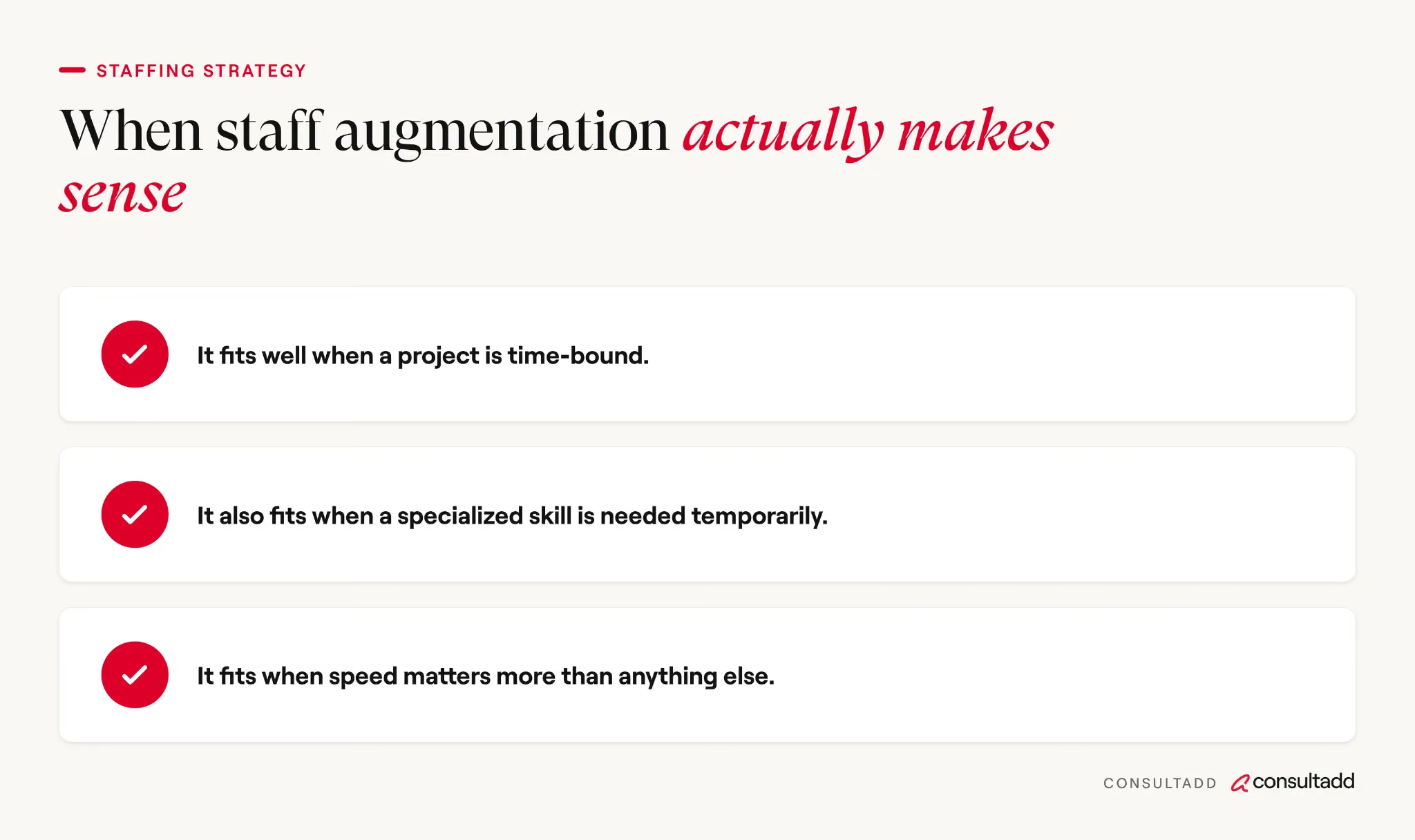
The model works best in a specific set of situations, and it tends to underperform outside of them.
- It fits well when a project is time-bound and the need will genuinely go away once the work is done.
- It also fits when a specialized skill is needed only temporarily, the kind of expertise that doesn't justify a permanent headcount line.
- It fits when speed matters more than anything else, because industry data puts the average time to fill a specialized technical role at roughly 88 days, a delay that can quietly become a strategic liability for a company running on quarterly product cycles.
It fits less well when the company doesn't have strong internal leadership already in place to direct the augmented staff. Without that, adding outside people to a team with unclear priorities or thin management bandwidth usually just adds friction instead of capacity.
Staff augmentation assumes the company already knows what it wants built and just needs more hands to build it, not a partner to figure out the plan.
How the engagement actually works
The process usually starts with:
Step 1: The company defines the gap clearly: which skills, for how long, and how the person will integrate into existing workflows.
Step 2: A staffing partner then sources and vets candidates against that specific need, handles the employment relationship, and manages the administrative side, tax classification, benefits, and onboarding documentation, so the hiring company's own HR team isn't left untangling paperwork for someone who isn't technically their employee.
Step 3: Once someone starts, they typically join the same tools the internal team already uses, the same sprint planning, the same code review process.
The line between an augmented team member and a full-time employee, on a day-to-day basis, is often invisible to everyone except payroll.
Our step-by-step breakdown of the IT staff augmentation process covers what a well-run engagement looks like from intake through placement.
The tradeoffs nobody puts in the pitch deck
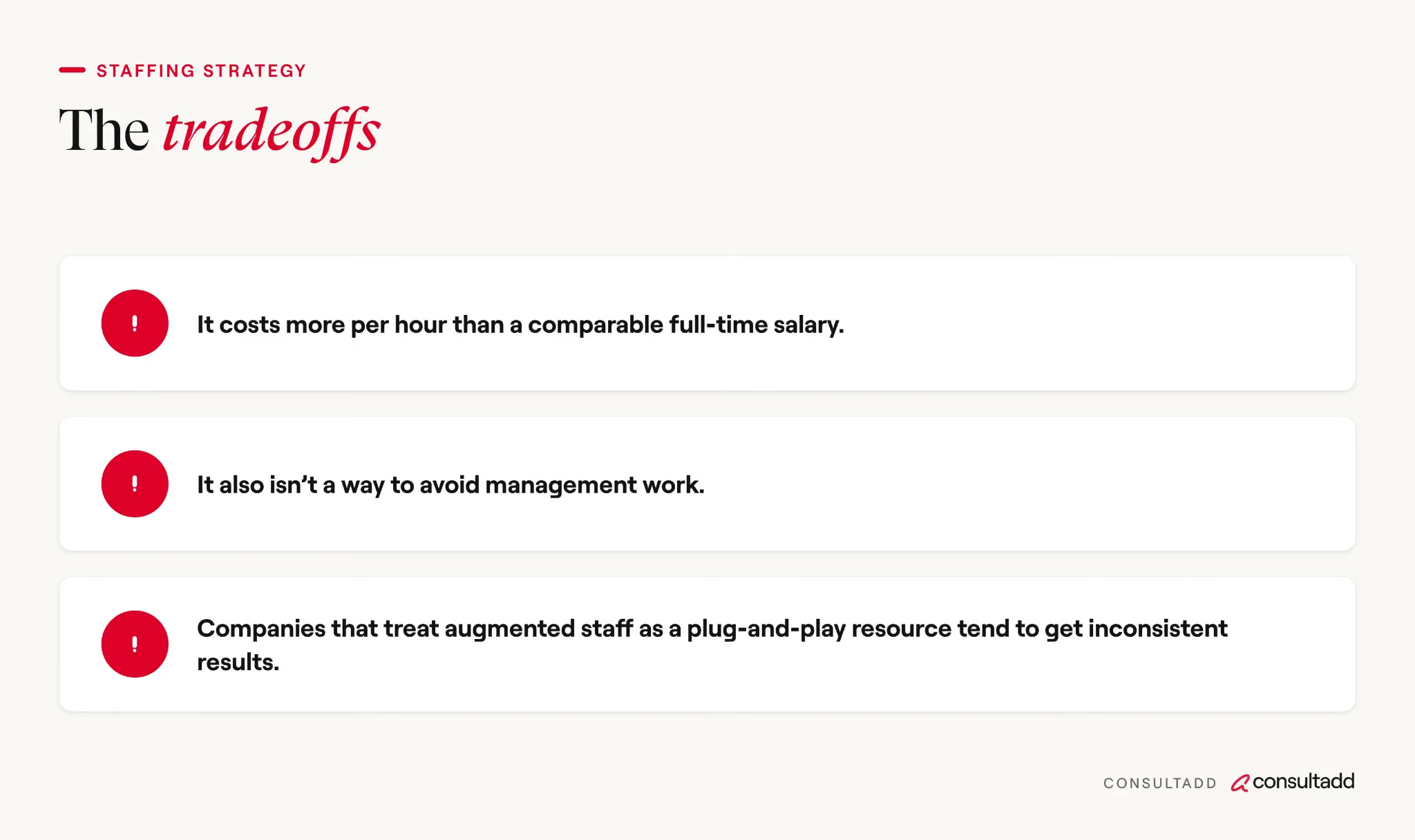
Staff augmentation isn't the cheapest option available, and it isn't the most hands-off either.
- It costs more per hour than a comparable full-time salary in most cases, because the rate has to cover the staffing partner's sourcing, compliance work, and margin on top of the person's actual pay.
- It also isn't a way to avoid management work. The company still has to onboard, direct, and integrate the augmented staff just as it would a direct hire, arguably more carefully, since there's no shared tenure or institutional context to fall back on.
- Companies that treat augmented staff as a plug-and-play resource, with no real onboarding or clear direction, tend to get inconsistent results and blame the model instead of the process.
The upside, when it's used well, is real:
A company gets specialized skills without a permanent commitment, fills a capacity gap in weeks instead of months, and keeps full control over how the work gets done.
That combination is why the model has moved from a stopgap measure to a core part of how many technology organizations plan their workforce.
Why this model has grown so fast in tech specifically
Demand for specialized technical skills, particularly around AI, cloud infrastructure, and cybersecurity, has consistently outpaced the supply of qualified full-time candidates.
IDC projects that more than 90% of organizations worldwide will be affected by the broader IT skills crisis, which is a large part of why staff augmentation has become the default answer rather than a fallback.
For agencies and companies sourcing this kind of talent, the harder part usually isn't finding people who claim the right skills. It's verifying they actually have them, particularly for AI-related roles where demand has grown faster than almost any other category.
Our guide on closing the AI skills gap covers how staffing partners are adjusting sourcing to keep up with that specific demand.
Start Strong With Consultadd
With 15 years in business and 5,000+ successful staffing engagements, we don't just fill roles, we build reliability into your process. We've supported 65 staffing companies in the past year alone and maintain MSAs with industry leaders like Robert Half and TEKsystems.
Here's what working with Consultadd looks like:
- Talent sourced in under 24 hours
- Ready-to-deploy candidates, vetted for experience and compliance
- Lower turnover risk: we match long-term goals, not just short-term needs
- Seamless compliance: visa, documentation, onboarding? Handled.
- Dedicated 1:1 account managers for responsive, personalized support
- Top 100 candidate matches delivered in the past year
- Strong partnerships with universities to tap into fresh, committed talent
- Post-placement support so your investment grows beyond day one
For candidates, your next opportunity is more than just a job title, it's a chance to build skills, gain experience, and move your career forward. At Consultadd, we connect technology professionals with projects and employers that align with their goals, whether they're looking for contract, contract-to-hire, or long-term opportunities.
The tech job market moves fast, but the right guidance can make all the difference. Ready to take the next step in your career journey? Explore Opportunities >>
Key Takeaways
- Staff augmentation adds outside talent under the hiring company's own direction, unlike outsourcing where a vendor owns the outcome.
- It works best for time-bound needs and specialized skills that don't justify a permanent hire.
- It requires real internal management, not just a signed contract, to actually work well.
- Cost per hour typically runs higher than a comparable salary, offset by speed and flexibility.
- The model has become a core workforce strategy in tech specifically, driven by persistent skills shortages.
FAQs
How is staff augmentation different from a regular staffing agency placement?
The line is thin in practice, but staff augmentation typically implies the person integrates closely into an existing team's tools and workflow for a defined engagement, while a general staffing placement can be more standalone. Many staffing partners handle both under similar terms.
Is staff augmentation cheaper than hiring full-time?
Usually not on a pure hourly basis. The rate includes the staffing partner's sourcing, vetting, and compliance work. The savings come from avoiding the cost and time of a permanent hire for a need that won't last, not from a lower headline rate.
What industries use staff augmentation most?
IT and software development are the heaviest users, but the model shows up in engineering, life sciences, and other technical fields where specialized skills are hard to find and projects are time-bound.
Can staff augmentation lead to a permanent hire?
Yes, this happens often. Many companies use an augmentation engagement to evaluate someone's performance and fit before extending a permanent offer, effectively an extended trial period with less commitment on both sides upfront.
Who handles compliance and payroll for augmented staff?
The staffing partner typically manages payroll, tax classification, benefits, and onboarding documentation, while the hiring company manages the person's actual day-to-day work and priorities.
What's the biggest mistake companies make with staff augmentation?
Treating it as a plug-and-play resource with no real onboarding or clear direction. Augmented staff still need context, priorities, and management attention to be productive, and skipping that step is the most common reason engagements underperform.




.webp)
