
.webp)

Introduction
If you're a job seeker considering opportunities in the United States or an employer evaluating international candidates, you've probably encountered the term "visa sponsorship." But what does it actually mean? And more importantly, what does it cost, who qualifies, and how long does the process take?
Visa sponsorship means a U.S. employer agrees to sponsor your immigration status, allowing you to live and work legally in the United States. The employer petitions the government on your behalf, saying "we want to hire this person, they don't have U.S. citizenship or permanent residency, and we're willing to navigate the immigration process to make it happen."
It's not a handout. Visa sponsorship is expensive, time-consuming, and involves significant legal complexity. But for employers desperate for specific talent and for international professionals seeking opportunity, it's the pathway to U.S. employment.
According to the U.S. Citizenship and Immigration Services (USCIS), approximately 1.5 million employment-based visas are issued annually across multiple visa categories. The most common for skilled workers is the H-1B visa, which allows companies to temporarily employ foreign workers in specialty occupations.
But H-1B is just one option. Understanding visa sponsorship means understanding the different pathways available, the costs involved, the timeline, and what employers and employees should expect.
TL;DR
- Visa sponsorship means a U.S. employer officially petitions for a foreign national to work and live in the United States
- Common visa types include H-1B (specialty occupation), L-1 (intracompany transfer), O-1 (extraordinary ability), and EB-3 (permanent employment sponsorship)
- Sponsorship costs employers $2,500-$15,000+ per person depending on visa type and legal complexity
- The process takes 3-12 months from petition to approval depending on visa category
- H-1B visa sponsorship requires proving no available U.S. workers and meeting prevailing wage requirements
Understanding what visa sponsorship actually means
Visa sponsorship is an official government process, not a casual arrangement. When an employer sponsors your visa, they're making a formal petition to the U.S. Department of Labor (DOL) and USCIS, asking the government to allow you to work in the United States.
Here's what happens behind the scenes:
- The employer files paperwork with the DOL describing the job, the salary, the job requirements, and proof that they've tried to hire U.S. workers but couldn't find qualified candidates.
- The DOL reviews the petition to ensure the employer isn't using foreign workers to depress wages or bypass hiring U.S. citizens.
- If approved, the employer then petitions USCIS for the specific visa category.
- USCIS reviews the petition, conducts background checks, and either approves or denies sponsorship.
The entire process is bureaucratic, time-consuming, and involves government fees, legal fees, and the employer's internal time investment. It's not something employers do lightly. If a company is willing to sponsor your visa, it means they genuinely want to hire you and believe you're worth the effort and cost.
This is fundamentally different from hiring a U.S. citizen or permanent resident. Those candidates can start work immediately after a background check. International candidates requiring visa sponsorship involve months of paperwork and uncertainty before they can legally work.
The most common visa sponsorship types for employment
Not all visa sponsorships are the same. Different visa categories exist for different situations. Understanding the main categories clarifies your options.
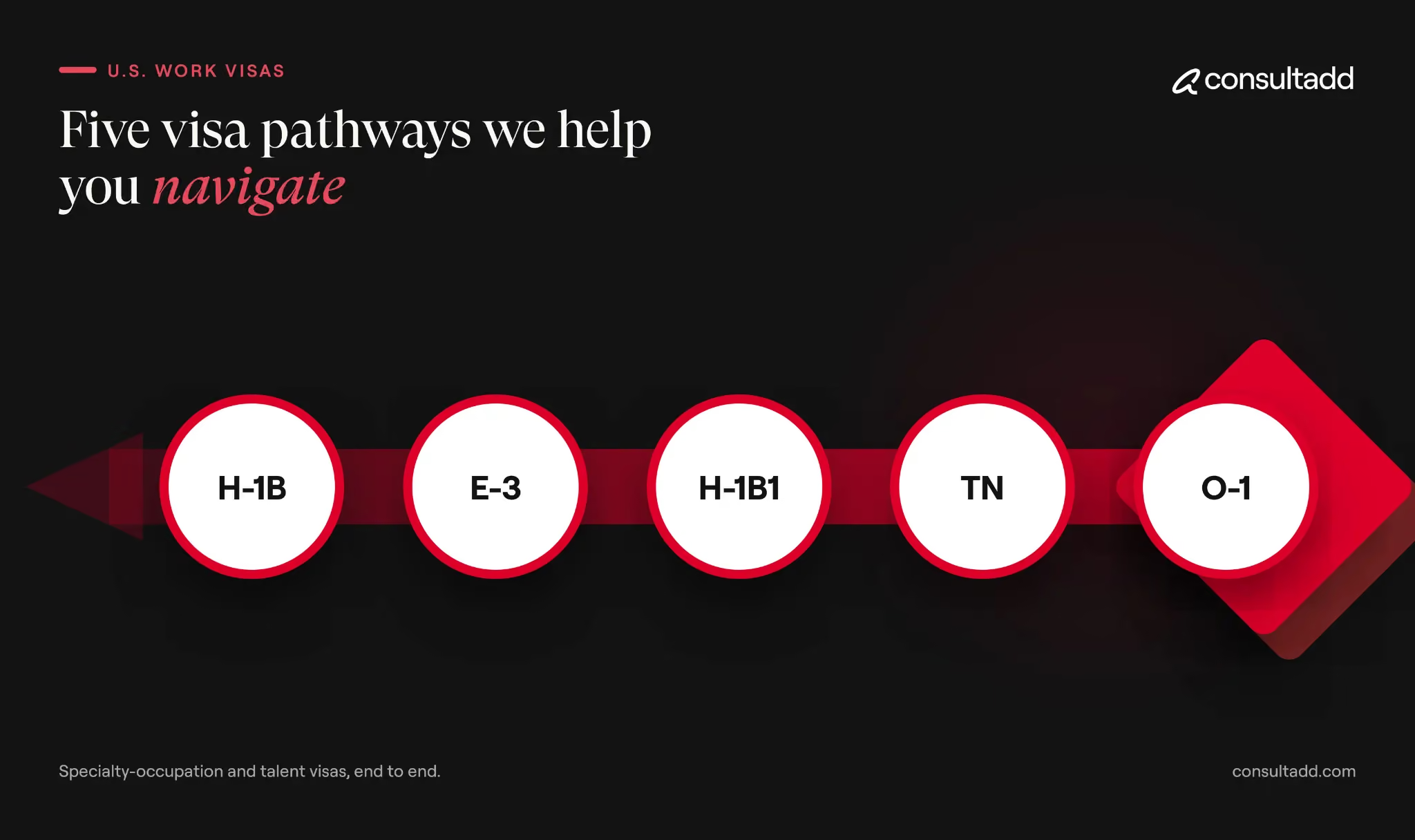
H-1B Visa: The most common option
H-1B is the visa category for specialty occupations requiring a bachelor's degree or higher. It's the primary pathway for companies sponsoring engineers, architects, mathematicians, and other skilled professionals.
Here's how H-1B works: The employer files a Labor Condition Application (LCA) with the DOL, certifying that hiring this foreign worker won't hurt U.S. workers. The employer must pay the worker at least the prevailing wage for that position in that geographic area. Once approved, the employer petitions USCIS for the H-1B visa. If approved, the foreign worker can legally work in the United States for up to 3 years, renewable for another 3 years (maximum 6 years total).
H-1B has a significant catch: the visa cap. Each fiscal year, USCIS accepts a limited number of H-1B petitions. In recent years, that cap has been 65,000 with an additional 20,000 for workers with advanced degrees from U.S. universities. When petitions exceed the cap, USCIS conducts a lottery. Your petition might not even be processed if you lose the lottery.
This uncertainty is a major issue. An employer and candidate might align perfectly. The employer petitions. But if the lottery doesn't select that petition, the sponsorship doesn't happen that year. The candidate waits another year or pursues other opportunities.
L-1 Visa: Intracompany transfers
L-1 visas are for employees of multinational companies transferring between offices. If you work for a company abroad and that company has a U.S. office, you can transfer to the U.S. office on an L-1 visa.
L-1A is for managers and executives. L-1B is for specialized knowledge employees. The advantage of L-1 over H-1B is there's no visa cap and no lottery. If the company petitions correctly, approval is likely. The disadvantage is you must already be employed by that company and working there for at least one year.
O-1 Visa: Extraordinary ability
O-1 visas are for individuals with extraordinary ability in their field. Think Nobel Prize winners, Olympic athletes, or top-tier scientists and artists. Most people don't qualify. But if you're an exceptionally accomplished professional, O-1 is an option.
There's no visa cap for O-1. Approval depends on demonstrating extraordinary ability through awards, publications, recognition, and peer letters. It's typically more expensive and time-consuming than H-1B, but there's no lottery risk.
EB-3: Permanent employment sponsorship
EB-3 is the pathway to permanent residency (green card) through employment. An employer sponsors you for a green card, giving you permanent right to live and work in the United States without visa renewals.
EB-3 involves several steps: The employer obtains a PERM labor certification from the DOL (proving no available U.S. workers), then petitions USCIS for permanent sponsorship, then applies for an immigrant visa. The entire process takes 3-5 years depending on your country of origin and visa category.
EB-3 is expensive and slow, but it's the only pathway for most international professionals to achieve permanent U.S. residency through employment. Many companies use H-1B first (temporary), then transition to EB-3 later (permanent) if both parties want long-term commitment.
E-2 Treaty Investor Visa
E-2 is for investors from treaty countries. If you're investing a significant amount in a U.S. business, you might qualify for an E-2 visa allowing you to work in that business. This is typically for entrepreneurs or owners, not employees.
How visa sponsorship costs break down
Visa sponsorship is expensive. Understanding costs helps you evaluate whether sponsorship makes financial sense.
Direct costs are only part of the story. There's also indirect cost: employer time spent managing the process, delays in starting work, and uncertainty around approval.
A company sponsoring an H-1B visa for an engineer might spend $7,000 in direct legal and filing fees, plus another $10,000-$20,000 in opportunity cost (HR time, delayed start date, engineering leadership time managing the process). Total cost: $17,000-$27,000 to hire one person.
This is why companies only sponsor visas for people they genuinely want. The cost and effort barrier means visa sponsorship is a serious commitment.
The visa sponsorship timeline: How long does it actually take?
The timeline varies dramatically by visa category. Understanding the expected timeline helps you plan and set realistic expectations.
H-1B Visa Timeline:
- December: Employers file H-1B petitions (initial filing window)
- April: USCIS conducts lottery if petitions exceed cap
- June-August: USCIS processes selected petitions and issues approvals
- September: Visa becomes effective (can start work)
- Total: 9-12 months from initial petition to start date
This long timeline means planning ahead is critical. If you want to start an H-1B position in September, the employer needs to file in December the prior year. That's 9 months of lead time.
L-1 Visa Timeline:
- Month 1: Employer files L-1 petition
- Month 3-4: USCIS approves (if submitted correctly)
- Month 4-5: Candidate completes visa interview at embassy
- Month 5-6: Visa is issued, candidate can start work
- Total: 4-6 months
L-1 is faster because there's no lottery. Approval happens relatively quickly if the petition is complete.
O-1 Visa Timeline:
- Month 1: Employer and candidate gather extraordinary ability documentation
- Month 2: Attorney files O-1 petition
- Month 3-4: USCIS adjudicates
- Month 4-5: Visa interview and issuance
- Month 5-6: Candidate starts work
- Total: 5-7 months
O-1 timeline depends heavily on how quickly you can gather supporting documentation (awards, publications, recommendation letters).
EB-3 Green Card Timeline:
- Month 1-2: PERM labor certification filing
- Month 6-12: DOL adjudicates PERM
- Month 12-24: I-140 petition and processing
- Month 24-36: Visa availability and consular processing
- Month 36+: Green card issued, permanent residency granted
- Total: 3-5 years
EB-3 is the long game. You're not getting a green card quickly. But you get permanent residency at the end, which is worth the wait for many people.
The sponsorship process step-by-step
Understanding the actual steps helps demystify visa sponsorship. Here's how H-1B sponsorship typically works:
Step 1: Job offer and commitment (Month - 6)
The employer and candidate agree on job terms: role, salary, start date, location. The employer commits to sponsoring an H-1B visa. Both parties sign a sponsorship agreement understanding the costs, timeline, and risks.
Step 2: Labor Condition Application (LCA) filing (Month - 5)
The employer works with immigration counsel to file an LCA with the DOL. The LCA certifies:
- The position, job duties, and location
- The prevailing wage for that position (employer must pay this minimum)
- Working conditions meet industry standards
- The employer won't harm U.S. workers
Filing LCA usually takes 1-2 weeks. DOL processing takes 7 days. Total: 2-3 weeks.
Step 3: H-1B petition filing (Month - 4)
Once the LCA is approved, the employer files the actual H-1B petition with USCIS. The petition includes:
- Completed forms (I-129)
- LCA approval
- Offer letter
- Candidate's resume and credentials
- Job description
- Employer documentation
Filing takes 1-2 weeks. USCIS then either accepts the petition into the lottery pool (if filing during the cap period) or processes it immediately (if filed outside cap period).
Step 4: Lottery and processing (Month - 2 to Month 0)
If filing during cap season (typically October-December), USCIS conducts a lottery if petitions exceed the cap. Your petition either gets selected or doesn't. If not selected, you're waitlisted and can try again next year.
If selected (or if filing outside cap), USCIS processes the petition. This takes 2-4 weeks. If approved, USCIS issues an approval notice.
Step 5: Visa interview and issuance (Month 1-2)
The candidate schedules a visa interview at a U.S. embassy or consulate in their home country. The candidate attends the interview, proves admissibility, and receives the H-1B visa in their passport.
Interview scheduling can take weeks depending on embassy workload. Processing typically takes 1-2 weeks after the interview.
Step 6: Travel and start date (Month 2-3)
Once the visa is in hand, the candidate can travel to the United States. The candidate enters through customs and immigration control, which admits them as an H-1B worker. The candidate can now legally work for the sponsoring employer.
Total process: 9-12 months from initial commitment to start date.
Who benefits from visa sponsorship
Visa sponsorship helps different groups in different ways.
International talent seeking U.S. opportunities. If you're a skilled professional outside the U.S. and want to work here, visa sponsorship is often your only pathway. Without an employer sponsoring a visa, you can't legally work in the United States. Visa sponsorship opens doors that would otherwise be closed.
Companies with specific skill gaps. Employers sometimes can't find qualified U.S. workers for specific roles. Maybe it's a niche technology, a specific expertise, or a leadership position. When they can't fill the role locally, visa sponsorship lets them hire internationally. For companies competing for talent, this is essential.
High-growth companies scaling quickly. Fast-growing companies often need to hire faster than the U.S. labor market can supply talent. Visa sponsorship lets them access global talent pools to fuel growth. Many tech companies sponsor dozens of H-1B visas annually as part of their scaling strategy.
Multinational companies coordinating globally. Companies with offices worldwide sometimes use L-1 visas to transfer employees between offices. This is particularly valuable for leadership roles, specialized expertise transfer, and developing talent globally.
Challenges and limitations of visa sponsorship
Visa sponsorship sounds good in theory, but it has real complications.
H-1B visa cap lottery. The biggest challenge is the visa lottery. Every year, far more H-1B petitions are submitted than the cap allows. USCIS randomly selects petitions. This means an employer and candidate might align perfectly, file everything correctly, but still not get approved because the lottery didn't select them. This uncertainty frustrates both employers and candidates.
Long processing timelines. H-1B takes 9-12 months. EB-3 takes 3-5 years. During this time, candidates are uncertain about their future. Will they get approved? Will they be able to start their job? Can they plan a life in the U.S.? The uncertainty creates stress and sometimes causes candidates to pursue other opportunities.
Work authorization delays. Even after visa approval, there's sometimes a gap before work authorization is granted. Candidates might not be able to legally start working immediately after arriving in the U.S. This causes disruption for employers expecting the candidate to start right away.
Wage and working condition requirements. For H-1B and other sponsored visas, employers must comply with prevailing wage requirements. They can't pay sponsored employees less than U.S. workers in similar roles. This is good policy (prevents wage suppression), but it means sponsoring a visa employee costs at least as much as hiring a U.S. worker. The cost comes not from sponsorship fees but from wage requirements.
Visa restrictions limit job mobility. When you're on a sponsored visa like H-1B, you're tied to that employer. Changing jobs requires a new sponsorship petition. You can't just leave one employer for another without starting a new sponsorship process. This creates an imbalance in employment relationships. Employers have more power because they control your visa status.
Quota and preference systems. For permanent sponsorship (green cards), the U.S. has country-based preference systems. If you're from India or China (high-demand countries), you might wait years for a green card even after an employer sponsors you. If you're from a country with lower visa demand, your wait time is shorter. This creates inequity and unpredictability.
Political and regulatory uncertainty. Visa sponsorship policy changes with administrations. What's allowed today might be restricted tomorrow. Recent years have seen increased H-1B scrutiny and policy changes. This uncertainty makes long-term planning difficult for both employers and candidates.
What employers need to know about sponsoring visas
If you're considering visa sponsorship as an employer, understand your obligations:
You're responsible for compliance. When you sponsor a visa, you're making legal commitments. You must pay prevailing wage. You must maintain work conditions that meet standards. You must report to the government if the employee leaves. If you violate sponsorship terms, you face fines, audit, and possible prohibition from future sponsorships.
Documentation is critical. Keep meticulous records: recruitment efforts (ads, application numbers), job descriptions, salary documentation, LCA certifications, approval notices. In an audit (which happens occasionally), you need to prove you complied with every requirement.
Sponsorship ties you to the employee. If you sponsor someone's visa and they become critical to your business, replacing them is difficult. They can't just move to a competitor without a new sponsorship. If they leave, you lose both the employee and your visa sponsorship investment.
Plan ahead. H-1B takes 9-12 months. If you want someone to start in September, file in December. Don't wait until June expecting to hire in July. Plan your visa sponsorships years in advance.
Work with immigration counsel. This isn't something to DIY. Hire experienced immigration attorneys who specialize in employment visa sponsorship. The cost ($1,500-$5,000) is worth the compliance certainty and better approval odds.
Consider multiple visa pathways. H-1B isn't the only option. Depending on the candidate's background, L-1, O-1, or other visas might be faster or more reliable. Good immigration counsel evaluates multiple options.
What international candidates need to know about visa sponsorship
If you're seeking visa sponsorship as a candidate, understand what you're signing up for:
Visa sponsorship isn't guaranteed. Even with an employer committed to sponsoring, approval isn't certain. H-1B faces a lottery. EB-3 faces years of waiting. You might lose the lottery or get passed over for other reasons. Plan for the possibility that sponsorship doesn't happen as expected.
Your mobility is limited. On a sponsored visa, you can't freely change jobs. Switching employers requires a new sponsorship petition. This limits your leverage in salary negotiations and career moves. Once you commit to a sponsor, you're somewhat locked in.
Timeline is long. H-1B takes 9-12 months. If the employer wants you to start in September, they need to commit in December. This long lead time makes planning your personal life difficult. You might be in limbo for months.
You pay some costs. While employers typically pay most sponsorship costs, candidates often pay medical exams, some application fees, and visa interview costs. These might total $500-$2,000 depending on the visa type.
Permanent sponsorship takes years. If permanent residency (green card) is your goal, expect 3-5 years or more depending on your country. During this time, you're in temporary visa status, which is fine, but it's not permanent.
Sponsor matters. Choose your sponsor carefully. Some employers are committed to visa sponsorship and do it regularly. Others treat it as a hassle. Employers committed to sponsorship make the process smoother, provide better support, and handle compliance carefully. Employers treating sponsorship as a burden create friction and uncertainty.
Comparing visa sponsorship to other immigration pathways
Visa sponsorship through an employer isn't the only way to come to the U.S. Understanding alternatives helps you choose the right pathway.
The table shows that employment visa sponsorship is one pathway among many. For skilled professionals seeking U.S. employment, it's typically the most direct route. But understanding alternatives helps you evaluate your best option.
Start Strong With Consultadd
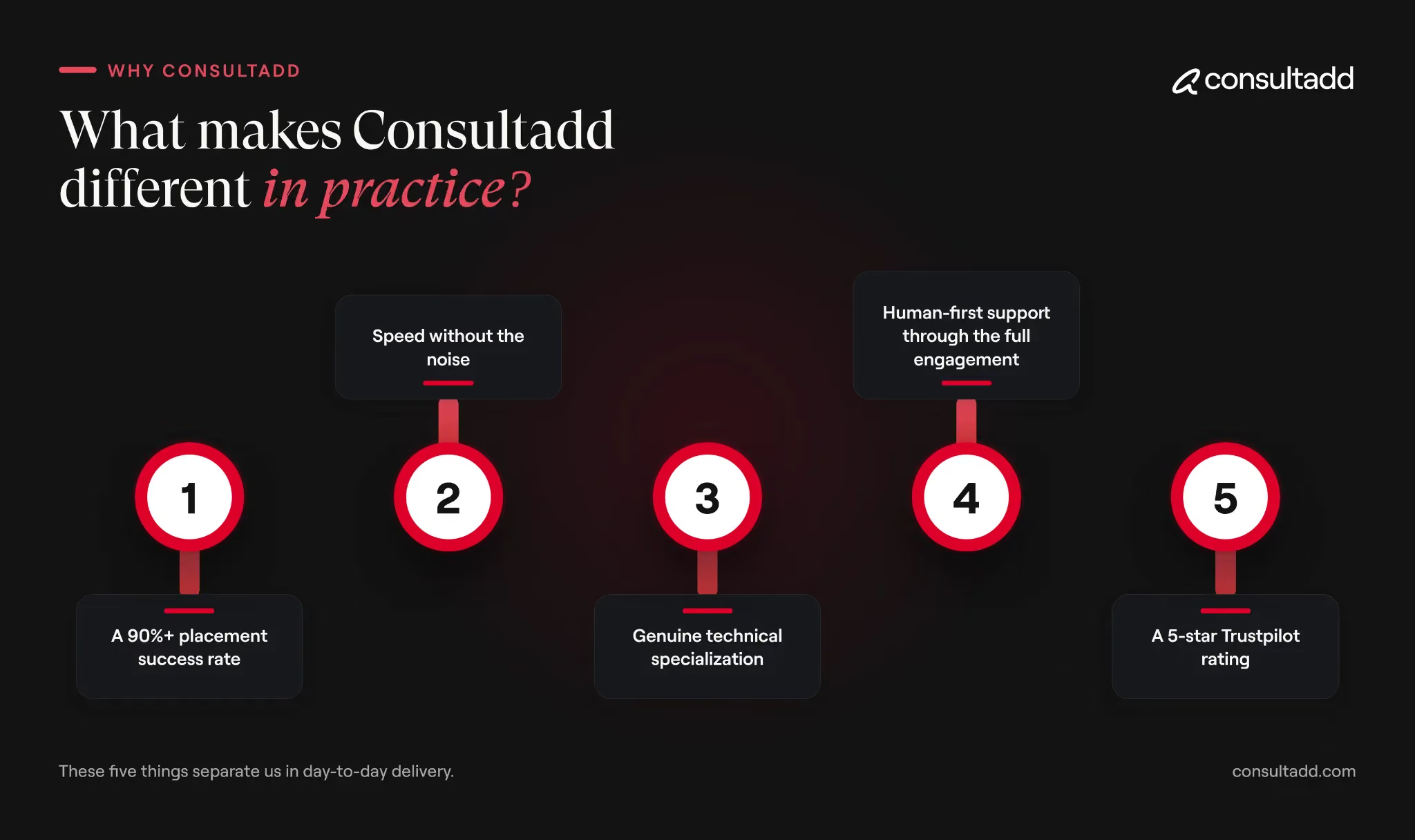
With 15 years in business and 5,000+ successful staffing engagements, we don't just fill roles, we build reliability into your process. We've supported 65 staffing companies in the past year alone and maintain MSAs with industry leaders like Robert Half and TEKsystems.
Here's what working with Consultadd looks like:
- Talent sourced in under 24 hours
- Ready-to-deploy candidates, vetted for experience and compliance
- Lower turnover risk: we match long-term goals, not just short-term needs
- Seamless compliance: visa, documentation, onboarding? Handled.
- Dedicated 1:1 account managers for responsive, personalized support
- Top 100 candidate matches delivered in the past year
- Strong partnerships with universities to tap into fresh, committed talent
- Post-placement support so your investment grows beyond day one
For candidates, your next opportunity is more than just a job title, it's a chance to build skills, gain experience, and move your career forward. At Consultadd, we connect technology professionals with projects and employers that align with their goals, whether they're looking for contract, contract-to-hire, or long-term opportunities.
The tech job market moves fast, but the right guidance can make all the difference. Ready to take the next step in your career journey? Explore Opportunities >>
Key takeaways
- Visa sponsorship means a U.S. employer officially petitions the government to allow a foreign national to work in the United States
- Common visa types include H-1B (specialty occupation), L-1 (intracompany transfer), O-1 (extraordinary ability), and EB-3 (permanent employment)
- Sponsorship costs employers $3,500-$14,000+ depending on visa type, with H-1B being the most common and least expensive
- Timeline varies: H-1B takes 9-12 months, L-1 takes 4-6 months, and EB-3 takes 3-5 years
- H-1B visa sponsorship faces significant uncertainty due to the annual visa lottery when petitions exceed the cap
FAQs
What does visa sponsorship mean in simple terms?
Visa sponsorship means a U.S. employer officially asks the government for permission to hire a foreign national. The employer files paperwork with the Department of Labor and USCIS saying "we want to hire this person from another country, we've looked for U.S. workers but can't find qualified candidates, and we'll comply with all visa requirements." If approved, the foreign national can legally work in the U.S. for that employer. It's the primary pathway for international talent to work in the United States.
How much does visa sponsorship cost?
Direct costs typically range from $3,500-$14,000 depending on visa type. H-1B costs around $3,500-$10,000. EB-3 green card sponsorship costs $5,500-$14,000+. Costs include USCIS filing fees ($460-$3,200), Department of Labor fees ($300-$600), attorney fees ($1,500-$8,000), and application support ($500-$2,000). Employers typically pay most costs. International candidates usually pay medical exams and visa interview fees ($200-$500). There's also indirect cost: HR time, delays in start date, and opportunity cost of uncertainty.
How long does visa sponsorship take?
Timeline depends on visa type: H-1B takes 9-12 months from petition filing to work authorization. L-1 takes 4-6 months. O-1 takes 5-7 months. EB-3 green card sponsorship takes 3-5 years. H-1B timeline is long partly because there's an annual lottery. EB-3 timeline is long because of country-based preference systems and visa availability limitations. Most employment-based visas require planning far in advance—at least 6-12 months for H-1B.
Can you change jobs while on visa sponsorship?
Not easily. On H-1B or other employment-based visas, you're tied to your sponsoring employer. Changing jobs requires a new sponsorship petition through your new employer. Your new employer must file new paperwork, pay new fees, and wait for approval. You can change jobs, but it's time-consuming and uncertain. This is why visa sponsorship creates imbalance—employers have more leverage because they control your visa status.
What's the difference between H-1B and EB-3 sponsorship?
H-1B is temporary work authorization (maximum 6 years). EB-3 is permanent residency (green card). H-1B is faster (9-12 months) and cheaper ($3,500-$10,000). EB-3 is much slower (3-5 years) and expensive ($5,500-$14,000+). Many people start on H-1B, work for 3-6 years, then transition to EB-3 if both employer and employee want long-term commitment. H-1B has an annual visa lottery cap. EB-3 has country-based preference systems. Most international tech workers use H-1B initially; EB-3 is for people seeking permanent U.S. residency.
Does visa sponsorship guarantee employment?
No. Visa sponsorship approval doesn't guarantee the job will work out or last. An employer can sponsor your visa, you can be approved, but the employment relationship can still end. If you lose the job, you need to find new employment and a new sponsor or leave the country. This is why it's important to choose reliable sponsors who are genuinely committed to your long-term success, not employers treating sponsorship as a short-term arrangement.
.webp)

.png)

.webp)