

Introduction
Most recruiting starts with a job and goes looking for a person. Bench sales starts with a person and goes looking for a job.
In US IT staffing, bench sales is the work of placing consultants who are already on a staffing firm's payroll but aren't billing on a client project. A bench sales recruiter markets those consultants to vendors and clients, submits them to matching requirements, and moves them onto a new contract as fast as possible.
Speed matters because every week a consultant sits on the bench, the firm is paying salary with no revenue coming in.
This guide covers how the bench sales process works, the terms you'll hear every day, how it differs from regular IT recruiting, which metrics to track, and the compliance rules that good bench sales teams follow.
TL;DR
- Bench sales is reverse recruiting: the firm already employs the consultant and has to find them a billable contract.
- The process runs from profile prep and hotlists to requirement sourcing, RTRs, submissions, rate confirmation, interviews and onboarding.
- Bench time is a cost, not a source of revenue. The firm pays the consultant while they wait, so faster placement protects margin.
- Track average bench days and the ratios from submission to interview to offer, not just raw submission volume.
- For H-1B consultants, employer-caused bench time generally has to be paid at the required wage, and resumes must reflect real experience.
What bench sales is
In IT staffing, the "bench" is the group of consultants a firm employs who aren't currently assigned to a client project. They might have just finished a contract, been released early, or recently joined the firm.
Bench sales, sometimes called bench marketing, is the work of getting those consultants back onto billable projects. The recruiter doesn't have an open job to fill. They have a Java developer, a DevOps engineer or a data analyst ready to start, and they need to find the right contract.
Most bench sales happens in the C2C and W-2 contract market. A smaller staffing firm employs the consultant and signs a contract with a larger vendor or implementation partner, which in turn serves the end client.
For how that structure works, see our guide to corp-to-corp staffing.
How the bench sales process works
The steps are fairly consistent across firms. What separates strong teams is how carefully they handle each one.
- Consultant intake. The recruiter confirms the consultant's skills, recent projects, work authorization, location preferences, availability and minimum rate.
- Profile prep. The resume is updated to reflect real, recent work and targeted at the roles the consultant is most likely to win. Many firms mask contact details so vendors have to go through the firm.
- Hotlist distribution. The consultant is added to the firm's hotlist, a regularly shared list of available consultants, skills and locations sent to vendor contacts.
- Requirement sourcing. The recruiter works vendor emails, job boards, vendor portals and direct relationships to find open contract requirements that match.
- RTR and submission. Before submitting, the recruiter gets the consultant's written right to represent them for that specific requirement, then sends the profile with the agreed rate.
- Rate confirmation. The bill rate to the vendor and the consultant's pay are confirmed before interviews, not after.
- Interviews. The vendor or end client interviews the consultant, usually over video, with one or two technical rounds.
- Onboarding. Contracts or work orders are signed, background checks and employment paperwork are completed, and the consultant starts.
The step teams most often rush is the first one. A recruiter who doesn't know the consultant's real strengths ends up sending them to the wrong roles, and the consultant's profile starts to look worn after a dozen rejections.
Bench sales terms you'll hear every day
New recruiters and consultants run into a lot of shorthand. Here are the terms that come up most.
Bench sales vs traditional IT recruiting
The two jobs use similar tools but run in opposite directions.
Many job postings blur these roles. A role titled "C2C recruiter" is often a bench sales job in practice. Our guide to what a C2C recruiter does covers how the titles overlap.
What a bench sales recruiter does day to day
A typical day mixes sales, research and consultant care:
- Reading new requirements from vendor emails and portals, and filtering out ones that don't fit
- Calling vendor contacts to learn about upcoming roles before they're widely shared
- Getting RTRs, submitting consultants and tracking every submission
- Preparing consultants for interviews with notes about the client, the team and likely questions
- Sending the hotlist and updating it as consultants are placed
- Checking in with consultants on the bench so they stay engaged and don't drift to another firm
The consultant check-ins matter more than most people expect. A consultant who hears nothing for two weeks starts taking calls from other firms. A short weekly update, even with no news, keeps them working with you.
Bench sales metrics worth tracking
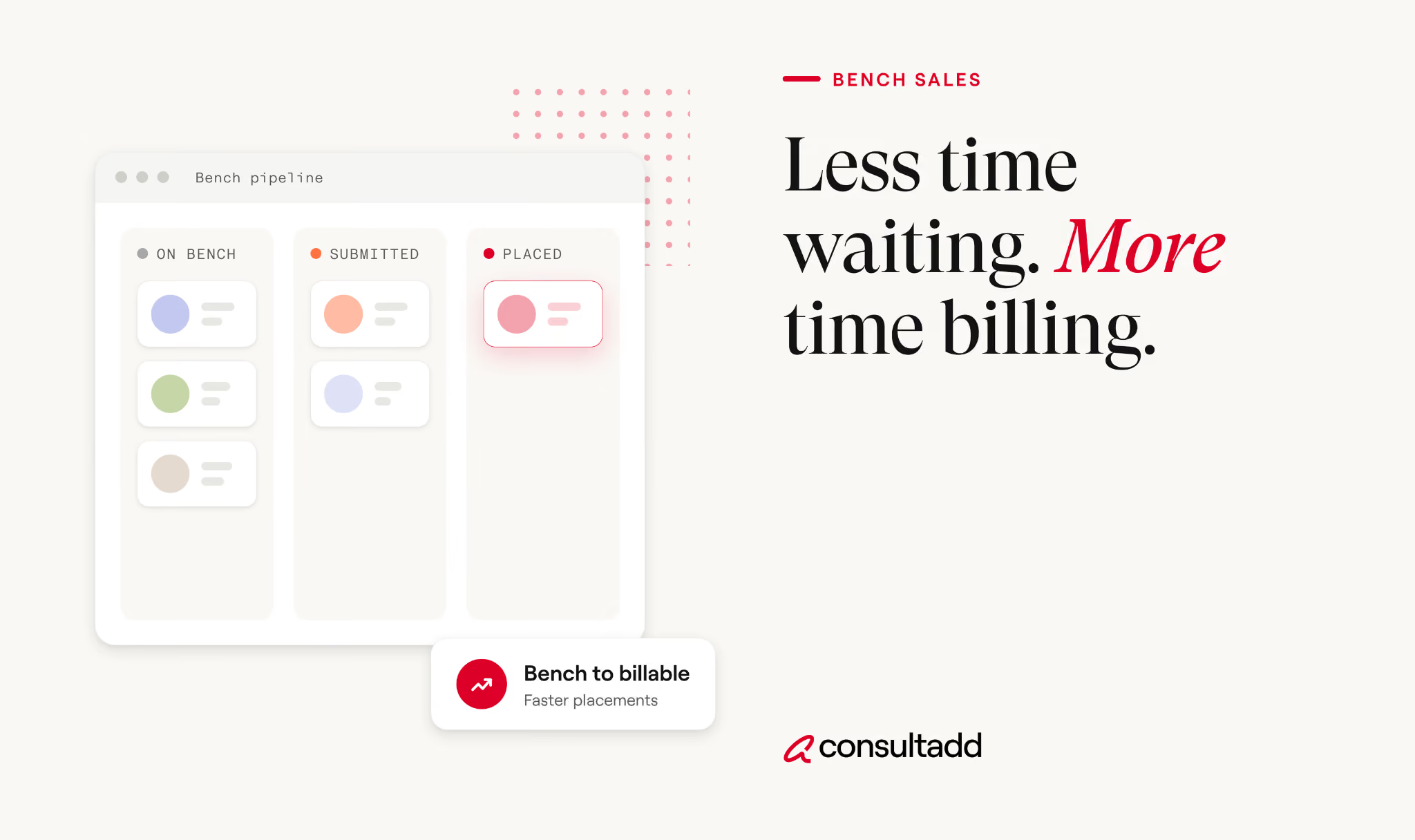
Raw submission volume is the easiest number to count and the least useful on its own. Sending fifty weak submissions wears out vendor relationships and the consultant's profile.
Look at these by skill area, not just across the whole bench. A firm can have a healthy average while its .NET consultants sit for weeks and its cloud engineers place in days.
Compliance and ethics in bench sales
Bench sales has a reputation problem in parts of the industry, mostly because of shortcuts some firms take under pressure. Good teams treat these rules as part of the job.
1. Pay during bench time
For H-1B consultants, employer-caused bench time is generally not unpaid time. The U.S. Department of Labor's guidance on H-1B nonproductive time says the required wage must be paid when a worker is in nonproductive status because of the employer, such as lack of assigned work. The rule sits in20 CFR 655.731.
Our post on bench candidates covers what that means for the consultant.
2. Honest resumes
Updating a resume to highlight relevant work is normal. Adding skills, titles or projects the consultant didn't actually have is not.
Fabricated experience usually comes out in the technical interview. When it doesn't, it shows up in the first few weeks on the project, and the vendor stops taking that firm's submissions.
3. One RTR per requirement
Submitting the same consultant to the same requirement through two vendors creates a dispute about who represents them. Most vendors and clients will reject the consultant to avoid it. Get a written RTR for each requirement, track it, and tell the consultant not to give a second one for the same role.
4. Employer relationship and worksite
For visa-sponsored consultants, the sponsoring firm needs a real employer relationship. USCIS policy guidance looks at whether the employer can hire, pay, fire, supervise or otherwise control the work.
The job title, duties and worksite in filings also need to match where and how the consultant actually works.
5. Worker classification
Consultants on W-2 are employees of the firm, with the obligations that come with that. The Department of Labor explains why employee misclassification creates wage and overtime exposure. This is general information, not legal advice.
Making bench sales work
Good bench sales comes down to knowing your consultants well, sending fewer but better-matched submissions, and keeping strict records on RTRs and rates.
Start with intake. Spend real time understanding each consultant's strongest recent work and set a realistic rate range with them on day one. Then build vendor relationships that send you requirements early, track bench days by skill, and keep in touch with every consultant while they wait.
The firms that do bench sales well tend to have shorter bench periods, fewer duplicate submissions and consultants who stay with them for years. That's where the margin comes from.
Start Strong With Consultadd
With 15 years in business and 5,000+ successful staffing engagements, we don’t just fill roles, we build reliability into your process. We’ve supported 65 staffing companies in the past year alone and maintain MSAs with industry leaders like Robert Half and TEKsystems.
Here’s what working with Consultadd looks like:
- Talent sourced in under 24 hours
- Ready-to-deploy candidates, vetted for experience and compliance
- Lower turnover risk: we match long-term goals, not just short-term needs
- Seamless compliance: visa, documentation, onboarding? Handled.
- Dedicated 1:1 account managers for responsive, personalized support
- Top 100 candidate matches delivered in the past year
- Strong partnerships with universities to tap into fresh, committed talent
- Post-placement support so your investment grows beyond day one
For candidates, your next opportunity is more than just a job title, it's a chance to build skills, gain experience, and move your career forward. At Consultadd, we connect technology professionals with projects and employers that align with their goals, whether they're looking for contract, contract-to-hire, or long-term opportunities.
The tech job market moves fast, but the right guidance can make all the difference. Ready to take the next step in your career journey? Explore Opportunities >>
Key takeaways
- Bench sales is reverse recruiting: placing consultants the firm already employs onto new billable contracts.
- Bench time is a cost to the firm, so faster, better-matched placements protect margin.
- The process depends on careful intake, targeted submissions, written RTRs and rates confirmed before interviews.
- Track average bench days and conversion ratios by skill area, not just submission volume.
- Pay H-1B consultants during employer-caused bench time, keep resumes accurate, and never double-submit a consultant to the same requirement.
FAQs
What is bench sales in IT staffing?
Bench sales is the process of finding new contract projects for consultants who are already employed by a staffing firm but aren't currently billing. The recruiter markets those consultants to vendors and clients and submits them to matching requirements. It's sometimes called bench marketing.
What does a bench sales recruiter do?
A bench sales recruiter markets the firm's available consultants, finds matching contract requirements, gets RTRs, submits profiles and confirms rates. They also prepare consultants for interviews and stay in touch with them during bench time. Most of their contacts are vendors and implementation partners rather than hiring managers.
What is a hotlist in bench sales?
A hotlist is a list of a firm's available consultants, usually sent to vendor contacts on a regular schedule. It typically shows each consultant's main skills, years of experience, location and work authorization. Vendors use it to spot consultants who match their open requirements.
What is RTR in bench sales?
RTR stands for right to represent. It's written permission from the consultant allowing one firm to submit them for one specific requirement. It prevents duplicate submissions, which can get a consultant rejected for the role.
Do bench consultants get paid?
It depends on the employment arrangement. For H-1B workers, the Department of Labor generally requires the employer to pay the required wage during nonproductive time caused by the employer, such as lack of assigned work. Consultants should confirm their bench pay terms in writing before they join a firm.
What is the difference between bench sales and IT recruiting?
Traditional IT recruiting starts with an open job and searches for a candidate. Bench sales starts with a consultant the firm already employs and searches for a job. That's why bench sales recruiters work mostly with vendors and other staffing firms, while traditional recruiters work mostly with hiring managers.
.png)