

Introduction
"What is your current employment status?" looks like the easiest question on any form. It's also one of the most often written badly.
The employment status question asks whether someone is working, looking for work or doing something else, like studying or caring for family.
It shows up on surveys, job applications, staffing intake forms and loan paperwork. When the answer options overlap or leave people out, the data you collect is wrong from the start.
This guide gives you standard wording and answer options, the official definitions they're based on, common mistakes to avoid, and how candidates should answer the question on a job application.
TL;DR
- The standard wording is "Which of the following best describes your current employment status?" followed by a single-choice list of options.
- A complete list covers full-time, part-time, self-employed, unemployed and looking, unemployed and not looking, student, retired, homemaker or caregiver, unable to work, and prefer not to say.
- Many survey designers borrow the BLS definitions, where having a job takes priority over looking for one.
- The most common mistakes are overlapping options, no option for contract or self-employed work, and no "prefer not to say."
- On a job application, answer honestly and briefly. Some places, including New York City, restrict employers from rejecting applicants just for being unemployed.
What the employment status question asks
The question has one job: put each person into one clear group based on their current work situation. Everything else you ask, like job title, hours or income, makes more sense once you know that group.
Different forms use it for different reasons:
- Market and customer surveys use it to segment answers by life stage and spending power.
- Employee and workforce research uses it to route people to the right follow-up questions.
- Job applications use it to understand availability and notice periods.
- Staffing intake forms use it to know whether a candidate is on a project, between projects or free to start.
Because the purpose changes, the right answer options change too. A consumer survey needs "retired" and "student." A staffing form needs to know whether a contractor is on assignment or finishing one next month.
Standard wording and answer options for the employment status question
The most widely used wording is:
"Which of the following best describes your current employment status?"
"Best describes" matters. It tells people to pick one answer even when their situation is mixed, which keeps the data clean.
Here's a full set of options and who each one is for.
A short version for quick forms
If you only need a rough split, five options usually cover it:
- Employed (full-time or part-time)
- Self-employed or contract
- Unemployed and looking for work
- Not working and not looking (student, retired, caregiver or other)
- Prefer not to say
Use the short version when the answer only decides which questions come next. Use the full version when you plan to report results by group.
Follow-up questions worth adding
The status question can't tell you everything. A few follow-ups fill the gaps:
- "How many hours do you usually work per week?" Shows full-time versus part-time without guessing at definitions.
- "Would you like to work more hours than you do now?" Finds people who are employed but underemployed.
- "How are you paid for your main job?" with options like W-2 employee, 1099 contractor or corp-to-corp. This is useful for staffing and contractor research.
- "Are you currently looking for a new job?" Works for employed people too, not just the unemployed.
How the official definitions work
If you want your data to line up with national statistics, borrow the definitions the U.S. Bureau of Labor Statistics uses in the Current Population Survey.
BLS sorts everyone age 16 and older into three groups. People are employed, unemployed, or not in the labor force, and the labor force is the employed plus the unemployed.
The rule that settles most edge cases is precedence. In its CPS FAQ, BLS explains that working or having a job takes precedence over looking for work, and labor force activities take precedence over non-labor force activities.
So a student with a part-time job counts as employed. A person who's working but searching for a new role also counts as employed.
Writing that rule into your instructions ("If you have any paid work, choose an employed option") removes most of the confusion.
Common mistakes and how to fix them
Most problems with the employment status question come from options that overlap or leave people out.
One more thing to check: the reference period. "Current" is fine for most forms, but research that will be compared over time should name it, like "in the past 7 days."
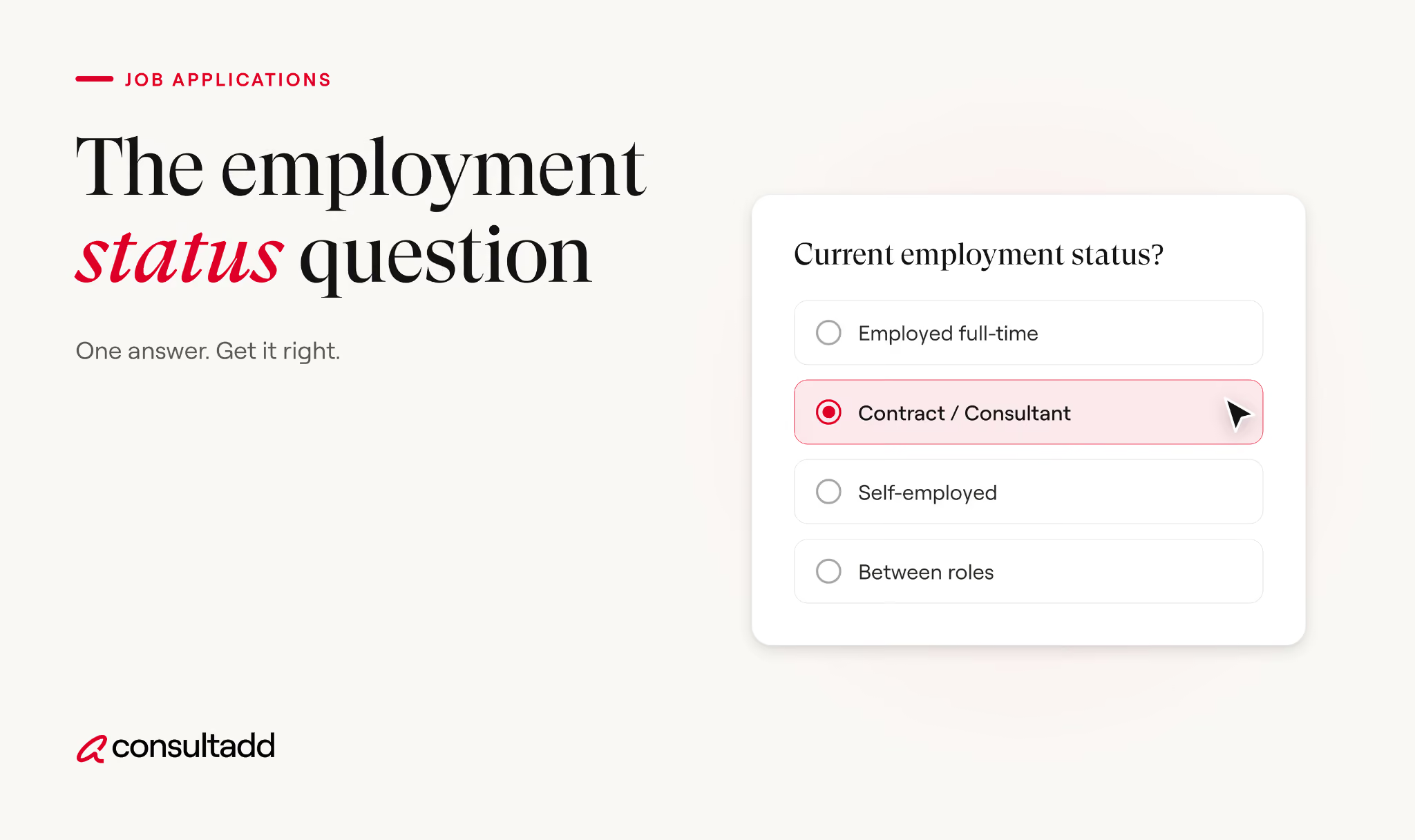
The employment status question on job applications
On a job application, the question usually reads "Are you currently employed?" or "What is your current employment status?"
Employers mainly want to know when you could start and whether you have a notice period.
What employers should keep in mind
Some places restrict how employers use this answer:
- New York City's Human Rights Law, for example, bars covered employers from basing hiring decisions on unemployment status without a substantially job-related reason. It also bars job ads that say applicants must be currently employed.
- New Jersey, Oregon and Washington, D.C. have their own rules on job ads and unemployment status.
That's why many employers ask about availability ("When could you start?") instead of status. It gets the same practical answer with less risk.
This is general information, not legal advice, so check the rules where you hire.
How candidates should answer
Answer honestly and keep it short. A status question isn't the place for a long explanation, but a brief note helps when your situation doesn't fit neatly.
In IT staffing, contractors run into this question constantly, and their situations are rarely simple.
The second row comes up often. A consultant on a staffing firm's bench is usually still on payroll, so "employed" is accurate.
Our explainer on what a bench candidate is in IT staffing covers how that arrangement works.
A gap between contracts isn't a red flag in tech hiring. Recruiters see it every week. What matters is being clear about your dates and availability.
If you're actively searching, our guide on how to find contract work can help shorten the gap.
Employment status vs worker classification
These two get mixed up, but they answer different questions.
- Employment status asks whether you're working, looking or out of the labor force.
- Worker classification asks how you're legally engaged when you do work: as an employee (W-2), an independent contractor (1099) or through your own company (C2C).
Two people can both be "employed" and have completely different tax and benefit situations. The IRS explains how independent contractor status differs from employee status.
The U.S. Department of Labor also explains why employee misclassification affects wage and overtime rights.
If your form needs both, ask them as two separate questions. For a full comparison of the three arrangements, see our guide to W-2 vs C2C vs 1099.
Writing a better employment status question
A good employment status question does three things:
It uses "best describes" wording, it gives options that don't overlap, and it includes everyone, from contractors to caregivers to people who'd rather not say.
- Start with the full option list above and cut it down to what your form actually needs.
- Add one line of instruction about which option wins when someone's situation is mixed.
- If you need hours, pay structure or job search status, ask those as separate follow-ups.
- Test it on five people before it goes live.
- If anyone hesitates over which option to pick, that's the option to rewrite.
Start Strong With Consultadd
With 15 years in business and 5,000+ successful staffing engagements, we don't just fill roles, we build reliability into your process. We've supported 65 staffing companies in the past year alone and maintain MSAs with industry leaders like Robert Half and TEKsystems.
Here's what working with Consultadd looks like:
- Talent sourced in under 24 hours
- Ready-to-deploy candidates, vetted for experience and compliance
- Lower turnover risk: we match long-term goals, not just short-term needs
- Seamless compliance: visa, documentation, onboarding? Handled.
- Dedicated 1:1 account managers for responsive, personalized support
- Top 100 candidate matches delivered in the past year
- Strong partnerships with universities to tap into fresh, committed talent
- Post-placement support so your investment grows beyond day one
For candidates, your next opportunity is more than just a job title, it's a chance to build skills, gain experience, and move your career forward. At Consultadd, we connect technology professionals with projects and employers that align with their goals, whether they're looking for contract, contract-to-hire, or long-term opportunities.
The tech job market moves fast, but the right guidance can make all the difference. Ready to take the next step in your career journey? Explore Opportunities >>
Key takeaways
- Ask "Which of the following best describes your current employment status?" as a single-choice question.
- Use options that don't overlap, and include self-employed or contract work, two types of unemployed, and "prefer not to say."
- Borrow the BLS precedence rule: any paid work counts as employed, even for students and active job seekers.
- Ask about hours, pay structure and job search status as separate follow-ups, not inside the status question.
- On job applications, candidates should answer honestly and add dates or availability in a short note when their situation is mixed.
FAQs
What is the employment status question?
It's a question that asks whether a person is currently working, looking for work or not in the labor force. It usually reads "Which of the following best describes your current employment status?" and appears on surveys, job applications and intake forms.
What are the standard options for employment status?
A full list includes employed full-time, employed part-time, self-employed or freelance, unemployed and looking, unemployed and not looking, student, retired, homemaker or caregiver, unable to work, and prefer not to say. Shorter forms often combine these into four or five groups.
What should I put for employment status if I'm a contractor?
If you're on an active contract or on a staffing firm's payroll between assignments, choose employed. If you contract through your own company, self-employed is usually the better fit. If your last contract has ended and you're not on anyone's payroll, choose unemployed and looking.
Is self-employed the same as employed?
For labor force statistics, yes. BLS counts self-employed people as employed. Many forms still list self-employed as its own option because it helps separate business owners and freelancers from people who work for an employer.
Can employers ask about employment status on a job application?
In most places, yes, but some jurisdictions limit how employers can use the answer. New York City, for example, restricts employers from rejecting applicants because they're unemployed and bans job ads that require current employment. Employers should check local rules and consider asking about availability instead.
What is the difference between unemployed and not in the labor force?
Unemployed people don't have a job but are available and actively looking for one. People not in the labor force don't have a job and aren't looking, such as many students, retirees and full-time caregivers. That's why surveys often split "unemployed" into "looking" and "not looking."
.png)


.webp)