

Introduction
Post a "C2C recruiter" job and you'll get a very specific kind of candidate: someone who talks fluently about hotlists, prime vendors, and rate negotiation, and who's spent years living inside job boards like Dice rather than LinkedIn.
So what is a C2C recruiter? It's a recruiter who staffs contract roles by placing candidates through corp-to-corp arrangements, connecting a consultant's own business entity (or the consulting firm employing them) with an end client, usually through a chain of vendors rather than a direct client relationship.
This is a genuinely different job than a standard corporate recruiter, and the confusion between the two is common enough that job postings routinely misuse the terms. A C2C recruiter, closely related to what the industry also calls a bench sales recruiter, spends the day marketing available consultants into a vendor network, negotiating rates across multiple markup layers, and managing compliance around work authorization, not sourcing candidates for a single company's open headcount.
This guide breaks down exactly what the role involves, the vendor chain it operates inside, the terminology that defines the job, the skills that separate strong performers, and how it compares to other recruiting roles.
TL;DR
- A C2C recruiter places contract IT professionals into roles through corp-to-corp arrangements, working through a chain of vendors rather than recruiting directly for one employer's open positions.
- The role is closely related to, and often used interchangeably with, "bench sales recruiter": marketing consultants who are between projects ("on the bench") to available contract openings.
- Success depends on fluency in the vendor chain (client, prime vendor, sub-vendors), rate negotiation across markup layers, and deep familiarity with US work authorization categories like H-1B, OPT, and GC EAD.
- Core tools are contract job boards (Dice, Indeed niche boards), vendor management systems (VMS) like Fieldglass and Beeline, and informal "hotlists" of active requirements shared across recruiter networks.
- Compliance is not optional: misrepresenting a candidate's status, a vendor chain, or rate structure exposes the recruiter's agency to real legal and reputational risk.
What a C2C recruiter actually does
The core job is matchmaking with a twist: instead of finding a candidate for an open role at one company, a C2C recruiter usually works from the other direction, starting with an available consultant (frequently one who's finishing a project and about to be "on the bench," unbilled and available) and marketing that person into active contract requirements across a network of vendors and clients.
A typical day blends several distinct activities. Sourcing active job requirements from prime vendors, staffing partners, and direct client postings. Submitting consultant profiles against those requirements, often reformatting resumes to match the specific technology stack listed. Negotiating the bill rate at each layer of the vendor chain, since every intermediary between the consultant and the end client takes a markup.
Coordinating interview scheduling between the consultant and the client, sometimes across multiple time zones. And managing the paperwork trail: the corp-to-corp agreement, work authorization documentation, and often a background check or drug screen requirement specific to the end client.
Recruiters who market their own bench consultants (rather than sourcing new candidates from the open market) are often specifically called bench sales recruiters, and the two titles overlap heavily in job postings; many roles labeled "C2C recruiter" are, functionally, bench sales positions.
Understanding the vendor chain
This is the structural piece that makes C2C recruiting genuinely different from direct-hire recruiting, and it's worth understanding before anything else makes sense.
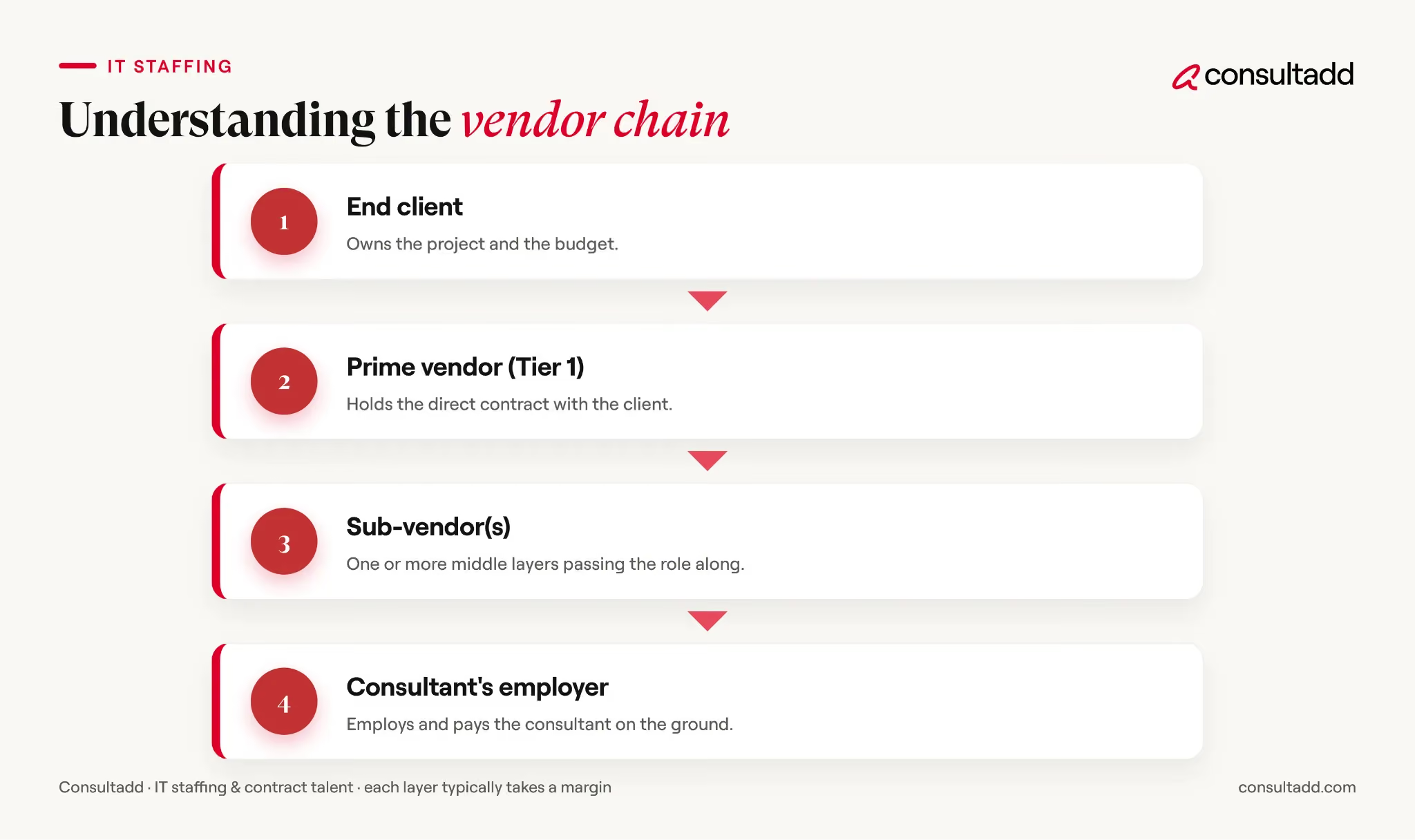
A recruiter with a direct Tier 1 vendor relationship can move a candidate faster and negotiate a better rate than one working three or four layers removed from the end client, where each markup shrinks what's left for the consultant and slows down every approval.
Long vendor chains (four, five, or more layers) are also where compliance risk concentrates, since visibility into who's actually managing the work relationship gets murkier with each added layer. For background on how the underlying arrangement is structured and taxed.
Our detailed guide to what is C2C employment covers the employment side of this same picture.
Key terms every C2C recruiter needs to know
Job postings and daily conversation in this world run on a specific vocabulary. Fluency in these terms is itself a hiring signal:
Recruiters unfamiliar with this vocabulary struggle to operate in the space regardless of general recruiting talent, which is part of why C2C/bench sales roles are typically filled by recruiters with specific prior experience in this exact niche rather than generalist talent acquisition professionals.
C2C recruiter vs other recruiting roles
Neither role is objectively harder, but they reward genuinely different strengths. Bench sales/C2C recruiting rewards speed, network depth, and negotiation stamina across a chain of intermediaries.
Direct-hire recruiting rewards candidate evaluation and employer storytelling. Companies building out a broader recruiting function often need both skill sets on the team, and understanding the difference prevents the common mistake of hiring a strong direct-hire recruiter into a bench sales seat, or vice versa, and being surprised when the fit doesn't work.
Our broader guide to hiring and recruiting strategies covers how different recruiting functions fit into a complete talent acquisition system.
Skills and tools of the role
Vendor and client relationship building. The single highest-leverage skill in this role. Recruiters who cultivate trusted, direct relationships with Tier 1 vendors and hiring managers consistently outperform those relying purely on cold submissions into open postings, because those relationships surface requirements before they're broadly circulated.
Rate negotiation. Every placement involves negotiating a bill rate that has to work across every layer of the vendor chain while still leaving the consultant a competitive take-home rate. This is a genuinely different skill than salary negotiation in direct-hire recruiting, since it involves reasoning through multiple parties' margins simultaneously.
Work authorization fluency. Strong C2C recruiters carry real working knowledge of US visa and status categories, CPT, OPT, STEM OPT, H-1B, H-4 EAD, and green card holders, since a candidate's status directly determines which roles they're eligible for and how urgently a placement needs to move.
Our guides to what is OPT/CPT and H-1B sponsorship for tech professionals cover the specifics recruiters in this space need to understand accurately, not just recognize as acronyms.
Speed and volume management. Contract requirements move fast, and a recruiter is typically managing many active submissions simultaneously, following up relentlessly without letting any single one stall. Organization under volume is as important as any single relationship skill.
Tools of the trade. Contract-focused job boards (Dice remains dominant in this niche, alongside various IT-specific and immigrant-community job boards), vendor management systems (Fieldglass, Beeline, and similar client-side platforms), and informal but powerful hotlist networks, email threads, WhatsApp and Google Groups, where active bench consultants and open requirements circulate constantly.
Compliance: where the role carries real risk
This is the part of the job that separates a durable career from a short one. Every submission carries real compliance weight: misrepresenting a candidate's work authorization status, inflating experience to match a requirement, or obscuring how many vendor layers actually sit in a chain can expose both the recruiter and their agency to serious consequences, including contract termination, legal liability, and reputational damage that follows an agency across the whole vendor network, which is smaller and more interconnected than it looks from outside.
The safest and most durable practice in this role: represent work authorization status accurately and completely, disclose the real vendor chain rather than hiding sub-vendor layers from a client, and never submit a candidate against requirements they genuinely don't meet just to keep pipeline numbers up.
Recruiters and agencies that build a reputation for clean, accurate submissions get preferred access to Tier 1 vendor relationships over time; the ones that don't get filtered out of networks faster than any single bad placement would suggest.
Start Strong With Consultadd
With 15 years in business and 5,000+ successful staffing engagements, we don't just fill roles, we build reliability into your process. We've supported 65 staffing companies in the past year alone and maintain MSAs with industry leaders like Robert Half and TEKsystems.
Here's what working with Consultadd looks like:
- Talent sourced in under 24 hours
- Ready-to-deploy candidates, vetted for experience and compliance
- Lower turnover risk: we match long-term goals, not just short-term needs
- Seamless compliance: visa, documentation, onboarding? Handled.
- Dedicated 1:1 account managers for responsive, personalized support
- Top 100 candidate matches delivered in the past year
- Strong partnerships with universities to tap into fresh, committed talent
- Post-placement support so your investment grows beyond day one
For candidates, your next opportunity is more than just a job title, it's a chance to build skills, gain experience, and move your career forward. At Consultadd, we connect technology professionals with projects and employers that align with their goals, whether they're looking for contract, contract-to-hire, or long-term opportunities.
The tech job market moves fast, but the right guidance can make all the difference. Ready to take the next step in your career journey? Explore Opportunities >>
Key takeaways
- A C2C recruiter places contract IT consultants through corp-to-corp arrangements, typically working from an available consultant outward into a network of vendors, rather than sourcing candidates for one company's open headcount.
- The role overlaps heavily with "bench sales recruiter" and requires fluency in the vendor chain: end client, prime/Tier 1 vendor, and one or more sub-vendor layers, each taking a markup.
- Core vocabulary (hotlist, submission, VMS, prime vendor) and deep familiarity with US work authorization categories are baseline requirements, not advanced skills.
- The role differs meaningfully from direct-hire recruiting in starting point, compensation structure, tools, and pace, and the two skill sets don't automatically transfer between roles.
- Compliance is the defining risk of the job: accurate representation of work authorization, vendor chains, and candidate qualifications protects both the recruiter's career and their agency's standing in a tightly connected industry network.
FAQs
What is a C2C recruiter in simple terms?
A recruiter who places contract IT professionals into roles through corp-to-corp arrangements, typically working through a chain of staffing vendors rather than recruiting directly for one company. The role is closely related to bench sales recruiting, marketing consultants who are between projects into active contract openings.
What is the difference between a C2C recruiter and a bench sales recruiter?
In practice, the terms overlap heavily and are often used interchangeably in job postings. Bench sales specifically emphasizes marketing consultants who are currently "on the bench" (employed but unbilled) to new placements, while "C2C recruiter" more broadly describes anyone working corp-to-corp placements, whether sourcing new candidates or marketing existing bench talent.
What is a prime vendor in C2C recruiting?
A prime vendor, also called a Tier 1 vendor, holds a direct staffing contract with the end client. Recruiters value prime vendor relationships highly because submissions through them move faster and involve fewer markup layers than going through one or more sub-vendors, which sit further from the client and typically shrink both speed and rate.
What skills does a C2C recruiter need?
Strong vendor and client relationship-building, rate negotiation across multiple markup layers, deep familiarity with US work authorization categories (CPT, OPT, H-1B, GC EAD, and others), and the organizational stamina to manage many active submissions at once. Fluency in industry vocabulary and hotlist networks is also a practical requirement.
What tools do C2C recruiters use?
Contract-focused job boards (Dice remains the dominant one in this niche), vendor management systems like Fieldglass and Beeline used by client-side procurement teams, and informal hotlist networks, shared lists of active consultants and open requirements circulated through email and messaging groups across the industry.
Is C2C recruiting risky from a compliance standpoint?
It carries real compliance weight if handled carelessly. Misrepresenting a candidate's work authorization status, inflating qualifications, or hiding vendor chain layers from a client can expose both the recruiter and their agency to legal and reputational consequences. Recruiters who represent submissions accurately build more durable, long-term vendor relationships than those who don't.
.png)


.webp)