.avif)

Introduction
A contract to hire position is a job that starts as a fixed-term contract role, usually through a staffing agency, with the option to become permanent if both sides like what they see.
You work the contract on the agency's payroll, get paid on a set schedule, and after a defined stretch, often three to six months, the client company decides whether to bring you on directly.
That's the short version. The longer version involves pay structure, benefits timing, and a few risks worth knowing before you sign anything.
This guide covers all of it, from how the process actually runs to when the model makes sense and when it doesn't.
TL;DR
- A contract to hire position puts you on a staffing agency's W-2 payroll for a set trial period, usually three to six months, before a possible permanent offer.
- Pay is often hourly and slightly higher than a similar salaried role, but full benefits are usually delayed until conversion.
- Employers use this model to lower the cost of a bad hire and confirm skills and fit before committing to a permanent seat.
- Conversion is never guaranteed. Budget changes, project cancellations, or performance concerns can end things early.
- Before accepting or offering a contract to hire role, get the conversion terms, timeline, and fee structure in writing.
What a contract to hire position actually means
During the contract phase, you're technically employed by a staffing agency, not the company you're working for day to day. The agency handles your paycheck, withholds taxes, and in most cases offers some form of benefits, though these are often thinner than what a direct employee gets.
This is what separates contract to hire from an independent contractor or corp-to-corp arrangement, where the worker operates through their own business entity and files taxes differently.
If you want the fuller breakdown of that distinction, our guide to W2 vs C2C arrangements walks through the tax and compliance side in detail.
The client company sets the work, the schedule, and usually the tools you use. At the end of the agreed period, they decide whether to extend a permanent offer. If they do, you move off the agency's payroll and onto theirs, with whatever salary, benefits, and title come with that.
How the contract to hire process works
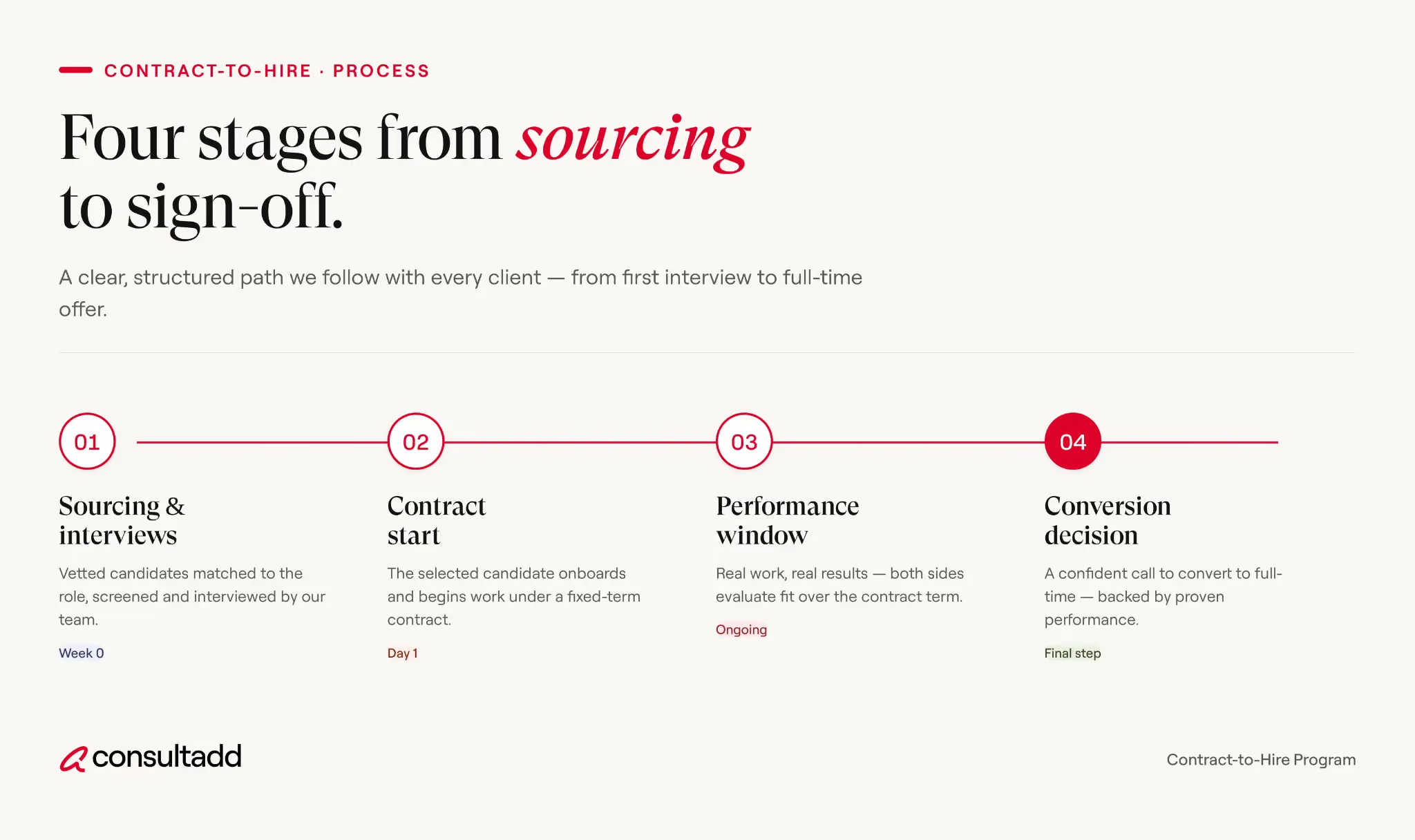
The mechanics are fairly consistent across staffing agencies, though timelines shift by industry and role complexity.
Nothing here is set in stone. Some roles convert in 90 days. Others run a full year before anyone brings up permanent employment. That's usually a sign the contract terms weren't specific enough going in, which is why it's worth asking upfront rather than assuming.
Contract to hire vs direct hire vs corp to corp
These three models get mixed up constantly, and the differences matter for taxes, benefits, and who controls the work.
If you're deciding between these models for a hiring plan rather than a personal job offer, look at how C2C contract hiring solutions fit into recruitment covers where that model tends to outperform contract to hire, particularly for short, specialized projects.
What it means if you're the candidate
1. Pay and benefits
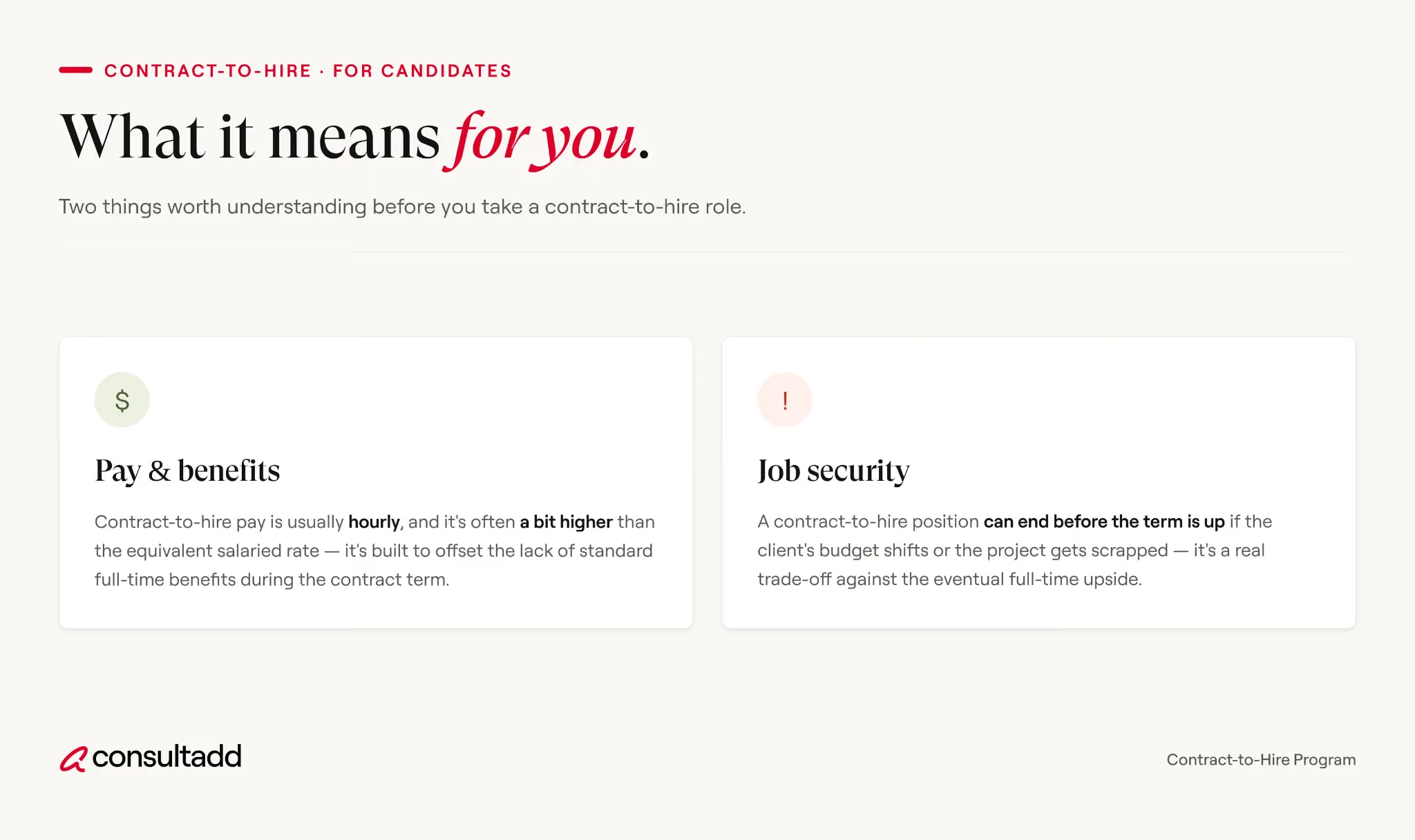
Contract to hire pay is usually hourly, and it's often a bit higher than the equivalent salaried rate to offset the lack of paid time off or employer-sponsored health coverage during the contract window.
Once converted, most of that gap closes since you move onto standard payroll and benefits.
2. Job security
This is the part that makes people nervous, and reasonably so.
A contract to hire position can end before the term is up if the client's budget shifts or the project gets scrapped. It's not personal in most cases.
Still, ask direct questions before accepting:
- What's the actual conversion rate for this client?
- Has anyone converted from this specific role before?
- What happens if the project ends early?
A staffing agency worth working with will answer these plainly instead of dodging.
What it means if you're the employer
The appeal here is risk reduction. The Society for Human Resource Management and the U.S. Department of Labor have both pointed to the high cost of a bad hire, with estimates running from roughly a third of a worker's first-year pay up into the low hundreds of percent once training, lost productivity, and replacement recruiting are factored in.
A contract to hire structure lets you see real output before that cost is locked in. It also helps with roles where the skill requirement is narrow or the project scope is still being defined.
The tradeoff is coordination. You're relying on an agency to manage payroll, compliance, and often the initial screening, so the quality of that agency matters as much as the candidate.
When a contract to hire position makes sense
Common risks and how to avoid them
- Vague conversion terms
Get the timeline and criteria for conversion in writing before day one, not verbally promised somewhere in the interview process.
- Worker misclassification
Contract to hire should be a W-2 arrangement through the agency. If someone tries to run it as 1099 with client-directed hours and tools, that's a compliance problem under IRS worker classification guidance, not a legitimate contract to hire setup.
- Unclear fee structure
Agencies typically charge a conversion fee to the client. Candidates should never be charged a fee to be placed. If a staffing firm asks a candidate for money, that's a red flag worth walking away from.
- No performance feedback loop
If nobody's telling you how you're doing during the contract, you can't course-correct before the conversion decision gets made. Ask for a check-in at the halfway point.
Start Strong With Consultadd
With 15 years in business and 5,000+ successful staffing engagements, we don't just fill roles, we build reliability into your process. We've supported 65 staffing companies in the past year alone and maintain MSAs with industry leaders like Robert Half and TEKsystems.
Here's what working with Consultadd looks like:
- Talent sourced in under 24 hours
- Ready-to-deploy candidates, vetted for experience and compliance
- Lower turnover risk: we match long-term goals, not just short-term needs
- Seamless compliance: visa, documentation, onboarding? Handled.
- Dedicated 1:1 account managers for responsive, personalized support
- Top 100 candidate matches delivered in the past year
- Strong partnerships with universities to tap into fresh, committed talent
- Post-placement support so your investment grows beyond day one
For candidates, your next opportunity is more than just a job title, it's a chance to build skills, gain experience, and move your career forward. At Consultadd, we connect technology professionals with projects and employers that align with their goals, whether they're looking for contract, contract-to-hire, or long-term opportunities.
The tech job market moves fast, but the right guidance can make all the difference. Ready to take the next step in your career journey? Explore Opportunities >>
Key takeaways
- A contract to hire position is a W-2 role through a staffing agency for a set trial period, with a possible permanent offer at the end.
- Pay tends to run slightly higher during the contract phase, while full benefits usually wait until conversion.
- Employers use this model to cut the financial risk of a bad hire before committing to a permanent seat.
- Conversion isn't automatic. Ask about timeline, criteria, and what happens if the project changes.
- Get the conversion terms in writing, and confirm the arrangement is a proper W-2 setup, not disguised 1099 work.
FAQs
Is contract to hire the same as temp to hire?
Yes, these terms are generally used interchangeably. Both describe a trial employment period through a staffing agency with the possibility of a permanent offer at the end.
Do contract to hire employees get benefits?
Some agencies offer limited benefits, like basic health coverage, during the contract phase, but they're usually less comprehensive than what a direct employee receives. Full benefits typically start after conversion.
Can a company end a contract to hire role early?
Yes. If the project ends, the budget changes, or performance doesn't meet expectations, the engagement can end before the full term is up. This is one of the tradeoffs of the model.
How long does a contract to hire position usually last?
Most run three to six months, though some extend closer to a year depending on the role and industry.
Is a contract to hire role good for your resume?
It can be, especially if you gain relevant experience or eventually convert to permanent. Listing it accurately, contract role with the actual company name, is usually the right approach.
What happens if I decline the permanent offer?
Nothing forces you to accept. Some candidates use the contract period to evaluate the company just as much as the company evaluates them, and it's fine to walk away if it's not the right fit.
Can you negotiate salary at the conversion stage?
Yes. Once the client is ready to make a permanent offer, that's a normal point to discuss salary, title, and benefits, especially if your performance during the contract period supports it.


.webp)