
.avif)

Introduction
Most people searching for H1B jobs already know the basics. What they actually want to know is narrower: which employers sponsor, how the lottery odds work now that the rules changed, and whether a $215 registration fee is the only cost involved. It isn't.
As of the FY 2027 cap season, the process looks different than it did two years ago, and a lot of advice floating around staffing forums is out of date.
This article walks through what changed, what stayed the same, and how candidates and hiring teams should approach H1B jobs from here.
TL;DR
- H1B jobs require a bachelor's degree (or equivalent experience) in a field directly tied to the role, plus an employer willing to file a Labor Condition Application and sponsor the petition.
- Starting with the FY 2027 cap season, USCIS moved from a purely random lottery to a wage-weighted selection process, so higher-paid roles now have better odds.
- A $100,000 proclamation fee applies to new H1B petitions for beneficiaries outside the US who need consular processing, but it generally doesn't apply to change-of-status cases filed for people already here.
- Direct employers, staffing firms, and corp-to-corp arrangements are all legitimate paths to an H1B job, and each comes with different tradeoffs around control, pay, and compliance.
- Prevailing wage requirements mean employers can't lowball H1B pay. The Department of Labor publishes the wage floor for every occupation and location.
What counts as an H1B job
An H1B job isn't just any role a foreign national happens to apply for. It's a specialty occupation, meaning the position genuinely requires theoretical or technical expertise in a specific field: software engineering, data science, financial analysis, mechanical engineering, and similar roles.
The employer has to show the job normally requires at least a bachelor's degree in that specific specialty, not just a degree in general.
Our breakdown of H1B visa prerequisites and who qualifies covers the three-way match in more detail: a qualified worker, a genuine specialty occupation, and an employer with a certified LCA.
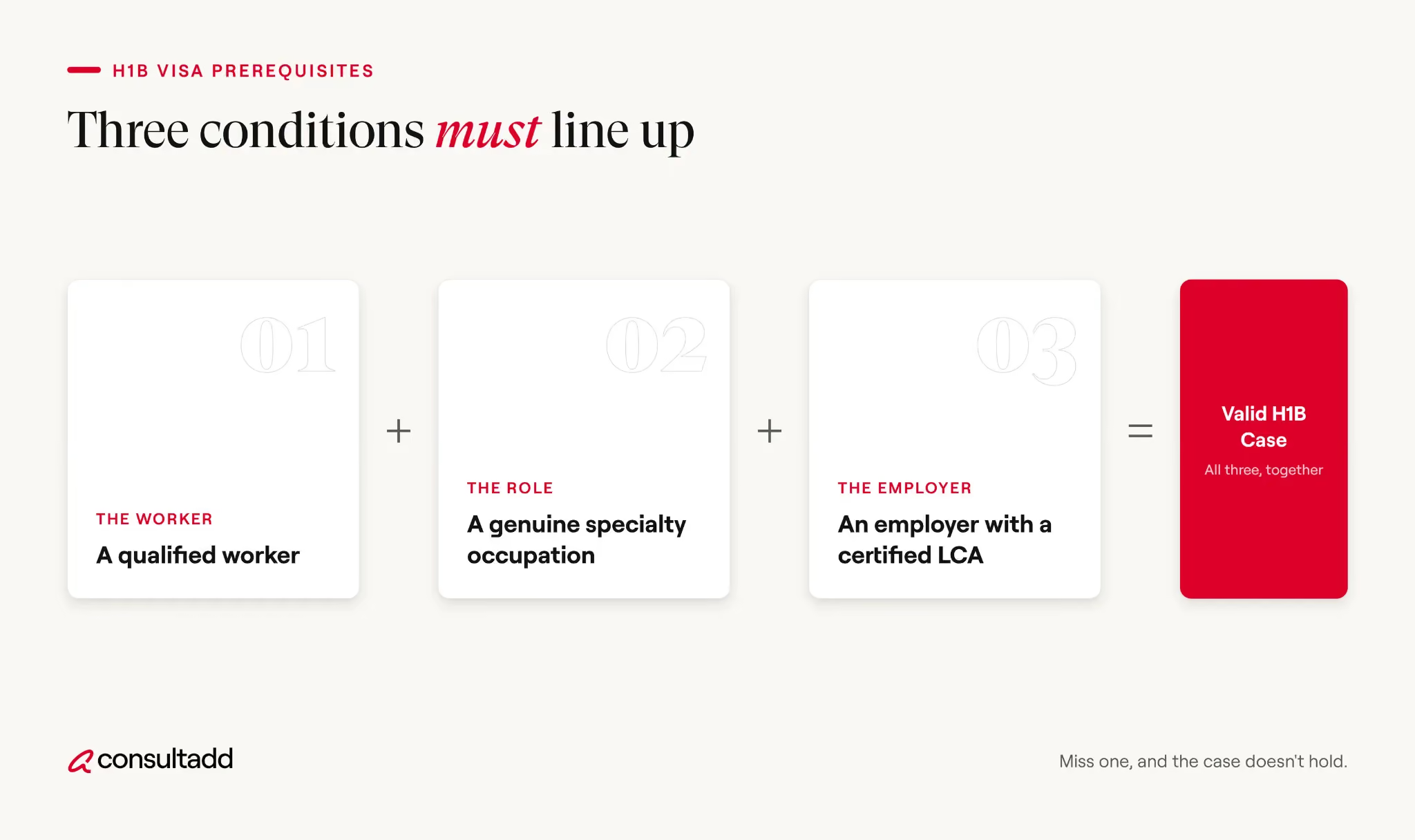
Miss any one of the three, and the petition has a real chance of denial regardless of how strong the candidate looks on paper.
One detail that trips people up: a bachelor's degree isn't strictly mandatory. USCIS allows a "three years of progressive experience equals one year of college" equivalency, so twelve years of documented, relevant experience can substitute for a four-year degree.
It's not a shortcut anyone should count on, but it does keep the door open for experienced candidates without a traditional degree path.
The FY 2027 lottery works differently now
For years, the H1B lottery was a straight random draw. Every registered beneficiary had the same odds regardless of salary. That changed for the FY 2027 cap season.
USCIS now runs a wage-weighted selection process. Registrations tied to higher Department of Labor wage levels get proportionally more entries in the lottery, while Level I (entry-level) registrations get fewer.
USCIS has said the goal is to prioritize allocating visas to higher-skilled and higher-paid workers while still leaving room for employers to sponsor at all wage levels.
Full details on the current cycle sit on USCIS's H-1B cap season page, including the exact registration windows and how the weighted selection is applied. Here's the timeline for the current cap season:
The registration fee stays at $215 per beneficiary, paid by the sponsoring employer through their USCIS online account. That part hasn't changed.
What has changed is the cost conversation around the separate $100,000 proclamation fee. It applies to new H1B petitions filed for beneficiaries who are outside the United States and need consular processing to enter on the visa.
Change-of-status petitions, most commonly F-1 students moving to H1B status while they're already in the country, are generally exempt. That distinction has quietly made in-country candidates far more attractive to employers weighing sponsorship costs.
Worth flagging: the $100,000 fee and the wage-weighted selection method are both being litigated in federal court, so the details could still shift before the FY 2027 season wraps up. Anyone relying on this for a filing decision should confirm the current status directly with USCIS or immigration counsel.
Who actually sponsors H1B jobs
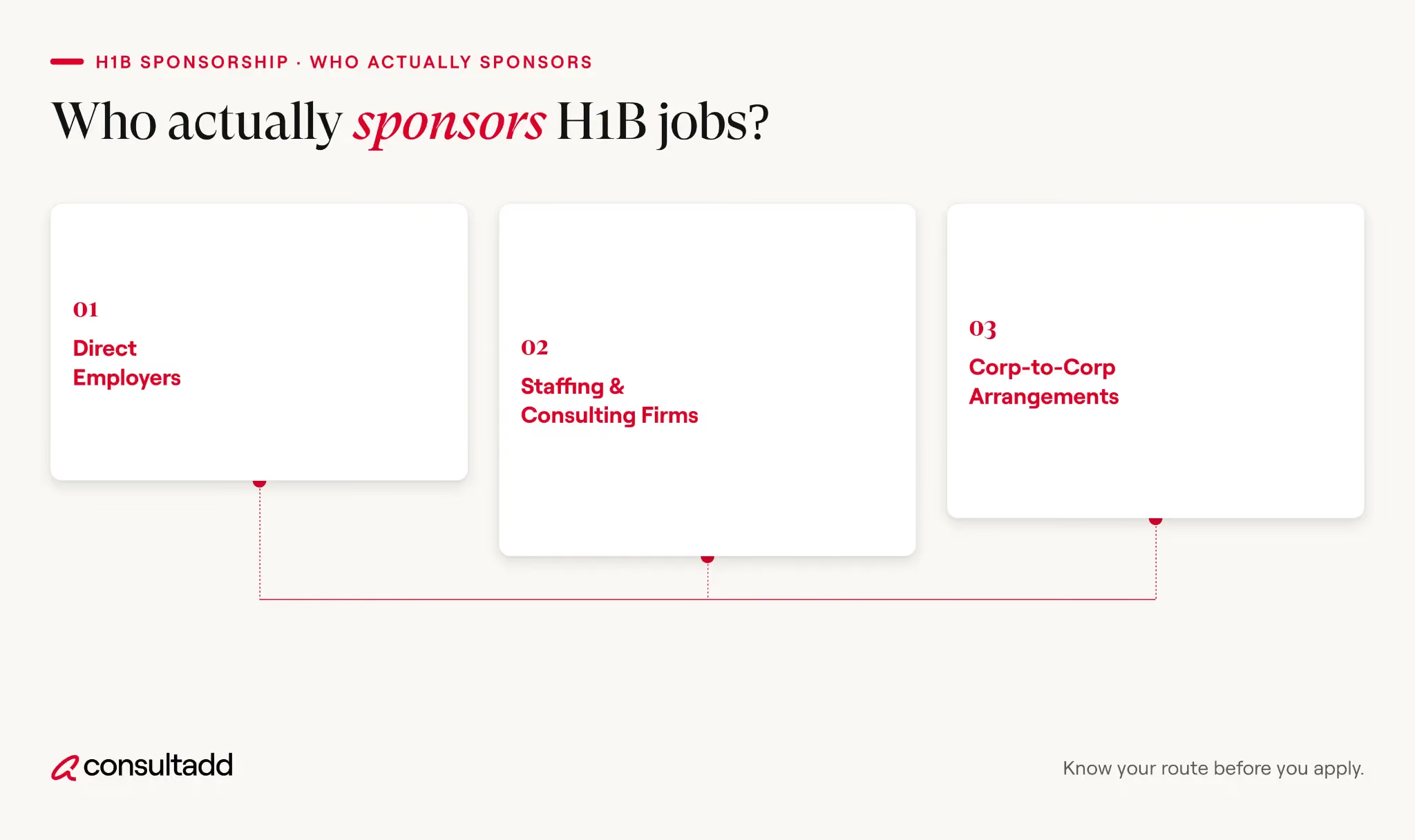
Sponsorship falls into three broad categories, and each one changes what the day-to-day job looks like.
1. Direct employers
- A company hires you outright and files the petition itself.
- This is the model most people picture: Amazon, Google, a regional bank, a hospital system.
- The employer owns the entire process, including LCA filing, wage compliance, and any petition amendments if your role or location changes.
2. Staffing and consulting firms.
- These firms hire H1B talent and place them at client sites, often on a W2 basis.
- The staffing firm is the legal employer of record, files the LCA, and handles compliance, while the candidate works at the end client.
- This is a well-trodden entry point for candidates without a direct offer in hand, and it's how a large share of IT and engineering H1B jobs actually get filled.
Corp-to-corp arrangements.
- Here, the candidate is technically employed through their own corporation or an intermediary vendor, not directly by the staffing firm or end client.
Our comparison of W2 vs C2C for visa holders breaks down which model tends to fit which situation.
Pay: what the prevailing wage rule actually protects
Every H1B job has a wage floor. Before an employer can file an LCA, they have to attest to the Department of Labor that the H1B worker will be paid at least the prevailing wage for that occupation, in that specific metro area, or the actual wage paid to similarly qualified employees at the same company, whichever is higher.
The wage levels run from Level I (entry, roughly the bottom quartile of pay for the occupation and area) up to Level IV (senior, top of the range).
This isn't just a compliance checkbox anymore. Since wage level now factors into lottery odds under the weighted selection process, employers filing at Level I are working with worse odds than they were two seasons ago.
The Department of Labor's OFLC Wage Search tool is the official source for checking what a given role should pay in a given location. It's public, and it's worth checking before assuming an offer is competitive.
Our explainer on what an LCA actually is covers the filing step in plain terms if you've seen the acronym on a job posting and weren't sure what it meant.
Finding H1B jobs without wasting a cap cycle
A candidate can be qualified and still miss out simply by targeting the wrong employers. A few things worth doing before the next registration window opens:
- Check H1B disclosure data before you apply. USCIS and the Department of Labor publish historical filing data, so you can see which companies actually sponsor at volume versus which ones list "will consider sponsorship" but rarely follow through.
- Confirm your work authorization status matches what a role requires. If you're not sure what counts as proof of authorization to work
- Target roles at or above Level II wages where you can. Given the weighted lottery, an offer at a higher wage level genuinely improves your selection odds this cycle, not just your paycheck.
- Don't rule out staffing and consulting firms as a starting point. They file large numbers of LCAs every year specifically because their business model depends on placing visa-holding talent, and that volume can work in a candidate's favor.
Start Strong With Consultadd
With 15 years in business and 5,000+ successful staffing engagements, we don't just fill roles, we build reliability into your process. We've supported 65 staffing companies in the past year alone and maintain MSAs with industry leaders like Robert Half and TEKsystems.
Here's what working with Consultadd looks like:
- Talent sourced in under 24 hours
- Ready-to-deploy candidates, vetted for experience and compliance
- Lower turnover risk: we match long-term goals, not just short-term needs
- Seamless compliance: visa, documentation, onboarding? Handled.
- Dedicated 1:1 account managers for responsive, personalized support
- Top 100 candidate matches delivered in the past year
- Strong partnerships with universities to tap into fresh, committed talent
- Post-placement support so your investment grows beyond day one
For candidates, your next opportunity is more than just a job title, it's a chance to build skills, gain experience, and move your career forward. At Consultadd, we connect technology professionals with projects and employers that align with their goals, whether they're looking for contract, contract-to-hire, or long-term opportunities.
The tech job market moves fast, but the right guidance can make all the difference. Ready to take the next step in your career journey? Explore Opportunities >>
Key Takeaways
- H1B jobs require more than a job offer, the role must qualify as a specialty occupation, and the employer must be willing to sponsor the H1B and meet LCA requirements.
- The FY 2027 lottery is now wage-weighted
- H1B sponsorship can come through different routes like direct employers, staffing/consulting firms, and corp-to-corp arrangements each have different implications for payroll, control, and compliance.
- H1B workers are protected by prevailing wage requirements
- Candidates should research sponsors before applying and considering staffing firms can improve the chances of finding viable H1B opportunities.
FAQs
Do all H1B jobs require a college degree?
Most do, since the role has to qualify as a specialty occupation requiring at least a bachelor's degree in a related field. There's an exception: twelve years of progressive, documented experience can substitute for a degree under USCIS's equivalency rule.
How many H1B visas are available each year?
The regular cap is 65,000, plus an additional 20,000 for candidates with a master's degree or higher from a US institution. Certain employers, like universities and nonprofit research organizations, are exempt from the cap entirely.
Does the $100,000 fee apply to every H1B petition?
No. It applies to new petitions for beneficiaries outside the US who need consular processing. Change-of-status petitions for people already in the country, including many F-1 to H1B transitions, are generally exempt.
Can a staffing agency sponsor an H1B visa?
Yes. Staffing and consulting firms sponsor H1B workers regularly and place them at client sites. The firm handles the LCA and petition, and the worker is typically employed on a W2 basis by the staffing firm.
What's the difference between H1B sponsorship and just getting hired?
Getting hired means an employer wants you. Sponsorship means that the employer is also willing to file the LCA, register you for the lottery, and cover the legal and administrative work tied to the visa. Not every employer that wants to hire you is willing to do that.
Why did my registration odds change this year?
Starting with the FY 2027 cap season, USCIS moved to a wage-weighted lottery. Registrations tied to higher Department of Labor wage levels receive more entries, so identical candidates at different wage levels no longer have identical odds.
Is the prevailing wage the same everywhere?
No. It varies by occupation, wage level, and metro area. A software engineer role in San Francisco has a different prevailing wage floor than the same title in a smaller market, which is why the Department of Labor's wage tool is location-specific.
.webp)



.webp)
