

Introduction
The H-1B is the visa everyone in tech talks about and surprisingly few people can accurately describe qualifying for. The h1b visa prerequisites break into three sets: the worker needs at least a bachelor's degree (or its equivalent) in a field related to the job, the job itself must be a specialty occupation that requires such a degree, and the employer must commit to wage and working-condition rules certified by the Department of Labor. Miss any one of the three and there's no petition worth filing.
And 2026 raised the stakes on getting this right. The lottery is no longer purely random: as of February 27, 2026, selection is wage-weighted, giving higher-paid roles more chances.
A $100,000 proclamation fee now attaches to many petitions for workers outside the US. The margin for casual, hopeful applications has essentially disappeared.
This guide walks through each prerequisite in detail, the registration and lottery mechanics, the full cost picture, and what the new rules mean for who actually gets selected.
TL;DR
- Three prerequisite sets must align: a qualified worker (bachelor's or equivalent in a related field), a qualifying job (specialty occupation), and a compliant employer (certified LCA, prevailing wage).
- Work experience can substitute for education under the 3-for-1 rule: three years of progressive, relevant experience counts as one year of university study.
- The annual cap remains 85,000 (65,000 regular plus 20,000 for US master's degree holders), with universities and research nonprofits exempt.
- The lottery is now wage-weighted: a Level IV wage offer gets four entries, Level I gets one, fundamentally favoring senior, higher-paid roles.
- Budget realistically: $215 registration, roughly $2,000 to $5,000+ in standard filing fees, and a $100,000 proclamation fee for many beneficiaries processed abroad, though change-of-status cases inside the US (like F-1 students) are generally exempt.
The three prerequisite sets at a glance
People tend to ask "do I qualify for an H-1B?" as if it were a personal credential, like a driver's license. It isn't. Eligibility is a three-way match, and the USCIS specialty occupations page frames all three:
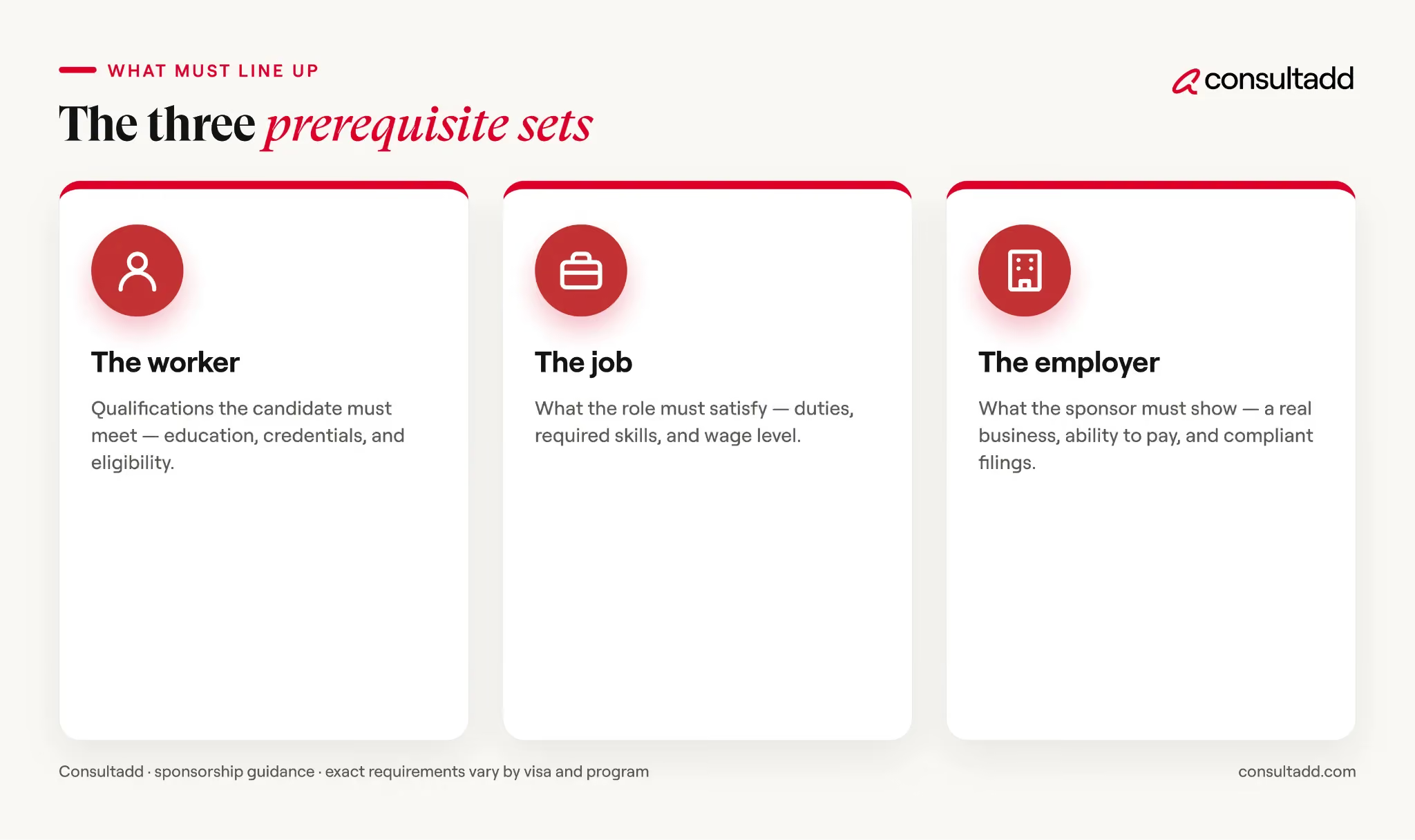
That's why the practical first prerequisite, before any of the legal ones, is landing an offer from an employer willing to sponsor, a process we covered from the company side in our guide to H-1B sponsorship for tech professionals.
Worker prerequisites: degree, equivalency, and licensure
The baseline is a US bachelor's degree or higher, or a foreign degree evaluated as equivalent, in a field directly related to the position. "Related" carries real weight: a computer science degree supports a software engineering role cleanly; a marketing degree supporting that same role invites a challenge, unless coursework and experience bridge the gap convincingly.
- No degree? There's still a path. USCIS recognizes education-experience equivalency under the 3-for-1 rule: three years of progressively responsible, documented work experience in the specialty substitute for one year of university education.
- Twelve years of qualifying experience can therefore stand in for a full bachelor's degree, though these cases demand meticulous documentation, credential evaluations, and often expert opinion letters. Combination cases (two years of college plus six years of experience) work the same math.
- Two more worker-side checks. If the profession requires a state license to practice, medicine, law, some engineering roles, the beneficiary generally needs that license or a temporary permit. And while there's no age, nationality, or salary prerequisite on the worker personally, the beneficiary's information must be registered accurately in the lottery; a passport typo or wrong birthdate can invalidate a selection before the case even begins.
Job prerequisites: what counts as a specialty occupation
The H-1B was built for specialty occupations: roles where a bachelor's degree in a specific field is the normal minimum entry requirement. Software engineers, data scientists, financial analysts, architects, physicians, university researchers, the classic profile is theoretical and practical application of a body of highly specialized knowledge.
USCIS evaluates the position, not the title. A "systems analyst" job whose actual duties read like general IT support will struggle; a modestly titled role with genuinely specialized duties can succeed.
The strongest petitions show at least one of: the degree is normally required across the industry for this role, the employer normally requires it, or the duties are so specialized that they're associated with degree-level knowledge.
Employer prerequisites: the LCA and prevailing wage
Before any petition reaches USCIS, the employer must obtain a certified Labor Condition Application from the Department of Labor. The LCA is a set of enforceable promises:
- Pay the required wage: the higher of the prevailing wage for the occupation in that geographic area or the actual wage paid to similar employees.
- No adverse effect: working conditions of US workers in similar roles won't be undermined.
- No strike or lockout in the occupation at the worksite.
- Notice: the employer informs its workforce of the filing.
The prevailing wage system sorts each occupation-location combination into four wage levels, from Level I (entry) to Level IV (fully competent/senior). Until this year, that level mattered mainly for compliance. Now it decides lottery odds, which we'll get to in a moment.
Beyond the LCA, the employer must demonstrate a genuine employer-employee relationship, the right to control the work, which draws extra scrutiny in third-party placement arrangements common in consulting and staffing.
Documented control, end-client letters, and clean contracts are what separate approvable staffing-model petitions from denials, one more reason candidates working through consulting employers should choose established ones.
Our review of the best IT staffing firms covers what operational maturity looks like.
The lottery: registration, wage weighting, and timing
Demand outruns the 85,000-visa cap every year, so meeting the prerequisites earns you a lottery ticket, not a visa. Here's the current annual rhythm, using the FY 2027 cycle that just ran:
- Registration (early March). Employers submit electronic registrations, $215 per beneficiary, through USCIS online accounts. The FY 2027 window ran March 4-19, 2026. New this cycle: registrations must report the offered wage level.
- Selection (late March). USCIS runs the selection and issues notices; FY 2027 notices went out by March 31, 2026.
- Petition filing (April 1 onward). Selected registrants file the full I-129 petition within a window of at least 90 days, with the certified LCA and all evidence.
- Start date (October 1). Approved cap cases begin work with the new fiscal year, with cap-gap protections bridging eligible F-1 students.
The structural change is how selection works. Effective February 27, 2026, the random lottery became wage-weighted:
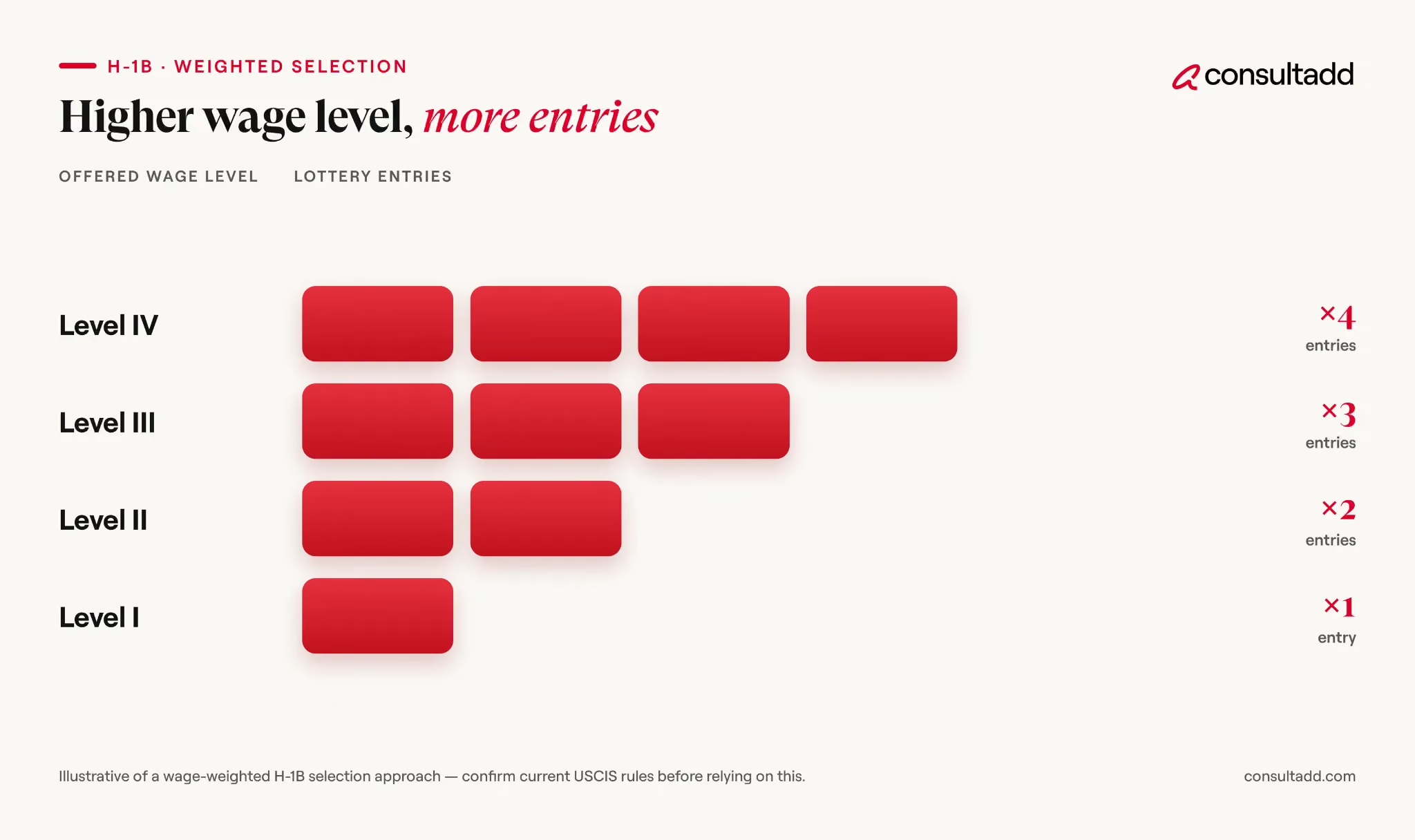
A senior engineer offered a Level IV wage now has four times the selection odds of an entry-level Level I candidate, and if one beneficiary has multiple registrations at different levels, USCIS assigns the lowest.
The strategic consequences are already visible: employers are leveling roles honestly upward where justified, entry-level international hiring is harder, and the US master's cap (20,000 additional selections for US advanced-degree holders) matters more than ever for new graduates.
Costs in 2026, including the $100K question
The honest budget conversation, because the prerequisites now include financial ones that reshape sponsorship decisions:
That last line changed the industry's math, and its boundaries matter enormously: the fee targets new cap-subject petitions for workers abroad, while change-of-status cases inside the US, the classic F-1 student moving to H-1B, are generally exempt. The result is a visible tilt toward hiring international talent already in the US on student or other statuses.
We analyzed the ruling, the exemptions, and the employer response in depth in our breakdown of the H-1B $100K fee ruling.
Pulling it together: the prerequisites in 2026 are the same three-way match they've always been, worker, job, employer, wrapped in a selection system that now rewards seniority and wage level, and a fee structure that rewards being physically in the US already.
Candidates who understand that landscape early, choosing degree paths, building experience toward Level II+ roles, and targeting sponsor-ready employers, enter the lottery with structurally better odds than those who discover the rules in March.
Start Strong With Consultadd
With 15 years in business and 5,000+ successful staffing engagements, we don't just fill roles, we build reliability into your process. We've supported 65 staffing companies in the past year alone and maintain MSAs with industry leaders like Robert Half and TEKsystems.
Here's what working with Consultadd looks like:
- Talent sourced in under 24 hours
- Ready-to-deploy candidates, vetted for experience and compliance
- Lower turnover risk: we match long-term goals, not just short-term needs
- Seamless compliance: visa, documentation, onboarding? Handled.
- Dedicated 1:1 account managers for responsive, personalized support
- Top 100 candidate matches delivered in the past year
- Strong partnerships with universities to tap into fresh, committed talent
- Post-placement support so your investment grows beyond day one
For candidates, your next opportunity is more than just a job title, it's a chance to build skills, gain experience, and move your career forward. At Consultadd, we connect technology professionals with projects and employers that align with their goals, whether they're looking for contract, contract-to-hire, or long-term opportunities.
The tech job market moves fast, but the right guidance can make all the difference. Ready to take the next step in your career journey? Explore Opportunities >>
Key takeaways
- H1B visa prerequisites form a three-way match: a worker with a bachelor's or equivalent in a related field, a specialty occupation genuinely requiring it, and an employer with a certified LCA paying the prevailing wage.
- No degree isn't necessarily disqualifying: the 3-for-1 equivalency rule lets twelve years of documented, progressive experience stand in for a bachelor's.
- Meeting the prerequisites earns a lottery entry, not a visa: the 85,000 cap persists, and selection is now wage-weighted, with Level IV offers receiving four entries to Level I's one.
- The FY cycle runs March registration ($215), late-March selection, April-June petition filing, and October start dates, with universities and research nonprofits exempt from the cap entirely.
- The $100,000 proclamation fee applies to many petitions for beneficiaries abroad but generally not to change-of-status cases inside the US, sharply favoring candidates already here on F-1 or similar status.
FAQs
What are the basic prerequisites for an H1B visa?
Three things must align: the worker holds at least a bachelor's degree (or equivalent experience) in a field related to the job, the position qualifies as a specialty occupation that normally requires such a degree, and the sponsoring employer obtains a certified Labor Condition Application committing to the prevailing wage. The employer files everything; individuals cannot self-petition for a standard H-1B.
Can I get an H1B without a bachelor's degree?
Possibly, through equivalency. USCIS accepts three years of progressively responsible, well-documented work experience in the specialty as equal to one year of university education, so twelve qualifying years can substitute for a full degree. These cases succeed with thorough documentation, credential evaluations, and often expert opinion letters.
Is there a minimum salary requirement for the H1B?
There's no single dollar figure; the employer must pay the higher of the prevailing wage for that occupation and location or the actual wage paid to similar employees. Wages sort into Levels I through IV, and since February 2026 the offered level also determines lottery odds, with higher levels receiving more selection entries.
How does the new wage-weighted H1B lottery work?
Instead of one random entry per registration, beneficiaries receive entries matching their offered wage level: four for Level IV, three for Level III, two for Level II, one for Level I. If someone has multiple registrations at different levels, USCIS assigns the lowest. The change structurally favors senior, higher-paid roles over entry-level offers.
Who is exempt from the H1B cap?
Institutions of higher education, nonprofits related to or affiliated with them, and nonprofit or governmental research organizations can file cap-exempt petitions year-round, with no lottery. Physicians with certain waivers and beneficiaries previously counted against the cap (like transfers and extensions) also sit outside the annual limit.
Does the $100,000 fee apply to every H1B petition?
No. The proclamation fee, effective for petitions filed on or after September 21, 2025, targets new petitions for beneficiaries outside the United States who require consular processing. Change-of-status cases filed for people already in the US, most notably F-1 students moving to H-1B, are generally exempt, which is why in-country candidates have become significantly more attractive to sponsors.
.png)

.webp)