
.avif)

Introduction
There's a version of the H1B timeline that fits in one sentence, and a real one that doesn't. The one-sentence version is "premium takes about three weeks, regular takes a few months."
The real one depends on which USCIS service center gets your file, whether you get a request for evidence, and whether you need a visa stamp abroad. Those variables can swing your timeline by half a year.
The H1B processing time is the stretch USCIS takes to decide your I-129 petition, and in 2026 it splits sharply into two lanes.
Premium processing buys you a guaranteed decision in 15 business days. Regular processing takes months, and how many depends heavily on factors outside your control.
This guide breaks down both lanes, walks through the full timeline from registration to start date, and explains what actually moves the needle, so you can plan around the wait instead of being surprised by it.
TL;DR
- H1B processing time splits into two lanes: premium (15 business days) and regular (several months, varying by service center).
- Premium processing costs $2,965 as of 2026 and guarantees a decision within 15 business days, but a decision can be an approval, a denial, or a request for evidence.
- Regular processing times vary widely by service center and case type, so always check the official USCIS processing times tool for your exact situation.
- USCIS processing is only part of the journey. Consular visa stamping can add weeks, while a change of status inside the US avoids that step.
- Processing times and fees change often, so confirm current figures on uscis.gov and treat this as general information, not legal advice.
How long is the H1B processing time?
The honest answer is that it depends on which lane you choose and where your petition lands. There are two processing options, and they produce very different waits.
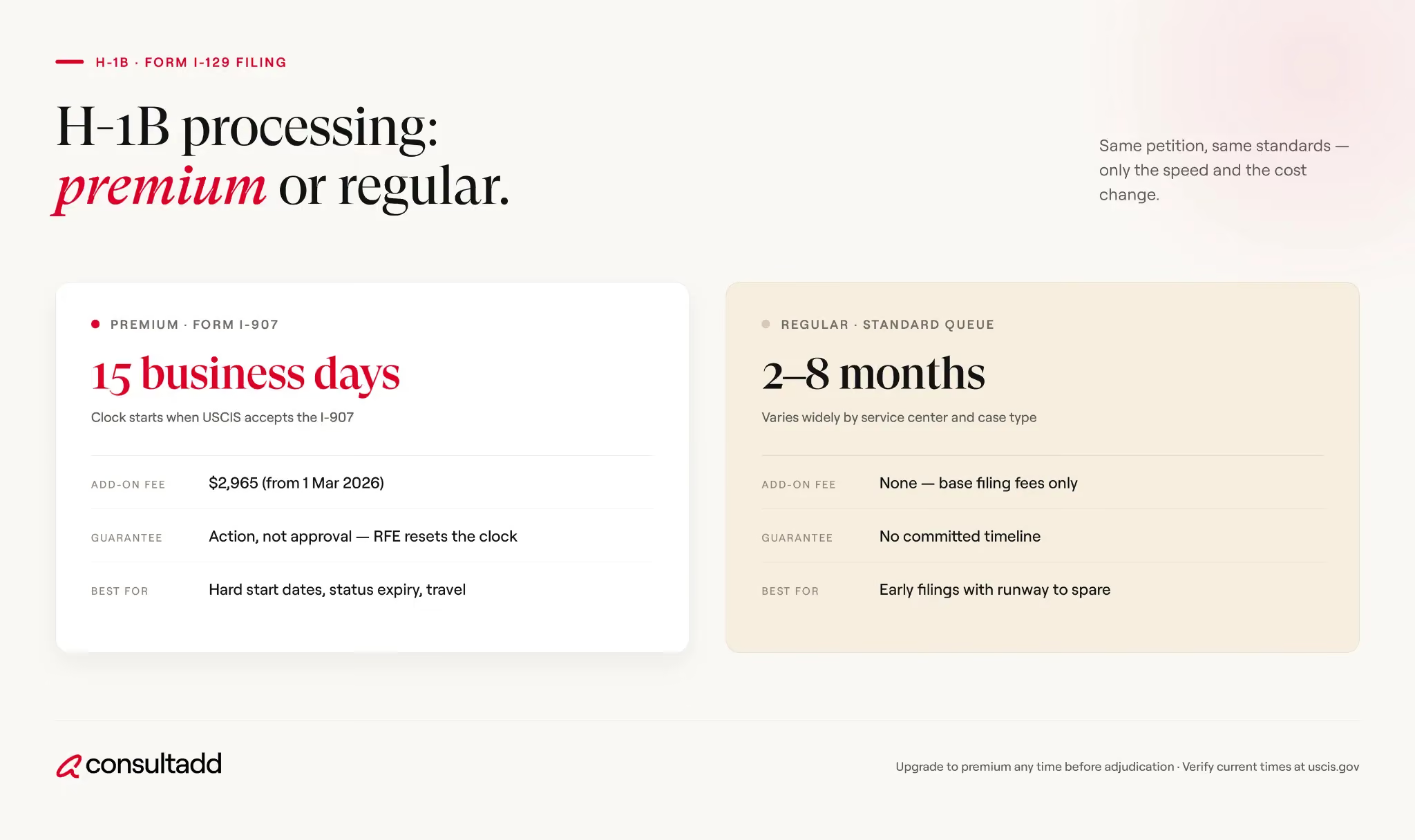
Premium processing gives you a decision within 15 business days, which works out to roughly three calendar weeks. Regular processing takes months, and the exact number varies significantly by USCIS service center and the type of case you file.
The single most useful thing you can do is check the official USCIS case processing times tool for Form I-129 at your assigned service center. General ranges help you plan, but only the live tool reflects your actual situation.
Premium processing: 15 business days
Premium processing is the only way to remove timing uncertainty from the USCIS stage, which is why so many employers use it.
For an additional fee of $2,965 in 2026, USCIS commits to taking action on your I-129 within 15 business days. Note that these are business days, Monday through Friday excluding federal holidays, so it's about three calendar weeks rather than two.
You file Form I-907 either alongside your petition or to upgrade a pending one.
Here's the catch that trips people up: premium processing speeds up action, not approval. Within those 15 business days, USCIS might approve your case, deny it, or issue a request for evidence.
If an RFE comes, the clock stops and restarts once you respond. So premium removes uncertainty about when you'll hear back, not about what the answer will be.
The service is highly reliable on its promise. USCIS meets the 15-day commitment in the large majority of cases and refunds the fee in the rare instances it doesn't, while continuing to expedite the case.
One timing note: premium is typically unavailable for cap-subject initial petitions during a short window right after the April filing period opens.
Regular processing: why it varies so much
If you skip premium, your wait comes down largely to which service center processes your petition, and you don't get to choose it.
Different service centers move at different speeds for the same petition type, and the gap can be substantial. Depending on the center and the case type, regular H1B processing in 2026 has ranged from a few months to considerably longer.
Some recent USCIS estimates have put completion for the bulk of H1B I-129 petitions at around 10 to 11 months, while faster service centers have cleared comparable cases in a fraction of that time.
That wide spread is exactly why a single number is misleading. Your petition goes where USCIS routing sends it, and that assignment alone can mean the difference between a spring and a fall start date.
Because these estimates shift month to month, treat any range as a rough guide and confirm the current figure on the USCIS tool. When a firm start date is on the line, many employers simply pay for premium rather than gamble on regular timelines.
The full H1B timeline, step by step
USCIS processing is only one segment of the journey. For a first-time cap-subject applicant, the full path stretches across most of a year. Here's how it fits together.
Two paths diverge after approval. If the worker is already in the US and eligible, a change of status lets them begin without leaving the country, avoiding consular delays. If they need a visa stamp from a US consulate abroad, appointment backlogs can add anywhere from two to eight weeks depending on the location.
This is why forward planning matters so much. The petition decision is the part people watch, but the surrounding steps often consume more of the calendar.
What affects your H1B processing time
Beyond the premium-versus-regular choice, a handful of factors determine how long you actually wait.
- Service center assignment is the big one for regular processing, since speeds differ by facility and you can't pick.
- Requests for evidence are the other major variable. An RFE can add months to any case, regardless of service center, because the processing clock pauses while you gather and submit a response.
- Filing a complete, well-documented petition up front is the best defense against one.
- Case type matters too.
- A change of status handled entirely within the US skips consular processing, while a case requiring a visa stamp abroad adds the embassy appointment step.
- And timing within the year plays a role, since cap season creates predictable crunches.
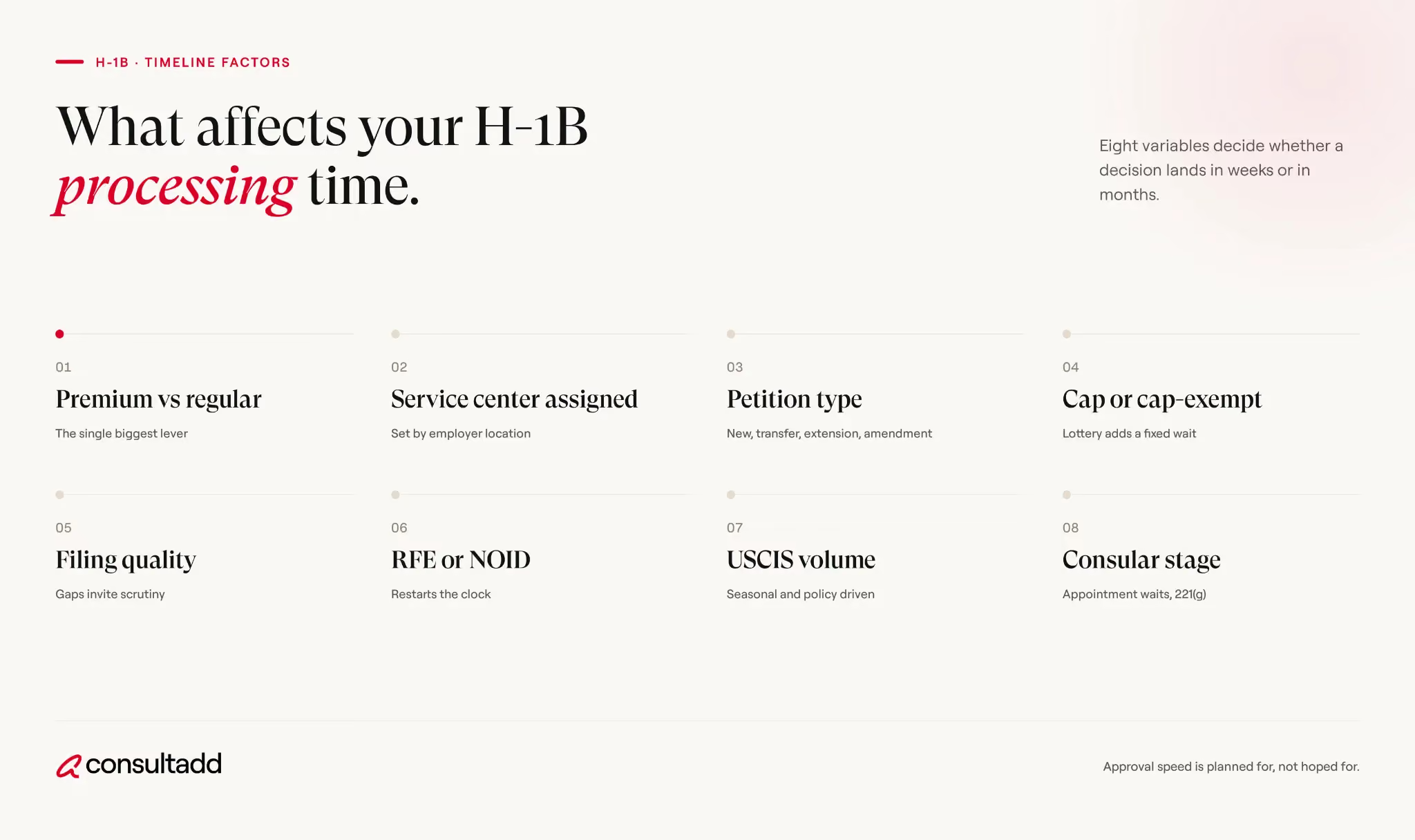
The practical takeaway: you control documentation quality and whether you pay for premium. You don't control your service center or embassy backlogs, so build slack into your plans for the parts you can't influence.
Recent changes that affect timing in 2026
The H1B rules have shifted noticeably over the past two years, and a few changes touch cost and planning.
A 2025 modernization rule reshaped several mechanics, including a beneficiary-centric selection system for the lottery and clarified adjudication standards.
On the fee side, premium processing rose to $2,965 under a Department of Homeland Security final rule effective March 1, 2026, and the H1B registration fee climbed sharply compared with prior years.
The most talked-about change is a September 2025 measure introducing a $100,000 fee tied to certain new H1B petitions. Reporting indicates it targets specific new filings rather than extensions, transfers, amendments, or changes of status, and the policy has faced legal challenges.
Because a rule like this can shift quickly, confirm its current status and scope on the official USCIS H1B page or with an immigration attorney before you rely on it.
None of these directly change the 15-business-day premium promise, but they affect the cost and strategy around your filing.
How to plan around H1B processing times
Since you can't control every variable, good planning is about managing the ones you can and building a buffer for the rest.
Start early and file a clean petition.
- Complete documentation is the single best way to avoid an RFE, which is the most common cause of a blown timeline.
- Decide on premium processing deliberately: if a hard start date, travel, or a cap-gap issue is in play, the extra fee often buys peace of mind worth far more than its cost.
For companies and workers using staffing arrangements, the employment model shapes both compliance and planning.
Consultadd's guide to corp-to-corp visa sponsorship for H1B jobs explains how that structure works, and its breakdown of W2 versus C2C for visa holders covers who carries responsibility in each setup.
A closing reminder, because this is immigration and the details move. Processing times, fees, and rules change frequently, sometimes mid-year.
Treat this guide as a map, verify current figures on uscis.gov, and consult a qualified attorney for advice on your specific case. Plan for the timeline you can't control, and the wait becomes manageable rather than nerve-wracking.
Start Strong With Consultadd
With 15 years in business and 5,000+ successful staffing engagements, we don't just fill roles, we build reliability into your process. We've supported 65 staffing companies in the past year alone and maintain MSAs with industry leaders like Robert Half and TEKsystems.
Here's what working with Consultadd looks like:
- Talent sourced in under 24 hours
- Ready-to-deploy candidates, vetted for experience and compliance
- Lower turnover risk: we match long-term goals, not just short-term needs
- Seamless compliance: visa, documentation, onboarding? Handled.
- Dedicated 1:1 account managers for responsive, personalized support
- Top 100 candidate matches delivered in the past year
- Strong partnerships with universities to tap into fresh, committed talent
- Post-placement support so your investment grows beyond day one
For candidates, your next opportunity is more than just a job title, it's a chance to build skills, gain experience, and move your career forward. At Consultadd, we connect technology professionals with projects and employers that align with their goals, whether they're looking for contract, contract-to-hire, or long-term opportunities.
The tech job market moves fast, but the right guidance can make all the difference. Ready to take the next step in your career journey? Explore Opportunities >>
Key takeaways
- H1B processing time splits into premium (15 business days) and regular (several months), with regular timelines varying widely by service center.
- Premium processing costs $2,965 in 2026 and guarantees USCIS action within 15 business days, but that action can be an approval, denial, or request for evidence.
- Always check the official USCIS processing times tool for your form and service center, since general ranges shift often.
- USCIS processing is only one segment; consular visa stamping adds weeks, while a change of status inside the US avoids it.
- Fees and rules changed in 2025 and 2026, so verify current figures on uscis.gov and treat this as general information, not legal advice.
FAQs
How long does H1B processing take in 2026?
It depends on your processing type and service center. Premium processing delivers a decision in 15 business days, about three weeks. Regular processing takes months and varies significantly by service center and case type. Check the official USCIS processing times tool for the current estimate on your specific form and location.
What is H1B premium processing and how much does it cost?
Premium processing is an optional service where USCIS commits to acting on your I-129 petition within 15 business days. In 2026, it costs an additional $2,965, filed using Form I-907. It's popular when an employer has a firm start date, because it removes uncertainty about when USCIS will respond.
Does premium processing guarantee approval?
No. Premium processing guarantees only that USCIS will take action within 15 business days. That action could be an approval, a denial, or a request for evidence. If an RFE is issued, the clock pauses and restarts once you respond, so premium speeds up the timeline, not the outcome.
Why do H1B processing times vary so much?
The biggest reason is service center assignment, since different USCIS facilities process the same petition type at different speeds, and you can't choose which one handles your case. Requests for evidence, case complexity, and whether you need consular processing also affect the total time. This is why a single average can be misleading.
Can I work while my H1B petition is pending?
Generally, you can only begin H1B employment once the petition is approved and you've reached your authorized start date, which for cap-subject cases is usually October 1. Some workers already in the US on another status may have specific bridging options, so check your exact situation with an immigration attorney.
How can I check my H1B case processing time?
Use the official USCIS "Check Case Processing Times" tool online, selecting Form I-129 and your assigned service center. You can also track your specific case status with your receipt number. These official tools are more reliable than general estimates, since USCIS updates them regularly.
.webp)



.webp)