.avif)

Introduction
The word "Python" on a resume tells you almost nothing on its own. It sits on the profile of someone who automates spreadsheets for $80,000, and on the profile of someone who ships production machine learning models for triple that. Same skill listed. Very different hires.
That's the real challenge of hiring a Python developer in 2026. Demand is high, the title is broad, and pay ranges are wide enough to be confusing. Knowing what you actually need, what it should cost, and how to screen for it is what separates a good hire from an expensive mismatch.
This guide breaks down the current market, the skills worth screening for, realistic costs, and a hiring process that holds up. Whether you're filling one role or scaling a team, it should save you time and a few costly mistakes.
TL;DR
- Python is the most in-demand programming language in 2026, which makes strong developers competitive to hire and slow to land.
- "Python developer" covers a wide range, so define whether you need backend, data engineering, or ML work before you post.
- US salaries run roughly $75K for juniors to $170K+ for senior and ML specialists, with contractors around $60 to $150+ per hour.
- Add 20 to 35% on top of base pay for total cost, and expect agency placement fees of 15 to 25% of first-year salary.
- Screen for demonstrated skills, not just credentials, since most hiring managers now weigh portfolios over degrees.
Why hiring a Python developer is harder than it looks
Python isn't just popular. It's the most widely used programming language going into 2026, leading the TIOBE index by a wide margin over every other language. That popularity is exactly why hiring is competitive.
The demand comes from where software is heading. The major machine learning frameworks, including PyTorch, TensorFlow, and scikit-learn, are Python-native, so nearly every company building AI-enabled products needs Python engineers. Web backends, data pipelines, and automation all lean on it too.
The supply side isn't keeping pace. The Bureau of Labor Statistics projects software developer roles to grow 15% through 2034, with roughly 129,200 openings a year, and the qualified candidate pool isn't expanding at the same rate. That gap is why a strong senior developer can field several offers at once.
So the difficulty isn't finding people who write Python. It's finding the right one, fast, before someone else does.
What a Python developer actually does
Before you write the job post, get clear on the role, because two very different jobs often hide behind the same title.
A Python developer builds systems that run in production. Think APIs, web applications, backend services, and data pipelines. The priority is reliability: code that holds up under real traffic and real data.
A data scientist, by contrast, builds models and analysis, often in notebooks, optimizing for the right answer rather than production stability. Both write Python. They're not interchangeable, and hiring one when you needed the other is a common and expensive error.
Within Python development itself, there are lanes. Backend web work leans on Django, FastAPI, or Flask. Data engineering centers on tools like Airflow and Spark.
ML engineering means production model deployment with frameworks like PyTorch. Name the lane you need before you start, and your whole process gets sharper.
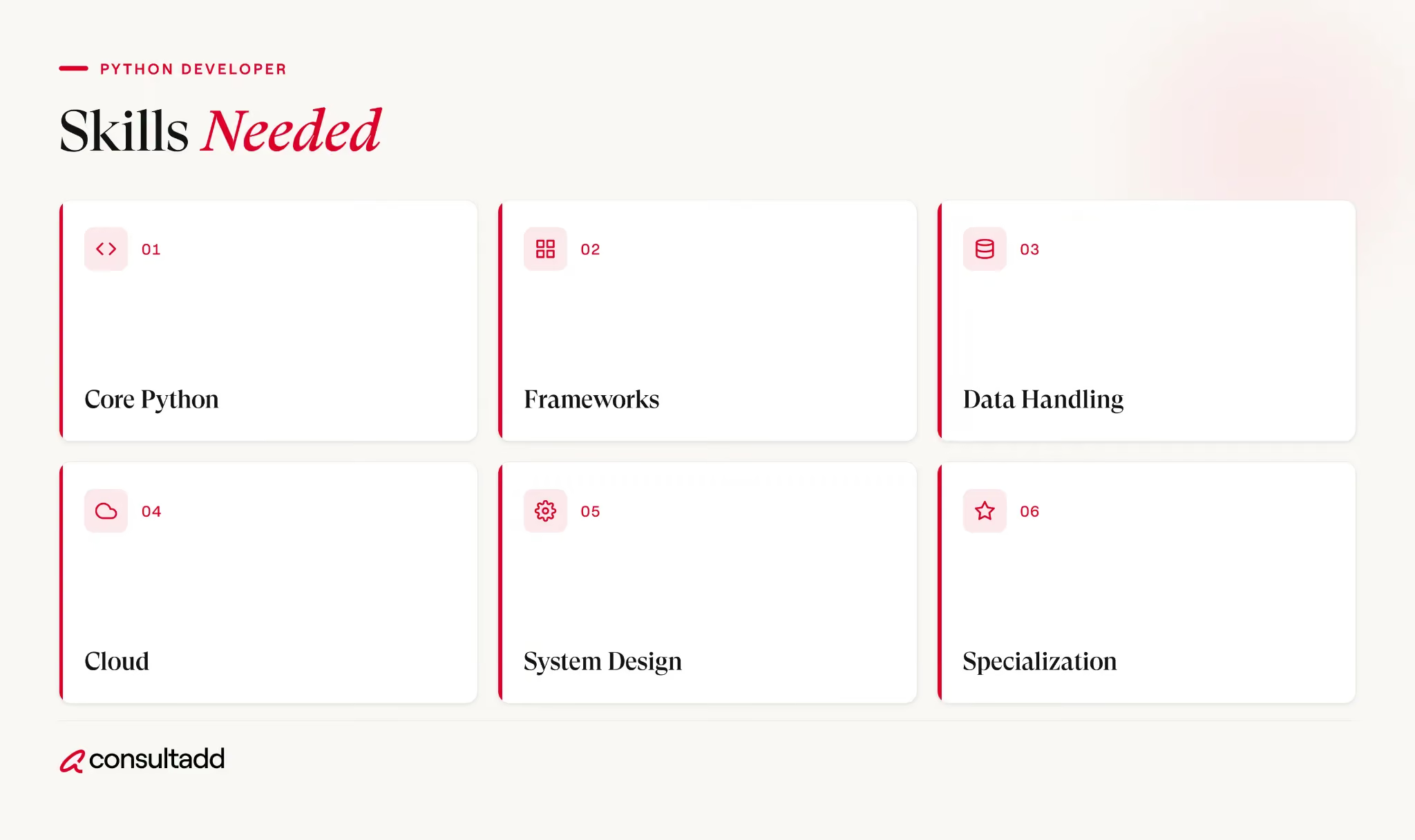
The skills to screen for
Once you know the lane, you can screen for what matters instead of a vague wish list. Here's how the main skill areas break down.
A word of caution on job descriptions. Listing Python, Django, pandas, ML pipelines, and cloud infrastructure all in one post is a fast way to attract nobody, because that's several people's jobs. Prioritize the two or three skills the role genuinely needs.
And screen for proof, not pedigree. A large share of hiring managers now weigh portfolio evidence over where a candidate studied, so practical assessments and past work tell you more than a degree line.
Consultadd's guide to technical recruitment goes deeper on building that kind of skills-first evaluation for engineering roles.
Contract vs full-time: choosing the model
Not every Python need is a full-time hire. The right model depends on the shape of the work, not on which sounds cheaper.
Contract works well for a defined build with a real deadline, like a FastAPI rewrite or a new data pipeline. Full-time makes sense when you need someone to own a system for years and grow with the codebase.
There's also a middle path. Contract-to-hire lets you evaluate someone on real work before committing to a permanent offer, which lowers the risk of a bad hire.
Consultadd's breakdown of the contract-to-hire model covers when that "try before you buy" approach pays off.
A hiring process that actually works
A strong process protects you from both slow hiring and bad hiring. Here's a sequence that keeps things moving without cutting corners.
- Define the role by outcomes.
Write down what the person must be able to build, and pick the two or three skills that actually matter. Skip the kitchen-sink job post.
- Screen resumes for evidence.
Look for shipped projects and relevant frameworks, not just keyword matches.
- Run a practical skills assessment.
A real coding exercise or work sample exposes the gap between claimed and actual ability faster than any interview question.
- Interview for depth and design.
For mid and senior roles, probe system design and past decisions, not just syntax.
- Move quickly on strong candidates.
Good developers get multiple offers. Set internal SLAs, like 24 hours for feedback, so you don't lose people to a slow loop.
That last point deserves emphasis. In this market, a slow, indecisive process loses more good candidates than a tough one does.
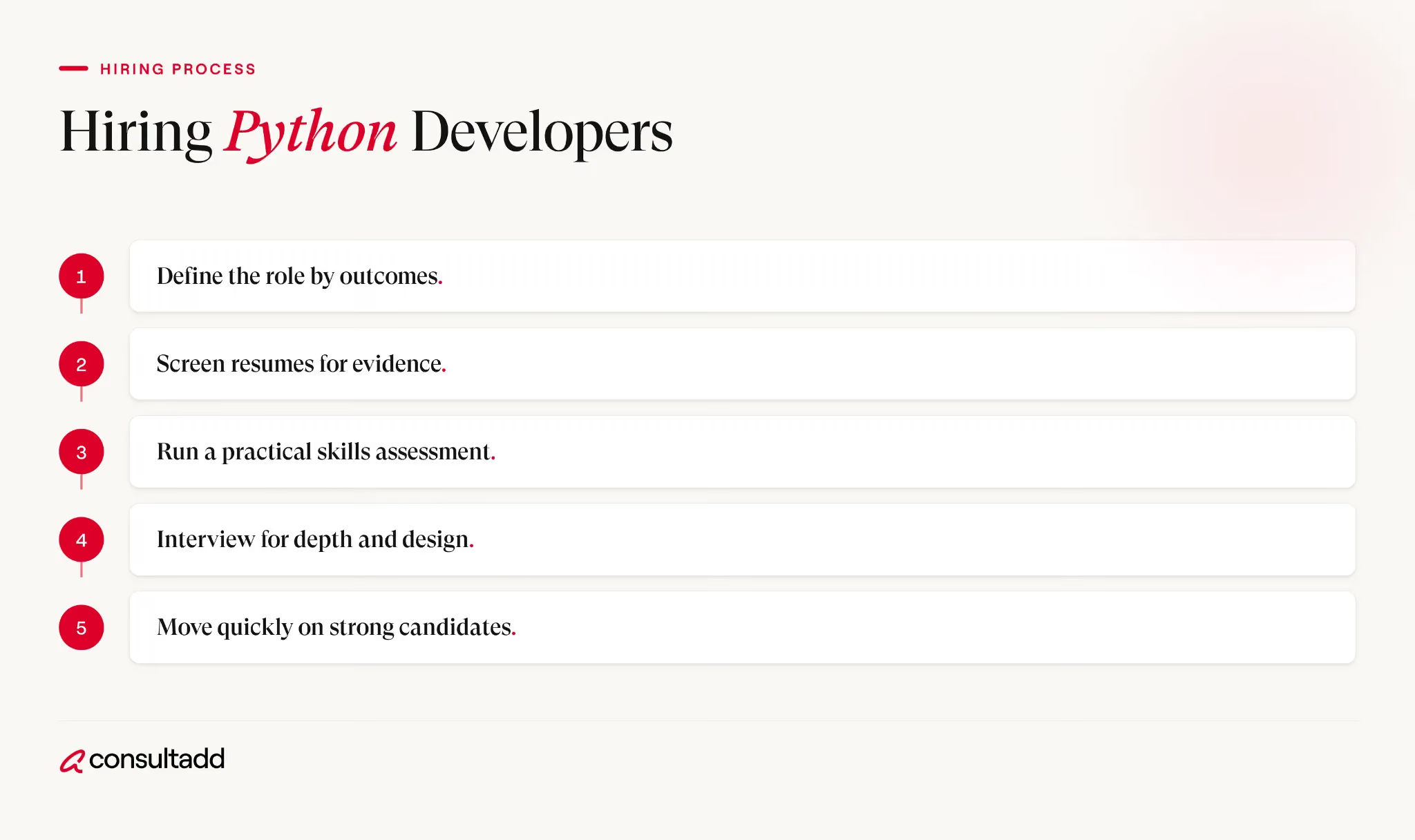
A structured candidate vetting process keeps quality high while still letting you move fast.
Where a staffing partner fits in
If your team is small or your timeline is tight, sourcing and vetting Python developers well for every role gets hard. This is where a staffing partner earns its place.
- A specialized partner handles the sourcing and technical screening, then hands you a short list of people who already cleared the checks.
- Instead of sifting hundreds of resumes and trying to tell excellent offshore talent from merely available talent, you review a handful of pre-vetted candidates matched to your stack.
- For roles touching proprietary data or model weights, that vetting also carries a security benefit.
- The payoff is speed without a quality drop.
- When the hardest senior ML hires can take two to three months on your own, a partner with a ready talent pool can compress that meaningfully.
Hiring a Python developer comes down to clarity and speed: know the lane you need, screen for real skill, budget honestly, and don't let a strong candidate sit.
Get those right, and the rest of the process tends to follow.
Start Strong With Consultadd
With 15 years in business and 5,000+ successful staffing engagements, we don't just fill roles, we build reliability into your process. We've supported 65 staffing companies in the past year alone and maintain MSAs with industry leaders like Robert Half and TEKsystems.
Here's what working with Consultadd looks like:
- Talent sourced in under 24 hours
- Ready-to-deploy candidates, vetted for experience and compliance
- Lower turnover risk: we match long-term goals, not just short-term needs
- Seamless compliance: visa, documentation, onboarding? Handled.
- Dedicated 1:1 account managers for responsive, personalized support
- Top 100 candidate matches delivered in the past year
- Strong partnerships with universities to tap into fresh, committed talent
- Post-placement support so your investment grows beyond day one
For candidates, your next opportunity is more than just a job title, it's a chance to build skills, gain experience, and move your career forward. At Consultadd, we connect technology professionals with projects and employers that align with their goals, whether they're looking for contract, contract-to-hire, or long-term opportunities.
The tech job market moves fast, but the right guidance can make all the difference. Ready to take the next step in your career journey? Explore Opportunities >>
Key takeaways
- Python is the most in-demand language in 2026, so strong developers are competitive to hire and quick to accept other offers.
- The title is broad, so define whether you need backend, data engineering, or ML work before you post the role.
- US salaries run roughly $75K for juniors to $170K+ for senior and ML specialists, with a 20 to 40% premium for AI expertise.
- Budget for total cost, adding 20 to 35% over base pay and 15 to 25% of salary for agency placement fees.
- Screen for demonstrated skills over credentials, and move fast, because a slow process loses good candidates.
FAQs
How much does it cost to hire a Python developer?
In the US in 2026, base salaries run roughly $75,000 for juniors to $170,000 or more for senior and ML specialists. Contractors typically charge $60 to $150+ per hour depending on seniority and specialization. Remember to add 20 to 35% over base pay for total cost, plus any agency placement fee.
What skills should a Python developer have?
It depends on the role, but core Python, a main framework like Django or FastAPI, and SQL are common baselines. Cloud experience with AWS, GCP, or Azure is now expected in most listings, along with Docker and testing. For ML roles, look for PyTorch or TensorFlow and production deployment experience.
Should I hire a Python developer full-time or on contract?
Contract works best for scoped projects of three to twelve months or specialized short-term needs. Full-time makes sense when you need someone to own a system long term and grow with the codebase. Contract-to-hire is a middle path that lets you evaluate a developer on real work before committing.
How long does it take to hire a Python developer?
It varies by seniority. Junior and mid-level roles can move in a few weeks, while senior ML or lead engineers often take two to three months given the small talent pool. Hiring through job boards alone tends to add several weeks compared to working with a staffing partner.
What is the difference between a Python developer and a data scientist?
A Python developer builds production systems like APIs, backends, and data pipelines, prioritizing reliability. A data scientist builds models and analysis, often in notebooks, optimizing for accurate results over production stability. Both use Python, but they solve different problems and aren't interchangeable.
Do Python developers need a computer science degree?
Not necessarily. Many hiring managers in 2026 weigh portfolio evidence and practical skills over formal degrees. A strong track record of shipped projects and good performance on a skills assessment often matters more than where, or whether, a candidate studied computer science.
.webp)