
.avif)

Introduction
Every staffing agency owner asks the same question at some point: how do staffing agencies get contracts when the market is already full of firms doing the same thing?
The honest answer is that most contracts don't come from luck or a slick pitch deck. They come from a repeatable process built around timing, proof, and paperwork that actually protects both sides.
This isn't a theory piece. It's a walkthrough of how agencies find clients, what a contract actually needs to say, and why some firms keep winning renewals while others keep starting from zero.
TL;DR
- Most first contracts come from direct outreach tied to a specific hiring pain point, not from ads or cold email blasts.
- A Master Service Agreement is the foundation of every client relationship. Get the billing model, replacement clause, and payment terms right before anything else.
- Vendor management systems (VMS) and managed service providers (MSP) control access to a large share of enterprise staffing spend, and agencies need a strategy to get on those panels.
- Government staffing contracts require SAM.gov registration, a Unique Entity Identifier, and the right NAICS code, but they offer steady, longer-term revenue once won.
- Winning the first contract matters less than what happens after. Retention and referrals are where staffing agencies actually make their margin.
Finding the clients worth pursuing
Agencies that consistently sign new contracts don't chase everyone. They watch for specific signals: a company posting the same role three times in two months, a sudden spike in job listings, or a LinkedIn post about a new product launch that will need staff behind it.
Repeated job posts, urgent backfills, and multiple openings for the same function are the clearest indicators that a company is struggling to hire on its own.
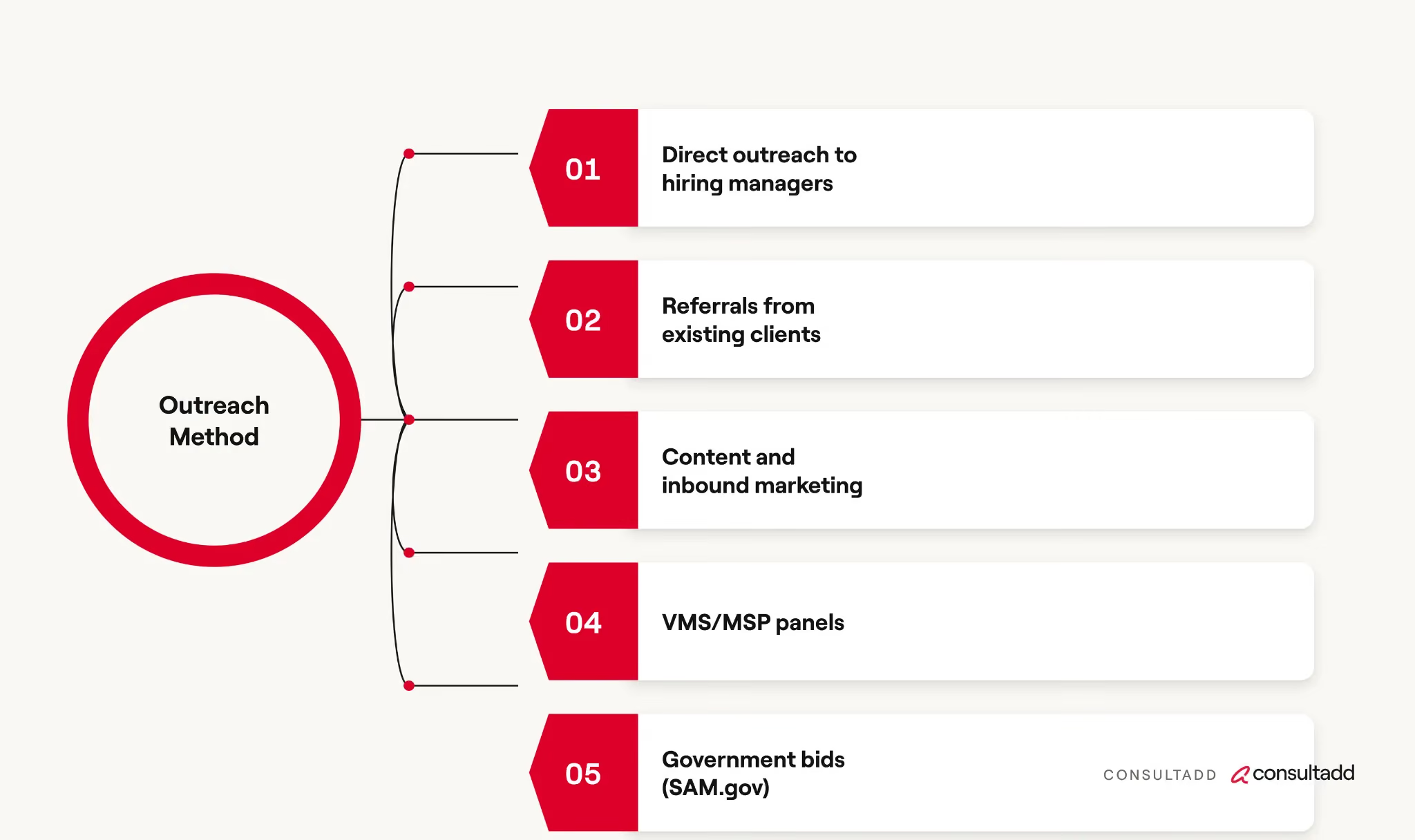
Most agencies build a target list from a mix of sources:
- LinkedIn Jobs
- Company career pages
- Referrals from existing clients
- Their own CRM data on past conversations that didn't close
The point isn't to email everyone in a spreadsheet. It's to show up when a company is already feeling the pain of an open seat.
What actually works in the first pitch
Cold outreach still works, but only when it's specific. Cold pitching works only when it's highly targeted and value-driven, and generic "we place great talent" emails rarely get a reply.
The pitches that land usually center on one open role, one clear pain point, and one piece of proof, like a past placement in the same function or a shortlist turnaround time.
Referrals do the heavy lifting once an agency has a track record. Satisfied clients become the best advocates for a staffing firm, and referrals tend to convert faster than cold outreach because trust is already built in. An agency that has filled ten roles well for one client has, without meaning to, built a case study it can use on the next ten prospects.
The trust factor matters even more for contract staffing than for one-off placements. A client is being asked to make an agency its ongoing employment partner for an entire category of workers, which is a bigger commitment than a single hire, so the sales conversation needs to reflect that.
The MSA: what it needs to say
No staffing contract is real until the Master Service Agreement is signed. This document sets the terms for everything that follows, and agencies that treat it as a formality tend to regret it later. A proper MSA should be tailored to the staffing model in use, not copied from a generic vendor template.
A few things belong in every MSA, regardless of size:
- The billing model, whether it's a bill rate, a placement fee, or a retainer, and exactly what that rate includes (markup, payroll taxes, statutory benefits, pass-through costs).
- Invoice terms, including the billing cycle, due date, and the point at which a payment counts as late.
- A replacement clause that defines the replacement window and what qualifies as a failed placement.
- Language covering how cost increases, like payroll tax changes, get handled mid-contract.
If a client asks for net-60 or net-90 payment terms, the markup needs to be adjusted to protect payroll cash flow, since the agency is usually paying its contractors well before the client pays the invoice.
This is one of the more common mistakes newer agencies make. They agree to long payment windows without adjusting their margin, and the cash flow gap eventually catches up with them.
The MSA is also just the first layer. Contract staffing runs on a stack of related documents.
A single placement can involve four to six separate signed documents across two or three parties:
- The client-facing MSA
- A contractor employment agreement
- An assignment-specific statement of work
- Compliance paperwork like I-9 verification
Agencies that don't have a system for tracking all of it end up chasing signatures instead of filling roles.
For agencies weighing whether their rate structure actually holds up once payroll and compliance costs are factored in, it's worth running the numbers before signing anything long-term.
Our breakdown of the IT staffing process covers where those costs typically show up.
Getting past the VMS gatekeeper
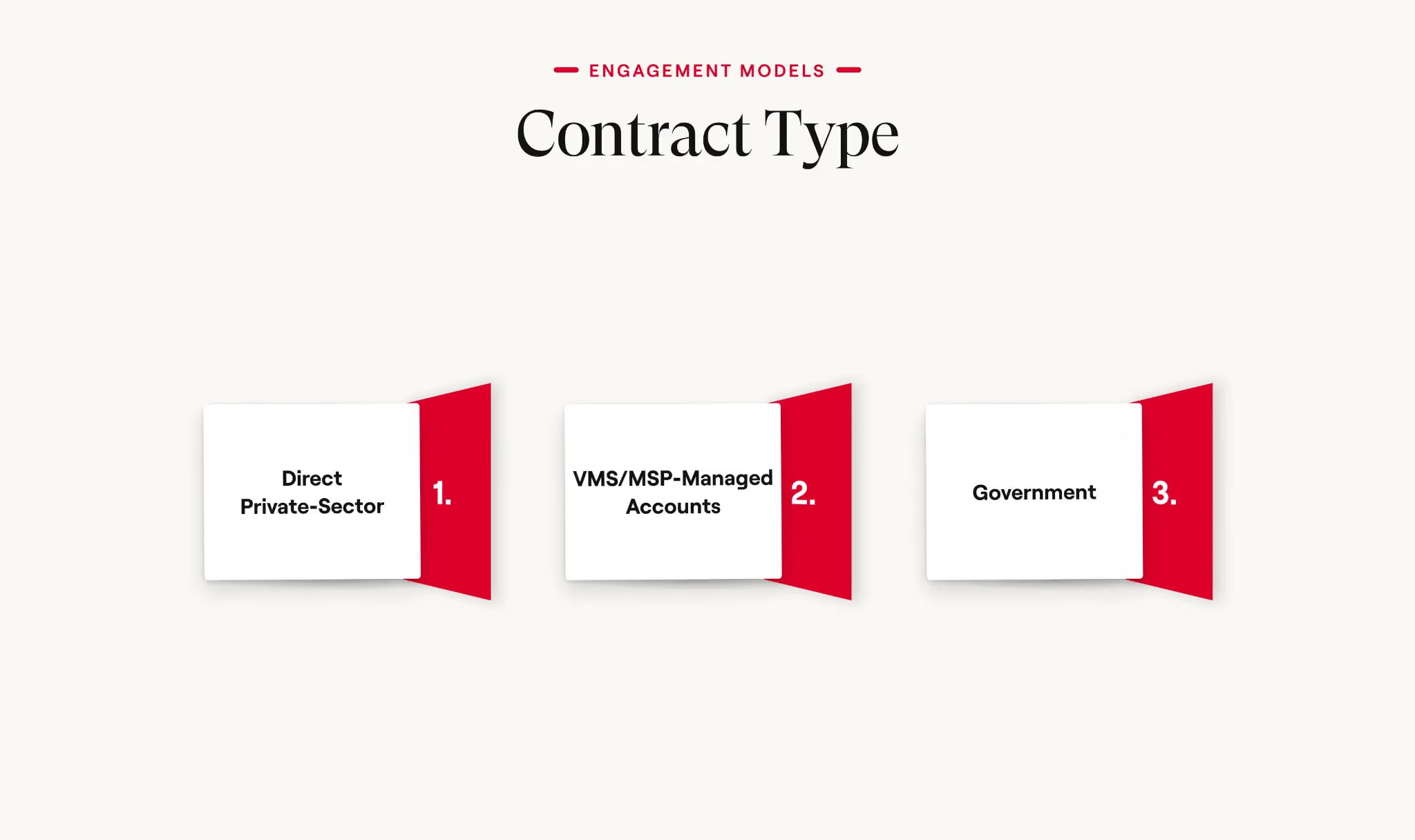
Larger clients rarely sign staffing contracts directly anymore. They route hiring through a vendor management system, a platform that centralizes every staffing supplier's submissions in one place.
Instead of sending every staffing supplier separate emails and spreadsheets, the client uses one platform to distribute job requisitions to all approved vendors at once.
Getting a supplier agreement with the company running the VMS doesn't guarantee volume. It just gets an agency onto the list of vendors who see the requisitions. From there, speed and quality of submissions decide who actually gets placements.
A smaller firm can compete for corporate contracts through a VMS as long as it understands the platform's rules and has reliable back-office infrastructure for onboarding, payroll, and compliance.
If you're trying to figure out where your firm fits against the larger players in the space, our rundown of top IT staffing firms breaks down how different agencies specialize.
This is where a lot of independent agencies stall. They win the supplier agreement, then lose ground because their internal process for submitting candidates is slower than a competing agency's, or their compliance paperwork isn't ready when a program manager asks for it.
Government staffing contracts
Federal and state agencies represent a different track entirely, with its own registration process:
To bid on government contracts, agencies need to register on SAM.gov, obtain a Unique Entity Identifier, and select the NAICS codes relevant to their services, such as 561320 for contract staffing.
Winning a government bid requires a detailed proposal that demonstrates experience, quality, pricing, and the ability to actually meet the staffing need described in the request. It's a slower sales cycle than private-sector work, often taking months instead of weeks, but the payoff is different too.
Government contracts tend to offer steadier, more predictable revenue than private-sector placements, and winning one adds credibility that helps with other prospective clients as well.
For agencies with the compliance infrastructure to handle federal requirements, it's worth the registration overhead.
What happens after the contract is signed
Winning the first contract opens the door. Keeping the client is a separate job.
Agencies need to prove their value over time by truly understanding each client's talent needs, delivering quality matches, and providing a consistently good experience through the process.
These turn a one-off contract into a preferred-provider relationship that can span years:
- Follow-through
- Responsiveness
- Successful placements
That relationship is worth more than any single deal, because renewal and expansion work is cheaper to win than a brand-new logo.
The staffing market itself has been uneven the past couple of years, which makes retention even more important.
According to the American Staffing Association, temporary and contract staffing sales totaled $113.5 billion in 2025, down 8.5% from 2024, though the fourth quarter showed signs of stabilization with sales rising 2.6% from the prior quarter.
In a market like that, an agency's existing book of clients carries more weight than it would in a growth year.
For a closer look at how agencies structure the client-facing side of the relationship once a contract is live, see our guide on hiring and recruiting strategies.
Start Strong With Consultadd
With 15 years in business and 5,000+ successful staffing engagements, we don't just fill roles, we build reliability into your process. We've supported 65 staffing companies in the past year alone and maintain MSAs with industry leaders like Robert Half and TEKsystems.
Here's what working with Consultadd looks like:
- Talent sourced in under 24 hours
- Ready-to-deploy candidates, vetted for experience and compliance
- Lower turnover risk: we match long-term goals, not just short-term needs
- Seamless compliance: visa, documentation, onboarding? Handled.
- Dedicated 1:1 account managers for responsive, personalized support
- Top 100 candidate matches delivered in the past year
- Strong partnerships with universities to tap into fresh, committed talent
- Post-placement support so your investment grows beyond day one
For candidates, your next opportunity is more than just a job title, it's a chance to build skills, gain experience, and move your career forward. At Consultadd, we connect technology professionals with projects and employers that align with their goals, whether they're looking for contract, contract-to-hire, or long-term opportunities.
The tech job market moves fast, but the right guidance can make all the difference. Ready to take the next step in your career journey? Explore Opportunities >>
Key Takeaways
- Contracts get won through targeted outreach tied to a visible hiring pain point, not mass cold email.
- The MSA is the foundation of the relationship. Billing terms, replacement clauses, and payment cycles need to be specific, not boilerplate.
- VMS and MSP platforms gate a large share of enterprise staffing work, and getting approved is only step one; submission speed decides who actually places candidates.
- Government contracts take longer to win but offer more stable revenue once secured.
- Retention and referrals, not new-logo wins, are where most agencies actually build sustainable margin.
FAQs
How long does it typically take a staffing agency to land its first client contract?
It varies widely, but most agencies see their first signed contract within one to three months of consistent outreach. Government contracts and enterprise VMS accounts take longer, sometimes six months or more, because of registration and approval steps.
What's the difference between a staffing contract and a staffing agreement?
In practice, the terms are often used interchangeably. Technically, an "agreement" like an MSA sets the ongoing framework, while individual "contracts" or statements of work cover specific placements under that framework.
Do small staffing agencies have a real shot at enterprise contracts?
Yes, particularly through VMS and MSP programs, which are designed to let smaller suppliers compete alongside larger firms. The main requirement is reliable back-office infrastructure for payroll, onboarding, and compliance.
What should a staffing agency never skip in an MSA?
The replacement clause and the billing model. Both directly affect cash flow and dispute risk, and vague language in either one tends to cause problems months into the relationship, not at signing.
Can a staffing agency bid on government contracts without prior government experience?
Yes, but it takes preparation. Registering on SAM.gov and selecting the correct NAICS code is the entry point; the proposal itself needs to demonstrate capability even without a long federal track record.
Why do some staffing agencies win contracts but struggle to keep clients?
Usually because they treat the signed contract as the finish line rather than the start of the relationship. Retention depends on consistent delivery and responsiveness after the ink dries, not on how strong the initial pitch was.




.webp)
