.avif)

Introduction
Most hiring teams don't have a talent problem. They have a process problem. The right candidate applies, sits in a queue for two weeks, gets a competing offer, and accepts it before your panel finishes its debrief. The person was there. The process lost them.
That's the frustrating truth about how to improve the recruitment process: the biggest gains usually come from fixing your own bottlenecks, not from finding more applicants. Speed, clarity, and a respectful candidate experience win more hires than a bigger pipeline does.
This guide walks through where the time actually goes, which fixes move the needle, and how to measure whether you're improving. Work through it in order, or jump to the bottleneck you already suspect.
TL;DR
- Improving recruitment is mostly about removing friction in your own process, not sourcing more applicants.
- Measure first. You can't fix a bottleneck you haven't located, so track time-to-hire, time-to-fill, and quality of hire.
- Speed matters because candidates accept offers based on momentum. A responsive process beats a slow one, even at similar pay.
- Automate the busywork like screening and scheduling, but keep humans on judgment and relationship.
- Standardize your interviews so every candidate is judged on the same criteria, which improves both fairness and quality.
Why your recruitment process needs a tune-up
A slow process costs you the best people, because the best people don't stay on the market long. The number to sit with: the average US hiring process takes roughly 42 days from job opening to accepted offer, according to SHRM's benchmarking. For many roles, that's plenty of time to lose a strong candidate.
The encouraging news is that the trend finally moved the right way in 2026. After three years of processes getting slower, median time-to-fill for non-executive roles dropped by about five days year over year, and SHRM credits much of that to automating repetitive recruiting work. Teams with the most effective practices fill roles roughly five days faster than everyone else.
Five days doesn't sound dramatic until you remember that offers are won on momentum. Candidates who move through a tight, responsive process tend to accept. Candidates parked between rounds show up to the offer stage holding competing options.
So the goal isn't just faster for its own sake. It's fewer places for a good candidate to slip away.
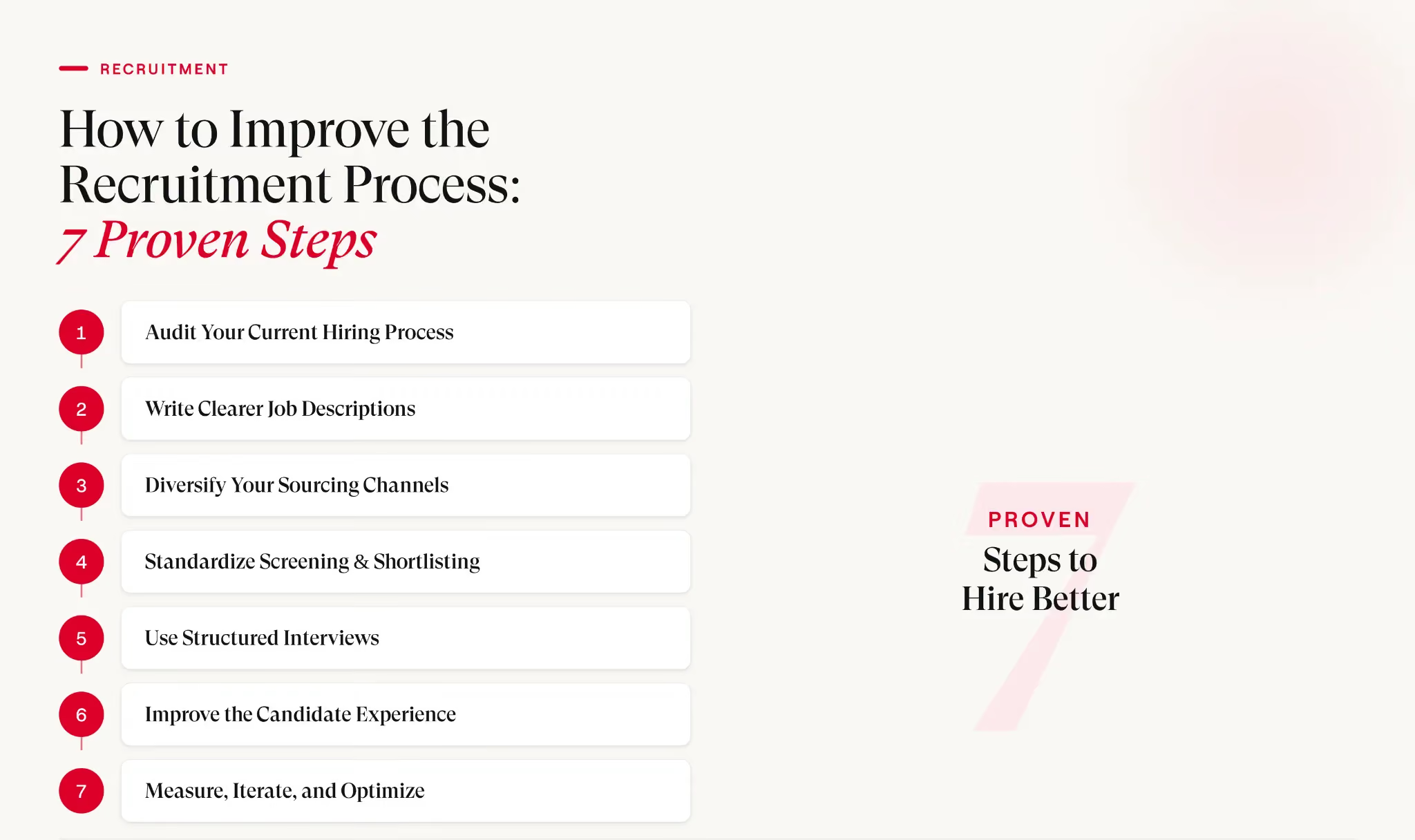
STEP 1: Start by measuring what you have
You can't fix a bottleneck you haven't found. Before changing anything, measure your current process so you know where the days actually go.
Track a small set of metrics consistently.
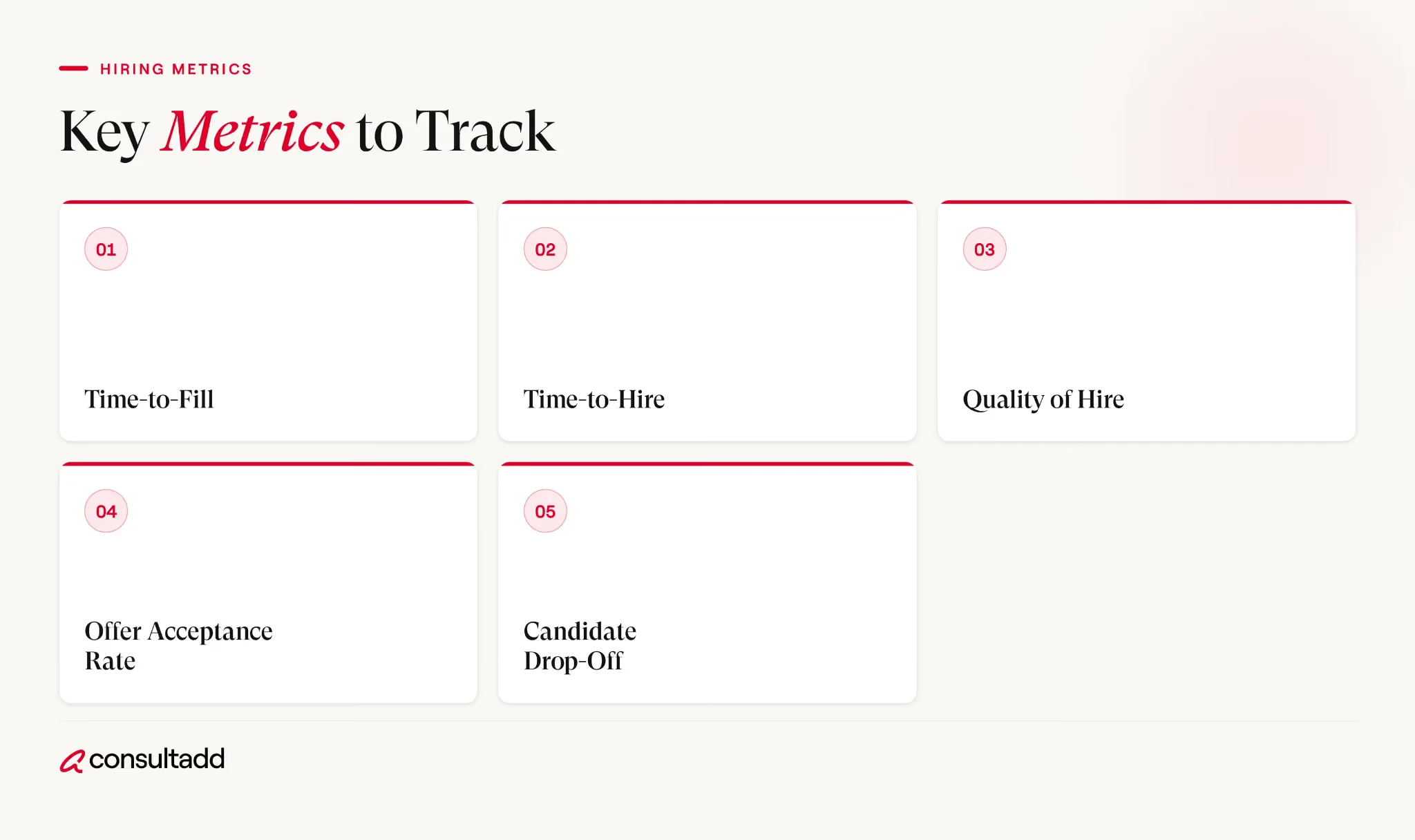
Keep your start and end points identical across roles, and exclude evergreen or always-open positions, which inflate your averages and hide the real picture.
Segment these by department and role so you can see exactly which stage is slow. Then pick one bottleneck, fix it, prove the saving, and move to the next.
Teams that improve fastest work one problem at a time rather than reinventing everything at once.
STEP 2: Sharpen your job descriptions
This is the cheapest fix on the list and one of the most overlooked. A vague job description produces a vague shortlist, and no screening tool can rescue it.
If your posting lists ten must-have skills that really belong to three different jobs, you'll either scare off good applicants or drown in mismatched ones. Name the two or three skills the role genuinely requires, describe the actual work, and be honest about level.
Clarity pays off twice. It attracts better-matched candidates up front, and it gives everyone downstream, including any screening automation, precise criteria to evaluate against.
If you're hiring technical roles, Consultadd's guide to technical recruitment covers how to translate a real job into a description that filters well.
STEP 3: Fix sourcing and re-engage your existing talent
A lot of teams treat every open role as a fresh start, which wastes the pipeline they already have. Some of your best candidates are sitting in your own applicant tracking system from previous searches.
Industry data in 2026 suggests a large share of eventual hires were already in the company's ATS before the new search began. Re-engaging past applicants and silver-medalists is faster than sourcing cold, and it costs almost nothing.
Beyond that, build talent pools for the roles you hire repeatedly, so you're not starting from zero each time. For high-volume needs especially, a ready pipeline is the difference between scrambling and scaling.
ConsultAdd's high-volume hiring strategies go deeper on keeping pre-screened talent on standby.
STEP 4: Automate the busywork with AI
The front of the funnel is where recruiters lose the most hours, and it's where automation helps most. Some 2026 analyses put AI-assisted timelines from first contact to offer around 28 days, versus roughly 41 days for manual processes, with most of that gap at the sourcing and screening stages.
Use automation for the repetitive, judgment-light work: parsing resumes, ranking applicants against clear criteria, sending status updates, and scheduling. Self-serve interview booking alone removes the multi-day email ping-pong that quietly adds days to every round.
A word of caution, though. AI matching is only as good as the criteria you feed it, which is why the job description fix comes first. And the goal isn't to remove the human element.
It's to reach it faster, so recruiters spend their time connecting with strong candidates instead of pushing paper. Tell candidates when AI is used and assure them a human reviews the results.
STEP 5: Standardize interviews for fairer, better decisions
Inconsistent interviews are where quality quietly leaks out. When every interviewer asks different questions and scores on gut feel, you're comparing impressions, not candidates.
A structured approach fixes this. Ask the same core questions for a given role, score answers against a defined rubric, and write down the rationale. Evaluating everyone against the same criteria produces a stronger, more comparable shortlist.
There's a compliance benefit too. Consistent, job-related evaluation helps you meet EEOC anti-discrimination expectations and reduces the room for bias to creep in.
Pairing structured interviews with a solid candidate vetting process gives you both fairness and quality without slowing things down.
STEP 6: Protect the candidate experience and keep momentum
Candidates judge your company by how your process treats them, and they vote with their acceptance. The two things they care about most are simple: clear communication and not being left waiting.
Keep people informed with timely updates and a clear next step at every stage. A receipt that says "we got your application" isn't communication.
Candidates want to know what happens next and when. Timely updates measurably increase the odds someone finishes the process and accepts an offer.
Momentum is the quiet driver of acceptance rates. Every day a candidate sits idle between rounds is a day a competitor can move.
Reduce unnecessary steps, run debriefs quickly, and don't let a strong candidate cool off while your calendar sorts itself out. The tighter the experience, the more offers you win.
STEP 7: Know when to bring in a staffing partner
Sometimes the fastest way to improve your process is to hand part of it to someone who does this at scale. If your team is small, your volume spikes, or you keep losing candidates to slow sourcing, a staffing partner can close the gap.
A good partner works from a pre-vetted talent pool, so the slowest stages, sourcing and initial screening, get compressed dramatically. You review a short list of qualified people instead of sifting hundreds of resumes. They also absorb the vetting and compliance work that eats your team's time.
The flexibility helps too. Contract and contract-to-hire models let you scale up for a project and evaluate fit before committing.
Consultadd's breakdown of the contract-to-hire model shows how that lowers hiring risk.
None of this replaces a well-run process. It amplifies one. Fix your bottlenecks, measure your gains, and bring in help where it buys back the most time.
Start Strong With Consultadd
With 15 years in business and 5,000+ successful staffing engagements, we don't just fill roles, we build reliability into your process. We've supported 65 staffing companies in the past year alone and maintain MSAs with industry leaders like Robert Half and TEKsystems.
Here's what working with Consultadd looks like:
- Talent sourced in under 24 hours
- Ready-to-deploy candidates, vetted for experience and compliance
- Lower turnover risk: we match long-term goals, not just short-term needs
- Seamless compliance: visa, documentation, onboarding? Handled.
- Dedicated 1:1 account managers for responsive, personalized support
- Top 100 candidate matches delivered in the past year
- Strong partnerships with universities to tap into fresh, committed talent
- Post-placement support so your investment grows beyond day one
For candidates, your next opportunity is more than just a job title, it's a chance to build skills, gain experience, and move your career forward. At Consultadd, we connect technology professionals with projects and employers that align with their goals, whether they're looking for contract, contract-to-hire, or long-term opportunities.
The tech job market moves fast, but the right guidance can make all the difference. Ready to take the next step in your career journey? Explore Opportunities >>
Key takeaways
- The biggest recruitment gains usually come from removing friction in your own process, not from sourcing more applicants.
- Measure before you change anything, tracking time-to-hire, time-to-fill, quality of hire, and where candidates drop off.
- Speed wins hires because candidates accept on momentum, so cut waiting and move quickly on strong people.
- Automate repetitive work like screening and scheduling, but keep humans on judgment and communication.
- Standardize interviews and vetting so every candidate is judged on the same criteria, improving fairness and quality.
FAQs
How long should the recruitment process take?
It depends on the role. The US average is around 42 days from opening to accepted offer, but benchmarks vary widely: retail and hospitality often run 14 to 30 days, technology and engineering 40 to 58 days, and executive roles 60 to 120. Compare yourself against your specific industry rather than a single global average.
What is the difference between time-to-hire and time-to-fill?
Time-to-hire counts the days from when a candidate enters your pipeline to when they accept the offer, so it measures process speed as the candidate feels it. Time-to-fill counts from when the role is approved and posted to offer acceptance, so it also includes sourcing time. Tracking both shows whether your problem is sourcing or process.
How can I speed up hiring without lowering quality?
Fix specific bottlenecks rather than rushing every stage. Automate scheduling and initial screening, re-engage candidates already in your ATS, and shorten debriefs. Standardized interviews let you move faster while keeping evaluation consistent, so speed and quality improve together instead of trading off.
Does AI actually improve recruitment?
Used well, yes, mainly by cutting time spent on repetitive tasks like resume parsing, scheduling, and status updates. Some 2026 analyses show meaningfully faster timelines for AI-assisted processes. The gains depend on good inputs, though. Vague job criteria produce vague shortlists, and a human should still review AI recommendations.
What metrics should I track to improve recruitment?
Start with time-to-fill, time-to-hire, quality of hire, offer acceptance rate, and candidate drop-off by stage. Keep your definitions consistent across roles and segment by department so you can spot the slow stages. These few metrics tell you where to focus without drowning you in data.
How do I reduce candidate drop-off?
Communicate clearly and keep the process moving. Give candidates a specific next step at every stage, use self-scheduling to remove delays, and avoid long gaps between rounds. Drop-off usually spikes where people are left waiting or unsure, so momentum and clear communication are your best tools.
.webp)