
.avif)

Introduction
Every hiring manager reaches the same wall eventually: a project needs three cloud engineers by next month, and the internal recruiting pipeline is nowhere close to that timeline.
That's usually the point where companies start looking at IT staff augmentation companies instead of running another six-week search from scratch.
The model itself is simple. A staffing partner supplies vetted technical talent that plugs into your existing team, while you keep control of the work and the outcomes.
The harder part is picking the right partner, because the market is crowded, the pitches all sound similar, and the difference between a good vendor and a mediocre one only shows up a few weeks into the engagement.
This guide covers what IT staff augmentation companies actually do, how the model compares to other hiring options, and what separates a partner worth keeping from one worth dropping.
TL;DR
- IT staff augmentation companies supply pre-vetted technical talent that works inside your existing team and processes, not a separate outsourced project.
- The global market is growing fast, with one widely cited estimate projecting the sector to reach $857.2 billion by 2032 at a 13.2% annual growth rate.
- Demand is climbing partly because talent is scarce: 72% of employers globally reported difficulty filling roles in 2026, according to ManpowerGroup.
- Staff augmentation differs from outsourcing and direct hire mainly in who controls the work and how long the engagement lasts.
- The best vendors are judged on time-to-fill, vetting quality, compliance handling, and what happens after placement, not just their rate card.
What IT staff augmentation companies actually do
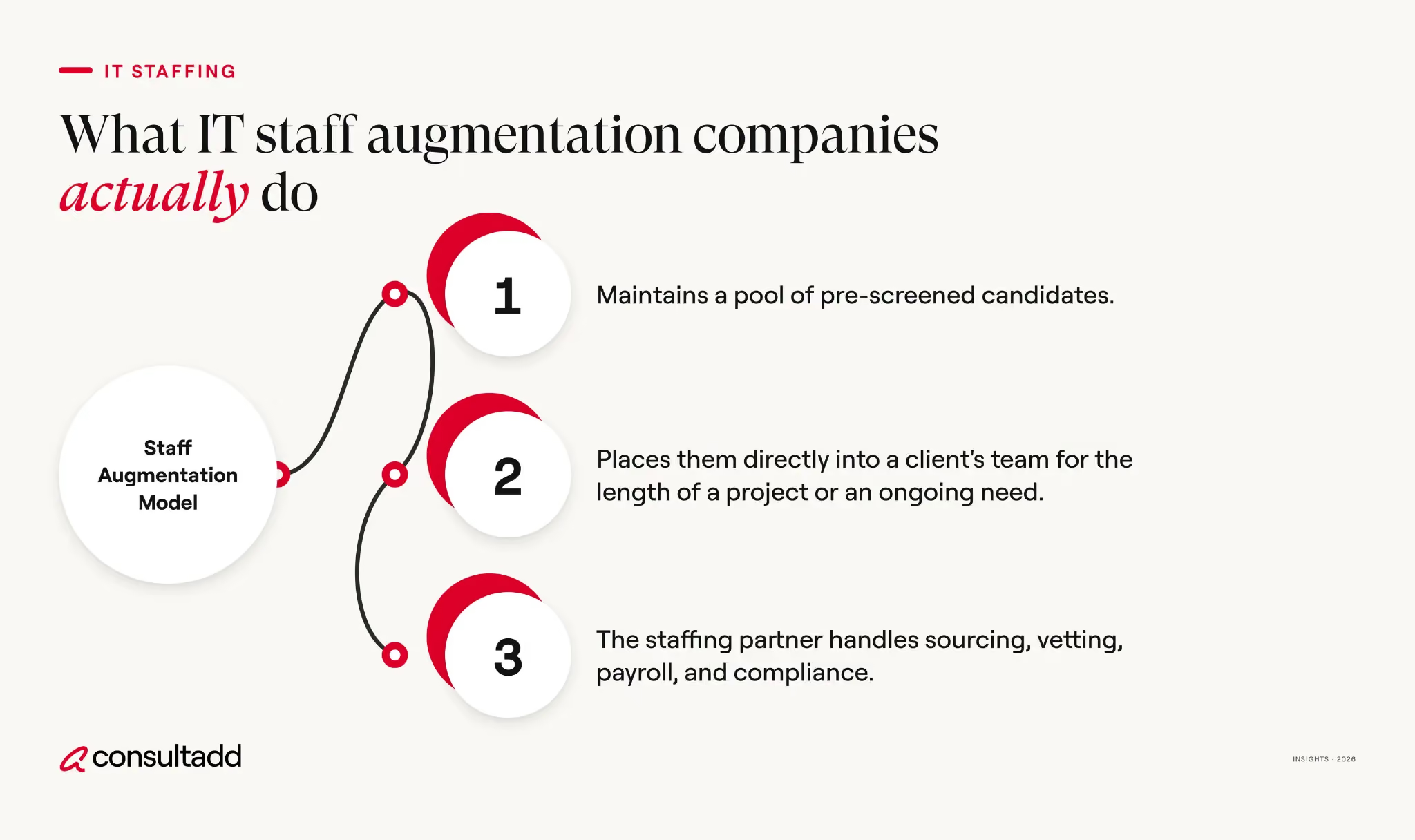
An IT staff augmentation company maintains a pool of pre-screened technical professionals, developers, QA engineers, cloud architects, security specialists, and places them directly into a client's team for the length of a project or an ongoing need.
Unlike a traditional outsourcing vendor, the augmentation company isn't managing the project itself. You keep the reporting lines, the sprint planning, and the final say on deliverables.
The staffing partner handles sourcing, vetting, payroll, and compliance.
This distinction matters because it changes who's accountable for what. With staff augmentation, if a deliverable slips, that's on your internal management.
With a managed outsourcing engagement, the vendor typically owns that outcome. Neither model is better across the board, they solve different problems.
Staff augmentation vs. outsourcing vs. direct hire
If you need a senior Kubernetes engineer for a six-month migration and already have a team to plug them into, augmentation fits.
If you need an entire mobile app built with no internal engineering team to manage it, outsourcing is the better call.
Why demand for staff augmentation keeps climbing
The market data backs up what most hiring managers already sense. Estimates vary by research firm, but the direction is consistent:
The IT staff augmentation service market was valued at roughly $299.3 billion in 2024 and is projected to grow at a 13.2% compound annual rate through the early 2030s, driven partly by demand for niche skills in areas like generative AI and cloud compliance that outstrip local talent supply.
That growth tracks closely with the labor shortage itself. ManpowerGroup's 2026 Global Talent Shortage Survey of more than 39,000 employers across 41 countries found 72% reporting difficulty filling open roles, with AI-related skills overtaking traditional engineering skills as the hardest to find for the first time.
In the U.S. specifically, 69% of employers reported difficulty finding skilled talent in 2026, with the challenge more pronounced at larger companies than smaller ones.
Put simply: the roles companies need filled are getting more specialized, and the traditional hiring pipeline hasn't caught up. Staff augmentation exists to close that gap faster than a full recruiting cycle can.
What separates a good IT staff augmentation company from a weak one
Most vendors will claim fast turnaround and quality talent. The real differences show up in the details.
A vendor that only surfaces during the sales pitch and disappears after placement is usually a sign the relationship will be transactional rather than useful.
Firms like Consultadd built their staffing model specifically around the areas that tend to go wrong, fast sourcing, compliance handling for visa and documentation, and dedicated account management that continues after someone starts the job, rather than treating placement as the finish line.
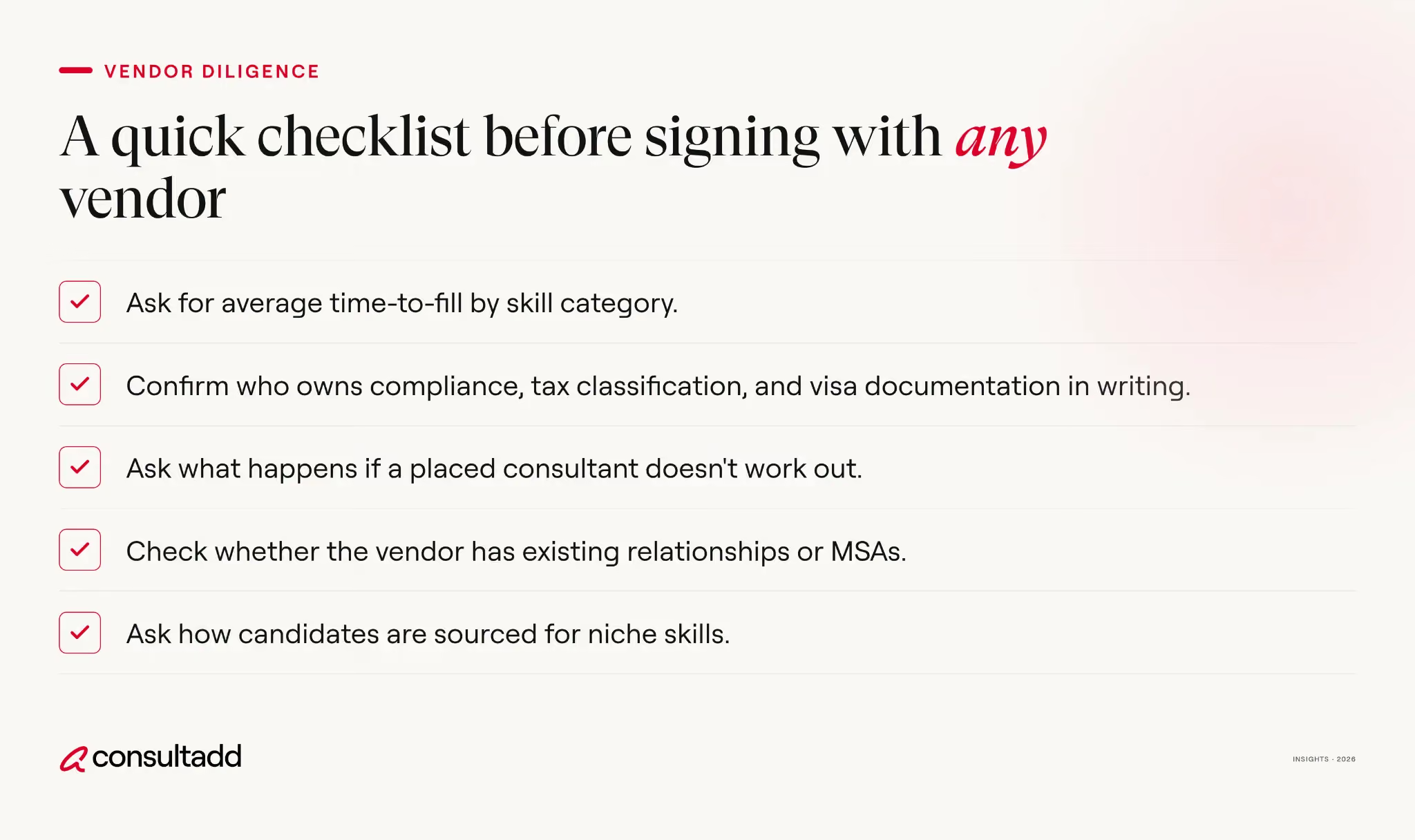
A quick checklist before signing with any vendor
- Ask for average time-to-fill by skill category, not a generic company-wide number.
- Confirm who owns compliance, tax classification, and visa documentation in writing.
- Ask what happens if a placed consultant doesn't work out. A real guarantee, not just a refund policy, matters here.
- Check whether the vendor has existing relationships or MSAs with recognizable staffing names in your industry, since that often signals established compliance practices.
- Ask how candidates are sourced for niche skills like AI/ML or cybersecurity specifically, not just general software development.
When staff augmentation is the wrong fit
It's worth being honest about the limits of the model.
Staff augmentation works best for defined, bounded needs, a migration project, a temporary skills gap, a spike in workload.
- It's a weaker fit for core, ownership-level roles where institutional knowledge and long-term accountability matter more than speed.
- In those cases, a contract-to-hire arrangement or direct hire usually serves the business better, since the goal there is retention, not flexibility.
Some companies also blend both. Augmented staff handle the burst capacity, while a smaller core team, hired directly, owns the architecture and long-term decisions.
This tends to work better than trying to force one model to cover every hiring need.
Start Strong With Consultadd
With 15 years in business and 5,000+ successful staffing engagements, we don't just fill roles, we build reliability into your process. We've supported 65 staffing companies in the past year alone and maintain MSAs with industry leaders like Robert Half and TEKsystems.
Here's what working with Consultadd looks like:
- Talent sourced in under 24 hours
- Ready-to-deploy candidates, vetted for experience and compliance
- Lower turnover risk: we match long-term goals, not just short-term needs
- Seamless compliance: visa, documentation, onboarding? Handled.
- Dedicated 1:1 account managers for responsive, personalized support
- Top 100 candidate matches delivered in the past year
- Strong partnerships with universities to tap into fresh, committed talent
- Post-placement support so your investment grows beyond day one
For candidates, your next opportunity is more than just a job title, it's a chance to build skills, gain experience, and move your career forward. At Consultadd, we connect technology professionals with projects and employers that align with their goals, whether they're looking for contract, contract-to-hire, or long-term opportunities.
The tech job market moves fast, but the right guidance can make all the difference. Ready to take the next step in your career journey? Explore Opportunities >>
Key takeaways
- IT staff augmentation companies supply vetted technical talent that works inside your team, while you retain control of the project itself.
- Global demand is rising fast, driven by both market growth projections and a persistent talent shortage affecting the majority of employers.
- Staff augmentation, outsourcing, and direct hire solve different problems, choosing the wrong one for the situation usually causes friction later.
- Good vendors are judged on vetting depth, compliance ownership, and post-placement support, not just how quickly they can send resumes.
- The model works best for bounded, defined needs, not for core roles requiring long-term institutional ownership.
FAQs
How is IT staff augmentation different from hiring a freelancer?
Freelancers are typically sourced and managed directly by the client with no intermediary vetting or compliance handling. Staff augmentation companies pre-screen candidates and often manage payroll, tax classification, and compliance on the client's behalf.
How long does it take to onboard talent through a staff augmentation company?
Timelines vary by skill and vendor, but established firms often place candidates within a few weeks for common roles, and faster for pre-vetted talent pools already matched to specific skill sets.
Is staff augmentation more expensive than direct hire?
Not usually, when you factor in recruiting costs, benefits, and the risk of a bad long-term hire. Staff augmentation can cost more per hour worked but often costs less overall for short or medium-term needs.
Can staff augmentation talent convert to full-time employees?
Yes, many staffing companies support contract-to-hire arrangements, where a placed consultant can transition to a permanent role after both sides confirm it's a good fit.
What industries use IT staff augmentation the most?
Technology, healthcare IT, financial services, and government contracting sectors rely heavily on staff augmentation, largely due to specialized skill requirements and compliance-heavy hiring processes.
Do staff augmentation companies handle work visas?
Reputable ones typically do, managing visa sponsorship and documentation as part of the placement process, though it's worth confirming this directly before signing an agreement.





.webp)