.avif)

Introduction
OPT jobs are positions that F-1 international students can legally take under Optional Practical Training, the work authorization that lets you gain experience in your field after (or sometimes during) your degree.
The tricky part isn't the concept, it's the execution: finding employers who actually understand OPT, timing your application correctly, and staying compliant once you're working.
This guide walks through eligibility, how the job search actually plays out, and what both students and employers need to get right.
TL;DR
- OPT jobs must relate directly to your field of study and require a valid Employment Authorization Document (EAD) before you start working.
- You get 12 months of OPT per degree level, and STEM graduates can add a 24-month extension for up to 36 months total.
- Unemployment while on OPT is capped, generally 90 days for standard OPT and 150 days total if you have the STEM extension.
- Not every employer understands OPT, so targeting companies and staffing agencies with experience sponsoring international candidates saves time.
- Report any change in employer, job title, or address to your Designated School Official (DSO) to stay in status.
What counts as an OPT job
An OPT job has to connect to your major area of study, at least in a way you can reasonably explain if asked.
A computer science graduate working as a software developer clears that bar easily. A marketing graduate taking an unrelated retail job doesn't.
The work can be paid or unpaid, full time or part time, and it can come from a single employer or multiple employers, as long as the total hours and the nature of the work meet USCIS requirements.
For a full breakdown of how OPT compares to CPT, the other major F-1 work authorization option, our guide on OPT vs CPT covers the timing and eligibility differences in plain terms.
Who qualifies for OPT jobs
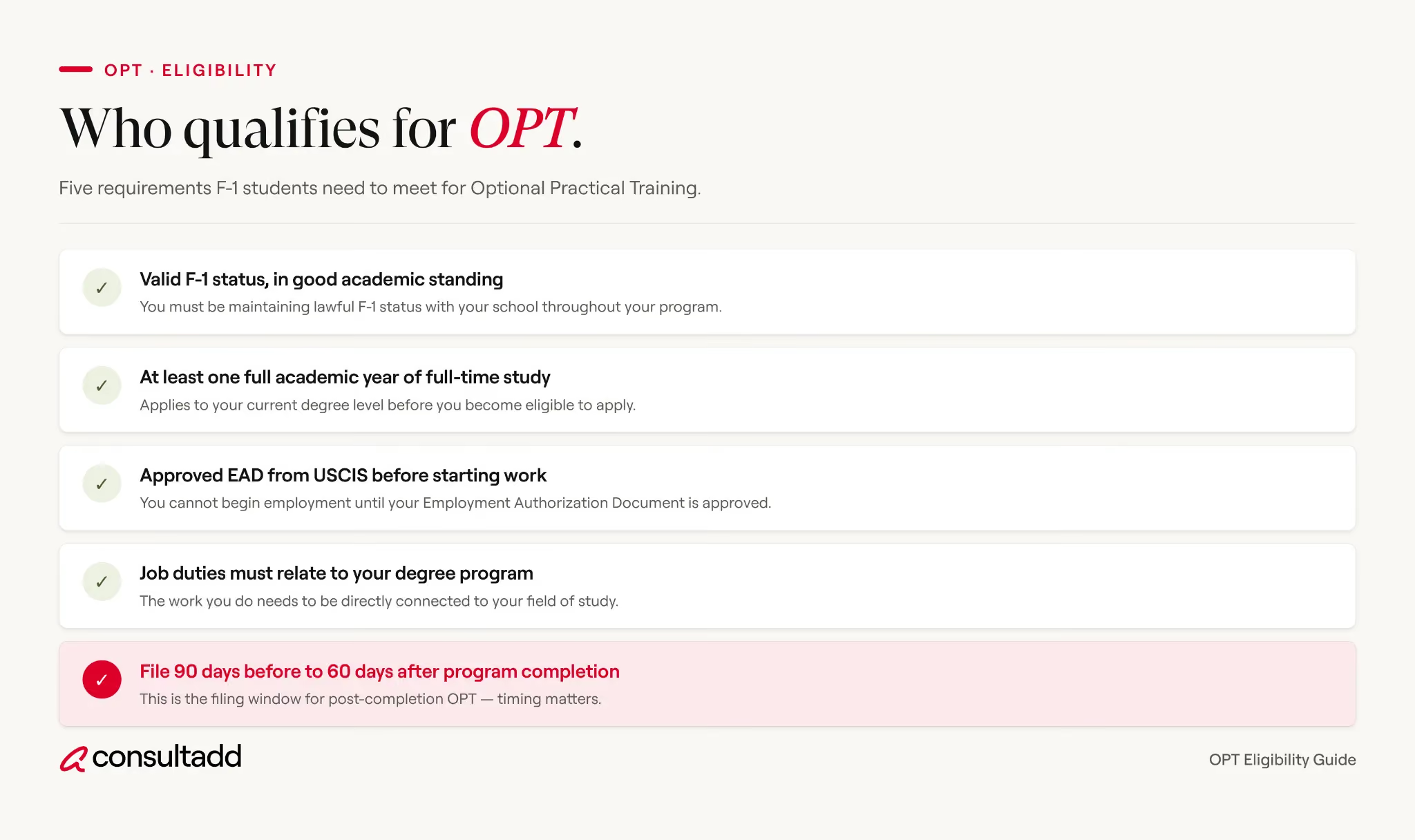
According to USCIS guidance on Optional Practical Training, students can apply for OPT before completing their studies (pre-completion) or after (post-completion), though any pre-completion time used gets subtracted from the total 12 months available.
How to actually find OPT jobs
Job boards alone rarely cut it here, since most postings don't specify visa sponsorship policy. A few things that move the needle:
- Target staffing agencies with visa experience.
Agencies that regularly place OPT candidates already know how to handle EAD verification, reporting, and timing, which removes friction for both you and the employer.
- Use your university's career center.
International student offices often maintain employer lists specifically for OPT and CPT hires.
- Search with the right terms.
"OPT sponsorship," "F-1 visa friendly," or "will sponsor STEM OPT" surface more relevant listings than generic job titles alone.
- Network within your program.
Alumni who went through OPT recently usually know which employers in your field are approachable.
OPT job rules you need to follow
Missing the unemployment window or skipping a report to your DSO is one of the more common ways students accidentally fall out of status.
It's worth setting a personal reminder well before any deadline rather than tracking it manually in your head.
OPT vs STEM OPT extension vs CPT
The STEM OPT extension page from USCIS has the full eligibility list, including which degree programs currently qualify.
If you're also weighing how OPT connects to longer-term work authorization, this comparison of H-1B and OPT visas is a useful next step, since many students transition from one to the other.
How staffing agencies help with OPT job searches
A staffing agency that regularly works with international candidates does a few things that speed up the process: they pre-screen roles for OPT compatibility, manage documentation so nothing slips past a reporting deadline, and often have existing relationships with employers who've sponsored OPT hires before.
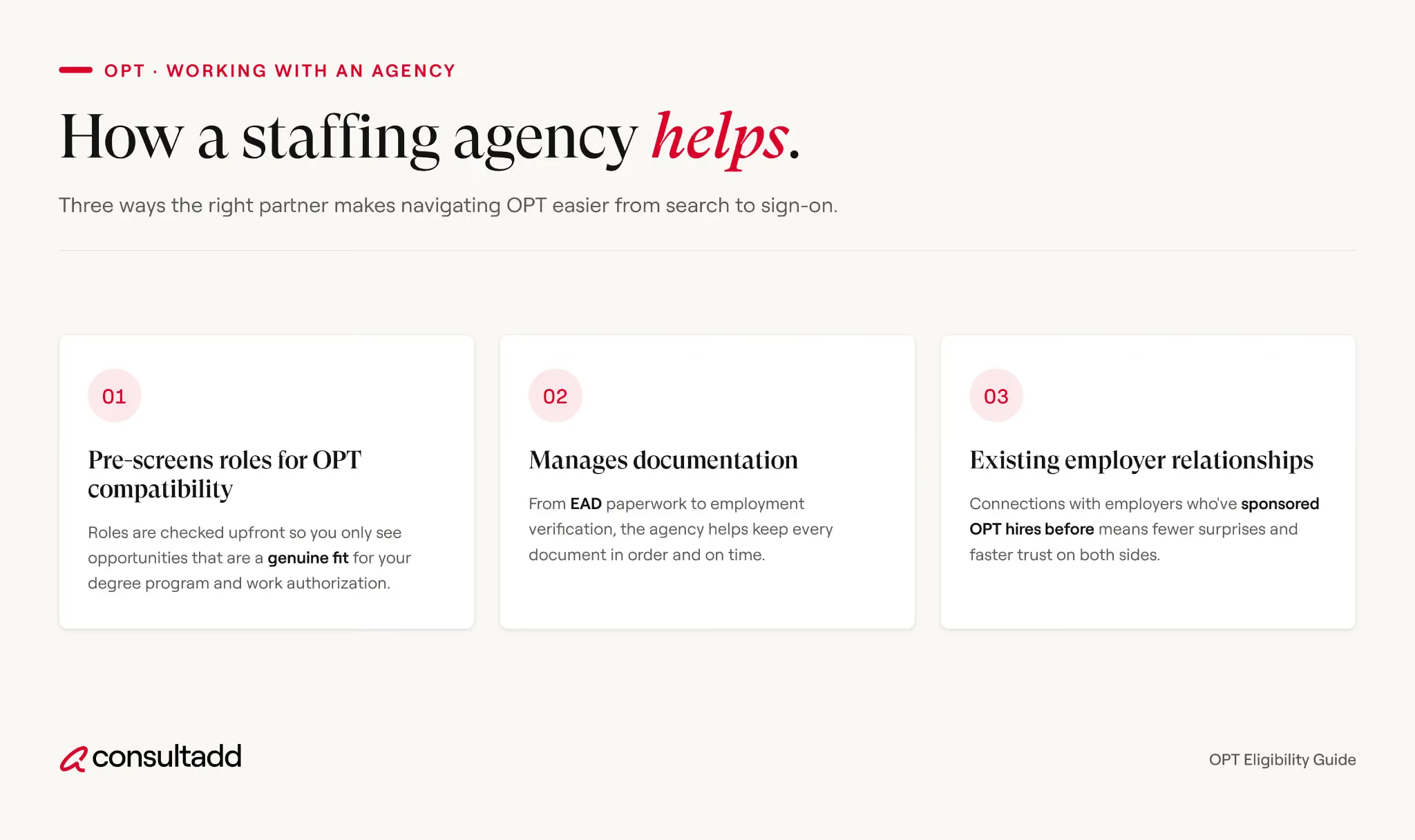
That last part matters more than it sounds, since a lot of the friction in an OPT job search comes from employers who are unfamiliar with the process rather than unwilling to hire international talent.
For a deeper look at how OPT work authorization actually functions day to day, this explainer on OPT work authorization covers the application steps and compliance details in more depth.
Start Strong With Consultadd
With 15 years in business and 5,000+ successful staffing engagements, we don't just fill roles, we build reliability into your process. We've supported 65 staffing companies in the past year alone and maintain MSAs with industry leaders like Robert Half and TEKsystems.
Here's what working with Consultadd looks like:
- Talent sourced in under 24 hours
- Ready-to-deploy candidates, vetted for experience and compliance
- Lower turnover risk: we match long-term goals, not just short-term needs
- Seamless compliance: visa, documentation, onboarding? Handled.
- Dedicated 1:1 account managers for responsive, personalized support
- Top 100 candidate matches delivered in the past year
- Strong partnerships with universities to tap into fresh, committed talent
- Post-placement support so your investment grows beyond day one
For candidates, your next opportunity is more than just a job title, it's a chance to build skills, gain experience, and move your career forward. At Consultadd, we connect technology professionals with projects and employers that align with their goals, whether they're looking for contract, contract-to-hire, or long-term opportunities.
The tech job market moves fast, but the right guidance can make all the difference. Ready to take the next step in your career journey? Explore Opportunities >>
Key takeaways
- OPT jobs must relate to your field of study, and you need an approved EAD in hand before your start date.
- You get 12 months of OPT per degree level, with a 24-month STEM extension available for qualifying degrees.
- Unemployment caps out at 90 days on standard OPT, 150 days total with the STEM extension.
- Reporting employer or address changes to your DSO promptly keeps you in status.
- Staffing agencies with visa experience can shorten the search by connecting you with employers who already sponsor OPT hires.
FAQs
Can I work multiple jobs while on OPT?
Yes, as long as all the work relates to your field of study and you track total hours to stay compliant with any part-time or full-time requirements tied to your OPT category.
Do I need a job offer before applying for OPT?
No, for post-completion OPT you can apply without a confirmed job offer. You do need to find qualifying work within the allowed unemployment window once your OPT starts.
What happens if I can't find a job during OPT?
You have up to 90 days of unemployment on standard OPT before risking your status, or 150 days total if you have the STEM extension. Staying under that limit is critical.
Can I switch employers while on OPT?
Yes, you can change employers during OPT as long as the new position still relates to your field of study, and you report the change to your DSO.
Is CPT the same as OPT?
No. CPT happens during your program and requires a job offer tied to your curriculum, while OPT can be used during or after your studies and doesn't require a curriculum connection.
Do all employers offer OPT sponsorship?
No. Some employers aren't familiar with OPT or prefer not to manage the reporting involved. Staffing agencies experienced with international hiring can help identify employers who are set up for it.
How long can I stay on OPT total?
Up to 12 months per degree level, plus an additional 24 months if you qualify for the STEM OPT extension, for a maximum of 36 months on one degree.



.webp)