.avif)

Introduction
"Do you have any questions for us?" It's the last few minutes of the interview, and how a candidate handles it says more than most people realize.
Knowing the right questions to ask an interviewer isn't about sounding polished. It's about getting information you actually need before deciding whether to take the job, while showing the interviewer you've been paying attention the whole time.
Saying "no, I think you covered everything" is one of the most common ways candidates undercut themselves in an otherwise good interview.
This guide breaks down which questions work at each stage, which ones to leave out, and why the answers matter as much as the questions themselves.
TL;DR
- Never say "no" when asked if you have questions. It signals disengagement even after a strong interview.
- The strongest questions are specific to the role and the conversation you just had, not generic ones pulled from a list.
- Ask about how success is measured, not just what the job involves day to day.
- Save salary and PTO questions for later rounds unless the interviewer brings them up first.
- A short question about the interviewer's own experience at the company often leaves the best impression.
Why this moment matters more than it seems
Interviewers read the closing questions as a signal of how seriously a candidate is taking the opportunity.
According to the Society for Human Resource Management, job seekers should be asking questions that help them make sound decisions about the role given how much the workplace has shifted in recent years, rather than treating the moment as a formality.
That framing matters: the point isn't to perform curiosity, it's to actually gather what you need.
Skipping the question entirely is worse than asking something imperfect. An interviewer who spends forty-five minutes explaining a role and gets a flat "no" at the end is left wondering whether the candidate was listening, or whether the role matters to them at all.
The right questions depend on where you are in the process
A first-round screening call and a final interview with a hiring manager call for different questions.
Asking a recruiter about equity vesting schedules on a first call, before an offer is even on the table, tends to read as premature. Save it for later.
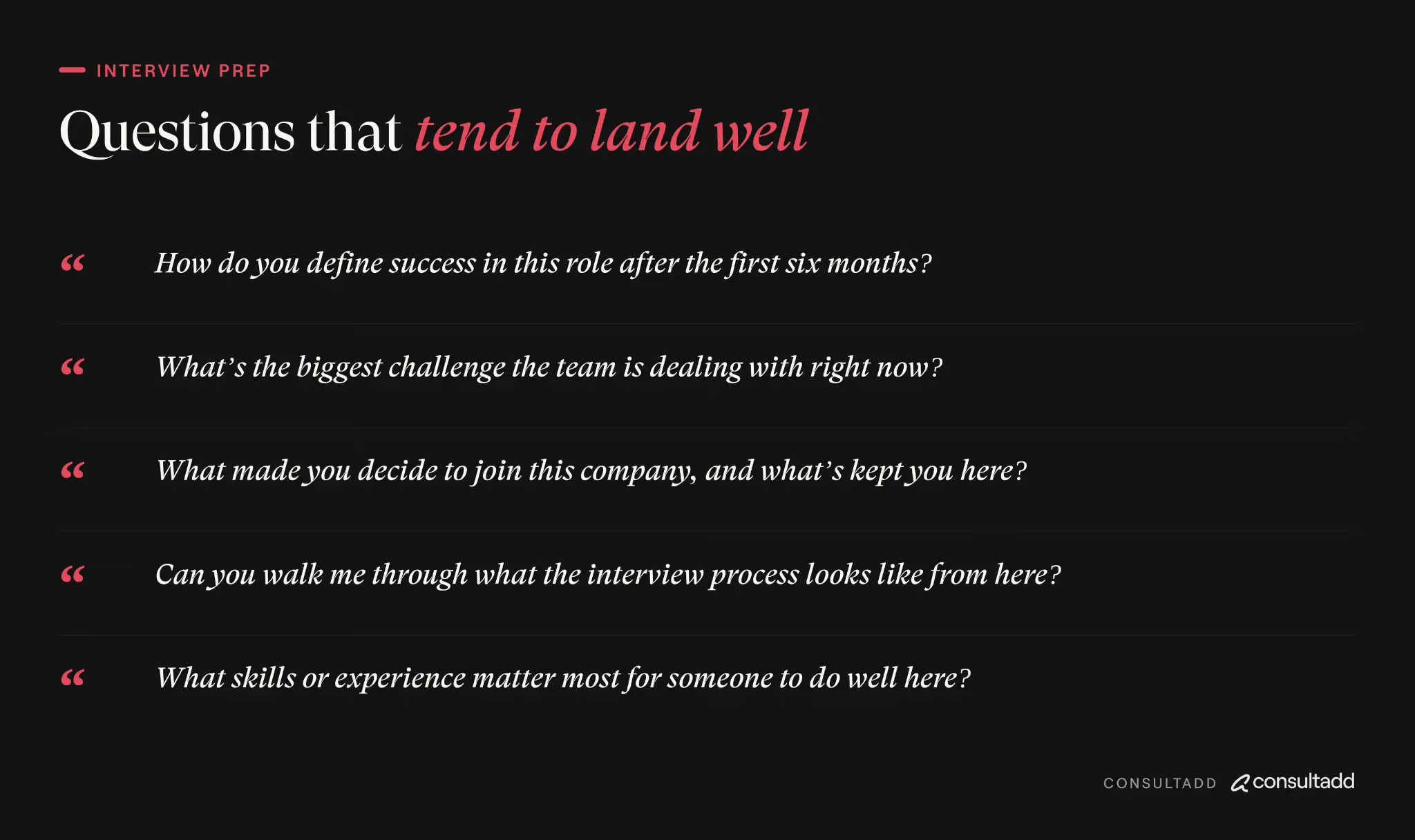
Questions that tend to land well
QUESTION - "How do you define success in this role after the first six months?"
This gets past the job description and into what the manager actually expects. It also gives a candidate something concrete to reference if they get the offer and want to hit the ground running.
QUESTION - "What's the biggest challenge the team is dealing with right now?"
Hiring managers tend to answer this one honestly, since it's a question they'd want answered if they were on the other side of the table. The response often reveals more about the role's real day-to-day than the posted job description does.
QUESTION - "What made you decide to join this company, and what's kept you here?"
This works well because it shifts the conversation to the interviewer as a person, not just a gatekeeper. It's also a question interviewers don't get asked often, which tends to make the exchange feel more genuine on both sides.
QUESTION - "Can you walk me through what the interview process looks like from
Practical and low-risk. It shows the candidate is thinking ahead without sounding pushy about wanting an answer immediately.
QUESTION - "What skills or experience matter most for someone to do well here?"
Job postings often list far more requirements than actually matter day to day. This question gets the interviewer to rank what's genuinely important, which is useful information whether or not the candidate gets the job.
Questions that tend to backfire
Not every question helps. A few patterns come up often enough to be worth naming directly:
- Anything already covered in the job posting or earlier in the conversation. It signals the candidate wasn't listening.
- Questions that are only about personal benefit this early, like vacation days or remote work flexibility, before there's any indication of mutual interest.
- Overly broad questions like "What's the company culture like?" with no follow-up angle. It rarely produces a useful answer and can feel like a box being checked.
- Anything that puts the interviewer on the spot about layoffs, turnover, or leadership drama, unless there's a specific and professional reason to raise it.
None of these are disqualifying on their own. But stacking several of them in one interview tends to leave a flatter impression than asking one or two sharp, specific questions.
How many questions is too many
There's no fixed number, but two or three well-chosen questions usually beat five generic ones.
Interviewers are often running on a tight schedule, and a candidate who asks one strong question and listens carefully to the answer comes across better than one who works through a long list without reacting to what they're told.
SHRM's guidance on structured interviewing makes a similar point from the employer's side:
A short list of well-chosen questions gets more useful answers than a long one asked without follow-up. The same logic applies in reverse when a candidate is the one asking.
It helps to prepare more questions than needed, then adjust in the moment. If the interviewer already answered a planned question earlier in the conversation, cross it off and ask a follow-up instead. This is one of the clearest signals of active listening versus a rehearsed script.
For candidates preparing for technical interviews specifically, the questions worth asking often shift toward the engineering side, like how the team handles code review or what the on-call rotation looks like.
Our guide on standing out in a full stack developer interview covers how technical candidates can adjust their approach for that kind of round.
If you're interviewing through a staffing agency
Working with a recruiter adds a layer worth understanding before the closing-questions moment even comes up.
Some of the terms behind the scenes, like who technically employs you during a contract, how benefits are handled, and how the placement fee affects the negotiation room, aren't always obvious from the outside.
Our breakdown of working with staffing companies covers what candidates should understand about that setup going in.
It also helps to know how the agency vetted you in the first place, since that shapes what the client company already knows before you walk into the room.
Our guide on what candidate vetting actually involves explains what typically happens before a candidate ever reaches the interview stage.
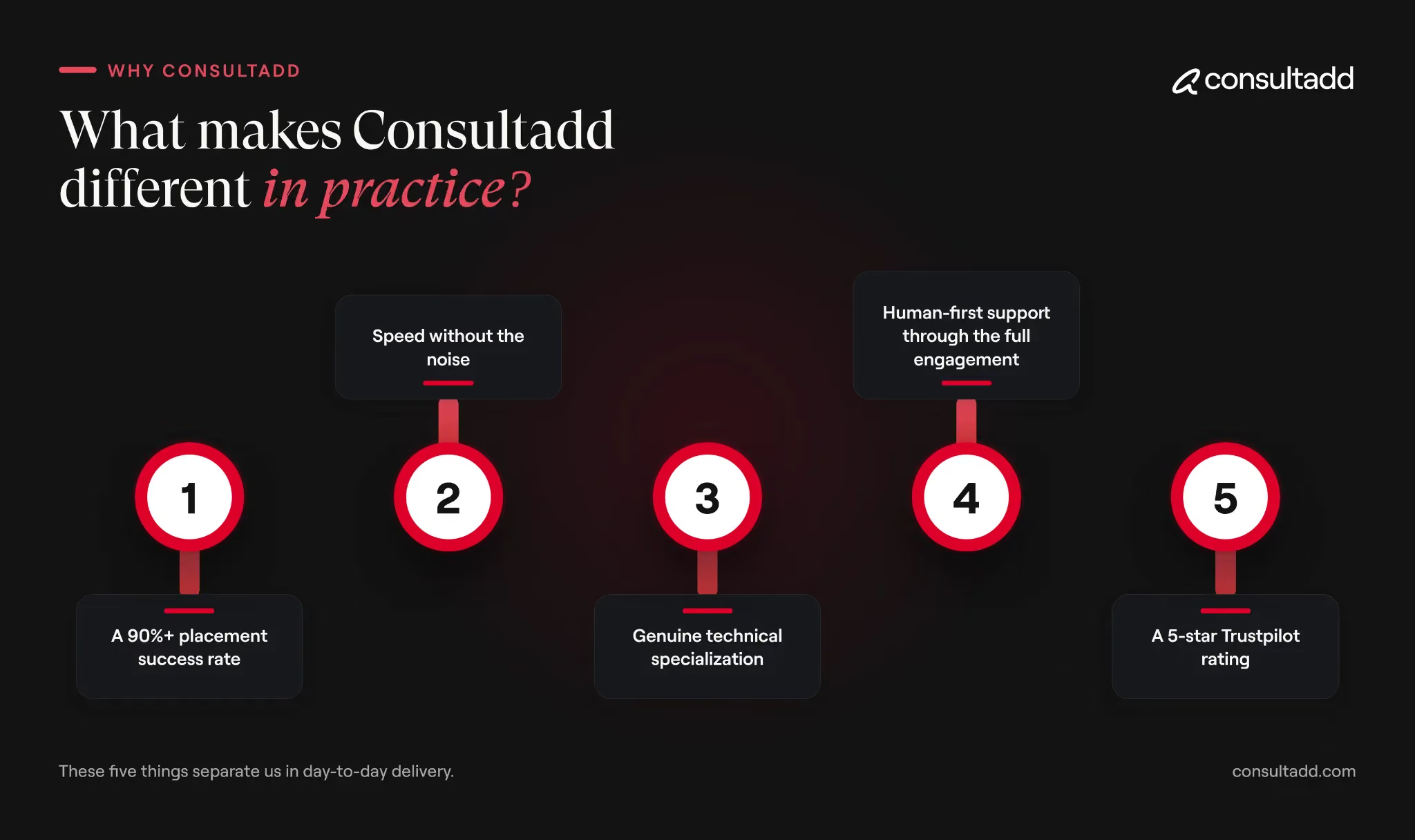
Start Strong With Consultadd
With 15 years in business and 5,000+ successful staffing engagements, we don't just fill roles, we build reliability into your process. We've supported 65 staffing companies in the past year alone and maintain MSAs with industry leaders like Robert Half and TEKsystems.
Here's what working with Consultadd looks like:
- Talent sourced in under 24 hours
- Ready-to-deploy candidates, vetted for experience and compliance
- Lower turnover risk: we match long-term goals, not just short-term needs
- Seamless compliance: visa, documentation, onboarding? Handled.
- Dedicated 1:1 account managers for responsive, personalized support
- Top 100 candidate matches delivered in the past year
- Strong partnerships with universities to tap into fresh, committed talent
- Post-placement support so your investment grows beyond day one
For candidates, your next opportunity is more than just a job title, it's a chance to build skills, gain experience, and move your career forward. At Consultadd, we connect technology professionals with projects and employers that align with their goals, whether they're looking for contract, contract-to-hire, or long-term opportunities.
The tech job market moves fast, but the right guidance can make all the difference. Ready to take the next step in your career journey? Explore Opportunities >>
Key Takeaways
- "No questions" is almost always the wrong answer, even in a strong interview.
- Match your questions to the interview stage. Save compensation and benefits for later rounds.
- Questions that ask the interviewer to define success or rank priorities tend to reveal more than generic culture questions.
- Two or three sharp questions land better than a long rehearsed list.
- Candidates going through a staffing agency should understand the placement structure before negotiation-style questions come up.
FAQs
What's the best question to end an interview with?
There isn't one universal best question, but asking how success will be measured in the first six months tends to work across most roles. It gives the interviewer something concrete to answer and gives the candidate useful information either way.
Is it bad to ask about salary in a first interview?
It depends on who raises it first. If a recruiter brings up compensation, it's fair to engage. If not, it's usually safer to wait until a later round or an offer discussion, since bringing it up too early can come across as the only thing the candidate cares about.
How many questions should I prepare before an interview?
Prepare four or five, but expect to only ask two or three. Some of the prepared ones will likely get answered naturally during the conversation, so having extras avoids running out of things to ask.
Should I ask different questions in a panel interview versus a one-on-one?
Yes. In a panel, it helps to direct a question at a specific person's role rather than asking the group something generic, since it shows attention to who's actually in the room.
What if the interviewer already answered everything I planned to ask?
Ask a follow-up on something they mentioned earlier instead of forcing a prepared question that no longer fits. It shows you were actually listening rather than running through a script.
Is it okay to ask an interviewer about their own experience at the company?
Yes, and it often leaves a strong impression. Interviewers rarely get asked about their own path, and a genuine question about it tends to make the closing minutes feel more like a conversation and less like an evaluation.
.webp)


.webp)