.avif)

Introduction
Ask ten staffing leaders what worries them most this year and the answers will overlap more than you'd expect. The staffing and recruiting industry challenges in 2026 aren't exotic.
They're old problems, cash flow, client retention, competition, wearing new clothes, plus a genuinely new one that didn't exist in this form two years ago: candidates who might not be real people at all.
This isn't a trends roundup dressed up with buzzwords. It's a look at what's actually pressuring agencies right now, backed by the numbers behind each problem, and what firms are doing about it.
TL;DR
- AI-generated candidates and deepfake interviews have gone from a rare incident to a volume problem agencies now have to plan around.
- Margins are getting squeezed from both directions: clients want lower rates through MSPs and VMS platforms, while payroll and compliance costs keep rising.
- Client consolidation means fewer, bigger vendor relationships, and agencies outside the preferred list are getting shut out earlier in the process.
- Skills-based hiring is now mainstream, which changes what agencies need to screen for and prove to clients.
- Cash flow mismatch, paying workers weekly while collecting from clients in 30 to 90 days, remains one of the most underrated risks in the industry.
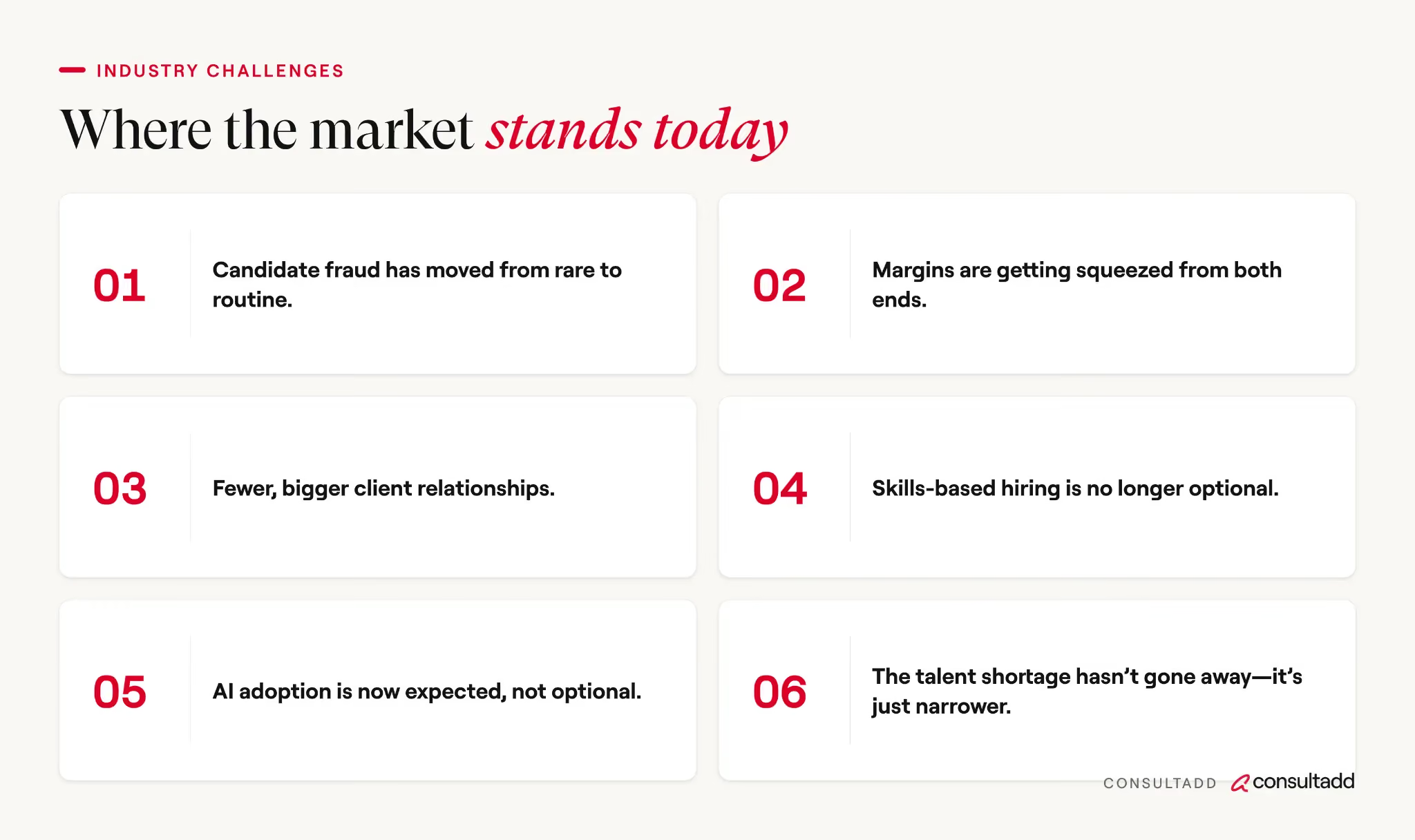
1. Candidate fraud has moved from rare to routine
This is the challenge that caught most of the industry off guard. Generative AI has made it cheap and fast to fabricate a convincing candidate, complete with a polished resume, faked credentials, and in some cases a synthetic face on a video call.
The numbers are hard to ignore:
- An analysis covering nearly 20,000 live interviews between July 2025 and January 2026 found that 38.5% showed signs of AI-cheating behavior, and the rate roughly tripled within a single three-month stretch.
- Separately, a survey of large organizations reported by Checkr found that 41% had already onboarded someone who turned out not to be who they claimed to be, meaning the interview happened, references checked out, and the fraud only surfaced weeks or months later.
For staffing agencies specifically, this isn't just an HR headache. A fraudulent placement can mean refunding a client, absorbing the cost of an investigation, and doing lasting damage to a relationship an agency spent years building.
Some firms are responding by reintroducing in-person rounds for sensitive roles, others are adding identity verification steps earlier in the process rather than treating it as a final formality.
2. Margins are getting squeezed from both ends
Clients want lower bill rates. Payroll taxes, statutory benefits, and compliance costs keep climbing.
Agencies are stuck in the middle, and the squeeze is getting tighter as more staffing spend routes through vendor management systems and managed service providers that negotiate rates at scale.
Cash flow deserves its own callout here, because it's easy to overlook until it's a real problem. Agencies typically pay their contractors weekly or biweekly but often don't collect from clients for 30, 60, or even 90 days.
When a client pushes for longer payment terms, that gap widens, and it's one of the more common reasons a growing agency runs into liquidity trouble even while winning new business.
3. Fewer, bigger client relationships
According to the American Staffing Association, clients are consolidating their staffing providers and in some cases building internal platforms to handle hiring themselves, which is pushing revenue and penetration rates down for firms that can't clearly answer the "why staffing" question.
That leaves agencies that aren't already on the preferred list fighting harder just to get a seat at the table, let alone win the work.
This shift is pushing staffing firms to answer a harder question than they used to: not just "can you fill this role," but "why should we use a staffing partner instead of doing this ourselves."
Firms that can point to something concrete, faster time-to-fill, lower turnover, deeper compliance coverage, have an easier time making that case than firms competing on price alone.
4. Skills-based hiring is no longer optional
Roughly 70% of employers now practice some form of skills-based hiring, evaluating candidates on demonstrated ability rather than degrees or brand-name employers.
That's a meaningful shift for staffing agencies, because it changes what a strong candidate submission actually needs to include. A resume with the right job titles used to be enough to get a client's attention.
Now agencies need:
- Work samples
- Structured assessments
- Verifiable project history to back up a submission, especially in technical roles where clients have gotten more skeptical of credentials alone
Agencies that built their sourcing process around keyword matching are having to retool, while firms that already screen for demonstrated skill are finding it easier to compete on quality instead of speed alone.
For a closer look at how this plays out in technical hiring specifically, our guide on IT staff augmentation breaks down what clients are actually screening for when they bring on contract technical talent.
5. AI adoption is now expected, not optional
Around 85% of staffing firms increased their use of AI tools in the past year, covering resume screening, candidate matching, and scheduling.
- The pressure isn't just about efficiency anymore.
- Agencies that lag on AI adoption risk losing submissions to firms that can get a qualified shortlist in front of a client hours faster.
The catch is that AI adoption brings its own compliance exposure.
- A growing number of states now regulate how automated tools can be used in hiring decisions, including requirements to notify candidates when AI is involved in screening or evaluation.
- An agency that adopts a screening tool without understanding those requirements can end up trading one risk for another.
Filling AI-related technical roles has its own separate challenge layered on top of this.
- Demand for AI and cloud skills has grown faster than almost any other category, and agencies still submitting candidates without that specific experience are finding those submissions rejected outright.
Our breakdown of strategies to close the AI skills gap covers how agencies are adjusting their sourcing for this specific demand.
6. The talent shortage hasn't gone away, it's just narrower
The broad labor shortage headlines from a few years ago have cooled, but shortages in specific verticals, healthcare, engineering, skilled trades, and specialized IT, remain persistent.
Roughly three out of four employers globally still report difficulty finding candidates with the right skills, a figure that has stayed near record highs for several years running.
This creates an uneven market: Some roles get flooded with applicants, many of them AI-polished or outright fake, while genuinely qualified candidates in scarce specialties get pursued by multiple agencies at once.
The result is that speed and relationship depth matter more in the scarce categories, while volume and screening rigor matter more everywhere else.
What this means for agencies going into the rest of 2026
None of these challenges are going to resolve on their own, and none of them are reasons to slow down.
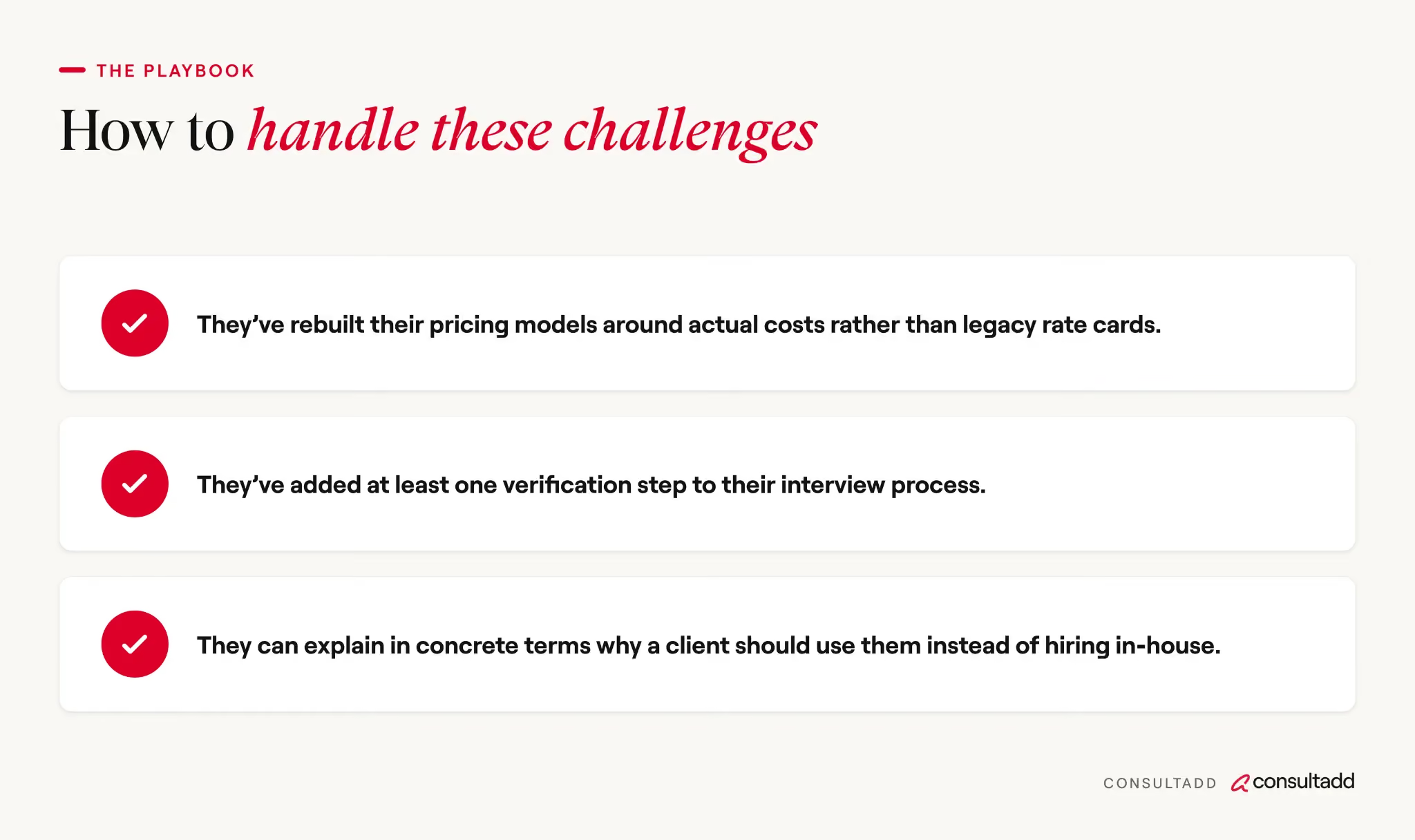
The staffing firms handling this well tend to share a few habits:
- They've rebuilt their pricing models around actual costs rather than legacy rate cards
- They've added at least one verification step to their interview process
- They can explain in concrete terms why a client should use them instead of hiring in-house
The agencies struggling the most tend to be the ones still competing purely on price and speed, with no real answer for why a client should stick with them once a cheaper or faster-looking alternative shows up.
Differentiation isn't a marketing exercise anymore. It's the actual survival strategy.
Start Strong With Consultadd
With 15 years in business and 5,000+ successful staffing engagements, we don't just fill roles, we build reliability into your process. We've supported 65 staffing companies in the past year alone and maintain MSAs with industry leaders like Robert Half and TEKsystems.
Here's what working with Consultadd looks like:
- Talent sourced in under 24 hours
- Ready-to-deploy candidates, vetted for experience and compliance
- Lower turnover risk: we match long-term goals, not just short-term needs
- Seamless compliance: visa, documentation, onboarding? Handled.
- Dedicated 1:1 account managers for responsive, personalized support
- Top 100 candidate matches delivered in the past year
- Strong partnerships with universities to tap into fresh, committed talent
- Post-placement support so your investment grows beyond day one
For candidates, your next opportunity is more than just a job title, it's a chance to build skills, gain experience, and move your career forward. At Consultadd, we connect technology professionals with projects and employers that align with their goals, whether they're looking for contract, contract-to-hire, or long-term opportunities.
The tech job market moves fast, but the right guidance can make all the difference. Ready to take the next step in your career journey? Explore Opportunities >>
Key Takeaways
- AI candidate fraud has become a volume problem, not an occasional incident, and needs a verification step built into the process.
- Margin pressure from both sides, client rate demands and rising costs, is pushing agencies toward niche specialization.
- Client consolidation means agencies need a clear answer for why they're worth using over building an in-house team.
- Skills-based hiring is now the default at most employers, changing what a competitive candidate submission looks like.
- Talent shortages persist in specific verticals even as broader hiring has cooled.
FAQs
What's the single biggest challenge facing staffing agencies in 2026?
There isn't a clean single answer, but candidate fraud and margin pressure are the two most agencies bring up unprompted. Fraud is newer and less understood, which makes it feel more urgent even though margin pressure has a longer track record of putting agencies out of business.
How are staffing agencies dealing with AI-generated fake candidates?
Common responses include adding identity verification earlier in the process, bringing back in-person interviews for sensitive roles, and training recruiters to recognize inconsistencies in video calls, like lighting or audio that doesn't match the environment.
Is the talent shortage still a major issue in 2026?
Yes, but it's uneven. Broad labor shortages have eased in some sectors, while healthcare, engineering, and specialized IT roles remain genuinely hard to fill.
What does skills-based hiring mean for staffing agencies specifically?
It means candidate submissions need more than a matching job title. Agencies increasingly need to show work samples, assessment results, or verifiable project history to satisfy clients who are screening for demonstrated ability over credentials.
Why is client consolidation a problem for smaller staffing firms?
Larger clients are narrowing their approved vendor lists and sometimes building internal recruiting teams, which shrinks the number of opportunities smaller agencies can compete for and raises the bar for getting on a preferred list in the first place.
How much does cash flow timing actually affect staffing agencies?
More than most people outside the industry realize. Agencies typically pay contractors weekly while waiting 30 to 90 days to collect from clients, and that gap can create real liquidity strain, especially during periods of fast growth or when clients push for longer payment terms.



.webp)