
.avif)

Introduction
Most people fall into recruiting. Very few plan it.
They take a job at an agency because it pays on performance and doesn't require a specific degree, and either they're gone in eight months or they're still there a decade later running a desk that pays more than the engineers they place.
Technical recruiter jobs sit in that unusual middle ground. Low barrier to entry, high variance in outcome. The listings all promise uncapped earnings and growth, and they're not lying exactly, but they leave out what the first year actually feels like. This covers the parts the job posts skip.
TL;DR
- Technical recruiter jobs vary enormously by setting. Agency, in-house, contract, and RPO are four different jobs sharing one title.
- Compensation is usually base plus commission, and the split matters more than the base number.
- BLS puts the median wage for human resources specialists, the category that includes recruiters, at $75,940 as of May 2025, with about 73,700 openings projected each year.
- You don't need a technical background, but you do need enough fluency to hold a credible conversation with an engineer.
- Attrition in the first year is high, and it's usually about the sales reality rather than the technical learning curve.
What the job actually involves day to day
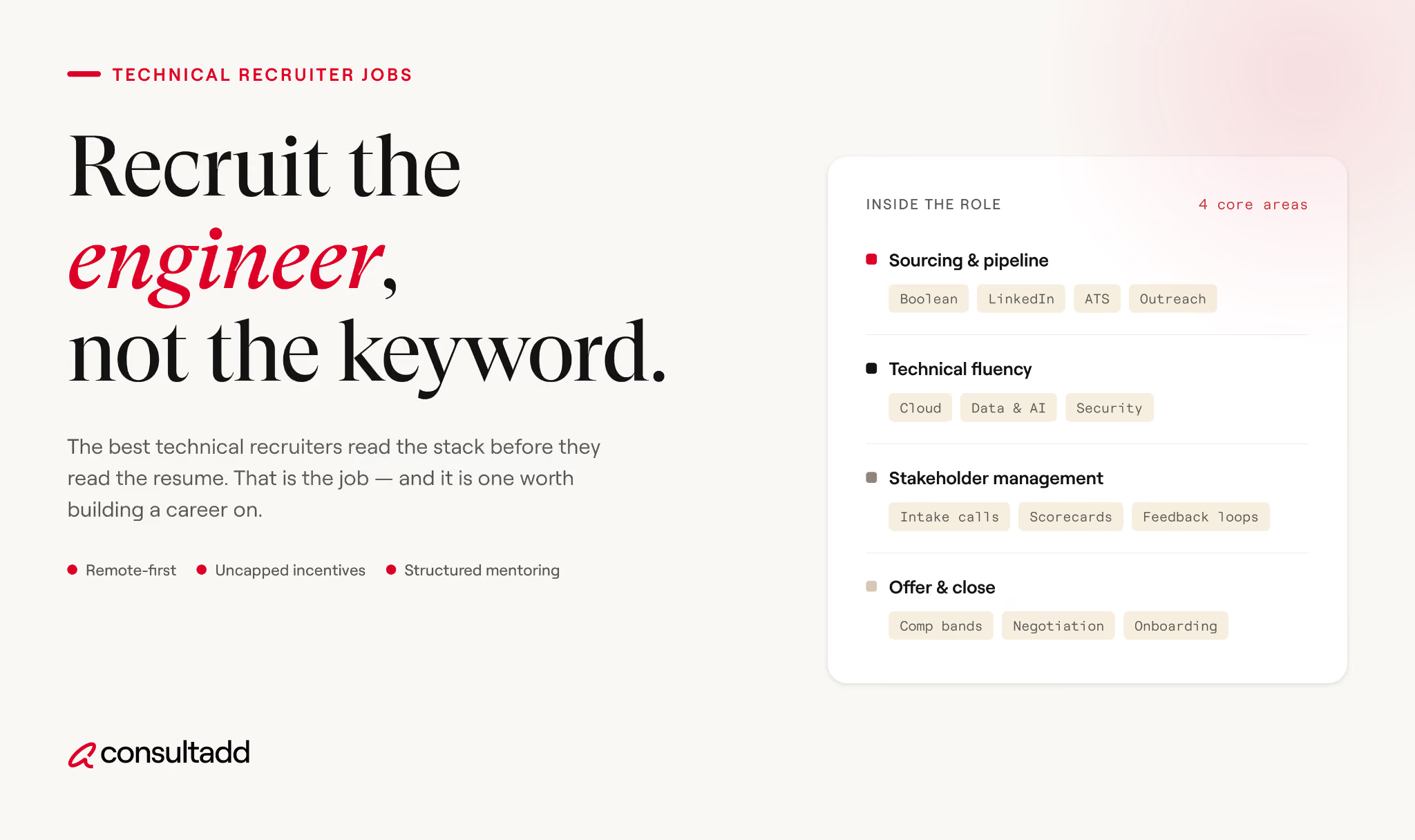
Strip away the job description language and a technical recruiter does four things:
finds people, convinces them to talk, assesses whether they fit, and manages everyone's expectations until a decision gets made.
The proportions shift depending on where you work. At an agency, more of your day is outreach and business development. In-house, more of it is coordination and stakeholder management.
A typical agency day looks roughly like this:
- An hour or two of sourcing in the morning.
- Calls through the middle of the day, some with candidates and some with hiring managers. Submittals written in the afternoon.
- Then the part nobody mentions, which is chasing feedback on candidates you submitted last week from people who haven't replied.
The waiting is the part that surprises new recruiters. You do good work, you submit a strong candidate, and then nothing happens for six days because the hiring manager is on vacation. Your pipeline sits frozen and your commission sits with it.
If you want the mechanics of the process itself, Consultadd's guide to how the technical recruitment process runs end to end covers the sourcing, screening, and assessment stages in detail.
This piece stays on the career path.
Where technical recruiter jobs sit
Four settings, four genuinely different jobs. Applying to all of them with the same resume is a mistake.
Two things worth knowing before you pick:
Agency recruiting teaches you faster. You'll work more reqs in six months than an in-house recruiter works in two years, and the feedback loop on whether you're any good is brutally short. That's why many in-house recruiters started at agencies.
In-house pays more predictably and less at the top. If your ceiling matters more than your floor, agency wins. If the reverse, in-house does.
What technical recruiter jobs pay
Start with the government baseline. BLS groups recruiters under human resources specialists, which reported a median annual wage of $75,940 in May 2025, with employment projected to grow 6% from 2025 to 2035 and about 73,700 openings a year.
That median understates technical recruiting specifically, since the category includes generalist HR roles. Technical recruiters typically earn above it, and agency recruiters with a working desk can earn well above it.
But the headline number matters less than the structure.
The recoverable draw question is the one that catches people. If your draw is recoverable and you underperform, you can finish a quarter owing your employer money. Ask directly, and get the answer in writing.
Also ask what the median recruiter on the team earned last year, not the top performer. Every agency has a story about someone who made $300,000. Fewer will tell you what the middle of the desk looks like.
The skills that separate a recruiter from a resume forwarder
The technical fluency bar is lower than people assume and the communication bar is higher.
You don't need to write code. You do need to know enough that an engineer doesn't immediately clock you as someone reading a keyword list.
Knowing that React and React Native aren't interchangeable, that a Java developer isn't a JavaScript developer, and that "five years of Kubernetes" was barely possible a few years ago will put you ahead of a surprising number of working recruiters.
Beyond that, four things separate the good ones:
1. Asking a second question.
A candidate says they worked on a migration. A weak recruiter writes "migration experience" in the submittal. A strong one asks what moved, why, and what broke.
2. Reading a req critically.
Many job descriptions ask for things the hiring manager doesn't actually need. Recruiters who clarify that upfront fill roles faster than recruiters who source against the literal text.
3. Delivering bad news quickly.
The instinct is to delay a rejection. Every good recruiter I know does the opposite, because a fast no protects the relationship and a slow no destroys it.
4. Keeping up.
WEF's Future of Jobs Report 2025 found employers expect 39% of workers' core skills to change by 2030. For a technical recruiter that churn is your whole job. The stack you learned to screen for in your first year will be partly obsolete by your fourth.
How to break in without experience
This is genuinely one of the more accessible entry points in the tech industry, which is both the appeal and the catch.
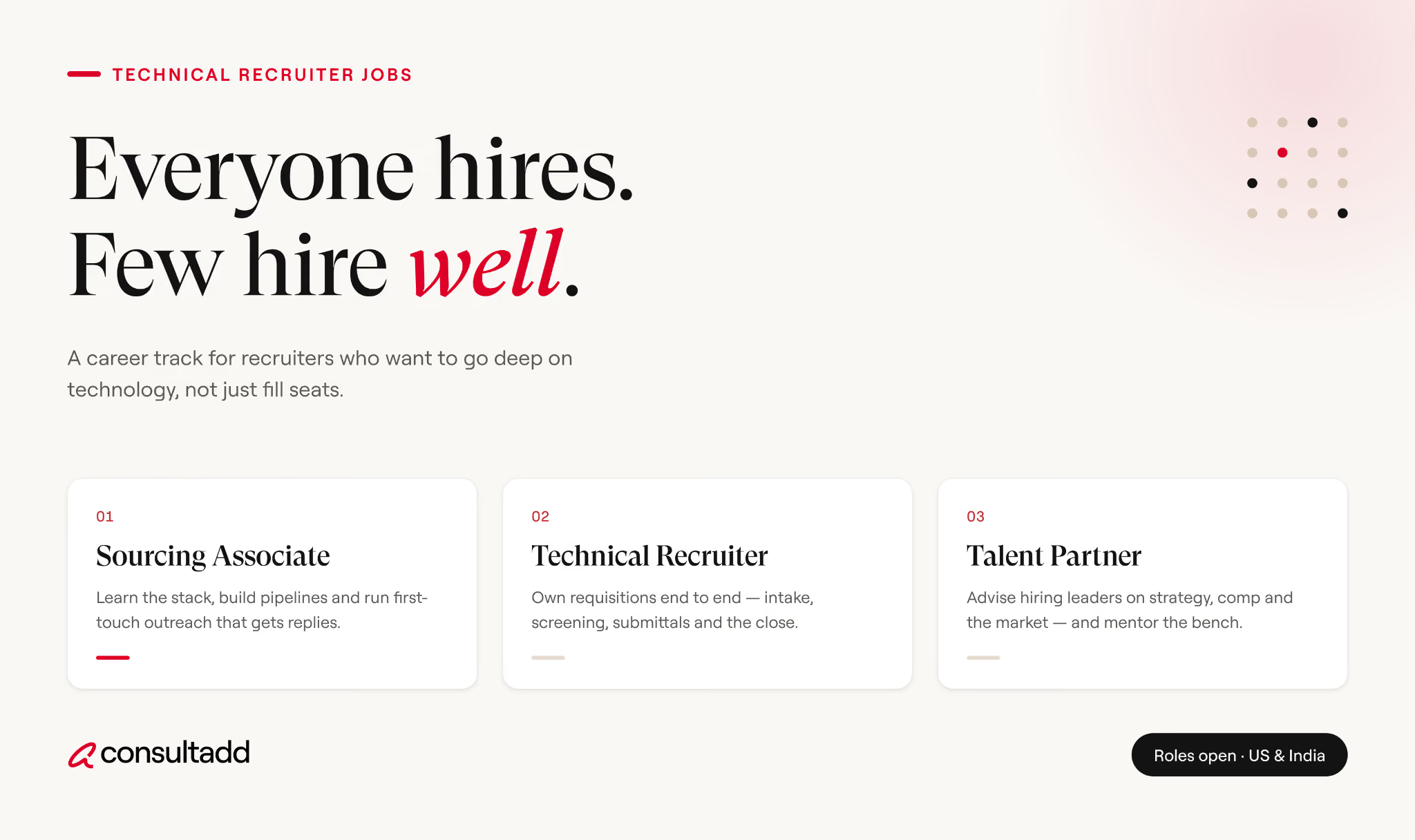
The most common route is starting as a sourcer. Sourcing is the front half of recruiting: find candidates, make first contact, hand qualified ones to a recruiter.
Lower pay, narrower scope, and the best training available for the full role. Many agencies hire sourcers with no relevant background.
Other realistic paths in:
- Agency entry-level roles. They hire on attitude and volume tolerance more than credentials. Expect a phone-heavy first six months.
- Adjacent sales experience. SDR and BDR backgrounds transfer almost directly. The skill of getting a stranger to take a call is most of the job.
- Coordinator to recruiter. Recruiting coordinator roles sit in-house and convert to recruiter regularly. Slower, more stable.
- Technical background pivot. Former engineers, QA analysts, and support staff who move into recruiting have an obvious credibility advantage and often skip the junior tier entirely.
What actually helps in the interview: demonstrate you've done the homework on the market.
Understanding how the U.S. tech job market split and being able to discuss where demand concentrated will separate you from candidates who just say they're a people person.
And know the vocabulary.
Terms like bench candidates in IT staffing come up constantly in agency interviews, and not knowing them signals you haven't looked into the work.
Where the career goes
Two exits worth noting, since they're common and rarely mentioned:
- Experienced technical recruiters move into HR tech sales fairly easily, because they know the buyer and the pain.
- And a good number start their own agencies, which is the highest-ceiling and highest-risk option available.
The honest downsides
Balanced advice beats a recruitment pitch, so here's what the job postings leave out:
First-year attrition is high. Not because the work is intellectually hard, but because it's a sales job with a long feedback delay, and people who came for "working with people" discover the metrics underneath.
You don't control the outcome. Your candidate accepts a counteroffer. The req gets frozen. The hiring manager ghosts. You did everything right and earned nothing. That happens repeatedly, and it's the single biggest reason people leave.
The reputation problem is real. Engineers get a lot of bad outreach, and you'll inherit that skepticism from day one whether you deserve it or not.
And in a soft hiring market, agency recruiters feel it first and hardest. Recruiting headcount is among the earliest cuts when hiring slows.
None of that makes it a bad career. It makes it a career worth entering with clear eyes rather than because a job ad promised uncapped earnings.
Start Strong With Consultadd
With 15 years in business and 5,000+ successful staffing engagements, we don't just fill roles, we build reliability into your process. We've supported 65 staffing companies in the past year alone and maintain MSAs with industry leaders like Robert Half and TEKsystems.
Here's what working with Consultadd looks like:
- Talent sourced in under 24 hours
- Ready-to-deploy candidates, vetted for experience and compliance
- Lower turnover risk: we match long-term goals, not just short-term needs
- Seamless compliance: visa, documentation, onboarding? Handled.
- Dedicated 1:1 account managers for responsive, personalized support
- Top 100 candidate matches delivered in the past year
- Strong partnerships with universities to tap into fresh, committed talent
- Post-placement support so your investment grows beyond day one
For candidates, your next opportunity is more than just a job title, it's a chance to build skills, gain experience, and move your career forward. At Consultadd, we connect technology professionals with projects and employers that align with their goals, whether they're looking for contract, contract-to-hire, or long-term opportunities.
The tech job market moves fast, but the right guidance can make all the difference. Ready to take the next step in your career journey? Explore Opportunities >>
Key takeaways
- Agency, in-house, contract, and RPO recruiting share a title and little else. Decide which setting you want before you apply.
- Interrogate the pay structure, especially whether the draw is recoverable, rather than fixating on the base salary.
- BLS reports a $75,940 median for human resources specialists as of May 2025 with roughly 73,700 annual openings, and technical recruiting typically pays above that category median.
- Enough technical fluency to ask a credible follow-up question beats memorizing a list of frameworks.
- Sourcing is the most reliable way in with no experience, and the fastest way to learn the full role.
FAQs
What does a technical recruiter do?
A technical recruiter sources, screens, and manages candidates for technology roles like software engineering, DevOps, data, and security. The job involves outreach, qualifying conversations, coordinating interviews, and managing expectations on both sides until an offer is signed or declined.
Do you need a technical background for technical recruiter jobs?
No, and most technical recruiters don't have one. You need enough fluency to hold a credible conversation with an engineer and ask a sensible follow-up question. Former engineers who move into recruiting do have a real advantage and often start at a more senior level.
How much do technical recruiters make?
BLS reports a median annual wage of $75,940 for human resources specialists, the category that includes recruiters, as of May 2025. Technical recruiters generally earn above that, and agency compensation is typically a base plus commission on gross profit, which makes total earnings highly variable.
Is technical recruiting a good career?
It suits people who are comfortable with sales pressure and a delayed feedback loop. The entry barrier is low, the earning ceiling at agencies is high, and the career ladder is clear. First-year attrition is also high, so it's worth being honest with yourself about the sales component.
How do I get a technical recruiter job with no experience?
Sourcing roles are the most common entry point and many agencies hire with no relevant background. SDR or BDR sales experience transfers well, and in-house recruiting coordinator roles convert to recruiter regularly. Learning the market and the staffing vocabulary before you interview makes a visible difference.
What is the difference between agency and in-house technical recruiting?
Agency recruiters work multiple clients, carry revenue targets, and earn meaningful commission with a lower base. In-house recruiters support one company, work fewer reqs in greater depth, and earn a higher base with limited variable pay. Agency teaches faster; in-house is steadier.
.webp)



.png)
