.avif)

Introduction
Ask ten people what "hiring on merit" means and you'll get ten slightly different answers. Some picture a pure test of skill. Others hear a coded argument about diversity programs. The phrase carries a lot of weight right now, and that makes it easy to talk past each other.
So what is merit-based hiring, stripped of the noise? It's a way of selecting people based on their skills, experience, qualifications, and proven performance rather than on personal characteristics, connections, or bias. The idea is that the most capable person for the job gets the job.
Simple in theory. Trickier in practice, because "merit" has to be defined by someone, and how you define it decides who makes the cut. This guide covers what merit-based hiring actually means, how to build it, where it helps, where it can quietly go wrong, and how it fits with the law in 2026.
TL;DR
- Merit-based hiring selects candidates on skills, experience, and performance rather than background, identity, or connections.
- It overlaps heavily with skills-based hiring, which measures proven ability instead of relying on credentials like a specific degree.
- Done well, it reduces bias and widens the talent pool. Done carelessly, it can bake in old biases through the criteria you choose.
- It has moved to the center of the DEI debate, with some organizations shifting toward a "merit, excellence, intelligence" framing.
- Merit-based hiring still has to comply with anti-discrimination law, including Title VII and EEOC guidance.
What merit-based hiring actually means
At its core, merit-based hiring rests on one principle: the job should go to the person best able to do it. Ability and results decide the outcome, not who someone knows or what group they belong to.
In a merit-based system, you evaluate candidates against the actual requirements of the role. What skills does the work demand? What has this person accomplished? Can they demonstrate the ability, not just claim it?
The appeal is obvious. It promises fairness through consistency, since everyone is measured by the same yardstick. It also promises performance, because you're selecting for capability rather than comfort or familiarity.
But there's a catch worth naming early. Merit is not a fact sitting in the world waiting to be measured. Someone has to define it. And if the definition is sloppy, the process can feel objective while quietly favoring one kind of candidate over another. Hold that thought, because it comes back later.
Merit-based vs skills-based hiring
These two terms get used almost interchangeably, and they're closely related, but they're not identical.
Merit-based hiring is the broad principle: reward ability and results.
Skills-based hiring is a specific method for putting that principle into action. It measures what a candidate can actually do, often replacing a rigid credential filter like "bachelor's degree required" with a test of proven skill.
The practical difference shows up in who gets through the door. A degree requirement screens on where someone studied. A skills assessment screens on whether they can do the work. The second is usually a better predictor of performance, and it opens the door to talented people from nontraditional paths.
For most employers, the two work best together. Merit sets the goal, and skills-based methods are how you reach it honestly.
How merit-based hiring works in practice
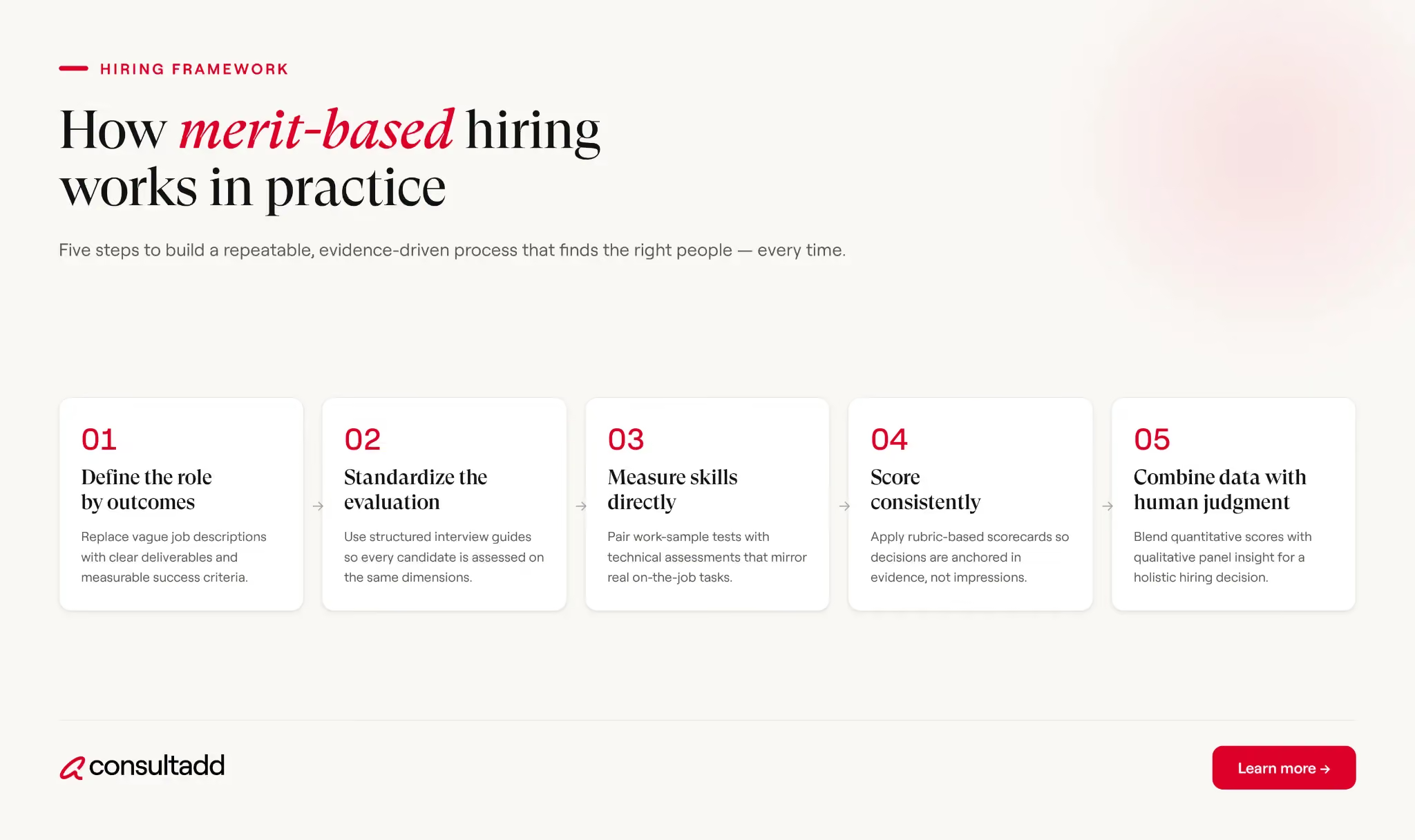
Talking about merit is easy. Building a process that actually delivers it takes structure. Here's what a merit-based approach looks like when it's done with care.
Define the role by outcomes.
List the specific, measurable things the person must be able to do, not a wish list of nice-to-haves. Ask what a degree or credential actually signals, and whether a direct skill check would tell you more.
Standardize the evaluation.
Use the same criteria and the same questions for every candidate so you're comparing like with like.
Measure skills directly.
Work samples, structured assessments, and practical exercises give you concrete evidence instead of impressions.
Score consistently.
Written scoring rationales and rotating interviewers reduce the chance that one person's gut feeling drives the decision.
Combine data with human judgment.
Numbers catch things people miss, and people catch context that numbers miss.
This is where a structured vetting process earns its keep.
Consultadd's guide to the candidate vetting process that cuts bad hires walks through how to standardize evaluation without turning it into a box-ticking exercise.
The theme running through all of it is consistency. A merit-based process isn't merit-based because you call it that. It's merit-based because every candidate faces the same fair test.
The benefits of hiring on merit
When it's built well, hiring on merit pays off in a few concrete ways:
- You get better performance, because you're selecting for demonstrated ability rather than pedigree or rapport.
- You reduce certain kinds of bias, since a structured, skills-first process leaves less room for a hiring manager's unconscious preferences to steer the outcome.
- You also widen the talent pool. When you stop screening solely on credentials and start measuring skills, you open the door to career changers, self-taught professionals, and people returning to the workforce after a gap. Some of the strongest candidates never fit the traditional mold.
- There's a business case too. Focusing on what people can do, backed by real assessment, tends to produce stronger hires and fewer expensive mistakes.
In technical fields especially, a computer science degree doesn't guarantee coding ability, which is why practical assessment matters. Consultadd's guide to technical recruitment makes this point directly for engineering roles.
The risks and blind spots
Here's where honesty matters, because merit-based hiring is often sold as flawless and it isn't.
The biggest risk is the definition of merit itself. If the criteria you pick unintentionally favor one group, a process that feels objective can reinforce the very inequalities it claims to remove.
Requiring a specific degree or a particular test score, for example, can screen out capable people who never had access to those things. The bias doesn't disappear. It just hides inside the rubric.
There's also the myth of pure objectivity. Interviews, resume reviews, and even assessment design involve human choices, and human choices carry bias. Calling a process merit-based doesn't automatically make it neutral.
And measurement has limits. Skills tests capture some abilities well and others poorly. Judgment, collaboration, and adaptability are real forms of merit that are hard to score on a timed exercise. Lean too hard on what's easy to measure, and you can miss what actually matters for the role.
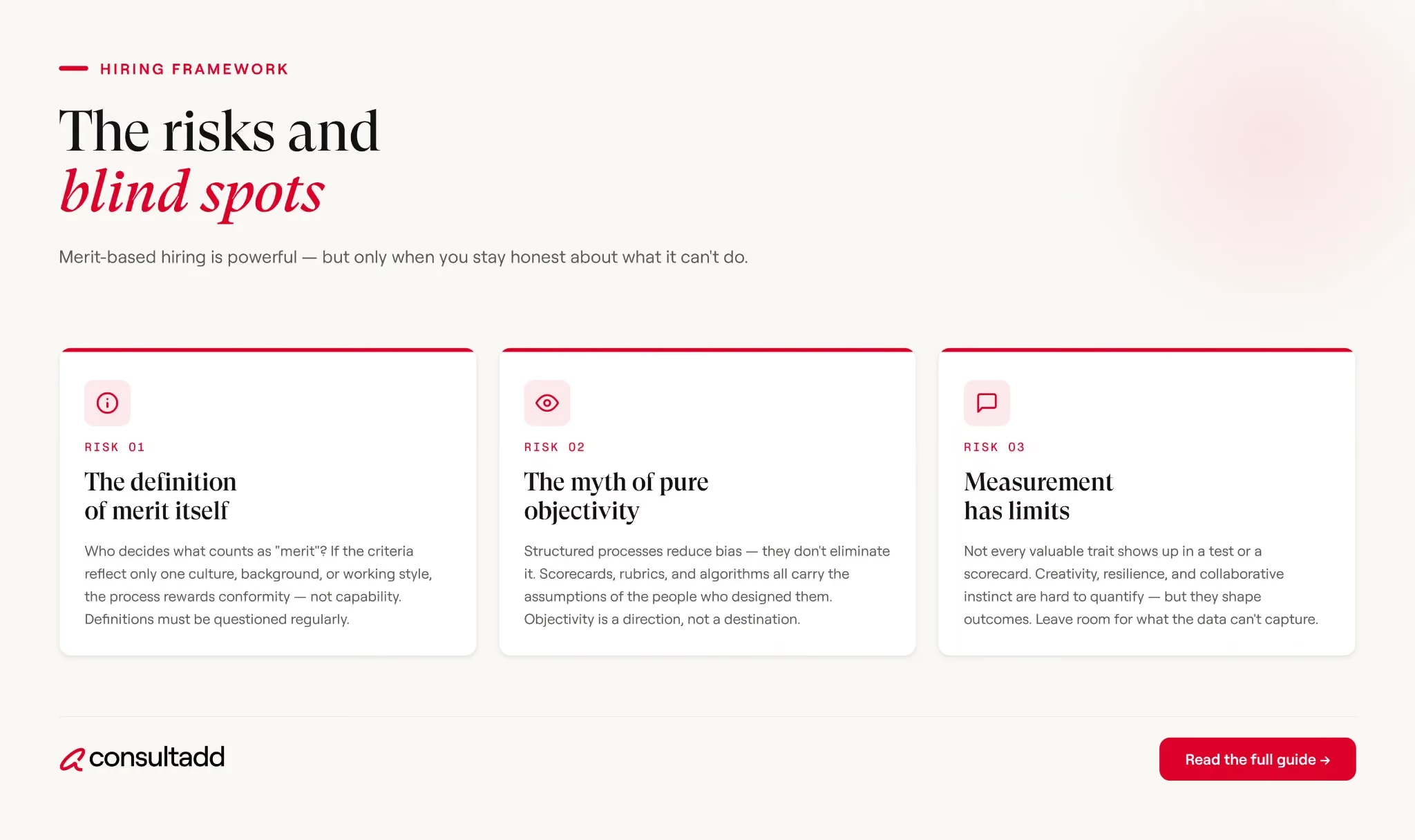
None of this means abandoning merit. It means designing for it carefully and checking your criteria against real outcomes instead of assuming they're fair.
Merit-based hiring and the DEI debate
You can't discuss this topic in 2026 without the wider debate around it. Merit-based hiring has become a flashpoint.
Over the past couple of years, many U.S. organizations have reexamined their diversity, equity, and inclusion programs in response to shifting federal guidance and legal pressure, including a 2025 executive order restricting certain DEI practices.
Out of that shift, some have adopted a framing sometimes called MEI, for merit, excellence, and intelligence, which puts capability and achievement at the center.
The debate tends to split into two camps.
- One argues that hiring should turn on talent and results alone, and that this is the fairest possible standard.
- The other argues that "merit" is never measured in a vacuum, and that ignoring structural barriers can quietly advantage people who already had a head start.
There's a reading that dissolves some of the conflict. Supporters of well-designed inclusion efforts have long argued that the point was always a genuine meritocracy, one where performance rather than privilege decides who gets ahead.
From that view, reducing bias and rewarding merit are the same project, not opposing ones. Reasonable people disagree here, and the aim of a hiring process isn't to win the argument. It's to be fair and to comply with the law.
Staying legal and fair
Whatever you call your approach, it operates inside a legal framework. Merit-based hiring is not a license to ignore anti-discrimination law.
In the U.S., that framework includes Title VII of the Civil Rights Act, which prohibits discrimination based on protected characteristics, along with guidance from the Equal Employment Opportunity Commission.
A process can be illegal even without intent to discriminate if its criteria disproportionately screen out a protected group and aren't justified by the job.
A few practical habits keep a merit-based process on solid ground. Tie every criterion to a genuine requirement of the role. Apply the same standards to everyone. Keep records of how decisions were made. And review your criteria periodically to check whether they're measuring ability or just filtering by proxy.
Fair and legal usually point the same direction. A process built on job-relevant skills, applied consistently and documented well, tends to produce both better hires and fewer legal headaches. When the stakes or the rules are unclear, it's worth involving someone who knows your local employment law.
Start Strong With Consultadd
With 15 years in business and 5,000+ successful staffing engagements, we don't just fill roles, we build reliability into your process. We've supported 65 staffing companies in the past year alone and maintain MSAs with industry leaders like Robert Half and TEKsystems.
Here's what working with Consultadd looks like:
- Talent sourced in under 24 hours
- Ready-to-deploy candidates, vetted for experience and compliance
- Lower turnover risk: we match long-term goals, not just short-term needs
- Seamless compliance: visa, documentation, onboarding? Handled.
- Dedicated 1:1 account managers for responsive, personalized support
- Top 100 candidate matches delivered in the past year
- Strong partnerships with universities to tap into fresh, committed talent
- Post-placement support so your investment grows beyond day one
For candidates, your next opportunity is more than just a job title, it's a chance to build skills, gain experience, and move your career forward. At Consultadd, we connect technology professionals with projects and employers that align with their goals, whether they're looking for contract, contract-to-hire, or long-term opportunities.
The tech job market moves fast, but the right guidance can make all the difference. Ready to take the next step in your career journey? Explore Opportunities >>
Key takeaways
- Merit-based hiring selects people on skills, experience, and performance rather than background, connections, or bias.
- It overlaps with skills-based hiring, which measures proven ability instead of relying on credentials alone.
- The main risk is how you define merit, since poor criteria can hide old biases inside a process that looks objective.
- It sits at the center of the DEI debate, and supporters on both sides often share the goal of a genuine meritocracy.
- Merit-based hiring must still comply with anti-discrimination law like Title VII and EEOC guidance.
FAQs
What is merit-based hiring in simple terms?
Merit-based hiring means choosing candidates based on their skills, experience, and proven performance rather than personal characteristics or connections. The goal is for the most capable person to get the job. It relies on evaluating everyone against the actual requirements of the role.
What is the difference between merit-based and skills-based hiring?
Merit-based hiring is the broad principle of rewarding ability and results. Skills-based hiring is a specific method that measures what a candidate can actually do, often replacing degree requirements with practical assessments. Skills-based hiring is one of the main ways to put merit-based principles into practice.
Does merit-based hiring conflict with diversity efforts?
Not necessarily. When merit criteria are well designed, they reduce bias and can widen access for underrepresented candidates. Poorly designed criteria, though, can reinforce existing inequalities. Many practitioners argue that fair, bias-free hiring and true merit are the same goal rather than opposing ones.
Is merit-based hiring legal?
Yes, and it's widely used, but it must comply with anti-discrimination laws such as Title VII and EEOC guidance. A process can still be unlawful if its criteria disproportionately exclude a protected group without being job-related. Tying every standard to genuine role requirements helps keep it compliant.
What are the main benefits of merit-based hiring?
It tends to improve performance by selecting for demonstrated ability, reduces certain hiring biases through structured evaluation, and widens the talent pool by looking past credentials. Focusing on what people can actually do also helps reduce costly hiring mistakes, especially in technical roles.
How do you build a merit-based hiring process?
Define roles by measurable outcomes, standardize your evaluation criteria, measure skills directly through assessments or work samples, and score candidates consistently. Combining objective data with human judgment produces the best results. Reviewing your criteria over time helps ensure they measure ability rather than acting as a proxy for background.
.webp)