.avif)

Introduction
Most teams do not have a hiring problem. They have a candidate sourcing problem that only looks like a hiring problem once the req has been open for six weeks.
The symptoms are recognizable. Applications come in, the pile is large, and almost none of it is submittable.
Meanwhile SHRM's 2026 benchmarking data puts median time to fill at 39 calendar days for nonexecutive roles and 45 days for executive roles, and median requisitions per recruiter climbed to 25 in 2026 from 20 the year before.
More reqs, same hours, and a pipeline built out of whoever happened to apply.
This guide covers the sourcing stage specifically: finding and engaging people before they become applicants. Screening, interviewing, and offer strategy sit downstream and are covered elsewhere.
TL;DR
- Candidate sourcing is the proactive search for talent that has not applied. It ends the moment someone enters your screening process.
- Job boards generate roughly 90% of applications but only about 50% of hires, which is why application volume is a misleading health signal.
- Outbound sourced candidates convert to hires at around five times the rate of inbound applicants, according to Gem's 2026 analysis of 165 million applications.
- Your existing ATS is the highest-yield channel most teams ignore. Rediscovered candidates accounted for 46% of sourced hires in 2026, up from 26% in 2021.
- Track source-to-submittal and response rate by channel. Volume metrics tell you almost nothing useful.
What candidate sourcing actually is, and where it ends
Candidate sourcing is the work of identifying and contacting qualified people who have not applied to your role. It produces conversations, not hires.
That boundary matters more than it sounds. When sourcing and recruiting get treated as one blurred activity, the sourcing work quietly gets deprioritized every time an interview needs scheduling. Reqs then run on inbound applications by default.
Sourcing vs recruiting
One practical test: if you stopped posting jobs entirely tomorrow, could you still fill a req? If the answer is no, you do not have a sourcing function. You have a job board subscription.
Why the math favors outbound sourcing
The case for sourcing is not philosophical. It comes down to pool size and conversion.
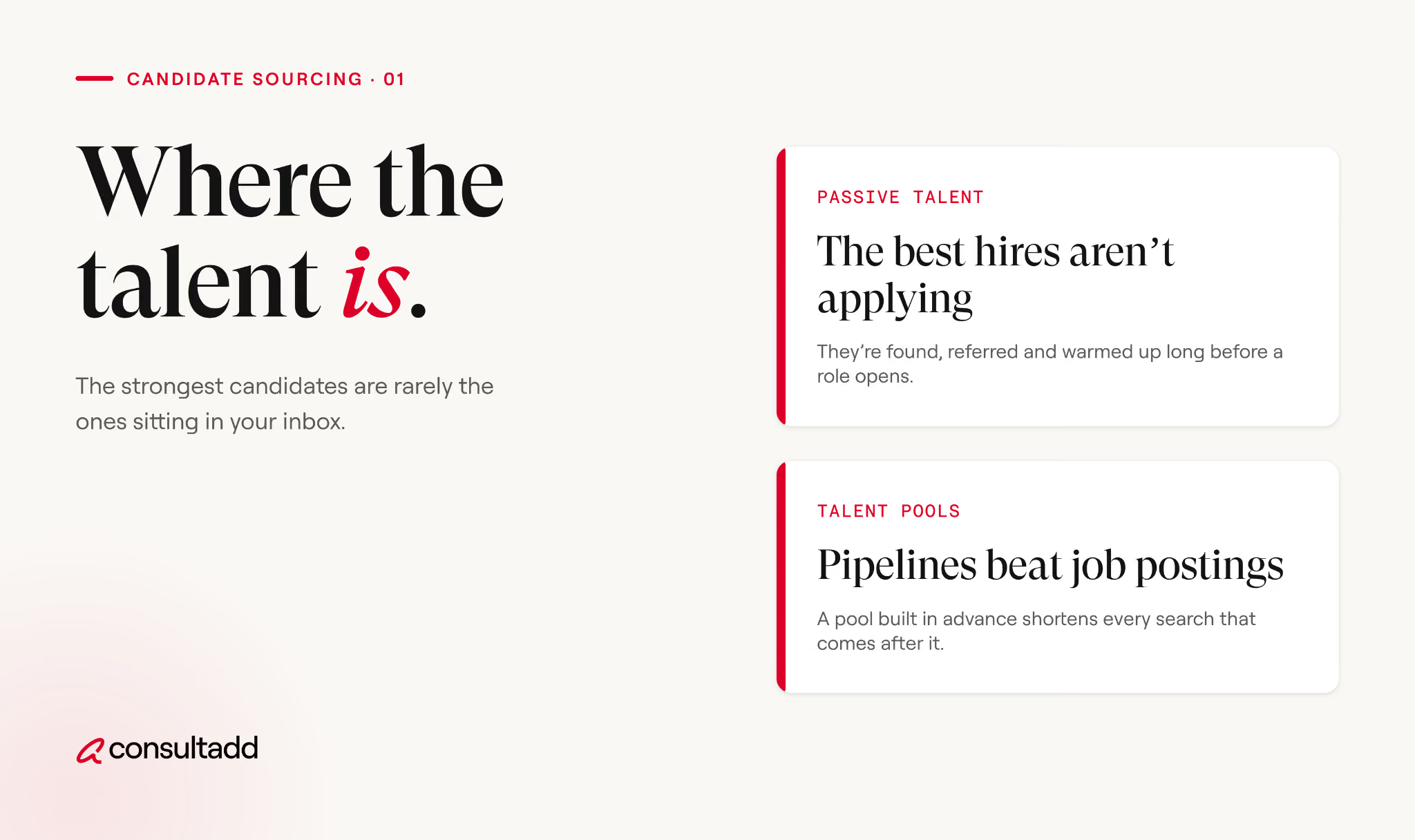
LinkedIn's research across 18,000 professionals in 26 countries found that about 70% of the global workforce qualifies as passive talent, and roughly 45% of those people are open to a recruiter's message if the approach is right. Only about 15% are fully disengaged from recruiter outreach.
So if your pipeline depends entirely on applicants, you are competing with everyone else for the same 30% slice.
The conversion data points in the same direction.
Gem's 2026 analysis found that outbound sourced candidates convert to hires at five times the rate of inbound applicants, and that job boards produce roughly 90% of applications but only about 50% of hires.
That gap is the whole argument. Job boards are a volume channel masquerading as a quality channel, and volume is what burns recruiter hours.
Demand context helps here too. The U.S. Bureau of Labor Statistics reported 7.4 million job openings and 5.3 million hires in June 2026. There is no shortage of open seats. The constraint is reaching the right people before someone else does.
The candidate sourcing channels that carry real weight
Channel choice should follow role type, not habit. Here is how the main options compare in practice.
1. Your own ATS is the most underused channel
Almost every team has thousands of previously screened candidates sitting in a database, and almost nobody searches it first.
Rediscovered talent, meaning candidates already in the ATS who get re-engaged for a new role, accounted for 46% of sourced hires in 2026, up from 26% in 2021.
These people already passed a screen once. They already know your company name. The outreach is warmer, the response rate is better, and the cost is effectively zero.
The barrier is usually data hygiene, not strategy. If your ATS records have no skill tags, no reason-for-rejection field, and no last-contacted date, rediscovery is guesswork. Fixing that is a two-week project that pays for years.
2. Referrals still outperform, and it is not close
SHRM research indicates referred candidates are hired roughly 55% faster than candidates from other channels, with better retention.
A referred passive candidate has already had the awkward questions answered by someone they trust. Is the manager decent? Is the technical work real? That conversation happened before you ever entered the picture.
Referral programs go quiet for boring reasons. The bonus is too small, the process is a form nobody can find, or employees never hear what happened to the person they referred. Fix those three things before buying another sourcing tool.
3. Where technical candidates actually live
For engineering roles, resumes are a weak signal and public work is a strong one. GitHub contribution history, Stack Overflow answers, conference talks, and open source maintainership show what someone can do rather than what they claim.
This is slow sourcing. It does not scale to twenty reqs. For a hard cloud or DevOps search where the shortlist is ten people nationally, it is the only method that works.
Our technical recruitment guide covers how to evaluate what you find there.
How to write outreach people answer
Sourcing generates a list. Outreach turns the list into a pipeline, and this is where most sourcing effort dies.
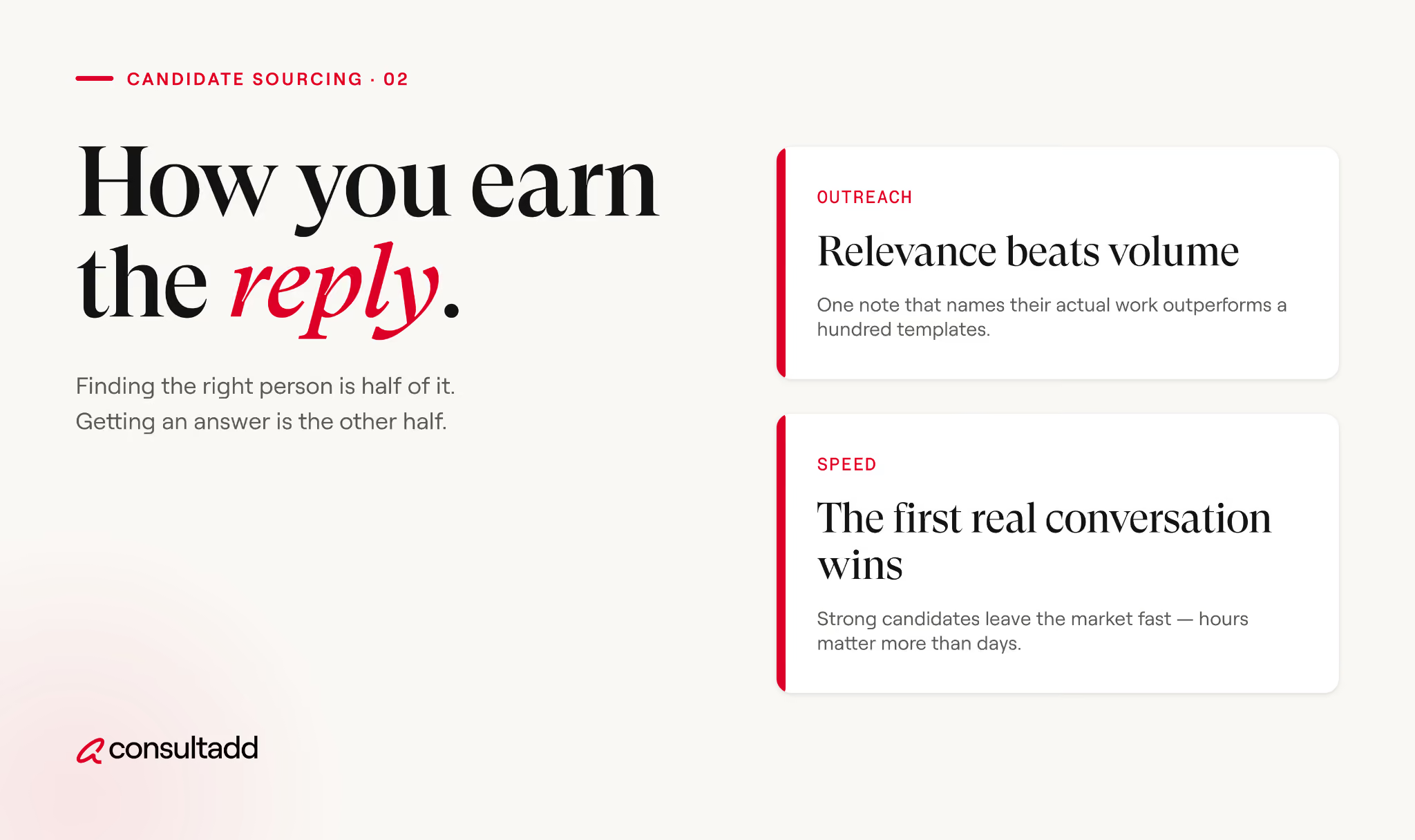
Response rate benchmarks make the personalization argument for you. Personalized recruiter InMails see roughly 18% to 25% response rates, against 5% to 8% for template messages.
Length matters too. LinkedIn's own data shows messages under 400 characters get response rates about 22% above the global average, with the best performance from messages in the 50 to 70 word range.
So the highest-performing recruiter message is short, specific, and obviously written by a person who read the profile. Three things to cut immediately:
- The pasted job description. Nobody reads it in the first message.
- "I came across your profile and was impressed." Everyone writes this. It signals a template.
- Four paragraphs about your company's mission before you say what the role is.
What to include instead: one concrete detail from their actual background, what the role is in one line, why you thought of them specifically, and a low-commitment question.
Follow up two or three times, spaced several days apart. A single message is a coin flip on whether they saw it at all.
The candidate sourcing metrics worth tracking
Most sourcing dashboards measure activity. Activity is not yield.
Two diagnostic patterns are worth memorizing. A healthy time to hire paired with a bloated time to fill usually means sourcing is the bottleneck. Both numbers high usually means the evaluation process is.
Our breakdown of time to hire benchmarks and the fixes that move them goes deeper on separating those two.
One more number worth noting: only about 20% of organizations measure quality of hire at all. If nobody checks which sourcing channel produced people who were still performing at month six, channel budgets get set on gut feel indefinitely.
Building a sourcing function versus buying pipeline
There is a real decision here, and the right answer changes by role type.
Building in-house makes sense when you hire the same profiles repeatedly, when the employer brand is a genuine asset, and when your reqs are permanent roles you want to own long term. The investment compounds. A well-maintained talent pool gets cheaper every quarter.
Buying pipeline makes sense when the need is urgent, when the skill is outside your team's search competence, or when the work is project-bound.
SHRM's 2026 data shows median cost per hire at $1,300 for nonexecutive roles and $15,000 for executive roles, with executive cost per hire up 42% in a single year. For the hard searches, the build-versus-buy math is closer than people assume.
Most teams end up running both, and that is usually correct. Own sourcing for your core recurring roles. Use a partner bench for urgent contract starts and specialist skills you touch twice a year.
If you are evaluating that second path, our guide to IT staffing models lays out where each one fits.
A 30-day plan to fix weak candidate sourcing
If sourcing is currently the weak link, this sequence works and does not require a new budget.
Compare response rate and source-to-submittal by channel. Move hours away from the worst performer.
Do not try to add channels in month one. Most teams already run more channels than they measure, and adding a sixth underperforming source makes the picture harder to read, not better.
Start Strong With Consultadd
With 15 years in business and 5,000+ successful staffing engagements, we don't just fill roles, we build reliability into your process. We've supported 65 staffing companies in the past year alone and maintain MSAs with industry leaders like Robert Half and TEKsystems.
Here's what working with Consultadd looks like:
- Talent sourced in under 24 hours
- Ready-to-deploy candidates, vetted for experience and compliance
- Lower turnover risk: we match long-term goals, not just short-term needs
- Seamless compliance: visa, documentation, onboarding? Handled.
- Dedicated 1:1 account managers for responsive, personalized support
- Top 100 candidate matches delivered in the past year
- Strong partnerships with universities to tap into fresh, committed talent
- Post-placement support so your investment grows beyond day one
For candidates, your next opportunity is more than just a job title, it's a chance to build skills, gain experience, and move your career forward. At Consultadd, we connect technology professionals with projects and employers that align with their goals, whether they're looking for contract, contract-to-hire, or long-term opportunities.
The tech job market moves fast, but the right guidance can make all the difference. Ready to take the next step in your career journey? Explore Opportunities >>
Key takeaways
- Candidate sourcing is proactive outreach to people who have not applied, and it ends where screening begins. Treating it as a distinct function is what keeps it from getting deprioritized.
- Application volume is a vanity metric. Job boards produce most applications and only about half of hires.
- Start channel improvement inside your own ATS, since rediscovered candidates now drive nearly half of sourced hires.
- Short, specific outreach under 70 words outperforms templates by a wide margin. Send follow-ups.
- Measure response rate and source-to-submittal by channel, not messages sent. Reallocate hours based on what those two numbers say.
FAQs
What is the difference between candidate sourcing and recruiting?
Sourcing is the proactive search for people who have not applied, and it produces engaged candidates. Recruiting takes over once someone is interested and covers screening, interviewing, and closing. Sourcing is measured by response and submittal rates, recruiting by offer acceptance and hires.
How do you source candidates with no budget?
Start with your ATS and your referral program, since both are already paid for and both produce strong conversion. Add free technical communities like GitHub or Stack Overflow for engineering roles. Budget buys reach, but it does not fix weak targeting or generic outreach.
What is a good response rate for candidate outreach?
Personalized recruiter messages generally land in the 18% to 25% range, while template messages run closer to 5% to 8%. Rates vary widely by industry, and saturated tech markets sit lower. Track your own baseline by channel rather than chasing a national average.
How many candidates should be in a pipeline per open role?
It depends on your submittal-to-hire ratio, so work backward from your own data. If roughly one in four submittals converts, you need enough engaged candidates to produce four solid submittals. Pipeline coverage is more useful as a trend line than as a fixed target.
Are passive candidates really better than active applicants?
They are not inherently better, but they are less contested and convert at a higher rate once engaged. Active candidates can be excellent and move faster. The practical argument for passive sourcing is pool size, since around 70% of the workforce is not actively looking at any given time.
Should we build a sourcing team or use a staffing partner?
Build in-house for roles you hire repeatedly, where the investment in a talent pool compounds over time. Use a partner for urgent contract starts, niche skills, or capacity spikes your team cannot absorb. Most organizations run both and assign each channel to the role types it fits.
.webp)