

Introduction
The executive hiring process optimization strategies that work are unglamorous: define the success profile before you source, shrink the number of people with veto power, keep a warm bench between searches, and score candidates against a rubric instead of a room's gut feeling. Everything else is variation on those four.
Optimization here does not mean speed for its own sake. A senior hire who fails costs months of severance, a stalled function, and a second search with a demoralized team watching. The goal is a shorter cycle with better evidence behind it.
The data on where executive searches lose time is fairly clear, and most of the loss is recoverable.
TL;DR
- SHRM puts median executive time to fill at 45 days in 2026, unchanged from 2025 but well below the 60 days recorded in 2022.
- Executive cost per hire jumped to a $15,000 median in 2026 from $10,600 the year before, while non-executive cost per hire barely moved.
- Boards are going outside more often. External CEO appointments in the S&P 500 nearly doubled between 2024 and 2025.
- Only 1 in 5 organizations measures quality of hire, which means most companies cannot tell whether their executive hiring is working.
- The highest-return fixes are structural: fewer decision-makers, a defined success profile, and a scoring rubric agreed on before the first interview.
What the executive hiring data shows right now
SHRM surveyed 4,657 members between November 2025 and January 2026. The executive numbers tell a different story from the non-executive ones.
The cost gap is widening, not closing
Executive cost per hire rose 42% in one year while non-executive cost stayed flat. SHRM's earlier benchmarking found executive hires running nearly seven times more expensive than non-executive hires, and the 2026 figures widen that ratio further.
Part of this is deliberate. Leadership development has been the top CHRO priority for two consecutive years. Part of it is that senior roles are harder to fill, and difficulty shows up as spend.
Either way, process waste at this level is expensive in a way non-executive waste isn't. A redundant interview round on a $1,300 hire is a rounding error. The same round on a $15,000 search is not.
Boards are going outside more often
The Conference Board, working with Egon Zehnder and Semler Brossy, found that external CEO appointments in the S&P 500 nearly doubled from 18% in 2024 to 33% in 2025, the highest level in eight years. The overall succession rate climbed to 12.5% from 9.8%.
That same research found turnover among top-performing companies rose from 7% to 12%, nearly matching the 14% rate at bottom-quartile performers. Boards are treating succession as a strategic tool rather than a response to bad results.
The implication for anyone designing an executive hiring process is direct. External searches are becoming the norm at the top, and the process has to work without a ready internal successor waiting.
Executive hiring process optimization strategies, ranked by impact
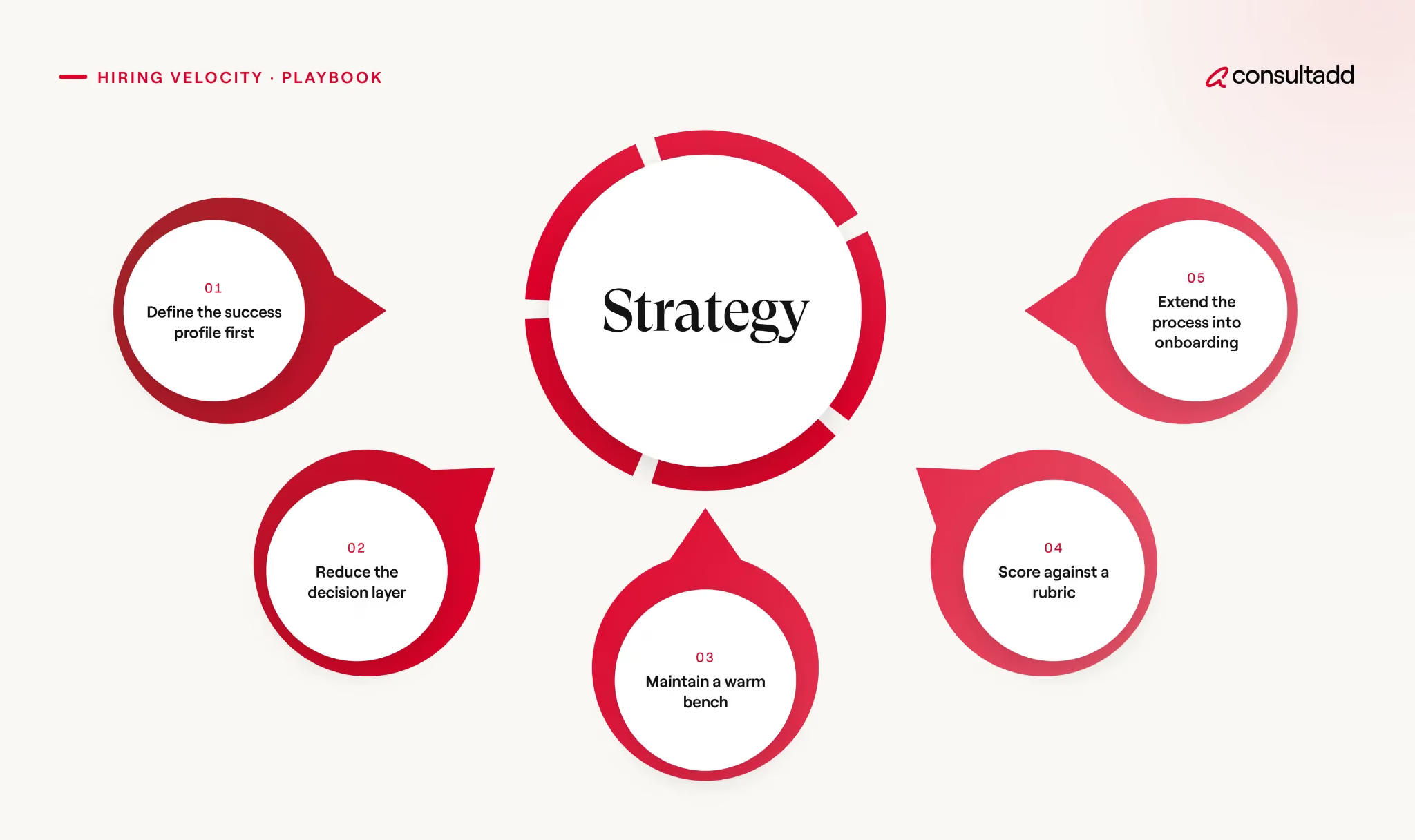
The first two cost nothing and return the most.
Strategy 1 - Define the success profile before you source
Most executive searches begin with a job description, which is a list of responsibilities. What you need is a success profile: what the person must accomplish and how it will be judged.
Write down three or four outcomes the hire owns in year one, the constraints they'll inherit, and what evidence would convince you a candidate can deliver them. Get the sponsor to sign off before a single name is sourced.
Skipping this is why searches restart. Six weeks in, someone says "I'm not sure this is really the profile we need," and it turns out nobody wrote the profile down.
Strategy 2 - Reduce the decision layer
Executive searches accumulate stakeholders. Every extra opinion adds scheduling friction on the front end and consensus-building on the back end.
Name one decision-maker and a small set of advisers whose input is heard but not binding. Cap the panel. Run the debrief as one scheduled session rather than an email thread, with written scores submitted beforehand so the loudest voice doesn't set the anchor.
I've watched this single change take two weeks off a search. It's also the change organizations resist most, because reducing the decision layer means telling someone their vote no longer counts.
Strategy 3 - Maintain a warm bench between searches
Recruiting cold at this level is slow because the people you want are not applying. They're employed, performing, and not reading job postings.
Relationship-building has to happen before the requisition exists. That means a named list of 20 to 30 credible senior people per function, refreshed quarterly, with occasional real contact rather than a mail merge. Teams that keep this list open a search with a slate instead of a blank page.
The same logic applies to interim coverage. If a fractional or project-based leader can run the function while the permanent search proceeds properly, the pressure to rush disappears.
Our overview of project-based recruiting covers how that bridge is structured.
Strategy 4 - Score against a rubric, not a room
Structured interviewing, where every candidate faces the same questions scored against defined criteria, predicts job performance considerably better than open conversation. It's the basis of SHRM's guidance to work from standardized questions and rating criteria.
At the executive level this gets skipped constantly, usually with some version of "you can't put a rubric on judgment." You can. Define the four or five competencies the success profile demands, write one question each, and anchor a 1-to-5 scale with what weak, adequate, and strong answers sound like.
Have interviewers submit scores within 30 minutes. Memory of a conversation degrades faster than most people believe.
Strategy 5 - Treat onboarding as part of the hire
The search isn't over at offer acceptance. Senior hires arrive without the informal context that makes decisions possible, and a leader who spends five months learning who actually influences what has been onboarding for five months.
Build a 90-day plan before day one: which relationships matter, which decisions they own immediately, which they should hold. Assign a peer sponsor and schedule a real 60-day check-in.
Where executive searches actually stall
Screening and interviewing each averaging 8 to 9 days across all roles. At the executive level both stretch further, since calendars are harder and panels larger.
Notice how little of that list is about evaluating candidates. Almost all of it is coordination, and coordination problems are solvable without judgment calls about people.
Metrics worth tracking for senior roles
Only 20% of organizations measure quality of hire, per SHRM's 2026 data, and that hasn't moved since 2025. It's the most consequential gap in executive hiring, because without it you're optimizing a process whose output you never check.
Four measures worth keeping for senior searches:
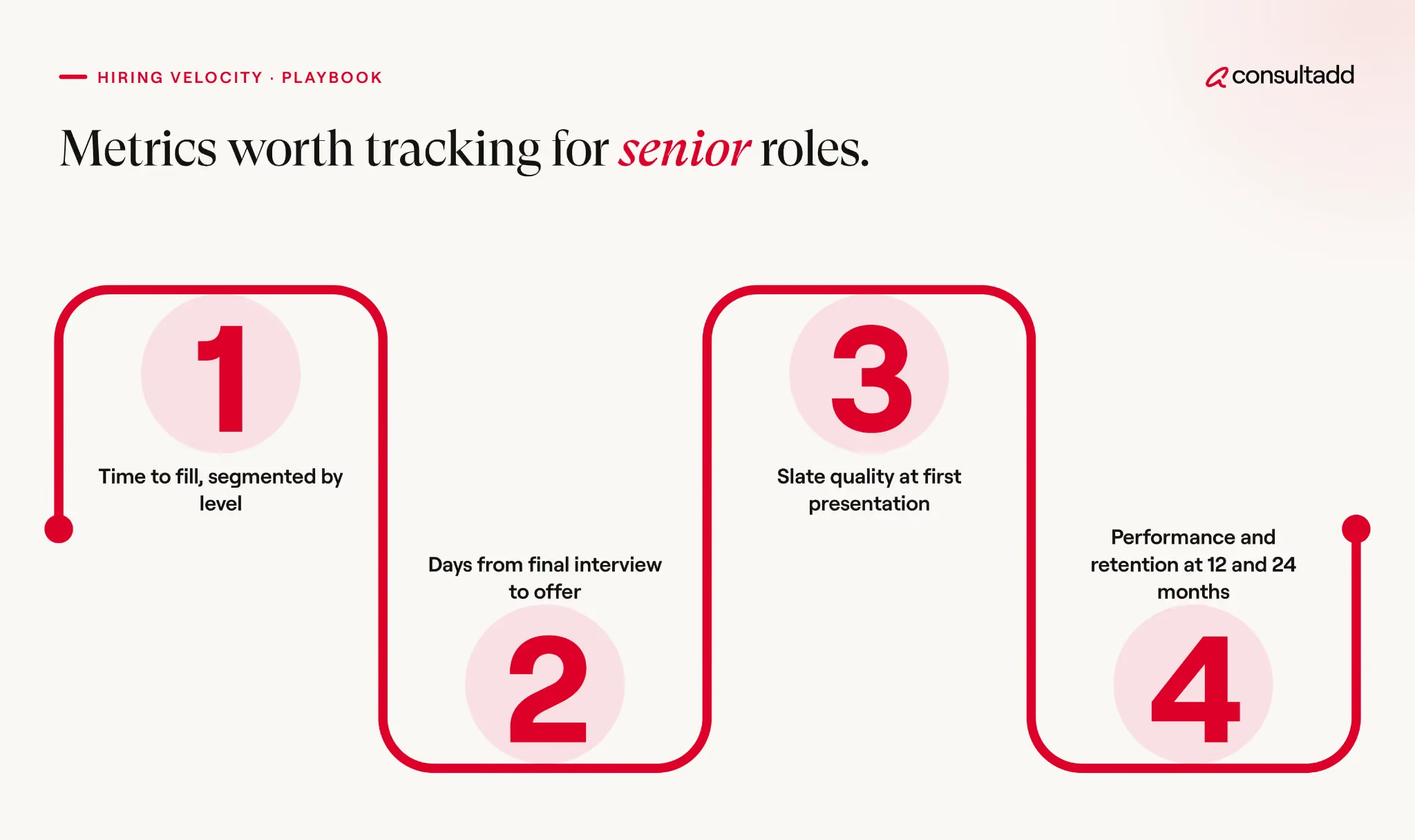
- Time to fill, segmented by level. Blending executive and non-executive searches produces a number that describes neither. Track your own trend rather than a national median.
Our breakdown of time to hire versus time to fill explains why the two diagnose different problems.
- Days from final interview to offer. This isolates your decision layer. If it's over five days on an executive search, the problem is governance, not candidates.
- Slate quality at first presentation. How many of the first candidates presented reached final rounds? A low rate means the success profile was never clear.
- Performance and retention at 12 and 24 months. Imperfect, lagging, and still the only measure that tells you whether the process produced good decisions.
Track the first three monthly, the fourth annually.
Running the search internally versus bringing in a partner
There's no universal answer, but there's a reasonable test.
Handle it internally:
- When you hire that profile regularly, your network in the function is real, and you have recruiter capacity for a proper search.
- That last condition fails more often than people admit. SHRM's 2026 data puts the median recruiter at 25 open requisitions, rising to 100 in the largest organizations.
- Nobody running 100 requisitions is also running a careful executive search.
Bring in a partner:
- When the profile is rare, the search is confidential, you're entering an unfamiliar market, or the seat has been open long enough that internal urgency is distorting judgment.
- If you go this route, ask about placement retention rates and average days to first qualified slate for comparable roles.
Our buyer's guide to staffing and search firms covers what to press on before signing.
One thing worth being honest about: a partner does not fix an undefined success profile or a committee that cannot decide. Those are internal problems, and outsourcing sourcing just relocates them. Fix the process first, then decide who runs it.
Our step-by-step staffing process guide is a reasonable frame for rebuilding.
Start strong with Consultadd
With 15 years in business and 5,000+ successful staffing engagements, we don't just fill roles, we build reliability into your process. We've supported 65 staffing companies in the past year alone and maintain MSAs with industry leaders like Robert Half and TEKsystems.
Here's what working with Consultadd looks like:
- Talent sourced in under 24 hours
- Ready-to-deploy candidates, vetted for experience and compliance
- Lower turnover risk: we match long-term goals, not just short-term needs
- Seamless compliance: visa, documentation, onboarding? Handled.
- Dedicated 1:1 account managers for responsive, personalized support
- Top 100 candidate matches delivered in the past year
- Strong partnerships with universities to tap into fresh, committed talent
- Post-placement support so your investment grows beyond day one
For candidates, your next opportunity is more than just a job title, it's a chance to build skills, gain experience, and move your career forward. At Consultadd, we connect technology professionals with projects and employers that align with their goals, whether they're looking for contract, contract-to-hire, or long-term opportunities.
The tech job market moves fast, but the right guidance can make all the difference. Ready to take the next step in your career journey? Explore Opportunities >>
Key takeaways
- The executive hiring process optimization strategies with the best return are structural: a written success profile, fewer decision-makers, a warm bench, and a scoring rubric.
- Executive median time to fill sits at 45 days, while cost per hire climbed to $15,000 in 2026, so process waste at this level is expensive.
- External hiring at the top is rising, which means the process has to work without a ready internal successor.
- Most delay in executive searches comes from coordination, not from evaluating people.
- Measure quality of hire alongside speed, or you have no way to know whether the process is producing good leaders.
FAQs
How long should an executive hiring process take?
SHRM's 2026 benchmarking puts the median executive time to fill at 45 days, down from 60 days in 2022. Treat that as a reference point rather than a target, since a confidential C-suite search in a thin market will reasonably take longer than a director-level hire in a deep one.
Why is executive cost per hire rising so fast?
Executive cost per hire reached a $15,000 median in 2026, up from $10,600 in 2025. Two forces: organizations are deliberately investing more in leadership, and more executive roles are filled externally, which brings search fees and relocation costs internal promotions avoid.
What's the single biggest fix for a slow executive search?
Reducing the number of people who can block a decision. It costs nothing and compresses both the scheduling phase and the debrief. It's also the change organizations resist hardest, because it means telling a stakeholder their vote is advisory.
Should executive candidates go through structured interviews?
Yes. Structured interviews predict job performance substantially better than unstructured conversation, and that holds at senior levels. Define four or five competencies from the success profile, write one question per competency, and have interviewers submit scores before any group discussion begins.
How do you measure whether executive hiring is working?
Track time to fill segmented by level, days from final interview to offer, the share of first-slate candidates who reach final rounds, and performance and retention at 12 and 24 months. Only about 20% of organizations measure quality of hire at all, which is the gap most worth closing.
When should we use an external search partner instead of hiring internally?
Use a partner when the profile is rare, the search needs to stay confidential, you're entering a market you don't know, or internal recruiter capacity is already stretched. Handle it internally when you hire that profile often and have genuine reach in the function.
.webp)