.avif)

Introduction
Losing an H-1B job doesn't mean losing your legal status the same day. Since 2017, federal regulation has given H-1B workers an H-1B 60 day grace period, up to 60 consecutive calendar days after employment ends, to find a new sponsor, switch to another status, or leave the country.
It's discretionary rather than guaranteed, but USCIS grants it in the overwhelming majority of cases. That said, the grace period has more edge cases than most people expect.
It doesn't extend past your authorized stay. It ends the moment you leave the country. And as of August 2026, DHS has a proposal under White House review that could eliminate it entirely.
Here's what the rule actually says today, what's changing, and what to do if the clock has already started on you.
TL;DR
- H-1B workers get up to 60 consecutive calendar days after their last day of work to find a new sponsor, change status, or depart, whichever comes first against their I-94 expiration.
- The clock starts on your last day of active employment, not when severance or PTO payouts end.
- Leaving the U.S. during the grace period ends it immediately, and you can't re-enter on the old H-1B.
- A new employer's timely, non-frivolous H-1B petition lets you start working right away under portability rules, even before it's approved.
- DHS sent a proposal to the White House in August 2026 that would eliminate the discretionary grace period; it is not law yet.
What the H-1B 60 day grace period actually is
The grace period comes from a 2017 DHS regulation found at 8 CFR 214.1(l)(2). It covers several nonimmigrant categories beyond H-1B, including E-1, E-2, E-3, H-1B1, L-1, O-1, and TN.
According to USCIS guidance on options for nonimmigrant workers following termination of employment, the rule lets these workers be treated as maintaining status for up to 60 consecutive calendar days after employment ends, or until their authorized validity period expires, whichever is shorter.
Before 2016, there was no such cushion. A terminated H-1B worker was out of status the moment employment stopped, full stop. The grace period exists specifically to give people time to act instead of scrambling to leave the country overnight.
It's worth being precise about what "up to 60 days" means. If your I-94 shows only 25 days left when your job ends, your grace period is 25 days, not 60.
USCIS uses whichever number is smaller. Checking your I-94 record the same week you're laid off isn't optional busywork, it's the number that determines your entire timeline.
When the clock starts, and what doesn't stop it
The grace period begins the day after your last day of active work, not the day your final paycheck clears. This trips up more people than any other part of the rule.
If your employer keeps paying you for two months after your actual last day, that continued pay doesn't extend your status. Neither does a severance package, a COBRA subsidy, or PTO payout. USCIS looks at when you stopped performing work duties, period.
If your employer offers garden leave, meaning you're still formally employed and, in some interpretations, still working during a notice period, that can push the start date later.
Get the separation date in writing if your employer is willing to provide one. It removes ambiguity that otherwise falls on you to prove later.
What ends the grace period early
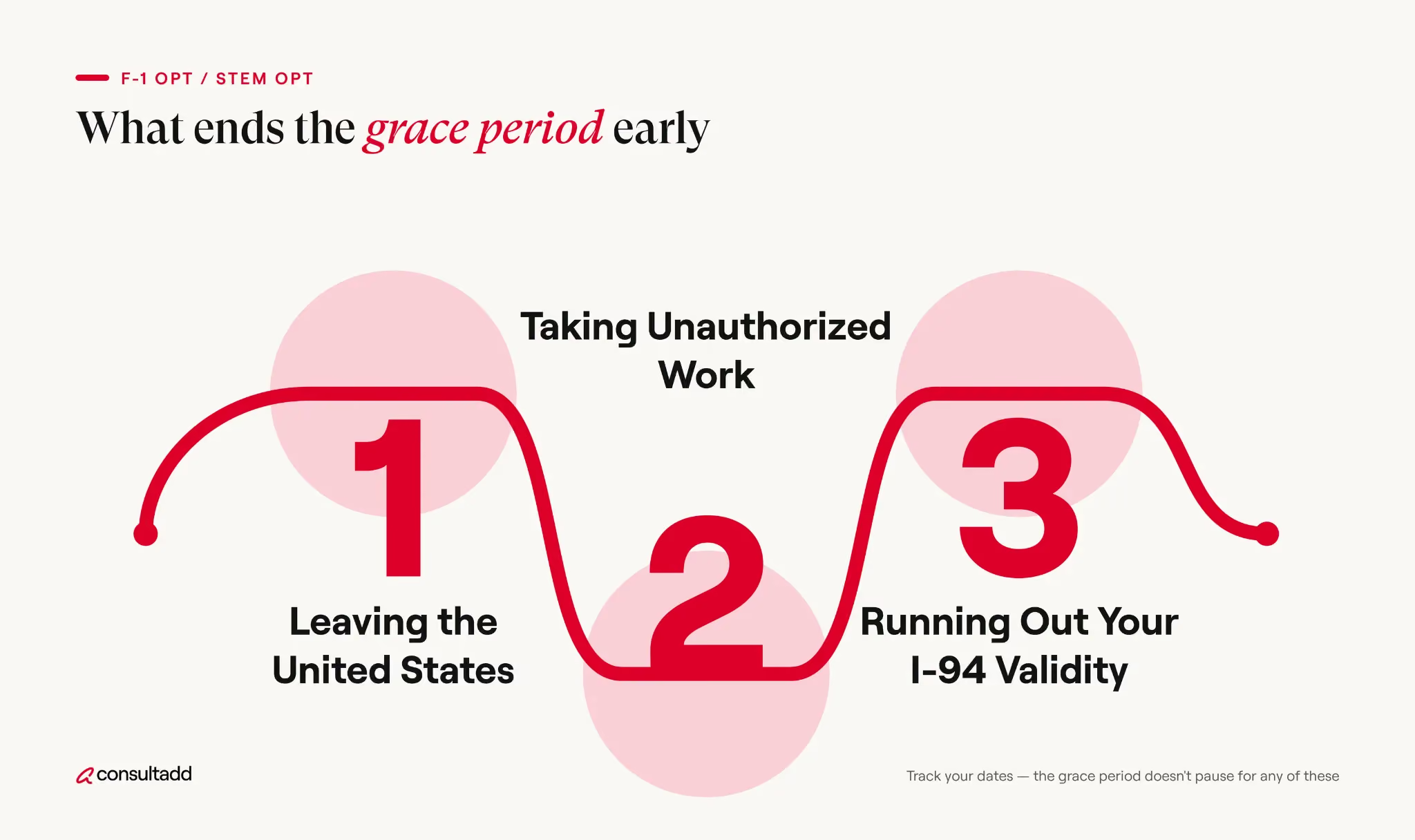
A few things cut the grace period short regardless of how many days are technically left:
- Leaving the United States
The purpose of the grace period is to give you time to depart or change status from inside the country. The moment you exit, it's over, and you cannot re-enter on the H-1B status tied to the job that ended.
- Taking unauthorized work
You cannot work during the grace period unless a new employer has already filed a non-frivolous H-1B petition on your behalf.
- Running out your I-94 validity
As covered above, your grace period can't outlast your authorized stay even if 60 full days haven't passed.
What to do the day you lose your job
Getting laid off on H-1B is stressful enough without also having to research immigration rules from scratch. A short checklist helps more than a long one in the moment:
- Pull your latest Form I-94 from the CBP website and note the exact expiration date.
- Ask your (former) employer for a written separation letter stating the last day of work.
- Start applying immediately to employers with an active history of H-1B sponsorship rather than companies that have never filed one, since a first-time sponsor takes longer to move.
- Talk to an immigration attorney before day 30 if you don't already have a lead on a new sponsor, not day 55.
- Avoid international travel until a new petition is filed or you've changed status. A quick trip home ends the grace period the moment you leave.
Your options before day 60
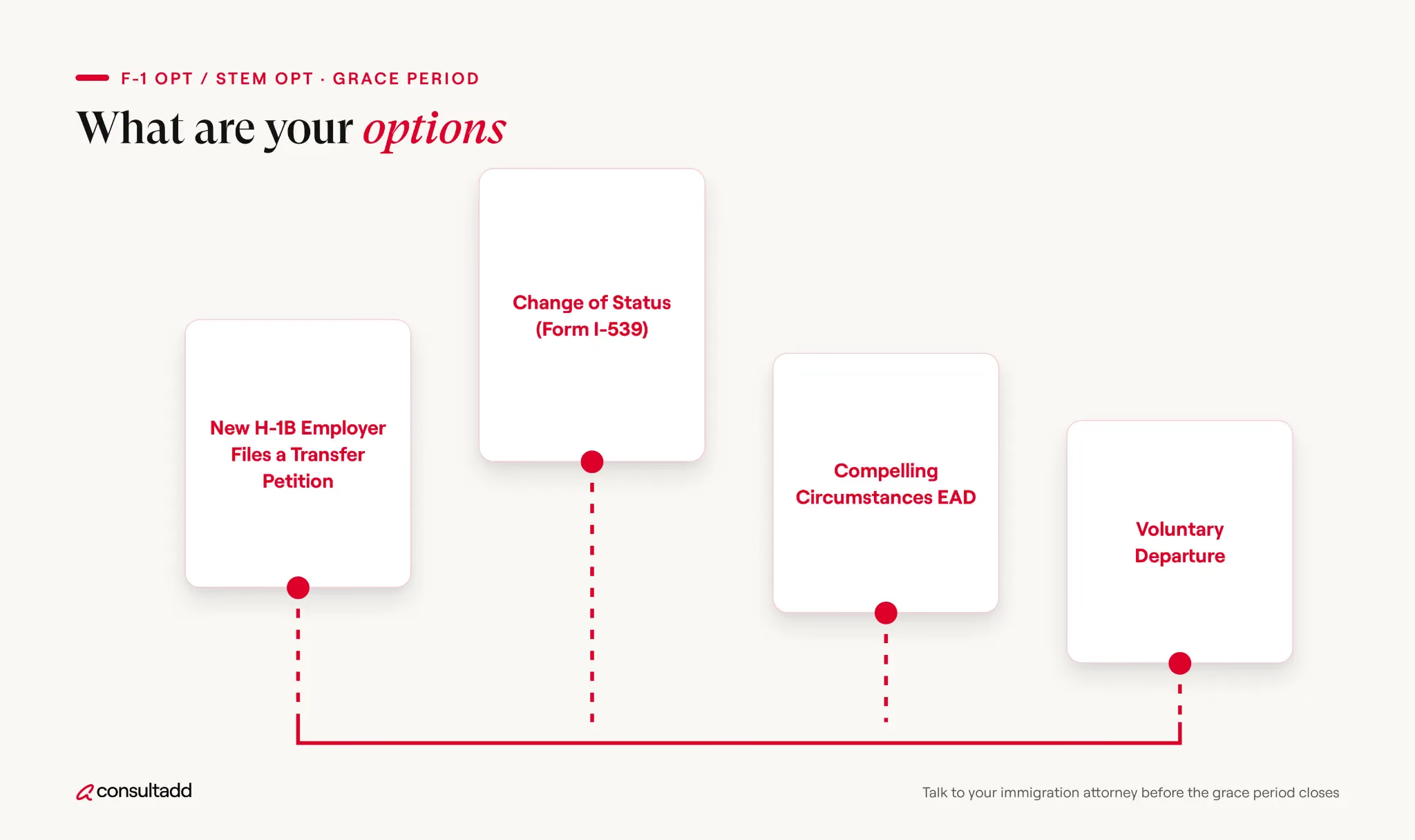
The most common move is the first one: a new employer files a change-of-employer H-1B petition.
If it's filed and received by USCIS while you're still within the grace period, you can generally begin working for the new employer right away, even before the petition is approved.
That's the core benefit of H-1B portability, and it's the reason moving fast on a job search matters more than the 60-day number might suggest.
If day 60 is approaching and no H-1B option has come through, filing Form I-539 to change status, commonly to H-4 (if a spouse holds H-1B status), F-1, or B-2, has to be received by USCIS before the grace period ends to protect your presence in the country.
If your underlying I-140 has been approved and pending for at least 180 days, your priority date generally travels with you to a new employer, which matters if you're mid-way through a green card process.
If you're weighing whether your current documentation and work authorization setup is even H-1B-eligible in the first place, our overview of work authorization types and EAD basics is a useful starting point, and our comparison of H-1B and OPT visas is worth a look if a transition to student status is on the table.
The DHS proposal to end the grace period
As of this writing, the H-1B 60 day grace period is still in effect, but it may not stay that way for long.
On August 6, 2026, DHS sent a proposed rule titled "Eliminating the Discretionary 60-day Grace Period" (RIN 1615-AD22) to the White House's Office of Information and Regulatory Affairs for review.
The contents of the rule aren't public, and it hasn't cleared OIRA review or been published in the Federal Register.
If it moves forward, the change would mean H-1B workers lose legal status immediately upon job loss rather than getting a window to find new sponsorship. That's a meaningful shift from how the rule has worked since 2017, and it would affect dependents on H-4 status too, since their status is tied to the principal visa holder.
There's no confirmed effective date yet. Rules at this stage in the regulatory process can still change substantially, get delayed, or get challenged in court before taking effect.
If you're currently in a grace period or expect to be soon, this is one of those situations where checking for updates directly from an immigration attorney or USCIS is worth doing regularly rather than relying on a single article's snapshot.
Start Strong With Consultadd
With 15 years in business and 5,000+ successful staffing engagements, we don't just fill roles, we build reliability into your process. We've supported 65 staffing companies in the past year alone and maintain MSAs with industry leaders like Robert Half and TEKsystems.
Here's what working with Consultadd looks like:
- Talent sourced in under 24 hours
- Ready-to-deploy candidates, vetted for experience and compliance
- Lower turnover risk: we match long-term goals, not just short-term needs
- Seamless compliance: visa, documentation, onboarding? Handled.
- Dedicated 1:1 account managers for responsive, personalized support
- Top 100 candidate matches delivered in the past year
- Strong partnerships with universities to tap into fresh, committed talent
- Post-placement support so your investment grows beyond day one
For candidates, your next opportunity is more than just a job title, it's a chance to build skills, gain experience, and move your career forward. At Consultadd, we connect technology professionals with projects and employers that align with their goals, whether they're looking for contract, contract-to-hire, or long-term opportunities.
The tech job market moves fast, but the right guidance can make all the difference. Ready to take the next step in your career journey? Explore Opportunities >>
Key takeaways
- The H-1B 60 day grace period gives workers up to 60 consecutive calendar days, or until their I-94 expires, whichever is shorter, to find new sponsorship, change status, or leave.
- The clock starts on the last day of actual work, not when pay or benefits stop.
- Leaving the U.S. during the grace period ends it immediately and blocks re-entry on the same H-1B.
- A timely H-1B transfer petition lets you work again right away, before approval, under portability rules.
- DHS has proposed eliminating the grace period entirely; as of August 2026 that proposal is still under White House review and is not in effect.
FAQs
How long is the H-1B grace period exactly?
Up to 60 consecutive calendar days after your last day of employment, or until your I-94 authorized stay expires, whichever comes first.
Does severance pay extend the grace period?
No. The grace period is based on your last day of actual work, not on when severance, PTO payout, or continued benefits end.
Can I travel outside the U.S. during the grace period?
No. Leaving the country ends the grace period immediately, and you would not be able to re-enter on the H-1B status tied to the job that ended.
Can I start working for a new employer before my H-1B transfer is approved?
Yes, as long as the new employer files a timely, non-frivolous H-1B petition while you're still within the grace period. H-1B portability rules let you begin work once USCIS receives the petition.
Is the H-1B grace period guaranteed?
It's discretionary. DHS can shorten or deny it case by case, though USCIS grants the full 60 days in the large majority of situations.
Is the 60-day grace period going away?
Not yet. DHS sent a proposal to end it to the White House for review in August 2026, but it hasn't been published as a formal rule and isn't in effect.
What happens if I don't find a new sponsor or change status in time?
You and any dependents would generally need to depart the United States once the grace period ends, since remaining without a valid status can lead to accrued unlawful presence and future immigration consequences.


.webp)