

Introduction
To hire data engineers who can actually do the job, look past the resume keywords and evaluate whether someone can design a pipeline that stays reliable once real data volume and edge cases hit it. That's the gap most hiring processes miss.
Plenty of candidates can name Spark, Airflow, and Snowflake in an interview. Fewer can explain what happens when a pipeline fails at 2 a.m. or how they'd redesign a schema that's outgrown its original use case.
This guide covers what to actually screen for, where to find qualified candidates, and the mistakes that slow down data engineering hires more than any other technical role.
TL;DR
- Screen for pipeline design and failure handling, not just tool familiarity.
- Python, SQL, and a distributed processing framework like Spark are close to table stakes now.
- Sourcing through niche communities and staffing partners beats generic job boards for this role.
- Take-home projects using realistic data problems predict performance better than whiteboard questions.
- Data engineering demand keeps climbing, which means slow hiring processes lose candidates to faster competitors.
Why hiring data engineers is harder than it looks
Data engineer job postings often read like a wish list: Python, SQL, Spark, Airflow, dbt, cloud platforms, and increasingly, some exposure to ML pipelines. That breadth is real.
Python and SQL sit at the core of the role, and having an additional language or framework like Java, Scala, or Kafka on top of that tends to signal stronger versatility.
Few candidates are strong across all of it, which pushes hiring teams toward one of two mistakes: hiring for the tool list and missing weak fundamentals, or hiring for fundamentals and ending up with a slow ramp-up on the specific stack.
Demand isn't slowing down either. Government labor data has tracked steady growth for data-related engineering occupations over the past decade, and the market has gotten more competitive for companies trying to move fast. Teams that take six weeks to make a decision routinely lose strong candidates to companies that move in two.
What to actually screen for
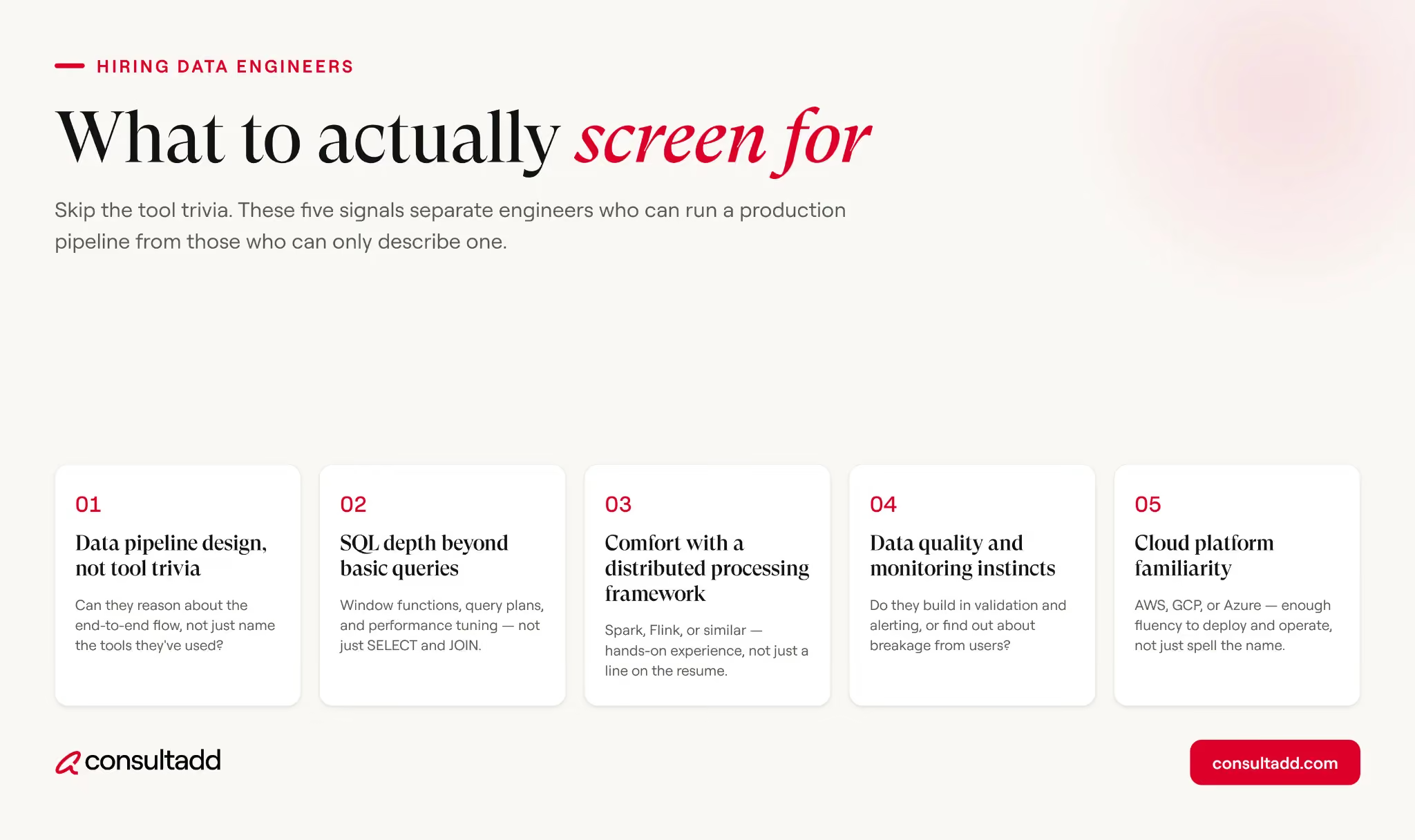
A strong data engineer needs to be evaluated on more than the tool list on their resume.
1. Data pipeline design, not tool trivia
- Ask a candidate to walk through how they'd design a pipeline for a specific, realistic scenario: ingesting data from three sources with different formats, handling schema drift, and keeping the pipeline running if one source goes down.
- Their answer reveals whether they think in terms of resilience and maintainability, or just know which tool does what.
2. SQL depth beyond basic queries
- Almost every data engineer claims strong SQL.
- Fewer can explain query performance, indexing trade-offs, or how they'd debug a query that suddenly got slow after a data volume increase.
- This is one of the highest-signal areas to test directly rather than take on faith.
3. Comfort with a distributed processing framework
- Apache Spark remains the dominant framework in the field, though platforms like Snowflake and Databricks have carved out real market share.
- A candidate doesn't need mastery of every option, but should be able to speak concretely about how one of these tools handles large-scale processing and where it breaks down.
4. Data quality and monitoring instincts
- The best data engineers think about how they'll know a pipeline is producing bad data before anyone downstream notices.
- Ask what monitoring or validation they've built into past pipelines. Vague answers here are a common warning sign.
5. Cloud platform familiarity
- Most data engineering work now runs on AWS, Google Cloud, or Azure.
- Certifications aren't required, but a candidate should be able to speak specifically about services they've used for storage, compute, and orchestration, not just name-drop the platform.
Interview structure that actually predicts performance
Traditional whiteboard algorithm questions tend to test the wrong thing for this role. A structure closer to the candidate's actual day-to-day work produces better signals.
Skip generic algorithm puzzles unless the role genuinely requires heavy computer science depth. Most data engineering work rewards someone who can reason about data flow and failure modes, not someone who's memorized sorting algorithms.
Where to find qualified data engineers
Generic job boards surface a flood of applicants, but the strongest data engineers are often not actively browsing listings. A few channels tend to produce better results.
- Niche data engineering and data platform communities, where practitioners already discuss real problems
- Referrals from current engineers, who tend to know who's actually strong versus who just interviews well
- Specialized staffing partners with an existing pipeline of vetted candidates, similar to the approach covered in how to hire Scala developers, since data engineering and Scala expertise often overlap in fintech and streaming-heavy environments
- Conferences and meetups focused on specific tools like Spark, Kafka, or dbt
Working with a staffing partner also helps when the internal team doesn't have a structured process yet.
A clear framework matters here, and following a defined staffing process instead of an ad hoc one tends to shorten time to hire without lowering the bar.
Common mistakes that slow this hire down
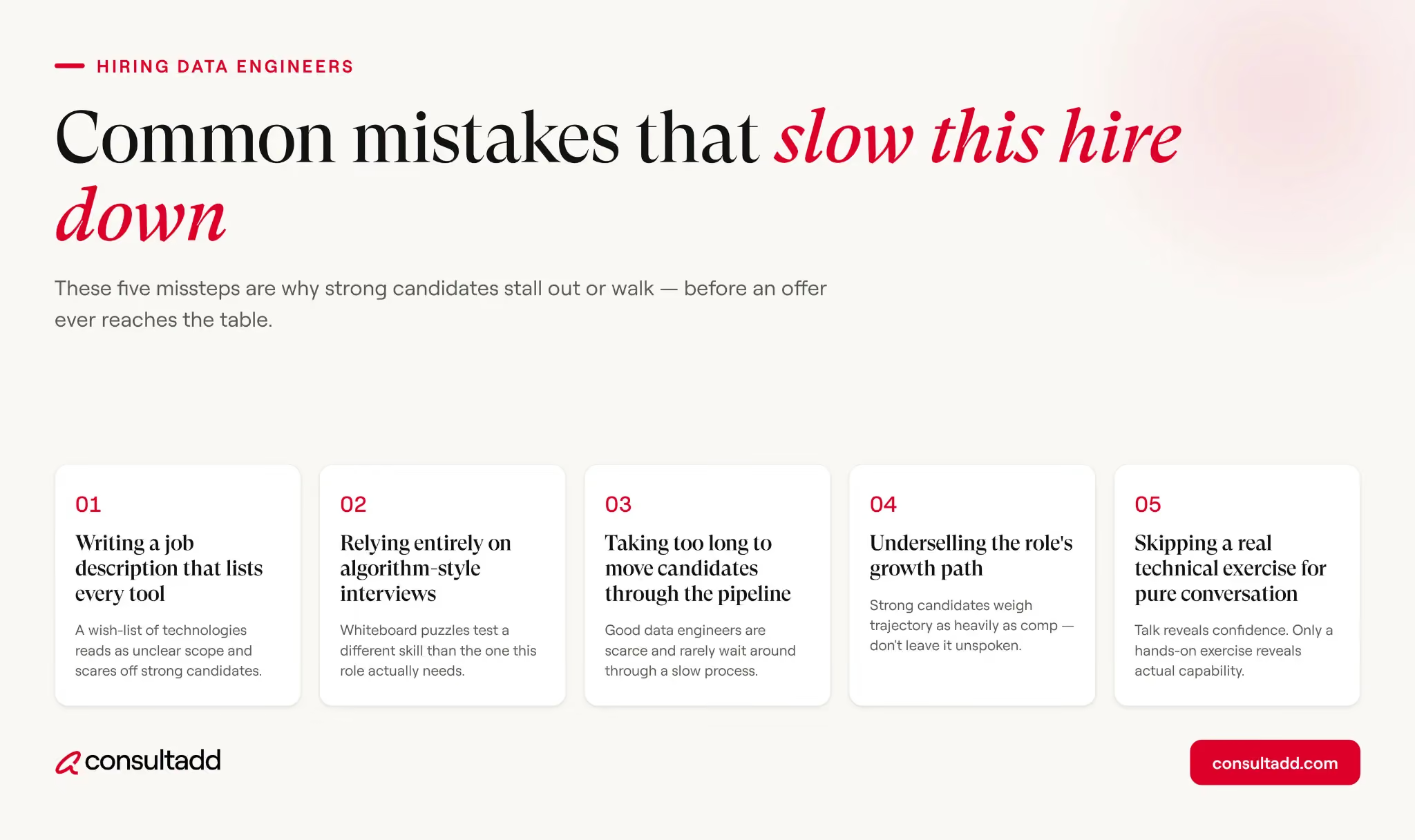
- Writing a job description that lists every tool in the ecosystem instead of the three or four that actually matter for this team
- Relying entirely on algorithm-style interviews that don't reflect real data engineering work
- Taking too long to move candidates through the pipeline, which matters more here given how tight the talent shortage has become for specialized technical roles
- Underselling the role's growth path, since strong data engineers are frequently comparing multiple offers at once
- Skipping a real technical exercise in favor of pure conversation, which makes it harder to catch candidates who interview well but can't execute
Start Strong With Consultadd
With 15 years in business and 5,000+ successful staffing engagements, we don't just fill roles, we build reliability into your process. We've supported 65 staffing companies in the past year alone and maintain MSAs with industry leaders like Robert Half and TEKsystems.
Here's what working with Consultadd looks like:
- Talent sourced in under 24 hours
- Ready-to-deploy candidates, vetted for experience and compliance
- Lower turnover risk: we match long-term goals, not just short-term needs
- Seamless compliance: visa, documentation, onboarding? Handled.
- Dedicated 1:1 account managers for responsive, personalized support
- Top 100 candidate matches delivered in the past year
- Strong partnerships with universities to tap into fresh, committed talent
- Post-placement support so your investment grows beyond day one
For candidates, your next opportunity is more than just a job title, it's a chance to build skills, gain experience, and move your career forward. At Consultadd, we connect technology professionals with projects and employers that align with their goals, whether they're looking for contract, contract-to-hire, or long-term opportunities.
The tech job market moves fast, but the right guidance can make all the difference. Ready to take the next step in your career journey? Explore Opportunities >>
Key takeaways
- Evaluate data engineers on pipeline design and failure handling, not just a list of familiar tools.
- SQL depth, distributed processing frameworks, and data quality instincts are the highest-signal areas to screen.
- Realistic take-home exercises predict performance better than algorithm-heavy interviews.
- Niche communities, referrals, and specialized staffing partners outperform generic job boards for this role.
- Slow hiring processes lose strong candidates in a market where demand keeps climbing.
FAQs
What's the most important skill to screen for when hiring a data engineer?
Pipeline design and reasoning about failure scenarios tend to separate strong candidates from ones who only know tool syntax. SQL depth is a close second, since it comes up in nearly every part of the job.
Should I require a specific cloud certification?
Not necessarily. Certifications from AWS or Google Cloud can indicate structured learning, but hands-on experience with real pipelines matters more than the credential itself.
How long should a data engineering hiring process take?
Aim to move a strong candidate from the first interview to offer within two to three weeks. Longer processes risk losing candidates to competing offers, especially given current demand for the role.
Is a take-home project necessary, or can interviews alone assess skill?
A short, realistic exercise catches gaps that conversation alone often misses, particularly around actual coding ability and data handling. Keep it scoped to a few hours so it doesn't become a burden that discourages strong candidates from finishing.
What's the difference between a data engineer and a data scientist for hiring purposes?
Data engineers build and maintain the infrastructure that moves and stores data. Data scientists analyze that data to produce insights or models. The two roles need different interview processes, since strong data science skills don't guarantee strong pipeline engineering skills.
Are data engineers hard to find right now?
Demand has stayed strong, and the required skill set keeps shifting toward AI-adjacent work, which narrows the pool of candidates who are current on the latest tools. Working with a staffing partner that already maintains a pipeline of vetted candidates typically shortens the search.
.webp)