

Introduction
Most candidates prepare answers. Fewer prepare for the interview format, and that's where a lot of good interviews go sideways.
A 20-minute phone screen, a recorded one-way video and a four-person panel each reward different habits. The same answer that works well in one can fall flat in another.
This guide covers the interview formats you're most likely to meet in tech and IT hiring. It explains what recruiters listen for in each one and how to prepare without overdoing it.
If your interview is tomorrow, jump to the prep table in the section on how to prepare. It's the fastest place to start.
TL;DR
- An interview format has three layers: how it's delivered, who's in the room, and what kind of questions you'll get.
- Phone screens and one-way video interviews usually filter candidates early, so clarity and pace matter more than depth.
- Panel interviews and multi-round loops test consistency, because several people compare notes on you afterward.
- Structured interviews use the same questions and scoring for every candidate, so specific examples beat general claims.
- Asking the recruiter about the format ahead of time is normal and gives you a real advantage.
What is an interview format?
An interview format is the setup of a job interview. It covers how the conversation happens, who takes part and how your answers get evaluated.
It helps to think of it in three layers:
- Delivery: phone, live video, one-way recorded video or in person
- Participants: one interviewer, a panel, a group of candidates or a series of back-to-back meetings
- Question style: open conversation, structured behavioral questions, technical problems or case scenarios
Most real interviews mix one option from each layer. A second-round interview might be a live video call with three panelists asking structured behavioral questions. Once you can name all three layers, preparation gets much more specific.
Job interview formats by delivery method
Delivery is usually the first thing you learn about an interview, because it shows up in the calendar invite.
1. Phone screen
The phone screen is typically the first conversation. Boston University's career center describes the initial screening as usually the first step in the process, often a short phone call of 15 to 30 minutes, run by HR, the hiring manager or a committee.
The goal here is simple. The recruiter wants to confirm that your skills, availability, pay expectations and work authorization line up with the role. With no visual cues, phone interviews put more weight on clear communication and tone of voice.
Keep your resume and the job description in front of you. Answer in short, complete thoughts, and don't be afraid to pause.
2. Live video interview
A live video call on Zoom, Teams or Google Meet works much like an in-person meeting. The difference is that small technical problems become your problem.
Test your camera, microphone and internet connection an hour before. Close anything that might pop up during screen sharing. Look at the camera when you're making a key point, not at your own face on the screen.
3. One-way video interview
This format catches people off guard. In a one-way video interview, you record answers to preset questions on your own and submit them by a deadline, and employers often use this step to screen candidates before live rounds.
There's no one to react to, so rambling is the biggest risk. Most platforms give you a short prep window and a time limit per answer. Practice with a phone timer, and aim to finish each answer a little before time runs out.
4. In-person or onsite interview
Onsite interviews are less common for early rounds now, but many companies still use them for final stages. You may meet several people, take a tour or join a working lunch.
Treat every person you meet as part of the interview, including whoever greets you at the front desk. Recruiters do hear about it.
Here's how the four delivery formats compare:
Interview formats by who's in the room
The number of people involved changes how you should pace yourself and where you direct your attention.
1. One-on-one interview
This is the classic format, usually with the hiring manager or a team lead. It feels the most like a normal conversation, which makes it easy to get too casual. Stay specific. If you mention a project, be ready for two or three follow-up questions about it.
2. Panel interview
In a panel interview, several interviewers question one candidate, and they typically take turns asking questions from a prepared list or following up on your answers.
A tech panel might include an engineering manager, a senior developer and someone from HR or the client side.
Answer the person who asked the question, then glance at the others as you finish. Each panelist often has a different checklist.
The developer cares about how you solved the problem, and the manager cares about how you worked with the team while doing it.
3. Group interview
Group interviews bring in several candidates at once, and interviewers watch how you interact with the other candidates. These are less common in senior tech hiring but still show up in campus drives and trainee programs.
Speak early so you're not fighting for space later. Build on other people's points instead of repeating them. Being the loudest person in the room rarely wins.
4. Back-to-back rounds or interview loops
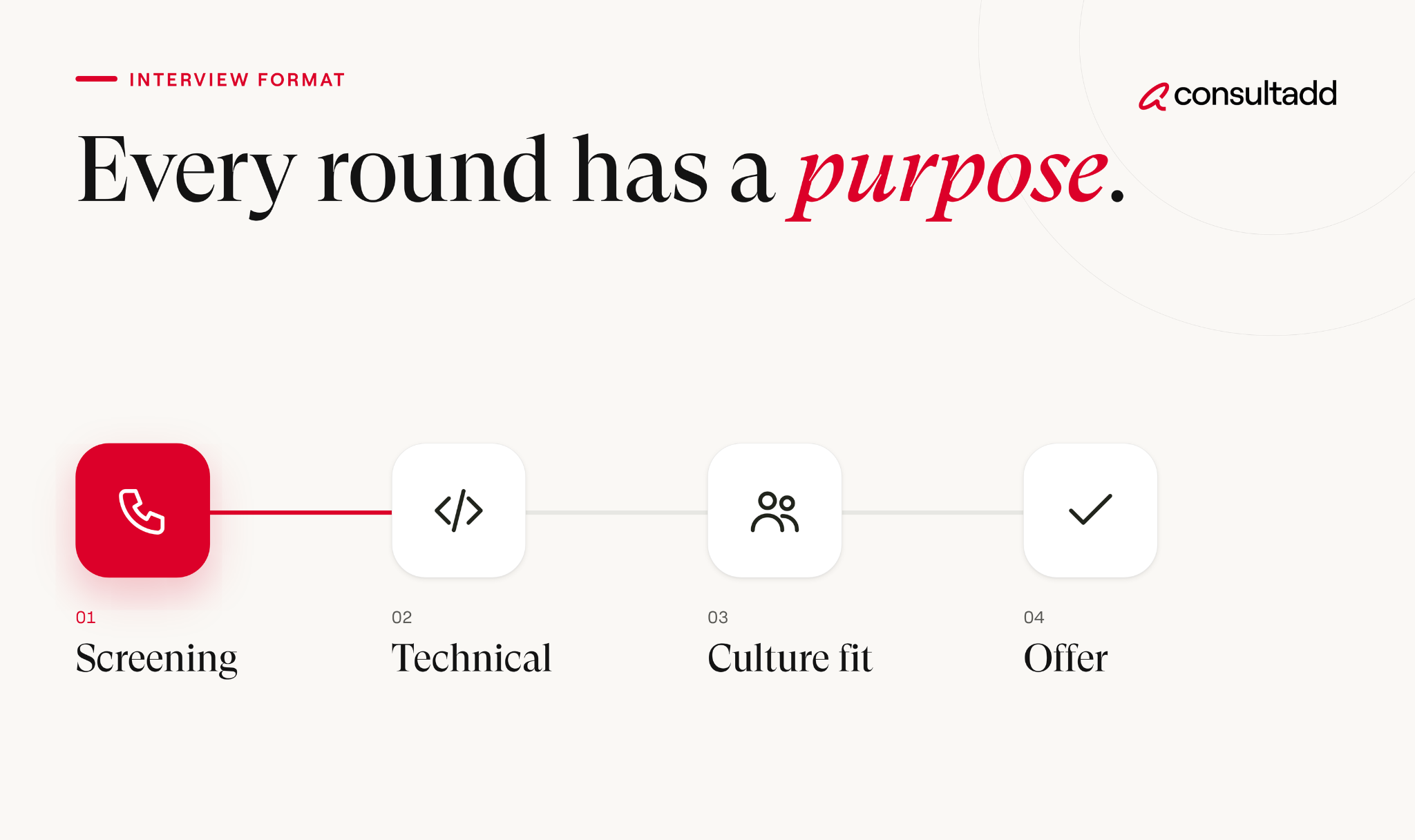
Many tech employers run a loop: several interviews in one day or across a week, each focused on a different skill.
Boston University's career center calls this a round robin, a series of same-day interviews that can mix panel and one-on-one sessions and may include a presentation or skills demonstration.
Stamina matters more than people expect. Eat beforehand, keep water nearby and write down the names of everyone you meet. Your answers should stay consistent, because interviewers usually compare notes afterward.
Structured and behavioral interview formats
This layer is about the questions themselves and how they get scored.
How a structured interview works
The U.S. Office of Personnel Management defines a structured interview as an assessment that measures job-related competencies by asking about past behavior and hypothetical situations, with the same questions and scoring process for every candidate.
OPM publishes free guidance on this in its structured interview resources.
Private employers use the same approach. Google's re:Work guide explains that Google asks the same questions, grades responses on the same scale and makes decisions based on consistent, predetermined qualifications.
You can read the full method in Google's guide to structured interviewing.
Why should a candidate care? Because in a structured interview, charm doesn't move your score much. The interviewer is matching your answer against a rubric. Vague answers score low even when the conversation felt friendly.
Behavioral and situational questions
Behavioral questions start with phrases like "Tell me about a time when..." They ask what you did. Situational questions ask what you would do in a hypothetical scenario.
For both, a short structure helps: set up the situation, explain your part, describe what you did and share the result.
We break down that approach with worked examples in our guide to answering analytical interview questions, so it isn't repeated here.
One practical tip: prepare five or six stories that you can adapt, rather than 30 memorized answers. A single story about fixing a production outage can answer questions about pressure, teamwork, ownership and problem-solving.
Technical interview formats in IT hiring
For developer, data, cloud and QA roles, at least one round will test your skills directly. The technical interview format tells you how.
1. Live coding and technical rounds
You solve a problem while an engineer watches, usually in a shared editor. Interviewers care about your reasoning as much as the final code. Talk through your approach before you start typing.
If this is your next round, our step-by-step guide to mastering the coding interview covers patterns and practice methods in detail.
Full stack candidates can also use our list of interview questions for a full stack developer.
2. Case and scenario interviews
UC Davis' career center notes that case interviews are most common in consulting and let recruiters watch your analytical and problem-solving skills as you think out loud, often with no single right answer.
In tech, this often looks like "A client's app slows down every Monday morning. Walk me through how you'd investigate."
Ask clarifying questions first. Interviewers often hold back details on purpose to see whether you'll ask.
3. Take-home assignments and working sessions
Some employers send a small project with a deadline. Others run a paired working session where you build or debug something alongside a team member.
These formats are closer to the real job, which many candidates prefer.
Before you start a take-home, confirm the expected time commitment. Put a short README with your decisions and trade-offs in your submission. That note often gets discussed in the next round.
How to prepare for each interview format
Good preparation starts before you rehearse a single answer.
Questions to ask the recruiter first
Recruiters expect these questions. Asking them makes you look organized, not nervous.
- Will this round be by phone, live video, recorded video or in person?
- Who will I meet, and what are their roles?
- How long is the interview, and are there multiple sessions?
- Is there a technical component, such as live coding, a case or a take-home?
- What does the next step look like after this round?
Prep checklist by interview format
What recruiters notice in practice
On the staffing side, recruiters prep candidates for client interviews all the time, and the same patterns come up.
Candidates who ask about the format ahead of time tend to handle surprises better. When the client adds a live coding exercise at the last minute, they've already practiced one.
Consistency matters more in contract and contract-to-hire hiring than many people assume. A candidate may speak with the staffing recruiter, then the client's hiring manager, then a technical lead. If the project details or dates in your story shift between rounds, people notice. Keep your examples consistent with your resume.
Also, don't assume a short interview is an easy one. Phone screens for contract roles can move fast because the client needs someone soon. A clear, confident 20 minutes can move you straight to the final round.
That speed is also why employers lean on structured interviews and technical evaluations in IT staffing.
Reading the interview format before you walk in
The interview format is information, and it's usually available if you ask. A phone screen tells you the recruiter is checking the basics.
A panel tells you several people need to agree. A structured, rubric-based round tells you to bring specific examples with results.
Match your preparation to the format, and you'll spend your time on what's actually being measured. The UConn Center for Career Readiness has a useful overview of specialized formats if your field uses one not covered here.
Start Strong With Consultadd
With 15 years in business and 5,000+ successful staffing engagements, we don't just fill roles, we build reliability into your process. We've supported 65 staffing companies in the past year alone and maintain MSAs with industry leaders like Robert Half and TEKsystems.
Here's what working with Consultadd looks like:
- Talent sourced in under 24 hours
- Ready-to-deploy candidates, vetted for experience and compliance
- Lower turnover risk: we match long-term goals, not just short-term needs
- Seamless compliance: visa, documentation, onboarding? Handled.
- Dedicated 1:1 account managers for responsive, personalized support
- Top 100 candidate matches delivered in the past year
- Strong partnerships with universities to tap into fresh, committed talent
- Post-placement support so your investment grows beyond day one
For candidates, your next opportunity is more than just a job title, it's a chance to build skills, gain experience, and move your career forward. At Consultadd, we connect technology professionals with projects and employers that align with their goals, whether they're looking for contract, contract-to-hire, or long-term opportunities.
The tech job market moves fast, but the right guidance can make all the difference. Ready to take the next step in your career journey? Explore Opportunities >>
Key takeaways
- Break any interview into delivery, participants and question style, and prepare for each layer.
- Treat phone screens and one-way videos as filters: be brief, clear and on time.
- In panel interviews and loops, answer the person who asked but speak to the whole room, and keep your stories consistent.
- Structured interviews are scored against a rubric, so specific examples with results carry the most weight.
- Ask the recruiter about the format early. It's a normal question and it shapes everything else you prepare.
FAQs
What are the most common types of interview formats?
The most common formats are phone screens, live video interviews, one-way recorded video interviews, one-on-one interviews, panel interviews and onsite loops. Tech roles usually add a technical format such as live coding, a case scenario or a take-home assignment. Most hiring processes combine several of these across rounds.
What is a panel interview format?
A panel interview is one candidate meeting several interviewers at the same time. The panelists usually take turns asking questions, and each may focus on a different area, such as technical skills or teamwork. Answer the person who asked, then include the rest of the panel with eye contact as you wrap up.
How does a one-way video interview work?
You receive a link, read or watch each question and record your answer within a set time limit. Nobody is on the other end live, so reviewers watch your recordings later. Practice with a timer so you finish each answer before the clock runs out.
Is it OK to ask a recruiter about the interview format?
Yes. Recruiters expect questions about the delivery method, the interviewers, the length and whether there's a technical component. Asking shows you're organized and helps you prepare for the right things.
What is the difference between a structured and an unstructured interview?
A structured interview asks every candidate the same job-related questions and scores the answers on the same scale. An unstructured interview flows more freely, and each interviewer may ask different things. Structured formats reward specific, evidence-based examples.
How many rounds does a typical tech interview process have?
It varies by company and role. Many tech hiring processes include a recruiter screen, one or more technical rounds and a final conversation with the hiring manager or team. Contract roles often move faster with fewer rounds, so ask the recruiter what to expect.


.webp)