

Introduction
Full stack interviews have a reputation problem: candidates prepare for a hundred trivia questions and then get evaluated on something else entirely.
The best interview questions for a full stack developer don't test whether you've memorized what REST stands for. They test whether you can carry a feature from database schema to browser render, explain your trade-offs, and, increasingly in 2026, prove you understand code that AI tools helped you write.
That last part is new and worth taking seriously. With most developers now working alongside tools like GitHub Copilot and Cursor, interviewers have started asking candidates to reason through code without AI assistance. Hiring managers have grown blunt about it: fluency you can't explain is fluency you don't have.
This guide organizes the questions you'll actually face by interview round, covers what strong answers sound like, and flags what interviewers are really listening for at each stage. Whether you're the candidate or the person running the loop, the list works both ways.
TL;DR
- Full stack interviews typically run four rounds: a screening call, a frontend/backend technical deep dive, a system design round, and a behavioral round, with live coding woven in.
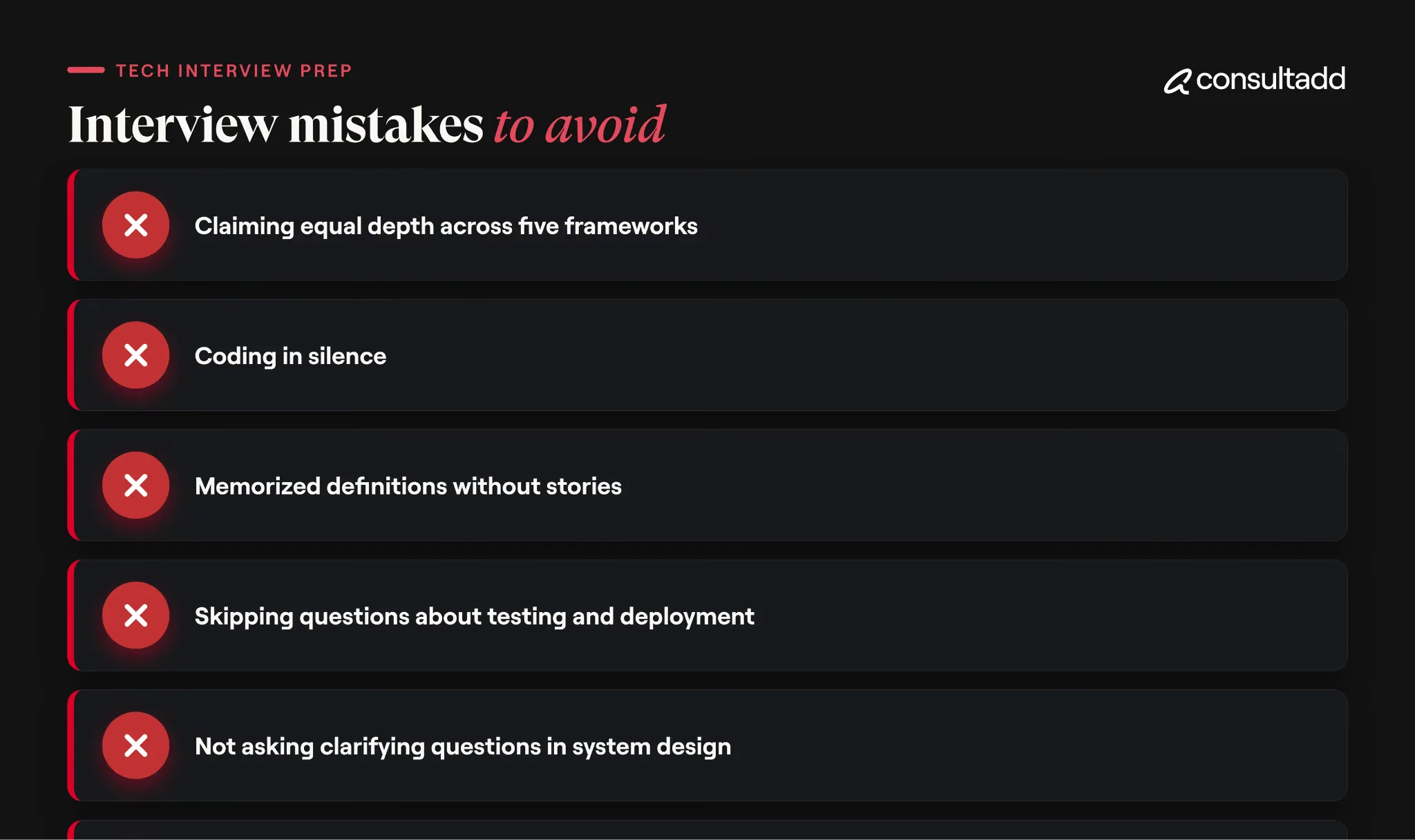
- Interviewers weight depth over breadth: one stack explained well (React + Node + PostgreSQL, for instance) beats surface familiarity with five frameworks.
- The 2026 twist is AI fluency: expect questions like "explain what this function does without AI context" and "when did an AI tool actually save you time?"
- System design carries the most weight for mid and senior roles; practice designing one complete feature end to end, including caching, auth, and failure handling.
- Demand stays strong: the Bureau of Labor Statistics projects roughly 16% growth for web developer roles through 2034, several times the average across all occupations.
How full stack interviews are structured
Most companies run a version of the same loop. Knowing the structure tells you where to spend your preparation hours:
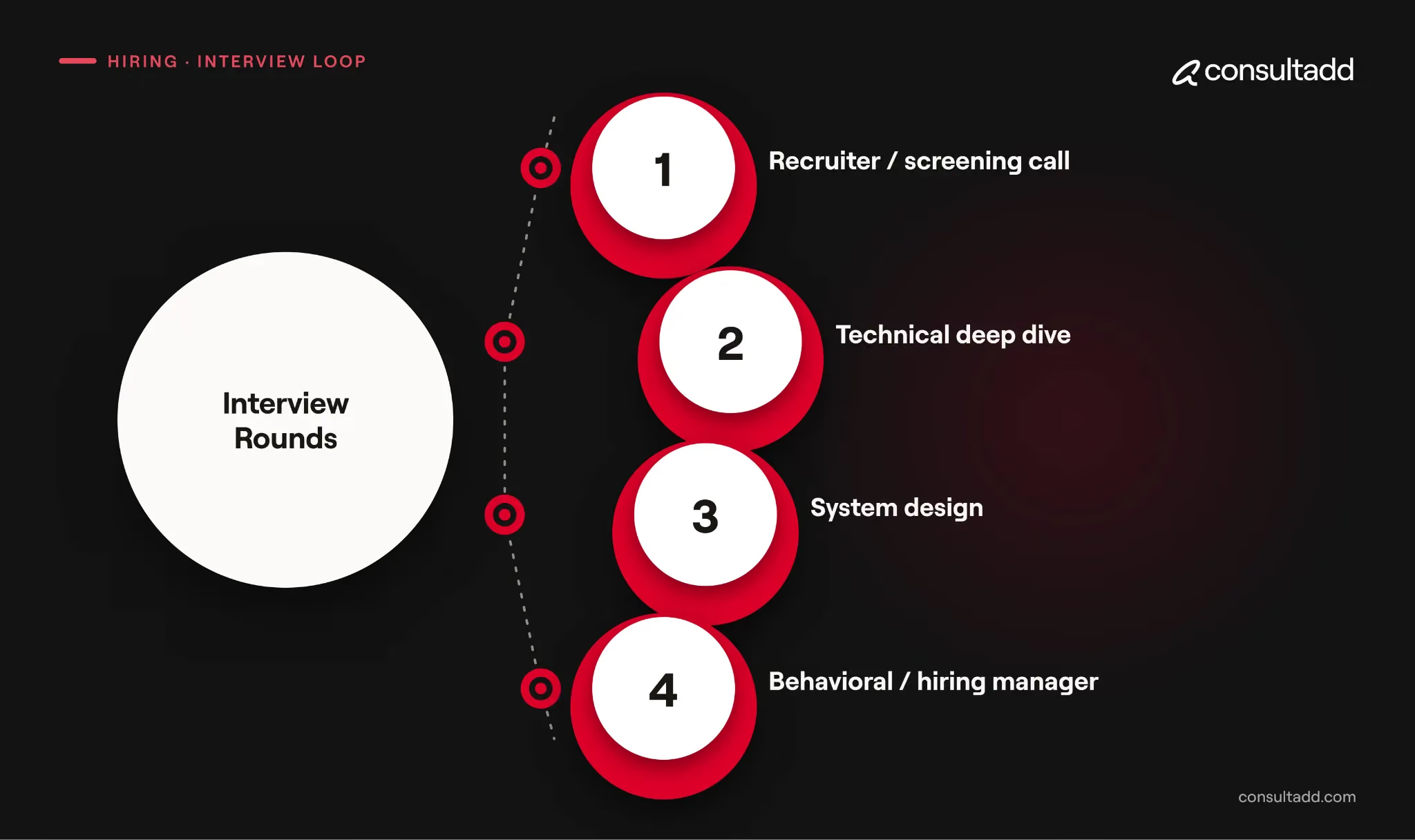
Two structural notes:
- First, "full stack" doesn't mean equal depth everywhere; interviewers expect a center of gravity (frontend-leaning or backend-leaning) with working competence on the other side. Say which one you are early; it sets fair expectations.
- Second, seniority shifts the weight: junior loops emphasize the technical deep dive, senior loops live and die in system design.
The general preparation principles from our coding interview playbook apply throughout, so I'll keep this guide focused on the full stack specific material.
Frontend interview questions
The frontend round in 2026 is overwhelmingly React and TypeScript territory, with the occasional Vue or Angular shop. Expect questions like:
1. What's the difference between state and props, and when does lifting state up become a problem?
Strong answers go past definitions into prop drilling, context, and when to reach for external state management rather than defaulting to it.
2. Explain how React re-renders. What actually triggers one, and how do you prevent unnecessary renders?
Interviewers listen for reconciliation, keys, memoization (React.memo, useMemo, useCallback), and, crucially, when memoizing is premature.
3. What are React Server Components, and what problem do they solve?
This one separates candidates who've worked in modern Next.js from those who stopped learning in 2022.
4. How does the browser go from HTML to pixels?
The rendering pipeline: parsing, DOM/CSSOM, layout, paint, composite. It underlies every performance question that follows.
5. A page is slow. Walk me through your diagnosis.
The expected shape: measure first (Lighthouse, DevTools performance tab), identify whether it's network, render, or JavaScript execution, then fix and re-measure. Jumping straight to "I'd lazy-load images" without measuring is the junior tell.
6. How do you handle forms and validation in a large app?
Controlled vs uncontrolled inputs, client vs server validation, and why you always validate on the server anyway.
7. Explain CORS in plain terms.
A perennial. If you can explain why the browser blocks the request and what the server must do about it, you understand the web's security model better than most.
Backend and API interview questions
Node.js dominates full stack backend interviews, with Python (Django/FastAPI) and Java (Spring Boot) close behind. The questions probe production thinking, not syntax:
1. Design a REST API for a resource, say, orders. What do your endpoints, status codes, and error responses look like?
Interviewers watch for consistent naming, correct verbs, pagination, versioning, and meaningful errors rather than 200-with-an-error-body.
2. REST vs GraphQL: when would you choose each?
The answer they want is a trade-off analysis (over-fetching vs caching complexity), not a tribal preference.
3. How do you handle authentication? Compare sessions and JWTs.
Expect follow-ups on token storage, expiry, refresh flows, and why localStorage for tokens makes security reviewers wince.
4. What happens, in as much detail as you can give, when a user submits a form on your site?
The classic end-to-end question, and arguably the single best full stack filter ever devised: DNS, TLS, request, middleware, validation, database write, response, re-render. Depth here correlates with real experience almost perfectly.
5. How do you make an endpoint idempotent, and why does it matter?
Payment and retry scenarios. If a candidate has never thought about duplicate requests, they haven't run anything important in production.
6. How would you rate-limit an API?
Token bucket vs fixed window, where the limiter lives, and what the client experience of a 429 should be.
7. How does the Node.js event loop work, and what happens when you block it?
The single most asked Node question. Strong answers cover the phases, why CPU-heavy work starves other requests, and remedies (worker threads, queues, offloading).
Database interview questions
Weak SQL sinks more full stack candidates than weak JavaScript, and interviewers in 2026 know it:
1. SQL vs NoSQL: how do you actually choose?
Consistency needs, query patterns, and schema flexibility, with a concrete example from your own work.
2. What is an index, how does it work, and when does adding one hurt?
B-trees at a conceptual level, faster reads, slower writes, and the discipline of indexing based on query patterns rather than vibes.
3. Write a query joining two tables with an aggregate, then optimize it.
Live SQL is back in fashion. Practice GROUP BY, HAVING, and reading an EXPLAIN plan.
4. Explain a transaction and the ACID properties with a real scenario.
The money-transfer example is fine; bonus points for discussing isolation levels and what a dirty read looks like in practice.
5. What's the N+1 query problem and how have you fixed it?
Every ORM user has hit this. Interviewers love it because the answer proves hands-on experience: eager loading, joins, batching with a dataloader.
6. How would you handle a schema migration on a live production table with millions of rows?
Backwards-compatible steps, deploy-then-migrate ordering, and never locking a hot table at noon.
System design and DevOps questions
For mid-level and senior roles, this round decides the offer. The prompts are open-ended by design:
1. Design a URL shortener / notification service / file upload feature end to end.
The evaluation isn't the final architecture; it's whether you clarify requirements first, reason about scale honestly, and name your trade-offs out loud.
2. Where would you add caching in a typical web app, and what can go wrong?
Browser, CDN, application (Redis), database. The "what can go wrong" half, invalidation, stale reads, stampedes, is where senior candidates separate.
3. How do you deploy your code today, and how would you improve it?
CI/CD literacy is now table stakes; a full stack developer who can't ship their own code reads as half the role. GitHub Actions, containers, environment promotion, rollback strategy.
4. A production endpoint's latency doubled overnight. Walk me through your investigation.
Logs, metrics, traces, recent deploys, database slow queries. Structured debugging under pressure is exactly what the job is.
5. How do you secure a full stack application?
OWASP basics: injection, XSS, CSRF, secrets management, dependency auditing. Nobody expects a security engineer; everyone expects awareness.
AI-era and behavioral questions
The newest question category, and the one candidates prepare for least. With AI assistants now writing a large share of production code, interviewers probe whether you're directing the tool or the tool is directing you:
1. Here's a function. Explain what it does, without any AI context.
Increasingly common at SaaS companies. It exists because hiring managers have been burned by candidates who couldn't explain their own GitHub history.
2. Tell me about a time an AI coding tool genuinely saved you significant time, and a time it led you astray.
The strong answer is specific and strategic (scaffolding tests, migrating patterns across files) rather than "it autocompletes my boilerplate."
3. How do you verify AI-generated code before shipping it?
Reading it fully, testing edge cases, checking licenses and security patterns. "I trust it for simple stuff" is the wrong answer.
The behavioral round then follows familiar lines: a project you owned end to end, a production incident and what changed afterward, a disagreement about technical direction, a deadline that forced scope cuts. Use a structure (situation, action, result), keep it honest, and pick stories where you can discuss the technical detail if pushed, because good interviewers always push.
Common mistakes and how to prepare
From the hiring side of the table, the same failure patterns repeat across loops:
Preparation that actually works: build or refactor one real project across the full stack and be ready to defend every decision in it, drill live SQL and one end-to-end system design prompt per week, and rehearse explaining code aloud without an editor's help.
The market rewards the effort; median pay for the BLS web developer category was $92,750 as of the latest published data, aggregator ranges for full stack roles run far higher with growth around 16% through 2034.
And if you're on the hiring side, the questions above only work inside a disciplined process: structured scorecards, consistent rubrics, and fast feedback loops.
Slow, improvised loops lose exactly the candidates you want, a pattern we've unpacked in our reviews of what's broken in IT recruitment and the hiring strategies that actually work in 2026
Start Strong With Consultadd
With 15 years in business and 5,000+ successful staffing engagements, we don't just fill roles, we build reliability into your process. We've supported 65 staffing companies in the past year alone and maintain MSAs with industry leaders like Robert Half and TEKsystems.
Here's what working with Consultadd looks like:
- Talent sourced in under 24 hours
- Ready-to-deploy candidates, vetted for experience and compliance
- Lower turnover risk: we match long-term goals, not just short-term needs
- Seamless compliance: visa, documentation, onboarding? Handled.
- Dedicated 1:1 account managers for responsive, personalized support
- Top 100 candidate matches delivered in the past year
- Strong partnerships with universities to tap into fresh, committed talent
- Post-placement support so your investment grows beyond day one
For candidates, your next opportunity is more than just a job title, it's a chance to build skills, gain experience, and move your career forward. At Consultadd, we connect technology professionals with projects and employers that align with their goals, whether they're looking for contract, contract-to-hire, or long-term opportunities.
The tech job market moves fast, but the right guidance can make all the difference. Ready to take the next step in your career journey? Explore Opportunities >>
Key takeaways
- Interview questions for a full stack developer cluster into five areas: frontend (React, rendering, performance), backend (APIs, auth, the event loop), databases (SQL, indexing, N+1), system design, and behavioral.
- Depth beats breadth: interviewers reward one well-explained stack with production stories over surface familiarity with many.
- The "what happens when a user submits a form" end-to-end question remains the single best full stack filter; rehearse it until your answer spans DNS to database and back.
- AI fluency questions are now standard: be ready to explain code without assistance and to describe strategically, not vaguely, how AI tools fit your workflow.
- System design decides mid and senior offers; practice one complete feature design weekly, clarifying requirements first and naming trade-offs out loud.
FAQs
What are the most common interview questions for a full stack developer?
The staples: explain what happens when a user submits a form (end to end), state vs props and re-rendering in React, how the Node.js event loop works, sessions vs JWTs for authentication, SQL joins with optimization, the N+1 query problem, and one open-ended system design prompt such as designing a URL shortener.
How do I prepare for a full stack developer interview?
Pick one primary stack and go deep: build or refactor a real project across frontend, backend, and database, and be ready to defend every decision in it. Drill live SQL, practice one system design prompt weekly, rehearse explaining code aloud, and prepare specific stories about production incidents and AI tool usage.
What technical skills do interviewers test for full stack roles in 2026?
React with TypeScript on the frontend, Node.js (or Python/Java) API design on the backend, SQL fluency including indexing and query optimization, CI/CD and cloud deployment basics, security fundamentals, and increasingly the ability to work with and verify AI-generated code.
How many interview rounds do full stack developers go through?
Typically three to four: a recruiter screen, a technical deep dive with live coding, a system design round, and a behavioral round with the hiring manager. Some companies add a take-home project or pair-programming session. Senior roles weight system design most heavily.
What is the hardest part of a full stack interview?
For most candidates, system design, because it's open-ended and tests judgment rather than recall. The most common failure isn't a wrong architecture but skipping requirements clarification and designing the wrong thing confidently. Database depth is the second most common gap.
Do interviewers care if I use AI coding tools?
They care how you use them. Expect questions asking you to explain code without AI assistance and to describe when a tool genuinely helped versus misled you. Candidates who treat AI as a strategic accelerator, and can verify its output, score well; candidates who can't explain their own code do not.



.webp)