


Introduction
A sales dashboard shows yesterday's numbers by 7 a.m. A fraud model scores transactions within seconds. A finance team closes the month without exporting 40 spreadsheets. Somebody built the pipelines behind all three, and in most companies that person writes a lot of Python.
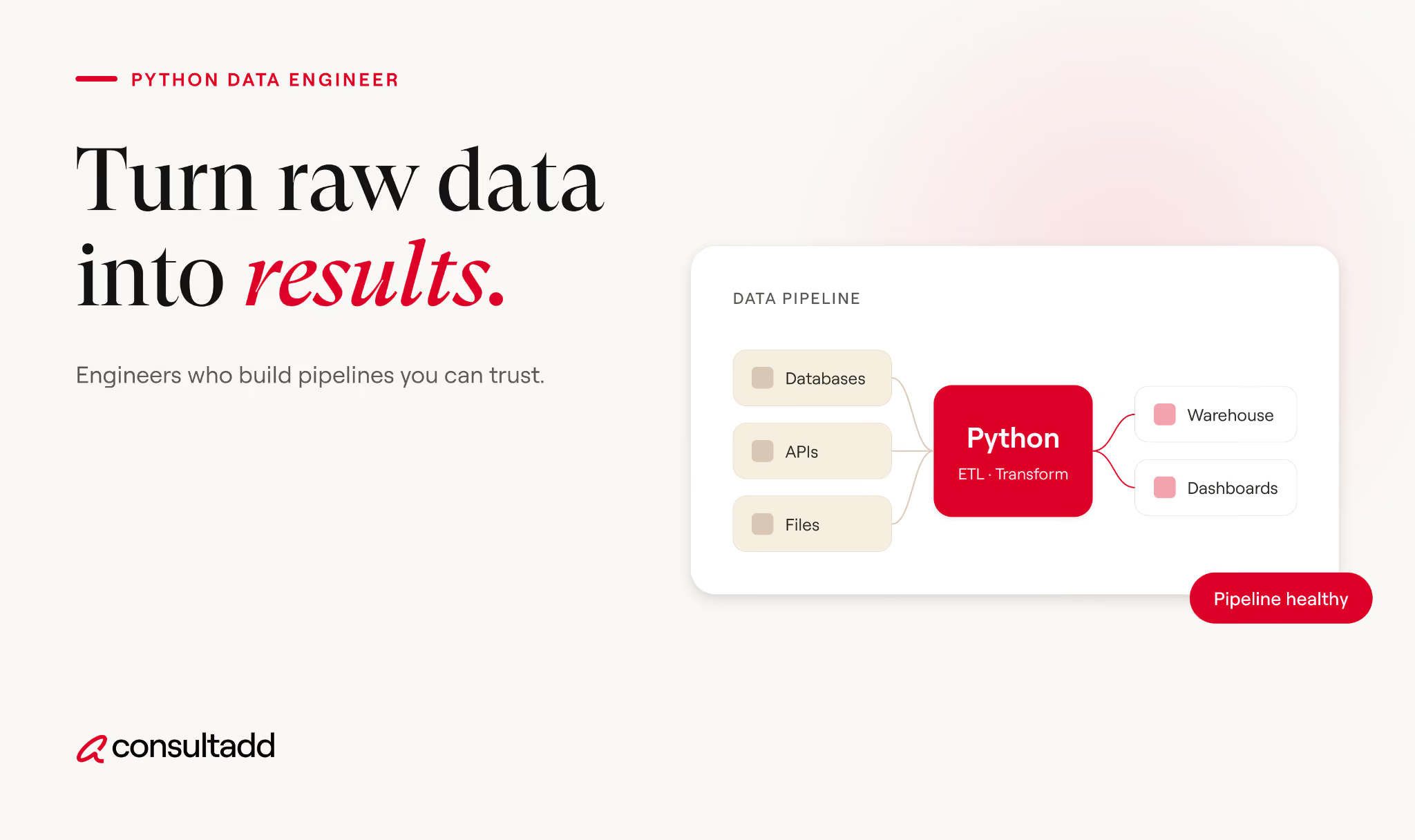
A Python data engineer designs, builds and maintains the systems that move data from where it's created to where people and models use it. Python is the main language for the code. SQL, cloud platforms and orchestration tools do much of the rest.
This guide covers what the job actually involves, the skills employers test for, the tools worth learning first, what the pay data shows, and how to get hired, whether you're coming from analytics, backend development or database work.
TL;DR
- A Python data engineer builds and runs pipelines that collect, clean, transform and deliver data. The work is closer to software engineering than to data science.
- Python alone isn't enough. Employers expect strong SQL, data modeling, a cloud platform and an orchestration tool alongside it.
- Learn one tool per category well (for example PySpark, Airflow, Snowflake and AWS) before collecting more.
- BLS doesn't track "data engineer" as its own job. The closest category, database architects, had a median wage of $135,980 in May 2024.
- Interviews usually test Python, SQL, pipeline design and how you've handled a broken pipeline in production.
What a Python data engineer does
Most of the job falls into four kinds of work:
Ingestion. Pulling data from APIs, application databases, files and event streams into a central store.
Transformation. Cleaning, joining and reshaping raw data into tables people can trust.
Orchestration. Scheduling jobs, handling dependencies and retrying failures so pipelines run on time without someone watching them.
Reliability. Testing, monitoring, data quality checks and fixing things when an upstream system changes a field name at 2 a.m.
Python shows up in all four. It's used to call APIs, write transformation logic in pandas or PySpark, define Airflow workflows and write tests. SQL handles much of the heavy transformation inside the warehouse.
The title gets confused with several neighboring roles. Here's how they usually differ:
The lines blur at smaller companies, where one person may do two of these jobs. If you're curious about the ML side, our guide to AI/ML engineer jobs covers those roles.
Python data engineer skills employers ask for
Job postings list a lot of tools. Underneath them, employers are looking for a fairly stable set of skills.
1. Python, at a software engineering level
Knowing pandas isn't the same as being able to write production Python. Employers want people who can structure code into modules, handle errors cleanly, write tests and work with large files without running out of memory.
Python's popularity helps here. In the Stack Overflow 2025 Developer Survey, Python usage rose 7 percentage points in a year to 57.9% of respondents.
That means plenty of learning material, but also plenty of competition, so depth matters more than a line on your resume.
2. SQL
SQL is non-negotiable. You'll write joins across large tables, window functions, incremental loads and queries that need to run fast and cost little in a cloud warehouse.
Many interviews spend as much time on SQL as on Python.
3. Data modeling
This means deciding how tables should be structured: what counts as a fact versus a dimension, how to handle history when a customer changes address, and how to keep tables understandable for the people using them.
4. Cloud and orchestration
Most data platforms now run in the cloud. You don't need all three major providers. Knowing one well, including its storage, compute and permissions model, is usually enough to get started.
The skill most candidates underrate is idempotency. A pipeline that produces the same result whether it runs once or three times is far easier to recover when something breaks. Interviewers often probe for it.
The Python data engineering toolkit
The tool list can feel endless. A better approach is to learn one tool per category properly, then pick up others as jobs require them.
Notice that the "learn first" column depends partly on your market. Spend 20 minutes counting tools in 15 or 20 job postings for roles you want. The pattern will tell you more than any generic list.
If AWS keeps showing up, our guide to AWS developers for hire explains which AWS services data engineers are usually screened on.
Python data engineer pay and job outlook
The U.S. Bureau of Labor Statistics doesn't have a separate occupation for data engineers. The closest category it tracks is database administrators and architects.
According to the BLS Occupational Outlook Handbook, the median annual wage was $135,980 for database architects and $104,620 for database administrators in May 2024. BLS projects 4% employment growth for the combined group from 2024 to 2034.
Treat those as rough reference points, not a salary quote. Data engineering pay varies a lot by city, industry, seniority and stack.
Engineers with strong Spark, streaming or cloud platform experience tend to sit at the upper end. Postings in finance and large tech companies often pay more than those in smaller firms.
A few things to keep in mind when comparing offers:
- Titles vary. "Data engineer," "big data engineer," "ETL developer" and "data platform engineer" can describe very similar jobs at different pay levels.
- Contract roles are quoted hourly. To compare with a salary, account for benefits, paid time off and gaps between contracts.
- How you're paid matters. A W-2 contract and a C2C contract at the same hourly rate are not the same take-home pay.
Our guide to W-2 vs C2C vs 1099 explains the difference.
How to become a Python data engineer
Few people start their careers as data engineers. Most move in from a neighboring role.
Whatever your starting point, the path usually looks like this:
- Get solid at SQL and Python together. Write scripts that read data, transform it and load it into a database, with tests.
- Learn one cloud platform's data services. Focus on storage, a warehouse and how permissions work.
- Add an orchestrator. Schedule your pipeline in Airflow, Prefect or Dagster, with retries and backfills.
- Build one complete project. One pipeline that runs end to end beats five notebooks.
- Write it up. A short README explaining design choices and what you'd change shows how you think.
What a strong portfolio project includes
Recruiters see a lot of projects that load a CSV into pandas and stop. A project that stands out does more:
- Pulls data from a real, changing source such as a public API
- Loads it incrementally rather than reprocessing everything every run
- Runs on a schedule with an orchestrator
- Includes data quality checks and unit tests
- Lands clean tables in a warehouse or database
- Explains what happens when the source fails or sends bad data
Our guide to key IT skills and how to prove them has more examples of turning project work into resume bullets that recruiters notice.
What Python data engineer interviews test
Interview loops vary by company, but most include some version of these rounds:
Two questions come up often in our experience placing data engineers:
- The first is some version of "Tell me about a pipeline that broke and how you fixed it."
- The second is "How would you know if this data was wrong?" Strong answers mention specific checks, alerts and what changed afterward to stop it happening again.
Many companies now also ask how you use AI coding tools. Be honest. Saying you use them to draft boilerplate and then review everything carefully is a reasonable answer.
Contract, contract-to-hire or full-time
Data engineering has a large contract market. Companies often bring in contractors for a platform migration, a warehouse rebuild or a new pipeline project, then keep a smaller permanent team to run it.
Our guide to IT contract jobs lists data engineer contracts at 6 to 18 months on average, which is long enough to build real experience on a new stack.
Contract work can suit you if you want exposure to several companies and tools quickly.
A contract-to-hire role gives both sides a trial period before a permanent offer. Full-time roles usually offer more stability, benefits and long-term ownership of a platform.
If you're open to remote contract work, our guide to staffing agencies for remote jobs explains how agencies place candidates and what to ask a recruiter before you agree to a submission.
Your next step as a Python data engineer
Being a Python data engineer is less about knowing every tool and more about building pipelines that keep working when things go wrong.
Strong Python and SQL, one cloud platform, one orchestrator and a project that shows how you handle failure will get you further than a long list of logos on a resume.
Pick five job postings you'd actually apply to this week. List the tools they share, compare them against what you know, and close the biggest gap with one focused project.
That's a better plan than another generic course.
Start Strong With Consultadd
With 15 years in business and 5,000+ successful staffing engagements, we don't just fill roles, we build reliability into your process. We've supported 65 staffing companies in the past year alone and maintain MSAs with industry leaders like Robert Half and TEKsystems.
Here's what working with Consultadd looks like:
- Talent sourced in under 24 hours
- Ready-to-deploy candidates, vetted for experience and compliance
- Lower turnover risk: we match long-term goals, not just short-term needs
- Seamless compliance: visa, documentation, onboarding? Handled.
- Dedicated 1:1 account managers for responsive, personalized support
- Top 100 candidate matches delivered in the past year
- Strong partnerships with universities to tap into fresh, committed talent
- Post-placement support so your investment grows beyond day one
For candidates, your next opportunity is more than just a job title, it's a chance to build skills, gain experience, and move your career forward. At Consultadd, we connect technology professionals with projects and employers that align with their goals, whether they're looking for contract, contract-to-hire, or long-term opportunities.
The tech job market moves fast, but the right guidance can make all the difference. Ready to take the next step in your career journey? Explore Opportunities >>
Key takeaways
- A Python data engineer builds and maintains pipelines for ingestion, transformation, orchestration and data reliability.
- Employers expect strong SQL, data modeling, one cloud platform and an orchestrator alongside production-quality Python.
- Learn one tool per category well, guided by what appears most in the job postings you're targeting.
- BLS reports a $135,980 median wage for database architects, the closest tracked category, though data engineering pay varies widely.
- One complete, scheduled, tested pipeline project does more for your job search than several half-finished ones.
FAQs
What does a Python data engineer do?
A Python data engineer builds systems that move data from sources like apps, APIs and files into warehouses and other destinations where people and models can use it. They write Python and SQL to ingest, clean and transform data, schedule jobs with orchestration tools, and monitor pipelines for failures and bad data.
Is Python enough to become a data engineer?
No. Python is the core programming language, but employers also expect strong SQL, data modeling skills, experience with a cloud platform and an orchestration tool like Airflow. Testing and version control habits matter too, because pipelines run in production.
What is the difference between a Python data engineer and a data scientist?
A data engineer builds and maintains the pipelines and infrastructure that deliver clean, reliable data. A data scientist uses that data to run analyses, experiments and predictive models. Both use Python daily, but data engineering is closer to software engineering, while data science is closer to statistics.
How much does a Python data engineer make?
BLS doesn't track data engineers separately, but database architects, the closest category, had a median annual wage of $135,980 in May 2024. Actual pay depends on location, industry, seniority and stack. Contract roles are usually quoted hourly, so compare total compensation rather than the rate alone.
Which Python libraries should a data engineer learn?
Start with pandas for data manipulation and pytest for testing, then learn PySpark for larger datasets. Get comfortable with a database connector like SQLAlchemy and a request library for APIs. Orchestration frameworks like Airflow are also defined in Python, so learning one counts toward your Python skills.
Can a data analyst become a Python data engineer?
Yes, and it's one of the most common paths. Analysts already know SQL and the business context. The main additions are production-quality Python, cloud data services, orchestration and testing, which you can show through one end-to-end pipeline project.




.png)