
.avif)

Introduction
SAP MM hiring has gotten harder in the last two years, not easier. Companies are still running procurement and inventory through SAP, S/4HANA migrations are picking up speed, and the pool of consultants who actually know the module cold hasn't grown at the same rate.
If you're a hiring manager or recruiter trying to fill an SAP MM seat right now, you've probably already noticed candidates asking for more money, more flexibility, or both.
This guide walks through what SAP MM hiring looks like today: the skills worth screening for, what the role actually pays, which hiring model fits your timeline, and where the process tends to go wrong.
TL;DR
- SAP MM pay has held steady through 2026, with average hourly rates near $73 in the US and senior consultants clearing $130,000 a year.
- The S/4HANA migration deadline is pulling more companies into hiring mode, which is tightening supply for experienced MM consultants.
- Screening should focus on procurement, inventory, and master data experience, not just a certification badge.
- Contract-to-hire has become the default model for MM roles because it lets both sides test fit before committing.
- Compliance work, including visa sponsorship, is often the slowest part of an SAP MM hire and worth planning for early.
SAP MM is a narrower hire than most job descriptions suggest
SAP Materials Management covers procurement, inventory management, material requirements planning, and vendor management inside the broader SAP ERP or S/4HANA system.
It's one of the modules most companies stood up first, because procurement and inventory touch nearly every part of a manufacturing, retail, or logistics business.
That history is part of the hiring problem. A lot of job postings for "SAP MM consultant" actually want someone who also understands SD (sales and distribution), FI (finance), or PP (production planning), because those modules integrate so closely with MM in a live system.
If your job description reads like three roles stitched together, you'll get fewer qualified applicants, not more.
The SAP MM talent market in 2026
Demand for SAP MM hasn't slowed down, and the reason has less to do with new implementations than with old ones.
- A large share of SAP's installed base is still running the legacy ECC system, and support for it ends in 2027.
- Gartner data cited by CIO reported that only about 39% of the roughly 35,000 ECC customers worldwide had migrated to S/4HANA by the end of 2024, which leaves a sizable chunk of companies racing to convert before the deadline.
- That migration wave is a direct driver of MM hiring, since inventory and procurement configuration has to be rebuilt or validated in the new system.
Pay reflects that pressure.
- ZipRecruiter salary data pegged the average US hourly rate for SAP MM work at $72.65 as of mid-August 2026, with senior consultants and specialized roles running well above that.
- Annual salaries for experienced SAP MM consultants commonly land between $60,000 and $120,000, with senior architects and niche specialists clearing $130,000.
The broader labor picture backs this up too.
- The Bureau of Labor Statistics projects that computer and information technology occupations will grow much faster than the average for all jobs through 2034, with roughly 317,700 openings a year across the field.
- SAP MM sits inside that broader IT demand curve, which means it's competing for the same limited talent pool as cybersecurity, cloud, and data roles.
Core skills and certifications to screen for
A certification tells you someone studied the material. It doesn't tell you they can configure a pricing procedure under a live deadline or untangle a messy vendor master data set.
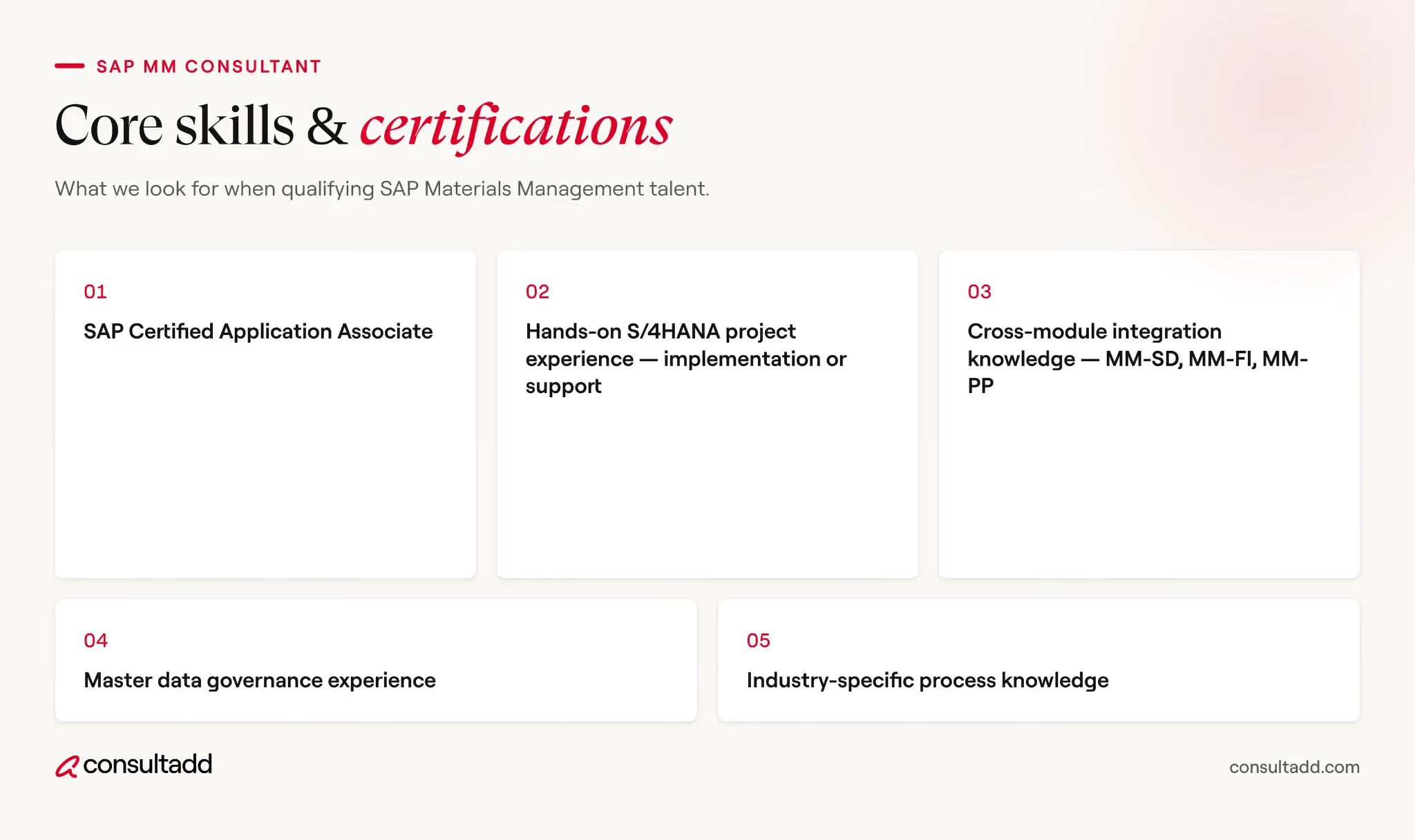
Use certifications as a baseline filter, then screen for hands-on experience underneath it.
Here's how skill expectations generally break down by seniority level:
If a candidate's resume is heavy on certifications but light on named projects, ask them to walk through a specific configuration decision they made and why.
It's a fast way to separate people who studied SAP MM from people who've actually run it.
Contract, contract-to-hire, or full-time: choosing the right model
The hiring model matters as much as the candidate. SAP MM work often comes in project waves (a migration, a rollout, a go-live) rather than steady-state need, which is part of why contract and contract-to-hire arrangements are so common in this space.
If you're not sure which model fits your situation, this breakdown of what contract-to-hire actually means and how it works is worth reading before you write the job posting.
Where to find SAP MM candidates
Sourcing SAP MM talent directly is possible, but it competes with every other company running the same migration timeline.
Most hiring teams end up mixing three channels:
- Internal referrals
- Direct sourcing through job boards
- Staffing partners who already maintain a bench of vetted SAP consultants
Staff augmentation tends to be the fastest option when you need someone live on a project within weeks rather than months.
If that's the situation you're in, this guide on how to hire tech talent faster through staff augmentation covers how the model works and what it costs relative to a direct hire.
Whatever channel you use, the process itself matters. A slow, disorganized hiring process loses good SAP MM candidates to competing offers, especially in a market where contract rates are attractive.
If you want a broader look at what's slowing hiring down and how to fix it, see this rundown of hiring and recruiting strategies that actually work in 2026.
Compliance and visa considerations
A meaningful share of SAP MM consultants in the US work under H-1B or similar visa classifications, since the role often qualifies as a specialty occupation requiring a bachelor's degree in a related field.
According to USCIS, employers filing H-1B petitions must obtain a certified Labor Condition Application from the Department of Labor and attest to paying the prevailing wage for the role and location.
That process, plus the annual H-1B cap, means visa-dependent hires need longer lead times than most hiring managers plan for.
If your SAP MM candidate pool includes visa holders, build the sponsorship timeline into your hiring plan from the start rather than discovering it after you've already made a verbal offer.
Common hiring mistakes to avoid
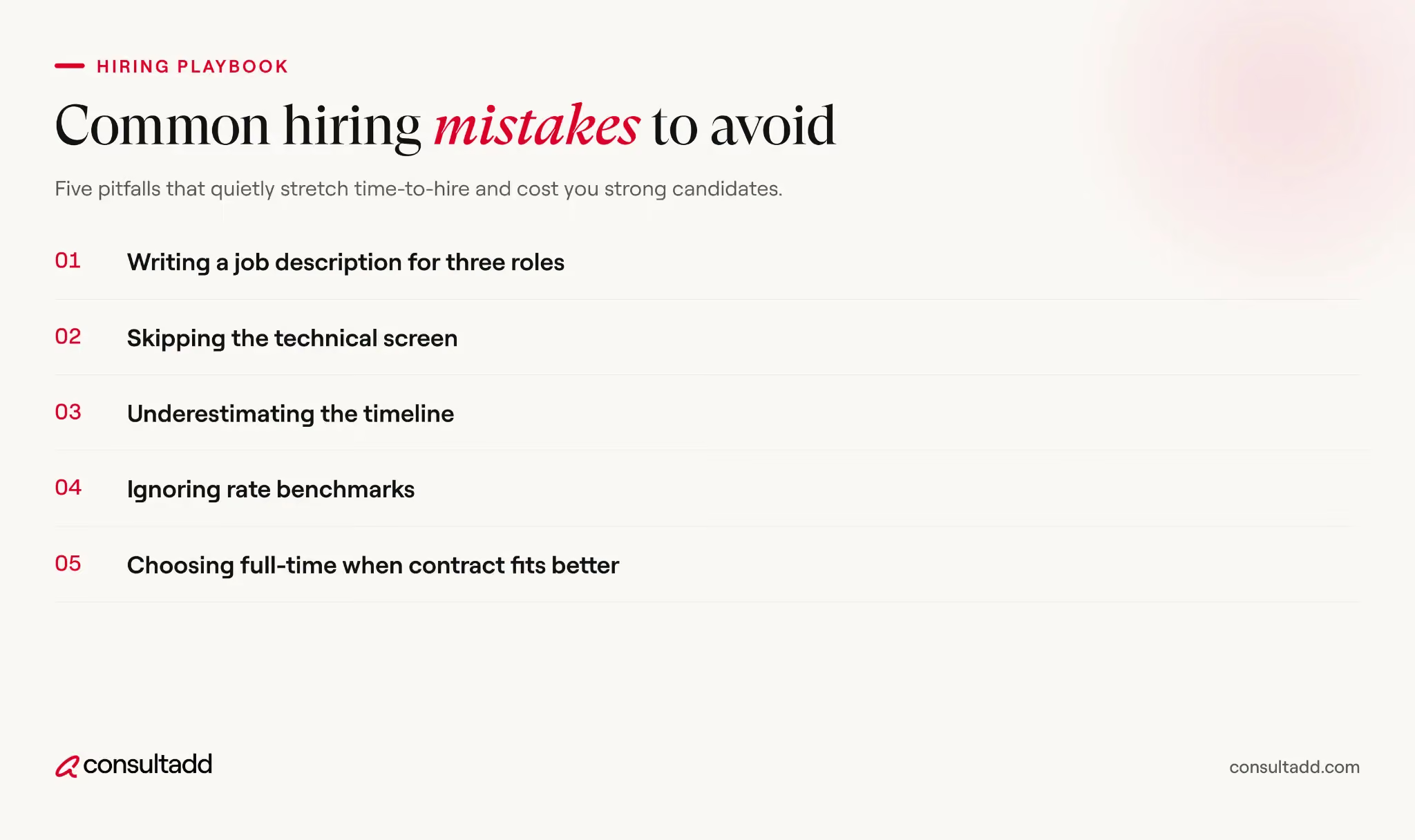
Writing a job description for three roles. Asking for deep MM, SD, and FI expertise in one posting shrinks your applicant pool without adding real value.
Skipping the technical screen. Certifications and resumes don't reveal how someone handles a live configuration problem. A scenario-based interview does.
Underestimating the timeline. Between sourcing, screening, and (if applicable) visa processing, a properly vetted SAP MM hire can take longer than the project deadline allows for.
Ignoring rate benchmarks. Offering below-market rates in a tight talent market means losing candidates to competing offers mid-process.
Choosing full-time when contract fits better. If the need is tied to a single migration or rollout, a contract hire is usually faster to bring on and easier to release once the project wraps.
Start Strong With Consultadd
With 15 years in business and 5,000+ successful staffing engagements, we don't just fill roles, we build reliability into your process. We've supported 65 staffing companies in the past year alone and maintain MSAs with industry leaders like Robert Half and TEKsystems.
Here's what working with Consultadd looks like:
- Talent sourced in under 24 hours
- Ready-to-deploy candidates, vetted for experience and compliance
- Lower turnover risk: we match long-term goals, not just short-term needs
- Seamless compliance: visa, documentation, onboarding? Handled.
- Dedicated 1:1 account managers for responsive, personalized support
- Top 100 candidate matches delivered in the past year
- Strong partnerships with universities to tap into fresh, committed talent
- Post-placement support so your investment grows beyond day one
For candidates, your next opportunity is more than just a job title, it's a chance to build skills, gain experience, and move your career forward. At Consultadd, we connect technology professionals with projects and employers that align with their goals, whether they're looking for contract, contract-to-hire, or long-term opportunities.
The tech job market moves fast, but the right guidance can make all the difference. Ready to take the next step in your career journey? Explore Opportunities >>
Key takeaways
- SAP MM hiring is being shaped by the 2027 S/4HANA migration deadline, which is pulling more companies into active hiring right now.
- Average US pay for SAP MM work sits around $73 an hour, with senior consultants earning well past $100,000 a year.
- Certifications are a starting filter, not proof of hands-on ability. Screen for real project experience underneath them.
- Contract-to-hire has become the go-to model because it lets employers validate fit before making a permanent commitment.
- Visa sponsorship and compliance timelines need to be part of the hiring plan from day one, not an afterthought.
FAQs
What does an SAP MM consultant actually do?
They manage the procurement, inventory, and material requirements planning processes inside SAP, working closely with vendors and cross-functional teams like SD and FI to keep the supply chain data accurate and the system running smoothly.
How much does it cost to hire an SAP MM consultant?
US hourly rates typically fall between $60 and $93, with the average sitting around $73 as of mid-2026. Full-time salaries for experienced consultants usually range from $60,000 to over $130,000 depending on seniority and location.
Is SAP MM still in demand with S/4HANA replacing older systems?
Yes. S/4HANA still requires materials management configuration, and the ongoing migration wave from legacy ECC systems has kept demand for MM consultants high through 2026.
Should I hire an SAP MM consultant on contract or full-time?
It depends on whether the need is tied to a specific project, like a migration or rollout, or an ongoing support function. Contract-to-hire is a common middle ground when you're not sure yet.
What certifications should I look for in an SAP MM candidate?
SAP Certified Application Associate credentials for Sourcing and Procurement are a reasonable baseline, but named project experience and cross-module integration knowledge matter more for actual job performance.
Do SAP MM hires typically require visa sponsorship?
Many do, often under the H-1B specialty occupation classification. That process involves a Department of Labor certification and can take months, so it's worth planning early if your candidate pool includes visa holders.
.webp)



.webp)
