

Introduction
A background check typically shows criminal records, employment history, education verification, and sometimes credit history or driving records, depending on the role. What it shows changes based on the type of check an employer orders and the state the candidate lives in. A warehouse job and a finance role don't get the same screening, and they shouldn't.
If you're a candidate waiting on a report, or a hiring manager trying to figure out which checks actually matter for your open role, the confusion usually comes down to one thing: nobody explains what's in the box until it's already been opened. This breaks down each type of check, what shows up, what doesn't, and where the legal lines sit.
TL;DR
- A standard background check usually covers criminal history, employment verification, and education verification.
- Credit checks, driving records, and drug screens only apply to specific roles, not every hire.
- Federal law requires written consent before an employer can pull a background report.
- Most checks look back 7 years for criminal and credit history, though state law can shorten or extend that.
- Candidates have the right to see the report and dispute anything inaccurate before a final decision is made.
What shows up on a standard employment background check
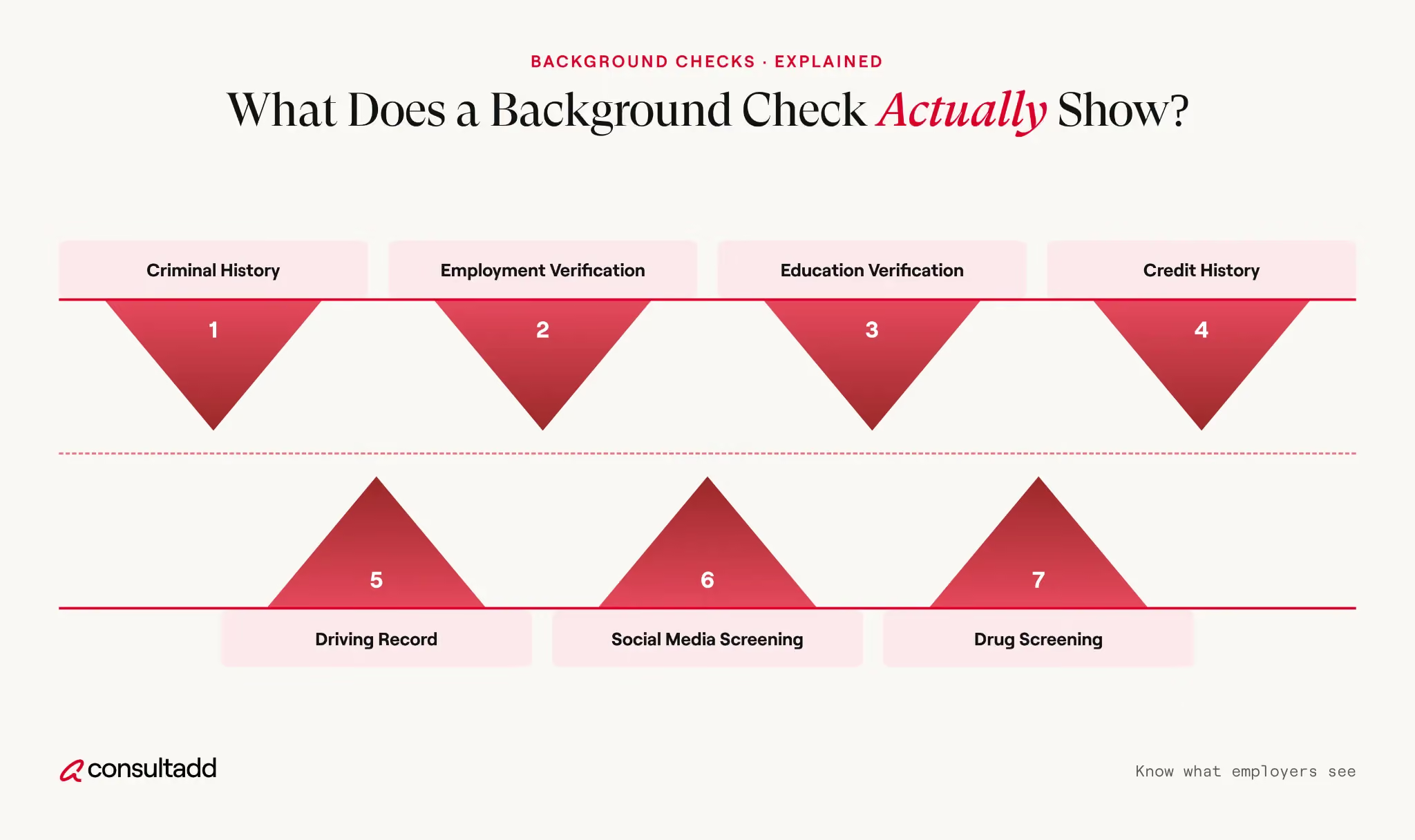
Most pre-employment screens are built from a handful of core searches. Here's what each one actually pulls.
Not every employer runs every check on this list. A retail hire rarely needs a credit pull. A delivery driver almost always needs a driving record check. The role should decide the scope, not habit.
Criminal history is the one candidates worry about most, and for good reason. It's also the one with the most legal nuance. Under EEOC guidance on employment background checks, a policy that excludes anyone with a criminal record can be illegal if it disproportionately affects a protected group and isn't actually tied to the job.
That's a mouthful, but it means blanket "no felons" policies are legally shaky, especially for roles where the conviction has nothing to do with the job.
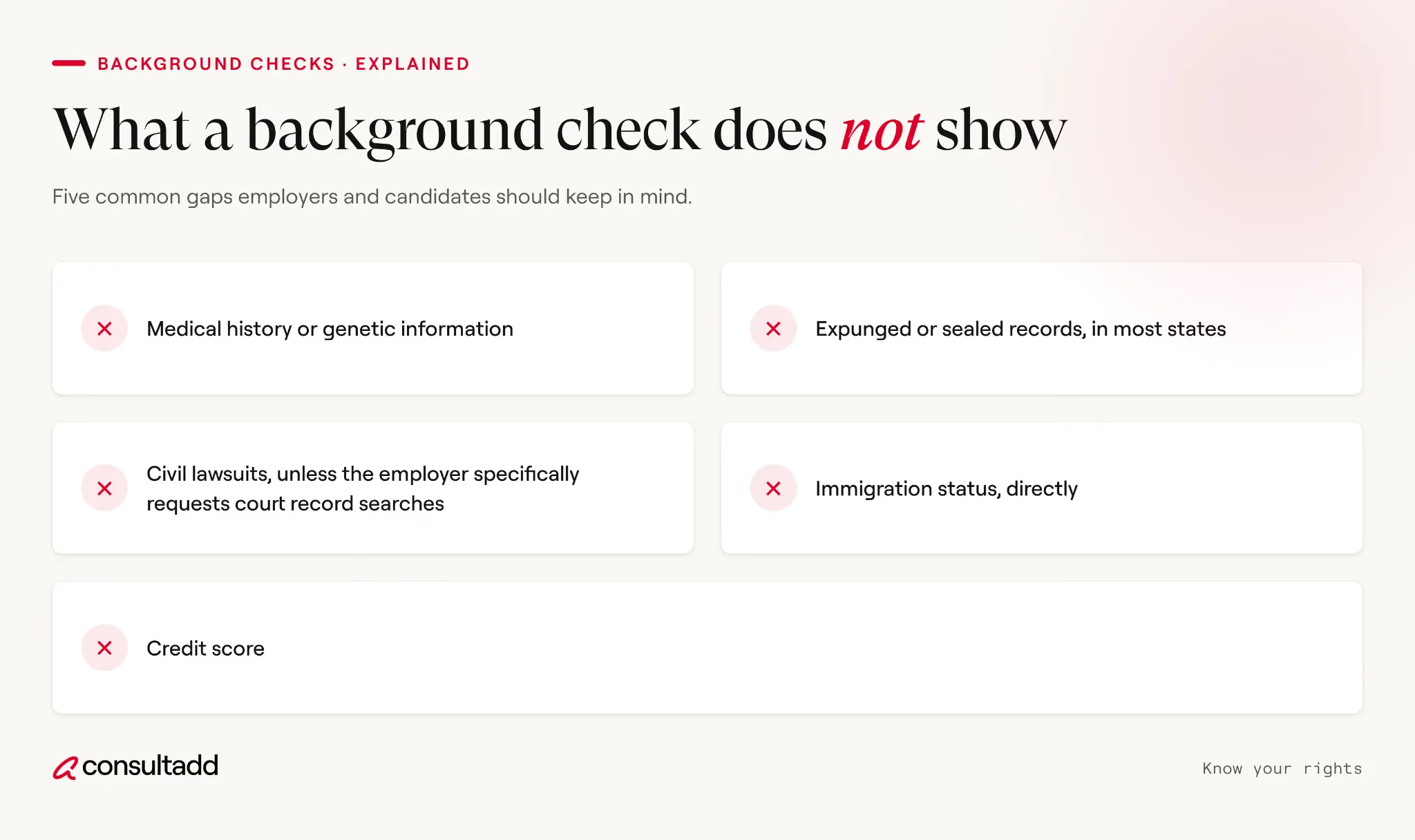
What a background check does not show
This part gets left out of most guides, and it's just as important as the list above.
- It does not show medical history or genetic information. Employers cannot ask for genetic information, including family medical history, and cannot ask medical questions before a conditional job offer is made, according to FTC guidance for employers.
- It does not include expunged or sealed records in most states.
- It does not automatically include civil lawsuits unless the employer specifically requests court record searches.
- It does not show immigration status directly, though separate work authorization verification (like Form I-9 or E-Verify) happens alongside hiring.
- It does not include a credit score. Credit reports for employment purposes show account history, not the three-digit score lenders use.
If a candidate is worried something private will surface in a routine check, most of that worry is misplaced. Background checks are narrower than people assume.
How far back does a background check go
Lookback periods depend on the type of check and the state.
California, New York, and a handful of other states have their own rules layered on top of federal law, so the same job req can require different screening depending on where the candidate is based.
This is one of the reasons a staffing partner who already understands the full staffing process saves time. Someone has to track this state by state, and most internal HR teams aren't set up to do it for every location they hire in.
Who can see the report, and what has to happen first
Before any of this data reaches a hiring manager's inbox, a few legal steps have to happen in order.
- The employer notifies the candidate, in writing, that a background check will be run.
- The candidate signs a consent form, separate from the general job application.
- The employer orders the report from a company that specializes in compiling background information, not from a random online search.
- If something in the report leads to a rejection, the employer sends a pre-adverse action notice with a copy of the report.
- The candidate gets a chance to respond before the employer finalizes the decision.
- If the employer proceeds with rejection, a final adverse action notice goes out.
Federal guidance from the FTC and EEOC is clear on this: employers need written permission from job applicants before getting background reports from a company in the business of compiling background information.
Skip that step, and the employer isn't just risking a bad hire. They're risking a Fair Credit Reporting Act violation, which comes with its own penalties separate from any discrimination claim.
Job applicants also have the right to review their background reports for accuracy when they're turned down for a job or denied a promotion based on that information. That review step catches more errors than people expect. Court records get mismatched to the wrong person more often than most candidates realize, especially with common names.
Why so many employers run these checks anyway
A SHRM survey found that 92 percent of organizations conduct background checks, mostly at the pre-employment stage, and nearly all of those screens include a search for criminal records. That number has held steady for years because the cost of a bad hire rarely shows up on day one. It shows up three months in, after training time, client exposure, and a resignation letter nobody saw coming.
We've seen staffing teams skip a verification step because a candidate looked strong on paper and the client wanted someone placed fast. Sometimes that works out fine. Sometimes the employment dates on the resume don't match what the last employer confirms, and now there's a harder conversation to have with the client than there ever would have been with the candidate.
The check isn't there to slow things down for no reason. It's there because paper and reality don't always match, and vetting a candidate properly catches that gap before it becomes the client's problem.
Background checks and reference checks aren't the same thing
It's worth separating these because people mix them up constantly.
- A background check pulls third-party records.
- A reference check calls people who actually worked with the candidate and asks what they were like day to day.
One tells you what happened on paper. The other tells you how someone performs under pressure, whether they show up on time, and whether a past manager would rehire them. Both matter. Neither replaces the other.
If you're building out your process, it's worth reading through how to run a reference check before making an offer, since the two steps usually happen back to back and catch different problems.
Building a background check process that doesn't create legal risk
A rushed process causes more problems than a slow one. Here's a simple framework that keeps things compliant without dragging out the timeline.
- Decide which checks actually apply to the role before you post the job, not after an offer is drafted.
- Use a standalone consent form. Don't bury it in the general application.
- Apply the same screening standard to every candidate for the same role. Inconsistent screening is where discrimination claims come from.
- Give candidates a real chance to explain flagged items before making a final call.
- Keep a written policy so every recruiter on the team is running the same process the same way.
Teams that document their screening steps consistently spend less time defending decisions later and more time actually hiring.
Start Strong With Consultadd
With 15 years in business and 5,000+ successful staffing engagements, we don't just fill roles, we build reliability into your process. We've supported 65 staffing companies in the past year alone and maintain MSAs with industry leaders like Robert Half and TEKsystems.
Here's what working with Consultadd looks like:
- Talent sourced in under 24 hours
- Ready-to-deploy candidates, vetted for experience and compliance
- Lower turnover risk: we match long-term goals, not just short-term needs
- Seamless compliance: visa, documentation, onboarding? Handled.
- Dedicated 1:1 account managers for responsive, personalized support
- Top 100 candidate matches delivered in the past year
- Strong partnerships with universities to tap into fresh, committed talent
- Post-placement support so your investment grows beyond day one
For candidates, your next opportunity is more than just a job title, it's a chance to build skills, gain experience, and move your career forward. At Consultadd, we connect technology professionals with projects and employers that align with their goals, whether they're looking for contract, contract-to-hire, or long-term opportunities.
The tech job market moves fast, but the right guidance can make all the difference. Ready to take the next step in your career journey? Explore Opportunities >>
Key takeaways
- A background check usually shows criminal history, employment verification, and education verification, with credit and driving checks added only for relevant roles.
- Medical history, genetic information, and expunged records are off-limits or excluded by law.
- Written consent has to come before the report is pulled, and candidates have the right to dispute inaccuracies.
- Lookback periods run around 7 years for most checks, though state law can change that window.
- Background checks and reference checks solve different problems and work best done together.
FAQs
Does a background check show past jobs I didn't list on my resume?
Usually not. Employment verification confirms the jobs you disclosed and gave permission to check. It doesn't go digging for jobs you left off, though gaps in your history may prompt a recruiter to ask about them directly.
Can an employer see my arrest record if I was never convicted?
It depends on the state. Some states only allow reporting of convictions, not arrests that didn't lead to one. Others allow pending charges to appear. This is one of the bigger state-by-state variations in background screening law.
Will a background check show my credit score?
No. Employment credit reports show account history, payment patterns, and public records like bankruptcies. They don't include the numeric score used for loans or credit cards.
How long does a background check take?
Most turn around in 1 to 5 business days. Checks that require county court searches in multiple jurisdictions, or international education verification, can take longer.
Can I dispute something wrong on my background report?
Yes. The FTC enforces the federal law that regulates background reports for employment, and if there's a mistake, you have the right to contact the company that issued the report to correct it. Start with the reporting agency, not just the employer.
Do background checks show social media activity?
Only if the employer specifically runs a social media screen, which is a separate service from a standard background check. It's not automatically bundled in.
Does every job require a background check?
No. Regulated industries like healthcare, finance, and transportation often require it by law. Other employers choose to run checks based on internal policy, and the scope should match the actual risk of the role.
.webp)