
.avif)

Introduction
A 1099 job is work you do as an independent contractor instead of an employee. The company pays you for the work, but it doesn't withhold taxes, doesn't pay into Social Security or Medicare on your behalf, and doesn't offer benefits.
At the end of the year, you get a Form 1099-NEC instead of a W-2, and you're responsible for handling your own taxes from there.
That's the short version. The longer version is where most people get tripped up, especially if this is their first contract role or their first time hiring a contractor instead of a full-time employee.
TL;DR
- A 1099 job means you're classified as an independent contractor, not an employee, so no taxes are withheld from your pay.
- You pay self-employment tax (15.3%) on top of regular income tax, since there's no employer splitting that cost with you.
- There are no employer-provided benefits: no health insurance, no paid time off, no unemployment insurance if the work dries up.
- You typically have more control over how, when, and where you do the work, which is the legal line the IRS uses to separate contractors from employees.
- 1099 pay rates are usually higher than W2 rates for the same role, because you're covering costs an employer would otherwise absorb.
Why the classification matters more than the paycheck number
Here's something that trips people up constantly:
- A recruiter offers $65 an hour on a 1099 basis, and it sounds better than the $52 an hour W2 offer down the road.
- It isn't automatically better.
- The $65 has to cover your own self-employment tax, any gap in health coverage, and time you don't get paid for, like vacation or sick days.
How the IRS decides if a job is really 1099
This isn't just a label a company slaps on a role. The general rule the IRS applies is that a worker counts as an independent contractor if the person paying for the work only controls the result, not the specific methods and schedule used to get there.
If a company tells you exactly when to log in, how to do the task, and supervises you closely, that's an employee relationship, even if they call it a 1099 role and hand you that form at year end.
The IRS breaks this down into three buckets it looks at when a classification gets challenged, per its own independent contractor guidance:
- Behavioral control: Does the company dictate how the work gets done, or just what the end result should look like?
- Financial control: Who provides the equipment? Can you take on other clients at the same time? Do you invoice, or get a regular paycheck?
- Relationship type: Is there a contract with an end date, or does the work look permanent and central to the business?
None of these three factors decides it alone. Courts and the IRS weigh them together. That's also why misclassification (a company treating someone as 1099 when the actual working relationship looks like employment) is a real legal risk for employers, not just a technicality.
The Department of Labor's Fact Sheet 13 lays out a similar "economic realities" test for Fair Labor Standards Act purposes, and it's worth a look if you're on the hiring side and want to get this right before a role is posted.
1099 job vs W2 job: the practical differences
If you want a deeper look at how this plays out specifically in IT staffing, where 1099, W2, and corp-to-corp all show up in the same job posting, our W2 vs C2C vs 1099 comparison goes through visa sponsorship and turnover considerations that don't come up in a generic 1099 vs W2 explainer.
What taxes actually look like on a 1099 job
This is the part that catches first-time contractors off guard. As a W2 employee, taxes come out before you ever see the money. On a 1099 job, you get the full amount, and it's on you to set aside enough for taxes and pay them yourself.
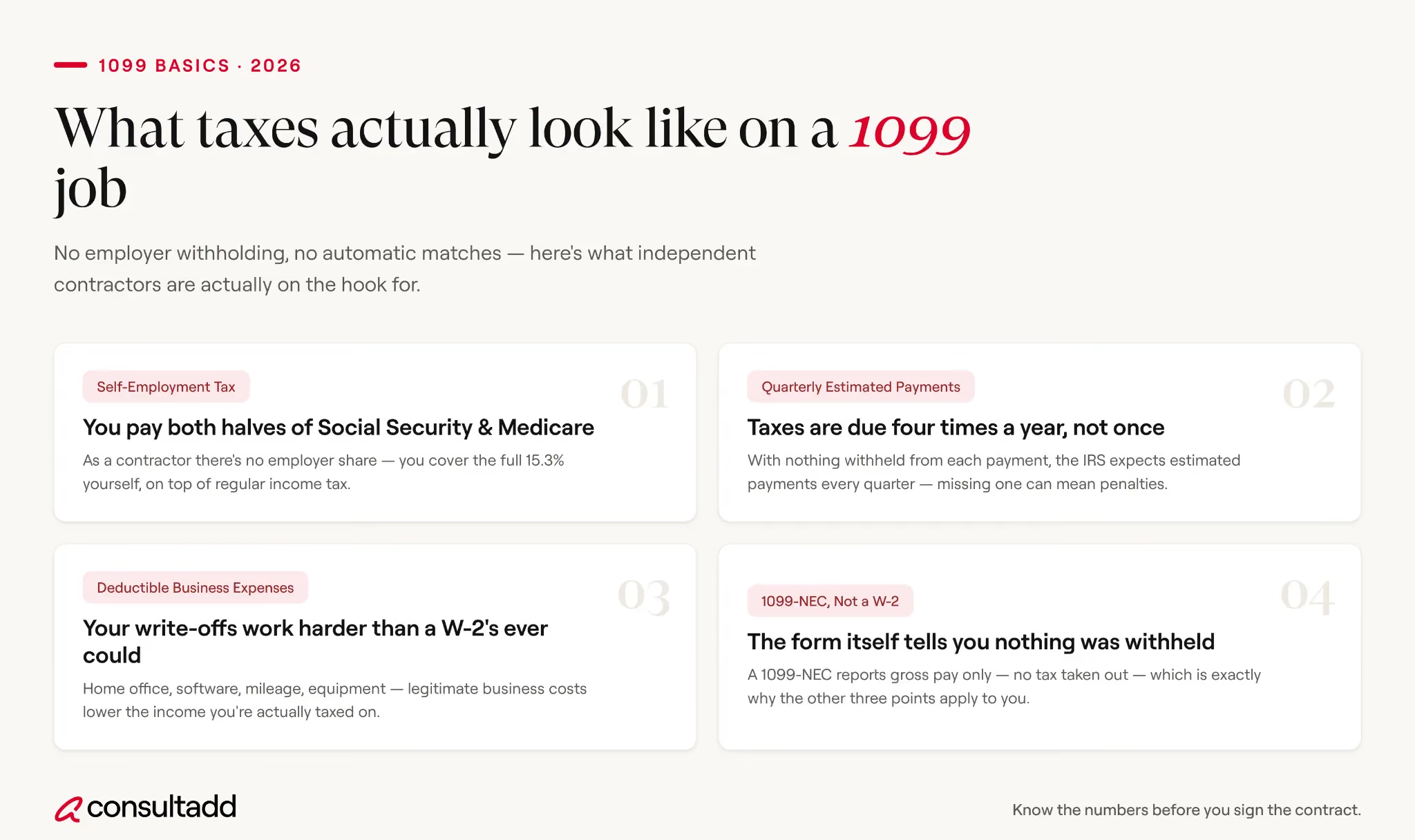
A few things to plan for:
- Self-employment tax. This covers Social Security and Medicare, and it's 15.3% of your net earnings. An employer normally pays half of this for a W2 employee. On 1099, you cover all of it.
- Quarterly estimated payments. The IRS expects payments roughly four times a year, not just one lump sum in April. Missing these can trigger underpayment penalties.
- Deductible business expenses. Home office costs, mileage, software subscriptions, and other work-related expenses can offset your taxable income. This is one real advantage over W2 work, where these deductions mostly don't exist anymore.
- A 1099-NEC, not a W-2. Generally, someone counts as self-employed if they carry on a trade or business as a sole proprietor or independent contractor, and that includes people earning money through gig economy work, which is exactly the bucket most 1099 contractors fall into.
The IRS worker classification guidance is a decent starting point if you want the tax obligations spelled out directly from the source, rather than through a staffing firm's interpretation of them.
Pros and cons of taking a 1099 job
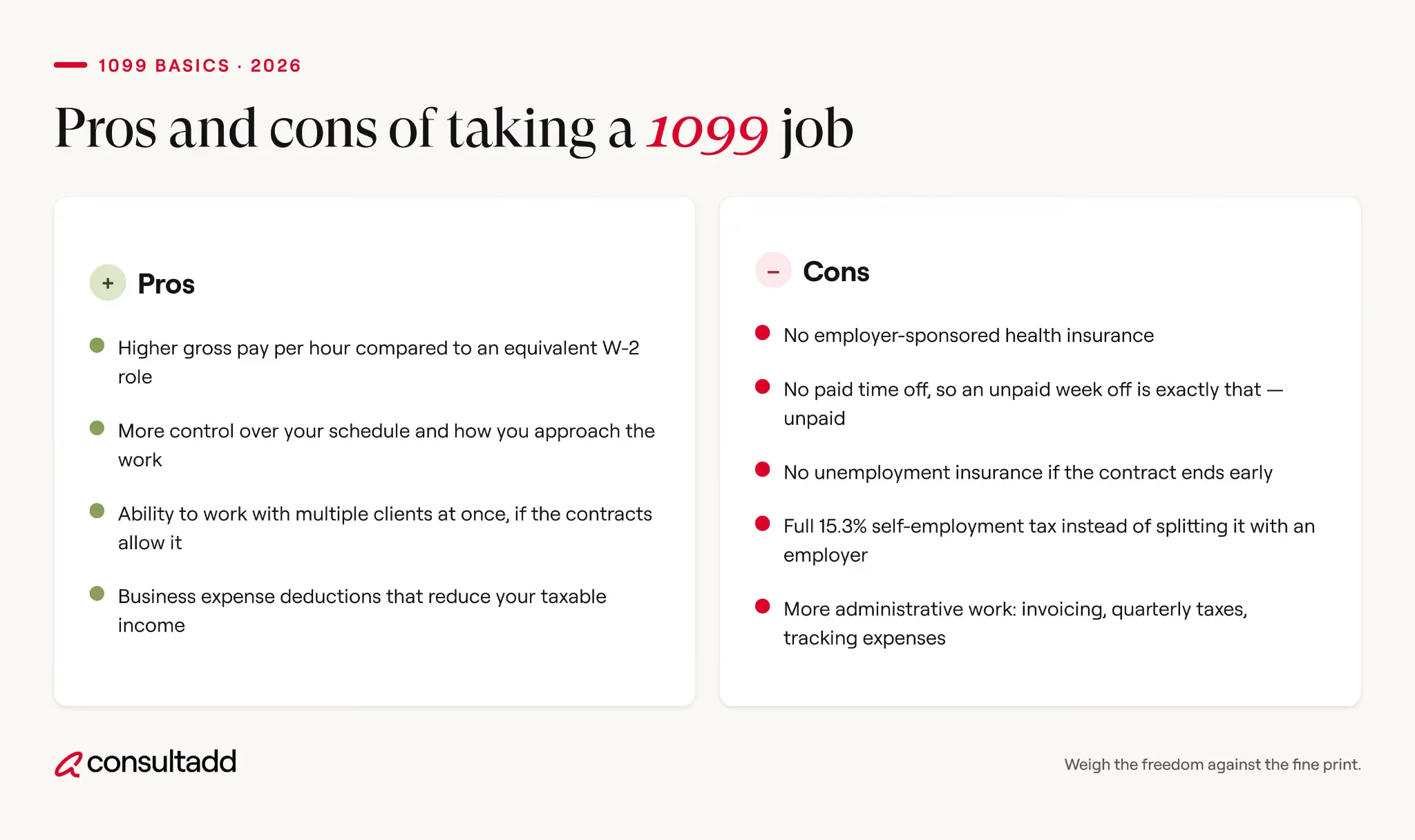
What tends to work in your favor:
- Higher gross pay per hour compared to an equivalent W2 role
- More control over your schedule and how you approach the work
- Ability to work with multiple clients at once, if the contracts allow it
- Business expense deductions that reduce your taxable income
What tends to work against you:
- No employer-sponsored health insurance
- No paid time off, so an unpaid week off is exactly that, unpaid
- No unemployment insurance if the contract ends early
- Full 15.3% self-employment tax instead of splitting it with an employer
- More administrative work: invoicing, quarterly taxes, tracking expenses
Some contractors move between 1099, W2, and corp-to-corp arrangements over the course of their career depending on the client and the length of the engagement.
If a client specifically wants to work through a registered business entity rather than with you as an individual, that's a corp-to-corp employment setup, and it changes the tax picture again.
When a company prefers 1099 over W2 (and vice versa)
Companies lean toward 1099 arrangements for short, clearly scoped projects where they don't want the overhead of payroll taxes, benefits, or a long-term commitment. Think a six-month system migration, a one-off audit, or specialized work that doesn't need daily supervision.
W2 makes more sense when the company wants closer control over the work, when the engagement is expected to run long-term, or when the role sits close to the core of what the business does day to day. Some clients also prefer W2 or corp-to-corp specifically because it lowers their own risk of a misclassification dispute down the line.
Start Strong With Consultadd
With 15 years in business and 5,000+ successful staffing engagements, we don't just fill roles, we build reliability into your process. We've supported 65 staffing companies in the past year alone and maintain MSAs with industry leaders like Robert Half and TEKsystems.
Here's what working with Consultadd looks like:
- Talent sourced in under 24 hours
- Ready-to-deploy candidates, vetted for experience and compliance
- Lower turnover risk: we match long-term goals, not just short-term needs
- Seamless compliance: visa, documentation, onboarding? Handled.
- Dedicated 1:1 account managers for responsive, personalized support
- Top 100 candidate matches delivered in the past year
- Strong partnerships with universities to tap into fresh, committed talent
- Post-placement support so your investment grows beyond day one
For candidates, your next opportunity is more than just a job title, it's a chance to build skills, gain experience, and move your career forward. At Consultadd, we connect technology professionals with projects and employers that align with their goals, whether they're looking for contract, contract-to-hire, or long-term opportunities.
The tech job market moves fast, but the right guidance can make all the difference. Ready to take the next step in your career journey? Explore Opportunities >>
Key takeaways
- A 1099 job means independent contractor status, with no tax withholding and no employer-provided benefits.
- The IRS decides classification based on control over the work, not what the company calls the arrangement.
- Self-employment tax runs 15.3%, and quarterly estimated payments are part of the deal.
- Higher hourly pay on 1099 contracts is meant to offset the taxes and benefits you'd otherwise get through an employer.
- Comparing a 1099 offer to a W2 offer means comparing take-home value, not just the rate on the page.
FAQs
Is a 1099 job the same as being self-employed?
Yes. If you receive a 1099-NEC for your work, the IRS treats you as self-employed, which means you're responsible for your own income tax and self-employment tax.
Do I get benefits on a 1099 job?
No. Health insurance, paid time off, and retirement contributions aren't part of a 1099 arrangement. You'd need to arrange and pay for these yourself.
How much should I charge more for a 1099 job compared to W2?
There's no single formula, but many contractors aim for enough of a rate increase to cover the extra 7.65% in self-employment tax and the value of benefits they're giving up. The right number depends on your specific costs.
Can a company just call a job 1099 to avoid paying benefits?
Not legally. Classification depends on the actual working relationship, not the label. A company that directs your schedule and methods closely but pays you on a 1099 basis may be misclassifying the role.
What happens if I don't pay quarterly estimated taxes?
The IRS can charge an underpayment penalty. It's generally cheaper and less stressful to pay quarterly than to owe a large lump sum, plus penalties, the following April.
Is 1099 work the same as gig work?
Gig work, like rideshare driving or app-based delivery, is usually structured as 1099 work, but 1099 status also covers consultants, IT contractors, freelancers, and many other types of project-based work.
.webp)



.webp)
