

Introduction
If you need to fly to the US for meetings, a conference, or contract negotiations, the B1 is almost certainly the visa you'll hear about first.
So what is a B1 visa, exactly? It's the US nonimmigrant visa for temporary business visitors: people entering the country for legitimate business activities, but not for employment. You can negotiate a deal on a B-1. You cannot take a job on one.
That single distinction, business versus work, is where nearly all B-1 trouble starts. The line is thinner than most travelers assume, and in 2026 the consequences of getting it wrong are steeper than they've been in years, with tighter consular scrutiny, new fees, and border officers who genuinely do check what you told them against what you're doing.
This guide covers what the B-1 allows, what it forbids, how it compares to the B-2 and visa-free travel, current costs, and the changes that matter this year.
TL;DR
- The B1 visa is the US business visitor visa. It permits meetings, conferences, negotiations, and consultations, but never employment or US-source salary.
- Most embassies issue a combined B-1/B-2 visa covering both business and tourism, often valid for 1 to 10 years with multiple entries depending on your nationality.
- Each visit is capped at what the CBP officer grants at entry, typically up to 6 months, recorded on your I-94.
- Budget for higher costs in 2026: the application fee rose to $205 on May 30, 2026, and a $250 Visa Integrity Fee now applies to issued visas under 2025 legislation.
- Scrutiny is up sharply, especially for travelers with pending H-1B petitions, so precise, honest answers about your trip purpose matter more than ever.
What is a B1 visa and who is it for?
The B-1 is a nonimmigrant visitor visa defined under US immigration law for people entering the United States temporarily for business purposes. Unlike petition-based work visas such as the H-1B, it requires no employer sponsorship, no USCIS petition, and no labor certification. You apply directly at a US embassy or consulate.
Two things define the category:
- Temporary: you must intend to leave when your trip ends, and you carry the burden of proving strong ties to your home country, a job, property, family, ongoing business, that will pull you back. Consular officers deny B visas under Section 214(b) precisely when that proof feels thin.
- Business, not Employment: the trip must serve a business purpose while your salary, employer, and place of work all remain outside the US.
In practice, most applicants never receive a standalone B-1. Embassies typically issue a combined B-1/B-2 visa that covers business and tourism in one document, which is why you'll see the terms bundled everywhere. The classification you're admitted under at the border is what governs your activities during that visit.
Typical B-1 travelers include executives attending board meetings, sales teams negotiating contracts, professionals at industry conferences, consultants meeting US clients (without performing billable hands-on work), and specialists settling estates or attending litigation.
What you can and can't do on a B-1
The permitted list is narrower than most travelers think, and the prohibited list is enforced harder than it used to be. The official reference is the State Department's visitor visa page, and here's the practical version:
The gray zones deserve respect. Remote work for your foreign employer while physically in the US sits in murky territory that immigration attorneys increasingly warn against for anything beyond incidental email.
And the "B-1 in lieu of H-1B" pattern, where someone enters as a visitor but effectively starts a US job, is now a specific enforcement target.
If your real plan is US employment, the honest path runs through a work visa, and our guide to H-1B sponsorship for tech professionals maps that route.
B-1 vs B-2 vs Visa-Free travel
Three options cover most short US visits. Choosing the right one saves money and, occasionally, an awkward secondary inspection:
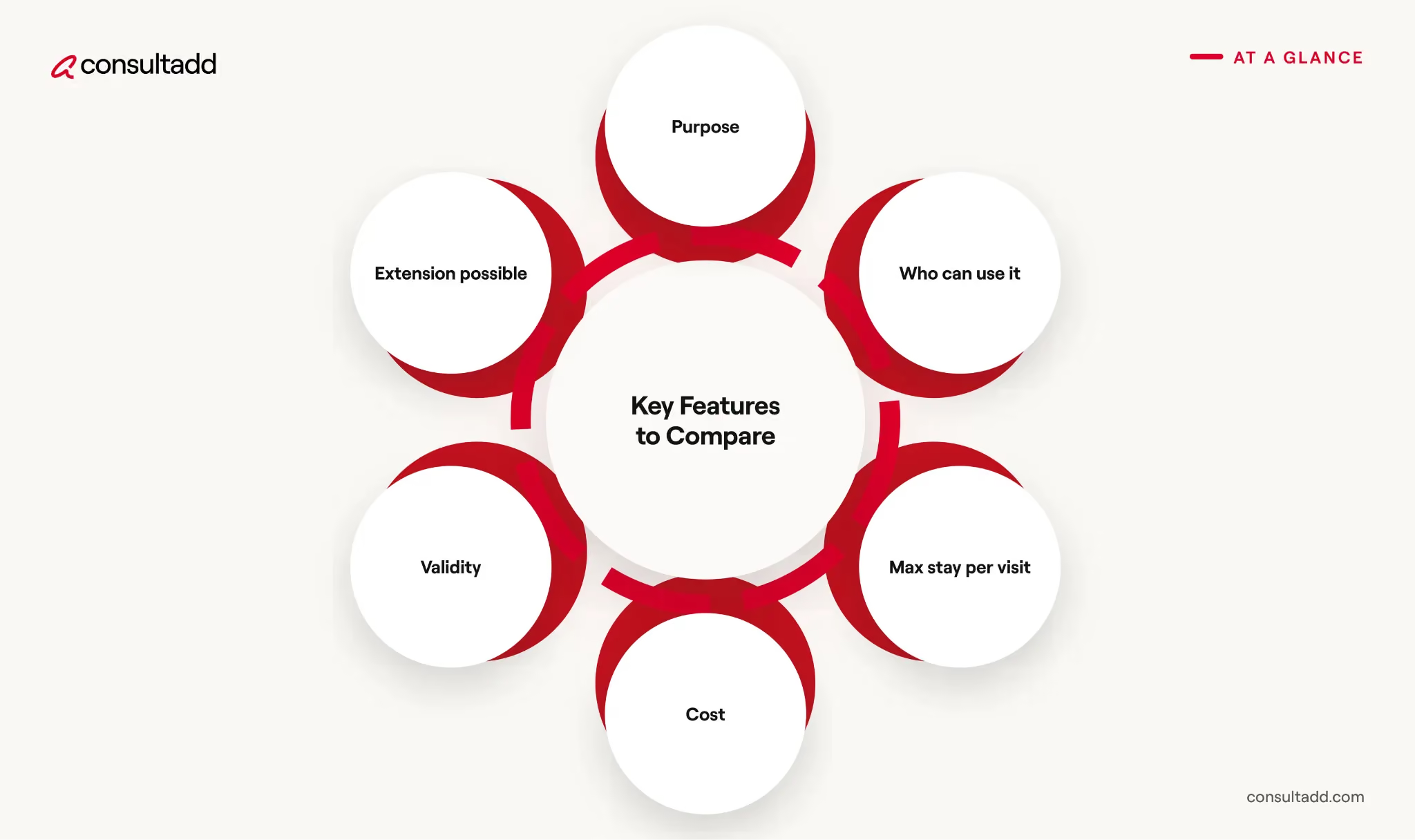
If you hold a passport from a Visa Waiver country and your trips are short, ESTA is faster and far cheaper. The B-1/B-2 becomes necessary when you need stays beyond 90 days, when your travel history complicates ESTA, or when an ESTA application has been denied.
How to apply for a B1 visa
The process runs through the State Department and follows five steps:
- Complete Form DS-160 online. This is the nonimmigrant visa application covering your personal details, travel plans, and background. Print the confirmation barcode; you'll need it at the interview.
- Pay the application fee. The machine-readable visa (MRV) fee rose from $185 to $205 on May 30, 2026, under the State Department's updated fee schedule. It's non-refundable even if you're denied, though the receipt stays valid for 365 days if you need to reapply.
- Schedule your interview at the US embassy or consulate serving your area. Wait times vary enormously by post, from days to many months, so book early.
- Attend the interview with documentation. Bring evidence of your trip purpose (invitation letters, conference registrations, meeting agendas) and of your ties home (employment letter, property, family). For B-1 trips, an employer letter confirming you remain on foreign payroll carries real weight.
- Pay the Visa Integrity Fee on issuance. Under legislation signed in July 2025, a $250 fee applies to visas issued on or after October 1, 2025. Unlike the application fee, it's charged only when the visa is approved, and it adjusts for inflation over time.
A quick word on the interview itself, because this is where prepared applicants separate from denied ones. Officers are testing two things: whether your trip purpose is genuinely permissible on a B-1, and whether you'll go home. Answer precisely. "I'm attending contract negotiations with our US distributor for two weeks" works.
"I'm going to work with our US team" is the phrasing that has derailed thousands of legitimate trips, because "work" is exactly the word the B-1 doesn't cover.
How long can you stay?
Visa validity and permitted stay are different things, and conflating them causes real problems.
Your visa's validity (say, 10 years) only governs how long you can use it to seek entry. The length of any individual stay is decided by the CBP officer at the port of entry and recorded electronically on your Form I-94, typically up to six months for B visitors, though officers can and do grant less. Check your I-94 online after every entry; the date there is the one that counts, not your assumptions.
Need more time? You can request an extension by filing Form I-539 with USCIS before your authorized stay expires, with total time generally capped around one year.
Overstaying even briefly can void your visa and complicate every future US application, so treat the I-94 date as immovable unless an extension is formally approved.
One pattern to avoid: long stays, short gaps, repeat. Travelers who spend six months in the US, leave for three weeks, and return are increasingly refused entry on the logic that they're effectively living in the US on a visitor visa.
What changed in 2026: Fees, Scrutiny, and Pilots
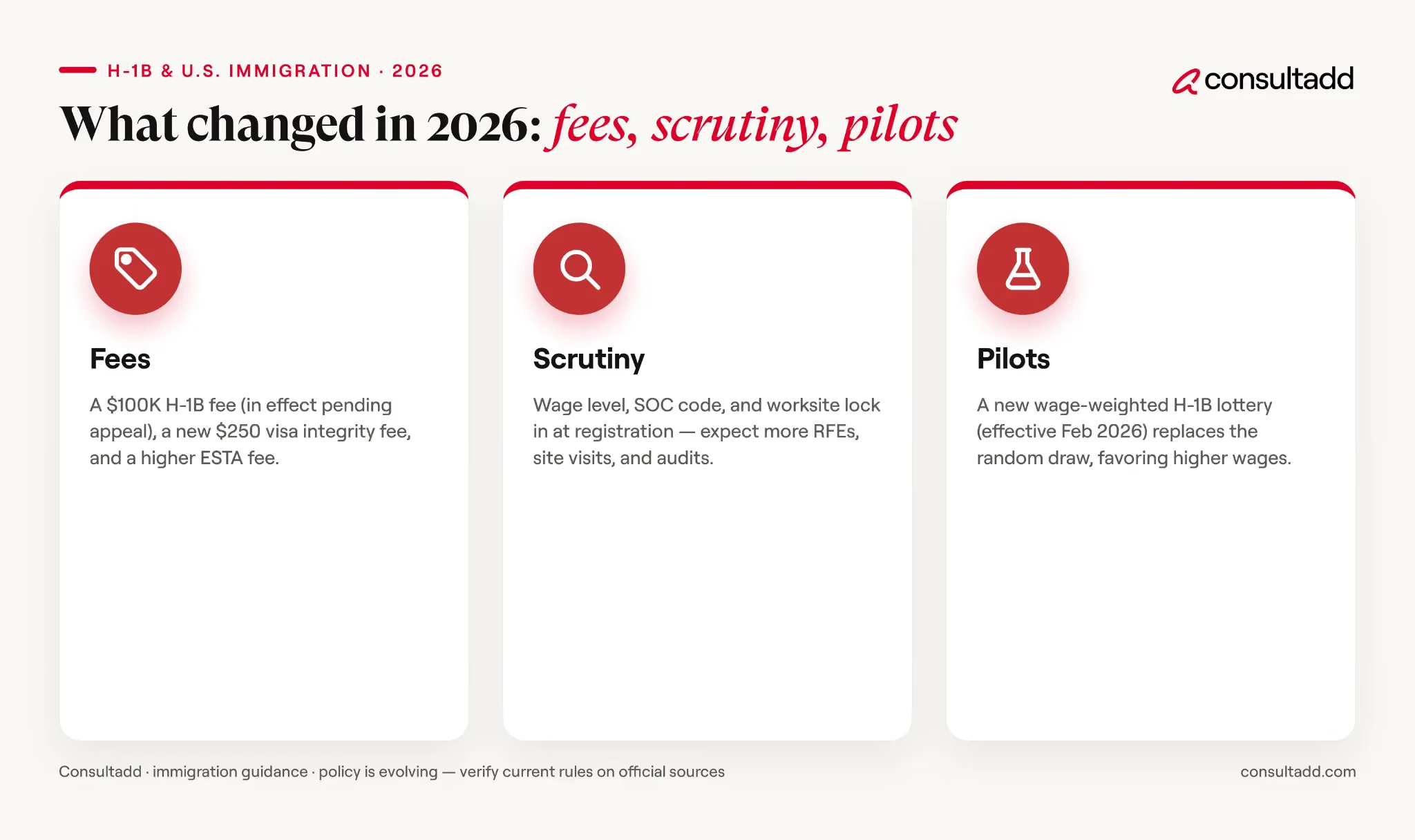
The B-1 rules themselves are stable. The environment around them is not, and four developments deserve attention this year.
Costs jumped
- Between the fee increase to $205 and the $250 integrity fee, a B-1/B-2 now runs around $455 all-in, roughly triple what it cost two years ago.
- Budget accordingly, and note the integrity fee only applies when a visa is actually issued.
Scrutiny of H-1B-adjacent travel intensified. Following a September 2025 presidential proclamation targeting misuse of B visas, travelers with pending or approved H-1B petitions face closer questioning at consulates and ports of entry. Entering on a B-1 to start work early while an H-1B is pending is exactly the scenario enforcement is built around.
Employers navigating this landscape are also digesting the cost side, which we covered in our analysis of the H-1B $100K fee ruling.
A visa bond pilot exists. Under a pilot program, applicants from certain countries can be required to post bonds of $5,000 to $15,000, refundable on timely departure. It applies narrowly, but if it touches your nationality, it changes the math of a trip.
Expedited interviews for a price. From July 1 through December 31, 2026, the State Department is piloting a $750 fee for a guaranteed interview appointment within ten business days at selected posts, framed as capacity testing ahead of the FIFA World Cup and 2028 Olympics. It stacks on top of the standard fee.
The through-line in all of it: the B-1 remains an accessible, flexible tool for genuine business travel, and a genuinely bad tool for anything resembling employment.
Companies bringing global talent to the US for actual work need actual work visas, and building that pipeline is a staffing strategy question as much as a legal one, one reason firms increasingly lean on partners who handle compliant IT contract staffing end to end.
Start strong with Consultadd
With 15 years in business and 5,000+ successful staffing engagements, we don't just fill roles, we build reliability into your process. We've supported 65 staffing companies in the past year alone and maintain MSAs with industry leaders like Robert Half and TEKsystems.
Here's what working with Consultadd looks like:
- Talent sourced in under 24 hours
- Ready-to-deploy candidates, vetted for experience and compliance
- Lower turnover risk: we match long-term goals, not just short-term needs
- Seamless compliance: visa, documentation, onboarding? Handled.
- Dedicated 1:1 account managers for responsive, personalized support
- Top 100 candidate matches delivered in the past year
- Strong partnerships with universities to tap into fresh, committed talent
- Post-placement support so your investment grows beyond day one
For candidates, your next opportunity is more than just a job title, it's a chance to build skills, gain experience, and move your career forward. At Consultadd, we connect technology professionals with projects and employers that align with their goals, whether they're looking for contract, contract-to-hire, or long-term opportunities.
The tech job market moves fast, but the right guidance can make all the difference. Ready to take the next step in your career journey? Explore Opportunities >>
Key takeaways
- The B1 visa is the US business visitor visa: meetings, conferences, negotiations, and consultations are fine, while employment, US-source pay, and hands-on productive work are prohibited.
- Most travelers receive a combined B-1/B-2 visa, valid for up to 10 years, but each stay is limited to what CBP grants at entry, usually a maximum of six months on the I-94.
- Total 2026 costs run about $455: a $205 application fee (raised May 30, 2026) plus a $250 Visa Integrity Fee charged on issuance.
- Approval hinges on proving nonimmigrant intent under Section 214(b), so documented ties to your home country matter as much as your trip's purpose.
- Enforcement tightened in 2026, particularly for travelers with pending H-1B petitions; anyone whose real goal is US employment should pursue a proper work visa instead.
FAQs
What is a B1 visa used for?
The B-1 covers temporary business visits to the US: attending meetings and conferences, negotiating and signing contracts, consulting with associates, settling estates, and certain contract-required equipment installation. It does not authorize employment, US-source income, or hands-on productive work of any kind.
What is the difference between a B1 and B2 visa?
The B-1 is for business purposes while the B-2 covers tourism, family visits, and medical treatment. In practice, US embassies almost always issue them as a combined B-1/B-2 visa, and the activity you declare at entry determines which rules govern your visit.
How long can I stay in the US on a B1 visa?
The CBP officer at the port of entry decides, typically granting up to six months, recorded on your I-94. Visa validity of up to 10 years doesn't change that per-visit limit. Extensions are possible by filing Form I-539 with USCIS before your stay expires, with total time generally capped near one year.
Can I work in the US on a B1 visa?
No. The B-1 explicitly prohibits employment, receiving salary from a US source, and productive hands-on work, even unpaid. Violating this can void your visa and damage future applications. If the goal is a US job, the correct path is an employer-sponsored work visa such as the H-1B.
How much does a B1 visa cost in 2026?
The application (MRV) fee is $205 as of May 30, 2026, non-refundable regardless of outcome. A $250 Visa Integrity Fee also applies when a visa is issued, bringing the typical total to about $455. An optional $750 expedited-interview pilot is running at selected posts through December 2026.
Why do B1 visas get denied?
The most common reason is Section 214(b): the officer isn't convinced you'll return home, usually because ties like employment, property, or family weren't well documented. Vague or work-sounding descriptions of the trip's purpose are the other frequent killer, especially in 2026's tighter enforcement climate.
.png)


.webp)