
.avif)

Introduction
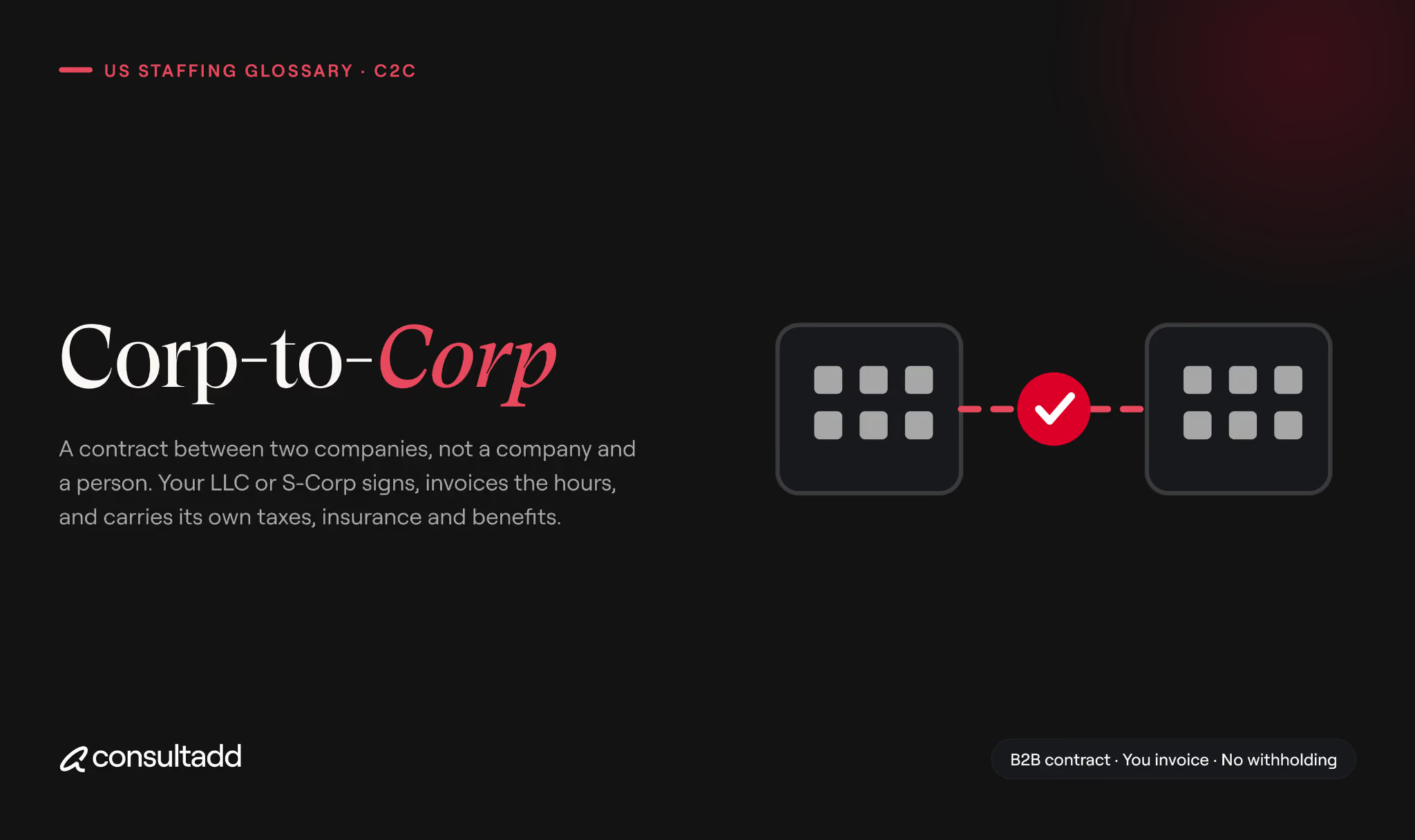
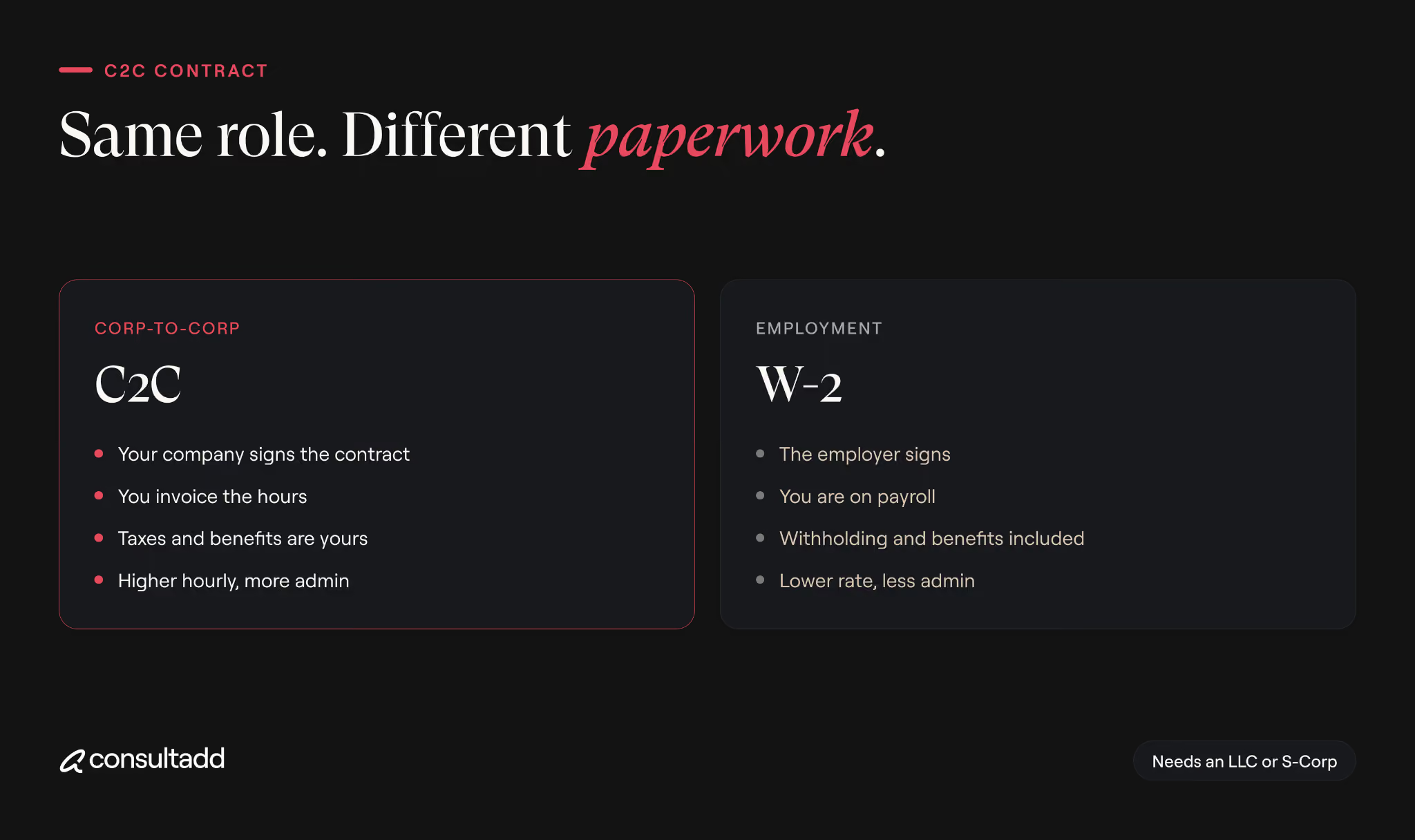
A C2C contract is the services agreement signed between two business entities when one company engages another company's worker. Your corporation signs it. Not you.
That's the short version, and if you want the full breakdown of the arrangement itself, our guide to what C2C employment means covers how it compares to W2 and 1099 and who it suits.
This piece is about something else: the document. Most people asking what is a C2C contract have one sitting in their inbox with a signature request attached, and what they actually need to know is which clauses matter and which ones are worth pushing back on.
Because here's the thing. The rate is the part everyone reads. The payment trigger, the non-solicit radius, and the indemnification cap are the parts that cost people money later.
TL;DR
- A C2C contract is usually three documents, not one: a master agreement, a work order, and a payment mechanism.
- Payment language matters more than the rate. "Pay when paid" delays you; "pay if paid" can mean you're never paid at all.
- Non-solicitation and conversion fee clauses decide whether you can take a full-time offer from the end client later.
- Insurance requirements and indemnification caps are where a bad contract quietly transfers risk onto the smaller party.
- The FTC's nationwide non-compete ban is dead as of 2026, so state law governs what a restrictive covenant can do to you.
The three documents in a C2C contract
A corp-to-corp engagement rarely lives in one file. Signing only the first document and assuming you've seen the deal is a common mistake.
The MSA carries almost all the risk. The work order carries the money. A lot of people negotiate hard on the work order and sign the MSA without reading it, which is backwards.
Watch for flow-down clauses in the MSA too. These say the terms of the upstream contract between the agency and the end client automatically apply to you, including terms you've never seen. Ask for a copy of what's flowing down. If the answer is no, you're agreeing to obligations you can't evaluate.
For how the parties stack up in a typical chain, our complete guide to corp to corp staffing maps the flow from end client to contractor.
The payment clauses
This is the section to read twice.
Net terms and what triggers the clock
Net 30, net 45, and net 60 are standard in staffing. What varies is when the clock starts: on invoice submission, on timesheet approval, or on the agency receiving payment from the client. Those are three very different deals wearing similar language.
Timesheet approval as the trigger is the one that causes disputes, because approval sits with someone who isn't a party to your contract. If the client manager is on vacation, your payment date moves.
Ask for a deemed-approval clause: if the timesheet isn't rejected within a set number of days, it's treated as approved.
Contingent payment language
Some C2C agreements condition your payment on the agency getting paid first. There are two versions and they are not the same thing.
Courts generally treat pay-if-paid clauses as requiring clear, unambiguous language to be enforceable, and some states void them entirely as against public policy.
Vague wording often gets read as pay-when-paid instead. But you don't want to be discovering which interpretation applies while you're litigating for three months of unpaid invoices.
The practical ask: convert any contingent language into pay-when-paid with an outside date, so there's a hard deadline by which you get paid regardless.
One thing contingent payment never overrides
If you're an H-1B worker employed by a consulting firm that holds a C2C agreement upstream, none of this changes your employer's wage obligation to you.
The Department of Labor's guidance on nonproductive time requires payment at the LCA wage rate for time in nonproductive status caused by employment-related conditions.
A client payment dispute between two companies isn't a reason for your paycheck to stop.
Restrictive covenants: non-solicit, non-compete, and conversion fees
These clauses determine what you can do after the engagement ends. They're also where 2026 changed things.
1. The non-compete landscape shifted
The FTC's 2024 rule banning most non-competes never took effect. A federal court vacated it in August 2024, the FTC withdrew its appeals in September 2025, and the agency formally removed the rule from the Code of Federal Regulations in February 2026.
So there's no federal ban. State law governs, and state law is moving fast in the other direction. Several states enacted new restrictions in 2026, including compensation thresholds below which non-competes are unenforceable.
Whether the clause in front of you holds up depends heavily on which state's law the contract selects, which is why the governing law provision deserves more attention than it usually gets.
2. Non-solicitation is the clause that actually binds
In staffing, non-solicit matters more than non-compete. A typical version prevents you from working directly with the end client, or with any client you were introduced to, for 12 to 24 months after the engagement ends.
What to check:
- Scope. Does it cover the specific end client, or every client the agency has? The second is overbroad and worth negotiating.
- Duration. Twelve months is normal. Twenty-four is aggressive.
- Trigger. Does it apply if the client approaches you, or only if you approach them? Mutual-approach language is fairer and more common in well-drafted agreements.
3. Conversion and right-to-hire fees
If the end client wants to bring you on permanently, someone owes the agency a fee. This is standard and reasonable. What varies is the size and whether it declines over time.
A buyout schedule that decreases with each month worked is the fair structure: the agency has already earned margin on your hours, so the fee should shrink.
A flat fee that stays at 25 percent of first-year salary whether you've been there two months or eighteen is worth questioning.
Our breakdown of C2C and contract-to-hire opportunities covers how conversion usually plays out in practice.
Insurance, indemnification, and liability caps
This is the section that gets skimmed and shouldn't:
Certificate of insurance requirements. Most agencies require the contractor entity to carry general liability, and many require professional liability or errors and omissions coverage as well. Workers' compensation is often required even for single-member entities, and some states mandate it regardless. Cyber liability shows up increasingly in technology engagements. Get quotes before you sign, because the premiums are a real cost that should factor into your rate.
Indemnification. Read whether it runs one way or both. A one-way clause where you indemnify the agency for everything, including their own negligence, is not a normal commercial term. Mutual indemnification, each party covering claims arising from its own conduct, is the reasonable version.
Limitation of liability. Look for a cap. A common structure limits liability to the fees paid under the agreement, or some multiple of them. An agreement with an indemnity obligation and no liability cap means your exposure is theoretically unlimited on an engagement worth a fixed amount of money. That asymmetry is worth raising.
Termination, IP, and the clauses people skim
A few more that matter:
Termination for convenience. Most C2C agreements let either side end the engagement with notice. Check that the notice period is symmetric. A contract where the agency can terminate with two days' notice and you owe thirty is a one-sided deal.
Intellectual property. Standard language assigns work product to the client. Fine. What you want is a carve-out for pre-existing IP: tools, libraries, and frameworks you built before the engagement. Without it, you can technically sign away code you use across every client.
Assignment and subcontracting. Many agreements bar you from subcontracting the work. If you run a small firm and intended to staff the engagement with an employee, confirm that's permitted before signing.
Background checks and drug screening. Usually required, usually at your cost. Minor, but budget for it.
Governing law and venue. If the contract selects a state you've never been to, any dispute means litigating there. For a small contractor, that alone can make enforcement impractical, which is sometimes the point.
Red flags before you sign
None of this makes a contract unsignable. Plenty of standard agreements contain one or two of these and the counterparty will fix them if you ask. The mistake is not asking.
Worth saying plainly: this is general information, not legal advice. For an agreement with real money attached, an hour with a contracts attorney costs far less than the clause you didn't catch.
And if the engagement involves visa sponsorship, the documentation requirements go further than what's covered here, which our guide to corp to corp visa sponsorship for H-1B jobs walks through.
Start Strong With Consultadd
With 15 years in business and 5,000+ successful staffing engagements, we don't just fill roles, we build reliability into your process. We've supported 65 staffing companies in the past year alone and maintain MSAs with industry leaders like Robert Half and TEKsystems.
Here's what working with Consultadd looks like:
- Talent sourced in under 24 hours
- Ready-to-deploy candidates, vetted for experience and compliance
- Lower turnover risk: we match long-term goals, not just short-term needs
- Seamless compliance: visa, documentation, onboarding? Handled.
- Dedicated 1:1 account managers for responsive, personalized support
- Top 100 candidate matches delivered in the past year
- Strong partnerships with universities to tap into fresh, committed talent
- Post-placement support so your investment grows beyond day one
For candidates, your next opportunity is more than just a job title, it's a chance to build skills, gain experience, and move your career forward. At Consultadd, we connect technology professionals with projects and employers that align with their goals, whether they're looking for contract, contract-to-hire, or long-term opportunities.
The tech job market moves fast, but the right guidance can make all the difference. Ready to take the next step in your career journey? Explore Opportunities >>
Key takeaways
- A C2C contract is normally a master agreement plus a work order plus a payment mechanism, and the master agreement carries most of the risk.
- Check what triggers the payment clock before you check the rate.
- Pay-if-paid language shifts the end client's credit risk onto you and deserves pushback.
- Non-solicitation scope and conversion fee structure decide whether a permanent offer is possible later.
- With the FTC rule gone as of February 2026, the governing law clause determines whether a restrictive covenant is enforceable at all.
FAQs
What is a C2C contract in simple terms?
It's a services agreement between two companies covering work performed by one company's worker for the other's client. The contractor's registered entity signs it, invoices under it, and gets paid under it. The individual doing the work is not a party to the contract.
What should I look for in a C2C contract before signing?
Start with payment terms: the net period, what triggers the clock, and whether payment is contingent on the agency being paid first. Then check the non-solicitation scope, the indemnification and liability cap, the termination notice periods, and which state's law governs. Those seven items cover most of the risk.
Is a non-compete in a C2C contract enforceable?
It depends entirely on state law. The FTC's nationwide ban was vacated and formally removed from federal regulations in February 2026, so there's no federal rule. Several states restrict or void non-competes outright, and others enforce them only within narrow limits on duration and geography.
What are typical payment terms in a C2C contract?
Net 30 to net 60 is standard in US IT staffing, measured from invoice submission or approved timesheet. The important detail is whether the terms are unconditional or contingent on upstream payment, since that determines whether a delay upstream becomes a delay for you.
Can I negotiate a C2C contract, or is it take it or leave it?
Most agencies will adjust specific clauses, particularly non-solicit scope, liability caps, and notice periods, if you ask with a clear reason. Rate is often less flexible than legal terms because the margin is set upstream. Asking costs nothing and the answer tells you something about the counterparty either way.
Do I need a lawyer to review a C2C contract?
For a first master service agreement, it's worth it, since that document governs every future engagement with that agency. Subsequent work orders under an already-reviewed MSA usually don't need the same scrutiny. Budget a single review rather than one per assignment.
.webp)




.webp)