
.avif)

Introduction
If you look it up, the answer to "what is a hiring manager" sounds simple: it's the person who owns the open position and makes the final call on who gets hired. That's true in a straightforward, direct-hire process.
It gets a lot less clear the moment a staffing agency, a vendor chain, or a C2C arrangement sits between you and the company that actually needs the work done.
That's the situation a lot of contract candidates and even some hiring companies find themselves in: multiple people who all look like the hiring manager, and no clear way to tell which one is actually deciding.
TL;DR
- A hiring manager is the person who owns the open role and makes the final hiring decision, usually the new hire's future supervisor.
- In a direct hire, that's one clear person. In a staffing or contract placement, you're often dealing with a recruiter, an agency account manager, and the end client's hiring manager at the same time.
- Only one of those people can actually approve you for the role. The other two influence the process but don't make the final call.
- Misreading who holds the decision costs candidates time, since they end up negotiating or following up with someone who has no authority to say yes.
- Asking directly who makes the final decision, early in the process, is the fastest way to find out where you actually stand.
The textbook definition
A hiring manager is the person responsible for filling a specific open position, typically a team lead or department manager who will supervise the new hire once they start.
Their job usually includes defining the role's requirements, interviewing top candidates, and making the final call on who gets an offer.
That's distinct from a recruiter, whose job is sourcing and screening candidates for the hiring manager to review.
The recruiter runs the process; the hiring manager owns the outcome. That distinction holds up fine in a typical direct-hire scenario, where there's one company and one clear reporting line.
Where the definition breaks down: contract and C2C placements
Once a role runs through a staffing agency, a vendor chain, or a corp-to-corp arrangement, "who's the hiring manager" stops having one answer.
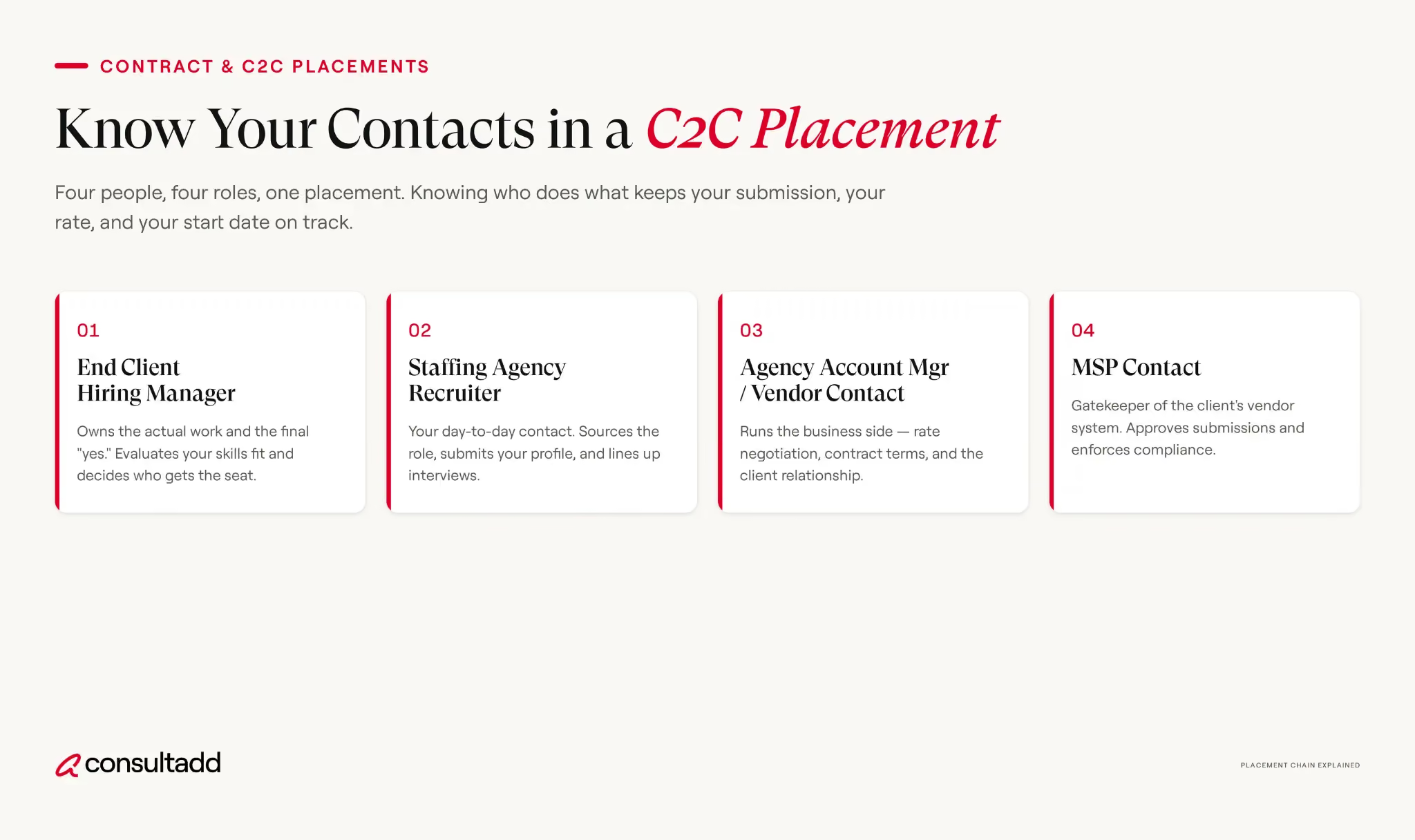
Depending on how the placement is structured, you might interact with:
- The end client's hiring manager. This is the person the textbook definition describes: they own the seat, they'll supervise you if you're placed, and they make the actual go or no-go call. In a staffing placement, you may or may not talk to them directly before an offer is made.
- The staffing agency recruiter. This person sources you, screens you, and submits your resume forward. They don't make the hiring decision, but they often control whether you're seen at all.
- The agency account manager or vendor contact. In C2C and multi-vendor placements, there's frequently a person managing the relationship between your staffing entity and the end client (or the next vendor up the chain). They can look like a decision-maker because they negotiate rate and terms, but the actual hire/no-hire call usually still sits with the end client's hiring manager.
- An MSP (managed service provider) contact, if the end client uses one to control its vendor list. This person manages process and compliance, not the hiring decision itself.
It's common for a candidate to go through two or three of these conversations without ever speaking directly to the person who actually approves the hire.
That's not necessarily a red flag; it's just how layered staffing engagements work.
But it means the standard advice about "impressing the hiring manager" doesn't map cleanly onto a contract placement unless you know which conversation that actually is.
How to figure out who's actually deciding
A few direct questions early in the process clear this up faster than guessing:
- Ask your recruiter or agency contact who at the client company will make the final decision, and whether you'll interview with them directly.
- If you're told there's a technical or panel interview, ask who's on the panel and who has veto power versus input only.
- If an offer or rate gets delayed, ask specifically whose sign-off it's waiting on. "The client" is not an answer; a name or title is.
- For multi-vendor placements, ask how many companies sit between you and the end client. That tells you how many approval layers exist before a decision reaches you.
Hiring delays are common even in direct-hire processes. SHRM's research on staffing metrics has tracked average time to fill in the range of several weeks
Every added layer of approval in a staffing chain tends to stretch that timeline further, since a request now has to travel up the chain and the decision has to travel back down.
Why this matters if you're negotiating or following up
If you're pushing for a faster answer or a rate adjustment, you want to be talking to the person who can actually say yes.
Negotiating hard with a recruiter or account manager who has no authority over the client's decision just burns goodwill without moving anything forward.
Once you know who the real decision-maker is, you can direct your follow-ups (through the appropriate channel) to the person whose answer actually matters, rather than escalating to someone who's only relaying information.
What this means if you're the one hiring
If you're the end client's hiring manager working with a staffing partner, the same confusion runs in reverse:
candidates may not realize you're the actual decision-maker, and may direct pushback or questions to your recruiter or account contact instead.
Being explicit early, letting the agency know you'll do a direct interview, or clarifying your role to the candidate when you do meet them, keeps the process moving and avoids the kind of miscommunication that slows down an otherwise strong hire.
If your hiring process is dragging for reasons beyond who's making the decision, this look at hiring and recruiting strategies covers the more common structural causes.
If you're evaluating whether to bring a contract hire on permanently once the engagement ends, our guide to how contract-to-hire actually works walks through that.
And if the placement is running through a corp-to-corp structure, it's worth understanding how the vendor chain itself affects rate and risk before assuming you know who's really in charge of the outcome.
Start Strong With Consultadd
With 15 years in business and 5,000+ successful staffing engagements, we don't just fill roles, we build reliability into your process. We've supported 65 staffing companies in the past year alone and maintain MSAs with industry leaders like Robert Half and TEKsystems.
Here's what working with Consultadd looks like:
- Talent sourced in under 24 hours
- Ready-to-deploy candidates, vetted for experience and compliance
- Lower turnover risk: we match long-term goals, not just short-term needs
- Seamless compliance: visa, documentation, onboarding? Handled.
- Dedicated 1:1 account managers for responsive, personalized support
- Top 100 candidate matches delivered in the past year
- Strong partnerships with universities to tap into fresh, committed talent
- Post-placement support so your investment grows beyond day one
For candidates, your next opportunity is more than just a job title, it's a chance to build skills, gain experience, and move your career forward. At Consultadd, we connect technology professionals with projects and employers that align with their goals, whether they're looking for contract, contract-to-hire, or long-term opportunities.
The tech job market moves fast, but the right guidance can make all the difference. Ready to take the next step in your career journey? Explore Opportunities >>
Key takeaways
- A hiring manager is the person who owns an open role and makes the final call on who's hired, usually the new hire's future supervisor.
- In staffing and C2C placements, that person is often one of three or four people you interact with, not the only one.
- Recruiters and account managers influence the process, but they typically can't approve a hire on their own.
- Asking directly who makes the final decision, and how many approval layers exist, saves time and avoids misdirected negotiation.
- If you're the hiring manager working through a staffing partner, being explicit about your role early keeps the process from stalling.
FAQs
What is a hiring manager, exactly?
A hiring manager is the person responsible for a specific open position, usually a team lead or department manager who will supervise the new hire and who makes the final decision on who gets the offer.
Is a hiring manager the same as a recruiter?
No. A recruiter sources and screens candidates and passes them along, while the hiring manager makes the final call on who's hired. In staffing and contract placements, there's often also an agency account manager or vendor contact between the two.
Who makes the final decision in a staffing agency placement?
Usually the end client's hiring manager, even though you may spend most of the process talking to a recruiter or account manager first. Ask directly whether you'll interview with the person who makes that call.
Why do I never seem to talk to the actual hiring manager in contract roles?
Layered staffing arrangements often route candidates through a recruiter and sometimes a vendor account manager before (or instead of) a direct conversation with the end client's hiring manager, especially in multi-vendor or C2C chains.
How do I know how many people are involved before a hiring decision is made?
Ask your recruiter or agency contact directly how many companies or approval layers sit between you and the end client. That number tells you how long a decision might take to travel back down.
Does it matter who I negotiate rate or start date with?
Yes. Negotiating with someone who doesn't have decision-making authority, like a recruiter relaying requests, usually just adds delay. Confirm who can actually approve changes before pushing hard on terms.
.png)


.png)
.webp)