.avif)

Introduction
If you've ever sat in a headcount meeting where nobody could agree on how many people you actually need next quarter, you already know why workforce planning matters. It's the difference between hiring on gut feeling and hiring based on where the business is actually headed.
So, what is workforce planning? In simple terms, it's the process of figuring out how many people you need, with what skills, and when, so your organization can hit its goals without overspending on payroll or scrambling to fill gaps at the last minute.
It sits somewhere between HR strategy and finance, and when it's done well, most people outside HR never even notice it's happening. That's usually the sign it's working.
This guide breaks down what workforce planning actually involves, how the process works step by step, and where most teams get stuck.
TL;DR
- Workforce planning matches your current and future staffing levels to business goals, covering headcount, skills, and budget.
- It's different from day-to-day recruiting. Recruiting fills open roles. Workforce planning decides which roles should exist in the first place.
- The process runs in five stages: assess current workforce, forecast demand, spot gaps, build an action plan, then monitor and adjust.
- Only 29% of CHROs feel confident their organization can actually deliver on its workforce planning goals, according to Gartner.
- Getting it right means combining internal headcount data with external labor market signals, not just gut instinct from department heads.
What is workforce planning, exactly?
Workforce planning is a systematic way of aligning your people, budget, and skills with what the business needs to accomplish over a set period, usually the next one to three years.
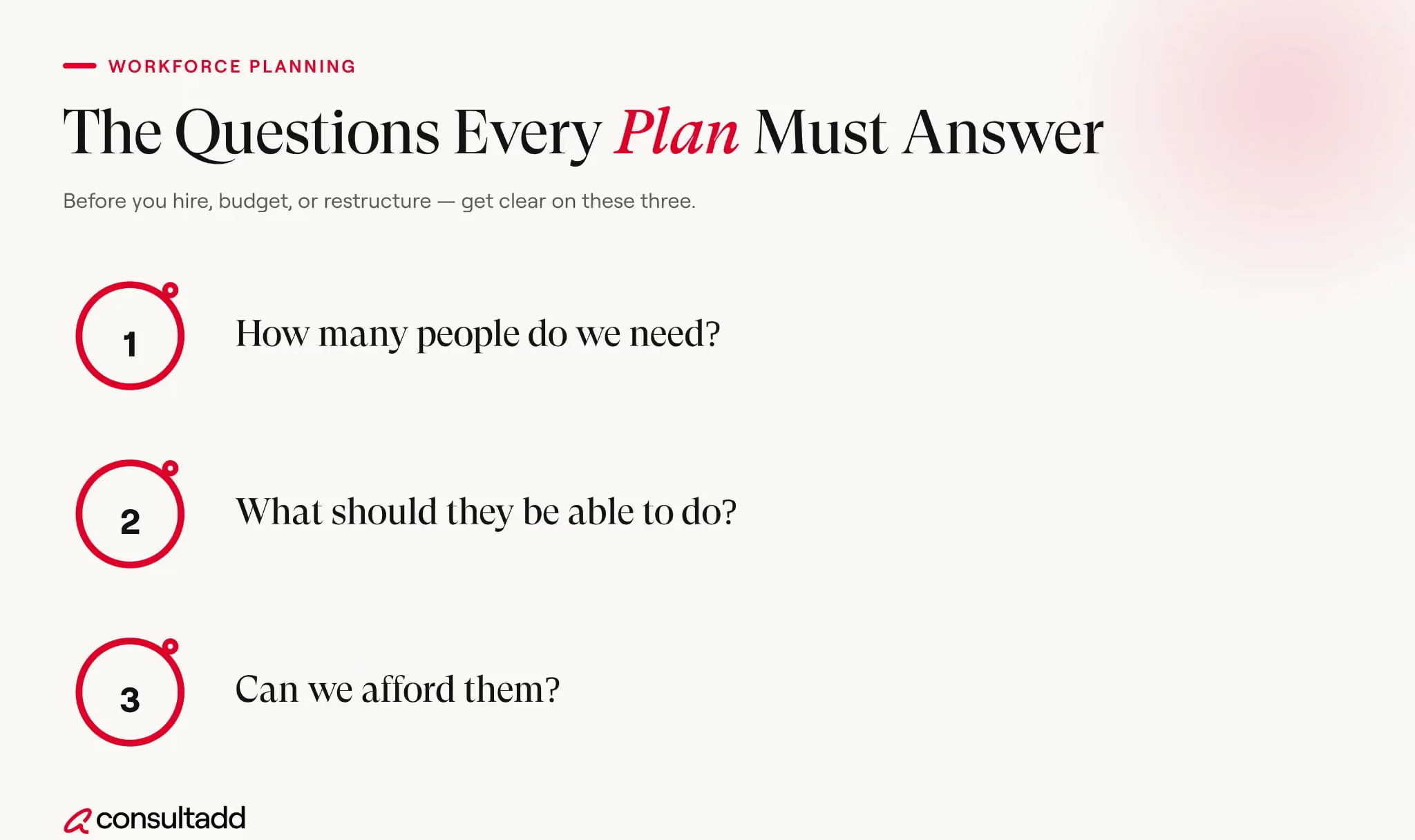
It answers three questions at once:
- How many people do we need
- What should they be able to do
- Can we afford them
Gartner's research points out that workforce planning typically centers on identifying and installing the people and capacities required for business strategy, along with diagnosing talent risks and building a plan to close those gaps.
That's a fair summary, though the practice looks different depending on company size. A 50-person startup might do this on a spreadsheet once a quarter. A 5,000-person enterprise usually runs it as a standing function with its own dashboards and dedicated staff.
The output isn't just a headcount number. It's a plan that covers hiring, internal mobility, training, and sometimes layoffs, all pointed at the same business target.
Workforce planning vs. recruiting vs. strategic workforce planning
People use these terms interchangeably, and that's where a lot of confusion starts. Here's how they actually differ.
Recruiting is tactical. It reacts to a requisition. Workforce planning is the layer above that decides whether the requisition should exist at all, and strategic workforce planning zooms out further to ask what the whole organization's talent shape needs to look like years from now.
Why workforce planning matters right now
Labor markets don't move the way they used to. The U.S. Bureau of Labor Statistics projects total employment growth of 3.1% from 2024 to 2034, a noticeably slower pace than the prior decade, driven largely by an aging population and slower labor force growth. That means the talent pool companies are competing over is growing more slowly than the demand for skilled workers in fields like healthcare, data, and technology.
At the same time, most HR leaders don't feel equipped to handle it. Gartner found that only 29% of CHROs are confident in their organization's ability to deliver on strategic workforce planning goals, even though workforce planning sits close to the center of nearly every major business decision.
A few concrete reasons this keeps landing on leadership agendas:
- Skill requirements shift faster than a typical hiring cycle can keep up with, especially in tech and healthcare.
- Budget owners want headcount decisions tied to revenue or output, not just "we're busy."
- Remote and contingent work has made the boundaries of a "workforce" less clear, so planning has to account for contractors and gig talent too.
- Turnover in specialized roles is expensive enough that most companies can't afford to plan reactively anymore.
The workforce planning process, step by step
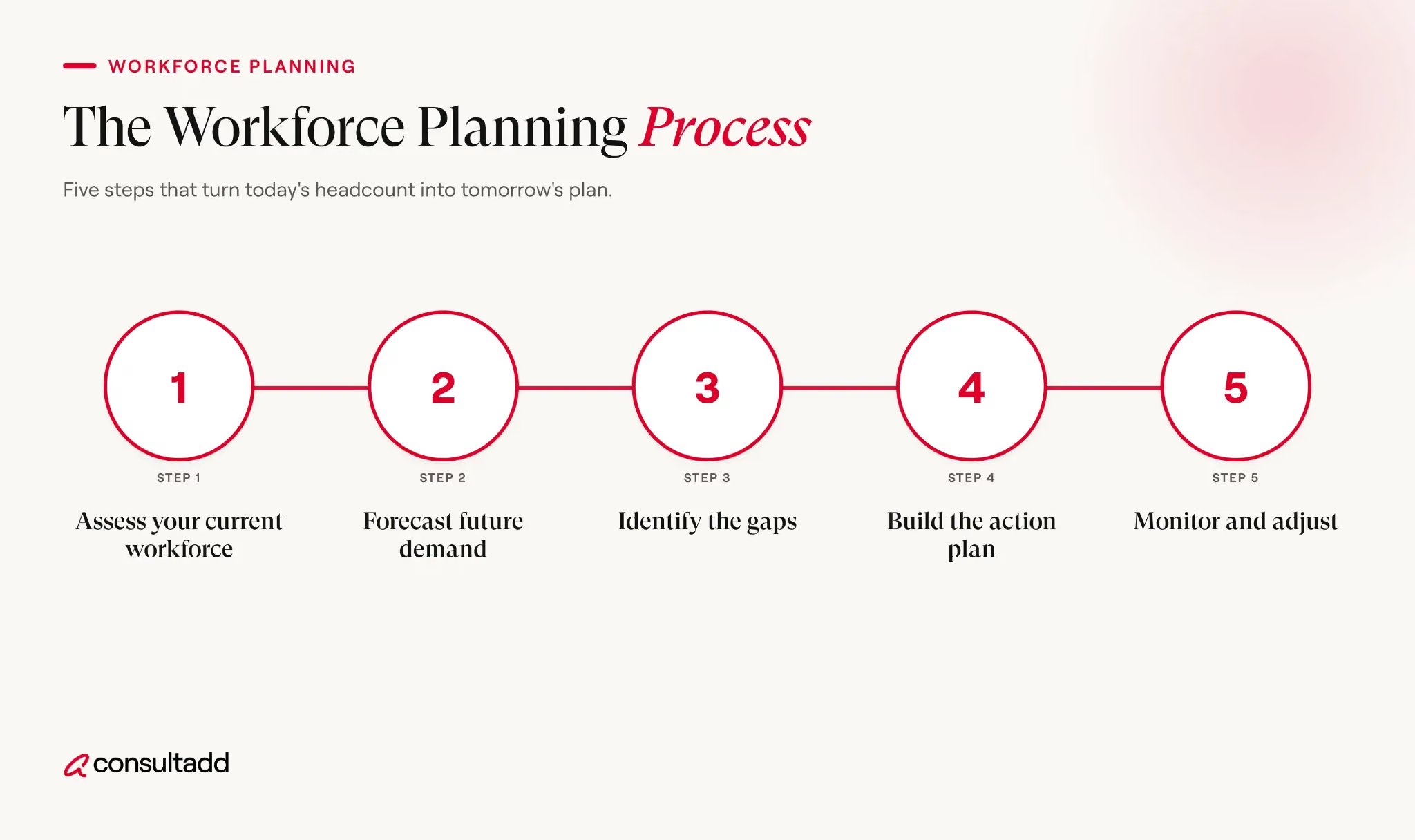
Most workforce planning frameworks follow a similar sequence, even if the labels differ. Here's the version that holds up across company sizes.
Step 1: Assess your current workforce
Start with a clear picture of what you have. That means headcount by department, skill inventories, tenure, performance data, and attrition trends. Skipping this step is the most common reason workforce plans fall apart later, because you can't measure a gap against a baseline you never established.
Step 2: Forecast future demand
Look at where the business is going, new products, market expansion, cost targets, and translate that into a rough headcount and skills forecast. This is usually a joint exercise between HR, finance, and department leaders, since each group sees a different piece of the puzzle.
Step 3: Identify the gaps
Compare what you have against what you'll need. Gaps usually show up in three forms: not enough people, the wrong skills, or people in the wrong locations or roles. Some companies also run a risk assessment here, flagging where a single departure would hurt disproportionately.
Step 4: Build the action plan
This is where the plan turns into decisions: hire externally, train internally, redeploy from another team, or bring in contract talent for a defined window. Not every gap needs a full-time hire.
Some are better solved with contract-to-hire arrangements or staff augmentation that buy time without locking in long-term headcount cost.
Step 5: Monitor and adjust
Workforce plans go stale fast. Revisit the plan on a set cadence, quarterly is common, and adjust for whatever changed: a new product line, a slower quarter, unexpected attrition. Treat the plan as a living document, not a report you file once a year.
Common workforce planning models
Not every company plans the same way. The model you pick usually depends on how predictable your demand is and how much data you already have.
Most mature organizations blend two or three of these rather than relying on just one. A tech company, for example, might run skills-based planning for engineering roles while using trend-based planning for support functions.
Where workforce plans usually break down
A few patterns show up again and again, regardless of industry.
Plans built entirely by HR, without finance or department leads at the table, tend to get overridden the moment budget season starts.
Plans that rely only on internal data miss what's happening in the broader labor market, like the BLS projections above showing where growth is actually concentrated.
And plans that get written once a year and never revisited become outdated within a couple of quarters, especially in fast-moving sectors like technology.
The fix isn't complicated, but it does take discipline: build cross-functional input into the process from the start, and treat the review cadence as non-negotiable.
Start Strong With Consultadd
With 15 years in business and 5,000+ successful staffing engagements, we don't just fill roles, we build reliability into your process. We've supported 65 staffing companies in the past year alone and maintain MSAs with industry leaders like Robert Half and TEKsystems.
Here's what working with Consultadd looks like:
- Talent sourced in under 24 hours
- Ready-to-deploy candidates, vetted for experience and compliance
- Lower turnover risk: we match long-term goals, not just short-term needs
- Seamless compliance: visa, documentation, onboarding? Handled.
- Dedicated 1:1 account managers for responsive, personalized support
- Top 100 candidate matches delivered in the past year
- Strong partnerships with universities to tap into fresh, committed talent
- Post-placement support so your investment grows beyond day one
For candidates, your next opportunity is more than just a job title, it's a chance to build skills, gain experience, and move your career forward. At Consultadd, we connect technology professionals with projects and employers that align with their goals, whether they're looking for contract, contract-to-hire, or long-term opportunities.
The tech job market moves fast, but the right guidance can make all the difference. Ready to take the next step in your career journey? Explore Opportunities >>
Key takeaways
- Workforce planning aligns headcount, skills, and budget with where the business is actually heading, not just where it's been.
- It's distinct from recruiting: recruiting fills roles, workforce planning decides which roles should exist.
- The five-step process, assess, forecast, identify gaps, plan, monitor, works across company sizes, though the depth varies.
- External labor market data, like BLS employment projections, should factor into forecasts alongside internal headcount trends.
- Flexible hiring models, including contract-to-hire, can close gaps without committing to permanent headcount too early.
FAQs
What is the main goal of workforce planning?
The main goal is making sure an organization has the right number of people, with the right skills, in the right roles, at the right time, without overspending on headcount it doesn't need yet.
How is workforce planning different from HR planning?
HR planning is a broader term covering policies, compliance, and employee relations. Workforce planning is narrower and focuses specifically on headcount, skills, and staffing decisions tied to business demand.
How often should a company update its workforce plan?
Quarterly reviews work well for most companies, though fast-changing industries like tech may need more frequent check-ins, especially after a major product launch or market shift.
What tools are used for workforce planning?
Common tools range from spreadsheets for smaller teams to dedicated HR analytics platforms and enterprise resource planning software for larger organizations tracking headcount across multiple departments or regions.
Who is responsible for workforce planning in a company?
It's usually a shared responsibility between HR leadership, finance, and department heads, since each group has visibility into a different piece of the staffing and budget picture.
Can small businesses do workforce planning too?
Yes. It doesn't require a dedicated team or expensive software. Even a simple annual review comparing current staff against next year's goals counts as workforce planning at a basic level.


.webp)