


Introduction
Interviewers ask this question because they want proof, not a compliment. What makes you the ideal candidate for the position comes down to three things: your skills match what the job actually requires, you can show real evidence of that match, and you understand what the team needs from day one.
Most candidates answer this with generic confidence instead of specifics, and that's exactly why so many strong resumes don't convert into offers.
This guide breaks down what interviewers are really listening for, how to structure an answer that holds up under follow-up questions, and where most people lose the room without realizing it.
TL;DR
- The question is really asking "why you, over everyone else who applied."
- Strong answers combine job-specific skills, proof from past work, and fit with the team.
- A simple three-part structure works better than memorized scripts.
- Vague claims like "hard worker" or "team player" don't hold up without examples.
- The best answers change slightly for every job, because every job description is different.
What interviewers really mean when they ask this question
"What makes you the ideal candidate" is rarely about finding a perfect match. Interviewers use it to test two things at once: whether you understood the job description, and whether you can talk about your own work without rambling.
A hiring manager reading fifty resumes for one role isn't looking for the most impressive person in the pile. They're looking for the person whose experience maps cleanest onto the problems they need solved in the next six months. That's a narrower target than "best candidate," and it changes how you should prepare.
If you've applied through a staffing partner or recruiter, this question often comes up twice, once in a screening call and again with the hiring manager.
Recruiters at firms handling high-volume placements, similar to what's covered in how to recruit for hard-to-fill roles, are often filtering for the same signals before they even submit your profile.
What actually makes a candidate stand out
Four things separate a memorable answer from a forgettable one. Missing any of them makes the rest sound thin.
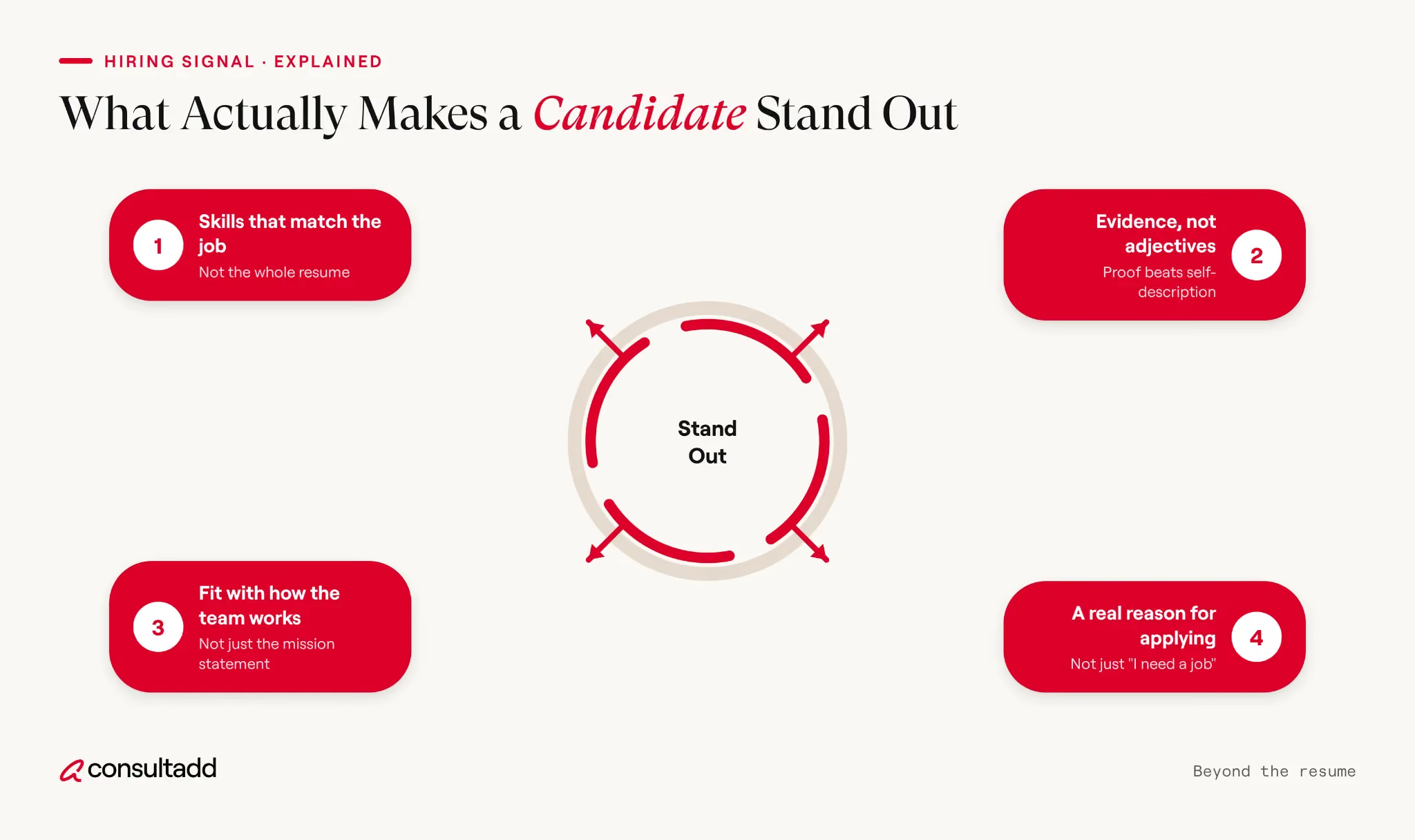
1. Skills that match the specific job, not your whole resume
Read the job posting line by line before the interview. Pull out the three or four requirements that appear first or repeat more than once. Those are the ones the hiring manager will listen for.
If you're switching industries or roles, this step matters even more.
A skill gap between your resume and the posting isn't disqualifying on its own, but pretending it doesn't exist is.
Naming it and showing how you closed it, or plan to, usually lands better than avoiding it.
2. Evidence, not adjectives
"I'm detail-oriented" means nothing without a number or outcome attached. "I caught a billing error before it went to 200 clients" does the same job and actually gets remembered.
Keep two or three of these ready before the interview. You don't need ten. You need the ones that map to what the role is actually asking for.
3. Fit with how the team works, not just the mission statement
Culture fit gets a bad reputation because people use it to mean "someone I'd like." Used correctly, it means something narrower: can you work the way this team works. Some teams move fast with a loose process. Others need someone who documents everything. Neither is better, but mismatches here cause more early exits than skill gaps do.
4. A reason that isn't just "I need a job"
Everyone needs a job. That's not a differentiator. What is a differentiator: naming something specific about this role, this team, or this stage of the company that connects to where you want to go next. It doesn't need to be dramatic. It needs to be true and specific.
How to structure your answer
A workable structure keeps you from either rambling or sounding rehearsed. This one holds up under follow-up questions because each part is something you can defend.
This isn't a script to memorize word for word. It's an order to think in, so you don't default to a list of adjectives when you're put on the spot.
Example answers by experience level
The right length and content shifts depending on where you are in your career. A first job answer and a tenth job answer shouldn't sound the same.
A mid-career candidate applying for a project coordination role, for example, might say their last job involved managing vendor timelines across three departments, and that a scheduling conflict they caught early saved two weeks on a launch. That's specific enough to survive a follow-up question. "I'm organized" is not.
Common mistakes that weaken your answer
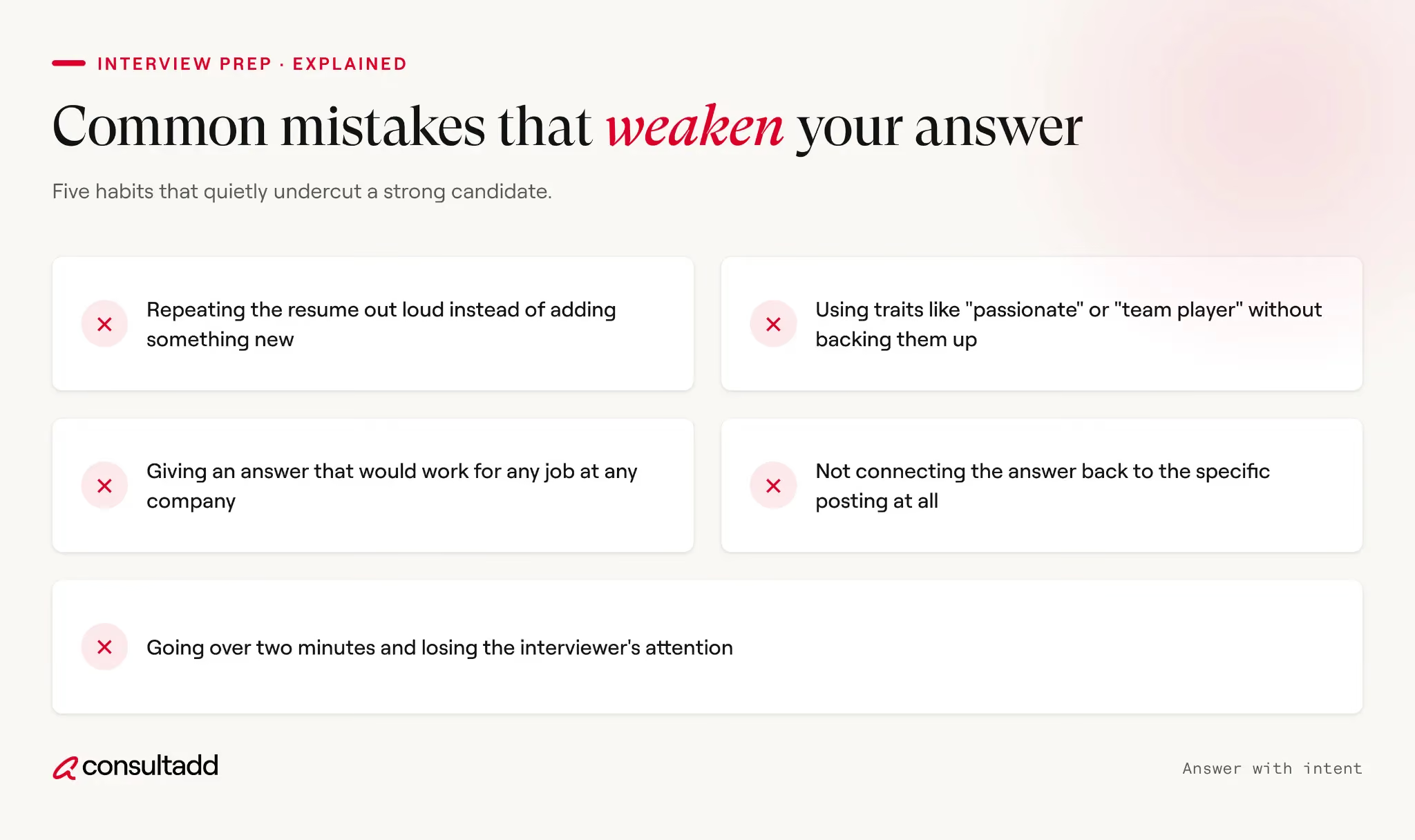
Most weak answers fail for the same handful of reasons.
- Repeating the resume out loud instead of adding something new
- Using traits like "passionate" or "team player" without backing them up
- Giving an answer that would work for any job at any company
- Not connecting the answer back to the specific posting at all
- Going over two minutes and losing the interviewer's attention halfway through
If you notice your practice answer would work for a completely different job posting, it's too generic. Rewrite it until it only fits this one.
Start Strong With Consultadd
With 15 years in business and 5,000+ successful staffing engagements, we don't just fill roles, we build reliability into your process. We've supported 65 staffing companies in the past year alone and maintain MSAs with industry leaders like Robert Half and TEKsystems.
Here's what working with Consultadd looks like:
- Talent sourced in under 24 hours
- Ready-to-deploy candidates, vetted for experience and compliance
- Lower turnover risk: we match long-term goals, not just short-term needs
- Seamless compliance: visa, documentation, onboarding? Handled.
- Dedicated 1:1 account managers for responsive, personalized support
- Top 100 candidate matches delivered in the past year
- Strong partnerships with universities to tap into fresh, committed talent
- Post-placement support so your investment grows beyond day one
For candidates, your next opportunity is more than just a job title, it's a chance to build skills, gain experience, and move your career forward. At Consultadd, we connect technology professionals with projects and employers that align with their goals, whether they're looking for contract, contract-to-hire, or long-term opportunities.
The tech job market moves fast, but the right guidance can make all the difference. Ready to take the next step in your career journey? Explore Opportunities >>
Key takeaways
- Interviewers are testing whether your experience matches this specific job, not your overall resume.
- Every strong answer needs a real example, not just a personality trait.
- Team fit is about working style, not likability.
- Structure your answer as anchor, evidence, fit, and forward, not as a memorized script.
- Tailor the length and content of your answer to your actual experience level.
FAQs
How long should my answer to this question be?
Aim for 60 to 90 seconds, roughly three to five sentences once you include one specific example. Longer answers tend to lose focus and can come across as rehearsed.
What if I don't have direct experience in this exact role?
Lead with the closest transferable experience and be upfront about the gap. According to SHRM's research on skills-based hiring, employers are increasingly evaluating demonstrated ability over exact title matches, so a relevant project or certification can carry real weight.
Is it okay to mention salary or benefits as a reason I want the job?
No. This question is about what you bring to the role, not what you want from it. Save compensation discussions for later in the process.
Should my answer change for a staffing or contract role versus a full-time position?
Yes. Contract roles often prioritize speed to productivity, so lean on examples where you ramped up quickly. For more on how contract roles differ, see how to find contract work.
What's the difference between this question and "why should we hire you"?
They're close to the same question. "Ideal candidate" tends to invite a broader answer about fit, while "why should we hire you" often expects a sharper, more competitive angle against other applicants. The same evidence usually works for both.
Can I reuse the same answer for every interview?
The structure can stay the same, but the content shouldn't. Reusing an identical answer across different job postings is one of the fastest ways to sound generic, and interviewers notice.
.webp)


.png)
