

Introduction
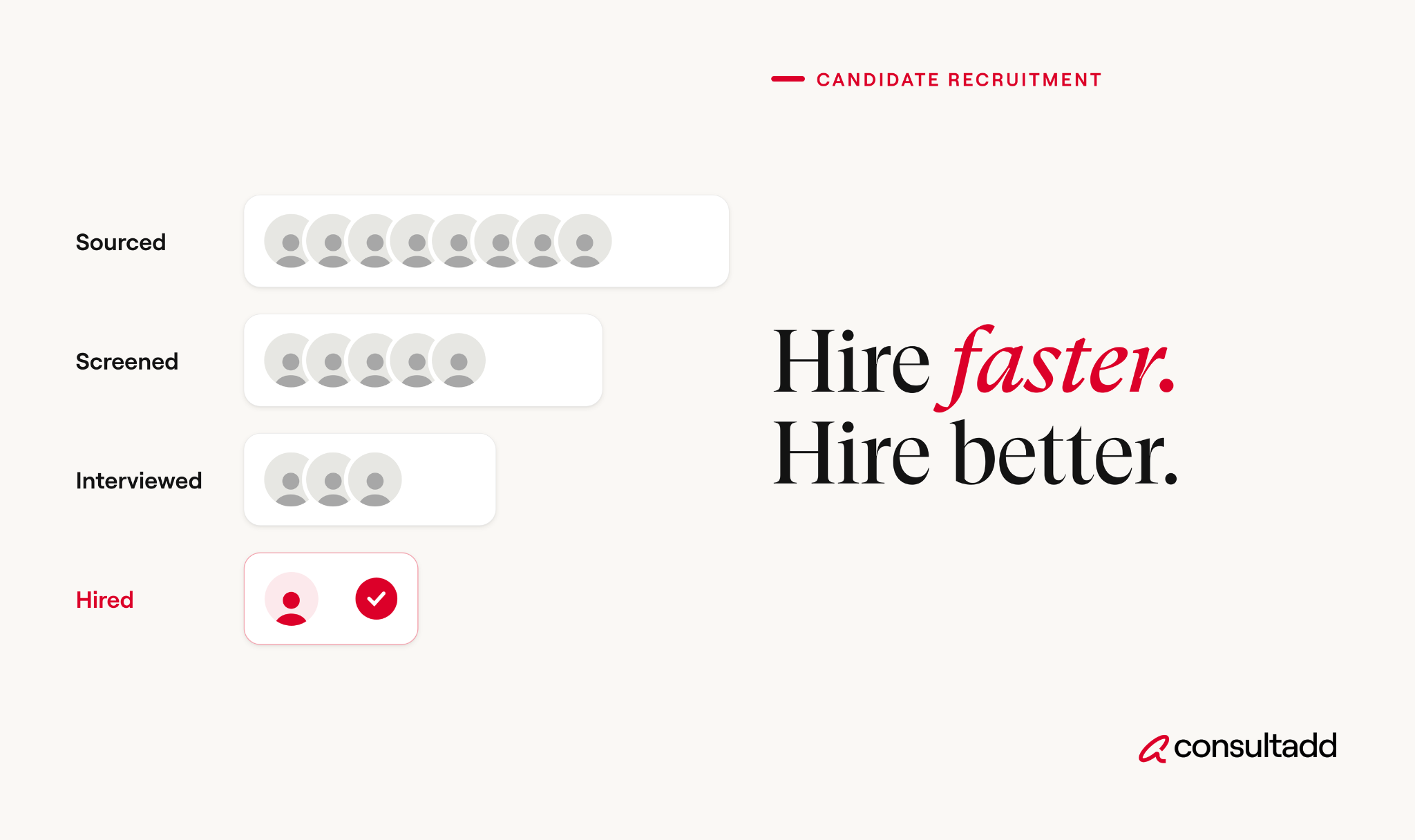
Most recruiting teams don't have a sourcing problem. They have a holding-on problem. The right candidate applies, clears the phone screen, impresses the hiring manager, and then goes quiet, takes another offer, or simply doesn't show up on day one.
Candidate recruitment is the whole path from a person's first look at your job to their first day at work. Sourcing gets most of the attention, but a lot of good hires are won or lost in the middle of that path, through slow replies, unclear timelines, and offers that arrive a week too late.
This guide walks through each stage from the candidate's side: where people drop out, why they leave, and the specific habits that keep strong candidates engaged until they start.
TL;DR
- Candidate recruitment covers the full journey from job post to first day, and most losses happen after sourcing, not before it.
- Ghosting runs both ways, and candidates who get ignored often refuse to apply to that company again.
- Speed matters most at three points: first response, the gap after interviews, and offer to start date.
- A simple communication cadence, where no candidate waits more than a few business days without an update, prevents much of the drop-off.
- Track stage-by-stage drop-off and offer acceptance, not just time to hire, so you can see exactly where candidates are leaving.
What candidate recruitment really covers
Candidate recruitment is the process of finding, engaging, assessing, and hiring people for open roles. In practice, it has two sides that teams often treat separately:
- What the company does: sourcing, screening, interviewing, deciding, and making offers
- What the candidate experiences: waiting, guessing, preparing, comparing offers, and deciding whether to stay in the process
Most recruiting playbooks are written from the first side. This one focuses on the second, because that's where a lot of hiring quietly fails.
For the company-side strategy across planning, sourcing, and selection, Consultadd's hiring and recruiting strategies playbook covers the full system.
For finding candidates in the first place, see the candidate sourcing solution guide.
Why good candidates drop out
Candidates leave a recruiting process for a handful of reasons, and most of them are fixable:
Competing offers are the big one. A LiveCareer survey cited by Pin found that one in four job seekers admit to ghosting an employer, most often because they accepted a competing offer, followed closely by a hiring process that wore out their patience.
Employers ghost too, and it costs them later. A 2026 LiveCareer report found that 45% of employees say they've been ghosted during a hiring process, and 48% of candidates who were ghosted wouldn't apply to that company again.
That second number matters for any company that hires for the same roles repeatedly. Every candidate you leave hanging is someone you may need next quarter.
From what we see placing tech candidates every week, drop-off usually traces back to one of these:
The candidate recruitment process, stage by stage
Here's how each stage looks from the candidate's side, and what keeps them moving forward.
Stage 1: The job post
Candidates decide in seconds whether a role is worth applying to. Vague posts attract the wrong people and push away the right ones.
A good post states the pay range, the location or remote policy, the core skills, and what the person will actually work on. If you list 15 "required" tools, strong candidates who have 10 of them often won't apply.
Stage 2: First contact
Speed at this stage has an outsized effect. Strong candidates are usually talking to several companies at once. A reply within one or two business days tells them you're serious. A reply after two weeks often reaches someone who's already deep in another process.
In our own placements, the candidates we lose most often are the ones who waited longest for a first call. Nothing else about the process went wrong. Someone else simply moved first.
Stage 3: Screening
Tell candidates up front what the process looks like: how many rounds, who they'll meet, and roughly how long it takes. This one habit removes most of the guessing that leads to drop-off.
Use the screen to confirm the basics both ways: skills, pay expectations, location, availability, and work authorization. Surprises at the offer stage usually come from questions nobody asked here.
For what a thorough screen involves, Consultadd's guide on what vetting a candidate means walks through the checks.
Stage 4: Interviews
Agree on the interview plan with the hiring manager before the first candidate is booked. That means a fixed number of rounds, the interviewers for each one, and what each round assesses.
Then protect the gaps. A week between rounds is often fine. Three weeks usually isn't. If a decision is going to take longer, tell the candidate why and when they'll hear back.
Stage 5: Offer
By this point, nothing in the offer should surprise the candidate. If pay was discussed at screening and confirmed after the final round, the offer becomes a formality rather than a negotiation.
Make the verbal offer by phone, follow with the written version the same day if you can, and give a reasonable decision window. Ask directly whether anything would stop them from accepting.
Stage 6: Offer to first day
This is the stage teams most often skip. The offer is signed, everyone relaxes, and the candidate hears nothing for three weeks. Meanwhile, their current employer makes a counteroffer, or a recruiter calls with something better.
Stay in touch until day one. Send a welcome note from the manager, the first-week schedule, equipment details, and a quick check-in call a few days before the start date.
A communication cadence that keeps candidates engaged
Most drop-off comes down to silence. A simple, written cadence fixes much of it, and it doesn't take sophisticated tools.
The rejection row is the one people skip, and it's where the long-term damage happens. A short, clear no takes two minutes and keeps the door open for future roles.
Fair, consistent selection builds trust
Candidates notice when a process feels random. They notice different questions in every round, interviewers who haven't read their resume, or feedback that contradicts the last conversation.
Structured interviews help on both fairness and quality. The U.S. Office of Personnel Management describes a structured interview as one where every candidate gets the same predetermined questions in the same order, and every answer is judged on the same rating scale.
OPM also notes that the structured interview is among the most valid assessment tools available, and when designed well it predicts job performance with relatively low adverse impact compared to other tools.
You don't need a government-scale process to use the idea. Agree on the skills each round assesses, write a few core questions for each, and score against the same scale. OPM's structured interview resources are a practical starting point.
Keep the process lawful too. The EEOC's guidance on prohibited employment practices covers what employers can't ask or base decisions on during recruitment.
For widening your candidate pool without changing selection standards, see Consultadd's diversity sourcing strategy playbook.
Candidate recruitment metrics worth tracking
Time to hire on its own can hide the real problem. A 30-day average looks fine until you see that half your finalists withdrew. These metrics show where candidates are actually leaving.
Review these by role type, not just overall. A senior cloud role and an entry-level support role will have very different drop-off points.
Common candidate recruitment mistakes
These are the patterns we see most often when clients ask why a role has been open for months:
- Posting before the role is defined. If the hiring manager isn't sure about pay, seniority, or remote policy, candidates find out mid-process and leave.
- Adding rounds as you go. A process that grows from three interviews to five feels disorganized to the candidate, and usually is.
- Waiting to compare a full slate. Holding a strong candidate for two weeks to see who else applies often means losing them.
- Skipping the pay conversation. Avoiding it early just moves the disagreement to the offer stage, where it's more expensive.
- Going silent after the offer. Signed offers aren't guarantees until the person shows up.
- Never rejecting anyone. Silence feels like ghosting to the candidate, even if it's just a busy week for you.
If your overall process needs work, Consultadd's guide on how to improve the recruitment process covers workflow fixes.
For roles you hire repeatedly, a talent bench keeps warm candidates ready before the next opening.
When a role is urgent and the internal team is stretched, contract or contract-to-hire can also take pressure off. Consultadd's guide to contract to hire explains how that model works.
Candidate recruitment that works
Good candidate recruitment isn't about doing more sourcing. It's about keeping the right people once you've found them. That comes down to clear job posts, fast first replies, a fixed interview plan, honest updates, and steady contact until the first day.
Start by measuring drop-off at each stage for one hard-to-fill role. The numbers usually point to one or two gaps, often the wait between interviews or the silence after an offer. Fix those first. Then write down a communication cadence so every candidate knows where they stand.
Start Strong With Consultadd
With 15 years in business and 5,000+ successful staffing engagements, we don't just fill roles, we build reliability into your process. We've supported 65 staffing companies in the past year alone and maintain MSAs with industry leaders like Robert Half and TEKsystems.
Here's what working with Consultadd looks like:
- Talent sourced in under 24 hours
- Ready-to-deploy candidates, vetted for experience and compliance
- Lower turnover risk: we match long-term goals, not just short-term needs
- Seamless compliance: visa, documentation, onboarding? Handled.
- Dedicated 1:1 account managers for responsive, personalized support
- Top 100 candidate matches delivered in the past year
- Strong partnerships with universities to tap into fresh, committed talent
- Post-placement support so your investment grows beyond day one
For candidates, your next opportunity is more than just a job title, it's a chance to build skills, gain experience, and move your career forward. At Consultadd, we connect technology professionals with projects and employers that align with their goals, whether they're looking for contract, contract-to-hire, or long-term opportunities.
The tech job market moves fast, but the right guidance can make all the difference. Ready to take the next step in your career journey? Explore Opportunities >>
Key takeaways
- Candidate recruitment runs from the job post to the first day, and many hires are lost in the middle stages rather than at sourcing.
- Competing offers and slow, silent processes are the main reasons strong candidates drop out.
- A written communication cadence, with updates at least every few business days, prevents much of the ghosting on both sides.
- Structured, consistent interviews make the process fairer and more predictive, and candidates notice the difference.
- Track drop-off by stage, offer acceptance, and offer-to-start no-shows to find exactly where your process loses people.
FAQs
What is candidate recruitment?
Candidate recruitment is the process of finding, engaging, assessing, and hiring people for open roles. It covers everything from writing the job post and sourcing candidates to interviewing, making an offer, and keeping the new hire engaged until their first day.
What are the stages of the candidate recruitment process?
Most processes include the job post, first contact, screening, interviews, the offer, and the period between offer acceptance and the start date. Each stage has its own drop-off risks. The middle and final stages are where many teams lose strong candidates.
Why do candidates drop out of the hiring process?
The most common reasons are accepting a competing offer, long gaps between interview rounds, and not knowing where they stand. Changes to pay or scope during the process and too many interview rounds also push candidates away.
How do you keep candidates engaged during recruitment?
Reply quickly, explain the full process up front, and give updates at least every few business days, even if there's no decision yet. Keep the number of rounds fixed, and stay in contact between offer acceptance and the first day.
What metrics should recruiters track?
Track time to first response, drop-off at each stage, time between interview rounds, offer acceptance rate, and offer-to-start no-shows. A short candidate feedback survey also helps. Together, these show where your process loses people.
How can staffing partners help with candidate recruitment?
Staffing partners maintain networks of pre-screened candidates, so they can present qualified people quickly. They also handle much of the screening, scheduling, and candidate communication, which keeps strong candidates engaged when internal teams are short on time.