

Introduction
Every March, roughly 780,000 registrations chase 85,000 H-1B slots, and most people walk away with nothing. What a lot of candidates don't realize is that there's a separate category of h1b cap exempt jobs that never touches the lottery at all.
These roles sit at universities, nonprofit research organizations, and government research bodies, and employers there can file a petition on any date of the year.
This isn't a loophole. It's written directly into the Immigration and Nationality Act, and USCIS has been processing these petitions for decades.
What's changed recently is how much more attractive this path has become, now that the regular lottery is wage-weighted and a $100,000 fee applies to many petitions filed from abroad.
Below is what actually qualifies, who's hiring, and what to check before you assume a job is exempt.
TL;DR
- H1B cap exempt jobs are tied to the employer's status, not the applicant's resume. Only universities, their affiliated nonprofits, and nonprofit or government research organizations qualify.
- There's no lottery, no March registration window, and no fee for the $100,000 supplemental charge, unless the beneficiary is filing from outside the U.S.
- Working at a cap-exempt location isn't the same as working for a cap-exempt petitioner. Staffing agencies placing workers on a university campus are usually still cap-subject.
- A 2026 rule change tightened how USCIS evaluates whether a nonprofit's research activity actually qualifies it for the exemption.
- Once cap-exempt status is granted, a worker can also take on a second, cap-subject job concurrently without entering the lottery for it.
What "cap exempt" actually means
The annual H-1B cap sits at 65,000 visas, plus another 20,000 reserved for people with a U.S. master's degree or higher. That's the number most job seekers hear about, and it's the reason the lottery exists at all.
Section 214(g)(5) of the Immigration and Nationality Act carves out three categories of employer that never have to compete for those numbers.
According to USCIS, H-1B workers petitioned for or employed at an institution of higher education, its affiliated nonprofit entities, a nonprofit research organization, or a government research organization are not subject to the annual numerical cap.
That's the entire legal basis for h1b cap exempt jobs, and it comes straight from the USCIS H-1B program page.
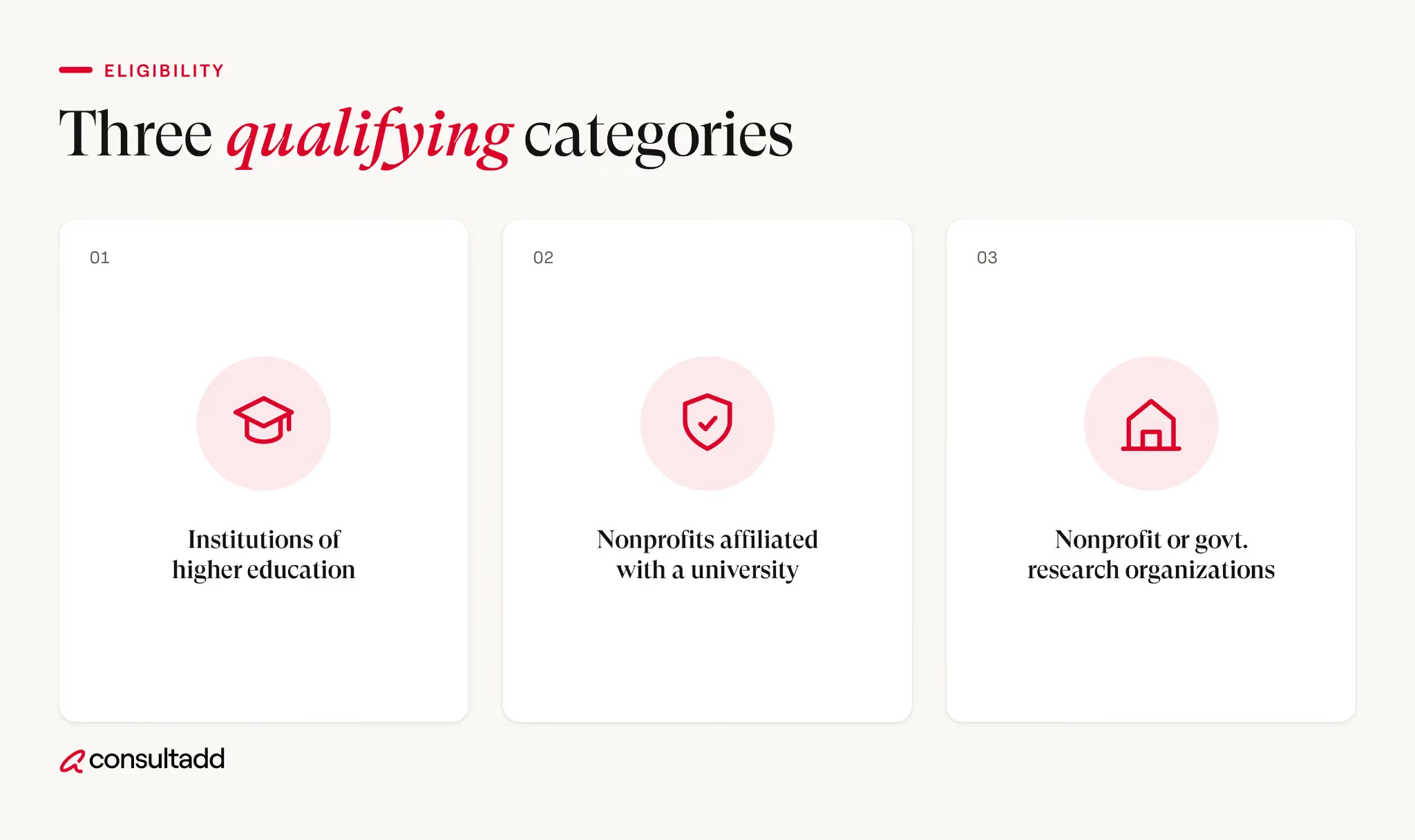
The three qualifying categories
- Institutions of higher education - accredited colleges and universities, public or private.
- Nonprofit entities related to or affiliated with a university - think university-affiliated hospitals, research centers, or teaching foundations with a documented, formal connection.
- Nonprofit or governmental research organizations - entities where research is a primary or fundamental activity, whether or not they're formally attached to a school.
If you want the full statutory language and USCIS's own framing of the H-1B program, their H-1B Specialty Occupations page is the primary source, and it's worth reading before you assume any employer qualifies.
Cap-subject vs. cap-exempt: side by side
Who is actually hiring for these roles
Cap-exempt status attaches to the organization, not the job title, which means the roles themselves are surprisingly varied.
1. Universities and colleges
Faculty and postdoctoral positions are the obvious fit, but IT, data, administrative, and lab-support roles at a university are just as exempt if the university itself is the petitioner.
2. University-affiliated nonprofits
Teaching hospitals, research foundations, and centers with a formal, written affiliation agreement to a school can qualify, provided they can document that connection when USCIS asks.
3. Nonprofit and government research organizations
National laboratories and similar institutions fall here. Their research mission, not a university tie, is what earns the exemption.
Employer type, examples, and the roles they typically sponsor
What's actually changed for 2026
A few things make 2026 a different year for anyone weighing cap-exempt options against the regular lottery.
1. The lottery got harder for lower-wage roles
- USCIS moved to a wage-weighted selection system in early 2026, and that pushed selection odds for entry-level, Level I registrations well below what senior, higher-wage candidates now see.
- For someone early in their career, a cap-exempt path at a research institution can be a more realistic route than repeatedly entering a lottery stacked against them.
Our breakdown of H-1B prerequisites and eligibility covers how that wage-weighting actually plays out.
2. The $100,000 fee mostly, but not entirely, skips cap-exempt filers
- The September 2025 proclamation fee applies to new H-1B petitions for beneficiaries who are abroad and need consular processing.
- Cap-exempt employers are generally not required to pay it, but there's a real exception: if a university or nonprofit is filing for someone currently overseas, the fee can still apply.
- Change-of-status cases, most notably F-1 students already in the U.S., are typically unaffected either way.
Nonprofit eligibility got more scrutiny
- A rule that took effect in January 2025 changed how USCIS evaluates whether a nonprofit's research activity is substantial enough to qualify, and the revised Form I-129, in effect since April 2026, asks for more specific detail connecting the job duties to the organization's qualifying mission.
- A nonprofit that assumed it was cap-exempt five years ago should not assume the same paperwork still holds up today.
LCA requirements haven't changed
- Every cap-exempt petition still needs a certified Labor Condition Application filed through the Department of Labor's FLAG system before the I-129 goes to USCIS.
- That step typically takes about a week and is identical whether the petition is cap-subject or cap-exempt.
The catch a lot of candidates and agencies miss
Here's where things go wrong most often: working at a cap-exempt location is not the same as being petitioned by a cap-exempt employer.
If a staffing agency places a contractor on a university campus, the agency, not the university, is usually the petitioner, and the agency is typically a for-profit company subject to the regular cap.
USCIS looks at who controls the work, who pays the salary, and who has the authority to end the assignment. That entity determines cap status, not the building the work happens in.
This matters a great deal for staffing firms building out tech teams for research institutions. If your placement model depends on cap-exempt status, the contract structure needs to reflect that the qualifying institution is actually the petitioning employer, not just the end client.
Our guide to corp-to-corp visa sponsorship walks through how staffing arrangements affect who's actually on the hook for a petition.
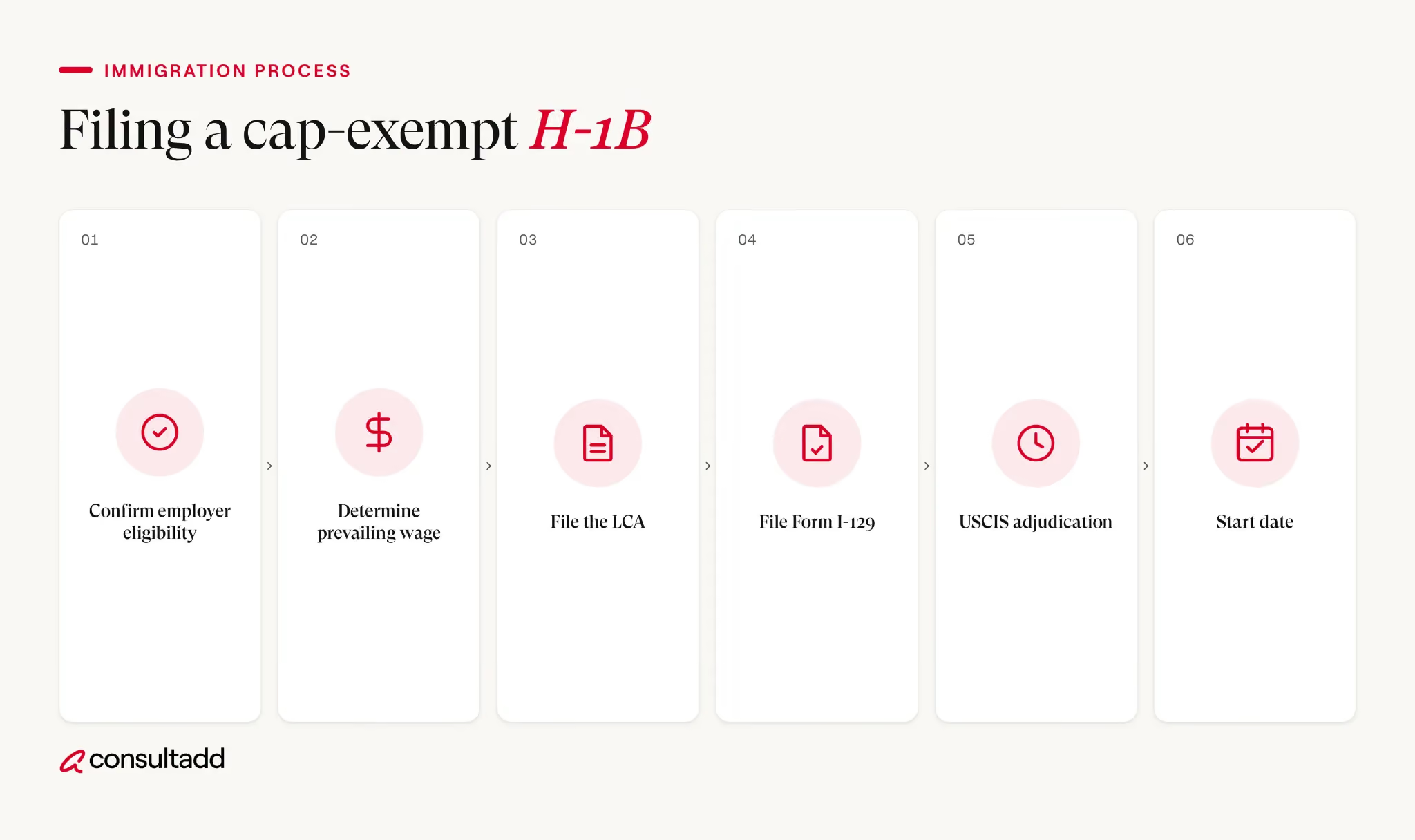
Step-by-step: how a cap-exempt H-1B actually gets filed
What this means if you're already in the U.S.
Candidates on F-1 OPT or an existing H-1B often assume cap-exempt roles are only for people applying from outside the country. That's backwards.
Since change-of-status petitions for people already here are usually unaffected by the $100,000 fee regardless of employer type, an in-country candidate applying to a cap-exempt research role often has the cleanest, least expensive path available.
It also works the other direction. Someone who holds cap-exempt H-1B status through a university can pick up a second, cap-subject job at the same time, since each employer files its own I-129 and the cap-exempt approval doesn't count against the regular limit.
That's a detail buried in most explainers, and it's genuinely useful if a research role pays less than a comparable industry position but you want to keep both doors open.
If you're weighing a research appointment against a staffing-based placement, our overview of the IT staffing process explains how agency-side timelines compare to a direct university hire.
Start Strong With Consultadd
With 15 years in business and 5,000+ successful staffing engagements, we don't just fill roles, we build reliability into your process. We've supported 65 staffing companies in the past year alone and maintain MSAs with industry leaders like Robert Half and TEKsystems.
Here's what working with Consultadd looks like:
- Talent sourced in under 24 hours
- Ready-to-deploy candidates, vetted for experience and compliance
- Lower turnover risk: we match long-term goals, not just short-term needs
- Seamless compliance: visa, documentation, onboarding? Handled.
- Dedicated 1:1 account managers for responsive, personalized support
- Top 100 candidate matches delivered in the past year
- Strong partnerships with universities to tap into fresh, committed talent
- Post-placement support so your investment grows beyond day one
For candidates, your next opportunity is more than just a job title, it's a chance to build skills, gain experience, and move your career forward. At Consultadd, we connect technology professionals with projects and employers that align with their goals, whether they're looking for contract, contract-to-hire, or long-term opportunities.
The tech job market moves fast, but the right guidance can make all the difference. Ready to take the next step in your career journey? Explore Opportunities >>
Key takeaways
- Cap-exempt status belongs to the employer, universities, affiliated nonprofits, and research organizations, not to the job or the applicant.
- There's no March registration, no lottery, and filing can happen any month of the year.
- The $100,000 proclamation fee generally spares cap-exempt petitions, except when the beneficiary is filing from abroad.
- Placement location doesn't determine cap status; the petitioning employer's control over the work does.
- A cap-exempt H-1B can run alongside a second, cap-subject job, since each is filed and evaluated separately.
FAQs
Are all university jobs automatically cap-exempt?
Only if the university itself is the petitioner. If a contractor or staffing agency is technically the employer of record, even for work performed on campus, the petition is usually still cap-subject.
Do cap-exempt employers still need to file a Labor Condition Application?
Yes. Every H-1B petition, cap-exempt or not, requires a certified LCA from the Department of Labor before Form I-129 can be filed with USCIS.
Can I transfer from a cap-subject H-1B to a cap-exempt employer?
Yes, and it doesn't require re-entering the lottery. The new cap-exempt employer files its own I-129 based on your existing H-1B status.
Does the $100,000 H-1B fee apply to university and nonprofit sponsors?
Usually not, but there's an exception. If the petition is for a beneficiary currently outside the U.S. requiring consular processing, the fee can still apply even at a cap-exempt organization.
What happens if I later move from a cap-exempt job to a for-profit employer?
That new employer's petition is cap-subject, so you'd need to be selected in the regular H-1B lottery, even though your prior role was exempt.
How long does a cap-exempt H-1B petition take to process?
Standard processing generally runs three to eight months. Premium processing, where available, brings a decision within 15 business days.



.webp)