.avif)

Introduction
Most advice about recruitment in IT stops at the strategy level. Hire for skills, build a pipeline, move faster. All true, and none of it tells you what to do on Monday morning when a req lands in your queue.
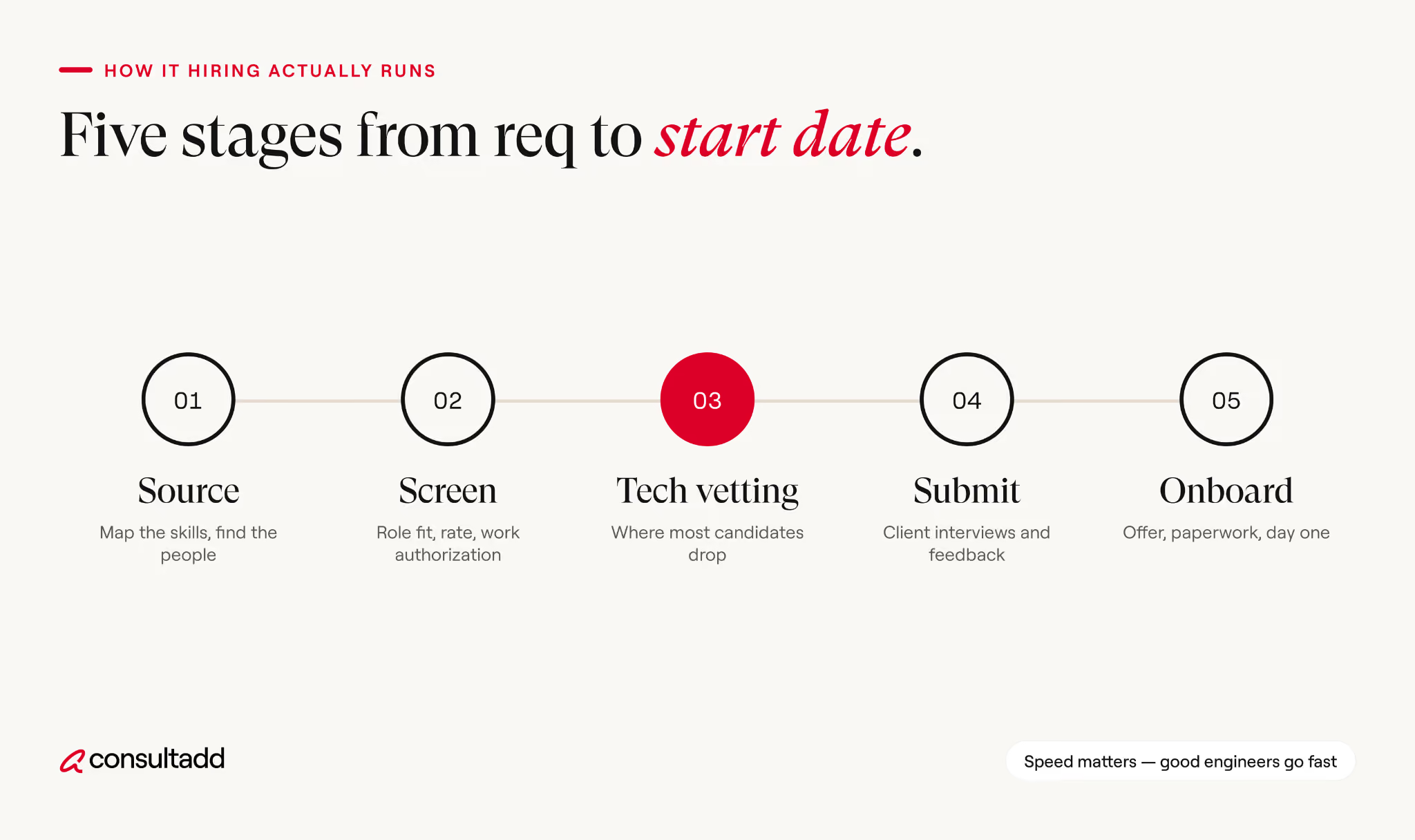
This is the operational version. Six stages, what each one should produce, how long it should take, and what to measure when it doesn't work.
One number frames the whole thing. In July 2026, US employers held 7.3 million open jobs but made only 5.1 million hires, and the hires rate sat at 3.2 percent, according to BLS Job Openings and Labor Turnover data.
Openings are plentiful. Actual hiring is slow. That gap is a process problem more than a demand problem, and process problems are fixable.
If you want the strategic context first, our breakdown of what's broken and what's working in IT recruitment covers the market conditions behind these numbers.
TL;DR
- A weak intake meeting is the single most expensive failure in the process, because every later stage inherits its ambiguity.
- Interview counts per hire have climbed sharply, which means added rounds now cost you candidates rather than better decisions.
- AI screening tools became a compliance question in 2026, with Illinois HB 3773 effective January 1 and NYC enforcement tightening.
- Measure elapsed days per stage alongside conversion per stage, or you'll optimize the wrong thing.
- Offers that sit open for days lose candidates. Speed at the close matters more than most teams account for.
The six stages and what each should produce
Durations are targets, not promises. Senior and specialized roles run longer. But if a stage consistently doubles its target, that's where your process is leaking.
Intake: the stage everyone rushes
Skipping a proper intake meeting is the most common and most expensive mistake in technical hiring. Everything downstream inherits whatever ambiguity survives this conversation.
A useful intake produces three artifacts:
1. A separated requirements list.
Must-haves and nice-to-haves in two columns, not one paragraph. Padding a job description with every desirable attribute discourages qualified people from applying and gives the recruiter no way to prioritize. If the list of must-haves runs past five items, the role is probably two roles.
2. An agreed compensation range.
Not "competitive." An actual number, confirmed with whoever approves it. Discovering a budget ceiling at offer stage wastes six weeks of everyone's time.
3. A scorecard.
What does a strong answer look like for each must-have, and who on the panel assesses which one. Without this, interviewers default to gut feel, and gut feel is where both bias and inconsistency enter.
One question worth asking the hiring manager directly: name someone currently on the team who'd be a strong fit for this role. Then look at that person's actual background. It's usually different from the job description, and the difference tells you what the role really needs.
Sourcing and outreach
Two channels do most of the work in technical hiring: direct outreach and referrals. Job boards contribute volume, and volume has become a liability rather than an asset.
On outreach response rates, LinkedIn Talent Solutions data puts personalized messages in the 18 to 25 percent range against 5 to 8 percent for templates. That gap is the entire argument for spending three minutes per message instead of thirty seconds.
What personalization actually means: reference something specific and recent from their work. A repository, a talk, a system they built. Not their job title and years of experience, which is what templates do and what candidates recognize instantly.
A practical benchmark for the first week: a first shortlist submitted within seven days of intake. If that slips, the usual cause is an unclear must-have list, which sends you back to stage one.
For roles that are genuinely hard to fill in the open market, a specialized partner with an existing bench often beats building a pipeline from zero.
Our guide to evaluating IT staffing firms covers what to ask before signing one, and IT contract staffing as a strategy explains when contract structures make a hard req easier to fill.
Screening, and the 2026 AI hiring rules
This stage changed legally in 2026, and a lot of teams haven't caught up.
If your ATS ranks or scores candidates, if a tool filters resumes automatically, or if a video interview platform analyzes responses, you may be running what the law calls an automated employment decision tool. That triggers obligations in a growing number of jurisdictions.
Two things make this more urgent than it looks:
First, a human making the final call doesn't necessarily take you outside scope. A resume-ranking score a recruiter relies on is generally treated as covered.
Second, enforcement is tightening.
A December 2025 New York State Comptroller audit of DCWP's enforcement of Local Law 144 found weaknesses in complaint handling and recommended a shift toward proactive investigation, which the agency accepted.
The practical first step is boring and useful: inventory every tool in your hiring stack and write down what each one actually scores. Most teams can't answer that question about their own ATS.
NYC's DCWP page on automated employment decision tools sets out the audit and notice mechanics if you hire there.
This is general information, not legal advice. If AI sits anywhere in your screening path, run the inventory past counsel.
The interview loop
Here's the uncomfortable finding from 2026 benchmark data. Ashby's analysis found technical interviews per hire rose 52 percent since 2021, reaching roughly 17.6, while business interviews rose 36 percent to 11.7. Gem's data puts the overall figure near 13 interviews per hire, up 42 percent in three years.
Teams added rounds to handle rising applicant volume. The result is more recruiter and interviewer hours per hire, not better hires.
Meanwhile Talent Board found 57 percent of candidates have abandoned a process for being too slow. So the added rounds are costing you the people they were meant to evaluate.
Three fixes that work:
1. Cap the loop before you start.
Decide the number of rounds at intake and treat adding one as a decision requiring a reason, not a default.
2. Make the technical assessment resemble the job.
A take-home that mirrors a real task, time-boxed to two hours, tells you more than an algorithmic puzzle and annoys candidates less. If you use a live exercise, make it collaborative rather than adversarial.
3. Schedule the loop as a block.
Pre-booked panel slots on one or two days beat scheduling each round after the previous one clears. Scheduling latency, not evaluation time, is where most of the elapsed days go.
Watch the reschedule rate too. Candidate.fyi's 2025 data found 14 percent of interviews were rescheduled and 18 percent of scheduling signals needed human intervention. Neither shows up in standard funnel reporting, and both consume days.
Offer, close, and what to measure
Offer acceptance across roles and industries sat around 82 percent in Gem's 2026 benchmarks, the highest since 2021. Technical roles run lower.
The strongest predictor of a close is how long the offer sits open. Two days versus six is a meaningful gap, and it's an early warning signal most teams don't track. If an offer is still unsigned after 72 hours, that's information, not patience.
Call the candidate before the written offer arrives. Verbal first, with the number said out loud, gives you the chance to hear hesitation and address it before it hardens into a counteroffer conversation elsewhere.
The metrics worth tracking
Treat these as reference points, not targets. Published benchmarks define stages differently, so your own trend line over two quarters is more useful than any single industry figure.
The one instruction that matters most: measure elapsed days per stage alongside conversion per stage.
A candidate who would have passed your loop but dropped out in week three shows up in your dashboard as a screening loss. The actual cause was delay. Fix the wrong thing and the number won't move.
For where demand is concentrated right now and which skills are hardest to source, our review of IT staffing trends and what's changing in tech hiring has the current picture.
Start Strong With Consultadd
With 15 years in business and 5,000+ successful staffing engagements, we don't just fill roles, we build reliability into your process. We've supported 65 staffing companies in the past year alone and maintain MSAs with industry leaders like Robert Half and TEKsystems.
Here's what working with Consultadd looks like:
- Talent sourced in under 24 hours
- Ready-to-deploy candidates, vetted for experience and compliance
- Lower turnover risk: we match long-term goals, not just short-term needs
- Seamless compliance: visa, documentation, onboarding? Handled.
- Dedicated 1:1 account managers for responsive, personalized support
- Top 100 candidate matches delivered in the past year
- Strong partnerships with universities to tap into fresh, committed talent
- Post-placement support so your investment grows beyond day one
For candidates, your next opportunity is more than just a job title, it's a chance to build skills, gain experience, and move your career forward. At Consultadd, we connect technology professionals with projects and employers that align with their goals, whether they're looking for contract, contract-to-hire, or long-term opportunities.
The tech job market moves fast, but the right guidance can make all the difference. Ready to take the next step in your career journey? Explore Opportunities >>
Key takeaways
- Recruitment in IT breaks down into six stages, and a weak intake meeting contaminates all five that follow.
- Personalized outreach converts at roughly three to four times the rate of templated messages.
- AI screening tools carry real compliance obligations as of 2026, and a human making the final call does not automatically exempt you.
- Interview counts per hire have risen sharply without improving outcomes, so cap the loop deliberately.
- Track days per stage alongside conversion per stage, since latency often masquerades as a screening problem.
FAQs
What is the IT recruitment process?
It runs from intake through onboarding: defining the role with the hiring manager, sourcing and outreach, screening, a technical interview loop, offer and close, then handoff to onboarding. Each stage should produce a specific output, and the intake stage determines the quality of everything after it.
How long should it take to fill a technical role?
SHRM's benchmarking data puts the US median time to fill at roughly 44 days across roles, with engineering positions running closer to 62 days. Specialized and senior technical roles take longer. What matters more than the absolute number is where in your own process the days accumulate.
How many interview rounds should a technical role have?
Fewer than most teams currently run. Benchmark data shows technical interviews per hire climbed more than 50 percent since 2021 without a corresponding improvement in hiring outcomes, while more than half of candidates have abandoned a process for being too slow. Decide the number at intake and treat adding a round as an exception.
Do AI screening tools create legal risk in 2026?
Yes, in a growing number of jurisdictions. NYC Local Law 144 requires an annual independent bias audit, a public summary, and advance candidate notice. Illinois HB 3773 took effect January 1, 2026 and makes discriminatory effect from AI in employment decisions a Human Rights Act violation. Colorado's requirements for employment AI began June 30, 2026.
What recruiting metrics matter most for IT hiring?
Start with three: outreach response rate, time to fill, and offer acceptance rate. Those cover sourcing quality, process speed, and close quality. Add application-to-interview and interview-to-offer conversion once the first three are stable, and always track elapsed days per stage alongside them.
Should we build an internal recruiting function or use a staffing partner?
Internal teams work well for steady, repeatable hiring where institutional knowledge compounds. Staffing partners add the most value on hard-to-fill niche roles and when speed matters more than cost per hire. Most organizations doing this well run both, with a clear rule about which reqs go where.
.webp)