.avif)

Introduction
"1099 employee" is one of those phrases that gets used constantly and technically doesn't exist.
If someone gets a 1099, they're not an employee at all, they're an independent contractor. But the term has stuck around because so many businesses genuinely aren't sure where the line sits, and getting it wrong is an expensive mistake.
So, what are the rules for 1099 employees? At the core, it comes down to classification tests set by the IRS and the Department of Labor, filing requirements once you pay a contractor over a certain amount, and a handful of practical dos and don'ts that keep the relationship from drifting into employee territory.
Get the classification wrong, and you're looking at back taxes, penalties, and potentially a Department of Labor audit. This guide walks through the actual rules, what changed for 2026, and where most businesses trip up.
TL;DR
- A 1099 contractor is self-employed and not on your payroll, so you don't withhold taxes or provide employee benefits.
- The IRS uses a common-law control test; the Department of Labor uses an economic reality test. Both look at control and independence, not just the contract's wording.
- Starting with 2026 payments, the Form 1099-NEC filing threshold rises from $600 to $2,000 under the One Big Beautiful Bill Act.
- Misclassification penalties can run into the thousands of dollars per form, plus back payroll taxes if an audit finds a worker should have been a W-2 employee.
- A written contract helps, but it doesn't override the facts of how the work actually happens day to day.
What is a 1099 contractor, exactly?
A 1099 contractor is a self-employed individual or business that performs services for a company without being on that company's payroll.
The IRS puts it plainly: the person paying for the services must report those payments on Form 1099-NEC, and the deciding factor isn't how much freedom the worker has day to day, it's whether the paying business has the legal right to control what gets done and how.
That last part trips up a lot of employers. You can give a contractor total freedom in practice, but if your contract or working arrangement gives you the right to dictate their schedule, tools, and methods, the IRS may still see an employee relationship underneath.
Contractors handle their own taxes, including self-employment tax, and typically invoice for their work rather than receiving a regular paycheck.
1099 contractor vs. W-2 employee
The classification tests that actually decide it
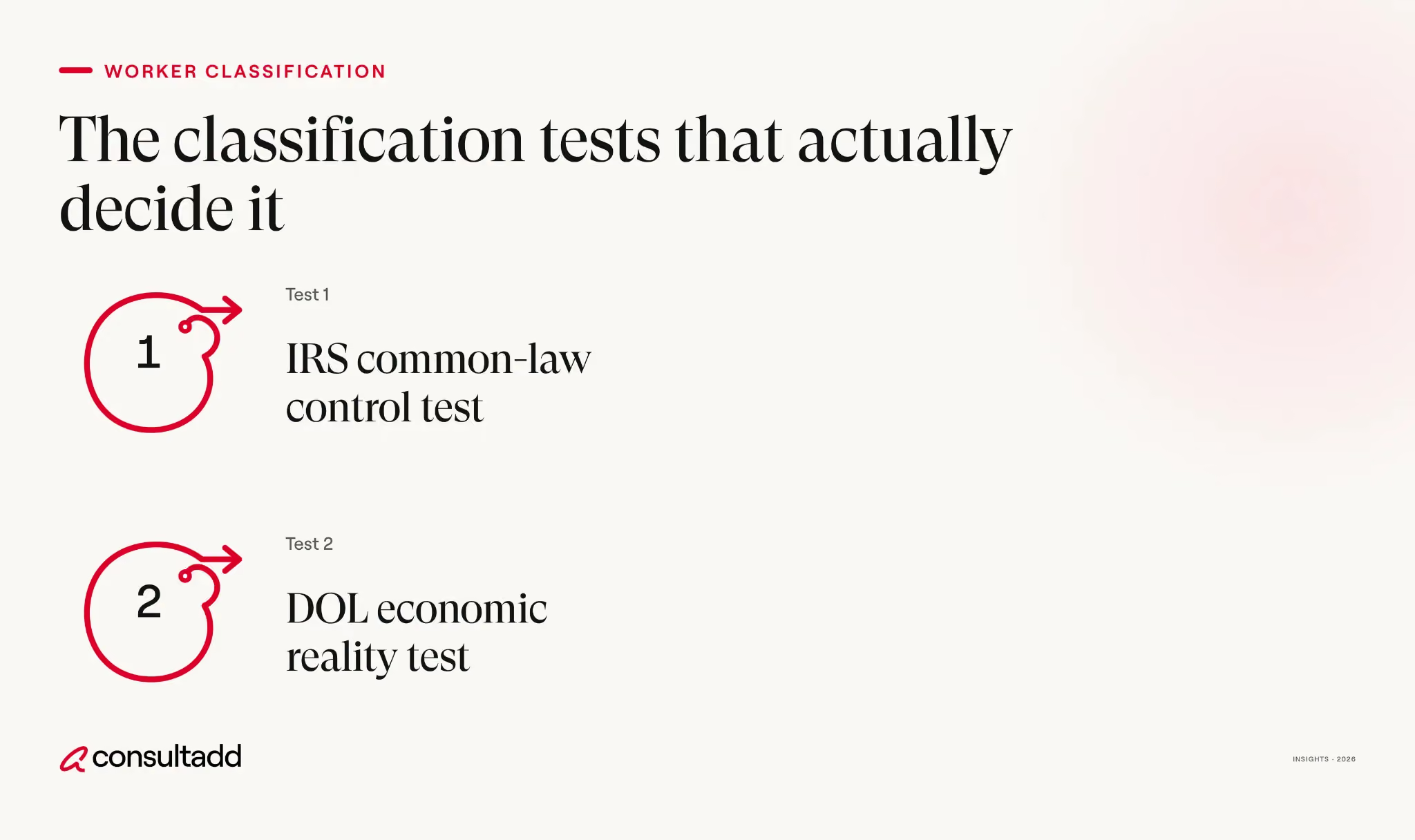
Two federal agencies care about this, and they don't use identical tests. Knowing both matters because passing one doesn't automatically mean you pass the other.
Test 1: IRS common-law control test
The IRS looks at three categories of evidence:
- Behavioral control (who directs how the work is done)
- Financial control (who bears the risk of profit or loss)
- Type of relationship (is there a contract, are benefits provided, is the work ongoing)
No single factor decides it. The IRS weighs the whole picture.
Test 2: DOL economic reality test
The Department of Labor's standard has shifted more than once in recent years, so it's worth knowing where things stand.
As of early 2026, the DOL is not enforcing the 2024 rule and has proposed reinstating an economic reality test that gives the most weight to two core factors:
- The nature and degree of control over the work
- The worker's opportunity for profit or loss based on their own initiative or investment
If those two factors point in the same direction, that's usually enough to settle the classification.
Other factors the DOL considers as supporting evidence include the worker's skill level, how permanent the relationship is, and whether the work is integral to the business.
Some states go further and apply their own ABC test, which is stricter than the federal standard and harder for a worker to pass as an independent contractor. Always check state-level rules before assuming federal classification is enough.
Filing rules for 1099 contractors in 2026
The paperwork side has changed for 2026. Under the One Big Beautiful Bill Act, the Form 1099-NEC reporting threshold rises from $600 to $2,000 starting with payments made in 2026, which businesses will report in 2027.
That means you won't need to issue a 1099-NEC for a contractor paid less than $2,000 in a calendar year, though tracking every payment still matters for your own records.
A few filing basics stay the same regardless of the threshold change:
- Collect a completed Form W-9 from every contractor before paying them, so you have their legal name, address, and taxpayer ID on file.
- Issue Form 1099-NEC by January 31 of the following year for any contractor who meets the threshold.
- Apply 24% backup withholding if a contractor doesn't provide a valid taxpayer ID.
- Payments made through PayPal, Stripe, or similar platforms typically get reported on Form 1099-K by the payment processor, not by you directly.
Missing a required filing isn't cheap. The penalty for an omitted Form 1099-NEC runs up to $340 per form for 2025 filings, with maximum penalties reaching into the millions for larger businesses, and even higher penalties if the IRS determines the omission was intentional.
Practical rules to keep the classification clean
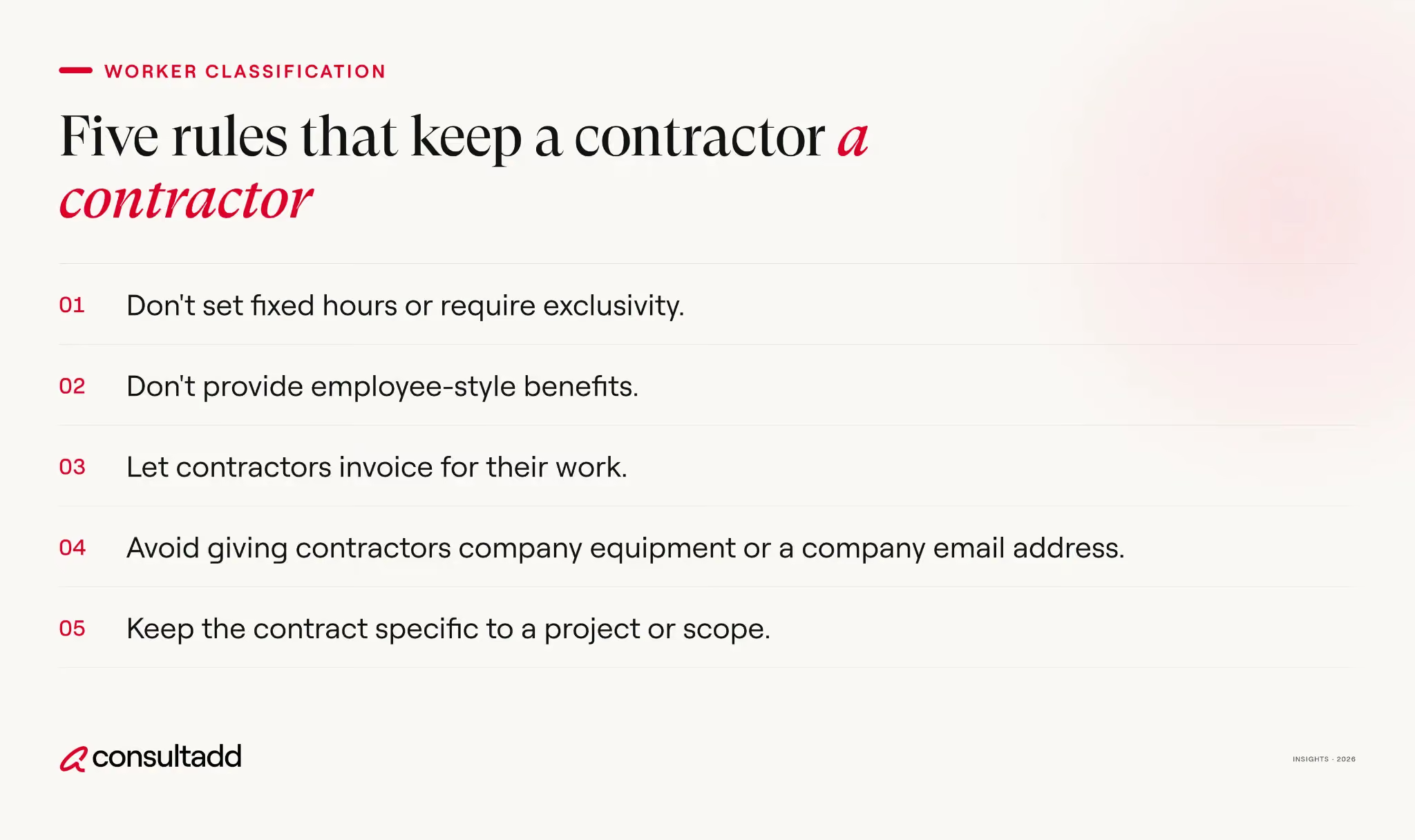
Passing a legal test on paper is one thing. Keeping the actual working relationship consistent with contractor status is another, and it's usually where businesses slip.
A few things worth building into how you manage 1099 relationships:
- Don't set fixed hours or require exclusivity. Contractors should be free to work for other clients and manage their own schedule.
- Don't provide employee-style benefits. Health insurance, paid time off, or retirement plan access all point toward employee status.
- Let contractors invoice for their work. A regular paycheck cadence looks more like payroll than a contractor relationship.
- Avoid giving contractors company equipment or a company email address, where it's practical to do so. Ownership of tools is a financial control factor.
- Keep the contract specific to a project or scope, rather than an open-ended, ongoing arrangement that never has a clear end date.
None of these guarantee compliance on their own, but ignoring them is one of the fastest ways to draw the wrong kind of attention during an audit.
What happens if you misclassify a worker
If an audit or a worker's own complaint finds that a 1099 contractor should have been a W-2 employee, the business is generally on the hook for back payroll taxes, unpaid overtime if applicable, and potential penalties on top.
This is exactly the kind of risk that makes flexible staffing models worth structuring properly from the start.
For companies unsure whether a role fits contractor status, models like contract-to-hire or working through a staffing partner for Corp-to-Corp arrangements can reduce classification risk, since the staffing agency, not the client company, often carries the payroll and compliance responsibility.
This is also part of why staff augmentation has become a common middle ground for companies that need flexible capacity without taking on direct misclassification exposure.
Start Strong With Consultadd
With 15 years in business and 5,000+ successful staffing engagements, we don't just fill roles, we build reliability into your process. We've supported 65 staffing companies in the past year alone and maintain MSAs with industry leaders like Robert Half and TEKsystems.
Here's what working with Consultadd looks like:
- Talent sourced in under 24 hours
- Ready-to-deploy candidates, vetted for experience and compliance
- Lower turnover risk: we match long-term goals, not just short-term needs
- Seamless compliance: visa, documentation, onboarding? Handled.
- Dedicated 1:1 account managers for responsive, personalized support
- Top 100 candidate matches delivered in the past year
- Strong partnerships with universities to tap into fresh, committed talent
- Post-placement support so your investment grows beyond day one
For candidates, your next opportunity is more than just a job title, it's a chance to build skills, gain experience, and move your career forward. At Consultadd, we connect technology professionals with projects and employers that align with their goals, whether they're looking for contract, contract-to-hire, or long-term opportunities.
The tech job market moves fast, but the right guidance can make all the difference. Ready to take the next step in your career journey? Explore Opportunities >>
Key takeaways
- A 1099 contractor is self-employed, not an employee, so there's no tax withholding or benefits obligation on the employer's side.
- The IRS common-law test and the DOL economic reality test both weigh control and independence, and passing one doesn't guarantee you pass the other.
- The 1099-NEC filing threshold rises to $2,000 for 2026 payments, up from $600, under the One Big Beautiful Bill Act.
- How the relationship actually operates, schedule, exclusivity, benefits, equipment, matters more than what the contract says.
- Misclassification penalties include IRS fines per form plus potential back payroll taxes, so getting the classification right upfront is worth the extra diligence.
FAQs
Can a 1099 contractor work full-time hours for one company?
They can, but doing so consistently is a red flag for misclassification, since full-time exclusivity looks more like an employment relationship than an independent contractor engagement.
Do I need a written contract for a 1099 worker?
It's strongly recommended, though not legally required in every case. A written agreement helps document scope, payment terms, and the independent nature of the relationship, but it won't override the actual facts of how the work happens.
What is the penalty for misclassifying an employee as a 1099 contractor?
Penalties vary by circumstance but can include back payroll taxes, unpaid overtime, fines per missed filing, and in some cases state-level penalties if the misclassification affected unemployment insurance or workers' compensation contributions.
Do 1099 contractors get overtime pay?
No. Overtime protections under the Fair Labor Standards Act apply to employees, not independent contractors, which is part of why correct classification matters so much for wage and hour compliance.
What is the 1099-NEC threshold for 2026?
Starting with payments made in 2026, the reporting threshold for Form 1099-NEC increases from $600 to $2,000 under the One Big Beautiful Bill Act, though businesses should still track all contractor payments internally.
Does a signed contract guarantee contractor status?
No. Both the IRS and the Department of Labor look at the actual working relationship, not just contract language. A contract calling someone an independent contractor doesn't protect a business if the real working conditions resemble employment.


.webp)