


Introduction
You've probably seen the phrase on a job application, a loan form, or a tax document, and paused for a second before answering.
Employment status sounds like it should be simple, and in some ways it is, but the term actually carries two different meanings depending on where you encounter it.
At its core, employment status describes the nature of someone's working relationship: whether they're working at all, and if so, under what kind of arrangement.
Mixing them up is how people end up confused on paperwork, and how employers end up in front of an auditor.
This post gives you the plain definition, shows where the term actually shows up in daily life, and breaks down the categories so you're not guessing the next time a form asks.
TL;DR
- Employment status means the classification of a person's working relationship, and it determines legal rights, tax treatment, and benefit eligibility.
- The term has two distinct uses: a labor-force sense (employed, unemployed, not in the labor force) and a legal or tax sense (employee, independent contractor, and similar categories).
- You'll be asked for it on job applications, tax forms, loan applications, background checks, and unemployment claims, and each context cares about a slightly different version of the answer.
- The IRS uses a three-part test behavioral control, financial control, and the relationship of the parties, to decide whether someone is an employee or a contractor.
- Getting employment status wrong isn't just a paperwork issue. It can trigger back taxes, denied benefits, or legal exposure for whoever got the classification wrong.
What employment status actually means
As mentioned earlier, employment status tells the nature of someone's working relationship: whether they're working at all, and if so, under what kind of arrangement. That single phrase carries legal weight because it determines who withholds taxes, who's on the hook for benefits, and what protections apply if something goes wrong.
Here's the part that trips people up. Employment status isn't one fixed concept. It shifts meaning depending on who's asking and why.
Employment status has two different meanings
The labor-force sense
Government agencies like the Bureau of Labor Statistics use employment status to describe where someone sits in the labor market.
Their Current Population Survey definitions split the working-age population into three groups: employed, unemployed, and not in the labor force.
- Employed means you worked or had a job to return to during the survey week.
- Unemployed means you're jobless but actively looking.
- Not in the labor force covers everyone else, students, retirees, caregivers, people who've stopped looking for work.
This version of employment status shows up on economic reports and government surveys. It's rarely what a form is asking about when you're filling out paperwork for a specific job or loan.
The legal and tax sense
This is the version most people actually run into. It describes whether you're an employee of a specific business or an independent contractor, and that distinction changes everything from tax withholding to who pays for your health insurance.
The IRS looks at three categories of evidence to sort this out:
- How much control the business has over how the work gets done
- Who controls the financial side of the arrangement
- How the relationship is structured on paper and in practice.
Neither factor decides things alone. The IRS explicitly says no single fact settles the question, which is exactly why classification disputes happen so often.
Where you'll actually be asked for your employment status
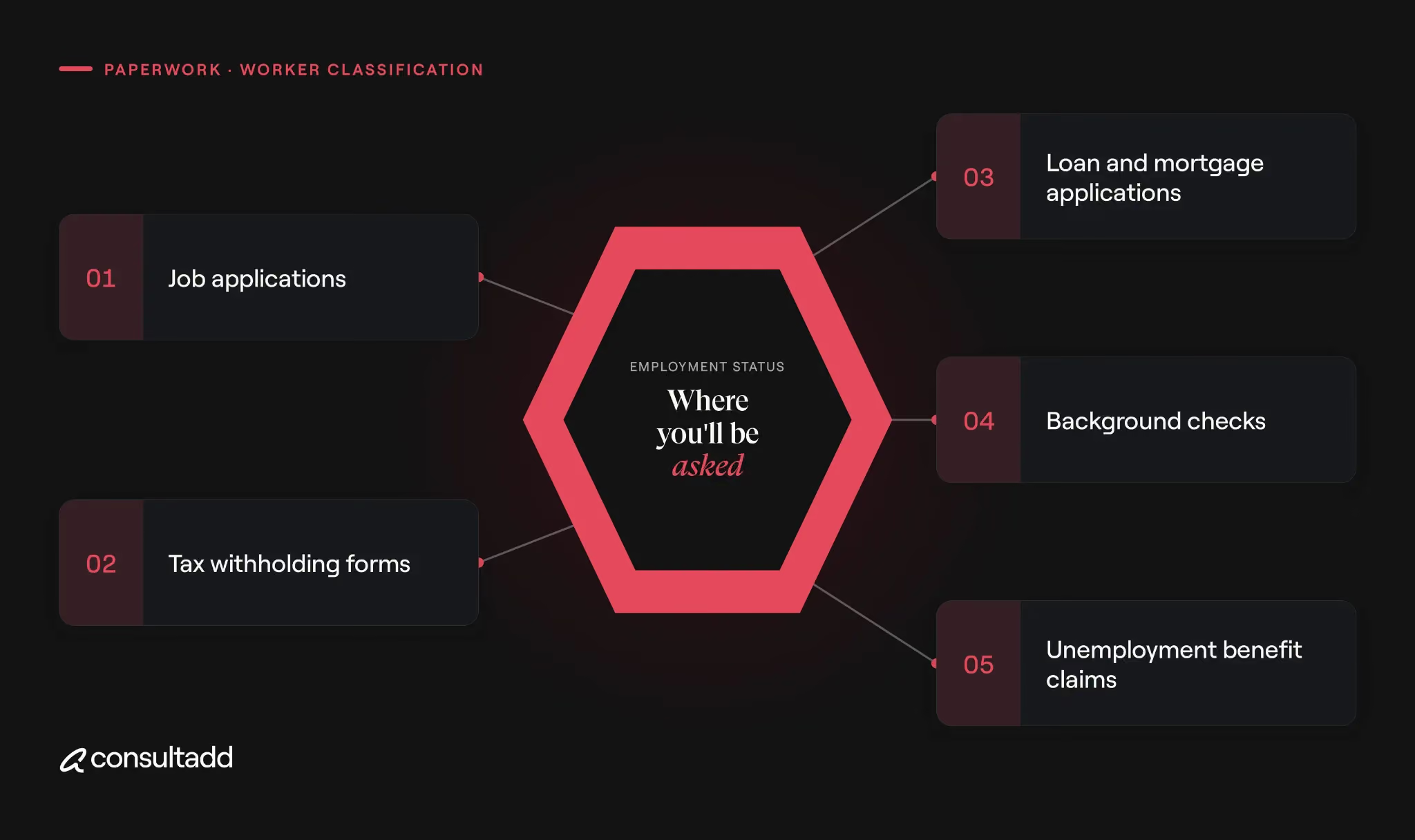
- Job applications: usually asking whether you're currently employed, unemployed, self-employed, or a student, mostly to understand your availability and background.
- Tax withholding forms: a W-4 signals you're being treated as an employee, while a W-9 signals you're being treated as a contractor, and the two carry very different tax consequences.
- Loan and mortgage applications: lenders want to know if your income is steady and verifiable, which is why self-employed applicants often face extra documentation requirements.
- Background checks and verification requests: employers or agencies confirming your current or past employment status as part of due diligence.
- Unemployment benefit claims: state agencies need to confirm you were an employee (not a contractor) to determine benefit eligibility.
The main employment status categories
Employee, full-time or part-time
An employee works under the direction of an employer, who withholds payroll taxes and typically offers some combination of benefits.
Full-time usually means 30 to 40-plus hours a week with fuller benefits eligibility. Part-time means fewer scheduled hours and often more limited benefits.
Independent contractor or self-employed
Contractors and self-employed individuals operate their own business, even if that business is just themselves. They handle their own tax payments, aren't covered by most employer-provided benefits, and generally have more control over how and when the work gets done.
If you want a deeper look at how this plays out for corp-to-corp arrangements specifically, our post on C2C employment explained breaks down how that structure compares to W2 and 1099 work.
Temporary or agency worker
Someone placed by a staffing agency to work at a client site. The legal employer of record is often the agency, not the company where the work actually happens, which is its own layer of classification to get right.
Unemployed or not in the labor force
Covered above under the labor-force sense: jobless and looking (unemployed) versus jobless and not looking (not in the labor force), a distinction that matters for benefit eligibility and government statistics but rarely appears on a standard job or loan application.
Quick reference: what each status typically means
How employment status gets determined
For the legal and tax version of employment status, the test comes down to control. Does the business direct how, when, and where the work gets done, or does the worker set their own terms?
The IRS frames this through behavioral control, financial control, and the nature of the relationship, and courts have applied similar logic for decades.
No single factor wins on its own; the full picture of the working relationship is what counts, which is exactly why a written contract calling someone a "contractor" doesn't override how the work actually functions day to day.
Where the term shows up, and what it affects
Employment status vs. terms people confuse it with
Employment status vs. job title
- A job title describes what someone does.
- Employment status describes the legal and tax nature of the relationship they do it under.
A "senior developer" could be a full-time employee, a C2C contractor, or an agency-placed temp, all with the same title and completely different classification.
Employment status vs. work authorization
These get confused constantly, and they're not the same thing.
- Employment status is about the nature of the working relationship.
- Work authorization is about whether someone is legally permitted to work in a given country at all.
Our guide on what work authorization actually means goes deeper on how that piece fits alongside classification, especially for visa-sponsored hires.
Comparing the terms at a glance
Why getting employment status right matters
Getting the classification wrong isn't a minor paperwork slip. Treat a contractor like an employee in practice while calling them independent on paper, and you're exposed to back taxes, penalties, and legal claims regardless of what the contract says.
This is exactly why staffing engagements need documented, consistent classification from day one rather than a label chosen for convenience.
If you're a hiring manager sorting through full-time, part-time, and contractual arrangements for your own team, our deeper guide on types of employment status walks through how to match the right classification to each role.
Start Strong With Consultadd
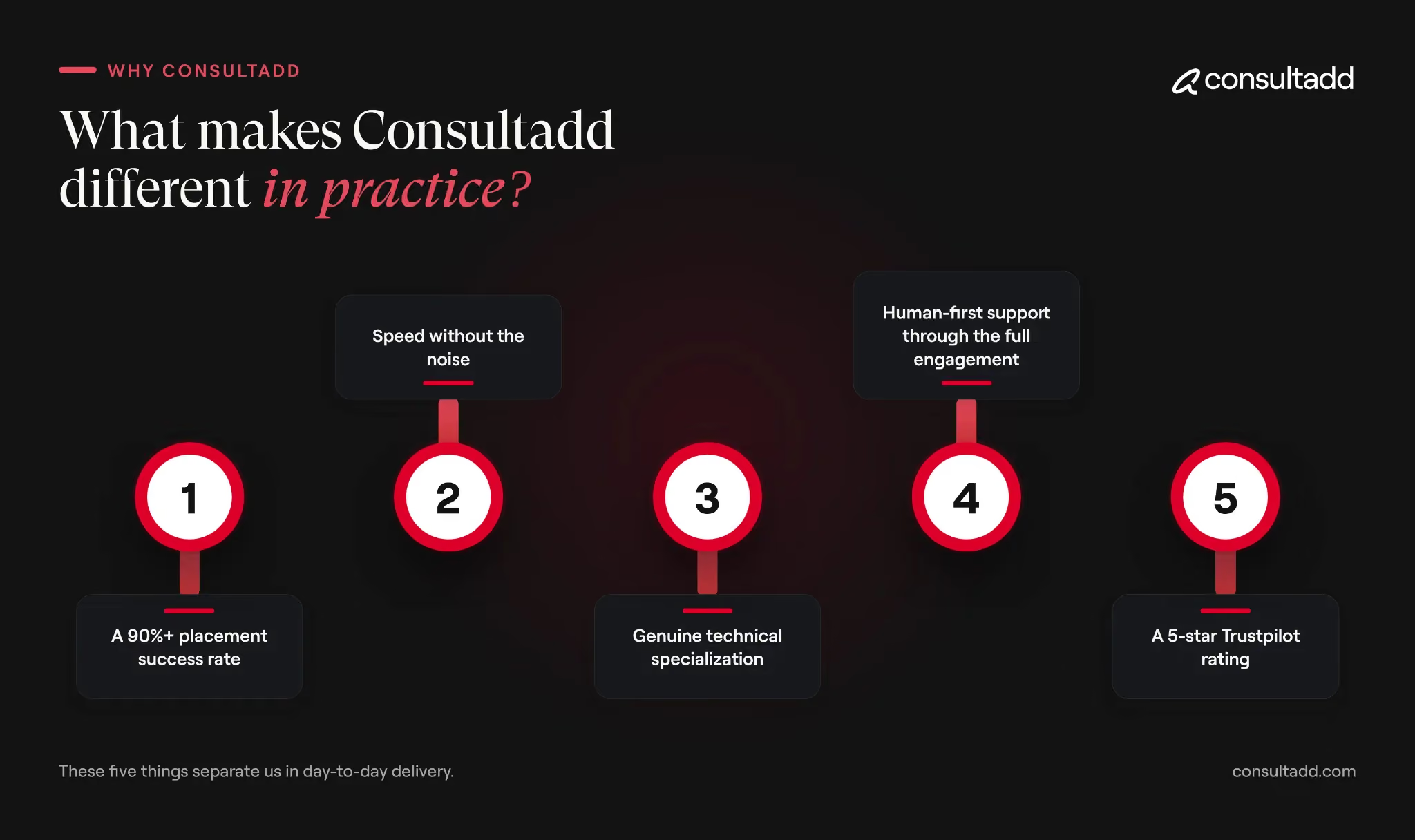
With 15 years in business and 5,000+ successful staffing engagements, we don't just fill roles, we build reliability into your process. We've supported 65 staffing companies in the past year alone and maintain MSAs with industry leaders like Robert Half and TEKsystems.
Here's what working with Consultadd looks like:
- Talent sourced in under 24 hours
- Ready-to-deploy candidates, vetted for experience and compliance
- Lower turnover risk: we match long-term goals, not just short-term needs
- Seamless compliance: visa, documentation, onboarding? Handled.
- Dedicated 1:1 account managers for responsive, personalized support
- Top 100 candidate matches delivered in the past year
- Strong partnerships with universities to tap into fresh, committed talent
- Post-placement support so your investment grows beyond day one
For candidates, your next opportunity is more than just a job title, it's a chance to build skills, gain experience, and move your career forward. At Consultadd, we connect technology professionals with projects and employers that align with their goals, whether they're looking for contract, contract-to-hire, or long-term opportunities.
The tech job market moves fast, but the right guidance can make all the difference. Ready to take the next step in your career journey? Explore Opportunities >>
Key Takeaways
- Employment status describes the nature of a working relationship, and it carries different meanings depending on whether you're looking at labor-force data or legal and tax classification.
- The labor-force sense covers employed, unemployed, and not in the labor force. The legal sense covers employee, contractor, and similar categories.
- You'll encounter the term on job applications, tax forms, loan applications, background checks, and unemployment claims, each caring about a slightly different angle of it.
- The IRS decides employee versus contractor status using behavioral control, financial control, and the relationship of the parties, not any single factor alone.
- Employment status, job title, and work authorization are three separate concepts that frequently get confused but answer completely different questions.
FAQs
What does employment status mean on a job application?
It usually asks whether you're currently employed, unemployed, self-employed, or a student. Employers use this to understand your availability and recent work background before moving forward with your application.
What is the difference between employment status and job title?
Job title describes the role or function someone performs. Employment status describes the legal and tax classification of the working relationship, such as employee or independent contractor, regardless of what the job is called.
Is self-employed an employment status?
Yes. Self-employed individuals operate their own business and handle their own taxes, which makes it a distinct legal and tax classification separate from being an employee of another company.
How is employment status different from work authorization?
Employment status describes the nature of a working relationship, like employee versus contractor. Work authorization describes whether someone has legal permission to work in a country at all. A person can have valid work authorization and still be classified under different employment statuses.
What happens if an employer gets employment status wrong?
Misclassifying an employee as an independent contractor can lead to back taxes, missed benefit contributions, and legal penalties, since regulators look at the actual working relationship rather than the label on a contract.
Why does the Bureau of Labor Statistics define employment status differently than the IRS?
The BLS is measuring labor market participation, employed, unemployed, or not in the labor force, for economic statistics. The IRS is determining tax and legal classification, employee versus contractor, for a specific working relationship. Both use the same term for genuinely different purposes.
.webp)



.webp)