

Introduction
Most paths to a US green card run through an employer, a family member, or a lottery. The EB-5 runs through your capital.
So what is an EB5 visa? It's the US immigrant investor program: invest $800,000 or more in an American business that creates at least 10 full-time jobs, and you, your spouse, and your unmarried children under 21 can qualify for permanent residency.
Congress created the program in 1990 to pull foreign investment into the US economy, and the EB-5 Reform and Integrity Act of 2022 (RIA) rebuilt it with stronger investor protections and stricter oversight.
In 2026 it's drawing more attention than it has in years, partly because H-1B professionals facing long green card backlogs have discovered that EB-5 lets many of them file for a green card and work authorization at the same time, without waiting on an employer.
This guide explains how the program works, what it costs, the step-by-step process, and the deadlines that make 2026 an unusually consequential year to understand it.
TL;DR
- The EB-5 visa grants US permanent residency to investors who put $800,000 (in a targeted employment area) or $1,050,000 (elsewhere) into a US enterprise that creates 10 full-time jobs.
- The investment must be genuinely at risk: guaranteed returns or guaranteed repayment disqualify the petition.
- Most investors go through USCIS-approved regional centers, which pool investments into large projects and count indirect jobs toward the 10-job requirement.
- Investors already in the US on H-1B, F-1, or similar status can often file the green card application concurrently, unlocking work and travel permits while the petition is pending.
- Current investment amounts hold through 2026, but an inflation adjustment arrives in January 2027 and a DHS proposal would push the non-TEA minimum to $1.4 million, so timing matters.
What is an EB5 visa and how does it work?
EB-5 stands for "employment-based, fifth preference," its slot in the US immigrant visa system. Unlike the H-1B or L-1, it's not a temporary work visa; it's an immigrant visa that leads directly to a green card.
Roughly 10,000 EB-5 visas are available each year, with portions set aside for rural and high-unemployment area investments.
The bargain at the center of the program is simple: the US gets job-creating capital, and the investor gets residency. The USCIS EB-5 program page frames it around three elements: a qualifying investment, in a new commercial enterprise, that creates jobs for US workers.
Approval doesn't produce a permanent green card immediately. Investors first receive conditional permanent residency valid for two years, essentially a probation period. Near the end of it, they must prove the investment was sustained and the jobs materialized.
Pass that test and the conditions come off, making the green card permanent and opening the standard five-year path to citizenship.
The whole family benefits from one investment: spouse and unmarried children under 21 are included as derivatives, which is a large part of why parents planning around a child's education often drive these cases.
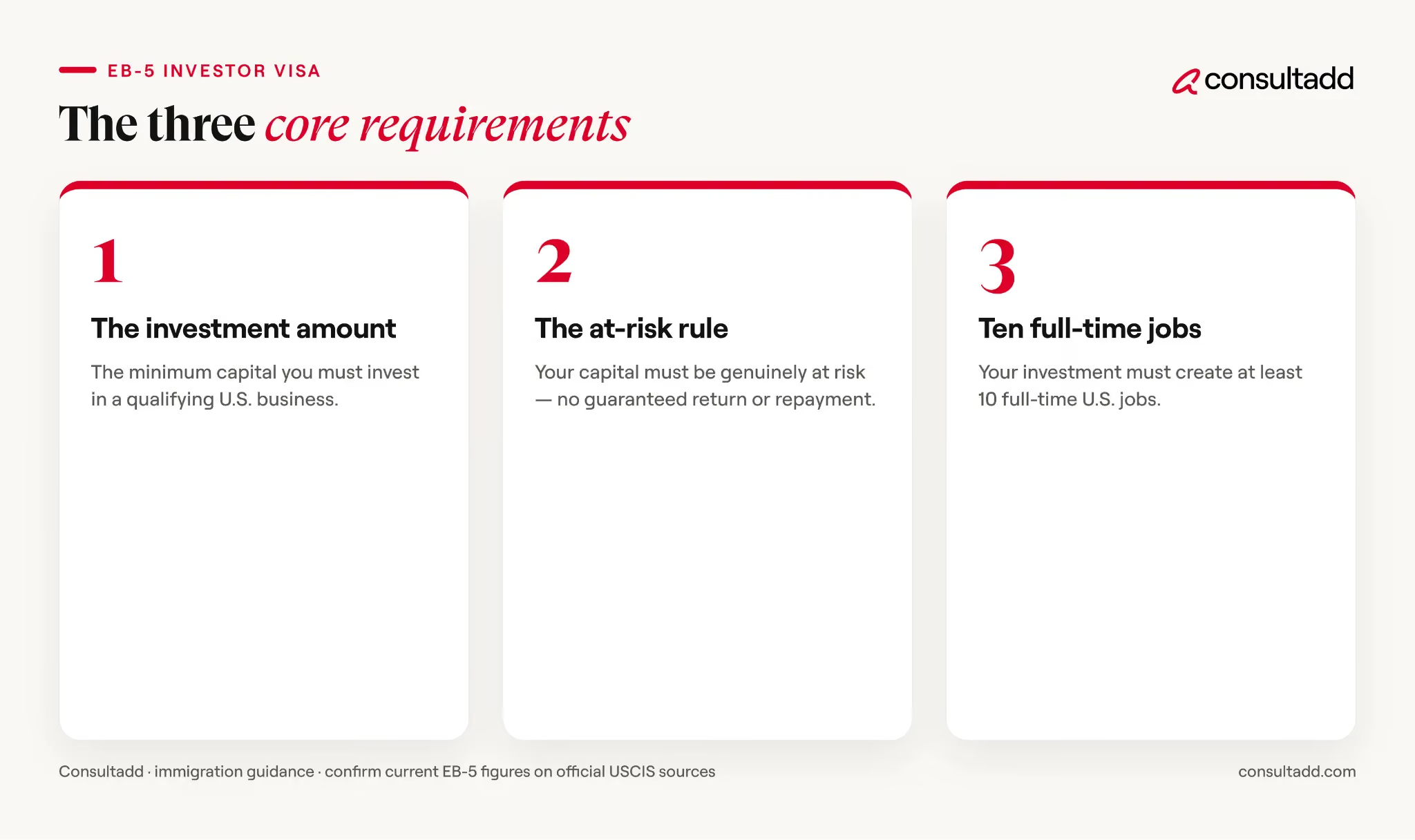
The three core requirements
1. The investment amount
How much you must invest depends entirely on where the project sits:
These thresholds were set by the RIA in 2022 and hold through 2026. Two changes loom: the RIA schedules an inflation adjustment for January 1, 2027, and a DHS rule proposed on July 2, 2026 would raise the non-TEA minimum to $1.4 million if finalized.
Neither affects petitions filed under today's amounts, which is exactly why filing timing has become a strategy conversation.
The capital must also be lawfully sourced and documented exhaustively: salary records, business sale documents, property transactions, gift letters, tax returns.
Source-of-funds review has visibly tightened since 2025, and thin documentation is now the fastest route to a request for evidence.
2. The At-Risk rule
The investment must be genuinely at risk of loss, with no guaranteed return and no guaranteed buyback. That's not an unfortunate side effect; it's a legal requirement. Any arrangement that promises your money back disqualifies the petition. This doesn't mean projects must be reckless, but it does mean EB-5 is an investment decision as much as an immigration one, and due diligence on the project is as important as the legal filing.
3. Ten Full-Time Jobs
Each investment must create at least 10 full-time positions for US workers within the required period. How jobs are counted depends on the investment route, which brings us to the biggest structural choice in the program.
Direct investment vs regional centers
Regional centers dominate because indirect job counting makes the 10-job requirement far easier to satisfy in large construction and development projects, and because most investors don't want to personally employ 10 people.
The trade-off is that you're trusting a project sponsor with your capital, so the RIA added mandatory audits, fund administration rules, and an EB-5 Integrity Fund to police the industry. Sensible diligence still applies: track record, capital structure, exit strategy, and independent review of offering documents.
The EB-5 process, step by step
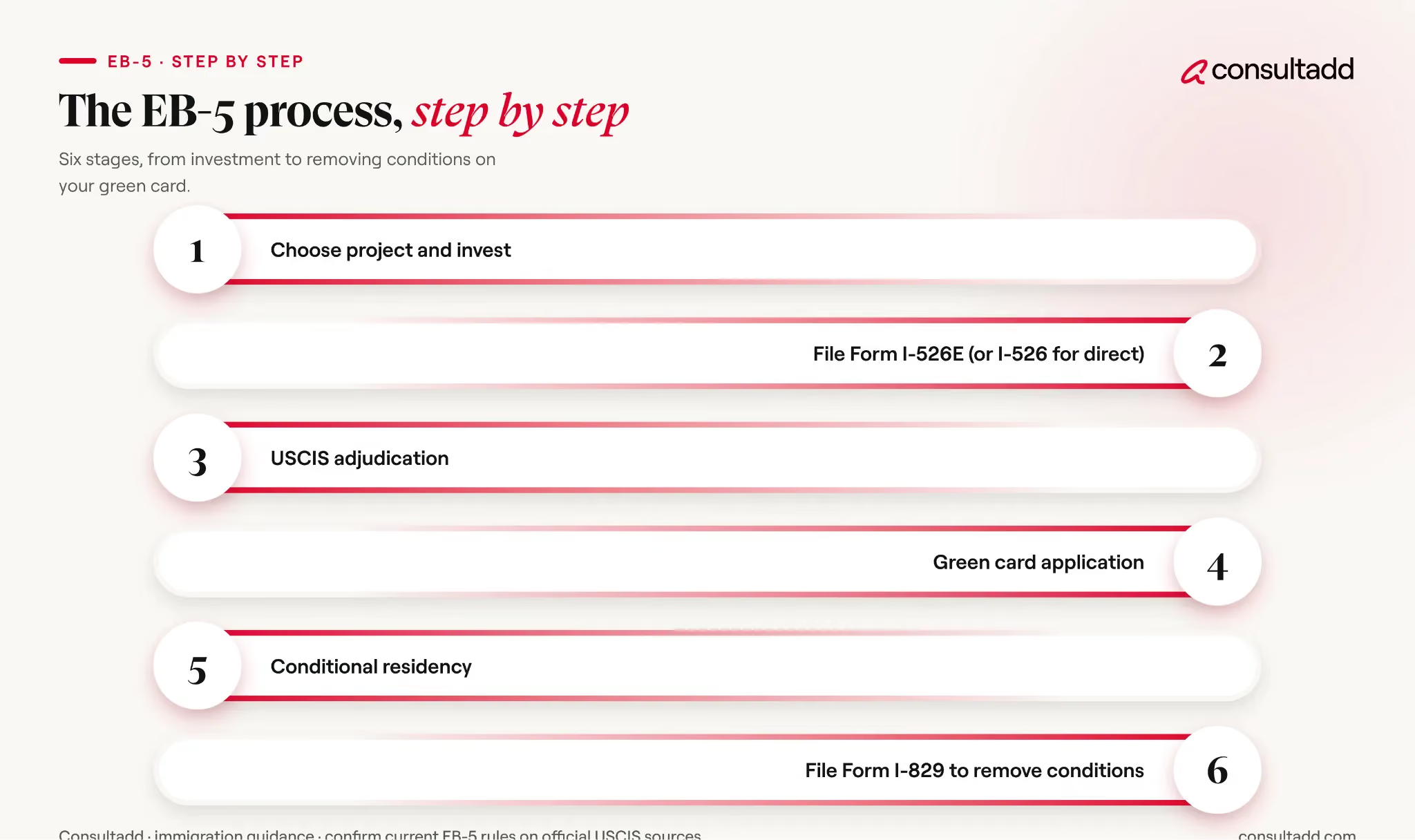
Two practical notes:
- First, visa availability depends on your country of birth: applicants from countries with heavy EB-5 demand, notably China and India, can face additional waits governed by the State Department Visa Bulletin, though the RIA's rural and high-unemployment set-aside categories have offered faster lanes.
- Second, total cost exceeds the investment itself: expect administrative fees, legal fees, and USCIS filing fees (including the RIA's $1,000 Integrity Fund fee) to add a meaningful amount on top, so budget beyond the headline number.
Why H-1B holders are looking at EB-5
Here's the development that moved EB-5 from a niche wealth-migration tool into mainstream conversation among tech professionals:
- Since the RIA, investors already in the US in valid status can file their I-485 adjustment of status at the same time as their EB-5 petition, when a visa number is available. Filing the I-485 unlocks an employment authorization document (EAD) and advance parole travel permit while everything is pending.
- In plain terms, an H-1B engineer who invests in EB-5 can gain work authorization independent of any employer, stop worrying about layoffs ending their status, change jobs freely, and let their spouse work without restriction.
- For Indian nationals staring at employment-based green card backlogs measured in decades, that trade is compelling for those with access to the capital. It's also reshaping employer conversations: sponsorship remains the standard path.
Our guide to H-1B sponsorship for tech professionals covers how that works, but rising sponsorship costs, including the fallout we analyzed in the H-1B $100K fee ruling, have pushed both companies and candidates to study alternatives seriously.
The caution belongs here too: EB-5 requires $800,000 of genuinely at-risk capital with lawful, documented origins. It's a fit for a specific slice of professionals and families, not a universal escape hatch, and anyone considering it should engage an experienced immigration attorney and independent financial advice before wiring anything.
Deadlines and changes to watch in 2026
Three dates define the current moment.
- September 30, 2026: The Grandfathering Deadline. Investors who file their EB-5 petition on or before this date are statutorily protected under current law, meaning their cases continue processing even if the regional center program later lapses when its authorization runs out in 2027. Filing after this date, under current rules, carries reauthorization risk that filing before it does not. This deadline, more than anything else, is compressing 2026 decision timelines.
- January 1, 2027: The Inflation Adjustment. The RIA ties investment minimums to inflation on a five-year cycle, with the first adjustment scheduled for the start of 2027. Today's $800,000 and $1,050,000 figures are a known quantity only through the end of 2026.
- The DHS Proposed Rule. Published July 2, 2026, it would codify RIA-era practices and raise the non-TEA threshold to $1.4 million. It's a proposal, not law, but it signals the direction of travel: amounts go up, scrutiny goes up, and documentation standards go up.
None of this changes what the EB-5 fundamentally is: the most direct green card path US law offers to those who can fund it, in exchange for real risk and real job creation. Whether it's the right path depends on your capital, your country of birth, your timeline, and your appetite for investment risk, questions worth settling with professional advice well before the deadlines settle them for you.
Start strong with Consultadd
With 15 years in business and 5,000+ successful staffing engagements, we don't just fill roles, we build reliability into your process. We've supported 65 staffing companies in the past year alone and maintain MSAs with industry leaders like Robert Half and TEKsystems.
Here's what working with Consultadd looks like:
- Talent sourced in under 24 hours
- Ready-to-deploy candidates, vetted for experience and compliance
- Lower turnover risk: we match long-term goals, not just short-term needs
- Seamless compliance: visa, documentation, onboarding? Handled.
- Dedicated 1:1 account managers for responsive, personalized support
- Top 100 candidate matches delivered in the past year
- Strong partnerships with universities to tap into fresh, committed talent
- Post-placement support so your investment grows beyond day one
For candidates, your next opportunity is more than just a job title, it's a chance to build skills, gain experience, and move your career forward. At Consultadd, we connect technology professionals with projects and employers that align with their goals, whether they're looking for contract, contract-to-hire, or long-term opportunities.
The tech job market moves fast, but the right guidance can make all the difference. Ready to take the next step in your career journey? Explore Opportunities >>
Key takeaways
- The EB5 visa is the US immigrant investor program: invest $800,000 (TEA) or $1,050,000 (non-TEA) in a job-creating US enterprise and qualify for green cards covering your spouse and children under 21.
- The investment must be lawfully sourced, thoroughly documented, and genuinely at risk, and it must create 10 full-time US jobs.
- Most investors use regional centers, where pooled projects and indirect job counting make compliance more achievable than running your own 10-employee business.
- Concurrent filing lets in-status investors (including H-1B holders) apply for adjustment of status immediately, gaining employer-independent work and travel authorization while the case is pending.
- The September 30, 2026 grandfathering deadline, the January 2027 inflation adjustment, and a proposed $1.4 million non-TEA minimum make this a year where timing genuinely changes outcomes.
FAQs
What is an EB5 visa in simple terms?
It's a US green card obtained through investment. Put at least $800,000 into an American business that creates 10 full-time jobs, and you, your spouse, and your unmarried children under 21 can become permanent residents. After roughly five years of residency, citizenship becomes possible.
How much money do you need for an EB-5 visa?
The minimum is $800,000 for projects in targeted employment areas (rural or high-unemployment locations) and $1,050,000 elsewhere. Administrative, legal, and filing fees add tens of thousands on top. These amounts hold through 2026, with an inflation adjustment scheduled for January 2027 and a proposed rule that would raise the non-TEA figure to $1.4 million.
Can the EB-5 investment be refunded?
Not on a guaranteed basis. The law requires capital to remain genuinely at risk, so any promised return or buyback disqualifies the petition. Well-structured projects plan for eventual repayment after the required period, but repayment depends on project performance and is never assured.
What is a targeted employment area (TEA)?
A TEA is either a rural area or a location with unemployment at least 150% of the national average, as designated under RIA rules. Investing in a TEA lowers the minimum investment to $800,000 and, for rural projects, can mean faster processing thanks to set-aside visa allocations and priority adjudication.
Can H-1B visa holders apply for EB-5?
Yes, and it's one of the program's fastest-growing use cases. H-1B holders with lawful funds can invest and, when a visa number is available, file their I-526E petition and I-485 adjustment concurrently. That filing brings work and travel authorization independent of their employer while the green card processes.
How long does the EB-5 process take?
Plan in years, not months. Petition adjudication commonly runs two to four years or more, though rural set-aside cases often move faster. After approval comes conditional residency for two years, then the I-829 filing to make it permanent. Applicants born in high-demand countries may also wait on visa availability per the monthly Visa Bulletin.
.png)


.webp)