
Contracts
%20(1).avif)
What is L1A Visa? Requirements, Timeline, and Green Card Path
Introduction
What is L1A visa, and why do so many multinational companies rely on it instead of other work visa categories?
In plain terms, it's the visa that lets a company move one of its managers or executives from an office abroad into a U.S. office, without going through the H-1B lottery or a labor certification process.
That makes it one of the more efficient routes into the U.S. for the right candidate, but it's also narrower than people expect. Not every transferred employee qualifies, and the paperwork burden on the employer is real.
Here's what actually determines whether an L1A petition gets approved, how long the status lasts, and what happens after.
TL;DR
- L1A is for executives and managers being transferred from a foreign office to a related U.S. company, not for general employees.
- The employee needs one continuous year of qualifying work abroad within the three years before filing.
- Initial status runs up to three years (one year for new U.S. offices), extendable to a maximum of seven years total.
- L1A doesn't require labor certification, which makes it a faster path to a green card through the EB-1C category than most other work visas.
- USCIS approval rates for L1A run high, but Requests for Evidence are common when the managerial role or corporate relationship isn't documented clearly.
What the L1A visa actually is
According to USCIS, the L-1A classification lets a U.S. employer transfer an executive or manager from an affiliated foreign office into one of its U.S. offices.
It also covers a separate situation: a foreign company that doesn't yet have a U.S. office can send an executive or manager to establish one.
The visa exists specifically for intracompany moves. It's not a general work visa a company can use to hire someone off the open market.
The employee has to already be working for a related entity abroad, and the U.S. side of the business has to have (or be actively building toward) a real qualifying relationship with that foreign company.
Who actually qualifies
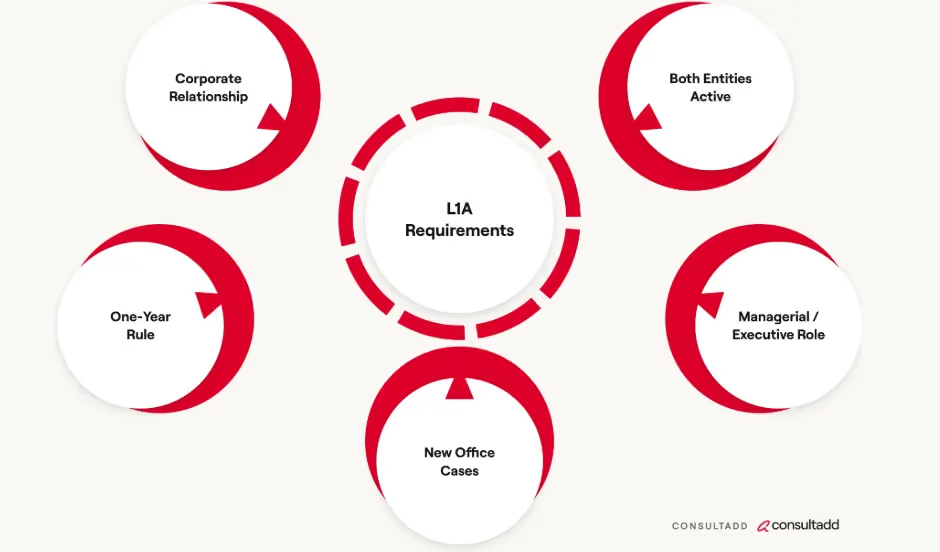
Two separate sets of requirements have to line up: one for the employer, one for the employee.
For the employer,
- USCIS requires a qualifying relationship between the U.S. company and the foreign company, structured as a parent, subsidiary, branch, or affiliate.
- Both sides need to be actually doing business, not just maintaining a name on paper.
- If the U.S. side is a brand-new office, the petition needs to show adequate physical premises and a credible plan for that office to support an executive or managerial position within its first year.
For the employee,
- The core requirement is straightforward on paper but strict in practice: at least one continuous year of employment abroad with the qualifying organization, completed within the three years immediately before filing, in a role that was genuinely managerial or executive.
- The new U.S. position also has to be genuinely managerial or executive, not a title change that doesn't reflect real authority over people, budgets, or a function.
USCIS looks at the org chart, reporting lines, and actual day-to-day duties to decide whether the role genuinely fits the legal definition of managerial or executive capacity, and gaps in that documentation are one of the more common reasons petitions get a Request for Evidence.
L1A versus L1B
The L1A and L1B categories often get confused because they cover the same basic mechanism, an intracompany transfer, but they're built for different kinds of employees.
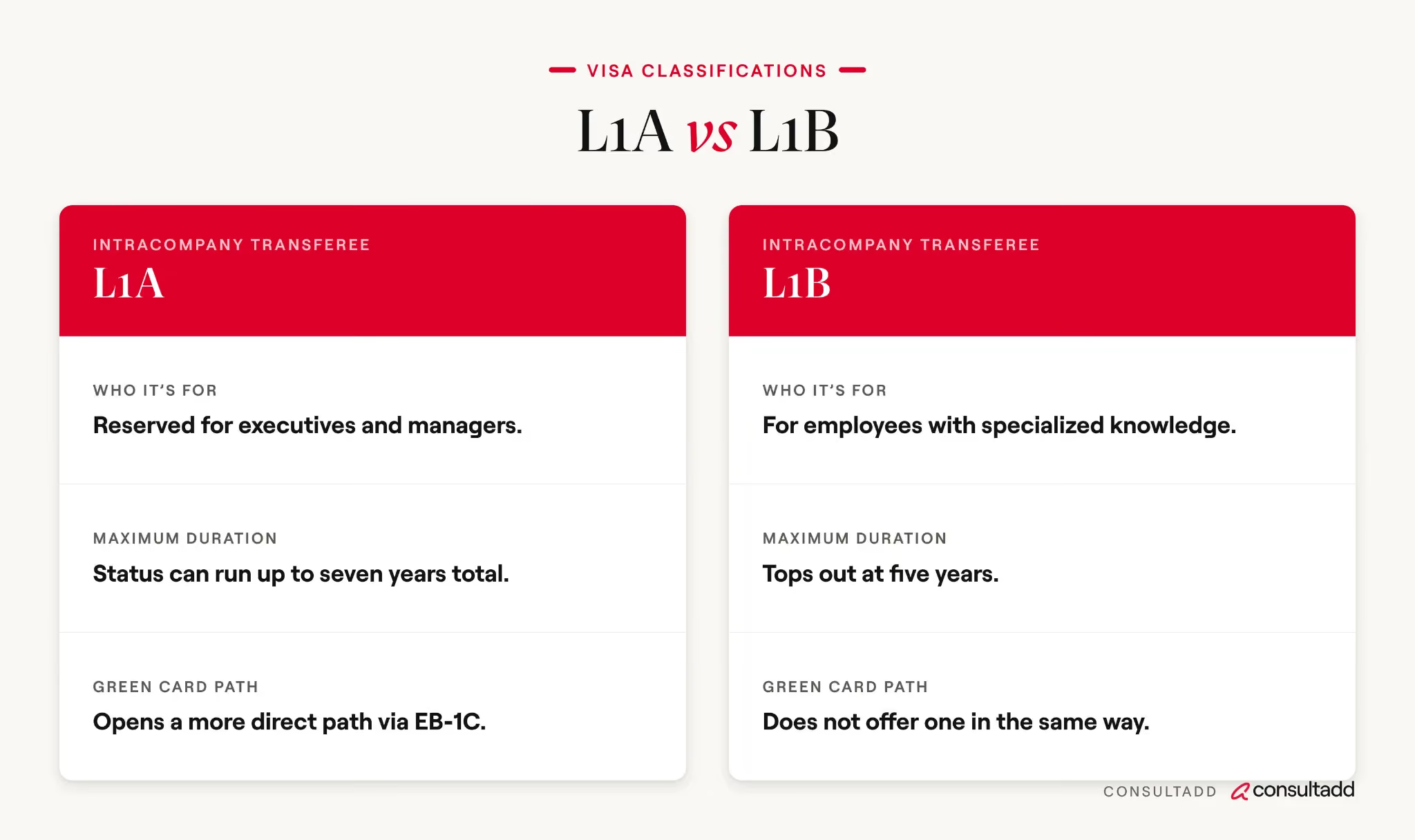
- L1A is reserved for executives and managers, people who direct an organization, a major function within it, or a team of professional staff.
- L1B is for employees with specialized knowledge, meaning deep, company-specific expertise in the business's products, processes, systems, or research that isn't easily available in the U.S. labor market.
The distinction matters beyond eligibility.
- L1A status can run up to seven years total, while L1B tops out at five.
- L1A also opens a more direct green card path, which L1B does not offer in the same way.
How long L1A status actually lasts
A standard L1A petition, for an employee joining an already-established U.S. office, grants an initial stay of up to three years.
If the petition is for a brand-new U.S. office still being set up, the initial stay is capped at one year, since USCIS wants to confirm the office is actually operating as promised before granting a longer period.
Per USCIS policy, extensions beyond that initial period are evaluated against the same managerial or executive capacity standard used at the time of filing.
From there, extensions are available in increments of up to two additional years, until the employee reaches the overall maximum of seven years in L1A status.
After that point, the employee generally needs to either change to a different visa category or, more commonly, be far enough along in a green card process to bridge the gap.
Why L1A is often a stepping stone to a green card
This is one of the biggest practical advantages of the category.
- L1A holders can pursue permanent residence through the EB-1C classification for multinational executives and managers.
- EB-1C doesn't require the PERM labor certification process that slows down most other employment-based green card routes.
- That doesn't make it automatic. The EB-1C petition still has to independently prove the same kind of qualifying relationship and managerial or executive capacity that the original L1A petition established.
- So a well-documented L1A file tends to make the green card stage smoother rather than guaranteeing it.
Employers and employees who treat the L1A paperwork as a formality often end up redoing evidentiary work later that could have been built once, properly, from the start.
For companies weighing whether to bring in transferred talent through this route versus building out a role locally, it helps to understand the broader tradeoffs first.
Our guide on IT staff augmentation covers when bringing in outside talent, transferred or contracted, makes more sense than a purely local hire.
Blanket petitions, for companies that transfer people often
Large multinational companies that regularly move executives and managers to the U.S. can apply for an L-1 blanket petition.
Once approved, it lets qualifying employees apply for L1A status more efficiently, often directly through a U.S. consulate, without the company filing a full individual petition with USCIS for each transfer.
A blanket approval doesn't lower the bar for any individual employee. Each person still has to independently demonstrate they meet the managerial or executive requirements, and a consular officer still has discretion to deny an application even under an approved blanket petition.
It speeds up the process for the employer, not the standard for the employee.
What this means if you're staffing internationally sourced talent
Agencies and companies bringing in talent through cross-border transfers need to think about L1A eligibility earlier than most people expect, ideally before a role is finalized, not after someone has already been informally offered the position.
The one-year foreign employment requirement in particular can't be worked around after the fact.
Our breakdown of how the IT staffing process works covers where visa and compliance planning fits into the broader hiring timeline, which matters just as much for L1A cases as it does for other work authorization categories.
Start Strong With Consultadd
With 15 years in business and 5,000+ successful staffing engagements, we don't just fill roles, we build reliability into your process. We've supported 65 staffing companies in the past year alone and maintain MSAs with industry leaders like Robert Half and TEKsystems.
Here's what working with Consultadd looks like:
- Talent sourced in under 24 hours
- Ready-to-deploy candidates, vetted for experience and compliance
- Lower turnover risk: we match long-term goals, not just short-term needs
- Seamless compliance: visa, documentation, onboarding? Handled.
- Dedicated 1:1 account managers for responsive, personalized support
- Top 100 candidate matches delivered in the past year
- Strong partnerships with universities to tap into fresh, committed talent
- Post-placement support so your investment grows beyond day one
For candidates, your next opportunity is more than just a job title, it's a chance to build skills, gain experience, and move your career forward. At Consultadd, we connect technology professionals with projects and employers that align with their goals, whether they're looking for contract, contract-to-hire, or long-term opportunities.
The tech job market moves fast, but the right guidance can make all the difference. Ready to take the next step in your career journey? Explore Opportunities >>
Key Takeaways
- L1A is for executives and managers transferring between related companies, not a general-purpose work visa.
- The employee needs one continuous year of qualifying foreign employment within the three years before filing.
- Status runs up to seven years total, starting at one year for new offices or three years otherwise.
- EB-1C offers a labor-certification-free green card path for L1A holders, but it still requires its own evidentiary proof.
- Blanket petitions speed up the process for frequent-transfer employers, but every employee still has to individually qualify.
FAQs
What is the difference between L1A and L1B visas?
L1A covers executives and managers who direct an organization or function. L1B covers employees with specialized, company-specific knowledge. L1A also allows a longer maximum stay and a more direct green card path than L1B.
How long does it take to get an L1A visa approved?
Standard processing typically runs around six months, though this varies by case complexity and USCIS workload. Premium processing, where available, guarantees a response within 15 business days for an added fee.
Can an L1A visa holder bring their family to the U.S.?
Yes. Spouses and unmarried children under 21 can seek L2 status, generally for the same period as the primary visa holder. Spouses can apply separately for work authorization once in L2 status.
Does the L1A visa require a labor certification?
No. That's one of its key advantages over most other employment-based visa categories, and it carries through to the EB-1C green card process, which also skips the PERM labor certification requirement.
What happens if an L1A employee's role changes after arriving in the U.S.?
The new role needs to remain genuinely managerial or executive to stay compliant with the visa's terms. A significant change in duties, especially one that moves away from managerial or executive responsibilities, can create compliance problems and should be reviewed with immigration counsel before it happens.
Can a small or newly formed company sponsor an L1A visa?
Yes, through the new office provision, but the bar is higher. The company has to show adequate physical premises and a credible plan for the U.S. office to support an executive or managerial position within its first year, and the initial approval is limited to one year instead of three.
.avif)
H-1B 60 Day Grace Period: What It Covers, What It Doesn't
Introduction
Losing an H-1B job doesn't mean losing your legal status the same day. Since 2017, federal regulation has given H-1B workers an H-1B 60 day grace period, up to 60 consecutive calendar days after employment ends, to find a new sponsor, switch to another status, or leave the country.
It's discretionary rather than guaranteed, but USCIS grants it in the overwhelming majority of cases. That said, the grace period has more edge cases than most people expect.
It doesn't extend past your authorized stay. It ends the moment you leave the country. And as of August 2026, DHS has a proposal under White House review that could eliminate it entirely.
Here's what the rule actually says today, what's changing, and what to do if the clock has already started on you.
TL;DR
- H-1B workers get up to 60 consecutive calendar days after their last day of work to find a new sponsor, change status, or depart, whichever comes first against their I-94 expiration.
- The clock starts on your last day of active employment, not when severance or PTO payouts end.
- Leaving the U.S. during the grace period ends it immediately, and you can't re-enter on the old H-1B.
- A new employer's timely, non-frivolous H-1B petition lets you start working right away under portability rules, even before it's approved.
- DHS sent a proposal to the White House in August 2026 that would eliminate the discretionary grace period; it is not law yet.
What the H-1B 60 day grace period actually is
The grace period comes from a 2017 DHS regulation found at 8 CFR 214.1(l)(2). It covers several nonimmigrant categories beyond H-1B, including E-1, E-2, E-3, H-1B1, L-1, O-1, and TN.
According to USCIS guidance on options for nonimmigrant workers following termination of employment, the rule lets these workers be treated as maintaining status for up to 60 consecutive calendar days after employment ends, or until their authorized validity period expires, whichever is shorter.
Before 2016, there was no such cushion. A terminated H-1B worker was out of status the moment employment stopped, full stop. The grace period exists specifically to give people time to act instead of scrambling to leave the country overnight.
It's worth being precise about what "up to 60 days" means. If your I-94 shows only 25 days left when your job ends, your grace period is 25 days, not 60.
USCIS uses whichever number is smaller. Checking your I-94 record the same week you're laid off isn't optional busywork, it's the number that determines your entire timeline.
When the clock starts, and what doesn't stop it
The grace period begins the day after your last day of active work, not the day your final paycheck clears. This trips up more people than any other part of the rule.
If your employer keeps paying you for two months after your actual last day, that continued pay doesn't extend your status. Neither does a severance package, a COBRA subsidy, or PTO payout. USCIS looks at when you stopped performing work duties, period.
If your employer offers garden leave, meaning you're still formally employed and, in some interpretations, still working during a notice period, that can push the start date later.
Get the separation date in writing if your employer is willing to provide one. It removes ambiguity that otherwise falls on you to prove later.
What ends the grace period early
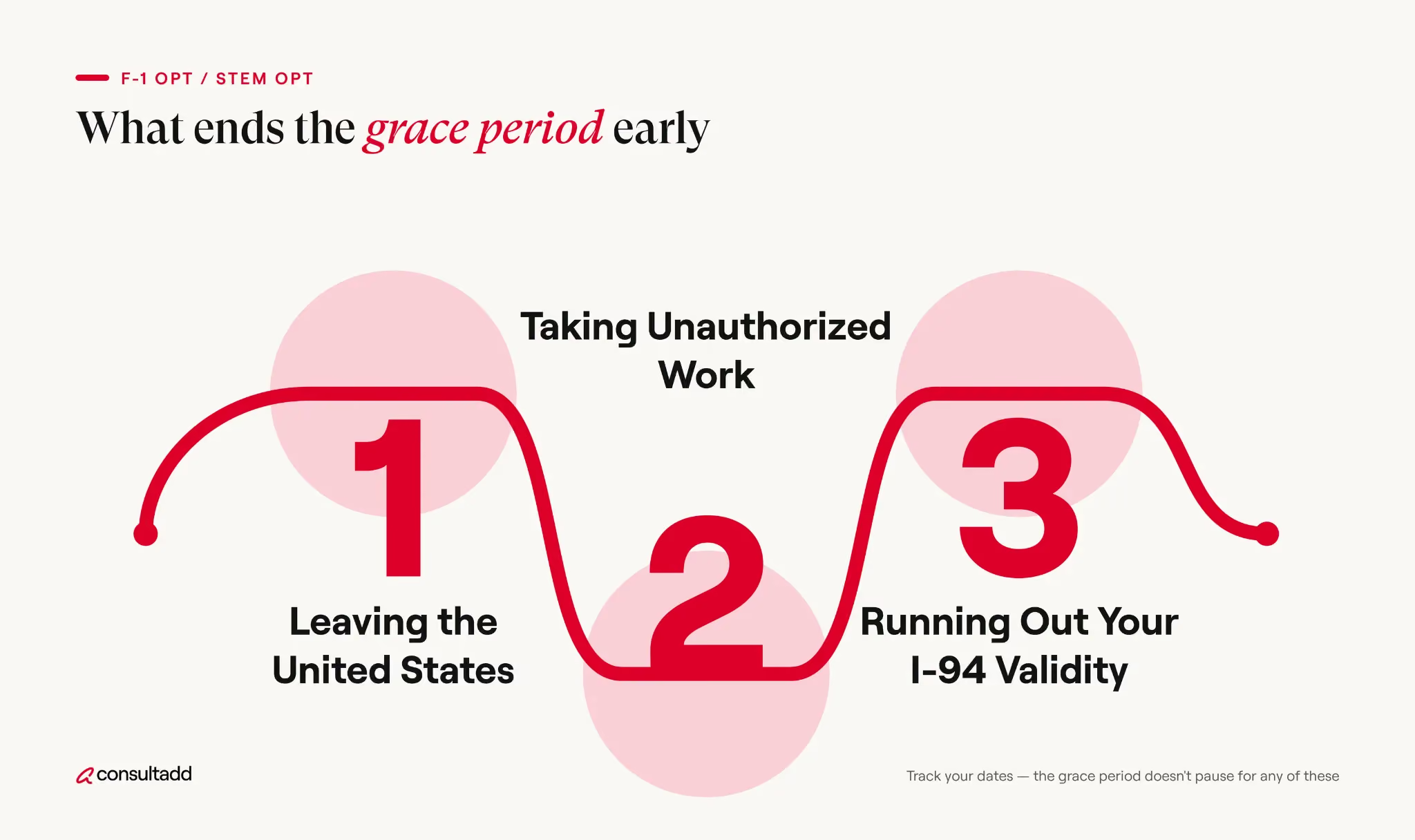
A few things cut the grace period short regardless of how many days are technically left:
- Leaving the United States
The purpose of the grace period is to give you time to depart or change status from inside the country. The moment you exit, it's over, and you cannot re-enter on the H-1B status tied to the job that ended.
- Taking unauthorized work
You cannot work during the grace period unless a new employer has already filed a non-frivolous H-1B petition on your behalf.
- Running out your I-94 validity
As covered above, your grace period can't outlast your authorized stay even if 60 full days haven't passed.
What to do the day you lose your job
Getting laid off on H-1B is stressful enough without also having to research immigration rules from scratch. A short checklist helps more than a long one in the moment:
- Pull your latest Form I-94 from the CBP website and note the exact expiration date.
- Ask your (former) employer for a written separation letter stating the last day of work.
- Start applying immediately to employers with an active history of H-1B sponsorship rather than companies that have never filed one, since a first-time sponsor takes longer to move.
- Talk to an immigration attorney before day 30 if you don't already have a lead on a new sponsor, not day 55.
- Avoid international travel until a new petition is filed or you've changed status. A quick trip home ends the grace period the moment you leave.
Your options before day 60
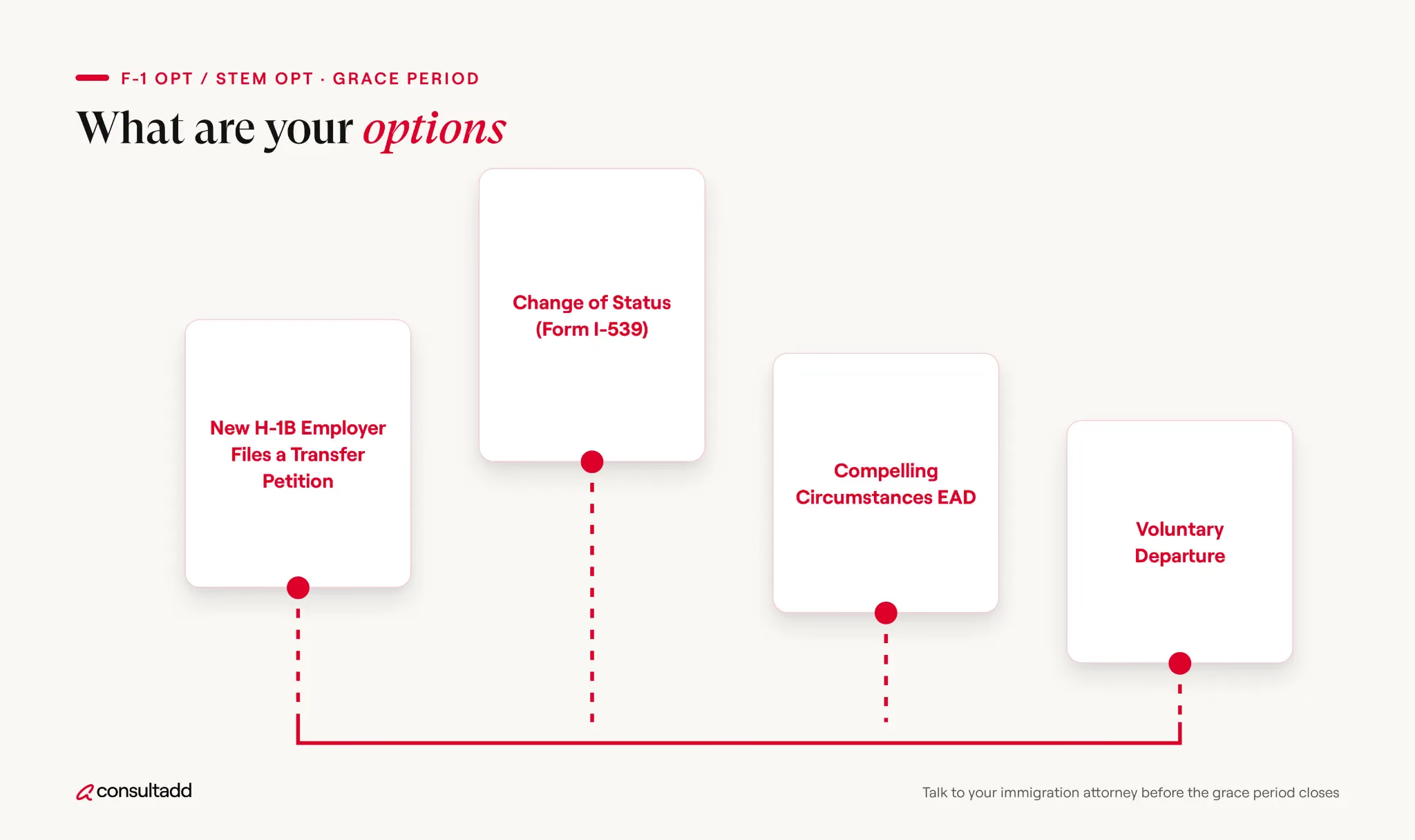
The most common move is the first one: a new employer files a change-of-employer H-1B petition.
If it's filed and received by USCIS while you're still within the grace period, you can generally begin working for the new employer right away, even before the petition is approved.
That's the core benefit of H-1B portability, and it's the reason moving fast on a job search matters more than the 60-day number might suggest.
If day 60 is approaching and no H-1B option has come through, filing Form I-539 to change status, commonly to H-4 (if a spouse holds H-1B status), F-1, or B-2, has to be received by USCIS before the grace period ends to protect your presence in the country.
If your underlying I-140 has been approved and pending for at least 180 days, your priority date generally travels with you to a new employer, which matters if you're mid-way through a green card process.
If you're weighing whether your current documentation and work authorization setup is even H-1B-eligible in the first place, our overview of work authorization types and EAD basics is a useful starting point, and our comparison of H-1B and OPT visas is worth a look if a transition to student status is on the table.
The DHS proposal to end the grace period
As of this writing, the H-1B 60 day grace period is still in effect, but it may not stay that way for long.
On August 6, 2026, DHS sent a proposed rule titled "Eliminating the Discretionary 60-day Grace Period" (RIN 1615-AD22) to the White House's Office of Information and Regulatory Affairs for review.
The contents of the rule aren't public, and it hasn't cleared OIRA review or been published in the Federal Register.
If it moves forward, the change would mean H-1B workers lose legal status immediately upon job loss rather than getting a window to find new sponsorship. That's a meaningful shift from how the rule has worked since 2017, and it would affect dependents on H-4 status too, since their status is tied to the principal visa holder.
There's no confirmed effective date yet. Rules at this stage in the regulatory process can still change substantially, get delayed, or get challenged in court before taking effect.
If you're currently in a grace period or expect to be soon, this is one of those situations where checking for updates directly from an immigration attorney or USCIS is worth doing regularly rather than relying on a single article's snapshot.
Start Strong With Consultadd
With 15 years in business and 5,000+ successful staffing engagements, we don't just fill roles, we build reliability into your process. We've supported 65 staffing companies in the past year alone and maintain MSAs with industry leaders like Robert Half and TEKsystems.
Here's what working with Consultadd looks like:
- Talent sourced in under 24 hours
- Ready-to-deploy candidates, vetted for experience and compliance
- Lower turnover risk: we match long-term goals, not just short-term needs
- Seamless compliance: visa, documentation, onboarding? Handled.
- Dedicated 1:1 account managers for responsive, personalized support
- Top 100 candidate matches delivered in the past year
- Strong partnerships with universities to tap into fresh, committed talent
- Post-placement support so your investment grows beyond day one
For candidates, your next opportunity is more than just a job title, it's a chance to build skills, gain experience, and move your career forward. At Consultadd, we connect technology professionals with projects and employers that align with their goals, whether they're looking for contract, contract-to-hire, or long-term opportunities.
The tech job market moves fast, but the right guidance can make all the difference. Ready to take the next step in your career journey? Explore Opportunities >>
Key takeaways
- The H-1B 60 day grace period gives workers up to 60 consecutive calendar days, or until their I-94 expires, whichever is shorter, to find new sponsorship, change status, or leave.
- The clock starts on the last day of actual work, not when pay or benefits stop.
- Leaving the U.S. during the grace period ends it immediately and blocks re-entry on the same H-1B.
- A timely H-1B transfer petition lets you work again right away, before approval, under portability rules.
- DHS has proposed eliminating the grace period entirely; as of August 2026 that proposal is still under White House review and is not in effect.
FAQs
How long is the H-1B grace period exactly?
Up to 60 consecutive calendar days after your last day of employment, or until your I-94 authorized stay expires, whichever comes first.
Does severance pay extend the grace period?
No. The grace period is based on your last day of actual work, not on when severance, PTO payout, or continued benefits end.
Can I travel outside the U.S. during the grace period?
No. Leaving the country ends the grace period immediately, and you would not be able to re-enter on the H-1B status tied to the job that ended.
Can I start working for a new employer before my H-1B transfer is approved?
Yes, as long as the new employer files a timely, non-frivolous H-1B petition while you're still within the grace period. H-1B portability rules let you begin work once USCIS receives the petition.
Is the H-1B grace period guaranteed?
It's discretionary. DHS can shorten or deny it case by case, though USCIS grants the full 60 days in the large majority of situations.
Is the 60-day grace period going away?
Not yet. DHS sent a proposal to end it to the White House for review in August 2026, but it hasn't been published as a formal rule and isn't in effect.
What happens if I don't find a new sponsor or change status in time?
You and any dependents would generally need to depart the United States once the grace period ends, since remaining without a valid status can lead to accrued unlawful presence and future immigration consequences.
.avif)
W2 vs W9: What's the Real Difference?
Introduction
If you've ever stared at a new-hire packet wondering whether you need a W-2 or a W-9, you're not alone. The confusion between these two forms is one of the most common questions we hear from employers building out their teams, and it's an easy one to get wrong.
Here's the short version of W2 vs W9: a W-2 is the form an employer sends to an employee, reporting wages and the taxes already withheld. A W-9 is the form a business collects from an independent contractor before paying them, so it has the information needed to issue a 1099 at year-end.
One form flows from employer to worker. The other flows from worker to the business paying them. Mixing the two up doesn't just create paperwork headaches, it can trigger IRS penalties and put your worker classification under a microscope.
This guide walks through what each form actually does, who's supposed to fill out which one, and how the IRS decides whether someone belongs on a W-2 or a W-9 in the first place.
TL;DR
- A W-2 reports wages and withheld taxes for employees; a W-9 collects tax ID information from contractors so a business can issue a 1099.
- Employers withhold Social Security, Medicare, and income tax for W-2 workers. Contractors who submit a W-9 handle their own taxes, including the full 15.3% self-employment tax.
- Worker classification comes down to the IRS's control test, not the title on someone's business card.
- A W-9 never gets sent to the IRS. It stays on file with the business that requested it.
- Misclassifying a W-2 employee as a 1099 contractor (or the reverse) can lead to back taxes, penalties, and in some cases federal investigation.
What is a Form W-2?
Form W-2, officially the Wage and Tax Statement, is the form an employer issues to every employee it pays. It shows total wages for the year alongside federal income tax, Social Security, and Medicare withheld from each paycheck.
Employers fill this out, not the worker. It's sent three places: to the employee, to the Social Security Administration, and to the IRS, generally by January 31 following the tax year. If you've withheld any taxes for a worker, or paid them more than a small threshold, a W-2 is required regardless of whether they worked full time or just a few shifts.
A W-2 employee typically works set hours, uses equipment the company provides, and takes direction on how the work gets done, not just what the end result should look like. That distinction matters more than it sounds, because it's exactly what the IRS looks at when a classification question comes up.
What is a Form W-9?
Form W-9, the Request for Taxpayer Identification Number and Certification, works completely differently. A business asks an independent contractor to fill one out before the first payment goes out. The contractor lists their name, business name if applicable, tax classification, and Social Security number or EIN.
The business doesn't send this form anywhere. It just keeps the W-9 on file and uses the information to prepare a 1099-NEC if it pays that contractor $600 or more during the year. No taxes are withheld on a W-9 basis. The contractor is responsible for paying their own income tax and self-employment tax, which is why freelancers and consultants often set aside a chunk of every invoice for tax season.
One detail trips people up constantly: employees never fill out a W-9. If someone is on your payroll, they get a W-4 during onboarding and a W-2 at year-end. The W-9 belongs strictly to the contractor relationship. If a worker starts the year as a contractor and converts to an employee partway through, they'd actually receive both a 1099 for the contractor period and a W-2 for the employee period. That's normal and doesn't indicate an error.
W2 vs W9 at a glance
How the IRS decides: employee or contractor
The IRS doesn't care what the contract says. It looks at the actual working relationship using what it calls the common law rules, grouped into three categories, per IRS Publication 15-A guidance on independent contractor status.
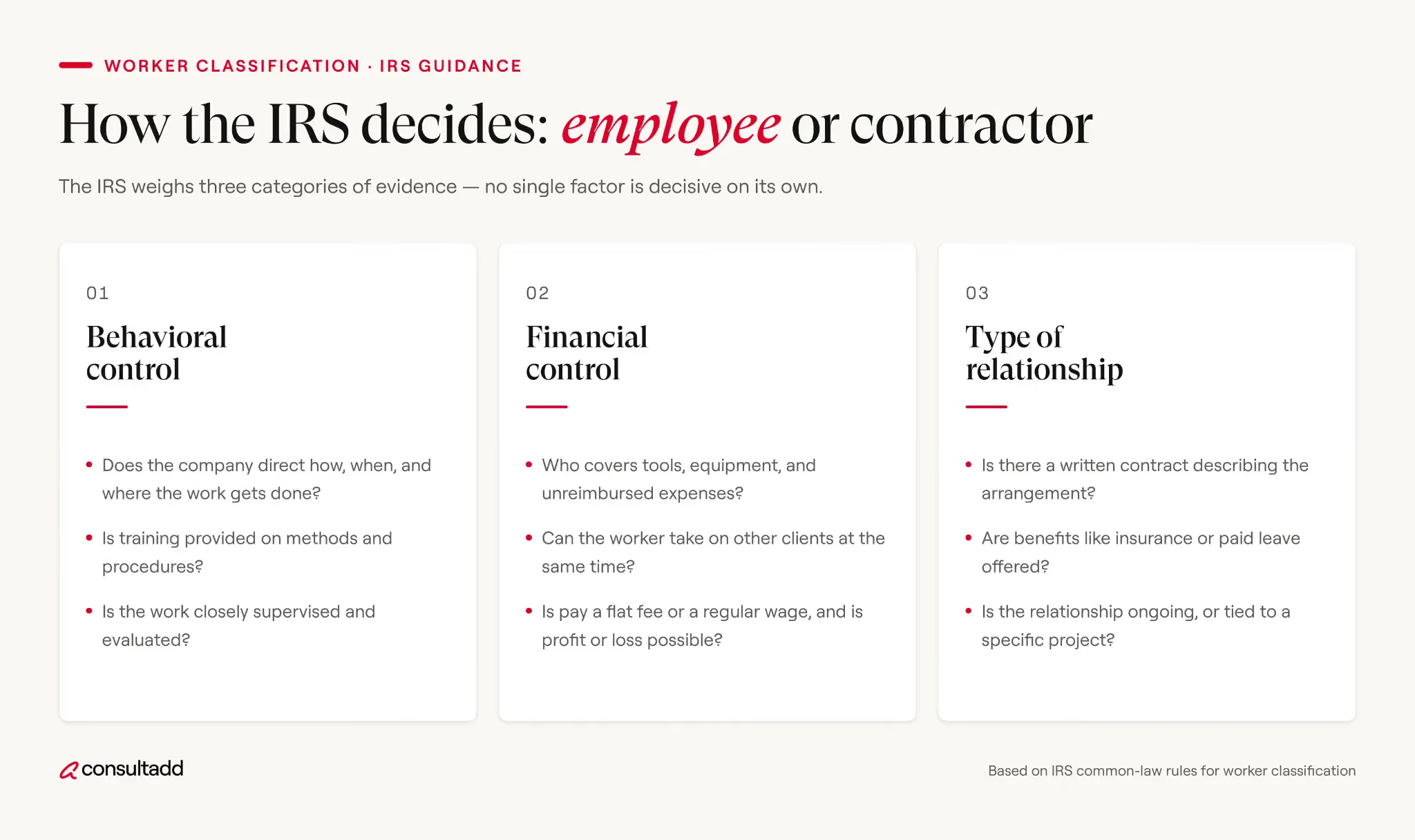
Behavioral control
- Does the business dictate when, where, and how the work happens, or does the worker decide that on their own?
- Setting someone's schedule and requiring them to use company equipment leans toward employee status.
Financial control
- Does the worker have unreimbursed expenses, their own tools, and the ability to work for other clients at the same time?
- Independent contractors typically carry more financial risk and independence than employees do.
Type of relationship
- Is there a written contract describing an independent engagement? Does the worker receive benefits?
- Is the relationship expected to continue indefinitely, or is it tied to a specific project?
According to the IRS, an individual is generally an independent contractor if the business only has the right to control the outcome of the work, not the details of how it gets done.
If the business retains the right to direct the process itself, that points to employee status even if the worker has a lot of day-to-day freedom. This same debate plays out at the federal labor level too.
The Department of Labor has gone back and forth on its own independent contractor test in recent years, and as of early 2026 it's reviewing proposed changes to how it evaluates worker classification under the Fair Labor Standards Act.
The IRS test and the DOL test aren't identical, so a worker classified correctly for tax purposes can still raise questions under labor law. It's worth checking both if you're building out a contractor-heavy team.
Tax withholding: where the real difference shows up
The forms themselves take five minutes to fill out. The tax consequences are where W2 vs W9 actually matters for take-home pay.
That last row catches a lot of new business owners off guard. If a contractor won't hand over a completed W-9, the IRS requires the paying business to withhold 24% of future payments until it gets one.
Which form should you actually use?
If you're the one hiring: figure out the classification first, then pick the form.
Don't reach for a W-9 just because it avoids payroll taxes on paper.
If the role has set hours, company-provided equipment, and ongoing supervision, it's a W-2 employee regardless of what you'd prefer to call it.
If you're the one being hired: ask before you start.
If the company controls your schedule and tools, expect a W-4 and W-2.
If you're setting your own hours, invoicing for deliverables, and working with other clients, a W-9 and eventual 1099 are the right fit.
Workers weighing a corp-to-corp setup versus straight 1099 work will find the tax math differs enough to matter, especially once self-employment tax enters the picture.
What happens if you get the classification wrong
Worker misclassification isn't a paperwork technicality. Treating someone who should be a W-2 employee as a 1099 contractor means the business skipped payroll taxes, unemployment insurance contributions, and potentially overtime pay it legally owed.
- If the IRS or a state agency catches it, the business can be on the hook for back payroll taxes, penalties, and interest, sometimes going back several years.
- Workers who believe they were misclassified can also request a formal determination from the IRS using Form SS-8.
- On the labor side, misclassification can trigger separate claims for unpaid overtime or minimum wage under the FLSA, independent of anything the IRS does.
None of this means every contractor relationship is a ticking time bomb.
- Plenty of businesses use contractors correctly for project-based work, specialized skills, or short-term coverage.
- The risk shows up when a "contractor" is functionally indistinguishable from an employee: fixed hours, company equipment, ongoing work with no defined end date, and day-to-day supervision.
If a contractor engagement is meant to lead somewhere permanent, a contract-to-hire arrangement is worth understanding too, since it runs on a W-2 basis through a staffing partner rather than a straight 1099 setup.
W2, W9, and 1099: how the pieces connect
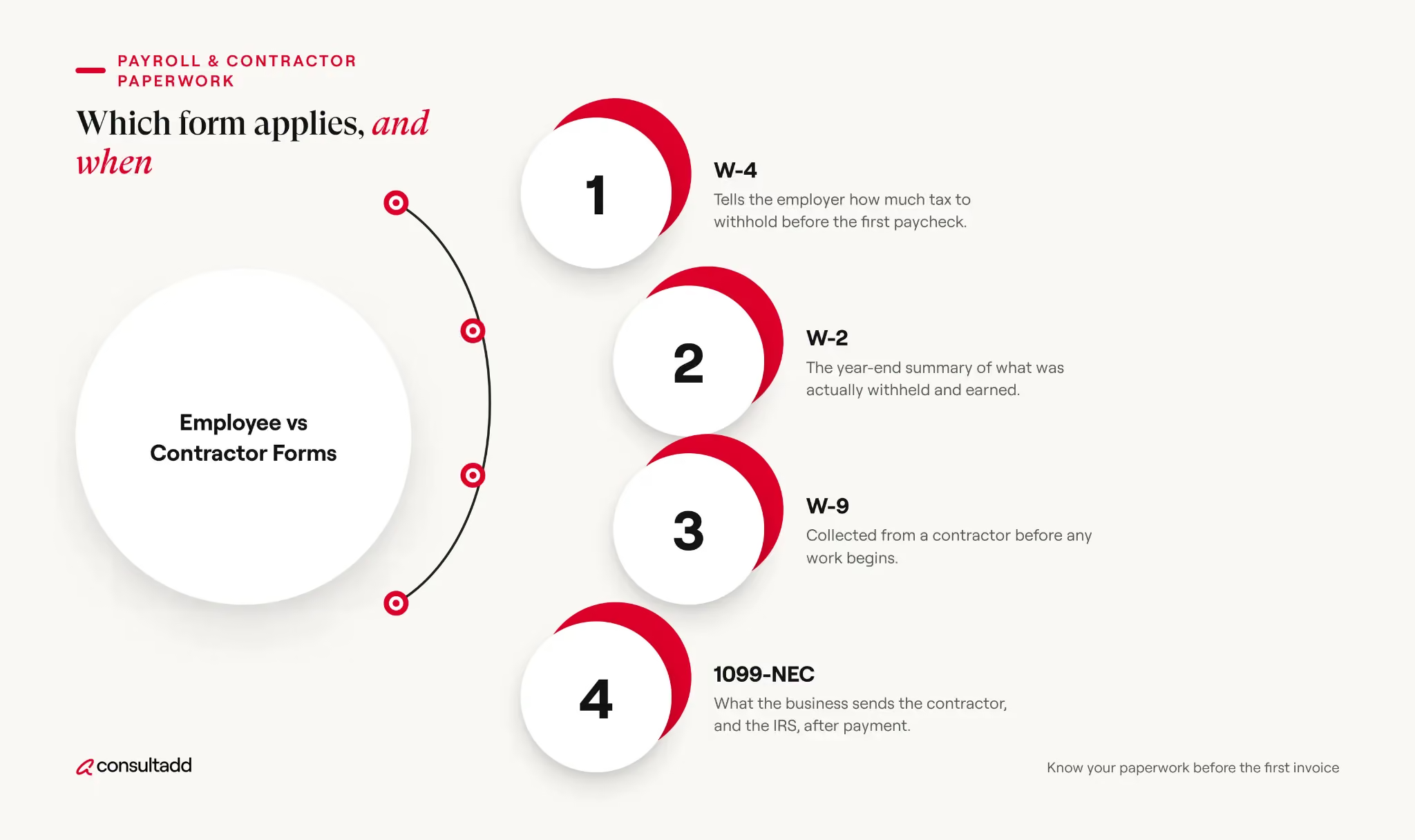
It helps to think of these as steps in a chain rather than competing options.
- A W-4 tells an employer how much to withhold from a new employee's paycheck.
- A W-2 is the year-end summary of what was actually withheld and earned.
- A W-9 is collected from a contractor before work begins.
- A 1099-NEC is what the business sends the contractor (and the IRS) at year-end, built from the W-9 information.
There's also a third path that comes up a lot in staffing and IT contracting: corp-to-corp arrangements, where a business contracts with a worker's registered company instead of the individual.
If you're weighing options beyond a straight W-9 relationship, our breakdown of W2 vs C2C vs 1099 contract types covers how pay, taxes, and risk shift across each structure.
Start Strong With Consultadd
With 15 years in business and 5,000+ successful staffing engagements, we don't just fill roles, we build reliability into your process. We've supported 65 staffing companies in the past year alone and maintain MSAs with industry leaders like Robert Half and TEKsystems.
Here's what working with Consultadd looks like:
- Talent sourced in under 24 hours
- Ready-to-deploy candidates, vetted for experience and compliance
- Lower turnover risk: we match long-term goals, not just short-term needs
- Seamless compliance: visa, documentation, onboarding? Handled.
- Dedicated 1:1 account managers for responsive, personalized support
- Top 100 candidate matches delivered in the past year
- Strong partnerships with universities to tap into fresh, committed talent
- Post-placement support so your investment grows beyond day one
For candidates, your next opportunity is more than just a job title, it's a chance to build skills, gain experience, and move your career forward. At Consultadd, we connect technology professionals with projects and employers that align with their goals, whether they're looking for contract, contract-to-hire, or long-term opportunities.
The tech job market moves fast, but the right guidance can make all the difference. Ready to take the next step in your career journey? Explore Opportunities >>
Key takeaways
- A W-2 is issued by employers to report employee wages and withholding; a W-9 is collected from contractors to prepare a 1099.
- W-9 forms never go to the IRS. They stay on file with the business that requested them.
- Contractors on a W-9 basis cover the full 15.3% self-employment tax themselves, since nothing is withheld.
- The IRS classification test looks at behavioral control, financial control, and the nature of the relationship, not job titles.
- Getting the classification wrong can mean back taxes, penalties, and exposure under both IRS and Department of Labor rules.
FAQs
Can an employee also fill out a W-9?
No. W-9 forms are for independent contractors only. If someone is a common-law employee, they complete a W-4 instead and receive a W-2 at year-end.
Does a W-9 get submitted to the IRS?
No. The business collects it and keeps it on file, then uses the information to prepare a 1099-NEC if the contractor is paid $600 or more in a year.
What if a contractor refuses to submit a W-9?
The paying business is generally required to apply 24% backup withholding on future payments until a completed W-9 is received.
Can someone receive both a W-2 and a 1099 in the same year?
Yes. This happens when a worker starts as a contractor and converts to a full employee, or the reverse, within the same tax year.
Who decides if a worker is an employee or a contractor?
The business does, but the IRS can reclassify a worker after the fact if the actual working relationship doesn't match how it was labeled. Either party can file Form SS-8 to request an official determination.
Is a W-9 the same as a 1099?
No. A W-9 collects tax ID information before payments begin. A 1099-NEC is the year-end form reporting how much the contractor was actually paid.
Do W-2 employees get benefits that W-9 contractors don't?
Generally, yes. Health insurance, retirement contributions, and paid time off are typically reserved for W-2 employees, since contractors are considered self-employed and outside the company's benefits structure.
.avif)
OPT Jobs: How International Students Can Find Work In The US
Introduction
OPT jobs are positions that F-1 international students can legally take under Optional Practical Training, the work authorization that lets you gain experience in your field after (or sometimes during) your degree.
The tricky part isn't the concept, it's the execution: finding employers who actually understand OPT, timing your application correctly, and staying compliant once you're working.
This guide walks through eligibility, how the job search actually plays out, and what both students and employers need to get right.
TL;DR
- OPT jobs must relate directly to your field of study and require a valid Employment Authorization Document (EAD) before you start working.
- You get 12 months of OPT per degree level, and STEM graduates can add a 24-month extension for up to 36 months total.
- Unemployment while on OPT is capped, generally 90 days for standard OPT and 150 days total if you have the STEM extension.
- Not every employer understands OPT, so targeting companies and staffing agencies with experience sponsoring international candidates saves time.
- Report any change in employer, job title, or address to your Designated School Official (DSO) to stay in status.
What counts as an OPT job
An OPT job has to connect to your major area of study, at least in a way you can reasonably explain if asked.
A computer science graduate working as a software developer clears that bar easily. A marketing graduate taking an unrelated retail job doesn't.
The work can be paid or unpaid, full time or part time, and it can come from a single employer or multiple employers, as long as the total hours and the nature of the work meet USCIS requirements.
For a full breakdown of how OPT compares to CPT, the other major F-1 work authorization option, our guide on OPT vs CPT covers the timing and eligibility differences in plain terms.
Who qualifies for OPT jobs
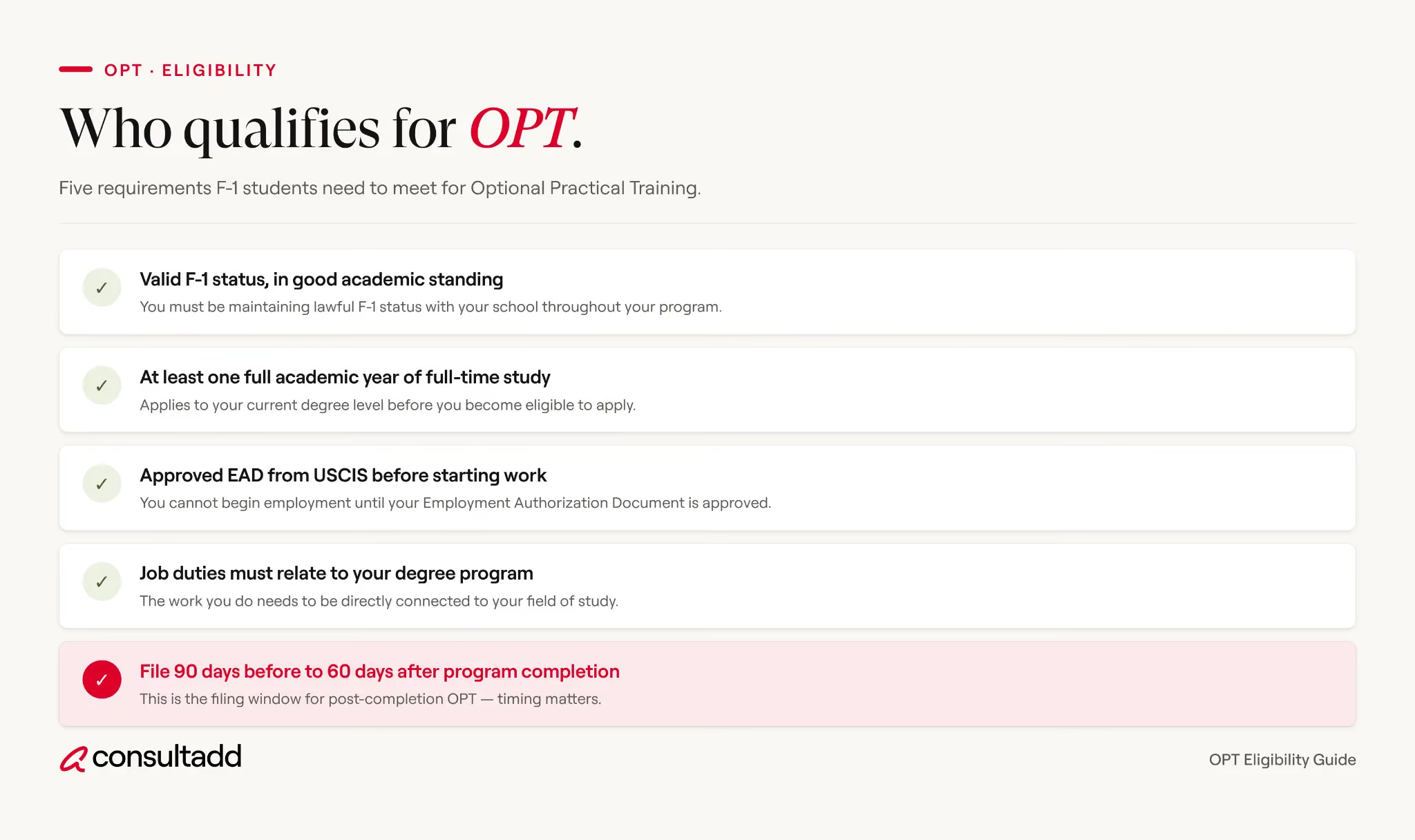
According to USCIS guidance on Optional Practical Training, students can apply for OPT before completing their studies (pre-completion) or after (post-completion), though any pre-completion time used gets subtracted from the total 12 months available.
How to actually find OPT jobs
Job boards alone rarely cut it here, since most postings don't specify visa sponsorship policy. A few things that move the needle:
- Target staffing agencies with visa experience.
Agencies that regularly place OPT candidates already know how to handle EAD verification, reporting, and timing, which removes friction for both you and the employer.
- Use your university's career center.
International student offices often maintain employer lists specifically for OPT and CPT hires.
- Search with the right terms.
"OPT sponsorship," "F-1 visa friendly," or "will sponsor STEM OPT" surface more relevant listings than generic job titles alone.
- Network within your program.
Alumni who went through OPT recently usually know which employers in your field are approachable.
OPT job rules you need to follow
Missing the unemployment window or skipping a report to your DSO is one of the more common ways students accidentally fall out of status.
It's worth setting a personal reminder well before any deadline rather than tracking it manually in your head.
OPT vs STEM OPT extension vs CPT
The STEM OPT extension page from USCIS has the full eligibility list, including which degree programs currently qualify.
If you're also weighing how OPT connects to longer-term work authorization, this comparison of H-1B and OPT visas is a useful next step, since many students transition from one to the other.
How staffing agencies help with OPT job searches
A staffing agency that regularly works with international candidates does a few things that speed up the process: they pre-screen roles for OPT compatibility, manage documentation so nothing slips past a reporting deadline, and often have existing relationships with employers who've sponsored OPT hires before.
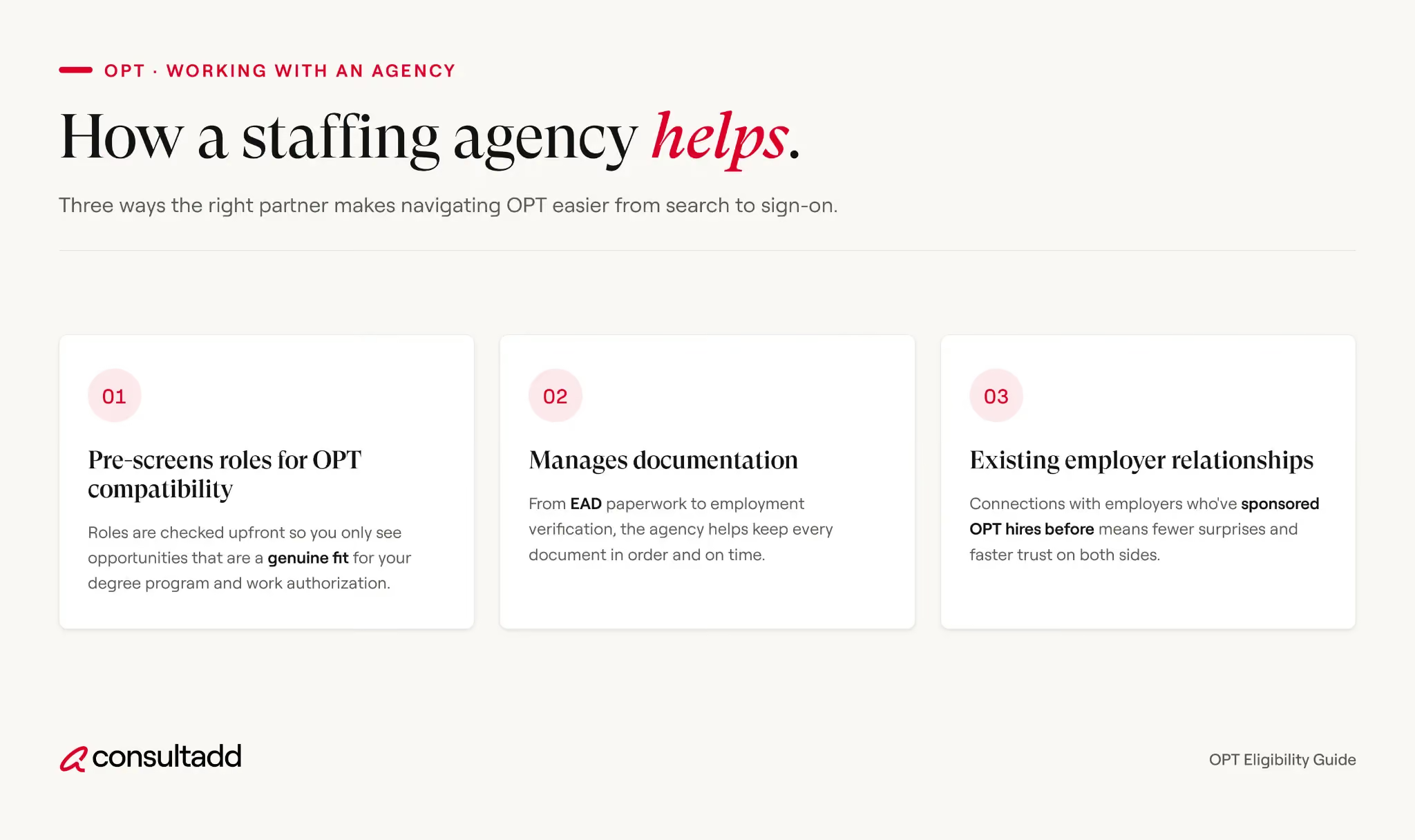
That last part matters more than it sounds, since a lot of the friction in an OPT job search comes from employers who are unfamiliar with the process rather than unwilling to hire international talent.
For a deeper look at how OPT work authorization actually functions day to day, this explainer on OPT work authorization covers the application steps and compliance details in more depth.
Start Strong With Consultadd
With 15 years in business and 5,000+ successful staffing engagements, we don't just fill roles, we build reliability into your process. We've supported 65 staffing companies in the past year alone and maintain MSAs with industry leaders like Robert Half and TEKsystems.
Here's what working with Consultadd looks like:
- Talent sourced in under 24 hours
- Ready-to-deploy candidates, vetted for experience and compliance
- Lower turnover risk: we match long-term goals, not just short-term needs
- Seamless compliance: visa, documentation, onboarding? Handled.
- Dedicated 1:1 account managers for responsive, personalized support
- Top 100 candidate matches delivered in the past year
- Strong partnerships with universities to tap into fresh, committed talent
- Post-placement support so your investment grows beyond day one
For candidates, your next opportunity is more than just a job title, it's a chance to build skills, gain experience, and move your career forward. At Consultadd, we connect technology professionals with projects and employers that align with their goals, whether they're looking for contract, contract-to-hire, or long-term opportunities.
The tech job market moves fast, but the right guidance can make all the difference. Ready to take the next step in your career journey? Explore Opportunities >>
Key takeaways
- OPT jobs must relate to your field of study, and you need an approved EAD in hand before your start date.
- You get 12 months of OPT per degree level, with a 24-month STEM extension available for qualifying degrees.
- Unemployment caps out at 90 days on standard OPT, 150 days total with the STEM extension.
- Reporting employer or address changes to your DSO promptly keeps you in status.
- Staffing agencies with visa experience can shorten the search by connecting you with employers who already sponsor OPT hires.
FAQs
Can I work multiple jobs while on OPT?
Yes, as long as all the work relates to your field of study and you track total hours to stay compliant with any part-time or full-time requirements tied to your OPT category.
Do I need a job offer before applying for OPT?
No, for post-completion OPT you can apply without a confirmed job offer. You do need to find qualifying work within the allowed unemployment window once your OPT starts.
What happens if I can't find a job during OPT?
You have up to 90 days of unemployment on standard OPT before risking your status, or 150 days total if you have the STEM extension. Staying under that limit is critical.
Can I switch employers while on OPT?
Yes, you can change employers during OPT as long as the new position still relates to your field of study, and you report the change to your DSO.
Is CPT the same as OPT?
No. CPT happens during your program and requires a job offer tied to your curriculum, while OPT can be used during or after your studies and doesn't require a curriculum connection.
Do all employers offer OPT sponsorship?
No. Some employers aren't familiar with OPT or prefer not to manage the reporting involved. Staffing agencies experienced with international hiring can help identify employers who are set up for it.
How long can I stay on OPT total?
Up to 12 months per degree level, plus an additional 24 months if you qualify for the STEM OPT extension, for a maximum of 36 months on one degree.
.avif)
Contract To Hire Position: What It Means And How It Works
Introduction
A contract to hire position is a job that starts as a fixed-term contract role, usually through a staffing agency, with the option to become permanent if both sides like what they see.
You work the contract on the agency's payroll, get paid on a set schedule, and after a defined stretch, often three to six months, the client company decides whether to bring you on directly.
That's the short version. The longer version involves pay structure, benefits timing, and a few risks worth knowing before you sign anything.
This guide covers all of it, from how the process actually runs to when the model makes sense and when it doesn't.
TL;DR
- A contract to hire position puts you on a staffing agency's W-2 payroll for a set trial period, usually three to six months, before a possible permanent offer.
- Pay is often hourly and slightly higher than a similar salaried role, but full benefits are usually delayed until conversion.
- Employers use this model to lower the cost of a bad hire and confirm skills and fit before committing to a permanent seat.
- Conversion is never guaranteed. Budget changes, project cancellations, or performance concerns can end things early.
- Before accepting or offering a contract to hire role, get the conversion terms, timeline, and fee structure in writing.
What a contract to hire position actually means
During the contract phase, you're technically employed by a staffing agency, not the company you're working for day to day. The agency handles your paycheck, withholds taxes, and in most cases offers some form of benefits, though these are often thinner than what a direct employee gets.
This is what separates contract to hire from an independent contractor or corp-to-corp arrangement, where the worker operates through their own business entity and files taxes differently.
If you want the fuller breakdown of that distinction, our guide to W2 vs C2C arrangements walks through the tax and compliance side in detail.
The client company sets the work, the schedule, and usually the tools you use. At the end of the agreed period, they decide whether to extend a permanent offer. If they do, you move off the agency's payroll and onto theirs, with whatever salary, benefits, and title come with that.
How the contract to hire process works
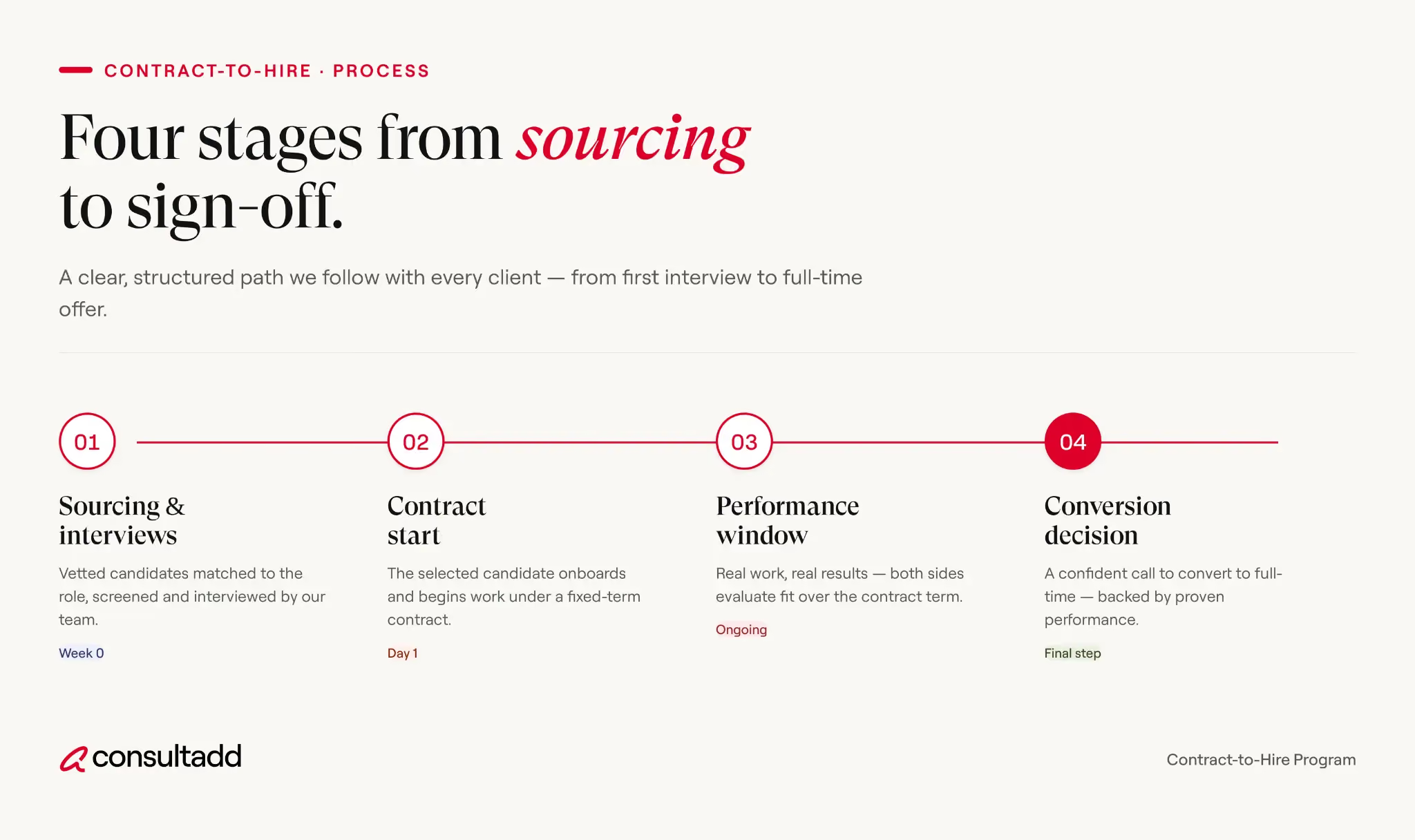
The mechanics are fairly consistent across staffing agencies, though timelines shift by industry and role complexity.
Nothing here is set in stone. Some roles convert in 90 days. Others run a full year before anyone brings up permanent employment. That's usually a sign the contract terms weren't specific enough going in, which is why it's worth asking upfront rather than assuming.
Contract to hire vs direct hire vs corp to corp
These three models get mixed up constantly, and the differences matter for taxes, benefits, and who controls the work.
If you're deciding between these models for a hiring plan rather than a personal job offer, look at how C2C contract hiring solutions fit into recruitment covers where that model tends to outperform contract to hire, particularly for short, specialized projects.
What it means if you're the candidate
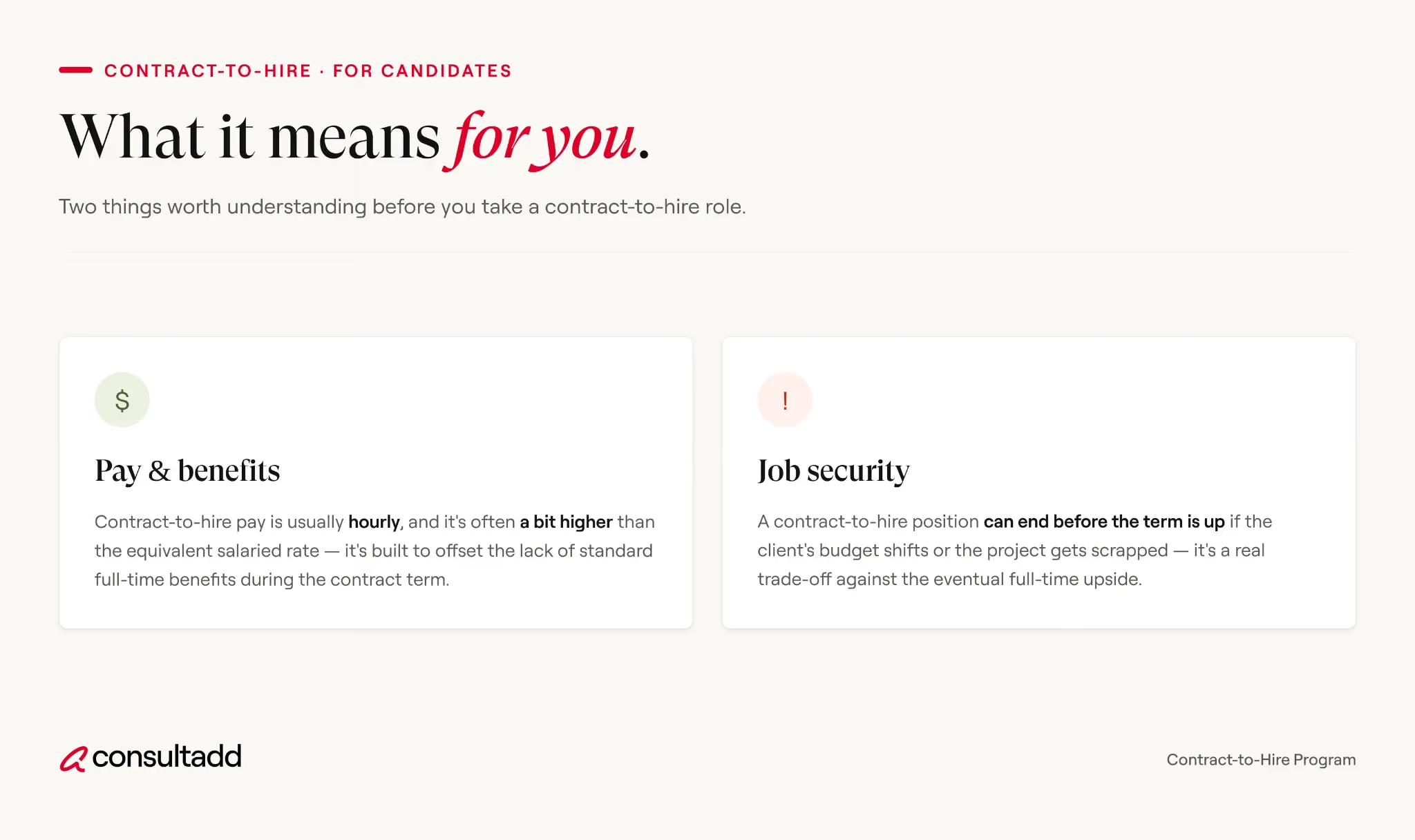
1. Pay and benefits
Contract to hire pay is usually hourly, and it's often a bit higher than the equivalent salaried rate to offset the lack of paid time off or employer-sponsored health coverage during the contract window.
Once converted, most of that gap closes since you move onto standard payroll and benefits.
2. Job security
This is the part that makes people nervous, and reasonably so.
A contract to hire position can end before the term is up if the client's budget shifts or the project gets scrapped. It's not personal in most cases.
Still, ask direct questions before accepting:
- What's the actual conversion rate for this client?
- Has anyone converted from this specific role before?
- What happens if the project ends early?
A staffing agency worth working with will answer these plainly instead of dodging.
What it means if you're the employer
The appeal here is risk reduction. The Society for Human Resource Management and the U.S. Department of Labor have both pointed to the high cost of a bad hire, with estimates running from roughly a third of a worker's first-year pay up into the low hundreds of percent once training, lost productivity, and replacement recruiting are factored in.
A contract to hire structure lets you see real output before that cost is locked in. It also helps with roles where the skill requirement is narrow or the project scope is still being defined.
The tradeoff is coordination. You're relying on an agency to manage payroll, compliance, and often the initial screening, so the quality of that agency matters as much as the candidate.
When a contract to hire position makes sense
Common risks and how to avoid them
- Vague conversion terms
Get the timeline and criteria for conversion in writing before day one, not verbally promised somewhere in the interview process.
- Worker misclassification
Contract to hire should be a W-2 arrangement through the agency. If someone tries to run it as 1099 with client-directed hours and tools, that's a compliance problem under IRS worker classification guidance, not a legitimate contract to hire setup.
- Unclear fee structure
Agencies typically charge a conversion fee to the client. Candidates should never be charged a fee to be placed. If a staffing firm asks a candidate for money, that's a red flag worth walking away from.
- No performance feedback loop
If nobody's telling you how you're doing during the contract, you can't course-correct before the conversion decision gets made. Ask for a check-in at the halfway point.
Start Strong With Consultadd
With 15 years in business and 5,000+ successful staffing engagements, we don't just fill roles, we build reliability into your process. We've supported 65 staffing companies in the past year alone and maintain MSAs with industry leaders like Robert Half and TEKsystems.
Here's what working with Consultadd looks like:
- Talent sourced in under 24 hours
- Ready-to-deploy candidates, vetted for experience and compliance
- Lower turnover risk: we match long-term goals, not just short-term needs
- Seamless compliance: visa, documentation, onboarding? Handled.
- Dedicated 1:1 account managers for responsive, personalized support
- Top 100 candidate matches delivered in the past year
- Strong partnerships with universities to tap into fresh, committed talent
- Post-placement support so your investment grows beyond day one
For candidates, your next opportunity is more than just a job title, it's a chance to build skills, gain experience, and move your career forward. At Consultadd, we connect technology professionals with projects and employers that align with their goals, whether they're looking for contract, contract-to-hire, or long-term opportunities.
The tech job market moves fast, but the right guidance can make all the difference. Ready to take the next step in your career journey? Explore Opportunities >>
Key takeaways
- A contract to hire position is a W-2 role through a staffing agency for a set trial period, with a possible permanent offer at the end.
- Pay tends to run slightly higher during the contract phase, while full benefits usually wait until conversion.
- Employers use this model to cut the financial risk of a bad hire before committing to a permanent seat.
- Conversion isn't automatic. Ask about timeline, criteria, and what happens if the project changes.
- Get the conversion terms in writing, and confirm the arrangement is a proper W-2 setup, not disguised 1099 work.
FAQs
Is contract to hire the same as temp to hire?
Yes, these terms are generally used interchangeably. Both describe a trial employment period through a staffing agency with the possibility of a permanent offer at the end.
Do contract to hire employees get benefits?
Some agencies offer limited benefits, like basic health coverage, during the contract phase, but they're usually less comprehensive than what a direct employee receives. Full benefits typically start after conversion.
Can a company end a contract to hire role early?
Yes. If the project ends, the budget changes, or performance doesn't meet expectations, the engagement can end before the full term is up. This is one of the tradeoffs of the model.
How long does a contract to hire position usually last?
Most run three to six months, though some extend closer to a year depending on the role and industry.
Is a contract to hire role good for your resume?
It can be, especially if you gain relevant experience or eventually convert to permanent. Listing it accurately, contract role with the actual company name, is usually the right approach.
What happens if I decline the permanent offer?
Nothing forces you to accept. Some candidates use the contract period to evaluate the company just as much as the company evaluates them, and it's fine to walk away if it's not the right fit.
Can you negotiate salary at the conversion stage?
Yes. Once the client is ready to make a permanent offer, that's a normal point to discuss salary, title, and benefits, especially if your performance during the contract period supports it.
.avif)
H-1B Jobs In 2026: How Sponsorship, The Lottery, And Pay Actually Work
Introduction
Most people searching for H1B jobs already know the basics. What they actually want to know is narrower: which employers sponsor, how the lottery odds work now that the rules changed, and whether a $215 registration fee is the only cost involved. It isn't.
As of the FY 2027 cap season, the process looks different than it did two years ago, and a lot of advice floating around staffing forums is out of date.
This article walks through what changed, what stayed the same, and how candidates and hiring teams should approach H1B jobs from here.
TL;DR
- H1B jobs require a bachelor's degree (or equivalent experience) in a field directly tied to the role, plus an employer willing to file a Labor Condition Application and sponsor the petition.
- Starting with the FY 2027 cap season, USCIS moved from a purely random lottery to a wage-weighted selection process, so higher-paid roles now have better odds.
- A $100,000 proclamation fee applies to new H1B petitions for beneficiaries outside the US who need consular processing, but it generally doesn't apply to change-of-status cases filed for people already here.
- Direct employers, staffing firms, and corp-to-corp arrangements are all legitimate paths to an H1B job, and each comes with different tradeoffs around control, pay, and compliance.
- Prevailing wage requirements mean employers can't lowball H1B pay. The Department of Labor publishes the wage floor for every occupation and location.
What counts as an H1B job
An H1B job isn't just any role a foreign national happens to apply for. It's a specialty occupation, meaning the position genuinely requires theoretical or technical expertise in a specific field: software engineering, data science, financial analysis, mechanical engineering, and similar roles.
The employer has to show the job normally requires at least a bachelor's degree in that specific specialty, not just a degree in general.
Our breakdown of H1B visa prerequisites and who qualifies covers the three-way match in more detail: a qualified worker, a genuine specialty occupation, and an employer with a certified LCA.
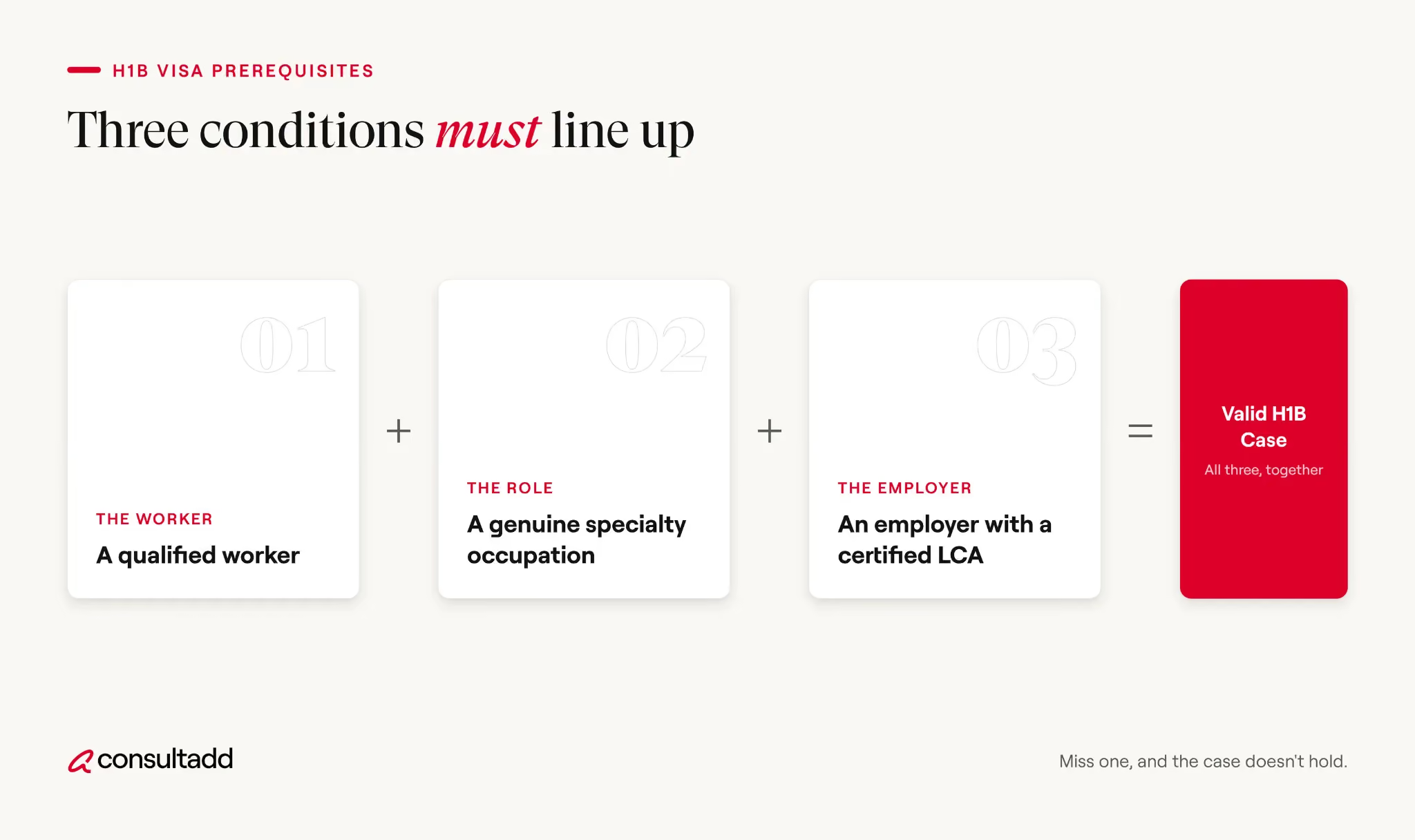
Miss any one of the three, and the petition has a real chance of denial regardless of how strong the candidate looks on paper.
One detail that trips people up: a bachelor's degree isn't strictly mandatory. USCIS allows a "three years of progressive experience equals one year of college" equivalency, so twelve years of documented, relevant experience can substitute for a four-year degree.
It's not a shortcut anyone should count on, but it does keep the door open for experienced candidates without a traditional degree path.
The FY 2027 lottery works differently now
For years, the H1B lottery was a straight random draw. Every registered beneficiary had the same odds regardless of salary. That changed for the FY 2027 cap season.
USCIS now runs a wage-weighted selection process. Registrations tied to higher Department of Labor wage levels get proportionally more entries in the lottery, while Level I (entry-level) registrations get fewer.
USCIS has said the goal is to prioritize allocating visas to higher-skilled and higher-paid workers while still leaving room for employers to sponsor at all wage levels.
Full details on the current cycle sit on USCIS's H-1B cap season page, including the exact registration windows and how the weighted selection is applied. Here's the timeline for the current cap season:
The registration fee stays at $215 per beneficiary, paid by the sponsoring employer through their USCIS online account. That part hasn't changed.
What has changed is the cost conversation around the separate $100,000 proclamation fee. It applies to new H1B petitions filed for beneficiaries who are outside the United States and need consular processing to enter on the visa.
Change-of-status petitions, most commonly F-1 students moving to H1B status while they're already in the country, are generally exempt. That distinction has quietly made in-country candidates far more attractive to employers weighing sponsorship costs.
Worth flagging: the $100,000 fee and the wage-weighted selection method are both being litigated in federal court, so the details could still shift before the FY 2027 season wraps up. Anyone relying on this for a filing decision should confirm the current status directly with USCIS or immigration counsel.
Who actually sponsors H1B jobs
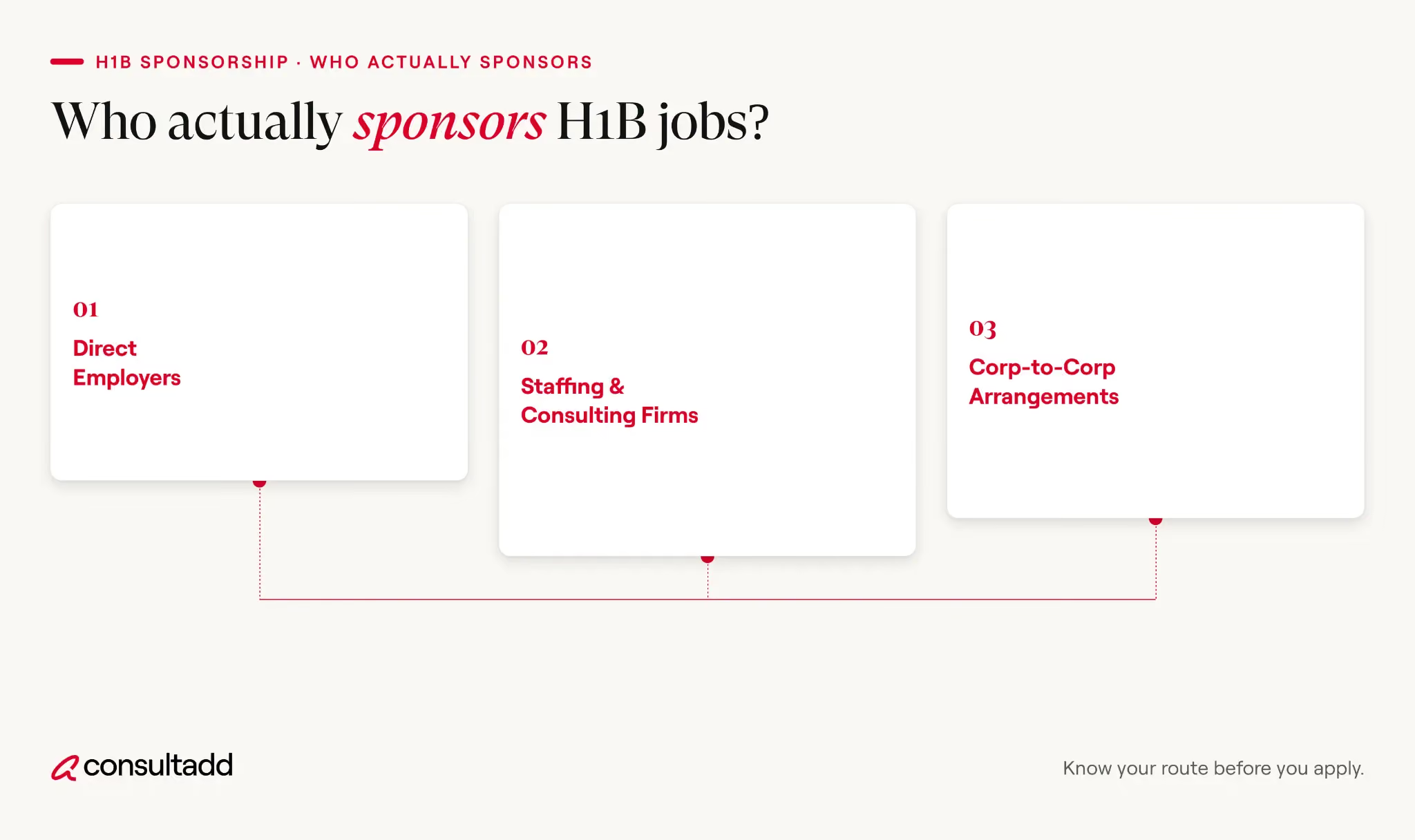
Sponsorship falls into three broad categories, and each one changes what the day-to-day job looks like.
1. Direct employers
- A company hires you outright and files the petition itself.
- This is the model most people picture: Amazon, Google, a regional bank, a hospital system.
- The employer owns the entire process, including LCA filing, wage compliance, and any petition amendments if your role or location changes.
2. Staffing and consulting firms.
- These firms hire H1B talent and place them at client sites, often on a W2 basis.
- The staffing firm is the legal employer of record, files the LCA, and handles compliance, while the candidate works at the end client.
- This is a well-trodden entry point for candidates without a direct offer in hand, and it's how a large share of IT and engineering H1B jobs actually get filled.
Corp-to-corp arrangements.
- Here, the candidate is technically employed through their own corporation or an intermediary vendor, not directly by the staffing firm or end client.
Our comparison of W2 vs C2C for visa holders breaks down which model tends to fit which situation.
Pay: what the prevailing wage rule actually protects
Every H1B job has a wage floor. Before an employer can file an LCA, they have to attest to the Department of Labor that the H1B worker will be paid at least the prevailing wage for that occupation, in that specific metro area, or the actual wage paid to similarly qualified employees at the same company, whichever is higher.
The wage levels run from Level I (entry, roughly the bottom quartile of pay for the occupation and area) up to Level IV (senior, top of the range).
This isn't just a compliance checkbox anymore. Since wage level now factors into lottery odds under the weighted selection process, employers filing at Level I are working with worse odds than they were two seasons ago.
The Department of Labor's OFLC Wage Search tool is the official source for checking what a given role should pay in a given location. It's public, and it's worth checking before assuming an offer is competitive.
Our explainer on what an LCA actually is covers the filing step in plain terms if you've seen the acronym on a job posting and weren't sure what it meant.
Finding H1B jobs without wasting a cap cycle
A candidate can be qualified and still miss out simply by targeting the wrong employers. A few things worth doing before the next registration window opens:
- Check H1B disclosure data before you apply. USCIS and the Department of Labor publish historical filing data, so you can see which companies actually sponsor at volume versus which ones list "will consider sponsorship" but rarely follow through.
- Confirm your work authorization status matches what a role requires. If you're not sure what counts as proof of authorization to work
- Target roles at or above Level II wages where you can. Given the weighted lottery, an offer at a higher wage level genuinely improves your selection odds this cycle, not just your paycheck.
- Don't rule out staffing and consulting firms as a starting point. They file large numbers of LCAs every year specifically because their business model depends on placing visa-holding talent, and that volume can work in a candidate's favor.
Start Strong With Consultadd
With 15 years in business and 5,000+ successful staffing engagements, we don't just fill roles, we build reliability into your process. We've supported 65 staffing companies in the past year alone and maintain MSAs with industry leaders like Robert Half and TEKsystems.
Here's what working with Consultadd looks like:
- Talent sourced in under 24 hours
- Ready-to-deploy candidates, vetted for experience and compliance
- Lower turnover risk: we match long-term goals, not just short-term needs
- Seamless compliance: visa, documentation, onboarding? Handled.
- Dedicated 1:1 account managers for responsive, personalized support
- Top 100 candidate matches delivered in the past year
- Strong partnerships with universities to tap into fresh, committed talent
- Post-placement support so your investment grows beyond day one
For candidates, your next opportunity is more than just a job title, it's a chance to build skills, gain experience, and move your career forward. At Consultadd, we connect technology professionals with projects and employers that align with their goals, whether they're looking for contract, contract-to-hire, or long-term opportunities.
The tech job market moves fast, but the right guidance can make all the difference. Ready to take the next step in your career journey? Explore Opportunities >>
Key Takeaways
- H1B jobs require more than a job offer, the role must qualify as a specialty occupation, and the employer must be willing to sponsor the H1B and meet LCA requirements.
- The FY 2027 lottery is now wage-weighted
- H1B sponsorship can come through different routes like direct employers, staffing/consulting firms, and corp-to-corp arrangements each have different implications for payroll, control, and compliance.
- H1B workers are protected by prevailing wage requirements
- Candidates should research sponsors before applying and considering staffing firms can improve the chances of finding viable H1B opportunities.
FAQs
Do all H1B jobs require a college degree?
Most do, since the role has to qualify as a specialty occupation requiring at least a bachelor's degree in a related field. There's an exception: twelve years of progressive, documented experience can substitute for a degree under USCIS's equivalency rule.
How many H1B visas are available each year?
The regular cap is 65,000, plus an additional 20,000 for candidates with a master's degree or higher from a US institution. Certain employers, like universities and nonprofit research organizations, are exempt from the cap entirely.
Does the $100,000 fee apply to every H1B petition?
No. It applies to new petitions for beneficiaries outside the US who need consular processing. Change-of-status petitions for people already in the country, including many F-1 to H1B transitions, are generally exempt.
Can a staffing agency sponsor an H1B visa?
Yes. Staffing and consulting firms sponsor H1B workers regularly and place them at client sites. The firm handles the LCA and petition, and the worker is typically employed on a W2 basis by the staffing firm.
What's the difference between H1B sponsorship and just getting hired?
Getting hired means an employer wants you. Sponsorship means that the employer is also willing to file the LCA, register you for the lottery, and cover the legal and administrative work tied to the visa. Not every employer that wants to hire you is willing to do that.
Why did my registration odds change this year?
Starting with the FY 2027 cap season, USCIS moved to a wage-weighted lottery. Registrations tied to higher Department of Labor wage levels receive more entries, so identical candidates at different wage levels no longer have identical odds.
Is the prevailing wage the same everywhere?
No. It varies by occupation, wage level, and metro area. A software engineer role in San Francisco has a different prevailing wage floor than the same title in a smaller market, which is why the Department of Labor's wage tool is location-specific.