
Contracts
.avif)
What Is A 1099 Job? A Simple Breakdown
Introduction
A 1099 job is work you do as an independent contractor instead of an employee. The company pays you for the work, but it doesn't withhold taxes, doesn't pay into Social Security or Medicare on your behalf, and doesn't offer benefits.
At the end of the year, you get a Form 1099-NEC instead of a W-2, and you're responsible for handling your own taxes from there.
That's the short version. The longer version is where most people get tripped up, especially if this is their first contract role or their first time hiring a contractor instead of a full-time employee.
TL;DR
- A 1099 job means you're classified as an independent contractor, not an employee, so no taxes are withheld from your pay.
- You pay self-employment tax (15.3%) on top of regular income tax, since there's no employer splitting that cost with you.
- There are no employer-provided benefits: no health insurance, no paid time off, no unemployment insurance if the work dries up.
- You typically have more control over how, when, and where you do the work, which is the legal line the IRS uses to separate contractors from employees.
- 1099 pay rates are usually higher than W2 rates for the same role, because you're covering costs an employer would otherwise absorb.
Why the classification matters more than the paycheck number
Here's something that trips people up constantly:
- A recruiter offers $65 an hour on a 1099 basis, and it sounds better than the $52 an hour W2 offer down the road.
- It isn't automatically better.
- The $65 has to cover your own self-employment tax, any gap in health coverage, and time you don't get paid for, like vacation or sick days.
How the IRS decides if a job is really 1099
This isn't just a label a company slaps on a role. The general rule the IRS applies is that a worker counts as an independent contractor if the person paying for the work only controls the result, not the specific methods and schedule used to get there.
If a company tells you exactly when to log in, how to do the task, and supervises you closely, that's an employee relationship, even if they call it a 1099 role and hand you that form at year end.
The IRS breaks this down into three buckets it looks at when a classification gets challenged, per its own independent contractor guidance:
- Behavioral control: Does the company dictate how the work gets done, or just what the end result should look like?
- Financial control: Who provides the equipment? Can you take on other clients at the same time? Do you invoice, or get a regular paycheck?
- Relationship type: Is there a contract with an end date, or does the work look permanent and central to the business?
None of these three factors decides it alone. Courts and the IRS weigh them together. That's also why misclassification (a company treating someone as 1099 when the actual working relationship looks like employment) is a real legal risk for employers, not just a technicality.
The Department of Labor's Fact Sheet 13 lays out a similar "economic realities" test for Fair Labor Standards Act purposes, and it's worth a look if you're on the hiring side and want to get this right before a role is posted.
1099 job vs W2 job: the practical differences
If you want a deeper look at how this plays out specifically in IT staffing, where 1099, W2, and corp-to-corp all show up in the same job posting, our W2 vs C2C vs 1099 comparison goes through visa sponsorship and turnover considerations that don't come up in a generic 1099 vs W2 explainer.
What taxes actually look like on a 1099 job
This is the part that catches first-time contractors off guard. As a W2 employee, taxes come out before you ever see the money. On a 1099 job, you get the full amount, and it's on you to set aside enough for taxes and pay them yourself.
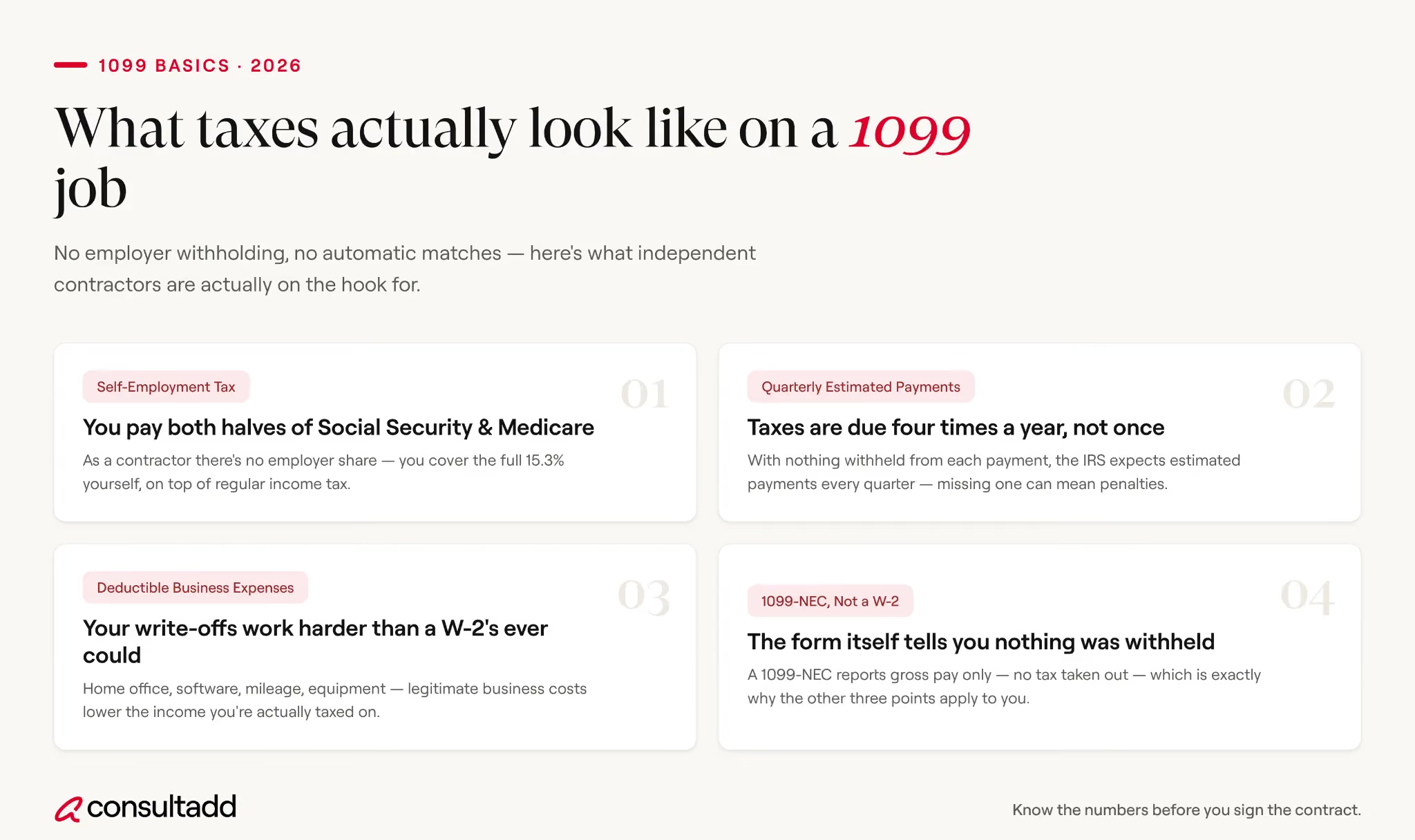
A few things to plan for:
- Self-employment tax. This covers Social Security and Medicare, and it's 15.3% of your net earnings. An employer normally pays half of this for a W2 employee. On 1099, you cover all of it.
- Quarterly estimated payments. The IRS expects payments roughly four times a year, not just one lump sum in April. Missing these can trigger underpayment penalties.
- Deductible business expenses. Home office costs, mileage, software subscriptions, and other work-related expenses can offset your taxable income. This is one real advantage over W2 work, where these deductions mostly don't exist anymore.
- A 1099-NEC, not a W-2. Generally, someone counts as self-employed if they carry on a trade or business as a sole proprietor or independent contractor, and that includes people earning money through gig economy work, which is exactly the bucket most 1099 contractors fall into.
The IRS worker classification guidance is a decent starting point if you want the tax obligations spelled out directly from the source, rather than through a staffing firm's interpretation of them.
Pros and cons of taking a 1099 job
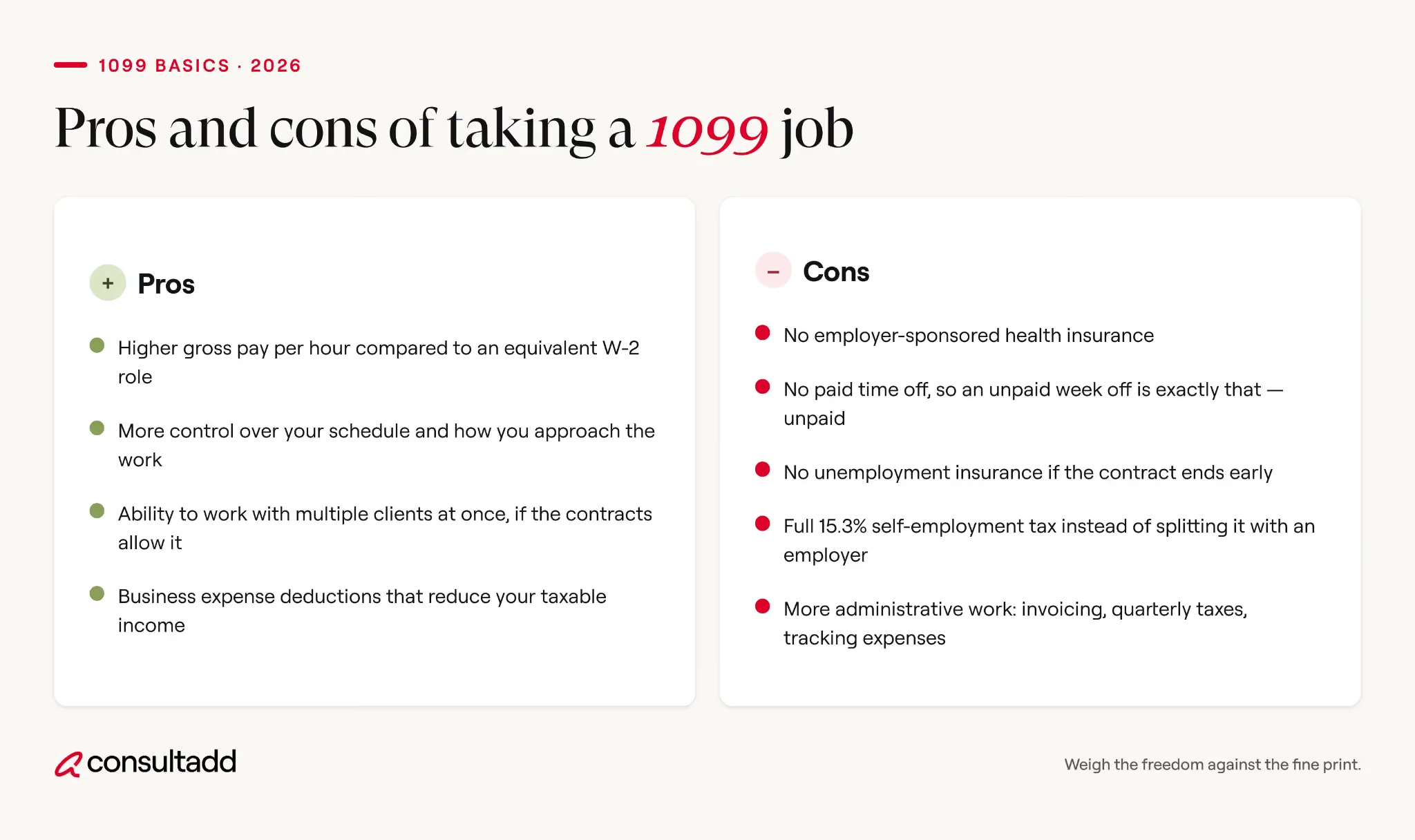
What tends to work in your favor:
- Higher gross pay per hour compared to an equivalent W2 role
- More control over your schedule and how you approach the work
- Ability to work with multiple clients at once, if the contracts allow it
- Business expense deductions that reduce your taxable income
What tends to work against you:
- No employer-sponsored health insurance
- No paid time off, so an unpaid week off is exactly that, unpaid
- No unemployment insurance if the contract ends early
- Full 15.3% self-employment tax instead of splitting it with an employer
- More administrative work: invoicing, quarterly taxes, tracking expenses
Some contractors move between 1099, W2, and corp-to-corp arrangements over the course of their career depending on the client and the length of the engagement.
If a client specifically wants to work through a registered business entity rather than with you as an individual, that's a corp-to-corp employment setup, and it changes the tax picture again.
When a company prefers 1099 over W2 (and vice versa)
Companies lean toward 1099 arrangements for short, clearly scoped projects where they don't want the overhead of payroll taxes, benefits, or a long-term commitment. Think a six-month system migration, a one-off audit, or specialized work that doesn't need daily supervision.
W2 makes more sense when the company wants closer control over the work, when the engagement is expected to run long-term, or when the role sits close to the core of what the business does day to day. Some clients also prefer W2 or corp-to-corp specifically because it lowers their own risk of a misclassification dispute down the line.
Start Strong With Consultadd
With 15 years in business and 5,000+ successful staffing engagements, we don't just fill roles, we build reliability into your process. We've supported 65 staffing companies in the past year alone and maintain MSAs with industry leaders like Robert Half and TEKsystems.
Here's what working with Consultadd looks like:
- Talent sourced in under 24 hours
- Ready-to-deploy candidates, vetted for experience and compliance
- Lower turnover risk: we match long-term goals, not just short-term needs
- Seamless compliance: visa, documentation, onboarding? Handled.
- Dedicated 1:1 account managers for responsive, personalized support
- Top 100 candidate matches delivered in the past year
- Strong partnerships with universities to tap into fresh, committed talent
- Post-placement support so your investment grows beyond day one
For candidates, your next opportunity is more than just a job title, it's a chance to build skills, gain experience, and move your career forward. At Consultadd, we connect technology professionals with projects and employers that align with their goals, whether they're looking for contract, contract-to-hire, or long-term opportunities.
The tech job market moves fast, but the right guidance can make all the difference. Ready to take the next step in your career journey? Explore Opportunities >>
Key takeaways
- A 1099 job means independent contractor status, with no tax withholding and no employer-provided benefits.
- The IRS decides classification based on control over the work, not what the company calls the arrangement.
- Self-employment tax runs 15.3%, and quarterly estimated payments are part of the deal.
- Higher hourly pay on 1099 contracts is meant to offset the taxes and benefits you'd otherwise get through an employer.
- Comparing a 1099 offer to a W2 offer means comparing take-home value, not just the rate on the page.
FAQs
Is a 1099 job the same as being self-employed?
Yes. If you receive a 1099-NEC for your work, the IRS treats you as self-employed, which means you're responsible for your own income tax and self-employment tax.
Do I get benefits on a 1099 job?
No. Health insurance, paid time off, and retirement contributions aren't part of a 1099 arrangement. You'd need to arrange and pay for these yourself.
How much should I charge more for a 1099 job compared to W2?
There's no single formula, but many contractors aim for enough of a rate increase to cover the extra 7.65% in self-employment tax and the value of benefits they're giving up. The right number depends on your specific costs.
Can a company just call a job 1099 to avoid paying benefits?
Not legally. Classification depends on the actual working relationship, not the label. A company that directs your schedule and methods closely but pays you on a 1099 basis may be misclassifying the role.
What happens if I don't pay quarterly estimated taxes?
The IRS can charge an underpayment penalty. It's generally cheaper and less stressful to pay quarterly than to owe a large lump sum, plus penalties, the following April.
Is 1099 work the same as gig work?
Gig work, like rideshare driving or app-based delivery, is usually structured as 1099 work, but 1099 status also covers consultants, IT contractors, freelancers, and many other types of project-based work.

How To Find Contract Work: A Real 2026 Strategy
Introduction
There's no single website, app, or agency that reliably keeps a contractor's pipeline full. Anyone who's actually done this work for a few years will tell you the same thing: consistent contract work comes from running several channels at once, staffing agencies, direct networking, job boards, and referrals, so that when one goes quiet, the others keep the pipeline moving.
Relying on a single source is the most common reason contractors experience painful gaps between assignments.
The channels themselves have also shifted. Job boards still matter, but they no longer dominate the way they once did; recruiters increasingly approach candidates directly through LinkedIn rather than waiting for applications.
Freelance marketplaces have matured into a real, if crowded, income source for some skill sets. And vetting an opportunity before you invest time in it has become its own skill, since not every posting represents a real, funded, ready-to-fill role.
This guide covers where contract work actually comes from in 2026, how to work each channel effectively, how to tell a real opportunity from a dead-end posting, and how to keep your pipeline full between assignments.
TL;DR
- No single channel is reliable on its own. Combine staffing agencies, direct networking, job boards, and referrals; each covers gaps the others leave.
- Staffing and recruiting agencies remain the highest-leverage channel for IT contract work specifically, since they carry existing client relationships you can't replicate cold.
- LinkedIn has overtaken job boards as the primary channel recruiters use to find contractors directly; an optimized profile with the right keywords gets found before you even apply anywhere.
- Freelance marketplaces (Upwork, Toptal, and similar) work well for project-based and creative work, less consistently for enterprise IT placements, which still run mostly through agencies and direct relationships.
- Vet every opportunity before investing real time: confirm the budget is actually approved, ask how long the role has been open, and treat vague, urgent-sounding postings with appropriate skepticism.
Why one channel is never enough
Contract work moves in bursts. A recruiter goes quiet for three weeks, then three opportunities land on the same day. A job board delivers nothing relevant for a month, then a perfect listing appears. Because the timing is unpredictable and largely outside your control, the only reliable strategy is running multiple channels simultaneously rather than betting on whichever one worked last time.
The practical version of this: treat your own pipeline the way a staffing agency treats its bench, always have applications in motion, relationships warm, and a profile visible, so you're never starting entirely from zero when a contract ends. The rest of this guide breaks down each channel and how to actually work it, rather than just having a presence on it.
Staffing agencies and recruiters
For IT and technical contract work specifically, this is usually the highest-leverage channel, and it's the one solo job-board searching can't replicate. Agencies carry existing client relationships, often with a direct line to hiring managers or a Tier 1 vendor position with the end client, that took years to build.
- A recruiter working an active requirement can move a submission in days; the same opportunity, discovered cold on a job board, might take weeks to even reach a decision-maker.
- Working this channel well means treating it as a relationship, not a transaction.
- Respond quickly when a recruiter reaches out, even to say the role isn't a fit, since recruiters remember who's reliable and who goes silent.
- Keep your resume and availability current with a handful of recruiters you trust rather than mass-blasting your details to dozens of agencies, which dilutes urgency and often results in the same role being submitted twice through different channels, a genuine problem for everyone involved.
- Understand the vendor chain you're operating inside, since your rate and how quickly you move often depend on how many layers sit between you and the end client.
Our detailed look at what is C2C employment and what is a C2C recruiter covers how that structure actually works from both sides.
LinkedIn and direct networking
LinkedIn has become the primary channel recruiters use to find contractors directly, ahead of job boards in many technical fields. This changes the strategy: instead of only applying to postings, the goal is being findable and credible enough that recruiters approach you first.
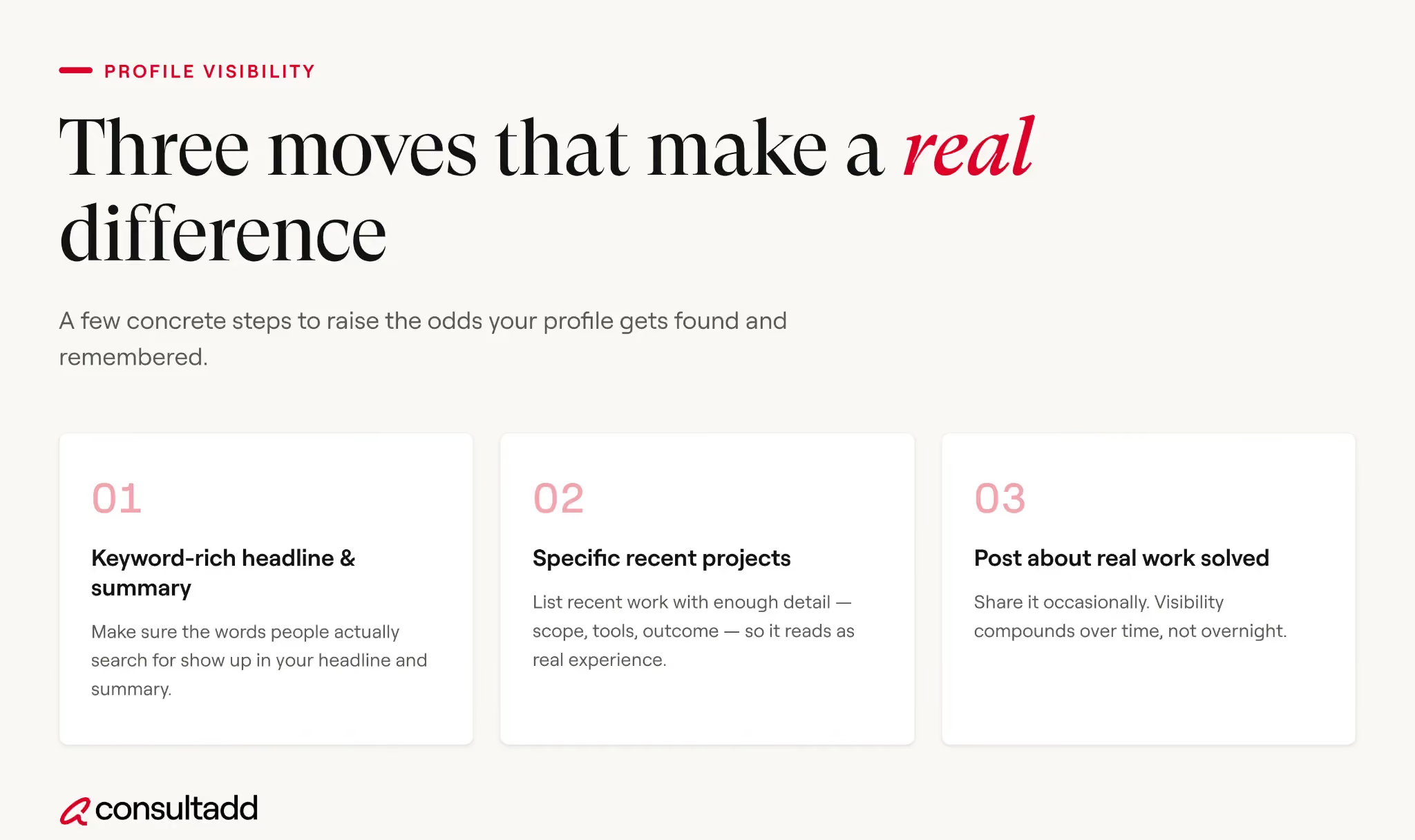
A few concrete moves make a real difference.
- Keep your headline and summary keyword-rich with the specific technologies and role titles you're targeting, since recruiter searches are largely keyword-driven.
- List recent projects with enough specificity that a recruiter can match you to a live requirement at a glance, not just a job title.
- Post occasionally about real work, a project completed, a technical problem solved, since visibility compounds over time and recruiters do notice active profiles over dormant ones.
And don't overlook direct outreach in the other direction: reaching out to recruiters and hiring managers at companies you'd genuinely like to work with, referencing a specific project or role, outperforms cold-applying into a stack of hundreds of resumes.
Job boards and freelance marketplaces
Job boards remain worth monitoring even though they no longer dominate the way they once did, and different platforms serve genuinely different kinds of contract work:
A workable strategy for most contractors: pick one general aggregator, one tech-specific or vetted board, and one marketplace if your skill set fits project-based work well, then set alerts rather than manually re-searching daily.
Be cautious of postings that read as CV-harvesting rather than a genuine open requirement, generic descriptions, no client name, unusually broad skill requirements designed to catch as many resumes as possible.
Referrals and past clients
This is the most underused channel relative to how well it works. Former clients and colleagues already know your work quality, which eliminates the biggest uncertainty a new client faces when hiring a contractor sight unseen.
A short, direct message to a past manager or client, "wrapping up a project soon, would love to help again if anything's opening up", regularly produces work faster than any job board search.
The practical habit: stay in light touch with every client and colleague after a contract ends, not just when you need work. A quarterly check-in costs almost nothing and keeps you top of mind when a role does open.
Contractors who treat every engagement as the start of a long-term relationship, rather than a closed transaction, consistently report shorter gaps between assignments than those who don't.
Vetting a contract opportunity before you commit time
Not every posting or recruiter outreach represents a real, ready-to-fill opportunity, and chasing dead-end requirements wastes time you could spend on ones that will actually close.
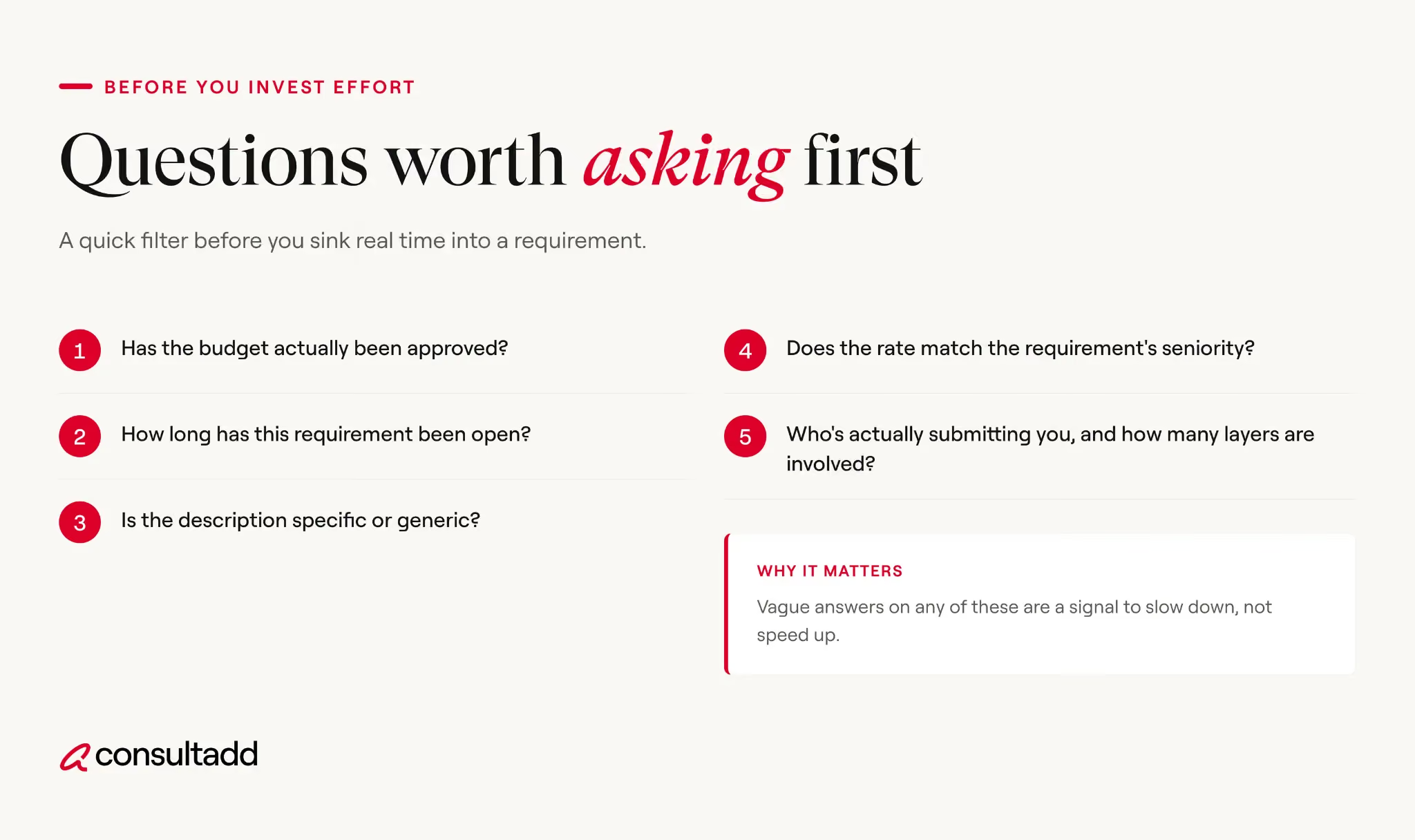
A few questions worth asking before investing serious effort:
- Has the budget actually been approved?
A role a client is "considering" and a role with signed-off funding are very different opportunities, and a good recruiter can usually tell you which one you're looking at.
- How long has this requirement been open?
A role open for two days behaves very differently than one open for two months; the latter often signals an unrealistic requirement, budget mismatch, or an internal candidate quietly being favored.
- Is the description specific or generic?
Vague postings with no client name, broad "any technology" requirements, or copy-paste language across multiple listings are common signs of resume harvesting rather than a genuine opening.
- Does the rate match the requirement's seniority?
A senior-level requirement paired with a junior-level rate is a signal worth questioning upfront rather than discovering after several interview rounds.
- Who's actually submitting you, and how many layers are involved?
The closer you are to the end client or a genuine Tier 1 vendor, the faster decisions typically move and the more transparent the rate structure tends to be.
Asking these questions upfront, politely and directly, is standard practice among experienced contractors and a reasonable expectation to set with any recruiter or client early in the conversation.
Keeping your pipeline full between contracts
The contractors who avoid long gaps treat sourcing as a continuous, low-level activity rather than something that starts only when a contract ends.
That means keeping your resume and LinkedIn profile current at all times, staying warm with two or three trusted recruiters even mid-contract, and starting outreach for the next opportunity a few weeks before the current one wraps rather than waiting for the last day.
It's also worth being genuinely interview-ready at all times, since strong opportunities move fast and a rusty interview performance costs more contracts than most people realize.
Our full stack developer interview questions guide and broader coding interview playbook are worth a refresh even between active searches, since technical interview expectations shift meaningfully year to year.
Finally, understand the structure you're stepping into before you accept a contract, since W2, 1099, and C2C arrangements carry genuinely different tax, benefits, and compliance implications that affect your real take-home pay.
Our comparisons of contract worker vs employee and what is C2C employment cover exactly what to expect from each structure before you sign anything.
Start Strong With Consultadd
With 15 years in business and 5,000+ successful staffing engagements, we don't just fill roles, we build reliability into your process. We've supported 65 staffing companies in the past year alone and maintain MSAs with industry leaders like Robert Half and TEKsystems.
Here's what working with Consultadd looks like:
- Talent sourced in under 24 hours
- Ready-to-deploy candidates, vetted for experience and compliance
- Lower turnover risk: we match long-term goals, not just short-term needs
- Seamless compliance: visa, documentation, onboarding? Handled.
- Dedicated 1:1 account managers for responsive, personalized support
- Top 100 candidate matches delivered in the past year
- Strong partnerships with universities to tap into fresh, committed talent
- Post-placement support so your investment grows beyond day one
For candidates, your next opportunity is more than just a job title, it's a chance to build skills, gain experience, and move your career forward. At Consultadd, we connect technology professionals with projects and employers that align with their goals, whether they're looking for contract, contract-to-hire, or long-term opportunities.
The tech job market moves fast, but the right guidance can make all the difference. Ready to take the next step in your career journey? Explore Opportunities >>
Key takeaways
- Consistent contract work comes from running multiple channels simultaneously, staffing agencies, LinkedIn, job boards, and referrals, since timing is unpredictable and no single source is reliable alone.
- For IT and technical contract work, staffing agencies and recruiters remain the highest-leverage channel, thanks to existing client relationships you can't replicate through cold applications.
- LinkedIn now outweighs job boards as the primary channel recruiters use to source contractors directly; an optimized, keyword-rich, active profile gets you found rather than only found through applying.
- Vet every opportunity before investing real time: confirm approved budget, ask how long the role has been open, and treat vague or generic postings as likely resume-harvesting rather than genuine openings.
- Treat sourcing as continuous, not reactive: stay warm with recruiters and past clients between contracts, and start outreach for your next opportunity weeks before the current one ends.
FAQs
What is the best way to find contract work in 2026?
No single method works reliably alone. The strongest approach combines staffing agency relationships, an optimized and active LinkedIn presence, targeted job board alerts, and referrals from past clients and colleagues. For IT and technical roles specifically, agency relationships and direct networking typically outperform job boards.
Are staffing agencies worth using to find contract work?
Yes, especially for IT and enterprise contract roles. Agencies carry existing client relationships and Tier 1 vendor positions that are difficult to replicate through cold job applications, and a good recruiter can move a strong candidate's submission far faster than an application into an open job posting.
How do I know if a contract job posting is legitimate?
Ask whether the budget for the role has actually been approved, how long the requirement has been open, and whether the description is specific (client name, clear tech stack) rather than generic and broad. Vague postings designed to collect resumes across many candidates, rather than fill one real role, are common and worth treating skeptically.
Is LinkedIn better than job boards for finding contract work?
For many technical fields, yes. Recruiters increasingly search and approach candidates directly on LinkedIn rather than relying solely on job board applications. An optimized profile with clear, specific, keyword-rich project descriptions gets you found by recruiters searching for exactly your skill set, often before you apply anywhere at all.
Should I use freelance marketplaces like Upwork for IT contract work?
They can work well for project-based or shorter-cycle technical work, but enterprise IT placements, especially longer-term contract or C2C roles, still run mostly through staffing agencies and direct client relationships rather than open marketplaces. Many experienced contractors use marketplaces as a supplementary channel rather than a primary one.
How do I avoid long gaps between contracts?
Treat sourcing as continuous rather than reactive: keep your resume and LinkedIn current at all times, stay in light touch with a few trusted recruiters and past clients even while under contract, and start outreach for your next opportunity a few weeks before your current one ends rather than waiting until it's already over.

What Is A C2C Recruiter? Role, Skills And How It Works
Introduction
Post a "C2C recruiter" job and you'll get a very specific kind of candidate: someone who talks fluently about hotlists, prime vendors, and rate negotiation, and who's spent years living inside job boards like Dice rather than LinkedIn.
So what is a C2C recruiter? It's a recruiter who staffs contract roles by placing candidates through corp-to-corp arrangements, connecting a consultant's own business entity (or the consulting firm employing them) with an end client, usually through a chain of vendors rather than a direct client relationship.
This is a genuinely different job than a standard corporate recruiter, and the confusion between the two is common enough that job postings routinely misuse the terms. A C2C recruiter, closely related to what the industry also calls a bench sales recruiter, spends the day marketing available consultants into a vendor network, negotiating rates across multiple markup layers, and managing compliance around work authorization, not sourcing candidates for a single company's open headcount.
This guide breaks down exactly what the role involves, the vendor chain it operates inside, the terminology that defines the job, the skills that separate strong performers, and how it compares to other recruiting roles.
TL;DR
- A C2C recruiter places contract IT professionals into roles through corp-to-corp arrangements, working through a chain of vendors rather than recruiting directly for one employer's open positions.
- The role is closely related to, and often used interchangeably with, "bench sales recruiter": marketing consultants who are between projects ("on the bench") to available contract openings.
- Success depends on fluency in the vendor chain (client, prime vendor, sub-vendors), rate negotiation across markup layers, and deep familiarity with US work authorization categories like H-1B, OPT, and GC EAD.
- Core tools are contract job boards (Dice, Indeed niche boards), vendor management systems (VMS) like Fieldglass and Beeline, and informal "hotlists" of active requirements shared across recruiter networks.
- Compliance is not optional: misrepresenting a candidate's status, a vendor chain, or rate structure exposes the recruiter's agency to real legal and reputational risk.
What a C2C recruiter actually does
The core job is matchmaking with a twist: instead of finding a candidate for an open role at one company, a C2C recruiter usually works from the other direction, starting with an available consultant (frequently one who's finishing a project and about to be "on the bench," unbilled and available) and marketing that person into active contract requirements across a network of vendors and clients.
A typical day blends several distinct activities. Sourcing active job requirements from prime vendors, staffing partners, and direct client postings. Submitting consultant profiles against those requirements, often reformatting resumes to match the specific technology stack listed. Negotiating the bill rate at each layer of the vendor chain, since every intermediary between the consultant and the end client takes a markup.
Coordinating interview scheduling between the consultant and the client, sometimes across multiple time zones. And managing the paperwork trail: the corp-to-corp agreement, work authorization documentation, and often a background check or drug screen requirement specific to the end client.
Recruiters who market their own bench consultants (rather than sourcing new candidates from the open market) are often specifically called bench sales recruiters, and the two titles overlap heavily in job postings; many roles labeled "C2C recruiter" are, functionally, bench sales positions.
Understanding the vendor chain
This is the structural piece that makes C2C recruiting genuinely different from direct-hire recruiting, and it's worth understanding before anything else makes sense.
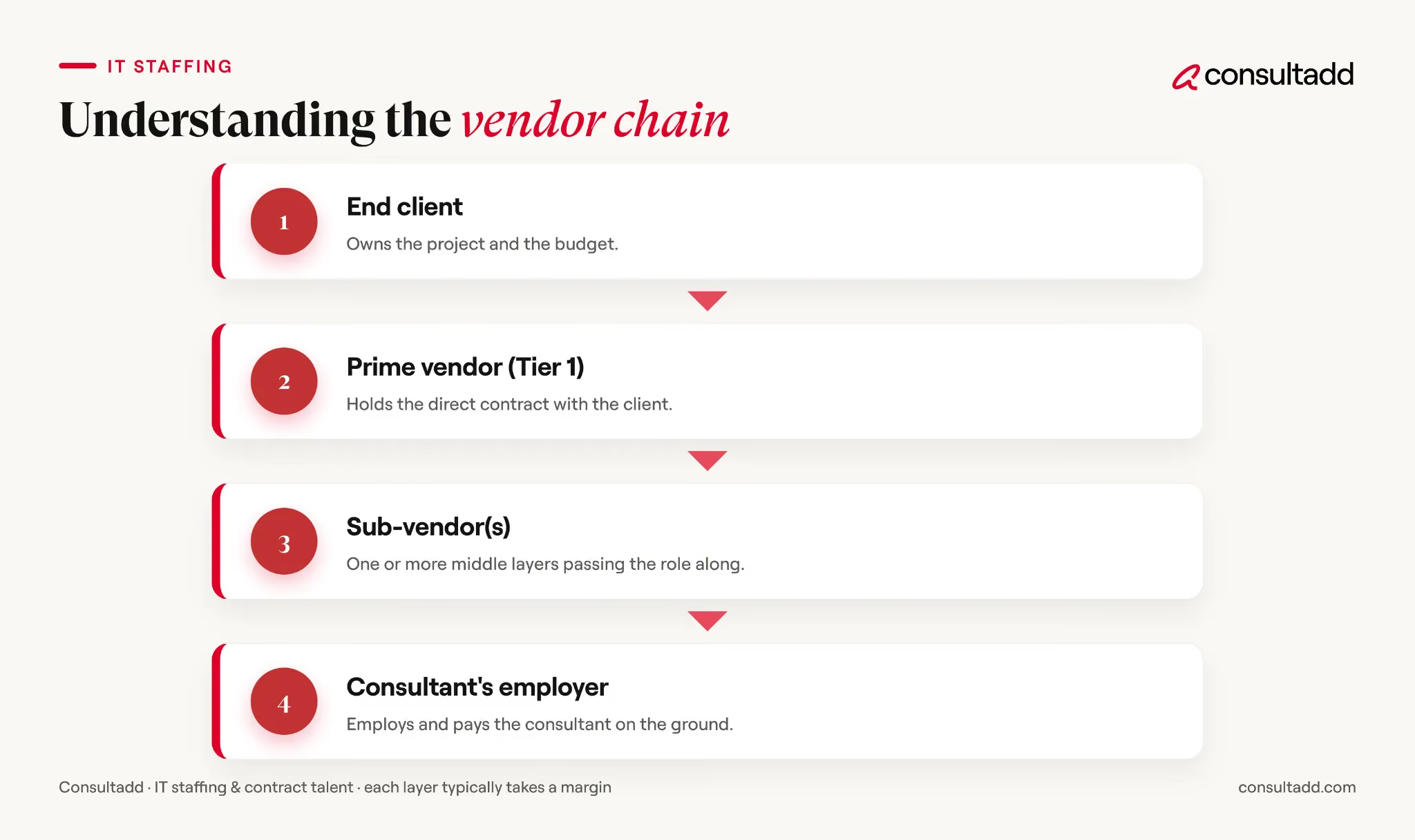
A recruiter with a direct Tier 1 vendor relationship can move a candidate faster and negotiate a better rate than one working three or four layers removed from the end client, where each markup shrinks what's left for the consultant and slows down every approval.
Long vendor chains (four, five, or more layers) are also where compliance risk concentrates, since visibility into who's actually managing the work relationship gets murkier with each added layer. For background on how the underlying arrangement is structured and taxed.
Our detailed guide to what is C2C employment covers the employment side of this same picture.
Key terms every C2C recruiter needs to know
Job postings and daily conversation in this world run on a specific vocabulary. Fluency in these terms is itself a hiring signal:
Recruiters unfamiliar with this vocabulary struggle to operate in the space regardless of general recruiting talent, which is part of why C2C/bench sales roles are typically filled by recruiters with specific prior experience in this exact niche rather than generalist talent acquisition professionals.
C2C recruiter vs other recruiting roles
Neither role is objectively harder, but they reward genuinely different strengths. Bench sales/C2C recruiting rewards speed, network depth, and negotiation stamina across a chain of intermediaries.
Direct-hire recruiting rewards candidate evaluation and employer storytelling. Companies building out a broader recruiting function often need both skill sets on the team, and understanding the difference prevents the common mistake of hiring a strong direct-hire recruiter into a bench sales seat, or vice versa, and being surprised when the fit doesn't work.
Our broader guide to hiring and recruiting strategies covers how different recruiting functions fit into a complete talent acquisition system.
Skills and tools of the role
Vendor and client relationship building. The single highest-leverage skill in this role. Recruiters who cultivate trusted, direct relationships with Tier 1 vendors and hiring managers consistently outperform those relying purely on cold submissions into open postings, because those relationships surface requirements before they're broadly circulated.
Rate negotiation. Every placement involves negotiating a bill rate that has to work across every layer of the vendor chain while still leaving the consultant a competitive take-home rate. This is a genuinely different skill than salary negotiation in direct-hire recruiting, since it involves reasoning through multiple parties' margins simultaneously.
Work authorization fluency. Strong C2C recruiters carry real working knowledge of US visa and status categories, CPT, OPT, STEM OPT, H-1B, H-4 EAD, and green card holders, since a candidate's status directly determines which roles they're eligible for and how urgently a placement needs to move.
Our guides to what is OPT/CPT and H-1B sponsorship for tech professionals cover the specifics recruiters in this space need to understand accurately, not just recognize as acronyms.
Speed and volume management. Contract requirements move fast, and a recruiter is typically managing many active submissions simultaneously, following up relentlessly without letting any single one stall. Organization under volume is as important as any single relationship skill.
Tools of the trade. Contract-focused job boards (Dice remains dominant in this niche, alongside various IT-specific and immigrant-community job boards), vendor management systems (Fieldglass, Beeline, and similar client-side platforms), and informal but powerful hotlist networks, email threads, WhatsApp and Google Groups, where active bench consultants and open requirements circulate constantly.
Compliance: where the role carries real risk
This is the part of the job that separates a durable career from a short one. Every submission carries real compliance weight: misrepresenting a candidate's work authorization status, inflating experience to match a requirement, or obscuring how many vendor layers actually sit in a chain can expose both the recruiter and their agency to serious consequences, including contract termination, legal liability, and reputational damage that follows an agency across the whole vendor network, which is smaller and more interconnected than it looks from outside.
The safest and most durable practice in this role: represent work authorization status accurately and completely, disclose the real vendor chain rather than hiding sub-vendor layers from a client, and never submit a candidate against requirements they genuinely don't meet just to keep pipeline numbers up.
Recruiters and agencies that build a reputation for clean, accurate submissions get preferred access to Tier 1 vendor relationships over time; the ones that don't get filtered out of networks faster than any single bad placement would suggest.
Start Strong With Consultadd
With 15 years in business and 5,000+ successful staffing engagements, we don't just fill roles, we build reliability into your process. We've supported 65 staffing companies in the past year alone and maintain MSAs with industry leaders like Robert Half and TEKsystems.
Here's what working with Consultadd looks like:
- Talent sourced in under 24 hours
- Ready-to-deploy candidates, vetted for experience and compliance
- Lower turnover risk: we match long-term goals, not just short-term needs
- Seamless compliance: visa, documentation, onboarding? Handled.
- Dedicated 1:1 account managers for responsive, personalized support
- Top 100 candidate matches delivered in the past year
- Strong partnerships with universities to tap into fresh, committed talent
- Post-placement support so your investment grows beyond day one
For candidates, your next opportunity is more than just a job title, it's a chance to build skills, gain experience, and move your career forward. At Consultadd, we connect technology professionals with projects and employers that align with their goals, whether they're looking for contract, contract-to-hire, or long-term opportunities.
The tech job market moves fast, but the right guidance can make all the difference. Ready to take the next step in your career journey? Explore Opportunities >>
Key takeaways
- A C2C recruiter places contract IT consultants through corp-to-corp arrangements, typically working from an available consultant outward into a network of vendors, rather than sourcing candidates for one company's open headcount.
- The role overlaps heavily with "bench sales recruiter" and requires fluency in the vendor chain: end client, prime/Tier 1 vendor, and one or more sub-vendor layers, each taking a markup.
- Core vocabulary (hotlist, submission, VMS, prime vendor) and deep familiarity with US work authorization categories are baseline requirements, not advanced skills.
- The role differs meaningfully from direct-hire recruiting in starting point, compensation structure, tools, and pace, and the two skill sets don't automatically transfer between roles.
- Compliance is the defining risk of the job: accurate representation of work authorization, vendor chains, and candidate qualifications protects both the recruiter's career and their agency's standing in a tightly connected industry network.
FAQs
What is a C2C recruiter in simple terms?
A recruiter who places contract IT professionals into roles through corp-to-corp arrangements, typically working through a chain of staffing vendors rather than recruiting directly for one company. The role is closely related to bench sales recruiting, marketing consultants who are between projects into active contract openings.
What is the difference between a C2C recruiter and a bench sales recruiter?
In practice, the terms overlap heavily and are often used interchangeably in job postings. Bench sales specifically emphasizes marketing consultants who are currently "on the bench" (employed but unbilled) to new placements, while "C2C recruiter" more broadly describes anyone working corp-to-corp placements, whether sourcing new candidates or marketing existing bench talent.
What is a prime vendor in C2C recruiting?
A prime vendor, also called a Tier 1 vendor, holds a direct staffing contract with the end client. Recruiters value prime vendor relationships highly because submissions through them move faster and involve fewer markup layers than going through one or more sub-vendors, which sit further from the client and typically shrink both speed and rate.
What skills does a C2C recruiter need?
Strong vendor and client relationship-building, rate negotiation across multiple markup layers, deep familiarity with US work authorization categories (CPT, OPT, H-1B, GC EAD, and others), and the organizational stamina to manage many active submissions at once. Fluency in industry vocabulary and hotlist networks is also a practical requirement.
What tools do C2C recruiters use?
Contract-focused job boards (Dice remains the dominant one in this niche), vendor management systems like Fieldglass and Beeline used by client-side procurement teams, and informal hotlist networks, shared lists of active consultants and open requirements circulated through email and messaging groups across the industry.
Is C2C recruiting risky from a compliance standpoint?
It carries real compliance weight if handled carelessly. Misrepresenting a candidate's work authorization status, inflating qualifications, or hiding vendor chain layers from a client can expose both the recruiter and their agency to legal and reputational consequences. Recruiters who represent submissions accurately build more durable, long-term vendor relationships than those who don't.

Am I Legally Authorized To Work In The US? How To Answer
Introduction
It's the checkbox that stops thousands of job applications mid-scroll: "Are you legally authorized to work in the United States?"
If you're asking yourself "am I legally authorized to work in the US?", here's the short answer: you are if you're a US citizen or national, a green card holder, or a noncitizen with valid work authorization, which includes people on employment visas like the H-1B and students with approved CPT or OPT.
The confusion isn't really about the law. It's about the checkbox. Application forms compress a genuinely nuanced status into a yes/no answer, then follow it with a second question about future sponsorship that trips up even people who've lived in the US for years.
Answer either one wrong, in either direction, and you can lose an offer you'd already earned or get filtered out of a job you fully qualified for.
This guide explains what work authorization actually means, exactly how to answer both application questions based on your status, and what documents prove it all when hiring paperwork begins.
TL;DR
- You're legally authorized to work in the US if you're a citizen, national, permanent resident, or a noncitizen with valid authorization: an employment visa, an EAD card, or approved CPT/OPT.
- The application question "Are you legally authorized to work in the US?" gets a Yes from F-1 students eligible for CPT/OPT and from H-1B holders, not just citizens and green card holders.
- The second question, "Will you now or in the future require sponsorship?", is the one that actually screens for visa status: most students and work-visa holders answer Yes honestly.
- Answer both truthfully; misrepresenting authorization surfaces at the I-9 stage and can end an offer, or worse, employment already begun.
- Employers may ask about authorization and sponsorship needs, but questions about citizenship, national origin, or specific visa types cross legal lines in most hiring contexts.
What "legally authorized to work" actually means
Under US immigration law, every employer must verify that each person they hire is permitted to work in the United States. "Legally authorized" simply means you fall into one of the categories the law recognizes: authorization that comes automatically with your status (citizens, permanent residents), authorization tied to a specific employer (H-1B, L-1), or authorization granted through a document or program (an EAD card, CPT, OPT).
Notice what that framing includes. A software engineer on an H-1B is legally authorized to work in the US. An F-1 student with approved OPT is legally authorized to work in the US. The question is not "are you a citizen?" and treating it that way, in either direction, is the root of most wrong answers.
Notice also what it doesn't include: tourists on B-1/B-2 visas, students without an approved work benefit, and anyone whose authorization has lapsed. Eligibility to apply for a status isn't authorization either; the approval has to exist before work begins.
Who is authorized to work in the US
The categories sort into three buckets, and the bucket you're in shapes every answer downstream:
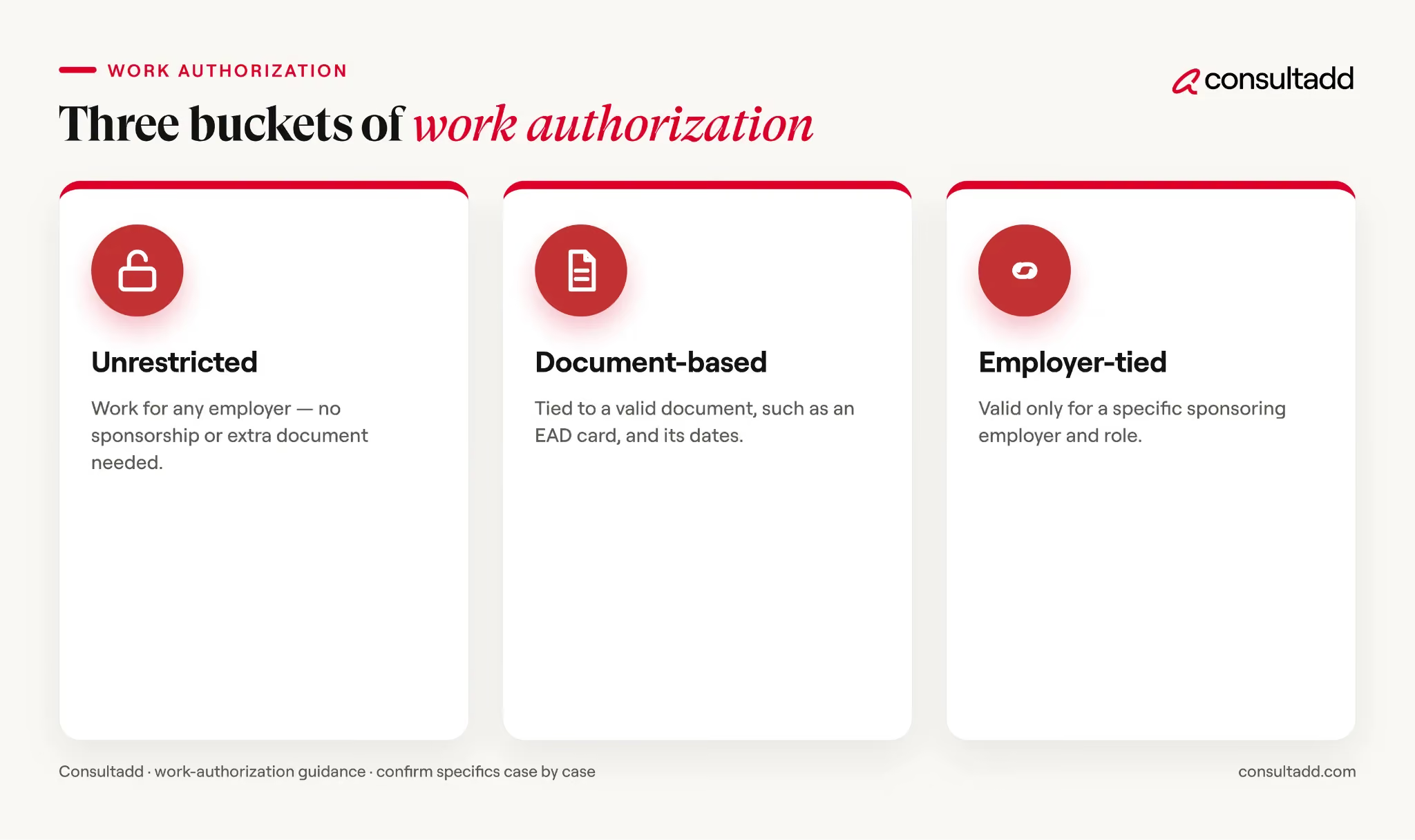
Two clarifications that resolve most real-world confusion.
First, F-1 students belong in the document-based bucket even before their CPT or OPT is approved in one specific sense: work authorization is a built-in benefit of F-1 status that they're eligible to activate.
University career offices consistently advise that students eligible for CPT/OPT answer "yes" to authorization questions, while making sure the approval is actually in hand before the first day of work.
Second, "employer-tied" still means authorized.
An H-1B professional filling out an application is legally authorized to work in the US; what they need is sponsorship, which is precisely what the second question exists to ask.
How to answer the two application questions
Applications almost always pair the authorization question with a sponsorship question. Here's the matrix, status by status:
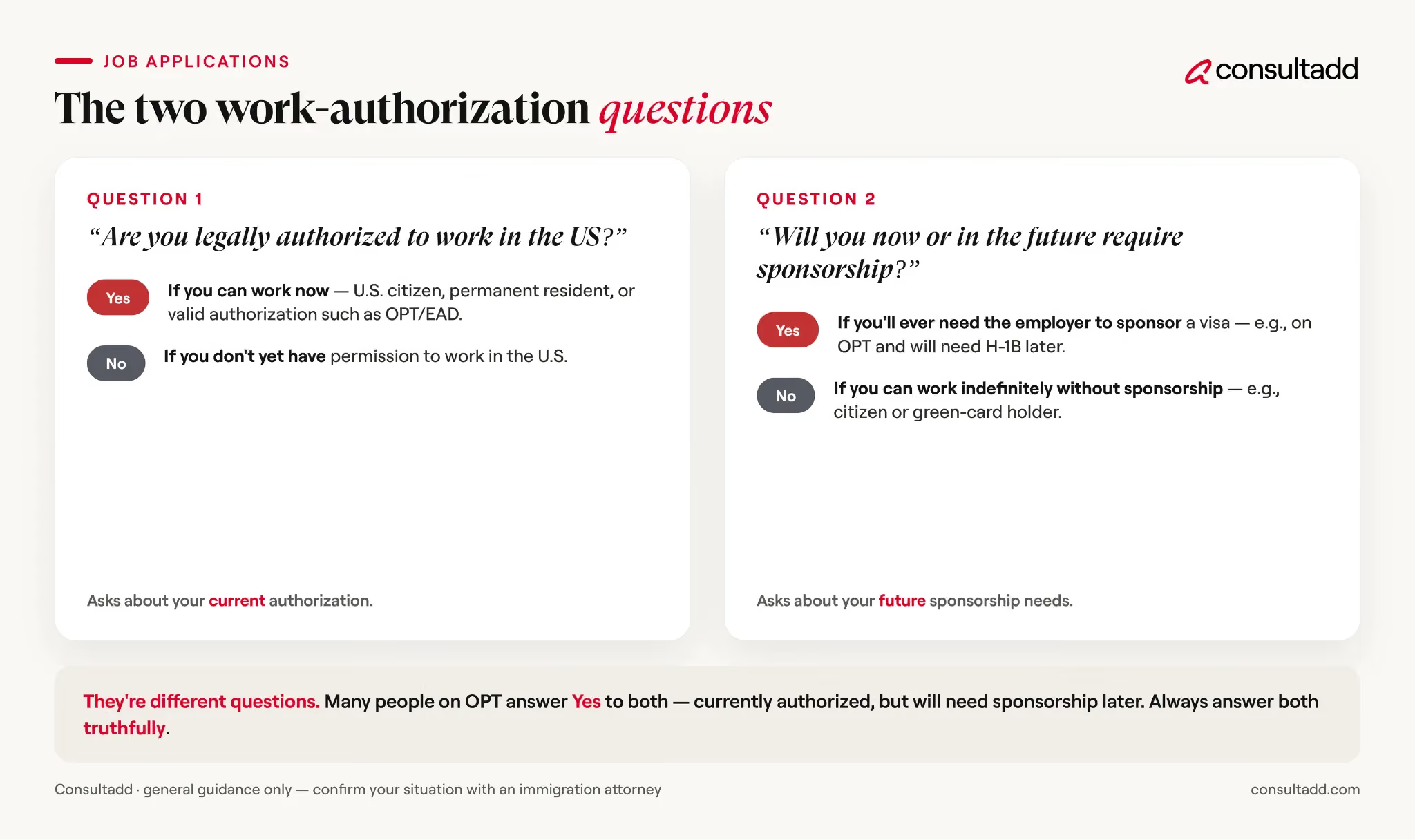
A few notes the table can't hold. The "in the future" phrasing is doing the heavy lifting: an OPT student doesn't need sponsorship today, but will when OPT runs out, so the honest answer is Yes unless they genuinely plan to leave the US afterward (a short internship before returning home is the classic legitimate No).
And wording varies: a question like "are you authorized to work without restriction?" reads differently, since employer-tied and time-limited authorization is a restriction; when a form offers a comments field, one clarifying sentence ("authorized via STEM OPT through May 2027; will require H-1B sponsorship thereafter") beats a bare checkbox every time.
The sponsorship question: honesty and strategy
Let's address the temptation directly, because everyone in this situation has felt it: answering "No" to the sponsorship question to get past the filter.
Don't. The misrepresentation doesn't disappear; it resurfaces at the offer stage or during onboarding paperwork, when your documents tell the real story. Offers get rescinded over exactly this, bridges get burned at companies you may want to approach again in three years, and in the worst cases employment already begun gets terminated.
The filter is frustrating, but it's screening for a real constraint: whether the company is set up to file petitions. Beating the filter doesn't change the constraint.
The productive strategy is targeting, not misdirection. Sponsorship-friendly employers exist in every industry, they're identifiable through H-1B disclosure data and platforms that flag sponsoring companies, and consulting and staffing firms that routinely employ visa-holding professionals are a well-trodden entry point into the US market.
Our guide to H-1B sponsorship for tech professionals covers how the employer side works, and once you're in front of the right companies, the differentiator becomes interview performance, where our coding interview playbook earns its keep.
Candidates with strong, specific skills get sponsored every year at companies that "don't sponsor," because policies bend for people teams genuinely want.
Proving it: Form I-9 and your documents
Whatever you checked on the application, verification happens for real after hire. Every US employer must complete Form I-9 with each new employee within three business days of the start date, examining documents that prove identity and work authorization. The official reference for all of it is USCIS I-9 Central.
Documents come in three lists:
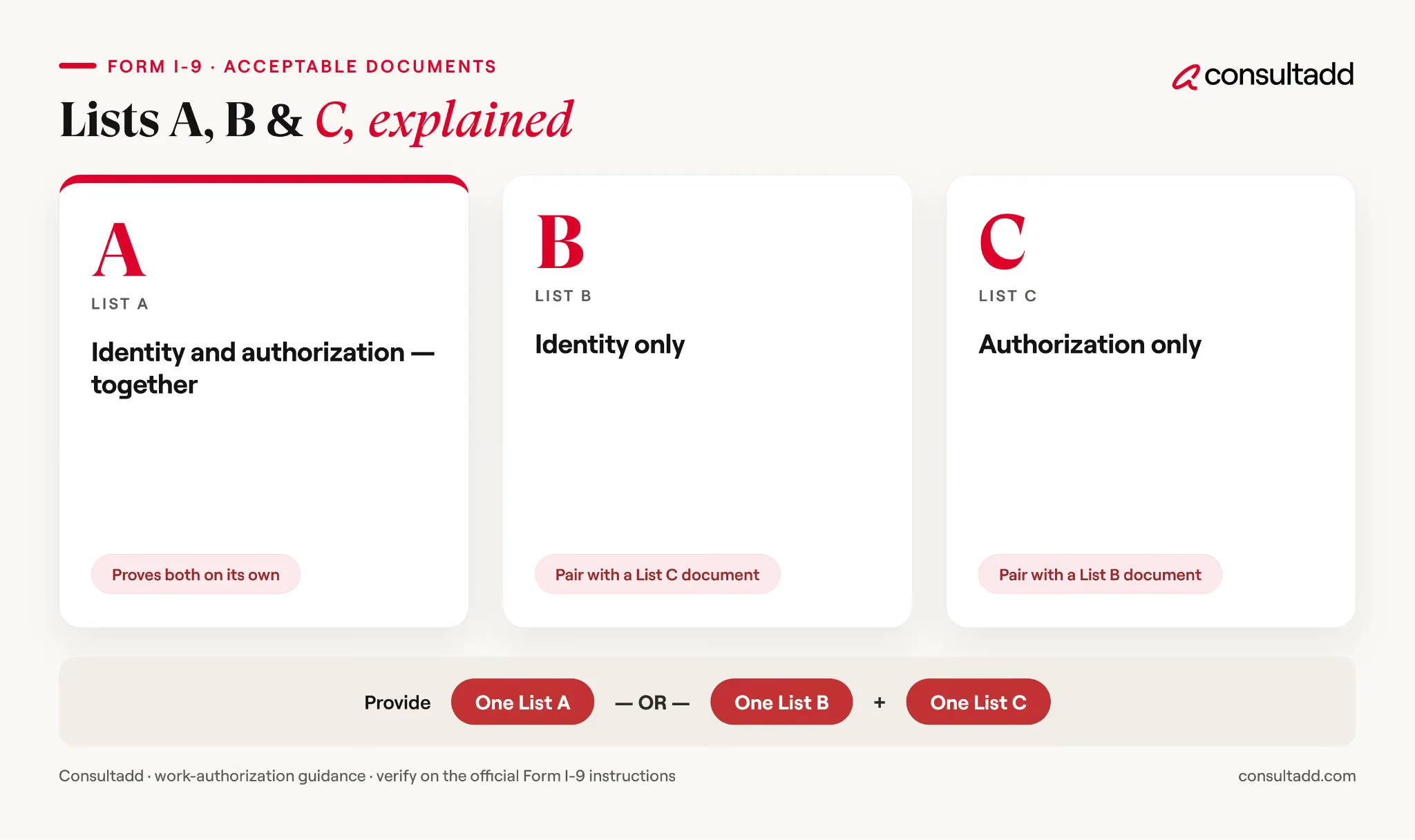
You present either one List A document or a B + C combination, and crucially, the choice of which valid documents to show is yours; employers cannot demand a specific document, a practice known as document abuse.
Many employers also run E-Verify, the government's electronic check, and STEM OPT employment requires an E-Verify enrolled employer by rule.
Practical housekeeping that prevents ugly surprises: track your document expiration dates (EADs in particular), start renewals as early as the rules allow, and keep copies of everything. Staffing and consulting employers who work with visa-holding professionals every day treat this compliance layer as routine.
Our overview of the best IT staffing firms touches on why operational maturity matters when choosing who to work through.
What employers can and can't ask
The boundaries here protect you, and knowing them changes how interviews feel.
Employers may ask the two screening questions this article is built around: whether you're authorized to work and whether you'll need sponsorship now or in the future. Those are lawful, standard, and asked of all candidates.
What crosses the line in most contexts: "Are you a US citizen?", "What country are you from?", "What visa are you on?", or demands for immigration paperwork before an offer.
Federal anti-discrimination law, enforced by the Justice Department's Immigrant and Employee Rights Section, prohibits hiring discrimination based on citizenship status and national origin against work-authorized individuals, with narrow exceptions (certain government contracts and roles with legal citizenship requirements).
University HR guidance across the country says the same thing to hiring managers: ask about sponsorship needs, never about visa types or origins.
If a recruiter pushes past the line, a composed, complete answer usually settles it: "I'm authorized to work for any US employer and won't require sponsorship," or "I'm authorized through 2027 and would need H-1B sponsorship afterward." You've answered the legitimate business question in full. Anything more is yours to share by choice, not obligation.
The bottom line on the whole topic: authorization is a matter of fact, the checkboxes are a matter of honest mapping, and the strategy is aiming your applications where your status is workable. Get those three straight and the scariest question on the application becomes the easiest one.
Start Strong With Consultadd
With 15 years in business and 5,000+ successful staffing engagements, we don't just fill roles, we build reliability into your process. We've supported 65 staffing companies in the past year alone and maintain MSAs with industry leaders like Robert Half and TEKsystems.
Here's what working with Consultadd looks like:
- Talent sourced in under 24 hours
- Ready-to-deploy candidates, vetted for experience and compliance
- Lower turnover risk: we match long-term goals, not just short-term needs
- Seamless compliance: visa, documentation, onboarding? Handled.
- Dedicated 1:1 account managers for responsive, personalized support
- Top 100 candidate matches delivered in the past year
- Strong partnerships with universities to tap into fresh, committed talent
- Post-placement support so your investment grows beyond day one
For candidates, your next opportunity is more than just a job title, it's a chance to build skills, gain experience, and move your career forward. At Consultadd, we connect technology professionals with projects and employers that align with their goals, whether they're looking for contract, contract-to-hire, or long-term opportunities.
The tech job market moves fast, but the right guidance can make all the difference. Ready to take the next step in your career journey? Explore Opportunities >>
Key takeaways
- You're legally authorized to work in the US as a citizen, national, green card holder, asylee/refugee, EAD holder, or employment-visa holder; authorization is broader than citizenship.
- F-1 students eligible for CPT/OPT and H-1B professionals both answer Yes to the authorization question; the sponsorship question is where their status honestly shows.
- Answer "Will you require sponsorship?" truthfully; a strategic-sounding No unravels at the I-9 stage and costs offers, reputations, and sometimes jobs already started.
- Verification is real: Form I-9 within three days of starting, with documents of your choosing from Lists A, B, and C, and E-Verify at many employers.
- Employers may ask about authorization and future sponsorship needs, but citizenship, national origin, and visa-type interrogations are off-limits in most hiring, and you can answer the legitimate question without volunteering the rest.
FAQs
What does "legally authorized to work in the US" mean?
It means US law permits you to be employed here: as a citizen or national, a permanent resident, an asylee or refugee, someone holding a valid EAD, or someone on an employment visa like the H-1B. It's a broader category than citizenship, and time-limited or employer-tied authorization still counts as authorization.
Am I legally authorized to work in the US on an F-1 visa?
Yes, for authorized employment. Work authorization through CPT and OPT is a benefit of F-1 status, so university advisors direct students to answer Yes on applications. The approval must actually be in place before your first day of work, and off-campus work without it violates your status.
How should H-1B holders answer "Are you legally authorized to work in the US?"
Yes. H-1B status is full legal work authorization, tied to the sponsoring employer. The second question is where the nuance lives: a new employer would need to file an H-1B transfer, so "Will you require sponsorship?" honestly gets a Yes.
Should I say No to the sponsorship question to get interviews?
No. The truth surfaces during I-9 verification and offer paperwork, and misrepresentation is grounds for rescinding offers or terminating employment. The better strategy is targeting employers with sponsorship track records, including consulting and staffing firms that employ visa-holding professionals routinely.
What documents prove work authorization for a new job?
Form I-9 accepts either one List A document proving both identity and authorization (US passport, green card, EAD, or foreign passport with qualifying I-94) or a combination of List B identity (driver's license) and List C authorization (unrestricted Social Security card). The choice among valid documents is legally yours, not the employer's.
Can an employer ask what visa I'm on?
Employers can ask whether you're authorized to work and whether you'll need sponsorship now or in the future. Asking about citizenship, national origin, or your specific visa type before an offer generally crosses into territory prohibited by federal anti-discrimination law, outside narrow exceptions like roles with legal citizenship requirements.

H1B Visa Prerequisites: Who Qualifies In And How
Introduction
The H-1B is the visa everyone in tech talks about and surprisingly few people can accurately describe qualifying for. The h1b visa prerequisites break into three sets: the worker needs at least a bachelor's degree (or its equivalent) in a field related to the job, the job itself must be a specialty occupation that requires such a degree, and the employer must commit to wage and working-condition rules certified by the Department of Labor. Miss any one of the three and there's no petition worth filing.
And 2026 raised the stakes on getting this right. The lottery is no longer purely random: as of February 27, 2026, selection is wage-weighted, giving higher-paid roles more chances.
A $100,000 proclamation fee now attaches to many petitions for workers outside the US. The margin for casual, hopeful applications has essentially disappeared.
This guide walks through each prerequisite in detail, the registration and lottery mechanics, the full cost picture, and what the new rules mean for who actually gets selected.
TL;DR
- Three prerequisite sets must align: a qualified worker (bachelor's or equivalent in a related field), a qualifying job (specialty occupation), and a compliant employer (certified LCA, prevailing wage).
- Work experience can substitute for education under the 3-for-1 rule: three years of progressive, relevant experience counts as one year of university study.
- The annual cap remains 85,000 (65,000 regular plus 20,000 for US master's degree holders), with universities and research nonprofits exempt.
- The lottery is now wage-weighted: a Level IV wage offer gets four entries, Level I gets one, fundamentally favoring senior, higher-paid roles.
- Budget realistically: $215 registration, roughly $2,000 to $5,000+ in standard filing fees, and a $100,000 proclamation fee for many beneficiaries processed abroad, though change-of-status cases inside the US (like F-1 students) are generally exempt.
The three prerequisite sets at a glance
People tend to ask "do I qualify for an H-1B?" as if it were a personal credential, like a driver's license. It isn't. Eligibility is a three-way match, and the USCIS specialty occupations page frames all three:
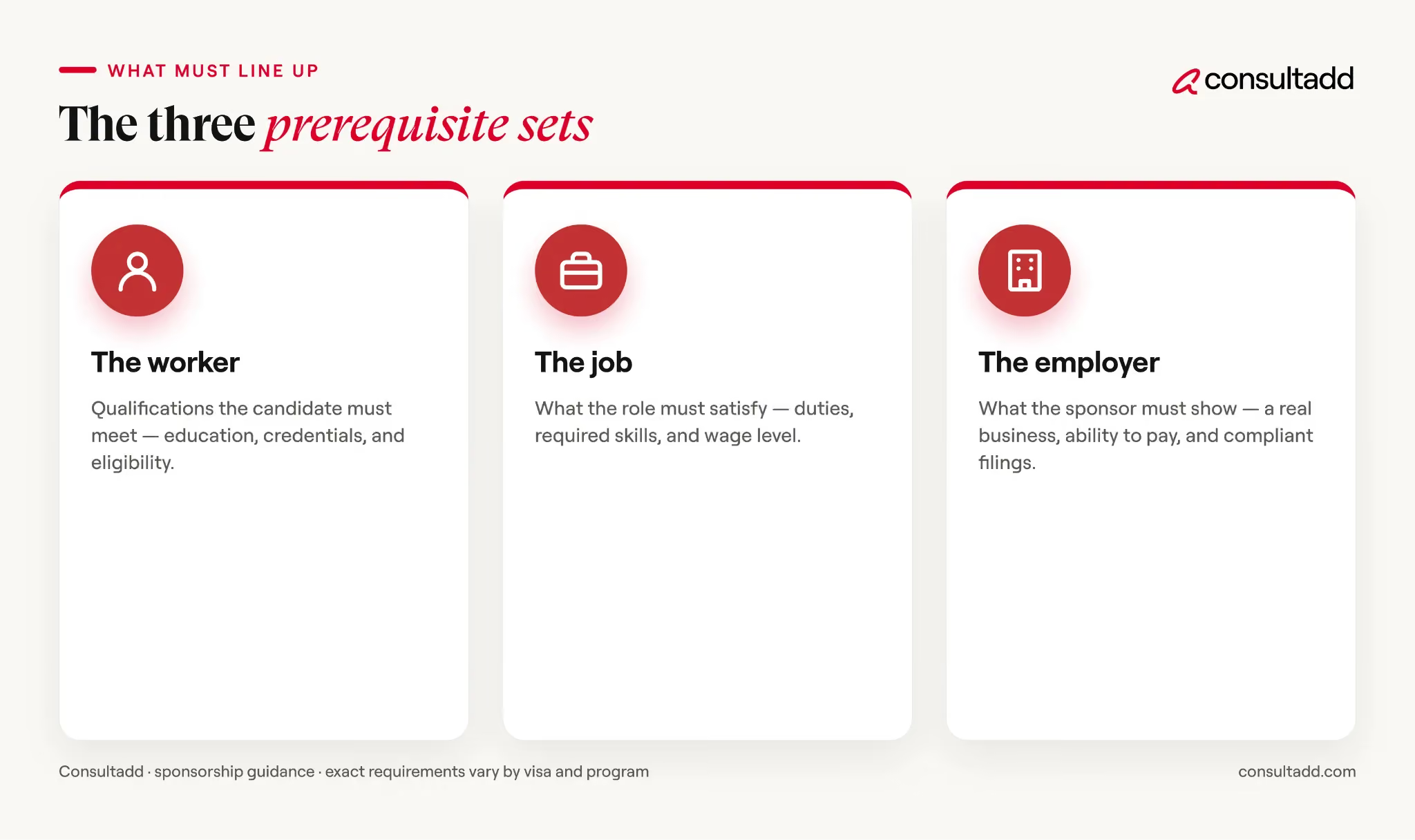
That's why the practical first prerequisite, before any of the legal ones, is landing an offer from an employer willing to sponsor, a process we covered from the company side in our guide to H-1B sponsorship for tech professionals.
Worker prerequisites: degree, equivalency, and licensure
The baseline is a US bachelor's degree or higher, or a foreign degree evaluated as equivalent, in a field directly related to the position. "Related" carries real weight: a computer science degree supports a software engineering role cleanly; a marketing degree supporting that same role invites a challenge, unless coursework and experience bridge the gap convincingly.
- No degree? There's still a path. USCIS recognizes education-experience equivalency under the 3-for-1 rule: three years of progressively responsible, documented work experience in the specialty substitute for one year of university education.
- Twelve years of qualifying experience can therefore stand in for a full bachelor's degree, though these cases demand meticulous documentation, credential evaluations, and often expert opinion letters. Combination cases (two years of college plus six years of experience) work the same math.
- Two more worker-side checks. If the profession requires a state license to practice, medicine, law, some engineering roles, the beneficiary generally needs that license or a temporary permit. And while there's no age, nationality, or salary prerequisite on the worker personally, the beneficiary's information must be registered accurately in the lottery; a passport typo or wrong birthdate can invalidate a selection before the case even begins.
Job prerequisites: what counts as a specialty occupation
The H-1B was built for specialty occupations: roles where a bachelor's degree in a specific field is the normal minimum entry requirement. Software engineers, data scientists, financial analysts, architects, physicians, university researchers, the classic profile is theoretical and practical application of a body of highly specialized knowledge.
USCIS evaluates the position, not the title. A "systems analyst" job whose actual duties read like general IT support will struggle; a modestly titled role with genuinely specialized duties can succeed.
The strongest petitions show at least one of: the degree is normally required across the industry for this role, the employer normally requires it, or the duties are so specialized that they're associated with degree-level knowledge.
Employer prerequisites: the LCA and prevailing wage
Before any petition reaches USCIS, the employer must obtain a certified Labor Condition Application from the Department of Labor. The LCA is a set of enforceable promises:
- Pay the required wage: the higher of the prevailing wage for the occupation in that geographic area or the actual wage paid to similar employees.
- No adverse effect: working conditions of US workers in similar roles won't be undermined.
- No strike or lockout in the occupation at the worksite.
- Notice: the employer informs its workforce of the filing.
The prevailing wage system sorts each occupation-location combination into four wage levels, from Level I (entry) to Level IV (fully competent/senior). Until this year, that level mattered mainly for compliance. Now it decides lottery odds, which we'll get to in a moment.
Beyond the LCA, the employer must demonstrate a genuine employer-employee relationship, the right to control the work, which draws extra scrutiny in third-party placement arrangements common in consulting and staffing.
Documented control, end-client letters, and clean contracts are what separate approvable staffing-model petitions from denials, one more reason candidates working through consulting employers should choose established ones.
Our review of the best IT staffing firms covers what operational maturity looks like.
The lottery: registration, wage weighting, and timing
Demand outruns the 85,000-visa cap every year, so meeting the prerequisites earns you a lottery ticket, not a visa. Here's the current annual rhythm, using the FY 2027 cycle that just ran:
- Registration (early March). Employers submit electronic registrations, $215 per beneficiary, through USCIS online accounts. The FY 2027 window ran March 4-19, 2026. New this cycle: registrations must report the offered wage level.
- Selection (late March). USCIS runs the selection and issues notices; FY 2027 notices went out by March 31, 2026.
- Petition filing (April 1 onward). Selected registrants file the full I-129 petition within a window of at least 90 days, with the certified LCA and all evidence.
- Start date (October 1). Approved cap cases begin work with the new fiscal year, with cap-gap protections bridging eligible F-1 students.
The structural change is how selection works. Effective February 27, 2026, the random lottery became wage-weighted:
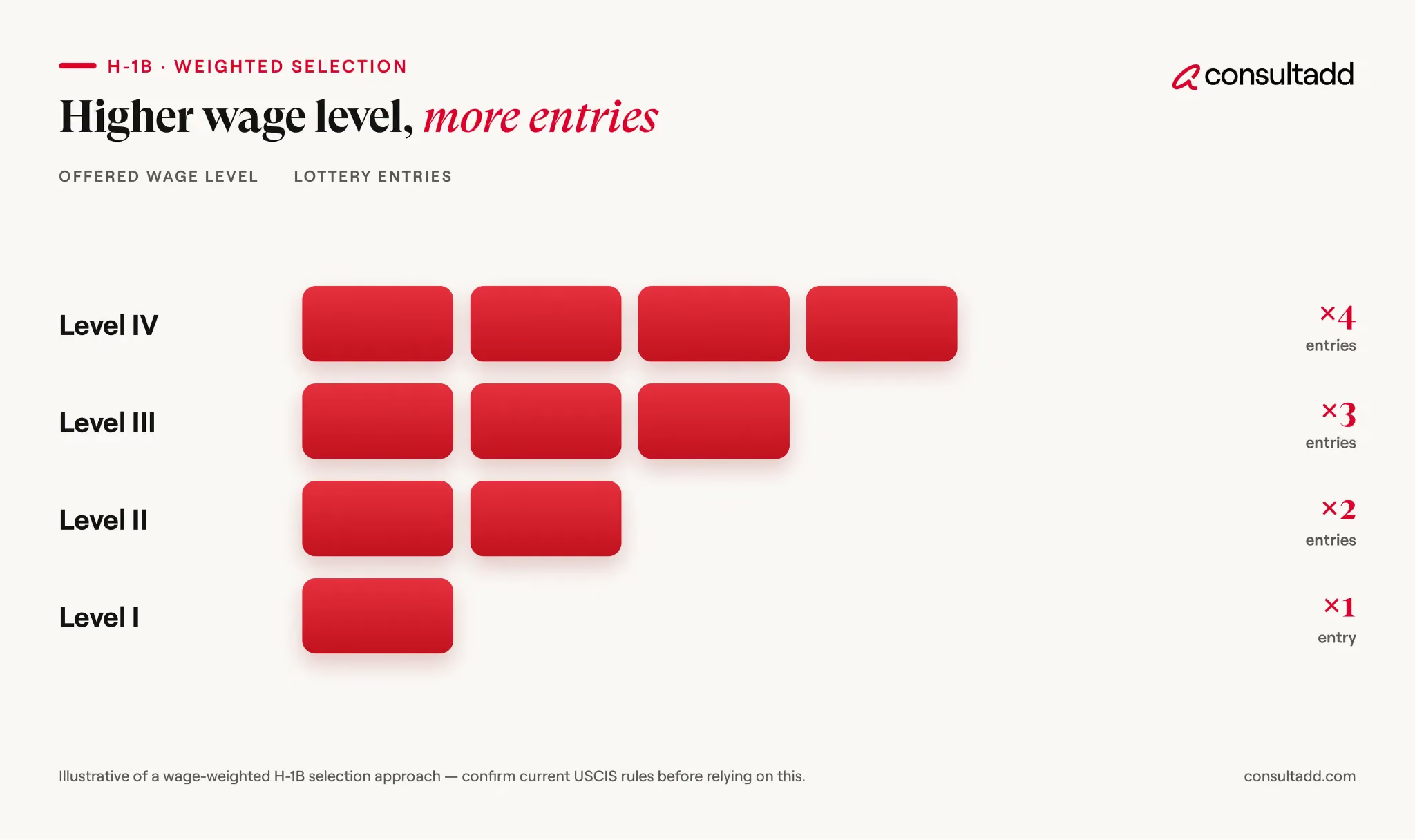
A senior engineer offered a Level IV wage now has four times the selection odds of an entry-level Level I candidate, and if one beneficiary has multiple registrations at different levels, USCIS assigns the lowest.
The strategic consequences are already visible: employers are leveling roles honestly upward where justified, entry-level international hiring is harder, and the US master's cap (20,000 additional selections for US advanced-degree holders) matters more than ever for new graduates.
Costs in 2026, including the $100K question
The honest budget conversation, because the prerequisites now include financial ones that reshape sponsorship decisions:
That last line changed the industry's math, and its boundaries matter enormously: the fee targets new cap-subject petitions for workers abroad, while change-of-status cases inside the US, the classic F-1 student moving to H-1B, are generally exempt. The result is a visible tilt toward hiring international talent already in the US on student or other statuses.
We analyzed the ruling, the exemptions, and the employer response in depth in our breakdown of the H-1B $100K fee ruling.
Pulling it together: the prerequisites in 2026 are the same three-way match they've always been, worker, job, employer, wrapped in a selection system that now rewards seniority and wage level, and a fee structure that rewards being physically in the US already.
Candidates who understand that landscape early, choosing degree paths, building experience toward Level II+ roles, and targeting sponsor-ready employers, enter the lottery with structurally better odds than those who discover the rules in March.
Start Strong With Consultadd
With 15 years in business and 5,000+ successful staffing engagements, we don't just fill roles, we build reliability into your process. We've supported 65 staffing companies in the past year alone and maintain MSAs with industry leaders like Robert Half and TEKsystems.
Here's what working with Consultadd looks like:
- Talent sourced in under 24 hours
- Ready-to-deploy candidates, vetted for experience and compliance
- Lower turnover risk: we match long-term goals, not just short-term needs
- Seamless compliance: visa, documentation, onboarding? Handled.
- Dedicated 1:1 account managers for responsive, personalized support
- Top 100 candidate matches delivered in the past year
- Strong partnerships with universities to tap into fresh, committed talent
- Post-placement support so your investment grows beyond day one
For candidates, your next opportunity is more than just a job title, it's a chance to build skills, gain experience, and move your career forward. At Consultadd, we connect technology professionals with projects and employers that align with their goals, whether they're looking for contract, contract-to-hire, or long-term opportunities.
The tech job market moves fast, but the right guidance can make all the difference. Ready to take the next step in your career journey? Explore Opportunities >>
Key takeaways
- H1B visa prerequisites form a three-way match: a worker with a bachelor's or equivalent in a related field, a specialty occupation genuinely requiring it, and an employer with a certified LCA paying the prevailing wage.
- No degree isn't necessarily disqualifying: the 3-for-1 equivalency rule lets twelve years of documented, progressive experience stand in for a bachelor's.
- Meeting the prerequisites earns a lottery entry, not a visa: the 85,000 cap persists, and selection is now wage-weighted, with Level IV offers receiving four entries to Level I's one.
- The FY cycle runs March registration ($215), late-March selection, April-June petition filing, and October start dates, with universities and research nonprofits exempt from the cap entirely.
- The $100,000 proclamation fee applies to many petitions for beneficiaries abroad but generally not to change-of-status cases inside the US, sharply favoring candidates already here on F-1 or similar status.
FAQs
What are the basic prerequisites for an H1B visa?
Three things must align: the worker holds at least a bachelor's degree (or equivalent experience) in a field related to the job, the position qualifies as a specialty occupation that normally requires such a degree, and the sponsoring employer obtains a certified Labor Condition Application committing to the prevailing wage. The employer files everything; individuals cannot self-petition for a standard H-1B.
Can I get an H1B without a bachelor's degree?
Possibly, through equivalency. USCIS accepts three years of progressively responsible, well-documented work experience in the specialty as equal to one year of university education, so twelve qualifying years can substitute for a full degree. These cases succeed with thorough documentation, credential evaluations, and often expert opinion letters.
Is there a minimum salary requirement for the H1B?
There's no single dollar figure; the employer must pay the higher of the prevailing wage for that occupation and location or the actual wage paid to similar employees. Wages sort into Levels I through IV, and since February 2026 the offered level also determines lottery odds, with higher levels receiving more selection entries.
How does the new wage-weighted H1B lottery work?
Instead of one random entry per registration, beneficiaries receive entries matching their offered wage level: four for Level IV, three for Level III, two for Level II, one for Level I. If someone has multiple registrations at different levels, USCIS assigns the lowest. The change structurally favors senior, higher-paid roles over entry-level offers.
Who is exempt from the H1B cap?
Institutions of higher education, nonprofits related to or affiliated with them, and nonprofit or governmental research organizations can file cap-exempt petitions year-round, with no lottery. Physicians with certain waivers and beneficiaries previously counted against the cap (like transfers and extensions) also sit outside the annual limit.
Does the $100,000 fee apply to every H1B petition?
No. The proclamation fee, effective for petitions filed on or after September 21, 2025, targets new petitions for beneficiaries outside the United States who require consular processing. Change-of-status cases filed for people already in the US, most notably F-1 students moving to H-1B, are generally exempt, which is why in-country candidates have become significantly more attractive to sponsors.

What Is An EB5 Visa? Green Card By Investment Explained
Introduction
Most paths to a US green card run through an employer, a family member, or a lottery. The EB-5 runs through your capital.
So what is an EB5 visa? It's the US immigrant investor program: invest $800,000 or more in an American business that creates at least 10 full-time jobs, and you, your spouse, and your unmarried children under 21 can qualify for permanent residency.
Congress created the program in 1990 to pull foreign investment into the US economy, and the EB-5 Reform and Integrity Act of 2022 (RIA) rebuilt it with stronger investor protections and stricter oversight.
In 2026 it's drawing more attention than it has in years, partly because H-1B professionals facing long green card backlogs have discovered that EB-5 lets many of them file for a green card and work authorization at the same time, without waiting on an employer.
This guide explains how the program works, what it costs, the step-by-step process, and the deadlines that make 2026 an unusually consequential year to understand it.
TL;DR
- The EB-5 visa grants US permanent residency to investors who put $800,000 (in a targeted employment area) or $1,050,000 (elsewhere) into a US enterprise that creates 10 full-time jobs.
- The investment must be genuinely at risk: guaranteed returns or guaranteed repayment disqualify the petition.
- Most investors go through USCIS-approved regional centers, which pool investments into large projects and count indirect jobs toward the 10-job requirement.
- Investors already in the US on H-1B, F-1, or similar status can often file the green card application concurrently, unlocking work and travel permits while the petition is pending.
- Current investment amounts hold through 2026, but an inflation adjustment arrives in January 2027 and a DHS proposal would push the non-TEA minimum to $1.4 million, so timing matters.
What is an EB5 visa and how does it work?
EB-5 stands for "employment-based, fifth preference," its slot in the US immigrant visa system. Unlike the H-1B or L-1, it's not a temporary work visa; it's an immigrant visa that leads directly to a green card.
Roughly 10,000 EB-5 visas are available each year, with portions set aside for rural and high-unemployment area investments.
The bargain at the center of the program is simple: the US gets job-creating capital, and the investor gets residency. The USCIS EB-5 program page frames it around three elements: a qualifying investment, in a new commercial enterprise, that creates jobs for US workers.
Approval doesn't produce a permanent green card immediately. Investors first receive conditional permanent residency valid for two years, essentially a probation period. Near the end of it, they must prove the investment was sustained and the jobs materialized.
Pass that test and the conditions come off, making the green card permanent and opening the standard five-year path to citizenship.
The whole family benefits from one investment: spouse and unmarried children under 21 are included as derivatives, which is a large part of why parents planning around a child's education often drive these cases.
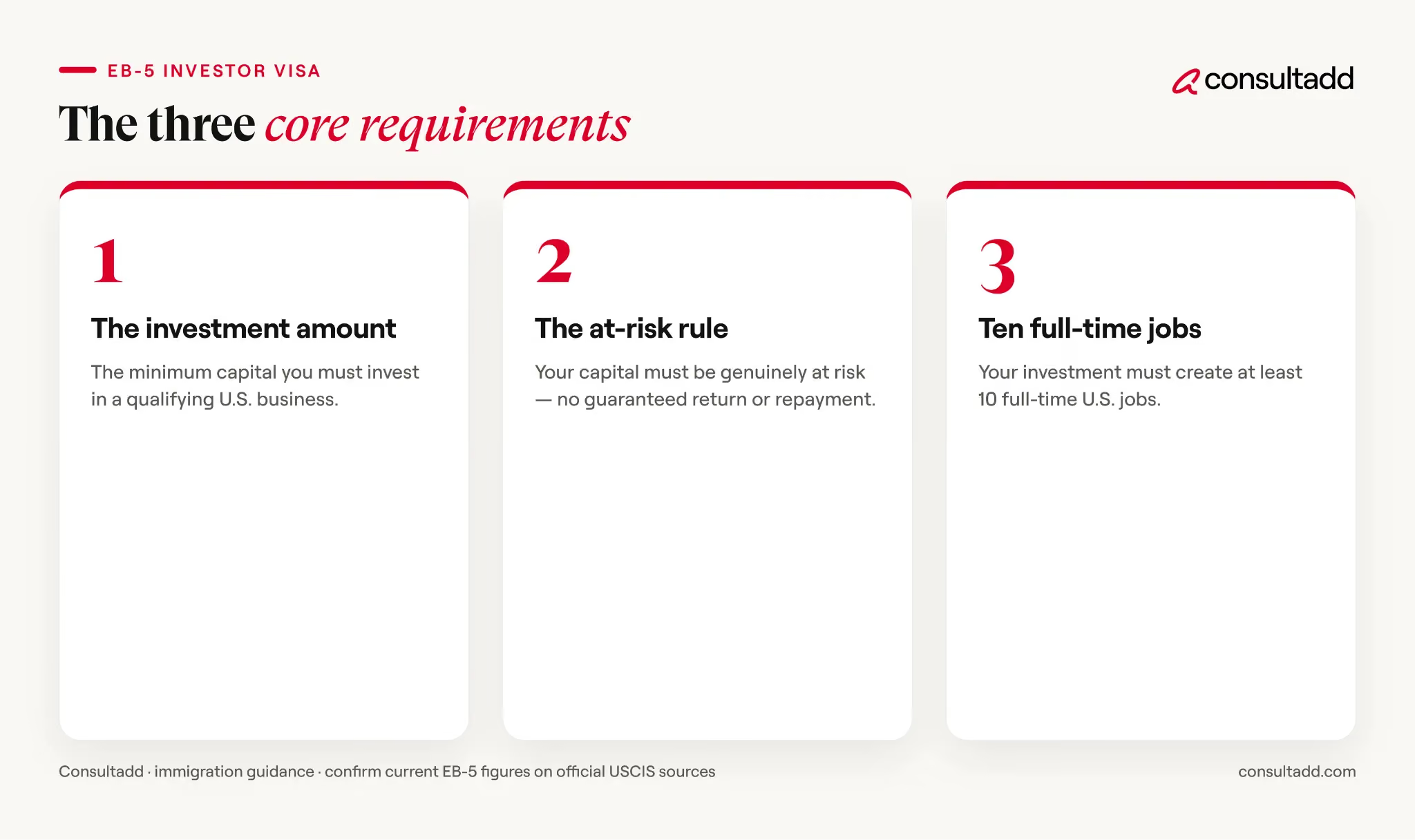
The three core requirements
1. The investment amount
How much you must invest depends entirely on where the project sits:
These thresholds were set by the RIA in 2022 and hold through 2026. Two changes loom: the RIA schedules an inflation adjustment for January 1, 2027, and a DHS rule proposed on July 2, 2026 would raise the non-TEA minimum to $1.4 million if finalized.
Neither affects petitions filed under today's amounts, which is exactly why filing timing has become a strategy conversation.
The capital must also be lawfully sourced and documented exhaustively: salary records, business sale documents, property transactions, gift letters, tax returns.
Source-of-funds review has visibly tightened since 2025, and thin documentation is now the fastest route to a request for evidence.
2. The At-Risk rule
The investment must be genuinely at risk of loss, with no guaranteed return and no guaranteed buyback. That's not an unfortunate side effect; it's a legal requirement. Any arrangement that promises your money back disqualifies the petition. This doesn't mean projects must be reckless, but it does mean EB-5 is an investment decision as much as an immigration one, and due diligence on the project is as important as the legal filing.
3. Ten Full-Time Jobs
Each investment must create at least 10 full-time positions for US workers within the required period. How jobs are counted depends on the investment route, which brings us to the biggest structural choice in the program.
Direct investment vs regional centers
Regional centers dominate because indirect job counting makes the 10-job requirement far easier to satisfy in large construction and development projects, and because most investors don't want to personally employ 10 people.
The trade-off is that you're trusting a project sponsor with your capital, so the RIA added mandatory audits, fund administration rules, and an EB-5 Integrity Fund to police the industry. Sensible diligence still applies: track record, capital structure, exit strategy, and independent review of offering documents.
The EB-5 process, step by step
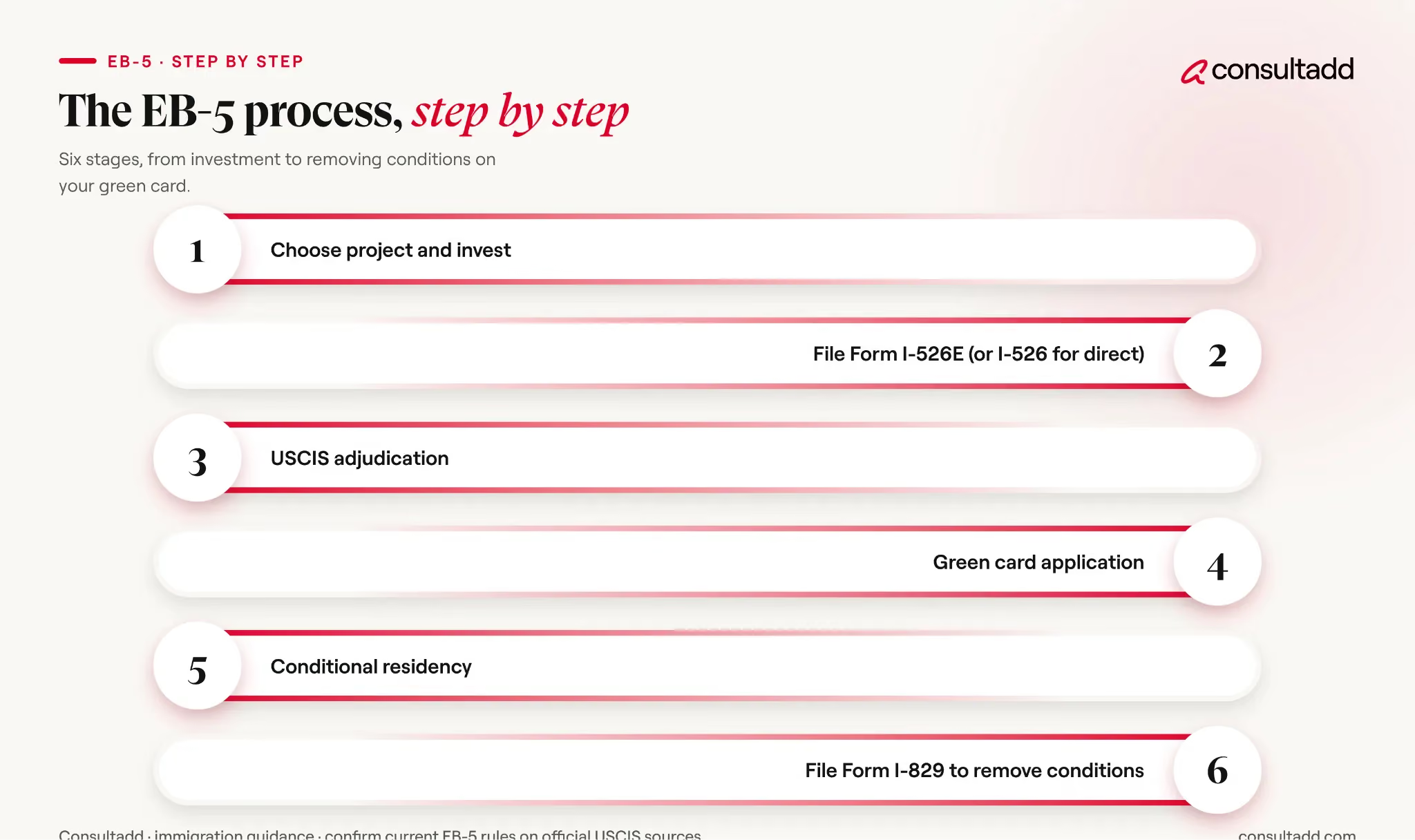
Two practical notes:
- First, visa availability depends on your country of birth: applicants from countries with heavy EB-5 demand, notably China and India, can face additional waits governed by the State Department Visa Bulletin, though the RIA's rural and high-unemployment set-aside categories have offered faster lanes.
- Second, total cost exceeds the investment itself: expect administrative fees, legal fees, and USCIS filing fees (including the RIA's $1,000 Integrity Fund fee) to add a meaningful amount on top, so budget beyond the headline number.
Why H-1B holders are looking at EB-5
Here's the development that moved EB-5 from a niche wealth-migration tool into mainstream conversation among tech professionals:
- Since the RIA, investors already in the US in valid status can file their I-485 adjustment of status at the same time as their EB-5 petition, when a visa number is available. Filing the I-485 unlocks an employment authorization document (EAD) and advance parole travel permit while everything is pending.
- In plain terms, an H-1B engineer who invests in EB-5 can gain work authorization independent of any employer, stop worrying about layoffs ending their status, change jobs freely, and let their spouse work without restriction.
- For Indian nationals staring at employment-based green card backlogs measured in decades, that trade is compelling for those with access to the capital. It's also reshaping employer conversations: sponsorship remains the standard path.
Our guide to H-1B sponsorship for tech professionals covers how that works, but rising sponsorship costs, including the fallout we analyzed in the H-1B $100K fee ruling, have pushed both companies and candidates to study alternatives seriously.
The caution belongs here too: EB-5 requires $800,000 of genuinely at-risk capital with lawful, documented origins. It's a fit for a specific slice of professionals and families, not a universal escape hatch, and anyone considering it should engage an experienced immigration attorney and independent financial advice before wiring anything.
Deadlines and changes to watch in 2026
Three dates define the current moment.
- September 30, 2026: The Grandfathering Deadline. Investors who file their EB-5 petition on or before this date are statutorily protected under current law, meaning their cases continue processing even if the regional center program later lapses when its authorization runs out in 2027. Filing after this date, under current rules, carries reauthorization risk that filing before it does not. This deadline, more than anything else, is compressing 2026 decision timelines.
- January 1, 2027: The Inflation Adjustment. The RIA ties investment minimums to inflation on a five-year cycle, with the first adjustment scheduled for the start of 2027. Today's $800,000 and $1,050,000 figures are a known quantity only through the end of 2026.
- The DHS Proposed Rule. Published July 2, 2026, it would codify RIA-era practices and raise the non-TEA threshold to $1.4 million. It's a proposal, not law, but it signals the direction of travel: amounts go up, scrutiny goes up, and documentation standards go up.
None of this changes what the EB-5 fundamentally is: the most direct green card path US law offers to those who can fund it, in exchange for real risk and real job creation. Whether it's the right path depends on your capital, your country of birth, your timeline, and your appetite for investment risk, questions worth settling with professional advice well before the deadlines settle them for you.
Start strong with Consultadd
With 15 years in business and 5,000+ successful staffing engagements, we don't just fill roles, we build reliability into your process. We've supported 65 staffing companies in the past year alone and maintain MSAs with industry leaders like Robert Half and TEKsystems.
Here's what working with Consultadd looks like:
- Talent sourced in under 24 hours
- Ready-to-deploy candidates, vetted for experience and compliance
- Lower turnover risk: we match long-term goals, not just short-term needs
- Seamless compliance: visa, documentation, onboarding? Handled.
- Dedicated 1:1 account managers for responsive, personalized support
- Top 100 candidate matches delivered in the past year
- Strong partnerships with universities to tap into fresh, committed talent
- Post-placement support so your investment grows beyond day one
For candidates, your next opportunity is more than just a job title, it's a chance to build skills, gain experience, and move your career forward. At Consultadd, we connect technology professionals with projects and employers that align with their goals, whether they're looking for contract, contract-to-hire, or long-term opportunities.
The tech job market moves fast, but the right guidance can make all the difference. Ready to take the next step in your career journey? Explore Opportunities >>
Key takeaways
- The EB5 visa is the US immigrant investor program: invest $800,000 (TEA) or $1,050,000 (non-TEA) in a job-creating US enterprise and qualify for green cards covering your spouse and children under 21.
- The investment must be lawfully sourced, thoroughly documented, and genuinely at risk, and it must create 10 full-time US jobs.
- Most investors use regional centers, where pooled projects and indirect job counting make compliance more achievable than running your own 10-employee business.
- Concurrent filing lets in-status investors (including H-1B holders) apply for adjustment of status immediately, gaining employer-independent work and travel authorization while the case is pending.
- The September 30, 2026 grandfathering deadline, the January 2027 inflation adjustment, and a proposed $1.4 million non-TEA minimum make this a year where timing genuinely changes outcomes.
FAQs
What is an EB5 visa in simple terms?
It's a US green card obtained through investment. Put at least $800,000 into an American business that creates 10 full-time jobs, and you, your spouse, and your unmarried children under 21 can become permanent residents. After roughly five years of residency, citizenship becomes possible.
How much money do you need for an EB-5 visa?
The minimum is $800,000 for projects in targeted employment areas (rural or high-unemployment locations) and $1,050,000 elsewhere. Administrative, legal, and filing fees add tens of thousands on top. These amounts hold through 2026, with an inflation adjustment scheduled for January 2027 and a proposed rule that would raise the non-TEA figure to $1.4 million.
Can the EB-5 investment be refunded?
Not on a guaranteed basis. The law requires capital to remain genuinely at risk, so any promised return or buyback disqualifies the petition. Well-structured projects plan for eventual repayment after the required period, but repayment depends on project performance and is never assured.
What is a targeted employment area (TEA)?
A TEA is either a rural area or a location with unemployment at least 150% of the national average, as designated under RIA rules. Investing in a TEA lowers the minimum investment to $800,000 and, for rural projects, can mean faster processing thanks to set-aside visa allocations and priority adjudication.
Can H-1B visa holders apply for EB-5?
Yes, and it's one of the program's fastest-growing use cases. H-1B holders with lawful funds can invest and, when a visa number is available, file their I-526E petition and I-485 adjustment concurrently. That filing brings work and travel authorization independent of their employer while the green card processes.
How long does the EB-5 process take?
Plan in years, not months. Petition adjudication commonly runs two to four years or more, though rural set-aside cases often move faster. After approval comes conditional residency for two years, then the I-829 filing to make it permanent. Applicants born in high-demand countries may also wait on visa availability per the monthly Visa Bulletin.