
Contracts

What is Visa Sponsorship: Meaning and How it Works in the United States
Introduction
If you're a job seeker considering opportunities in the United States or an employer evaluating international candidates, you've probably encountered the term "visa sponsorship." But what does it actually mean? And more importantly, what does it cost, who qualifies, and how long does the process take?
Visa sponsorship means a U.S. employer agrees to sponsor your immigration status, allowing you to live and work legally in the United States. The employer petitions the government on your behalf, saying "we want to hire this person, they don't have U.S. citizenship or permanent residency, and we're willing to navigate the immigration process to make it happen."
It's not a handout. Visa sponsorship is expensive, time-consuming, and involves significant legal complexity. But for employers desperate for specific talent and for international professionals seeking opportunity, it's the pathway to U.S. employment.
According to the U.S. Citizenship and Immigration Services (USCIS), approximately 1.5 million employment-based visas are issued annually across multiple visa categories. The most common for skilled workers is the H-1B visa, which allows companies to temporarily employ foreign workers in specialty occupations.
But H-1B is just one option. Understanding visa sponsorship means understanding the different pathways available, the costs involved, the timeline, and what employers and employees should expect.
TL;DR
- Visa sponsorship means a U.S. employer officially petitions for a foreign national to work and live in the United States
- Common visa types include H-1B (specialty occupation), L-1 (intracompany transfer), O-1 (extraordinary ability), and EB-3 (permanent employment sponsorship)
- Sponsorship costs employers $2,500-$15,000+ per person depending on visa type and legal complexity
- The process takes 3-12 months from petition to approval depending on visa category
- H-1B visa sponsorship requires proving no available U.S. workers and meeting prevailing wage requirements
Understanding what visa sponsorship actually means
Visa sponsorship is an official government process, not a casual arrangement. When an employer sponsors your visa, they're making a formal petition to the U.S. Department of Labor (DOL) and USCIS, asking the government to allow you to work in the United States.
Here's what happens behind the scenes:
- The employer files paperwork with the DOL describing the job, the salary, the job requirements, and proof that they've tried to hire U.S. workers but couldn't find qualified candidates.
- The DOL reviews the petition to ensure the employer isn't using foreign workers to depress wages or bypass hiring U.S. citizens.
- If approved, the employer then petitions USCIS for the specific visa category.
- USCIS reviews the petition, conducts background checks, and either approves or denies sponsorship.
The entire process is bureaucratic, time-consuming, and involves government fees, legal fees, and the employer's internal time investment. It's not something employers do lightly. If a company is willing to sponsor your visa, it means they genuinely want to hire you and believe you're worth the effort and cost.
This is fundamentally different from hiring a U.S. citizen or permanent resident. Those candidates can start work immediately after a background check. International candidates requiring visa sponsorship involve months of paperwork and uncertainty before they can legally work.
The most common visa sponsorship types for employment
Not all visa sponsorships are the same. Different visa categories exist for different situations. Understanding the main categories clarifies your options.
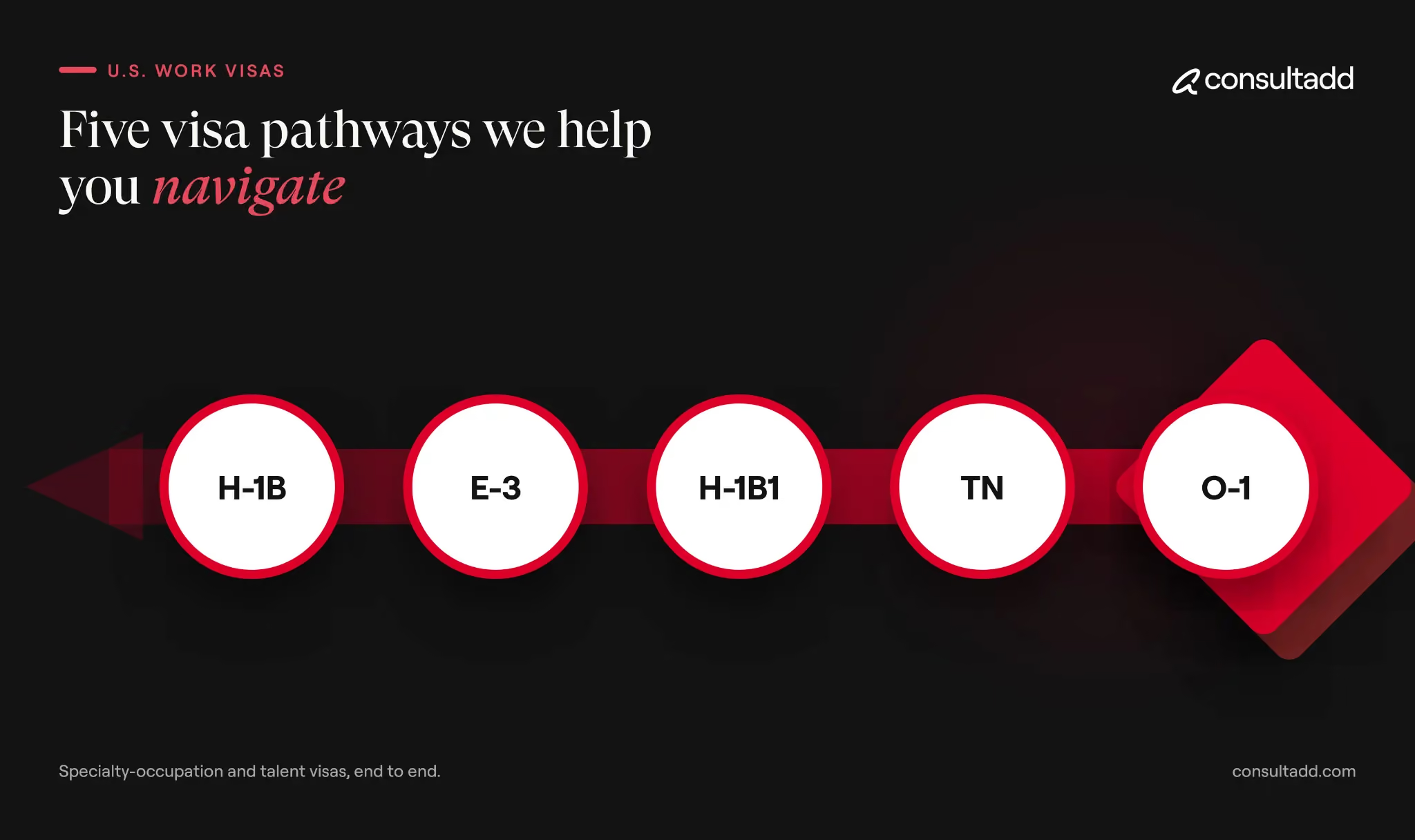
H-1B Visa: The most common option
H-1B is the visa category for specialty occupations requiring a bachelor's degree or higher. It's the primary pathway for companies sponsoring engineers, architects, mathematicians, and other skilled professionals.
Here's how H-1B works: The employer files a Labor Condition Application (LCA) with the DOL, certifying that hiring this foreign worker won't hurt U.S. workers. The employer must pay the worker at least the prevailing wage for that position in that geographic area. Once approved, the employer petitions USCIS for the H-1B visa. If approved, the foreign worker can legally work in the United States for up to 3 years, renewable for another 3 years (maximum 6 years total).
H-1B has a significant catch: the visa cap. Each fiscal year, USCIS accepts a limited number of H-1B petitions. In recent years, that cap has been 65,000 with an additional 20,000 for workers with advanced degrees from U.S. universities. When petitions exceed the cap, USCIS conducts a lottery. Your petition might not even be processed if you lose the lottery.
This uncertainty is a major issue. An employer and candidate might align perfectly. The employer petitions. But if the lottery doesn't select that petition, the sponsorship doesn't happen that year. The candidate waits another year or pursues other opportunities.
L-1 Visa: Intracompany transfers
L-1 visas are for employees of multinational companies transferring between offices. If you work for a company abroad and that company has a U.S. office, you can transfer to the U.S. office on an L-1 visa.
L-1A is for managers and executives. L-1B is for specialized knowledge employees. The advantage of L-1 over H-1B is there's no visa cap and no lottery. If the company petitions correctly, approval is likely. The disadvantage is you must already be employed by that company and working there for at least one year.
O-1 Visa: Extraordinary ability
O-1 visas are for individuals with extraordinary ability in their field. Think Nobel Prize winners, Olympic athletes, or top-tier scientists and artists. Most people don't qualify. But if you're an exceptionally accomplished professional, O-1 is an option.
There's no visa cap for O-1. Approval depends on demonstrating extraordinary ability through awards, publications, recognition, and peer letters. It's typically more expensive and time-consuming than H-1B, but there's no lottery risk.
EB-3: Permanent employment sponsorship
EB-3 is the pathway to permanent residency (green card) through employment. An employer sponsors you for a green card, giving you permanent right to live and work in the United States without visa renewals.
EB-3 involves several steps: The employer obtains a PERM labor certification from the DOL (proving no available U.S. workers), then petitions USCIS for permanent sponsorship, then applies for an immigrant visa. The entire process takes 3-5 years depending on your country of origin and visa category.
EB-3 is expensive and slow, but it's the only pathway for most international professionals to achieve permanent U.S. residency through employment. Many companies use H-1B first (temporary), then transition to EB-3 later (permanent) if both parties want long-term commitment.
E-2 Treaty Investor Visa
E-2 is for investors from treaty countries. If you're investing a significant amount in a U.S. business, you might qualify for an E-2 visa allowing you to work in that business. This is typically for entrepreneurs or owners, not employees.
How visa sponsorship costs break down
Visa sponsorship is expensive. Understanding costs helps you evaluate whether sponsorship makes financial sense.
Direct costs are only part of the story. There's also indirect cost: employer time spent managing the process, delays in starting work, and uncertainty around approval.
A company sponsoring an H-1B visa for an engineer might spend $7,000 in direct legal and filing fees, plus another $10,000-$20,000 in opportunity cost (HR time, delayed start date, engineering leadership time managing the process). Total cost: $17,000-$27,000 to hire one person.
This is why companies only sponsor visas for people they genuinely want. The cost and effort barrier means visa sponsorship is a serious commitment.
The visa sponsorship timeline: How long does it actually take?
The timeline varies dramatically by visa category. Understanding the expected timeline helps you plan and set realistic expectations.
H-1B Visa Timeline:
- December: Employers file H-1B petitions (initial filing window)
- April: USCIS conducts lottery if petitions exceed cap
- June-August: USCIS processes selected petitions and issues approvals
- September: Visa becomes effective (can start work)
- Total: 9-12 months from initial petition to start date
This long timeline means planning ahead is critical. If you want to start an H-1B position in September, the employer needs to file in December the prior year. That's 9 months of lead time.
L-1 Visa Timeline:
- Month 1: Employer files L-1 petition
- Month 3-4: USCIS approves (if submitted correctly)
- Month 4-5: Candidate completes visa interview at embassy
- Month 5-6: Visa is issued, candidate can start work
- Total: 4-6 months
L-1 is faster because there's no lottery. Approval happens relatively quickly if the petition is complete.
O-1 Visa Timeline:
- Month 1: Employer and candidate gather extraordinary ability documentation
- Month 2: Attorney files O-1 petition
- Month 3-4: USCIS adjudicates
- Month 4-5: Visa interview and issuance
- Month 5-6: Candidate starts work
- Total: 5-7 months
O-1 timeline depends heavily on how quickly you can gather supporting documentation (awards, publications, recommendation letters).
EB-3 Green Card Timeline:
- Month 1-2: PERM labor certification filing
- Month 6-12: DOL adjudicates PERM
- Month 12-24: I-140 petition and processing
- Month 24-36: Visa availability and consular processing
- Month 36+: Green card issued, permanent residency granted
- Total: 3-5 years
EB-3 is the long game. You're not getting a green card quickly. But you get permanent residency at the end, which is worth the wait for many people.
The sponsorship process step-by-step
Understanding the actual steps helps demystify visa sponsorship. Here's how H-1B sponsorship typically works:
Step 1: Job offer and commitment (Month - 6)
The employer and candidate agree on job terms: role, salary, start date, location. The employer commits to sponsoring an H-1B visa. Both parties sign a sponsorship agreement understanding the costs, timeline, and risks.
Step 2: Labor Condition Application (LCA) filing (Month - 5)
The employer works with immigration counsel to file an LCA with the DOL. The LCA certifies:
- The position, job duties, and location
- The prevailing wage for that position (employer must pay this minimum)
- Working conditions meet industry standards
- The employer won't harm U.S. workers
Filing LCA usually takes 1-2 weeks. DOL processing takes 7 days. Total: 2-3 weeks.
Step 3: H-1B petition filing (Month - 4)
Once the LCA is approved, the employer files the actual H-1B petition with USCIS. The petition includes:
- Completed forms (I-129)
- LCA approval
- Offer letter
- Candidate's resume and credentials
- Job description
- Employer documentation
Filing takes 1-2 weeks. USCIS then either accepts the petition into the lottery pool (if filing during the cap period) or processes it immediately (if filed outside cap period).
Step 4: Lottery and processing (Month - 2 to Month 0)
If filing during cap season (typically October-December), USCIS conducts a lottery if petitions exceed the cap. Your petition either gets selected or doesn't. If not selected, you're waitlisted and can try again next year.
If selected (or if filing outside cap), USCIS processes the petition. This takes 2-4 weeks. If approved, USCIS issues an approval notice.
Step 5: Visa interview and issuance (Month 1-2)
The candidate schedules a visa interview at a U.S. embassy or consulate in their home country. The candidate attends the interview, proves admissibility, and receives the H-1B visa in their passport.
Interview scheduling can take weeks depending on embassy workload. Processing typically takes 1-2 weeks after the interview.
Step 6: Travel and start date (Month 2-3)
Once the visa is in hand, the candidate can travel to the United States. The candidate enters through customs and immigration control, which admits them as an H-1B worker. The candidate can now legally work for the sponsoring employer.
Total process: 9-12 months from initial commitment to start date.
Who benefits from visa sponsorship
Visa sponsorship helps different groups in different ways.
International talent seeking U.S. opportunities. If you're a skilled professional outside the U.S. and want to work here, visa sponsorship is often your only pathway. Without an employer sponsoring a visa, you can't legally work in the United States. Visa sponsorship opens doors that would otherwise be closed.
Companies with specific skill gaps. Employers sometimes can't find qualified U.S. workers for specific roles. Maybe it's a niche technology, a specific expertise, or a leadership position. When they can't fill the role locally, visa sponsorship lets them hire internationally. For companies competing for talent, this is essential.
High-growth companies scaling quickly. Fast-growing companies often need to hire faster than the U.S. labor market can supply talent. Visa sponsorship lets them access global talent pools to fuel growth. Many tech companies sponsor dozens of H-1B visas annually as part of their scaling strategy.
Multinational companies coordinating globally. Companies with offices worldwide sometimes use L-1 visas to transfer employees between offices. This is particularly valuable for leadership roles, specialized expertise transfer, and developing talent globally.
Challenges and limitations of visa sponsorship
Visa sponsorship sounds good in theory, but it has real complications.
H-1B visa cap lottery. The biggest challenge is the visa lottery. Every year, far more H-1B petitions are submitted than the cap allows. USCIS randomly selects petitions. This means an employer and candidate might align perfectly, file everything correctly, but still not get approved because the lottery didn't select them. This uncertainty frustrates both employers and candidates.
Long processing timelines. H-1B takes 9-12 months. EB-3 takes 3-5 years. During this time, candidates are uncertain about their future. Will they get approved? Will they be able to start their job? Can they plan a life in the U.S.? The uncertainty creates stress and sometimes causes candidates to pursue other opportunities.
Work authorization delays. Even after visa approval, there's sometimes a gap before work authorization is granted. Candidates might not be able to legally start working immediately after arriving in the U.S. This causes disruption for employers expecting the candidate to start right away.
Wage and working condition requirements. For H-1B and other sponsored visas, employers must comply with prevailing wage requirements. They can't pay sponsored employees less than U.S. workers in similar roles. This is good policy (prevents wage suppression), but it means sponsoring a visa employee costs at least as much as hiring a U.S. worker. The cost comes not from sponsorship fees but from wage requirements.
Visa restrictions limit job mobility. When you're on a sponsored visa like H-1B, you're tied to that employer. Changing jobs requires a new sponsorship petition. You can't just leave one employer for another without starting a new sponsorship process. This creates an imbalance in employment relationships. Employers have more power because they control your visa status.
Quota and preference systems. For permanent sponsorship (green cards), the U.S. has country-based preference systems. If you're from India or China (high-demand countries), you might wait years for a green card even after an employer sponsors you. If you're from a country with lower visa demand, your wait time is shorter. This creates inequity and unpredictability.
Political and regulatory uncertainty. Visa sponsorship policy changes with administrations. What's allowed today might be restricted tomorrow. Recent years have seen increased H-1B scrutiny and policy changes. This uncertainty makes long-term planning difficult for both employers and candidates.
What employers need to know about sponsoring visas
If you're considering visa sponsorship as an employer, understand your obligations:
You're responsible for compliance. When you sponsor a visa, you're making legal commitments. You must pay prevailing wage. You must maintain work conditions that meet standards. You must report to the government if the employee leaves. If you violate sponsorship terms, you face fines, audit, and possible prohibition from future sponsorships.
Documentation is critical. Keep meticulous records: recruitment efforts (ads, application numbers), job descriptions, salary documentation, LCA certifications, approval notices. In an audit (which happens occasionally), you need to prove you complied with every requirement.
Sponsorship ties you to the employee. If you sponsor someone's visa and they become critical to your business, replacing them is difficult. They can't just move to a competitor without a new sponsorship. If they leave, you lose both the employee and your visa sponsorship investment.
Plan ahead. H-1B takes 9-12 months. If you want someone to start in September, file in December. Don't wait until June expecting to hire in July. Plan your visa sponsorships years in advance.
Work with immigration counsel. This isn't something to DIY. Hire experienced immigration attorneys who specialize in employment visa sponsorship. The cost ($1,500-$5,000) is worth the compliance certainty and better approval odds.
Consider multiple visa pathways. H-1B isn't the only option. Depending on the candidate's background, L-1, O-1, or other visas might be faster or more reliable. Good immigration counsel evaluates multiple options.
What international candidates need to know about visa sponsorship
If you're seeking visa sponsorship as a candidate, understand what you're signing up for:
Visa sponsorship isn't guaranteed. Even with an employer committed to sponsoring, approval isn't certain. H-1B faces a lottery. EB-3 faces years of waiting. You might lose the lottery or get passed over for other reasons. Plan for the possibility that sponsorship doesn't happen as expected.
Your mobility is limited. On a sponsored visa, you can't freely change jobs. Switching employers requires a new sponsorship petition. This limits your leverage in salary negotiations and career moves. Once you commit to a sponsor, you're somewhat locked in.
Timeline is long. H-1B takes 9-12 months. If the employer wants you to start in September, they need to commit in December. This long lead time makes planning your personal life difficult. You might be in limbo for months.
You pay some costs. While employers typically pay most sponsorship costs, candidates often pay medical exams, some application fees, and visa interview costs. These might total $500-$2,000 depending on the visa type.
Permanent sponsorship takes years. If permanent residency (green card) is your goal, expect 3-5 years or more depending on your country. During this time, you're in temporary visa status, which is fine, but it's not permanent.
Sponsor matters. Choose your sponsor carefully. Some employers are committed to visa sponsorship and do it regularly. Others treat it as a hassle. Employers committed to sponsorship make the process smoother, provide better support, and handle compliance carefully. Employers treating sponsorship as a burden create friction and uncertainty.
Comparing visa sponsorship to other immigration pathways
Visa sponsorship through an employer isn't the only way to come to the U.S. Understanding alternatives helps you choose the right pathway.
The table shows that employment visa sponsorship is one pathway among many. For skilled professionals seeking U.S. employment, it's typically the most direct route. But understanding alternatives helps you evaluate your best option.
Start Strong With Consultadd
With 15 years in business and 5,000+ successful staffing engagements, we don't just fill roles, we build reliability into your process. We've supported 65 staffing companies in the past year alone and maintain MSAs with industry leaders like Robert Half and TEKsystems.
Here's what working with Consultadd looks like:
- Talent sourced in under 24 hours
- Ready-to-deploy candidates, vetted for experience and compliance
- Lower turnover risk: we match long-term goals, not just short-term needs
- Seamless compliance: visa, documentation, onboarding? Handled.
- Dedicated 1:1 account managers for responsive, personalized support
- Top 100 candidate matches delivered in the past year
- Strong partnerships with universities to tap into fresh, committed talent
- Post-placement support so your investment grows beyond day one
For candidates, your next opportunity is more than just a job title, it's a chance to build skills, gain experience, and move your career forward. At Consultadd, we connect technology professionals with projects and employers that align with their goals, whether they're looking for contract, contract-to-hire, or long-term opportunities.
The tech job market moves fast, but the right guidance can make all the difference. Ready to take the next step in your career journey? Explore Opportunities >>
Key takeaways
- Visa sponsorship means a U.S. employer officially petitions the government to allow a foreign national to work in the United States
- Common visa types include H-1B (specialty occupation), L-1 (intracompany transfer), O-1 (extraordinary ability), and EB-3 (permanent employment)
- Sponsorship costs employers $3,500-$14,000+ depending on visa type, with H-1B being the most common and least expensive
- Timeline varies: H-1B takes 9-12 months, L-1 takes 4-6 months, and EB-3 takes 3-5 years
- H-1B visa sponsorship faces significant uncertainty due to the annual visa lottery when petitions exceed the cap
FAQs
What does visa sponsorship mean in simple terms?
Visa sponsorship means a U.S. employer officially asks the government for permission to hire a foreign national. The employer files paperwork with the Department of Labor and USCIS saying "we want to hire this person from another country, we've looked for U.S. workers but can't find qualified candidates, and we'll comply with all visa requirements." If approved, the foreign national can legally work in the U.S. for that employer. It's the primary pathway for international talent to work in the United States.
How much does visa sponsorship cost?
Direct costs typically range from $3,500-$14,000 depending on visa type. H-1B costs around $3,500-$10,000. EB-3 green card sponsorship costs $5,500-$14,000+. Costs include USCIS filing fees ($460-$3,200), Department of Labor fees ($300-$600), attorney fees ($1,500-$8,000), and application support ($500-$2,000). Employers typically pay most costs. International candidates usually pay medical exams and visa interview fees ($200-$500). There's also indirect cost: HR time, delays in start date, and opportunity cost of uncertainty.
How long does visa sponsorship take?
Timeline depends on visa type: H-1B takes 9-12 months from petition filing to work authorization. L-1 takes 4-6 months. O-1 takes 5-7 months. EB-3 green card sponsorship takes 3-5 years. H-1B timeline is long partly because there's an annual lottery. EB-3 timeline is long because of country-based preference systems and visa availability limitations. Most employment-based visas require planning far in advance—at least 6-12 months for H-1B.
Can you change jobs while on visa sponsorship?
Not easily. On H-1B or other employment-based visas, you're tied to your sponsoring employer. Changing jobs requires a new sponsorship petition through your new employer. Your new employer must file new paperwork, pay new fees, and wait for approval. You can change jobs, but it's time-consuming and uncertain. This is why visa sponsorship creates imbalance—employers have more leverage because they control your visa status.
What's the difference between H-1B and EB-3 sponsorship?
H-1B is temporary work authorization (maximum 6 years). EB-3 is permanent residency (green card). H-1B is faster (9-12 months) and cheaper ($3,500-$10,000). EB-3 is much slower (3-5 years) and expensive ($5,500-$14,000+). Many people start on H-1B, work for 3-6 years, then transition to EB-3 if both employer and employee want long-term commitment. H-1B has an annual visa lottery cap. EB-3 has country-based preference systems. Most international tech workers use H-1B initially; EB-3 is for people seeking permanent U.S. residency.
Does visa sponsorship guarantee employment?
No. Visa sponsorship approval doesn't guarantee the job will work out or last. An employer can sponsor your visa, you can be approved, but the employment relationship can still end. If you lose the job, you need to find new employment and a new sponsor or leave the country. This is why it's important to choose reliable sponsors who are genuinely committed to your long-term success, not employers treating sponsorship as a short-term arrangement.
.avif)
C2C Jobs: Complete Guide to Contract-to-Hire Opportunities
Introduction
If you've scrolled through job boards lately, you've probably noticed the term "c2c job" popping up everywhere. But what exactly does it mean, and why should you care? The reality is that c2c jobs have become one of the smartest ways to land a permanent role while testing the fit on both sides.
C2C stands for "contract-to-hire," and it's exactly what it sounds like. You start as a contractor with no obligation beyond your agreed timeline, and if things work out, the company converts you to a permanent employee. It's a low-risk way for employers to evaluate talent without immediate commitment, and for job seekers, it's an actual opportunity to prove yourself before signing a multi-year contract.
More companies are turning to c2c job models than ever before. According to the U.S. Department of Labor's employment reports, contract work has grown steadily, with many roles eventually converting to permanent positions. The appeal is mutual: companies get to validate cultural fit and work ethic, and you get real-world experience and a potential path to stability.
TL;DR
- C2C jobs (contract-to-hire) let you start as a contractor and move to permanent employment if both parties agree
- The average contract period lasts 3 to 6 months before conversion decisions are made
- C2C roles offer flexibility, faster entry into roles, and a genuine way to prove your value to employers
- Conversion rates vary by industry, but tech and staffing sectors see higher success rates
- Success in c2c jobs depends on clear expectations, strong performance, and communication with hiring managers
Understanding what c2c jobs really mean
A c2c job isn't just a temporary contract. It's a structured pathway designed to turn contractors into employees.
You work through a staffing partner or directly for the company under a defined contract, usually ranging from 3 to 6 months.
During this period, both you and the employer evaluate whether the role, team dynamics, and compensation structure align for a permanent arrangement.
The key difference from standard temporary work is intent. With c2c positions, conversion to permanent status isn't just possible, it's the goal. Companies investing in c2c placements are actively looking to build their core teams, not just fill gaps.
The mechanics work like this:
- You accept a contract role with a clear start date and typically a 90-day or 6-month evaluation period.
- The company assesses your performance, team fit, and ability to contribute.
- You get firsthand experience with the company culture, workload, and team dynamics.
- If everything clicks, the employer makes an offer for permanent employment. If not, the contract ends cleanly with no hard feelings and both parties move on.
Why employers use c2c job structures
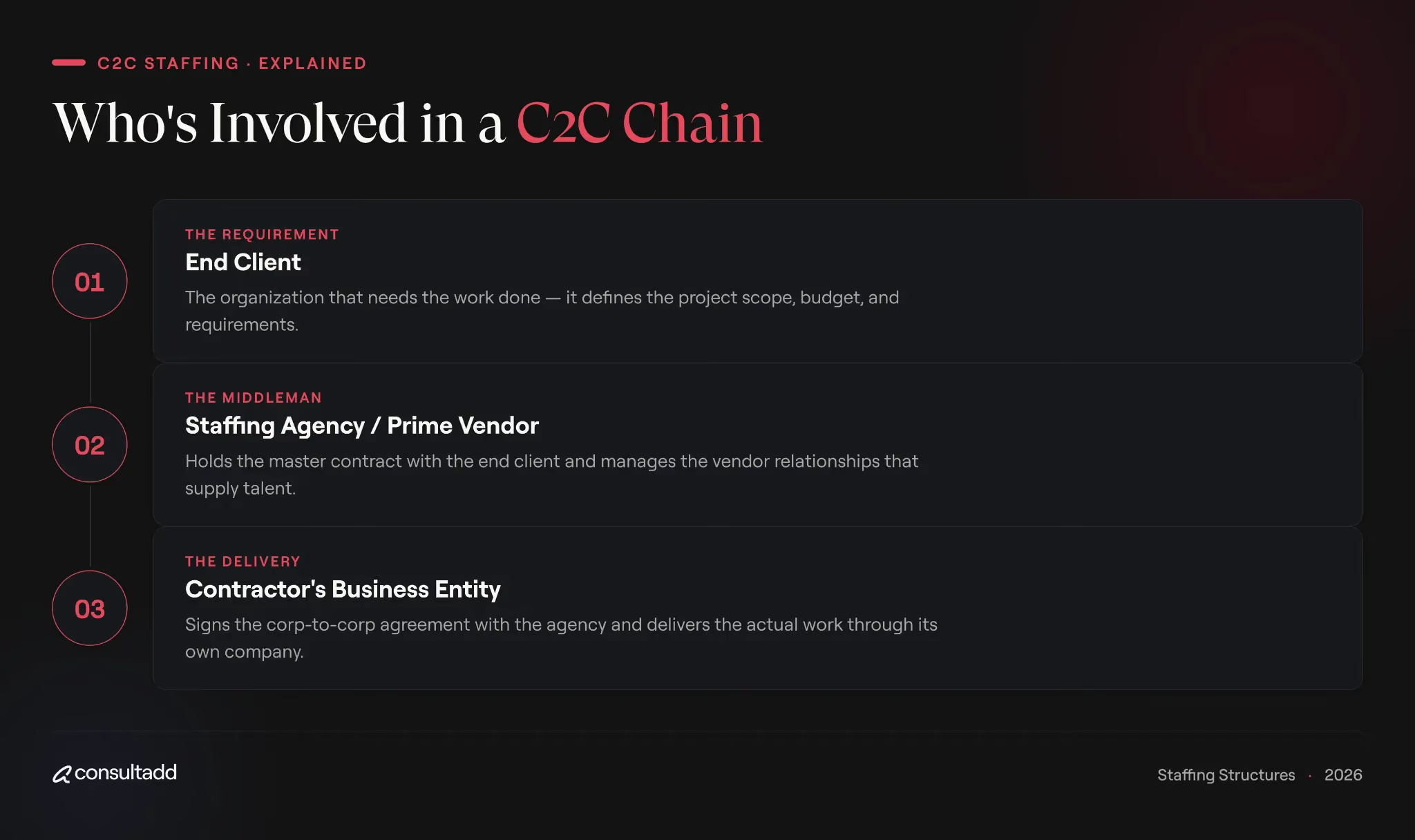
From an employer's perspective, c2c roles solve a real hiring problem.
- Permanent hiring involves risk.
- You can't fully know how someone works until they're actually working.
- Skills assessments and interviews only tell you so much. With c2c placements, companies get 90 to 180 days of real-world validation.
Companies also appreciate the flexibility.
- If business needs to shift or the role isn't quite right, they can part ways without the costs of termination, severance, or extended employment-related obligations.
- This is especially common in tech, where project-based work and shifting priorities mean the role you're hiring for might look different six months from now.
For staffing teams, c2c jobs reduce recruitment friction too.
- Rather than interviewing dozens of candidates and making a permanent hire based on limited information, they can bring someone in for a trial period.
- High-performing contractors often convert to permanent roles, and even those who don't gain valuable employment history and references.
How c2c jobs compare to other employment types
Understanding how c2c positions stack up against other roles helps you decide if this path makes sense for your career.
The table above shows that c2c jobs occupy a unique middle ground. You get more stability than straight contract work, faster entry than traditional permanent hiring, and genuine conversion potential if things go well.
The c2c job conversion timeline
Timing matters in c2c placements. Most companies structure their evaluation period around standard performance review cycles, which usually happen every 90 days or every 6 months.
Month 1-3: The evaluation phase
Your first three months are critical. You're getting onboarded, learning systems, and proving you can deliver. The company is observing your work quality, collaboration, and cultural fit.
Don't expect a conversion conversation yet. Your focus should be on exceeding performance expectations and building relationships with your team.
Month 4-5: The assessment period
By month four, managers have real data. They know if you can ship work, communicate clearly, and mesh with the team. Informal conversations might start happening.
Your manager may ask how you're enjoying the role or mention that things are going well. These aren't conversion offers yet, but they're signals.
Month 6: The conversion decision
Most c2c conversions happen around the 6-month mark, though some companies move faster. Formal conversations happen here.
If the company wants to convert you, you'll get an offer letter, compensation details, and benefits information. If they're not sure, they might extend the contract another 3 months to keep evaluating.
Why c2c jobs are worth considering
The practical advantages of c2c roles shouldn't be underestimated:
For one, you reduce hiring friction.
- A traditional permanent hire can take 2-4 months from application to start date.
- C2C roles often move faster because the commitment is lower upfront.
You also get to validate the role before accepting permanent status.
- Jobs often look different from the inside.
- The team dynamics, day-to-day responsibilities, or growth potential might not match the job description.
- A c2c period lets you discover this before you're locked into a permanent commitment.
From a career-building perspective, c2c roles show initiative and confidence.
- You're willing to start with a trial period, which signals maturity to employers. You're not just seeking job security, you're proving your value.
- Conversely, companies that invest in converting c2c contractors are signaling that they've vetted you thoroughly and see genuine growth potential.
There's also the matter of market responsiveness.
- If you're entering a new industry or skill area, c2c roles let you build relevant experience without requiring five years of background in the field.
- You learn on the job while the employer accepts the training investment upfront.
Challenges and realities of c2c job positions
C2C roles aren't without downsides:
The biggest challenge is uncertainty.
- During the contract period, you don't have the same job security as permanent employees. If the company runs into budget cuts or the role gets eliminated, you're out.
- There's no severance conversation; you simply reach the end of your contract term.
Compensation is another real concern.
- Contractors often make more per hour than permanent employees in the same role, but they sacrifice benefits, paid time off, and 401k matching.
- If you're a contractor making $45/hour with no benefits, you might earn around $93,600 annually gross.
- But after taxes, health insurance, and retirement contributions you're managing yourself, your take-home might be less than a permanent employee earning $75,000 with benefits included.
The benefits gap is significant.
- As a contractor, you're responsible for your own health insurance, dental, vision, life insurance, and retirement planning.
- This adds up quickly. Permanent employees get these often subsidized through their employer.
- When evaluating a c2c offer, factor in full annual costs for health coverage and retirement savings.
According to Bureau of Labor Statistics data on contingent work, contractors comprise a growing portion of the workforce, but their benefit coverage lags significantly behind permanent employees.
Understanding this gap before committing to a c2c role is critical for financial planning.
There's also social friction sometimes.
- Contract workers aren't always fully integrated into company culture.
- You might miss the email about the team lunch, skip the off-site meeting, or feel like an outsider during company-wide celebrations.
- Some teams are incredibly inclusive; others treat contractors as separate. This varies by company.
Getting hired into c2c job positions
Landing a c2c role starts the same way as any other job search. Apply through job boards, work with staffing recruiters, or network directly. But how you position yourself matters.
First, be explicit about openness to c2c roles.
Many job seekers hide from contract work, worried it looks unstable. But employers appreciate candidates who understand c2c models and see them as genuine opportunities.
In your cover letter or when speaking with recruiters, mention that you're actively interested in contract-to-hire positions and understand the evaluation period as a mutual fit assessment.
Second, work with experienced staffing partners.
Recruiters at firms like Consultadd understand c2c placements and can match you with companies that have actual conversion track records.
Some companies claim to offer c2c roles but never convert anyone. A good recruiter will steer you toward companies with genuine conversion histories.
Third, prepare for the contract details conversation. Before you accept, understand:
- What's the contract length? (3, 6, or 9 months?)
- Is there a conversion benchmark? (What do you need to achieve?)
- What's the hourly rate or annual contract value?
- Are there benefits during the contract period?
- Who manages the contract, the company or a staffing firm?
- What's the process for extending or converting?
Getting these details upfront prevents misunderstandings later. It also shows professionalism and seriousness about the role.
What employers look for in c2c candidates
Companies don't just hire anyone for contract-to-hire roles. They're looking for candidates who can hit the ground running because the evaluation period is compressed.
Here's what gets noticed:
Relevant technical skills. You need to actually do the job from day one. There's less room for an extended ramp-up period compared to permanent hires. If the role requires Python, you need Python experience. If it's a project management position, you need to manage projects immediately.
Clear communication. Contractors need to be self-directed because managers aren't always checking in. You communicate what you've completed, what you're working on, and what you need from others. This matters during evaluation periods.
Adaptability. Contract roles sometimes involve learning new systems, tools, or codebases. Candidates who learn quickly and ask smart questions get better conversions than those who struggle with new environments.
Reliability. This sounds basic, but consistency during a contract period is underrated. Showing up on time, meeting deadlines, and following through on commitments differentiates average contractors from those who convert.
Cultural awareness. You don't need to be best friends with your team, but understanding company dynamics and contributing positively to team morale matters. Companies that convert contractors are hiring people they want to work with long-term.
Conversion rates: What are your actual odds?
Conversion rates vary significantly by industry and company size. In the tech sector, c2c conversion rates hover around 60-75%, according to industry surveys.
Staffing firms report similar figures for roles they place. However, smaller companies or industries with higher turnover naturally see lower conversion rates.
The variable factors:
Company stability. Stable companies with predictable budgets convert more contractors than companies experiencing layoffs or restructuring.
Role clarity. Roles with clear success metrics and stable responsibilities convert more often than those where the scope keeps shifting.
Hiring manager investment. Managers who actively want to convert a contractor and advocate for conversion make it happen. Managers who are indifferent create friction.
Market conditions. In tight labor markets, companies are more likely to convert strong contractors because replacing them is harder. In soft markets, they might end contracts and rehire.
Contractor performance. This is obvious but worth stating: strong performers convert; underperformers don't. If you're meeting expectations and contributing value, conversion becomes likely.
How to maximize your odds of c2c conversion
If you land a c2c role, here's what actually improves your odds of conversion.
Set up the conversion conversation early. Ask your manager in week two or three what success looks like for the conversion decision. Get clarity on technical expectations, team dynamics, and any other factors they'll evaluate. This shows intent and removes ambiguity.
Over-communicate progress. Send brief weekly updates to your manager on what you've shipped, completed, and learned. This isn't annoying; it's professional. It keeps your contributions visible and shows momentum.
Build relationships beyond your direct manager. Network across teams. Grab coffee with colleagues. Help people with problems. Visibility beyond your direct team makes you harder to let go at contract end.
Ask for feedback often. Don't wait for formal reviews. Ask your manager monthly: "How am I doing? Anything I should adjust?" This creates touchpoints and shows you're actively seeking improvement.
Document your wins. Keep a running list of problems you've solved, projects you've shipped, and impact you've created. When conversion conversations happen, you've got concrete examples of your value.
Get to know the hiring manager personally. If your manager isn't the hiring manager, build a direct relationship with whoever will make the conversion decision. They need to know who you are and respect your work.
Deliver more than expected. Find something not in the original job description that would add value and do it. Solve a problem your manager mentioned. Clean up technical debt. The candidates who convert aren't just meeting expectations; they're exceeding them.
The role of staffing partners in c2c placements
Many c2c roles flow through staffing firms, and understanding this relationship matters.
When you work with a staffing partner, you're technically employed by the staffing firm while working at the client company. This has both advantages and disadvantages.
Advantages:
- Staffing firms handle payroll, taxes, and HR logistics.
- They also negotiate on your behalf, handle contract disputes, and often provide benefits like health insurance.
- If things don't work out with the client, they help find your next placement.
Disadvantages:
- Staffing firms take a cut of your rate, typically 20-30%.
- You'll make less than you would negotiating directly with the company.
- Also, staffing firms often move contractors between clients, so they might not be as invested in your conversion as you are.
When working with a staffing partner, choose experienced ones. Consultadd, for example, has relationships with companies that have legitimate conversion track records. Newer firms might place you in roles where no one actually converts.
Ask your staffing recruiter directly: "What's the conversion rate for this specific client?" and "How many contractors from this company have converted to permanent roles?" Good recruiters have this data and will share it. If they won't, that's a red flag.
Industries where c2c jobs are most common
C2C roles aren't equally distributed across industries. Some sectors rely heavily on contract-to-hire staffing models; others rarely use them.
Tech and software development: C2C is huge here. Companies hire contractors for specific projects or to evaluate engineers for permanent roles. Conversion rates are relatively high, especially for strong performers. Every type of engineering role has c2c variants.
Data science and analytics: Similar to tech, data roles often come through c2c models. Companies want to evaluate how analysts approach data problems and integrate with existing teams.
Finance and accounting: Contract roles in accounting are common, especially for specialized positions like tax accounting or financial analysis. Conversion varies by company.
Project management: Project managers are frequently hired on a contract basis to manage specific initiatives. Companies often convert strong PMs to permanent roles.
Sales and business development: Less common for c2c, but some companies use it to test sales team additions before making permanent hires.
Operations and supply chain: Operations roles sometimes follow c2c models, particularly for specialized experience like procurement or logistics optimization.
HR and recruiting: HR roles are occasionally c2c, though less frequently than technical positions.
Industries like retail, hospitality, and customer service rarely use c2c models. They tend to hire permanent employees directly or use traditional temporary staffing.
If you're considering a c2c role, check your industry norms. High-tech fields have strong conversion cultures; traditional industries are more skeptical.
Immigration and employment eligibility in c2c roles
For international candidates, understanding USCIS employment-based visa requirements is critical when considering c2c placements. Some visa categories allow contract work, while others require permanent employment from day one.
If you're on an H-1B or similar visa, verify that the c2c arrangement complies with your visa terms before accepting. Companies that regularly hire contractors through c2c models are usually familiar with visa requirements, but it's your responsibility to confirm.
Staffing partners like Consultadd handle visa compliance as part of their placement process, so working with experienced firms reduces legal risk.
Start Strong With Consultadd
With 15 years in business and 5,000+ successful staffing engagements, we don't just fill roles, we build reliability into your process. We've supported 65 staffing companies in the past year alone and maintain MSAs with industry leaders like Robert Half and TEKsystems.
Here's what working with Consultadd looks like:
- Talent sourced in under 24 hours
- Ready-to-deploy candidates, vetted for experience and compliance
- Lower turnover risk: we match long-term goals, not just short-term needs
- Seamless compliance: visa, documentation, onboarding? Handled.
- Dedicated 1:1 account managers for responsive, personalized support
- Top 100 candidate matches delivered in the past year
- Strong partnerships with universities to tap into fresh, committed talent
- Post-placement support so your investment grows beyond day one
For candidates, your next opportunity is more than just a job title, it's a chance to build skills, gain experience, and move your career forward. At Consultadd, we connect technology professionals with projects and employers that align with their goals, whether they're looking for contract, contract-to-hire, or long-term opportunities.
The tech job market moves fast, but the right guidance can make all the difference. Ready to take the next step in your career journey? Explore Opportunities >>
Key takeaways
- C2C jobs let you start as a contractor with a defined evaluation period and clear potential for permanent conversion
- The average contract lasts 3 to 6 months, with conversion decisions typically made around month 6
- Tech and staffing industries have the highest c2c conversion rates, ranging from 60-75%
- Factor in taxes and benefits when comparing contract rates to permanent salaries; contractors often earn less net despite higher hourly rates
- Success in c2c roles depends on clear expectations, strong performance, communication, and relationship-building with managers
FAQs
What does C2C stand for?
C2C stands for "contract-to-hire." It's an employment model where you start as a contractor for a defined period (typically 3-6 months) with the possibility of converting to a permanent employee if both parties agree. The contract period serves as a mutual evaluation phase, allowing the employer to assess your work quality and cultural fit before making a permanent commitment.
How long do c2c jobs typically last before conversion?
Most c2c positions have an initial contract period of 3 to 6 months, with conversion decisions usually made around the 6-month mark. Some companies offer 90-day contracts with the option to extend another 90 days before making a conversion decision. The timeline depends on the company's hiring process and role requirements, but 6 months is the most common conversion point.
Do c2c jobs include benefits during the contract period?
Benefits during the contract period vary by company and staffing arrangement. Some companies offer limited health insurance or 401k access to contractors. Others provide no benefits, requiring contractors to arrange their own health insurance and retirement savings. Always ask about benefits before accepting a c2c offer, as this significantly impacts your total compensation and financial planning.
What's the difference between c2c jobs and temporary work?
The key difference is intent and structure. Temporary work is designed to fill a short-term gap with no expectation of permanent employment. C2C roles are specifically structured as a pathway to permanent employment, with both the company and contractor actively evaluating whether permanent conversion makes sense. C2C roles also typically last longer and involve more comprehensive evaluation.
How do I know if a company actually converts c2c contractors?
Ask your staffing recruiter for conversion data: "What percentage of contractors from this company have converted to permanent roles in the past year?" Also ask for specific examples and timeframes. If a recruiter can't answer these questions, that's a warning sign. You can also research the company's hiring practices and ask during interviews whether they have a track record of converting contractors successfully.
Should I negotiate the contract terms before accepting a c2c role?
Absolutely. Before accepting, clarify the contract length, hourly rate or annual contract value, conversion benchmarks, and benefits. Get these details in writing. This prevents misunderstandings and shows professionalism. If you're working through a staffing firm, the firm typically handles some negotiation, but you can still request modifications.
.avif)
W2 vs W4: Two Very Different Things With Similar Names
Introduction
Search "W2 vs W4" and you'll usually land in one of two situations.
Either you're comparing employment types, like W2 versus C2C or 1099, or you just got handed a form on your first day that says "W-4" and you're wondering if that's the same thing as the W2 status your offer letter mentioned.
It isn't, and mixing the two up is one of the most common points of confusion for anyone starting a new W2 job, especially through a staffing agency.
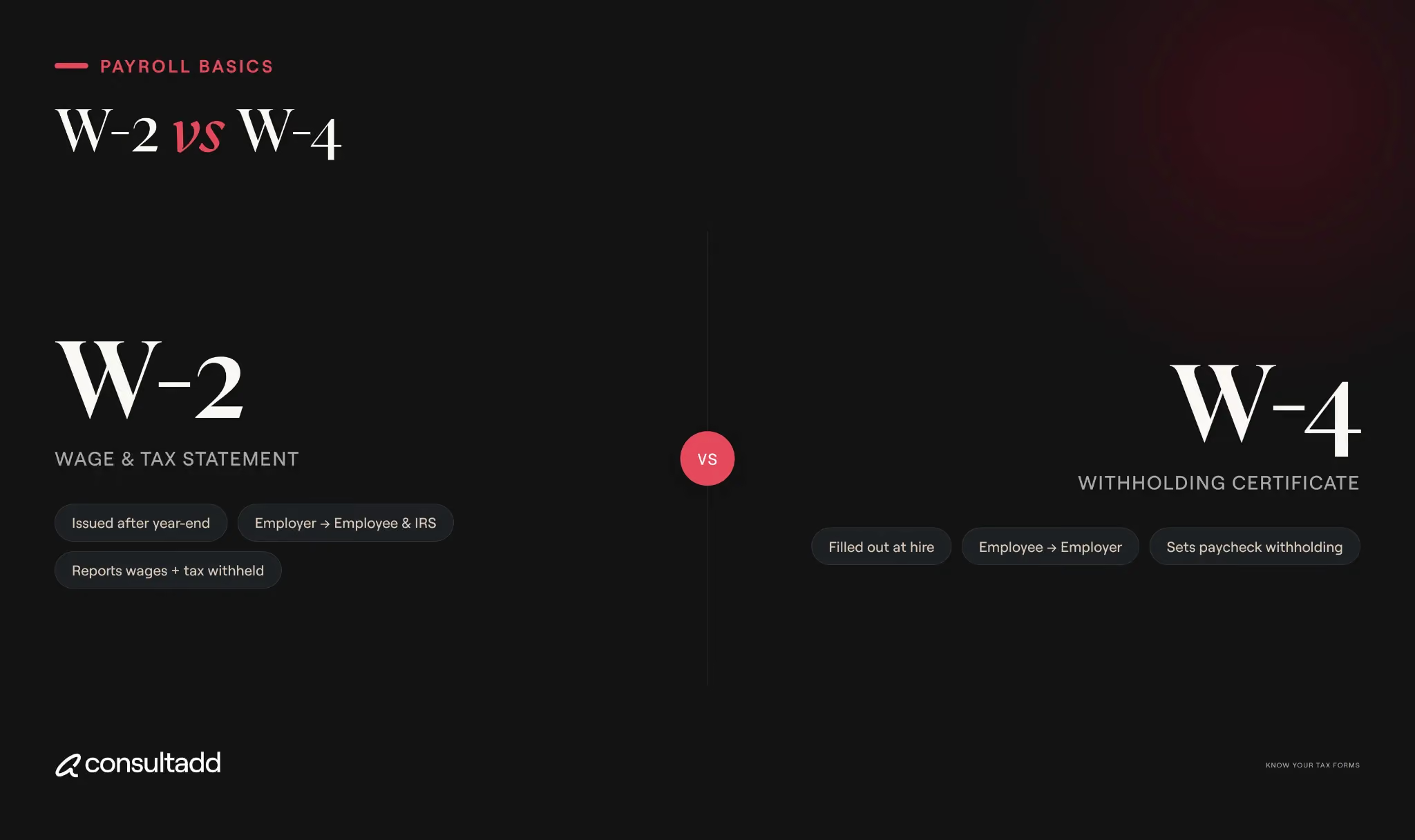
To put it simply W4 tells your employer how much tax to take out while W2 tells you how much you earned and how much tax was taken out.
This post clears up the actual difference: what each form does, who fills it out, when you'll see it, and why getting the W-4 wrong is the thing that actually costs you money.
TL;DR
- W-4 and W-2 are both IRS forms, but they do opposite jobs: the W-4 sets up withholding before you're paid, and the W-2 reports what was actually withheld after the year ends.
- You fill out the W-4 yourself, usually on day one. Your employer fills out the W-2 and sends it to you and the IRS.
- "W2" as a job type (versus C2C or 1099) is a separate concept from the W-2 form. They share a name, not a purpose.
- Getting your W-4 wrong doesn't change your employment classification, but it can mean an unpleasant tax bill or an interest-free loan to the IRS.
- Contract-to-hire and staffing placements are where this confusion shows up most, since a W-4 usually needs to be redone for each new W2 employer in the chain.
What each form actually does
The IRS is direct about the W-4's purpose: it's completed by employees and given to the employer so the employer can withhold the correct federal income tax from pay.
The W-2 works in the other direction: employers file it to report wages, tips, and other compensation paid to employees, along with the taxes that were withheld.
Put simply, the W-4 is a forecast. The W-2 is the actuals.
Why the confusion happens in the first place
If you've spent any time around contract or staffing job postings, you've seen "W2" used as shorthand for an employment classification, meaning you're a direct employee with taxes withheld, as opposed to 1099 (independent contractor) or C2C (corp-to-corp).
That's a completely different use of the term from the W-2 form itself.
Here's where it gets genuinely confusing: to become a "W2 employee" in that staffing sense, the very first thing you do is fill out a W-4, not a W-2. The W-2 doesn't show up until the following tax season.
So a new contractor who was told "this is a W2 role" and then hands in a W-4 form on day one isn't seeing a mismatch. That's exactly how it's supposed to work.
Getting the W-4 wrong doesn't change your classification, but it does cost you
One clarification worth making directly: submitting a W-4 doesn't determine whether you're an employee or a contractor.
Worker classification is decided by the nature of the working relationship, not by which tax forms get filled out. What the W-4 actually controls is how much comes out of each paycheck.
If you claim too few dependents or skip updating it after a life change, like a second job, a new dependent, or a spouse who started working, you can end up with too much or too little withheld all year.
- Too much means you gave the IRS an interest-free loan until you filed your return.
- Too little means a tax bill you weren't expecting.
Neither one is a crisis, but both are avoidable with five minutes of attention when you start a role or when your situation shifts.
Where this gets more complicated: staffing and contract-to-hire placements
If you're moving between contract assignments, or converting from contract to a permanent W2 role, you'll likely fill out a new W-4 for each new employer of record, even if you're doing the exact same work for the same end client. That's normal.
Every employer needs its own W-4 on file, and you'll get a separate W-2 from each one at year's end if you worked for more than one employer during the year.
This is also where it's worth understanding the bigger picture of how W2 employment compares to other contract structures you might be offered.
If you're weighing a W2 offer against a 1099 or C2C arrangement for the same role, our comparison of W2 versus C2C covers the tax and benefits trade-offs beyond just the withholding forms.
And if you're specifically deciding between contract-to-hire and a direct offer, this breakdown of how contract-to-hire actually works is a useful next read.
Quick answers if you're filling one out right now
Q) Starting a new job this week?
You need a W-4, not a W-2. The W-2 doesn't exist yet; it gets generated from the withholding your W-4 sets up.
Q) Filing your taxes?
You need your W-2 (or W-2s, if you had more than one employer), not a new W-4, unless your withholding also needs adjusting for next year.
Q) Not sure if your situation changed enough to update your W-4?
Marriage, divorce, a new dependent, or picking up a second job are the common triggers worth a quick review.
Start Strong With Consultadd
With 15 years in business and 5,000+ successful staffing engagements, we don't just fill roles, we build reliability into your process. We've supported 65 staffing companies in the past year alone and maintain MSAs with industry leaders like Robert Half and TEKsystems.
Here's what working with Consultadd looks like:
- Talent sourced in under 24 hours
- Ready-to-deploy candidates, vetted for experience and compliance
- Lower turnover risk: we match long-term goals, not just short-term needs
- Seamless compliance: visa, documentation, onboarding? Handled.
- Dedicated 1:1 account managers for responsive, personalized support
- Top 100 candidate matches delivered in the past year
- Strong partnerships with universities to tap into fresh, committed talent
- Post-placement support so your investment grows beyond day one
For candidates, your next opportunity is more than just a job title, it's a chance to build skills, gain experience, and move your career forward. At Consultadd, we connect technology professionals with projects and employers that align with their goals, whether they're looking for contract, contract-to-hire, or long-term opportunities.
The tech job market moves fast, but the right guidance can make all the difference. Ready to take the next step in your career journey? Explore Opportunities >>
Key takeaways
- W-4 sets up tax withholding before you're paid; W-2 reports what actually happened after the year ends. They're opposite ends of the same process, not competing forms.
- You complete the W-4 yourself on day one; your employer prepares the W-2 and sends it to you and the government.
- "W2 employee" as a job classification and the W-2 form share a name but describe different things, which is the main source of confusion.
- An incorrect W-4 doesn't reclassify your employment status, but it can lead to an unexpected tax bill or an over-withheld paycheck all year.
- Expect a fresh W-4 for every new employer of record, especially across staffing placements and contract-to-hire conversions.
FAQs
Is W2 the same thing as a W-4?
No. "W2" as an employment term means you're a direct employee with taxes withheld from pay. Form W-4 is the specific document you fill out to set that withholding amount. They're related but not the same thing.
Do I fill out a W-2 or does my employer?
Your employer fills out and files the W-2. You fill out the W-4 yourself, typically when you start a job.
When do I get my W-2?
By January 31 of the year after you worked, so you have time to file your taxes before the mid-April deadline.
How often do I need to update my W-4?
Only when your situation changes, like getting married, having a child, or picking up a second job. Otherwise, it stays on file with your employer indefinitely.
Can my employer see what's on my W-4?
Yes, your employer keeps your W-4 on file and uses it to calculate withholding. It's generally not sent to the IRS unless specifically requested.
If I switch from one staffing agency to another, do I need a new W-4?
Yes. Each employer of record needs its own W-4 on file, even if the work and end client stay the same. You'll also receive a separate W-2 from each employer at year's end.
.avif)
What Is C2C? The Vendor Chain Nobody Explains
Introduction
If you've searched "what is C2C" before, you've probably already found the basic answer: corp-to-corp means a company pays your business entity instead of paying you directly.
That part is simple. What most explanations skip is the part that actually affects your paycheck and your risk: the chain of vendors sitting between you and the company that's really paying for your work.
This isn't another rundown of C2C versus W2 versus 1099. It's what happens after you understand the definition and start seeing job postings that mention "prime vendor," "sub-vendor," or a bill rate that seems to shrink every time you ask about it.
TL;DR
- C2C means the hiring company contracts with your registered business entity (LLC, S-corp, or similar), not with you as an individual.
- In practice, most C2C placements run through a vendor chain: end client, prime vendor, and sometimes one or two sub-vendors below that.
- Each layer in the chain takes a margin, so the rate you're offered can be well below what the end client is actually paying.
- More layers usually means more risk, since accountability and payment reliability tend to weaken the further you are from the prime vendor.
- Knowing how many layers you're behind, and asking directly, is one of the few ways to protect your rate and your risk exposure.
The part everyone explains: what C2C actually means
Corp-to-corp is a contracting arrangement where a company pays another registered business, not an individual, for a worker's services.
To operate C2C, the contractor needs an actual LLC, S-corp, or similar entity. A sole proprietorship doesn't qualify.
The entity signs the agreement, sends the invoice, and receives payment, while the person still shows up and does the work.
That's the version most guides stop at. It's accurate, but it describes a two-party relationship that rarely exists in IT staffing the way it's described.
The part nobody explains: how the chain actually works
Here's what a typical C2C placement looks like once you follow the money all the way up:
- The end client has a project and a budget. They rarely hire contractors directly; instead, they work through an approved vendor list or an MSP (managed service provider) that controls who's allowed to submit candidates.
- The prime vendor, sometimes called a Tier 1 vendor, holds the actual staffing contract with the client or MSP. This is the company closest to the real rate and the real requirement.
- Sub-vendors sit below the prime vendor. They get requirements passed down through hotlists, recruiter networks, or messaging groups, then submit candidates upward. There can be one sub-vendor layer, or two, or occasionally three.
- You (or your entity) sit at the bottom, often without a direct relationship with the prime vendor or the end client at all.
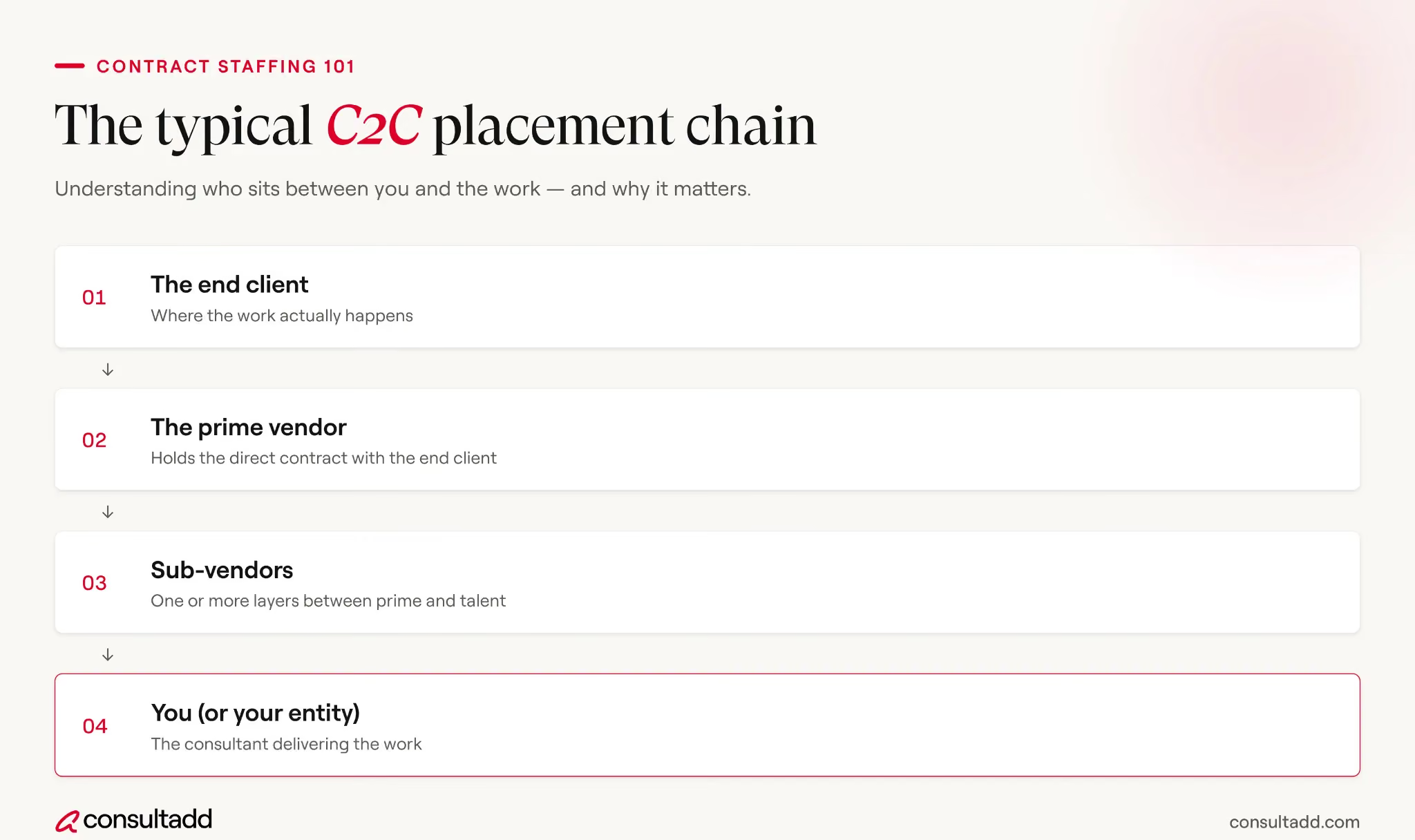
Every layer between you and the end client takes a cut, usually somewhere in the range of 8% to 15% off the top. That's not a hidden fee; it's how staffing margins work.
But it means the rate quoted to you can look very different from what the client is actually paying. A role billing at $95 an hour at the client level can land at $68 an hour by the time it passes through two sub-vendor layers.
Why this matters more than the C2C-vs-W2 question
Most people researching "what is C2C" are really trying to answer one of two questions: how much will I actually take home, and how much risk am I taking on.
The vendor chain answers both, and it's a bigger factor than the C2C label itself.
- Pay compression. The number of layers between you and the prime vendor has more effect on your rate than almost anything else, including your skill level. A senior consultant three layers deep can earn less than a mid-level consultant working one layer from the prime vendor on the same requirement.
- Payment risk. If a sub-vendor two or three layers down runs into cash flow problems, your invoice can sit unpaid even though the end client already paid the prime vendor. The further you are from the top of the chain, the less visibility you have into whether that's happening.
- Speed and stability. Requirements move fast through hotlists and can close within hours. Layers add delay and miscommunication, which is part of why roles closer to the prime vendor tend to be more stable, not just better paid.
How many layers is normal, and when it's a red flag
The compliance risk that sits underneath all of this
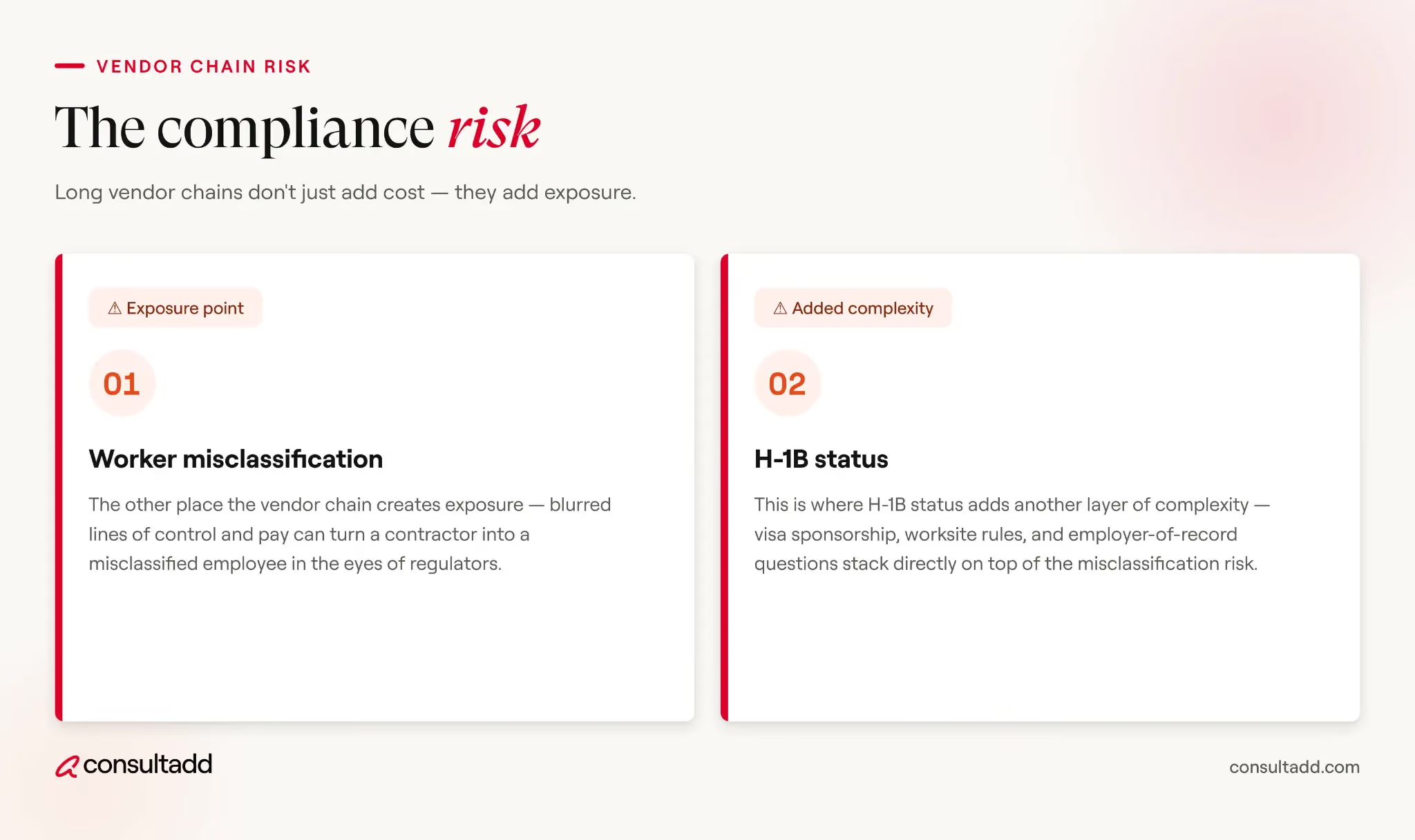
Worker misclassification is the other place the vendor chain creates exposure.
Even when a contract is labeled C2C, the IRS evaluates the actual working relationship, not just the paperwork, looking at behavioral control, financial control, and how the parties actually operate day to day.
A worker treated like a full-time employee, set hours, company-provided equipment, ongoing supervision, can be misclassified regardless of what the contract says, and that risk doesn't disappear just because there's a vendor chain involved.
If anything, longer chains make it harder to trace who's actually responsible for getting the classification right.
This is also where H-1B status adds another layer of complexity.
- H-1B workers can't contract independently through their own entity; the visa requires a sponsoring employer.
- In practice, H-1B professionals on "C2C" projects are W2 employees of a staffing or consulting firm, and that firm is the entity actually doing the corp-to-corp billing further up the chain.
If you're navigating C2C alongside visa sponsorship, our breakdown of corp-to-corp visa sponsorship for H1B roles covers how that structure actually works.
What this means if you're evaluating a C2C offer
- Ask how many vendor layers sit between the role and the end client, not just what the rate is.
- Get payment terms in writing, including how quickly the sub-vendor pays after invoicing, before you start.
- Compare the offered rate against what similar roles pay closer to the prime vendor, since that gap tells you how much margin is being taken above you.
- Confirm your own entity is set up correctly before signing anything.
Our guide on corp-to-corp staffing walks through what a compliant setup actually looks like.
If you're weighing C2C against a W2 role with the same client, our comparison of C2C, W2, and 1099 covers the tax and benefits trade-offs in more depth than we can here.
Start Strong With Consultadd
With 15 years in business and 5,000+ successful staffing engagements, we don't just fill roles, we build reliability into your process. We've supported 65 staffing companies in the past year alone and maintain MSAs with industry leaders like Robert Half and TEKsystems.
Here's what working with Consultadd looks like:
- Talent sourced in under 24 hours
- Ready-to-deploy candidates, vetted for experience and compliance
- Lower turnover risk: we match long-term goals, not just short-term needs
- Seamless compliance: visa, documentation, onboarding? Handled.
- Dedicated 1:1 account managers for responsive, personalized support
- Top 100 candidate matches delivered in the past year
- Strong partnerships with universities to tap into fresh, committed talent
- Post-placement support so your investment grows beyond day one
For candidates, your next opportunity is more than just a job title, it's a chance to build skills, gain experience, and move your career forward. At Consultadd, we connect technology professionals with projects and employers that align with their goals, whether they're looking for contract, contract-to-hire, or long-term opportunities.
The tech job market moves fast, but the right guidance can make all the difference. Ready to take the next step in your career journey? Explore Opportunities >>
Key takeaways
- C2C means a business entity, not an individual, is being paid, but the real story is usually a multi-party vendor chain above that entity.
- Each layer in the chain takes a margin, which is why the rate offered to you can be much lower than what the end client is paying.
- Chains of one or two layers are common; three or more layers is a signal to verify payment terms and the prime vendor relationship before committing.
- Misclassification risk sits underneath the whole structure regardless of how many vendors are involved, since the IRS looks at actual working conditions, not contract labels.
- H-1B holders can't operate C2C through a personal entity; they remain W2 employees of a sponsoring firm even inside a "C2C" project.
FAQs
What is C2C in simple terms?
C2C, or corp-to-corp, means the hiring company pays a registered business entity, like an LLC or S-corp, for a contractor's work instead of paying the individual directly.
What is a prime vendor in a C2C chain?
A prime vendor is the staffing firm that holds the direct contract with the end client. Roles closer to the prime vendor typically pay better and involve fewer communication delays than roles several sub-vendor layers down.
Why does my C2C rate seem lower than what the client is paying?
Each layer in the vendor chain takes a margin, commonly 8% to 15%. If your role has passed through two or three sub-vendors, that compounding margin explains most of the gap between the client's budget and your offer.
How many vendor layers is too many?
There's no fixed rule, but one or two layers is common and manageable. Three or more layers increases payment risk and reduces your visibility into the actual terms, so it's worth verifying the chain before signing.
Can I work C2C on an H-1B visa?
Not through your own personal entity. H-1B status requires a sponsoring employer, so H-1B professionals on C2C-labeled projects are typically W2 employees of a staffing or consulting firm that handles the corp-to-corp arrangement further up the chain.
How do I check if a C2C arrangement is properly classified?
Look at the actual working relationship, not just the contract label. The IRS weighs behavioral control, financial control, and how independently the work is performed, so set hours, company equipment, and ongoing supervision can all point toward misclassification regardless of the paperwork.

H1B Cap Exempt Jobs: How to Skip the Lottery in 2026
Introduction
Every March, roughly 780,000 registrations chase 85,000 H-1B slots, and most people walk away with nothing. What a lot of candidates don't realize is that there's a separate category of h1b cap exempt jobs that never touches the lottery at all.
These roles sit at universities, nonprofit research organizations, and government research bodies, and employers there can file a petition on any date of the year.
This isn't a loophole. It's written directly into the Immigration and Nationality Act, and USCIS has been processing these petitions for decades.
What's changed recently is how much more attractive this path has become, now that the regular lottery is wage-weighted and a $100,000 fee applies to many petitions filed from abroad.
Below is what actually qualifies, who's hiring, and what to check before you assume a job is exempt.
TL;DR
- H1B cap exempt jobs are tied to the employer's status, not the applicant's resume. Only universities, their affiliated nonprofits, and nonprofit or government research organizations qualify.
- There's no lottery, no March registration window, and no fee for the $100,000 supplemental charge, unless the beneficiary is filing from outside the U.S.
- Working at a cap-exempt location isn't the same as working for a cap-exempt petitioner. Staffing agencies placing workers on a university campus are usually still cap-subject.
- A 2026 rule change tightened how USCIS evaluates whether a nonprofit's research activity actually qualifies it for the exemption.
- Once cap-exempt status is granted, a worker can also take on a second, cap-subject job concurrently without entering the lottery for it.
What "cap exempt" actually means
The annual H-1B cap sits at 65,000 visas, plus another 20,000 reserved for people with a U.S. master's degree or higher. That's the number most job seekers hear about, and it's the reason the lottery exists at all.
Section 214(g)(5) of the Immigration and Nationality Act carves out three categories of employer that never have to compete for those numbers.
According to USCIS, H-1B workers petitioned for or employed at an institution of higher education, its affiliated nonprofit entities, a nonprofit research organization, or a government research organization are not subject to the annual numerical cap.
That's the entire legal basis for h1b cap exempt jobs, and it comes straight from the USCIS H-1B program page.
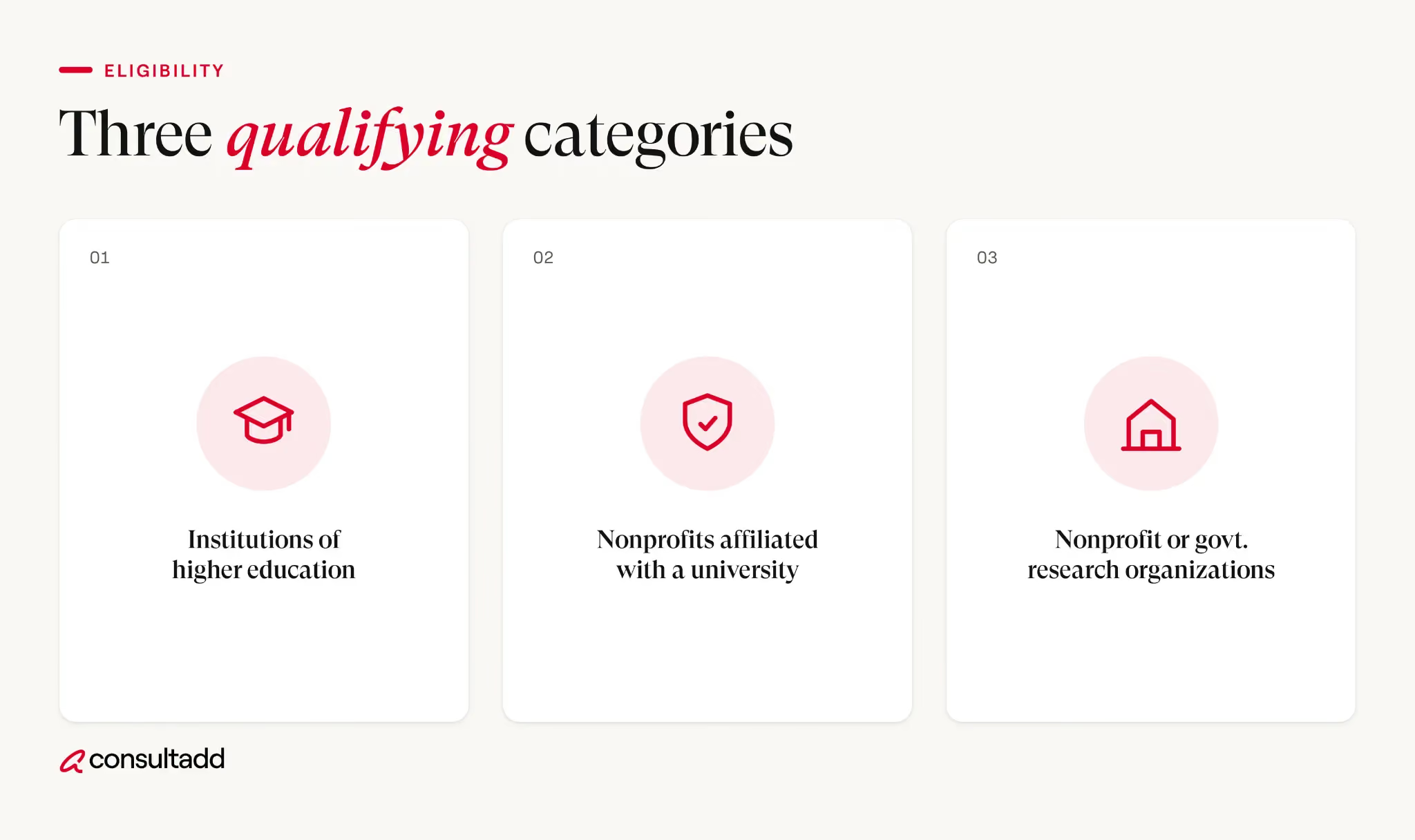
The three qualifying categories
- Institutions of higher education - accredited colleges and universities, public or private.
- Nonprofit entities related to or affiliated with a university - think university-affiliated hospitals, research centers, or teaching foundations with a documented, formal connection.
- Nonprofit or governmental research organizations - entities where research is a primary or fundamental activity, whether or not they're formally attached to a school.
If you want the full statutory language and USCIS's own framing of the H-1B program, their H-1B Specialty Occupations page is the primary source, and it's worth reading before you assume any employer qualifies.
Cap-subject vs. cap-exempt: side by side
Who is actually hiring for these roles
Cap-exempt status attaches to the organization, not the job title, which means the roles themselves are surprisingly varied.
1. Universities and colleges
Faculty and postdoctoral positions are the obvious fit, but IT, data, administrative, and lab-support roles at a university are just as exempt if the university itself is the petitioner.
2. University-affiliated nonprofits
Teaching hospitals, research foundations, and centers with a formal, written affiliation agreement to a school can qualify, provided they can document that connection when USCIS asks.
3. Nonprofit and government research organizations
National laboratories and similar institutions fall here. Their research mission, not a university tie, is what earns the exemption.
Employer type, examples, and the roles they typically sponsor
What's actually changed for 2026
A few things make 2026 a different year for anyone weighing cap-exempt options against the regular lottery.
1. The lottery got harder for lower-wage roles
- USCIS moved to a wage-weighted selection system in early 2026, and that pushed selection odds for entry-level, Level I registrations well below what senior, higher-wage candidates now see.
- For someone early in their career, a cap-exempt path at a research institution can be a more realistic route than repeatedly entering a lottery stacked against them.
Our breakdown of H-1B prerequisites and eligibility covers how that wage-weighting actually plays out.
2. The $100,000 fee mostly, but not entirely, skips cap-exempt filers
- The September 2025 proclamation fee applies to new H-1B petitions for beneficiaries who are abroad and need consular processing.
- Cap-exempt employers are generally not required to pay it, but there's a real exception: if a university or nonprofit is filing for someone currently overseas, the fee can still apply.
- Change-of-status cases, most notably F-1 students already in the U.S., are typically unaffected either way.
Nonprofit eligibility got more scrutiny
- A rule that took effect in January 2025 changed how USCIS evaluates whether a nonprofit's research activity is substantial enough to qualify, and the revised Form I-129, in effect since April 2026, asks for more specific detail connecting the job duties to the organization's qualifying mission.
- A nonprofit that assumed it was cap-exempt five years ago should not assume the same paperwork still holds up today.
LCA requirements haven't changed
- Every cap-exempt petition still needs a certified Labor Condition Application filed through the Department of Labor's FLAG system before the I-129 goes to USCIS.
- That step typically takes about a week and is identical whether the petition is cap-subject or cap-exempt.
The catch a lot of candidates and agencies miss
Here's where things go wrong most often: working at a cap-exempt location is not the same as being petitioned by a cap-exempt employer.
If a staffing agency places a contractor on a university campus, the agency, not the university, is usually the petitioner, and the agency is typically a for-profit company subject to the regular cap.
USCIS looks at who controls the work, who pays the salary, and who has the authority to end the assignment. That entity determines cap status, not the building the work happens in.
This matters a great deal for staffing firms building out tech teams for research institutions. If your placement model depends on cap-exempt status, the contract structure needs to reflect that the qualifying institution is actually the petitioning employer, not just the end client.
Our guide to corp-to-corp visa sponsorship walks through how staffing arrangements affect who's actually on the hook for a petition.
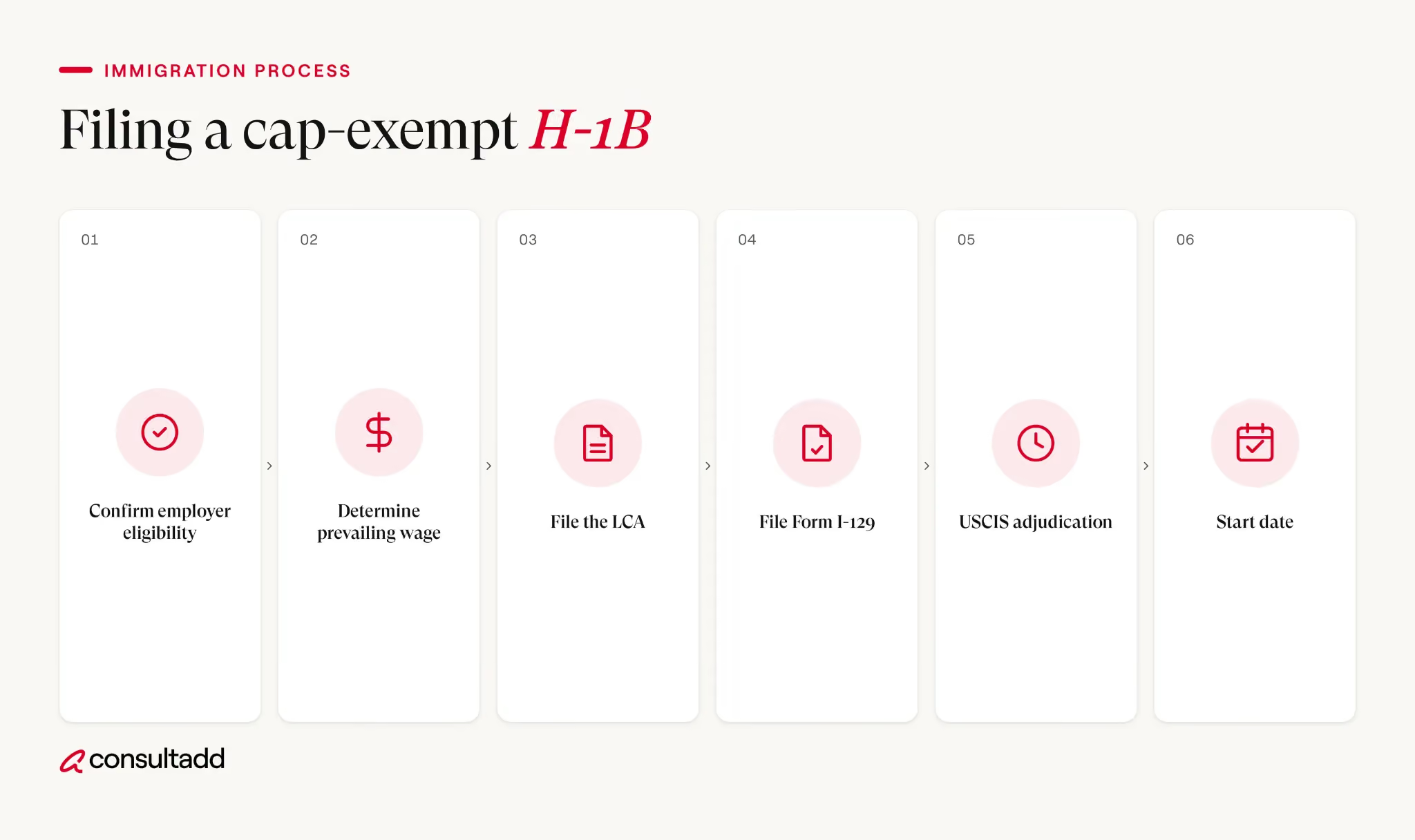
Step-by-step: how a cap-exempt H-1B actually gets filed
What this means if you're already in the U.S.
Candidates on F-1 OPT or an existing H-1B often assume cap-exempt roles are only for people applying from outside the country. That's backwards.
Since change-of-status petitions for people already here are usually unaffected by the $100,000 fee regardless of employer type, an in-country candidate applying to a cap-exempt research role often has the cleanest, least expensive path available.
It also works the other direction. Someone who holds cap-exempt H-1B status through a university can pick up a second, cap-subject job at the same time, since each employer files its own I-129 and the cap-exempt approval doesn't count against the regular limit.
That's a detail buried in most explainers, and it's genuinely useful if a research role pays less than a comparable industry position but you want to keep both doors open.
If you're weighing a research appointment against a staffing-based placement, our overview of the IT staffing process explains how agency-side timelines compare to a direct university hire.
Start Strong With Consultadd
With 15 years in business and 5,000+ successful staffing engagements, we don't just fill roles, we build reliability into your process. We've supported 65 staffing companies in the past year alone and maintain MSAs with industry leaders like Robert Half and TEKsystems.
Here's what working with Consultadd looks like:
- Talent sourced in under 24 hours
- Ready-to-deploy candidates, vetted for experience and compliance
- Lower turnover risk: we match long-term goals, not just short-term needs
- Seamless compliance: visa, documentation, onboarding? Handled.
- Dedicated 1:1 account managers for responsive, personalized support
- Top 100 candidate matches delivered in the past year
- Strong partnerships with universities to tap into fresh, committed talent
- Post-placement support so your investment grows beyond day one
For candidates, your next opportunity is more than just a job title, it's a chance to build skills, gain experience, and move your career forward. At Consultadd, we connect technology professionals with projects and employers that align with their goals, whether they're looking for contract, contract-to-hire, or long-term opportunities.
The tech job market moves fast, but the right guidance can make all the difference. Ready to take the next step in your career journey? Explore Opportunities >>
Key takeaways
- Cap-exempt status belongs to the employer, universities, affiliated nonprofits, and research organizations, not to the job or the applicant.
- There's no March registration, no lottery, and filing can happen any month of the year.
- The $100,000 proclamation fee generally spares cap-exempt petitions, except when the beneficiary is filing from abroad.
- Placement location doesn't determine cap status; the petitioning employer's control over the work does.
- A cap-exempt H-1B can run alongside a second, cap-subject job, since each is filed and evaluated separately.
FAQs
Are all university jobs automatically cap-exempt?
Only if the university itself is the petitioner. If a contractor or staffing agency is technically the employer of record, even for work performed on campus, the petition is usually still cap-subject.
Do cap-exempt employers still need to file a Labor Condition Application?
Yes. Every H-1B petition, cap-exempt or not, requires a certified LCA from the Department of Labor before Form I-129 can be filed with USCIS.
Can I transfer from a cap-subject H-1B to a cap-exempt employer?
Yes, and it doesn't require re-entering the lottery. The new cap-exempt employer files its own I-129 based on your existing H-1B status.
Does the $100,000 H-1B fee apply to university and nonprofit sponsors?
Usually not, but there's an exception. If the petition is for a beneficiary currently outside the U.S. requiring consular processing, the fee can still apply even at a cap-exempt organization.
What happens if I later move from a cap-exempt job to a for-profit employer?
That new employer's petition is cap-subject, so you'd need to be selected in the regular H-1B lottery, even though your prior role was exempt.
How long does a cap-exempt H-1B petition take to process?
Standard processing generally runs three to eight months. Premium processing, where available, brings a decision within 15 business days.
.avif)
What Are the Rules for 1099 Employees? A 2026 Guide
Introduction
"1099 employee" is one of those phrases that gets used constantly and technically doesn't exist.
If someone gets a 1099, they're not an employee at all, they're an independent contractor. But the term has stuck around because so many businesses genuinely aren't sure where the line sits, and getting it wrong is an expensive mistake.
So, what are the rules for 1099 employees? At the core, it comes down to classification tests set by the IRS and the Department of Labor, filing requirements once you pay a contractor over a certain amount, and a handful of practical dos and don'ts that keep the relationship from drifting into employee territory.
Get the classification wrong, and you're looking at back taxes, penalties, and potentially a Department of Labor audit. This guide walks through the actual rules, what changed for 2026, and where most businesses trip up.
TL;DR
- A 1099 contractor is self-employed and not on your payroll, so you don't withhold taxes or provide employee benefits.
- The IRS uses a common-law control test; the Department of Labor uses an economic reality test. Both look at control and independence, not just the contract's wording.
- Starting with 2026 payments, the Form 1099-NEC filing threshold rises from $600 to $2,000 under the One Big Beautiful Bill Act.
- Misclassification penalties can run into the thousands of dollars per form, plus back payroll taxes if an audit finds a worker should have been a W-2 employee.
- A written contract helps, but it doesn't override the facts of how the work actually happens day to day.
What is a 1099 contractor, exactly?
A 1099 contractor is a self-employed individual or business that performs services for a company without being on that company's payroll.
The IRS puts it plainly: the person paying for the services must report those payments on Form 1099-NEC, and the deciding factor isn't how much freedom the worker has day to day, it's whether the paying business has the legal right to control what gets done and how.
That last part trips up a lot of employers. You can give a contractor total freedom in practice, but if your contract or working arrangement gives you the right to dictate their schedule, tools, and methods, the IRS may still see an employee relationship underneath.
Contractors handle their own taxes, including self-employment tax, and typically invoice for their work rather than receiving a regular paycheck.
1099 contractor vs. W-2 employee
The classification tests that actually decide it
Two federal agencies care about this, and they don't use identical tests. Knowing both matters because passing one doesn't automatically mean you pass the other.
Test 1: IRS common-law control test
The IRS looks at three categories of evidence:
- Behavioral control (who directs how the work is done)
- Financial control (who bears the risk of profit or loss)
- Type of relationship (is there a contract, are benefits provided, is the work ongoing)
No single factor decides it. The IRS weighs the whole picture.
Test 2: DOL economic reality test
The Department of Labor's standard has shifted more than once in recent years, so it's worth knowing where things stand.
As of early 2026, the DOL is not enforcing the 2024 rule and has proposed reinstating an economic reality test that gives the most weight to two core factors:
- The nature and degree of control over the work
- The worker's opportunity for profit or loss based on their own initiative or investment
If those two factors point in the same direction, that's usually enough to settle the classification.
Other factors the DOL considers as supporting evidence include the worker's skill level, how permanent the relationship is, and whether the work is integral to the business.
Some states go further and apply their own ABC test, which is stricter than the federal standard and harder for a worker to pass as an independent contractor. Always check state-level rules before assuming federal classification is enough.
Filing rules for 1099 contractors in 2026
The paperwork side has changed for 2026. Under the One Big Beautiful Bill Act, the Form 1099-NEC reporting threshold rises from $600 to $2,000 starting with payments made in 2026, which businesses will report in 2027.
That means you won't need to issue a 1099-NEC for a contractor paid less than $2,000 in a calendar year, though tracking every payment still matters for your own records.
A few filing basics stay the same regardless of the threshold change:
- Collect a completed Form W-9 from every contractor before paying them, so you have their legal name, address, and taxpayer ID on file.
- Issue Form 1099-NEC by January 31 of the following year for any contractor who meets the threshold.
- Apply 24% backup withholding if a contractor doesn't provide a valid taxpayer ID.
- Payments made through PayPal, Stripe, or similar platforms typically get reported on Form 1099-K by the payment processor, not by you directly.
Missing a required filing isn't cheap. The penalty for an omitted Form 1099-NEC runs up to $340 per form for 2025 filings, with maximum penalties reaching into the millions for larger businesses, and even higher penalties if the IRS determines the omission was intentional.
Practical rules to keep the classification clean
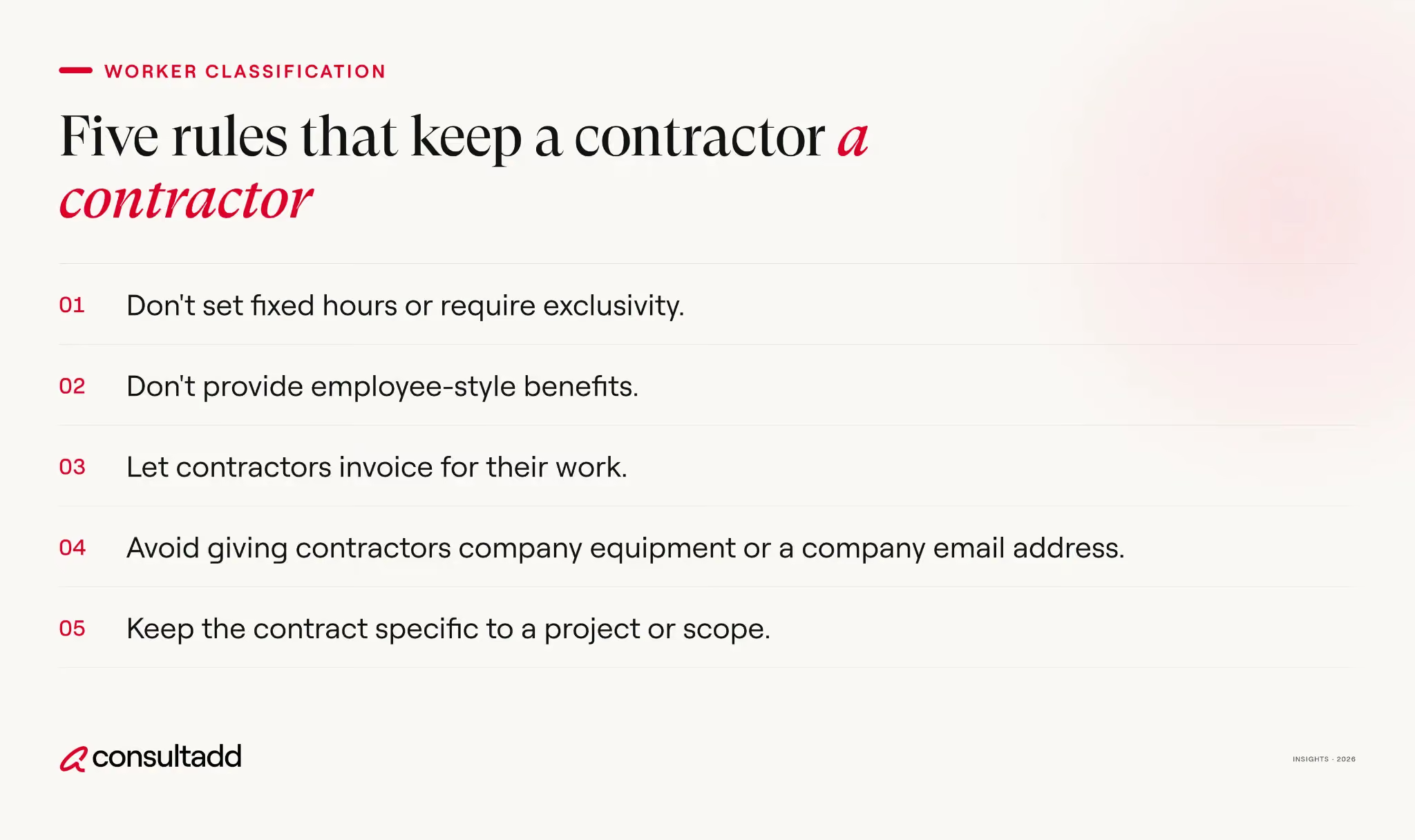
Passing a legal test on paper is one thing. Keeping the actual working relationship consistent with contractor status is another, and it's usually where businesses slip.
A few things worth building into how you manage 1099 relationships:
- Don't set fixed hours or require exclusivity. Contractors should be free to work for other clients and manage their own schedule.
- Don't provide employee-style benefits. Health insurance, paid time off, or retirement plan access all point toward employee status.
- Let contractors invoice for their work. A regular paycheck cadence looks more like payroll than a contractor relationship.
- Avoid giving contractors company equipment or a company email address, where it's practical to do so. Ownership of tools is a financial control factor.
- Keep the contract specific to a project or scope, rather than an open-ended, ongoing arrangement that never has a clear end date.
None of these guarantee compliance on their own, but ignoring them is one of the fastest ways to draw the wrong kind of attention during an audit.
What happens if you misclassify a worker
If an audit or a worker's own complaint finds that a 1099 contractor should have been a W-2 employee, the business is generally on the hook for back payroll taxes, unpaid overtime if applicable, and potential penalties on top.
This is exactly the kind of risk that makes flexible staffing models worth structuring properly from the start.
For companies unsure whether a role fits contractor status, models like contract-to-hire or working through a staffing partner for Corp-to-Corp arrangements can reduce classification risk, since the staffing agency, not the client company, often carries the payroll and compliance responsibility.
This is also part of why staff augmentation has become a common middle ground for companies that need flexible capacity without taking on direct misclassification exposure.
Start Strong With Consultadd
With 15 years in business and 5,000+ successful staffing engagements, we don't just fill roles, we build reliability into your process. We've supported 65 staffing companies in the past year alone and maintain MSAs with industry leaders like Robert Half and TEKsystems.
Here's what working with Consultadd looks like:
- Talent sourced in under 24 hours
- Ready-to-deploy candidates, vetted for experience and compliance
- Lower turnover risk: we match long-term goals, not just short-term needs
- Seamless compliance: visa, documentation, onboarding? Handled.
- Dedicated 1:1 account managers for responsive, personalized support
- Top 100 candidate matches delivered in the past year
- Strong partnerships with universities to tap into fresh, committed talent
- Post-placement support so your investment grows beyond day one
For candidates, your next opportunity is more than just a job title, it's a chance to build skills, gain experience, and move your career forward. At Consultadd, we connect technology professionals with projects and employers that align with their goals, whether they're looking for contract, contract-to-hire, or long-term opportunities.
The tech job market moves fast, but the right guidance can make all the difference. Ready to take the next step in your career journey? Explore Opportunities >>
Key takeaways
- A 1099 contractor is self-employed, not an employee, so there's no tax withholding or benefits obligation on the employer's side.
- The IRS common-law test and the DOL economic reality test both weigh control and independence, and passing one doesn't guarantee you pass the other.
- The 1099-NEC filing threshold rises to $2,000 for 2026 payments, up from $600, under the One Big Beautiful Bill Act.
- How the relationship actually operates, schedule, exclusivity, benefits, equipment, matters more than what the contract says.
- Misclassification penalties include IRS fines per form plus potential back payroll taxes, so getting the classification right upfront is worth the extra diligence.
FAQs
Can a 1099 contractor work full-time hours for one company?
They can, but doing so consistently is a red flag for misclassification, since full-time exclusivity looks more like an employment relationship than an independent contractor engagement.
Do I need a written contract for a 1099 worker?
It's strongly recommended, though not legally required in every case. A written agreement helps document scope, payment terms, and the independent nature of the relationship, but it won't override the actual facts of how the work happens.
What is the penalty for misclassifying an employee as a 1099 contractor?
Penalties vary by circumstance but can include back payroll taxes, unpaid overtime, fines per missed filing, and in some cases state-level penalties if the misclassification affected unemployment insurance or workers' compensation contributions.
Do 1099 contractors get overtime pay?
No. Overtime protections under the Fair Labor Standards Act apply to employees, not independent contractors, which is part of why correct classification matters so much for wage and hour compliance.
What is the 1099-NEC threshold for 2026?
Starting with payments made in 2026, the reporting threshold for Form 1099-NEC increases from $600 to $2,000 under the One Big Beautiful Bill Act, though businesses should still track all contractor payments internally.
Does a signed contract guarantee contractor status?
No. Both the IRS and the Department of Labor look at the actual working relationship, not just contract language. A contract calling someone an independent contractor doesn't protect a business if the real working conditions resemble employment.