
Contracts
.avif)
What's the Difference Between a Green Card and a Visa?
Introduction
Ask ten people what's the difference between a green card and a visa and you'll get a lot of confident, partly wrong answers. The most common one is that a green card is "a permanent visa." It isn't, and the distinction matters more than it sounds like it should.
The short version: a visa is a travel document. A green card is proof of a status. Different agencies issue them, they do different jobs, and one of them can expire while you're still perfectly legal.
Here's how each one actually works, how people move from a visa to a green card, and what changes in daily life once they do.
This is general information, not legal advice. Immigration rules change and individual cases vary, so check with a licensed immigration attorney before acting on anything here.
TL;DR
- A visa is issued by the U.S. Department of State at a consulate abroad. It lets you travel to a port of entry and ask to be admitted. It does not guarantee entry.
- A green card (officially Form I-551) is issued by USCIS. It's evidence that you're a lawful permanent resident, with the right to live and work in the U.S. indefinitely.
- Your visa's expiration date is the last day you can travel to the U.S. on it, not the last day you can stay. Your I-94 admission record controls how long you can remain.
- Most green cards are valid for 10 years, some conditional ones for two. The card expiring is not the same as your status ending.
- Millions of people hold both in sequence: a temporary visa first, then permanent residence through employment, family, or another qualifying route.
The short answer
Everything below is detail on those rows:
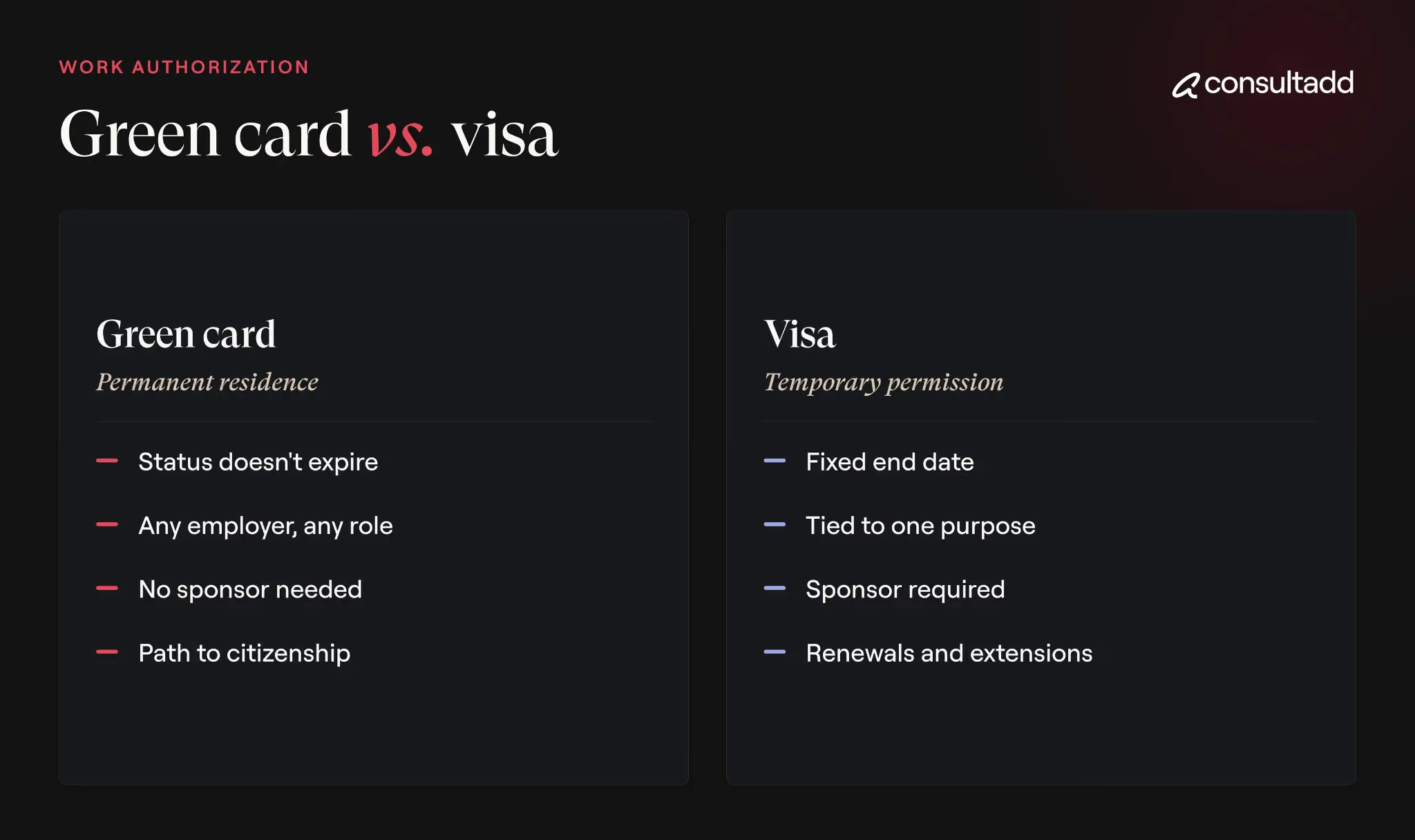
What a visa actually is
A visa is permission to show up and ask.
- That's the part people miss. According to the U.S. Department of State, a visa allows a foreign citizen to travel to a U.S. port of entry and request permission to enter. It does not guarantee entry.
- Customs and Border Protection officers at the port of entry have the authority to permit or deny admission, and if you're admitted, the CBP official provides an admission stamp or a paper Form I-94.
- So a visa is closer to a boarding pass than a residency permit. It gets you to the door. Someone else decides whether the door opens.
Nonimmigrant visas vs. immigrant visas
There are two broad families, and mixing them up causes half the confusion around this topic.
Nonimmigrant visas are for temporary stays with a defined purpose: tourism, business, study, specialty work. B-1/B-2 visitors, F-1 students, H-1B specialty workers, L-1 intracompany transferees, O-1 extraordinary ability.
Each category has its own rules about how long you can stay, whether you can work, and who you can work for.
Immigrant visas are for people who have been approved for permanent residence but are still outside the United States.
This is the one that trips people up, because an immigrant visa is a step toward a green card, not a substitute for one. You use it to enter. Once a CBP officer endorses it at the port of entry, you become a lawful permanent resident, and the physical card arrives by mail afterward.
Two documents, one process, in sequence.
Your visa expiration date is not your deadline
This is the single most misunderstood detail in U.S. immigration, and it's worth stating plainly.
The State Department is explicit: the visa expiration date doesn't reflect how long you're authorized to stay. Entry and length of authorized stay are determined by the CBP officer at the port of entry each time you travel.
In practice that means your visa can expire while you're legally in the country, and you'd still be in status. It also means the reverse: a valid visa in your passport doesn't help if your admitted-until date has passed. The visa governs travel. The I-94 governs stay.
If you leave and want to come back, though, you'll need a valid visa again.
What a green card actually is
A green card is the physical evidence that you hold lawful permanent resident status.
- USCIS issues it, and the official name is Form I-551, Permanent Resident Card.
- Permanent residence is a status, not a document. The card proves it. That distinction sounds pedantic until the card expires, at which point it becomes the whole story.
- As a permanent resident you can live anywhere in the U.S., work for any employer or no employer, change jobs without filing anything, start a business, and travel in and out of the country using the card itself.
- You're not tied to a sponsor, a job title, or a renewal cycle tied to someone else's decisions.
Conditional cards and 10-year cards
Most green cards are valid for 10 years. Some people receive a conditional card valid for two, most commonly through a recent marriage or an EB-5 investment.
Conditional residents file a separate petition to remove the conditions before that two-year card expires, using Form I-751 for marriage-based cases or Form I-829 for investor cases.
Form I-90 is for renewing or replacing a standard card. It is not the form for removing conditions. People mix these up constantly, and filing the wrong one costs months.
The card can expire without your status ending
An expired green card does not mean expired residence. It means you're a permanent resident without current proof, which is a practical problem rather than a legal one, and it shows up fast at a job or an airport.
USCIS handles this through the renewal receipt. Per USCIS guidance on replacing a green card, the Form I-90 receipt notice presented together with your expired card serves as evidence of lawful permanent resident status for 36 months from the card's expiration date. That extension went from 24 months to 36 months in September 2024.
Long absences are a different matter. Extended trips abroad can raise questions about whether you've abandoned residence, which is why people planning long stays outside the U.S. file for a reentry permit before leaving.
Green card vs visa, in practice
The table near the top covers the mechanics. Here's what actually changes in someone's life.
How people move from a visa to a green card
There are two mechanical routes, and which one applies depends on where you are when your case is approved.
Adjustment of status happens inside the United States. You file Form I-485 while holding a valid status, and if it's approved, the green card is the first status document you receive. No consulate, no immigrant visa.
Consular processing happens abroad. You're approved, a U.S. consulate issues an immigrant visa, you travel, a CBP officer admits you, and the card follows in the mail.
Timelines vary widely by category and country of birth. Some employment-based cases move in a couple of years. Others take much longer because of per-country limits.
If you're working through the earlier stages of this, Consultadd's guides on what work authorization actually means and H-1B vs. OPT differences cover the temporary side of the journey in more detail.
What changes day to day
People tend to expect the shift from visa to green card to feel dramatic. Mostly it feels like the absence of friction.
You stop planning your career around a petition calendar. You stop asking whether a job change is worth the filing risk. You stop refreshing a case status page. A layoff becomes a career problem instead of an immigration emergency.
What doesn't change: you still file U.S. taxes, you still carry documentation, and you still have obligations. Permanent residence is durable, not unconditional. Serious criminal convictions and prolonged abandonment of residence are both routes to losing it.
What this means if you're hiring
Employers don't need to adjudicate immigration status. They need to verify work authorization correctly and avoid discriminating in the process.
Every U.S. employer completes Form I-9 for every new hire, citizen or not. The employee completes Section 1 no later than their first day of work, and the employer completes Section 2 within three business days of the hire date.
The form is retained for three years after the hire date or one year after employment ends, whichever is later.
One rule worth internalizing: employees choose which acceptable documents to present. Employers don't get to request a specific document, and asking a permanent resident for their green card specifically when they've offered other valid documents can create a discrimination problem.
For staffing firms placing visa-dependent talent, this is where engagements go sideways:
- A candidate who looks available in March may not be able to start until June.
- Verifying status before the client interview rather than after the offer saves everyone weeks.
Consultadd's guide to H-1B sponsorship for tech professionals covers the sponsorship side, and the IT staffing process walkthrough shows where compliance checks belong in a hiring sequence.
Start Strong With Consultadd
With 15 years in business and 5,000+ successful staffing engagements, we don't just fill roles, we build reliability into your process. We've supported 65 staffing companies in the past year alone and maintain MSAs with industry leaders like Robert Half and TEKsystems.
Here's what working with Consultadd looks like:
- Talent sourced in under 24 hours
- Ready-to-deploy candidates, vetted for experience and compliance
- Lower turnover risk: we match long-term goals, not just short-term needs
- Seamless compliance: visa, documentation, onboarding? Handled.
- Dedicated 1:1 account managers for responsive, personalized support
- Top 100 candidate matches delivered in the past year
- Strong partnerships with universities to tap into fresh, committed talent
- Post-placement support so your investment grows beyond day one
For candidates, your next opportunity is more than just a job title, it's a chance to build skills, gain experience, and move your career forward. At Consultadd, we connect technology professionals with projects and employers that align with their goals, whether they're looking for contract, contract-to-hire, or long-term opportunities.
The tech job market moves fast, but the right guidance can make all the difference. Ready to take the next step in your career journey? Explore Opportunities >>
Key takeaways
- A visa is a travel document from the State Department that lets you request admission. A green card is USCIS evidence that you already hold permanent resident status.
- A visa doesn't guarantee entry, and its expiration date governs travel, not how long you can stay. The I-94 does that.
- Most green cards run 10 years, conditional ones two, and an expired card doesn't end your status.
- Moving from a visa to a green card happens either through adjustment of status inside the U.S. or consular processing abroad.
- Employers verify work authorization through Form I-9 and must let employees choose which acceptable documents to present.
FAQs
Is a green card a type of visa?
No. They're issued by different agencies and do different jobs. A visa comes from the State Department and permits travel to a port of entry. A green card comes from USCIS and documents lawful permanent resident status. Some people hold an immigrant visa first and receive the green card after entering.
Can you work in the U.S. with a visa?
Only if your visa category allows it. Tourist visas don't permit employment. Work categories like H-1B and L-1 do, but usually only for the sponsoring employer. A green card removes that restriction entirely.
What happens if my green card expires?
Your permanent resident status continues. You'll need to file Form I-90 to renew the card. USCIS states that the I-90 receipt notice, presented with your expired card, serves as evidence of your status for 36 months from the card's expiration date.
How long does it take to get a green card from a work visa?
It depends heavily on category and country of birth. Some employment-based cases complete in a couple of years. Others take significantly longer because of annual per-country limits. Family-based cases vary the same way.
Can a green card be taken away?
Yes, though it's uncommon. The main routes are serious criminal convictions and abandonment of residence through extended time abroad. Permanent residents planning long absences typically apply for a reentry permit beforehand.
Do green card holders have to become citizens?
No. Permanent residence can be maintained indefinitely as long as you keep the card current and don't abandon residence. Naturalization is an option, not a requirement, and it becomes available after a qualifying period of permanent residence.
.avif)
H1B Visa Jobs: How to Find Real Sponsorship in 2026
Introduction
If you searched for h1b visa jobs this month, here's the first thing worth knowing: the FY2027 cap is closed. USCIS confirmed in July 2026 that it had received enough petitions to hit the congressional limit, and there was no second lottery.
Anyone starting a cap-subject job hunt today is aiming at the March 2027 registration window and an October 2027 start date.
That's the calendar. The rules also changed underneath it. The random lottery is gone, replaced by a wage-weighted draw where your offered salary determines how many entries you get.
Filing costs have been in and out of court all year. If you're using advice from 2023, throw it out.
This is a practical read for candidates. What counts as an h1b visa job, where sponsorship actually exists, what your odds look like at each wage level, and what to do between now and next March.
TL;DR
- The FY2027 cap closed in mid-2026. Cap-subject registration for FY2028 opens around early March 2027, with start dates no earlier than October 1, 2027.
- The lottery is now weighted by wage level. Level IV offers get four entries, Level III three, Level II two, Level I one.
- Cap-exempt employers, universities, affiliated nonprofits, and qualifying research organizations can file year-round with no lottery at all.
- H1B transfers and extensions for people already in status are not subject to the cap, so job-hopping mid-status is a different and easier process.
- The $100,000 entry fee from the September 2025 proclamation is not currently enforceable, but the policy environment is unstable enough that timing matters more than usual.
What counts as an H1B visa job
Not every job posting that says "visa sponsorship available" is an H1B job. The category is narrower than it looks.
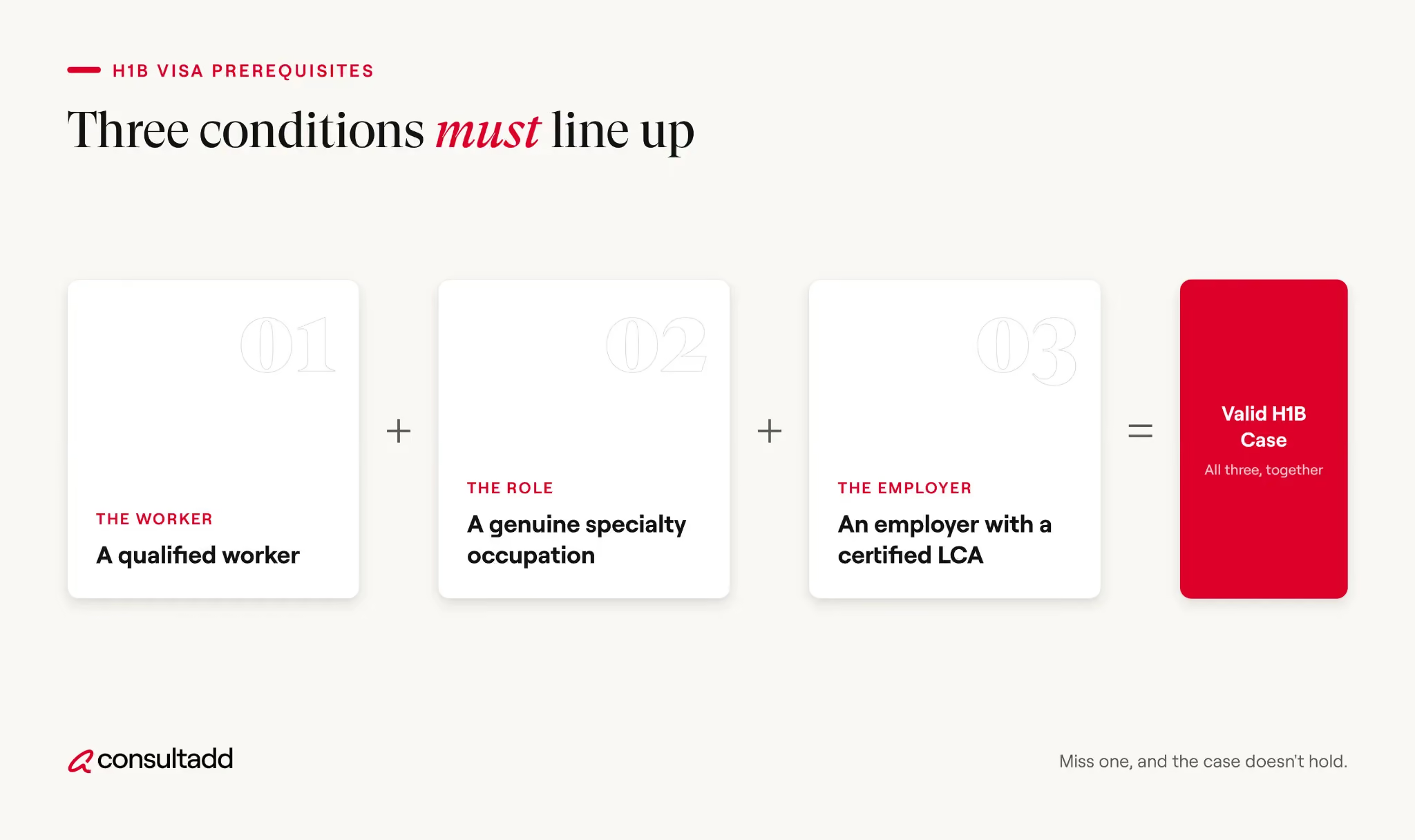
1. It has to be a specialty occupation
USCIS defines the H1B as a nonimmigrant classification for specialty occupations, which means the role needs at minimum a bachelor's degree or the equivalent in a field directly related to the duties.
Software engineering, data science, actuarial work, accounting, architecture, and most clinical and research roles qualify. Generalist operations and support roles usually don't.
The initial grant runs up to three years, with one extension available for a six-year total. Longer stays are possible in specific situations, generally tied to a pending green card case.
USCIS keeps the current requirements and active alerts on its H-1B specialty occupations page.
2. You can't apply for one yourself
The employer files the petition.
There is no self-petition route on an H1B, which means your entire search is really a search for a sponsoring employer, not for a visa.
It also means anyone offering to sell you sponsorship is offering something illegal.
3. Cap-subject and cap-exempt are two different job markets
This distinction does more work than almost anything else in an H1B job search, and most candidates never get told about it.
That last row deserves emphasis. Cap-exempt status doesn't carry over.
If you take a university role and then get an offer from a private company, you generally go into the March lottery as a new applicant. Plan the second move before you make the first.
What changed in 2026, and why it affects your search
Three things shifted, and they pull in different directions.
1. The lottery is now weighted by wage
DHS published its final rule on weighted selection on December 29, 2025, effective February 27, 2026. FY2027 was the first cap season run entirely under it.
Registrants now have to submit the SOC occupation code, the area of intended employment, and the highest Department of Labor wage level the offered salary meets.
Entries are then allocated by tier.
Two mechanics matter for candidates:
- First, each beneficiary is still counted once no matter how many employers register you, so multiple registrations don't multiply your odds.
- Second, USCIS assigns you the lowest applicable wage level across all registrations filed on your behalf. One low-balled registration can drag down an otherwise strong position.
The full rule, including DHS's own responses to public comments, is on the Federal Register.
The practical read: an entry-level offer at Level I is now the hardest H1B path there is. A mid-career offer at Level III or IV is meaningfully better positioned than it was under the old coin flip.
2. The $100,000 fee is off, for now
Proclamation 10973, signed September 19, 2025, required a $100,000 payment on certain new H1B petitions for beneficiaries outside the United States.
It never applied to change of status, extension, or amendment filings for people already in the US.
A federal district court in Massachusetts vacated the implementing policy on June 8, 2026, holding it functioned as a tax the executive branch lacked authority to impose.
The First Circuit declined to reinstate it on July 24, 2026, so the fee is not currently enforceable. The proclamation expires by its own terms on September 20, 2026 unless extended, and DHS has separately opened a rulemaking on a proposed $103,265 charge.
None of this is settled. If your offer involves consular processing from abroad, ask your employer's immigration counsel what the status is the week they file, not the month before.
3. Prevailing wages may be going up
DOL issued a proposed rule in late March 2026 that would raise all four wage levels by shifting their OEWS percentile thresholds.
Level I would move from roughly the 17th percentile to the 34th, Level II from the 34th to the 52nd, Level III from the 50th to the 70th, and Level IV from the 67th to the 88th.
Nothing is final, but combined with the weighted lottery it points the same way: sponsorship is getting more expensive and more concentrated at higher salary bands.
DOL publishes the current wage framework at flag.dol.gov.
Also worth knowing if you're joining a consulting firm: a DHS final rule effective September 9, 2026 extends the 9-11 biometric fee to all H1B and L petitions filed by covered employers, meaning companies with 50 or more US employees where more than half hold H1B or L status. That's a real cost line for some sponsors.
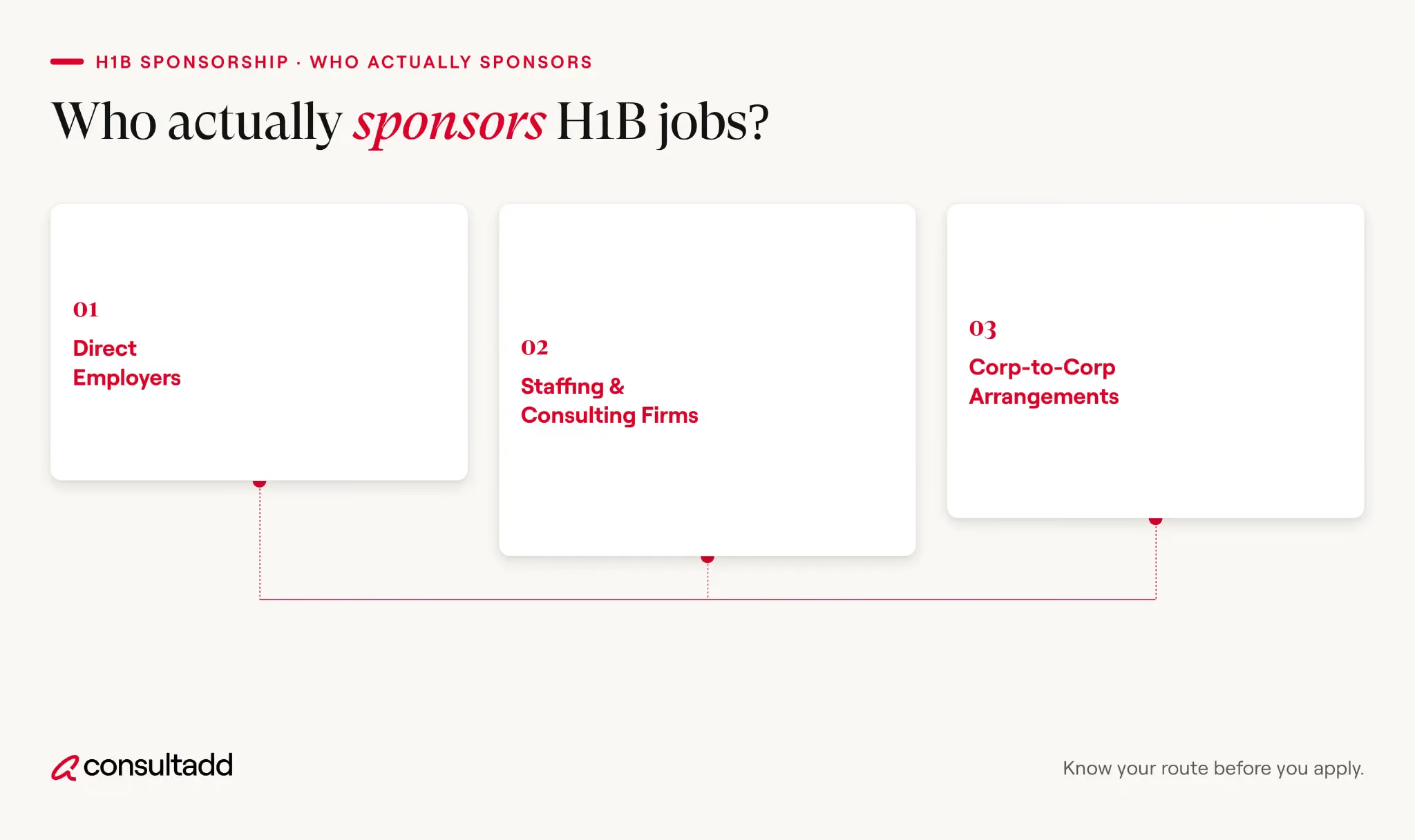
Where H1B visa jobs actually are
Sponsorship clusters. It isn't spread evenly across the economy, and knowing where it sits saves months:
1. Large tech and product companies. Established immigration teams, high wage levels, but the most competitive interview loops.
2. IT staffing and consulting firms. This is where a large share of H1B volume has always lived. The upside is infrastructure: in-house immigration support, experience with cap-gap and transfers, and in some cases access to cap-exempt client placements.
Consultadd's guide to sponsoring an H1B visa walks through how that works in practice.
3. Healthcare systems and research hospitals. Many are cap-exempt or affiliated with cap-exempt institutions.
4. Universities and nonprofit research. No cap, no lottery, year-round filing. Salaries tend to be lower.
5. Financial services and insurance. Steady sponsorship in quant, risk, and engineering roles.
Two ways to verify a company sponsors before you spend time applying:
- Check public LCA filing data, and look at whether the job posting names a specific wage or wage level.
- Postings that dodge compensation entirely are harder to evaluate under a wage-weighted system.
If you're weighing employer types, the comparison of top IT staffing companies in the USA covers which firms run active visa programs.
The timeline you're working against
FY2026 gives a reliable template for what FY2027 will look like.
Work backwards from March. That means interviewing in the autumn and having an offer in hand by January or February. Starting a sponsorship-dependent search in February is starting late.
How to improve your position, not just your resume
Under the old lottery, all you could do was get an offer. Now the offer's structure matters.
- Negotiate on wage level, not just salary. Ask which DOL wage level the offered salary meets for that SOC code and metro area. The answer literally sets your number of lottery entries.
- Don't spread registrations thin. Extra employers don't add entries, and the lowest wage level among them is the one that counts.
- Target roles a tier above entry. An additional year of experience that moves an offer from Level I to Level II doubles your entries.
- Keep cap-exempt options open. No lottery, year-round filing. Worth a parallel track even if it isn't your first choice.
- Ask about the transfer path. If you're already in H1B status, changing employers is a transfer, not a new lottery entry. That's a much shorter conversation.
- Get the compliance details straight. Job title, duties, wage, and worksite have to stay consistent across the LCA, the petition, and reality. Inconsistency draws RFEs.
For candidates working through staffing firms, the mechanics of who employs you and who sponsors you can get confusing. Corp to corp visa sponsorship for H1B jobs breaks down that structure.
Red flags in H1B visa job listings
Some of these are common enough to be worth naming plainly.
- Anyone asking you to pay for sponsorship, the registration fee, or a "processing charge." Employer-paid fees are a legal requirement, not a courtesy.
- A promise of guaranteed selection. Nobody controls the draw.
- A posting with no wage information and a recruiter who won't say the wage level.
- Pressure to accept a lower salary "just for the petition," with a raise promised after approval. That creates a compliance problem and lowers your lottery entries.
- Vague job duties. The petition has to describe a specialty occupation specifically.
If you're on OPT or STEM OPT
Your position is better than most, because you're already in the US and a change of status filing avoids consular processing entirely. That also kept you outside the scope of the $100,000 proclamation while it was in force.
The thing to watch is the gap. If your OPT expires while a timely-filed H1B petition is pending, cap-gap relief can bridge it, but the timing is tight and depends on filing early in the cycle. Line up an employer who has done this before rather than one learning on your case.
The weighted lottery cuts against new graduates specifically, since entry-level offers usually sit at Level I.
That's the strongest argument for taking a role with a higher wage level even if it's less exciting on paper, or for going the cap-exempt route while you build experience.
Where to start
Searching for H1B visa jobs in 2026 is less about volume of applications and more about picking the right lane.
Cap-subject roles need an offer locked in months before March. Cap-exempt roles are open year-round but pay differently. Transfers are the easiest path of all if you already hold status.
The one shift worth internalizing: your salary is now part of your immigration strategy, not just your compensation. A conversation about wage level during negotiation does more for your odds than fifty more applications.
If you're comparing engagement models before you commit, the IT staffing services models guide lays out how contract, contract-to-hire, and direct sponsorship differ.
Start Strong With Consultadd
With 15 years in business and 5,000+ successful staffing engagements, we don't just fill roles, we build reliability into your process. We've supported 65 staffing companies in the past year alone and maintain MSAs with industry leaders like Robert Half and TEKsystems.
Here's what working with Consultadd looks like:
- Talent sourced in under 24 hours
- Ready-to-deploy candidates, vetted for experience and compliance
- Lower turnover risk: we match long-term goals, not just short-term needs
- Seamless compliance: visa, documentation, onboarding? Handled.
- Dedicated 1:1 account managers for responsive, personalized support
- Top 100 candidate matches delivered in the past year
- Strong partnerships with universities to tap into fresh, committed talent
- Post-placement support so your investment grows beyond day one
For candidates, your next opportunity is more than just a job title, it's a chance to build skills, gain experience, and move your career forward. At Consultadd, we connect technology professionals with projects and employers that align with their goals, whether they're looking for contract, contract-to-hire, or long-term opportunities.
The tech job market moves fast, but the right guidance can make all the difference. Ready to take the next step in your career journey? Explore Opportunities >>
Key takeaways
- The FY2027 cap closed in July 2026 with no second lottery, so cap-subject candidates are now targeting the March 2027 registration window.
- Selection is weighted by DOL wage level: Level IV gets four entries and a projected 61% plus chance, Level I gets one entry and the worst odds in the system.
- USCIS uses the lowest wage level across all registrations filed for you, so extra sponsors can hurt rather than help.
- Cap-exempt employers file year-round with no lottery, but moving from cap-exempt to a private employer puts you back in the draw.
- The $100,000 entry fee is currently unenforceable and the proclamation lapses September 20, 2026 unless extended, while a proposed $103,265 replacement is in rulemaking.
FAQs
Which companies sponsor H1B visas?
Sponsorship concentrates in large tech firms, IT staffing and consulting companies, healthcare systems, universities and nonprofit research organizations, and financial services. Public LCA filing data is the most reliable way to confirm a specific employer has sponsored before, since past filings predict future willingness better than a job posting does.
Can I apply for an H1B visa without a job offer?
No. The H1B is employer-sponsored and there is no self-petition option. A US employer has to register you during the cap season and file the petition. Your search is for a sponsoring employer, not for the visa itself.
How many H1B visas are available each year?
The statutory cap is 85,000: 65,000 in the regular pool plus 20,000 reserved for beneficiaries with a US master's degree or higher. Cap-exempt employers and petitions for workers already in H1B status, including transfers and extensions, fall outside that limit.
Do I have a better chance with a higher salary now?
Yes, and it's built into the rule. Registrations are entered once for Level I, twice for Level II, three times for Level III, and four times for Level IV, based on the DOL wage level your offered salary meets for that occupation and location. Ask about the wage level before you accept an offer.
Can I change jobs while on an H1B visa?
Yes. Moving to a new employer is an H1B transfer, which is not cap-subject and does not require going back into the lottery. The new employer files a petition, and portability rules generally let you begin work once it's properly filed. Confirm the specifics with immigration counsel before giving notice.
Is the $100,000 H1B fee still in effect?
Not as of this writing. A federal court vacated the implementing policy in June 2026 and the First Circuit declined to reinstate it in July 2026, so the fee is unenforceable while the appeal continues. The underlying proclamation is set to expire September 20, 2026 unless extended, and DHS has proposed a separate $103,265 charge through rulemaking. Verify the current status before any filing that involves consular processing.
.avif)
What Is F2A Visa Category? 2026 Rules and Wait Times
Introduction
If you hold a green card and your spouse or young child is still overseas, your case almost certainly sits in F2A. So what is F2A visa category in plain terms?
It is the "A" half of the family second preference, set aside for the spouses and unmarried children under 21 of lawful permanent residents. The catch is that F2A applicants draw from a capped pool of visas each year, which is why a priority date and the monthly Visa Bulletin end up controlling your timeline more than anything you file.
This guide covers who qualifies, how the process runs, what the numbers look like right now, and the mistakes that quietly cost families a year or more.
TL;DR
- F2A covers spouses and unmarried children under 21 of green card holders. Spouses and children of U.S. citizens are immediate relatives instead, with no annual cap.
- Family second preference gets 114,200 visas a year, and F2A takes 77% of that. Three quarters of F2A numbers are exempt from per-country limits, which is why F2A moves faster than F2B or F4 for India and Mexico.
- Your priority date is the day USCIS receives the Form I-130. Nothing moves until that date clears the Visa Bulletin cutoff for your country.
- On the September 2026 bulletin, F2A is currently on the Dates for Filing chart for every country, while the Final Action Date sits at August 22, 2026 for most countries and August 22, 2025 for Mexico.
- Children close to 21 need the Child Status Protection Act math run early, and they must seek permanent residence within one year of a visa becoming available or the protection drops.
What the F2A category actually is
F2A is a slice of the family-sponsored preference system created by section 203(a) of the Immigration and Nationality Act. The second preference as a whole gets 114,200 visas per year, plus any numbers the first preference does not use.
Inside that, F2A takes 77% of the total, and 75% of those F2A numbers are exempt from the per-country limit. F2B, unmarried sons and daughters aged 21 or older, gets the remaining 23%.
That per-country exemption is the single most useful thing to understand about F2A. Most family categories are throttled hard for high-demand countries, because no country can take more than 7% of the combined family and employment totals.
For fiscal year 2026, the worldwide family preference limit is 226,000 and the per-country limit is 28,862. Because three quarters of F2A numbers sit outside that cap, F2A cutoff dates for India, Mexico, China and the Philippines usually track close to the worldwide date instead of falling years behind.
The practical result: an Indian national in F2A waits a fraction of what an Indian national in F4 waits. Same statute, very different math.
Who qualifies for F2A
Two groups, and no others.
Spouses of green card holders
- The marriage has to be legally valid where it took place and it has to be real, not arranged for immigration purposes.
- Same-sex marriages qualify as long as the marriage is legally recognized in the place it was registered.
- The petitioner has to be a lawful permanent resident at the time of filing, not a U.S. citizen, and not someone with a pending green card application.
Unmarried children under 21
- Biological children, stepchildren and adopted children can all qualify.
- Stepchildren only count if the marriage between the child's biological parent and the permanent resident happened before the child turned 18.
- Adopted children qualify only when the legal relationship was created before specific age cutoffs, so adoption cases are worth running past an attorney rather than assuming.
Who does not qualify
- A green card holder cannot sponsor a parent or a sibling at all. Those categories exist only for U.S. citizens.
- Children who marry drop out of F2A immediately.
- A married son or daughter of a green card holder has no preference category whatsoever until the parent naturalizes, at which point the case becomes F3.
- Children who turn 21 move to F2B, which is a much slower line.
F2A compared with the other family categories
Where F2A sits relative to everything else, using the September 2026 Final Action Dates:
How the F2A process works
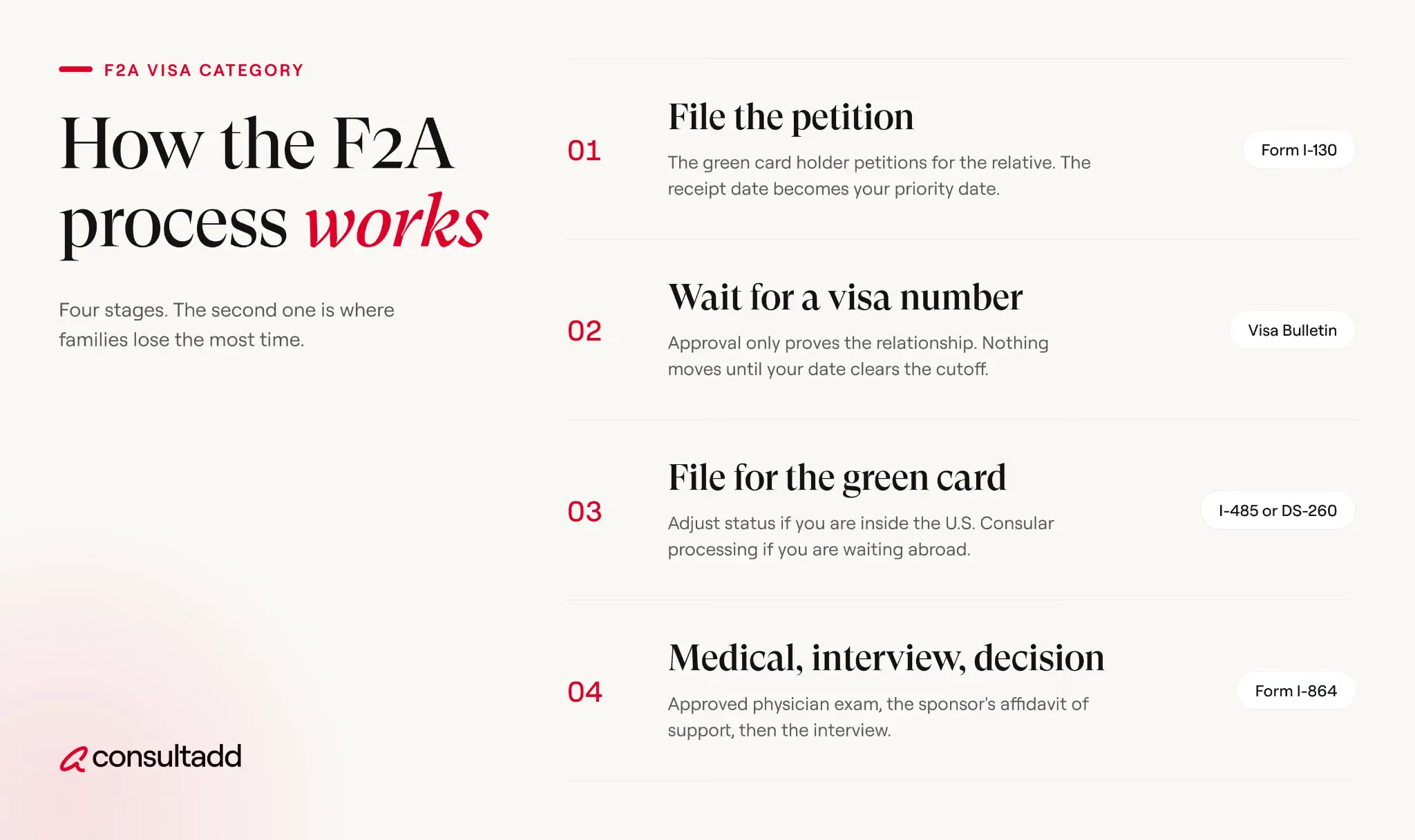
Four stages, and the second one is where families lose time.
Step 1: file Form I-130
The green card holder files Form I-130, Petition for Alien Relative, with USCIS. Filing fees are $625 online through a myUSCIS account or $675 by mail, unchanged since the April 2024 fee rule. A spouse petition also needs Form I-130A, which carries no separate fee. One petition and one fee per relative, so a spouse and two stepchildren means three filings.
The date USCIS receives the petition becomes the priority date. That date is your place in line and it does not change, even if the petition later gets an RFE or sits for years.
Step 2: wait for a visa number
An approved I-130 does not grant status, work permission, travel permission, or admission to the United States. It only establishes the relationship.
Everything after that waits on the Visa Bulletin. If you are unclear on how sponsorship-based petitions differ from work-based ones, our breakdown of how visa sponsorship works in the U.S. covers the distinction.
Step 3: adjustment of status or consular processing
If the beneficiary is already inside the United States in valid status, they file Form I-485 to adjust status. If they are abroad, the case goes to the National Visa Center, then to a consulate for an interview.
Which chart you use depends on where you are. Applicants outside the U.S. use the Final Action Dates chart. Applicants filing I-485 inside the U.S. use whichever chart USCIS designates that month, published at uscis.gov/visabulletininfo.
USCIS has been designating the Dates for Filing chart for family categories through mid-2026, but it makes that call fresh every month.
Step 4: medical exam, interview, decision
The medical exam has to be done by a USCIS-designated civil surgeon for adjustment cases, or a panel physician abroad.
The sponsor also files Form I-864, Affidavit of Support, promising the government the relative will not become a public charge. Then comes the interview and the decision.
Reading the Visa Bulletin for F2A
Here is where F2A stood in September 2026:
First, F2A numbers exempt from the per-country limit went to applicants from all countries with priority dates before August 22, 2025. Numbers subject to the per-country limit went to every country except Mexico for dates from August 22, 2025 up to August 22, 2026, and all Mexican F2A numbers are exempt from the cap.
Second, the State Department attached a warning to the whole bulletin: dates were pushed forward across categories partly because immigrant visa issuance dropped for nationals of certain countries under recent administration actions, and retrogression may be necessary if demand materializes.
Read that as a reason to file when your date is current rather than waiting for a better month. A filing already submitted while the date was current is not undone by a later pullback.
Also note that a fiscal year rollover on October 1 resets the annual numbers, and dates can shift in either direction. Always check the current Visa Bulletin on travel.state.gov rather than a summary.
F2A wait times and costs in 2026
The honest answer on timing is that the petition stage, not the visa line, is the bottleneck right now. Boundless, reading USCIS data, puts the F2A I-130 at roughly 45.5 months for fiscal year 2026, against about 12.9 months for a citizen's spouse filing from abroad.
Other trackers' reports range from the mid-30s to over 100 months depending on service center and how the percentile is calculated. Check the USCIS processing times tool with your own receipt number instead of trusting any single figure, including this one.
Rough government costs, excluding the medical exam and any attorney fees:
Fees change, so confirm against the current USCIS G-1055 fee schedule before you pay. A wrong payment amount gets the whole package rejected, and you refile from scratch.
Aging out and the Child Status Protection Act
This is the part of F2A that catches families off guard.
A child who turns 21 while waiting normally falls out of F2A. The Child Status Protection Act softens that by subtracting the time the I-130 was pending from the child's actual age. If the resulting CSPA age is under 21, the child stays eligible.
There is a second requirement that trips people up. The child must seek to acquire permanent residence within one year of a visa becoming available, by filing the I-485, paying the immigrant visa fee, paying the I-864 review fee, or having an I-824 filed on their behalf.
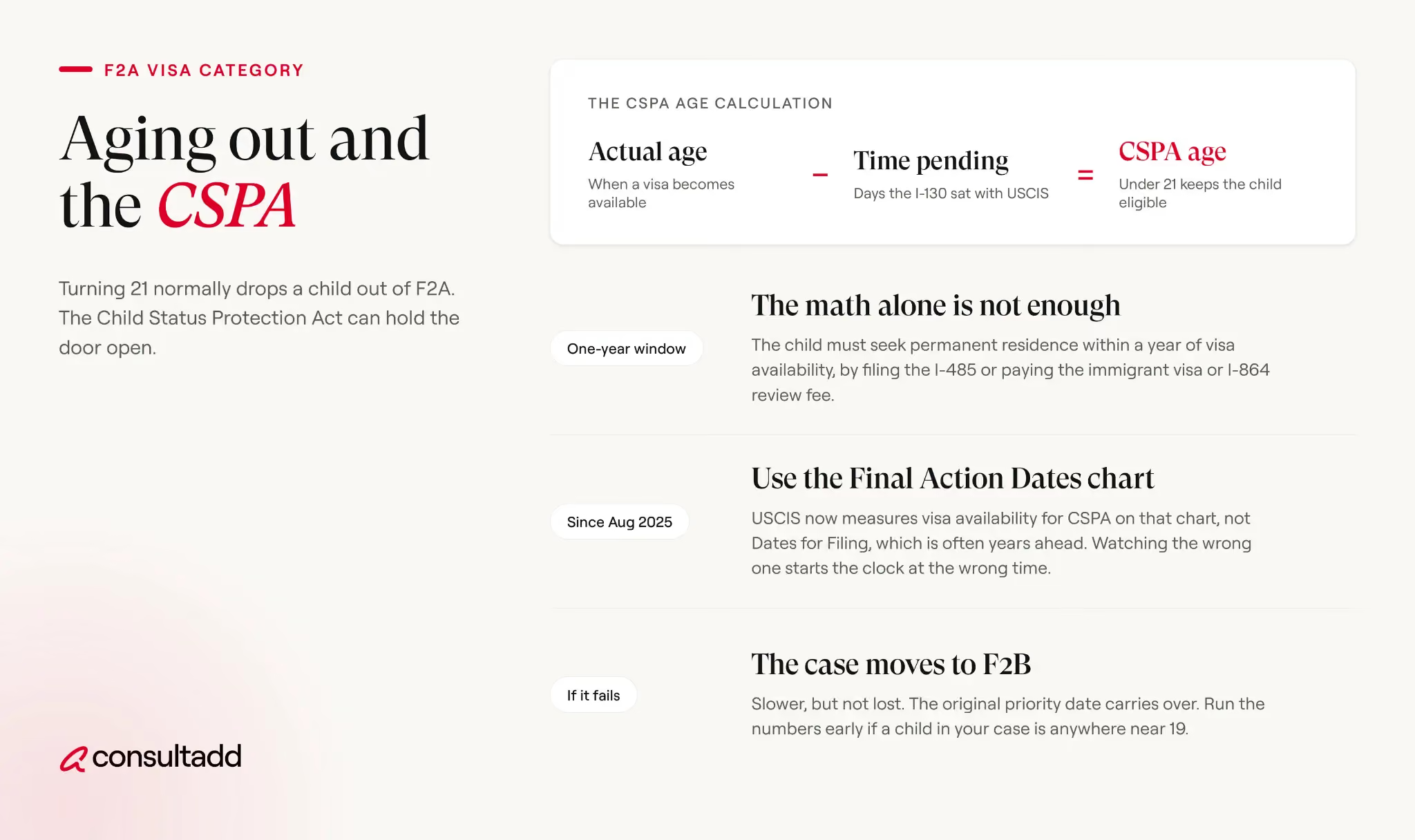
Miss that window and the protection is gone, even if the CSPA math worked out. USCIS can excuse a missed deadline for extraordinary circumstances, but that is discretionary, not a plan.
Since August 15, 2025, USCIS measures visa availability for CSPA purposes using the Final Action Dates chart, matching what the State Department already did for consular cases. That change matters because the Dates for Filing chart is often years ahead. A family watching the wrong chart can start the one-year clock in their head at the wrong time.
If a child does age out despite CSPA, the case converts to F2B and keeps the original priority date. Slower, but not lost. The USCIS guidance on CSPA and the detailed rules in Volume 7, Part A, Chapter 7 of the Policy Manual are worth reading directly if a child in your case is anywhere near 19.
What changes if the sponsor naturalizes
If the petitioning green card holder becomes a U.S. citizen before the beneficiary gets their green card, the category converts automatically.
A spouse becomes an immediate relative with no annual cap and no visa line. A child under 21 also becomes an immediate relative. A son or daughter over 21 converts to F1, and a married one to F3.
For a family sitting in a long F2A petition queue, naturalizing is often the fastest available move, and it removes the aging-out risk for children entirely, because immediate relatives lock their age at the filing date rather than running through the CSPA formula.
If the sponsor naturalizes mid-case, notify USCIS or the National Visa Center with proof of citizenship so the file gets reclassified.
Mistakes that delay F2A cases
From what we see across compliance and documentation work with candidates and their families, the same handful of problems keep recurring.
1. Watching the wrong chart.
Dates for Filing and Final Action Dates are different numbers with different uses. Filing off the wrong one either wastes a fee or wastes a year.
2. Waiting for a better month.
Families sometimes hold off when a date turns current, hoping for cleaner timing. Meanwhile the CSPA clock runs and the bulletin can retrogress.
3. Thin marriage evidence.
A certificate alone rarely satisfies a bona fide marriage review. Joint leases, shared accounts, insurance, photos across time, and travel records do more work than a stack of affidavits.
4. Assuming an approved I-130 means something it does not.
It confers no status and no right to work. If work authorization is the actual concern, our guide to work authorization types and EAD basics sets out what does and does not grant it.
5. Missing an RFE or a document deadline.
USCIS and the NVC set firm response windows. A late reply can stall a case or close it.
6. Confusing document numbers.
The number on a visa foil is not a case number, a priority date, or a visa slot.
We explain what the visa number on a U.S. visa actually means because the mix-up shows up constantly in intake calls.
One more thing worth saying plainly: this is general information, not legal advice. Adoption, prior marriages, unlawful presence, and criminal history all change the analysis, and those cases need a licensed immigration attorney. For an official starting point on eligibility, USAGov's family sponsorship page is a good neutral reference.
Start Strong With Consultadd
With 15 years in business and 5,000+ successful staffing engagements, we don't just fill roles, we build reliability into your process. We've supported 65 staffing companies in the past year alone and maintain MSAs with industry leaders like Robert Half and TEKsystems.
Here's what working with Consultadd looks like:
- Talent sourced in under 24 hours
- Ready-to-deploy candidates, vetted for experience and compliance
- Lower turnover risk: we match long-term goals, not just short-term needs
- Seamless compliance: visa, documentation, onboarding? Handled.
- Dedicated 1:1 account managers for responsive, personalized support
- Top 100 candidate matches delivered in the past year
- Strong partnerships with universities to tap into fresh, committed talent
- Post-placement support so your investment grows beyond day one
For candidates, your next opportunity is more than just a job title, it's a chance to build skills, gain experience, and move your career forward. At Consultadd, we connect technology professionals with projects and employers that align with their goals, whether they're looking for contract, contract-to-hire, or long-term opportunities.
The tech job market moves fast, but the right guidance can make all the difference. Ready to take the next step in your career journey? Explore Opportunities >>
Key takeaways
- The F2A visa category is for spouses and unmarried children under 21 of lawful permanent residents, and it is capped, unlike the immediate relative route open to U.S. citizens.
- F2A gets 77% of the 114,200 second preference visas, and 75% of those numbers ignore per-country limits, which keeps F2A far ahead of F2B, F3 and F4 for high-demand countries.
- Your priority date is the day USCIS receives the I-130, and it survives every later delay in the case.
- As of September 2026, F2A is current on the Dates for Filing chart for all countries, with Final Action Dates at August 22, 2026 for most countries and August 22, 2025 for Mexico.
- Children approaching 21 need the CSPA calculation done early, and they must seek permanent residence within one year of visa availability measured on the Final Action Dates chart.
FAQs
Is the F2A visa the same as a green card?
No. F2A is a preference category that determines when an immigrant visa number becomes available to you. The green card comes at the end, either through adjustment of status inside the United States or an immigrant visa at a consulate abroad. Being in F2A means you are in line, not that you have been approved.
How long does the F2A process take in 2026?
Most of the wait is now in the petition stage rather than the visa line. Boundless puts the F2A I-130 at around 45.5 months for fiscal year 2026, and other trackers report wider ranges depending on service center. Because F2A is current on the Dates for Filing chart, many beneficiaries can move to the green card stage as soon as the petition is approved.
Can my spouse work or travel while the F2A case is pending?
Not on the strength of the I-130 alone. If your spouse is inside the United States and files Form I-485, they can file Form I-765 for a work permit and Form I-131 for travel permission at the same time. A spouse waiting abroad has no U.S. work authorization until they are admitted as a permanent resident.
Is the F2A category current right now?
On the September 2026 Visa Bulletin, F2A was listed as current on the Dates for Filing chart for every country, while the Final Action Dates chart still showed cutoffs. Those are two separate charts with two separate uses, so check which one applies to your situation. The State Department has also warned that retrogression may be necessary in coming months.
What happens to an F2A petition if the sponsor becomes a U.S. citizen?
The category converts automatically. A spouse and any child under 21 become immediate relatives, which removes the annual cap and the visa line entirely. A son or daughter over 21 converts to F1, or F3 if married. Notify USCIS or the National Visa Center with proof of naturalization so your file gets reclassified.
Can my spouse bring our children on the same F2A case?
Often yes. Under section 203(d) of the INA, spouses and children of preference immigrants get the same status and the same order of consideration when accompanying or following to join the principal applicant. Whether a separate I-130 is also advisable depends on the children's relationship to the sponsor and their ages, so this is worth confirming case by case..
.avif)
1099 vs W2: Taxes, Benefits & Which Is Better (2026)
Introduction
Two people can do the exact same job, at the same desk, for the same pay, and end the year in very different financial places. The difference often comes down to a single letter and number on a tax form: 1099 or W-2.
The 1099 vs W2 question boils down to one thing: who sends your taxes to the IRS. A W-2 employee has taxes withheld from every paycheck and the employer covers half of Social Security and Medicare. A 1099 contractor is self-employed, gets paid in full with nothing withheld, and owes all of those taxes themselves.
That one distinction ripples into your paycheck, your benefits, your legal protections, and your paperwork. This guide breaks down the real differences in 2026, who pays what, and how to tell which classification actually applies to you, because it's not always a free choice.
TL;DR
- The core 1099 vs W2 difference is who handles taxes: a W-2 employer withholds and pays half of FICA, while a 1099 contractor pays everything themselves.
- 1099 contractors owe the full 15.3% self-employment tax, versus the 7.65% employee share a W-2 worker pays, though contractors get offsetting deductions.
- W-2 employees get benefits and legal protections; 1099 contractors trade those for flexibility, more control, and business deductions.
- Classification is a legal question decided by the working relationship, not a label you or the employer choose. Getting it wrong is expensive.
- This is general information, not tax or legal advice. Rules changed in 2026, so confirm current figures with the IRS or a professional.
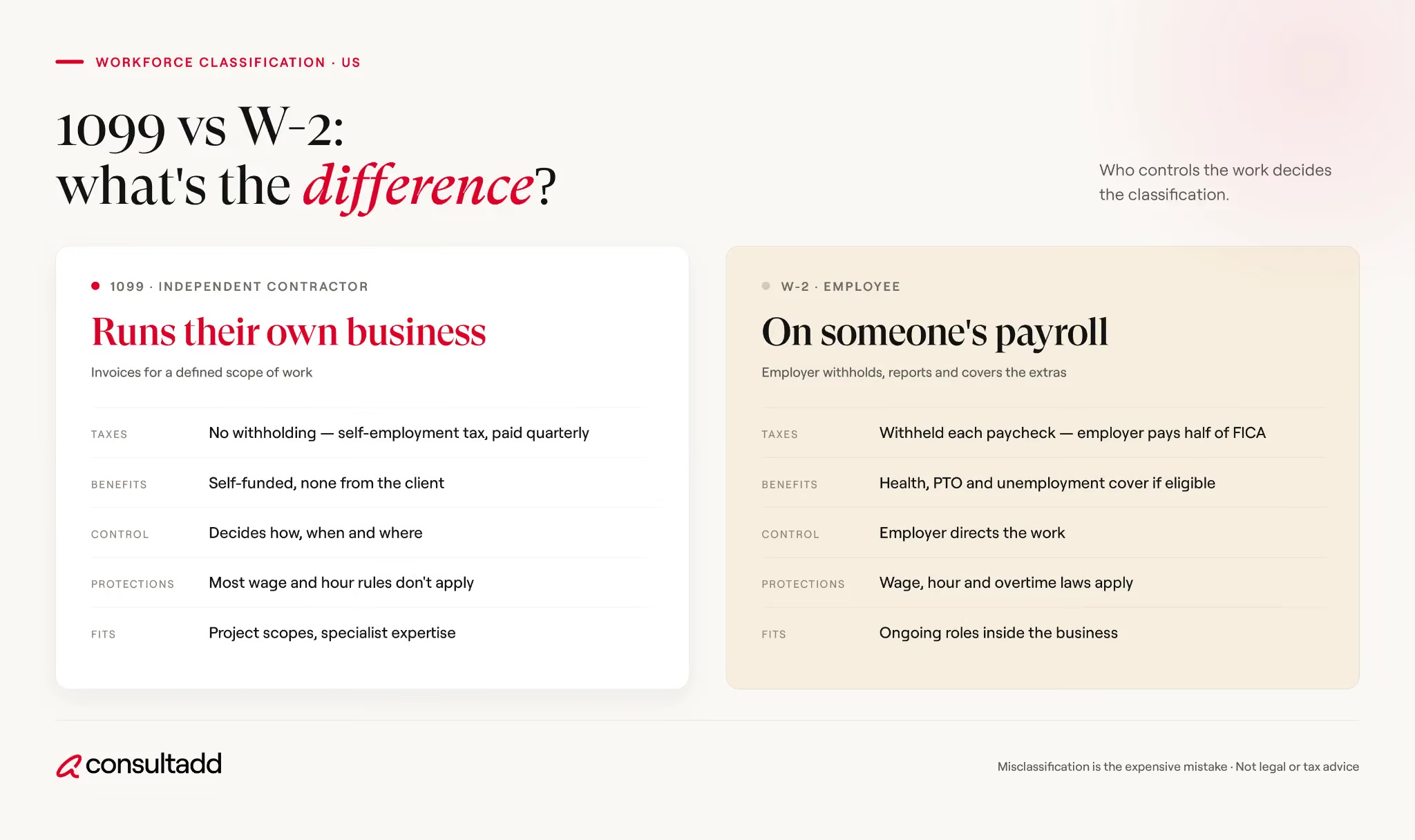
1099 vs W2: what's the difference?
A W-2 employee is on a company's payroll.
- The employer withholds income tax, Social Security, and Medicare from each paycheck, pays the employer share of payroll taxes, and typically provides benefits.
- The employee works under the company's direction and gets legal protections like minimum wage and overtime.
A 1099 contractor is self-employed.
- The company pays them for services rendered, withholds nothing, and the contractor handles their own taxes.
- In exchange for that responsibility, the contractor generally controls how the work gets done and can serve multiple clients.
Here's the master comparison, then we'll dig into the parts that matter most.
The forms behind the labels
The names come straight from IRS forms, and the paperwork differs from day one.
As a W-2 employee, you fill out a Form W-4 when you start, which tells your employer how much tax to withhold. At year end, you receive a W-2 summarizing your wages and the taxes already taken out.
As a 1099 contractor, you fill out a Form W-9 to provide your taxpayer details. After the year ends, the client sends you a Form 1099-NEC reporting what they paid you, with nothing withheld.
One 2026 change worth noting: the 1099-NEC reporting threshold rose from $600 to $2,000 under the One Big Beautiful Bill Act. That changes when a client must issue the form, but it does not change your obligation to report all your income.
Taxes: the biggest difference
If you read one section twice, make it this one. Self-employment tax is the single biggest surprise for anyone moving from W-2 to 1099 income.
When you're a W-2 employee, the 15.3% Social Security and Medicare tax is split down the middle. You pay 7.65%, and your employer pays the other 7.65%.
As a 1099 contractor, you're legally both the employer and the employee, so you pay the full 15.3% yourself. That's 12.4% for Social Security and 2.9% for Medicare, calculated on about 92.35% of your net earnings, per IRS self-employment tax rules.
For 2026, the Social Security portion applies to the first $184,500 of earnings, with an added 0.9% Medicare tax on income above $200,000. On $100,000 of income, a 1099 contractor pays roughly $7,000 more in employment taxes than a W-2 employee earning the same amount.
That said, the gap is more nuanced than a flat penalty.
Contractors get deductions employees don't: you can deduct half of your self-employment tax, take the 20% qualified business income deduction (made permanent under recent law), and write off legitimate business expenses.
There's also a timing catch. Nobody withholds for you, so if you expect to owe $1,000 or more, you generally make quarterly estimated payments. Miss those deadlines and you face underpayment penalties, even if you pay the full amount by April.
Benefits and protections
Taxes are only half the story. The benefits gap is just as real, and it's easy to overlook when you compare two numbers that look the same on paper.
A W-2 job usually bundles in value that never shows on your salary line. A 1099 contractor has to buy or forgo all of it.
The dollars add up. A $100,000 W-2 position often carries an extra $20,000 to $40,000 in benefits value compared with $100,000 of 1099 income.
This is why a common rule of thumb says a 1099 rate should run 30% to 50% higher than the equivalent W-2 wage just to break even. If a W-2 job pays $50 an hour, a contractor usually needs to target $65 to $75 an hour to match the real take-home.
Pros and cons for workers
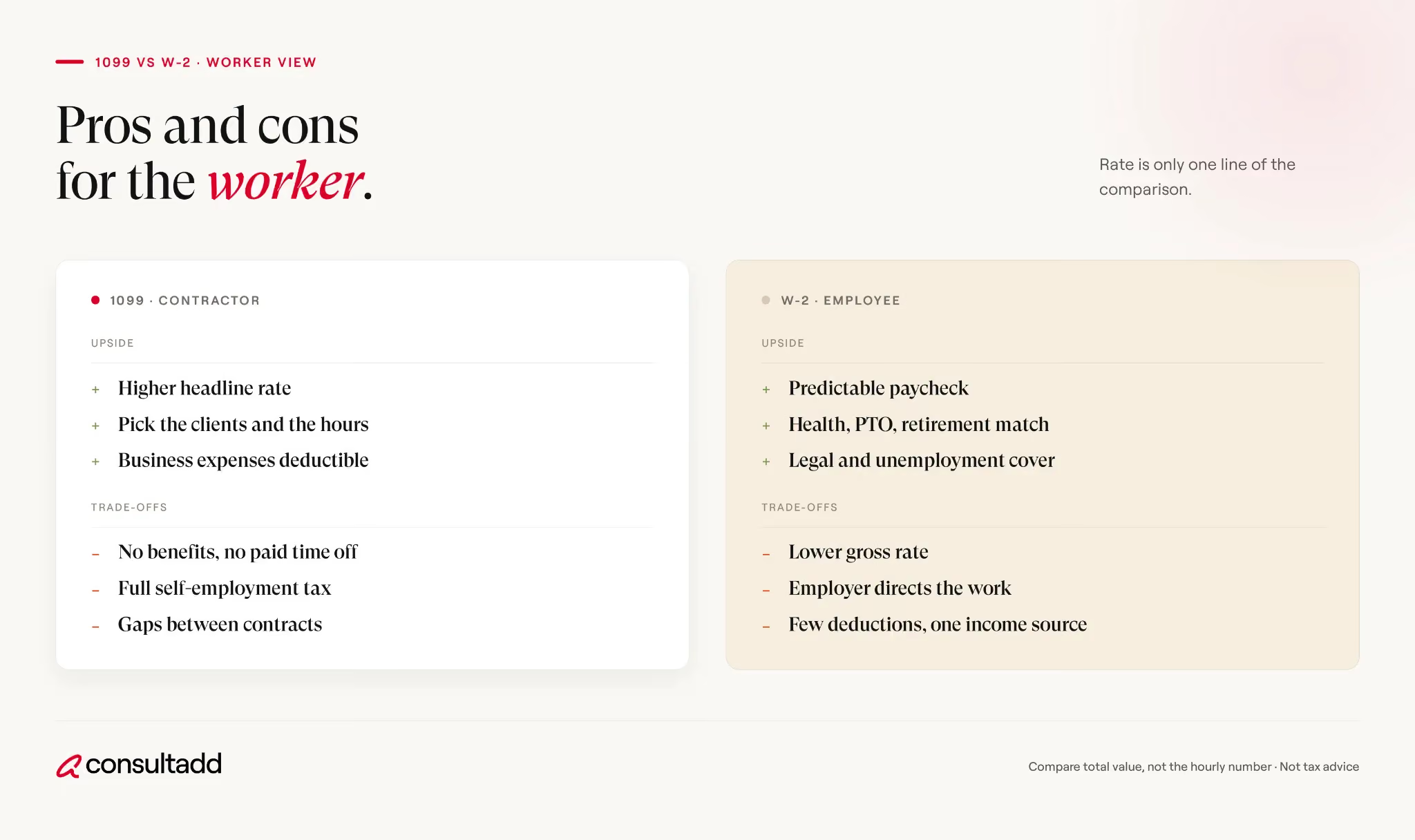
Neither option is universally better. It depends on what you value and where you are in your career.
Being a 1099 contractor offers real upside: higher gross pay, flexibility over your schedule and clients, the ability to deduct business expenses, and access to self-employed retirement plans with high contribution limits.
The trade-offs are the tax burden, the missing benefits, unpredictable income, and the admin of running your own taxes.
Being a W-2 employee offers stability: steady pay, benefits, legal protections, and taxes handled on autopilot. The trade-off is less flexibility and often a lower headline rate.
If you value predictability, W-2 tends to win. If you value autonomy and can manage the tax discipline, 1099 can pay off.
Classification is the law, not a choice
This is the part that surprises employers and workers alike. Whether a role is 1099 or W-2 is not a preference. It's a legal classification based on the actual working relationship, and you can't fix it with a label in a contract.
The IRS uses a three-factor test to decide, and the Department of Labor applies its own economic-reality test. Several states add their own standards on top.
Getting this wrong is costly. If the IRS or DOL reclassifies contractors as employees, a business can owe back payroll taxes, penalties, interest, unpaid overtime, and more, with intentional misclassification adding penalties up to $1,000 per worker and even personal liability for company officers.
The rules are also in motion: federal classification guidance shifted in 2025 and 2026, so anyone making these decisions should confirm the current standard rather than relying on old assumptions.
Beyond 1099 and W2: the C2C option
In tech and staffing, there's a third arrangement worth knowing, because 1099 and W-2 aren't the only ways to engage talent.
Corp-to-corp, or C2C, means you work through your own registered business, and the client contracts with that company rather than with you personally. It's a business-to-business relationship, common among IT professionals, with its own tax and compliance implications.
Consultadd's breakdown of W2 versus C2C explains how it compares, and its guide to corp-to-corp arrangements covers the mechanics.
There's also contract-to-hire, where you start on a contract, often as a W-2 employee of a staffing agency, and convert to a permanent role later.
Consultadd's look at the contract-to-hire model shows how that path works.
One practical note for workers who don't want the 1099 tax burden: when you work through a staffing agency as a W-2 contractor, the agency handles withholding and compliance as your employer of record. You get contract flexibility without carrying the full self-employment load yourself.
A closing reminder, because taxes and classification carry real consequences. The figures here reflect 2026 rules that can change, and your situation may differ.
Treat this as general information, not tax or legal advice, and check the current numbers with the IRS or a qualified professional before you decide.
Start Strong With Consultadd
With 15 years in business and 5,000+ successful staffing engagements, we don't just fill roles, we build reliability into your process. We've supported 65 staffing companies in the past year alone and maintain MSAs with industry leaders like Robert Half and TEKsystems.
Here's what working with Consultadd looks like:
- Talent sourced in under 24 hours
- Ready-to-deploy candidates, vetted for experience and compliance
- Lower turnover risk: we match long-term goals, not just short-term needs
- Seamless compliance: visa, documentation, onboarding? Handled.
- Dedicated 1:1 account managers for responsive, personalized support
- Top 100 candidate matches delivered in the past year
- Strong partnerships with universities to tap into fresh, committed talent
- Post-placement support so your investment grows beyond day one
For candidates, your next opportunity is more than just a job title, it's a chance to build skills, gain experience, and move your career forward. At Consultadd, we connect technology professionals with projects and employers that align with their goals, whether they're looking for contract, contract-to-hire, or long-term opportunities.
The tech job market moves fast, but the right guidance can make all the difference. Ready to take the next step in your career journey? Explore Opportunities >>
Key takeaways
- The core 1099 vs W2 difference is who handles taxes: a W-2 employer withholds and pays half of FICA, while a 1099 contractor pays it all.
- Contractors owe the full 15.3% self-employment tax versus a W-2 employee's 7.65% share, but they get offsetting deductions.
- W-2 roles include benefits and legal protections worth tens of thousands, which is why 1099 rates should run meaningfully higher to compare fairly.
- Classification is decided by the working relationship under IRS and DOL tests, not by a label, and misclassification carries serious penalties.
- In tech, corp-to-corp and W-2 contracting through an agency are common alternatives to going 1099.
FAQs
What is the main difference between 1099 and W2?
The main difference is who handles taxes and employment. A W-2 employee has taxes withheld by an employer who pays half of Social Security and Medicare and often provides benefits. A 1099 contractor is self-employed, receives pay with nothing withheld, and manages their own taxes and benefits.
Do 1099 contractors pay more taxes than W2 employees?
On employment taxes, yes. A 1099 contractor pays the full 15.3% self-employment tax, while a W-2 employee pays only the 7.65% employee share and the employer covers the rest. However, contractors can offset some of that with deductions, including half of the self-employment tax, the qualified business income deduction, and business expenses.
Is it better to be a 1099 or W2 employee?
It depends on your priorities. W-2 offers stability, benefits, and taxes handled for you, which suits people who value predictability. 1099 offers higher gross pay, flexibility, and deductions, which suits people who value autonomy and can manage their own taxes. Run the numbers on your specific situation, including benefits value.
Can an employer choose whether a worker is 1099 or W2?
No. Classification is determined by the nature of the working relationship, not by preference or a contract label. The IRS and Department of Labor use multi-factor tests looking at control and independence. Misclassifying an employee as a contractor can trigger back taxes, penalties, and legal liability.
What is the difference between a W-9 and a W-4?
A W-4 is what a W-2 employee fills out so their employer knows how much tax to withhold from each paycheck. A W-9 is what a 1099 contractor fills out to provide their taxpayer information to a client. The W-4 supports withholding, while the W-9 supports year-end 1099 reporting with no withholding.
What happens if a worker is misclassified as 1099?
Misclassification can be expensive for the business. Consequences include back payroll taxes, penalties and interest, liability for unpaid overtime, workers' compensation exposure, and unemployment claims. Intentional misclassification can add penalties per worker and even personal liability for company officers, so classification should be handled carefully.
.avif)
H1B Processing Time: Premium vs Regular (2026 Guide)
Introduction
There's a version of the H1B timeline that fits in one sentence, and a real one that doesn't. The one-sentence version is "premium takes about three weeks, regular takes a few months."
The real one depends on which USCIS service center gets your file, whether you get a request for evidence, and whether you need a visa stamp abroad. Those variables can swing your timeline by half a year.
The H1B processing time is the stretch USCIS takes to decide your I-129 petition, and in 2026 it splits sharply into two lanes.
Premium processing buys you a guaranteed decision in 15 business days. Regular processing takes months, and how many depends heavily on factors outside your control.
This guide breaks down both lanes, walks through the full timeline from registration to start date, and explains what actually moves the needle, so you can plan around the wait instead of being surprised by it.
TL;DR
- H1B processing time splits into two lanes: premium (15 business days) and regular (several months, varying by service center).
- Premium processing costs $2,965 as of 2026 and guarantees a decision within 15 business days, but a decision can be an approval, a denial, or a request for evidence.
- Regular processing times vary widely by service center and case type, so always check the official USCIS processing times tool for your exact situation.
- USCIS processing is only part of the journey. Consular visa stamping can add weeks, while a change of status inside the US avoids that step.
- Processing times and fees change often, so confirm current figures on uscis.gov and treat this as general information, not legal advice.
How long is the H1B processing time?
The honest answer is that it depends on which lane you choose and where your petition lands. There are two processing options, and they produce very different waits.
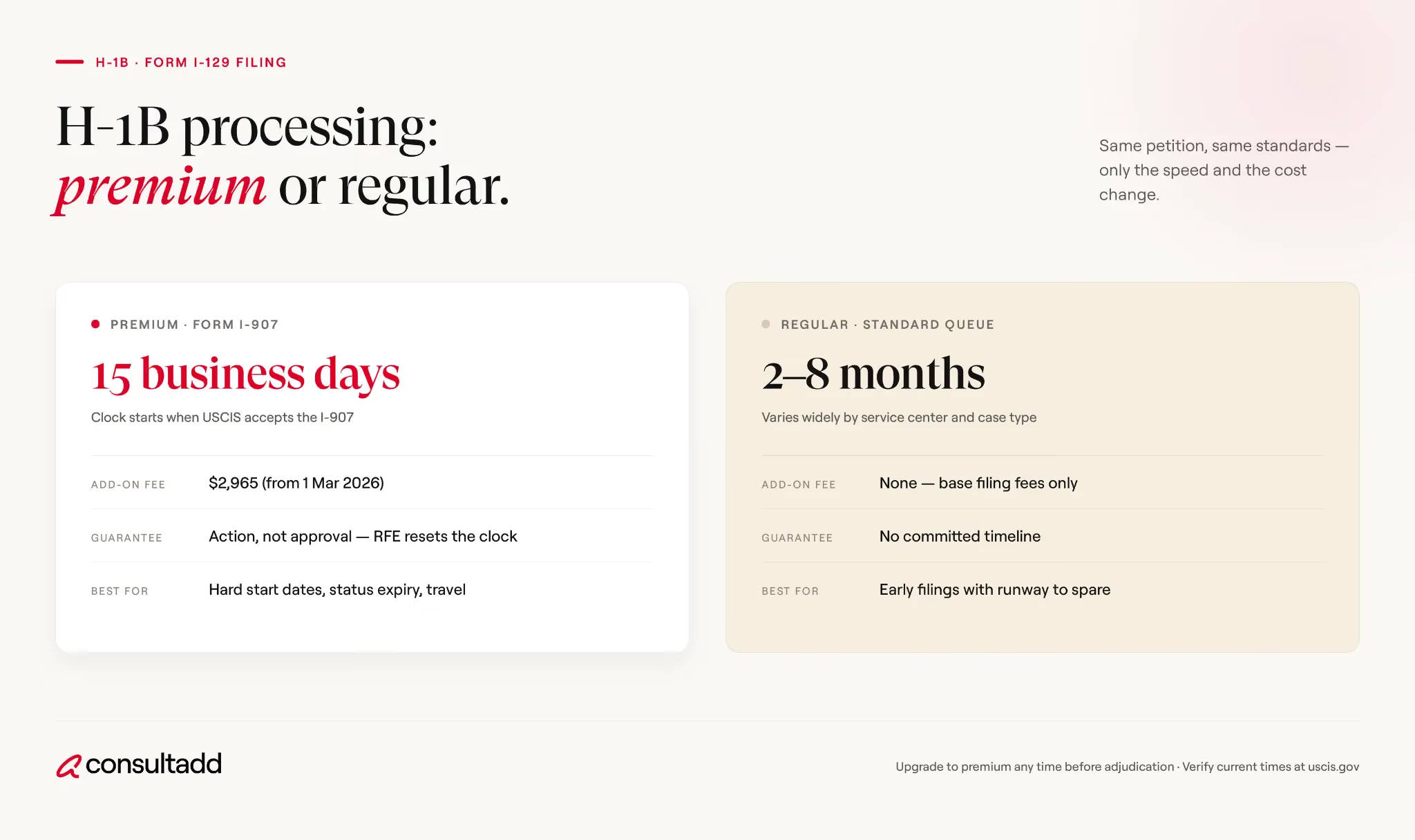
Premium processing gives you a decision within 15 business days, which works out to roughly three calendar weeks. Regular processing takes months, and the exact number varies significantly by USCIS service center and the type of case you file.
The single most useful thing you can do is check the official USCIS case processing times tool for Form I-129 at your assigned service center. General ranges help you plan, but only the live tool reflects your actual situation.
Premium processing: 15 business days
Premium processing is the only way to remove timing uncertainty from the USCIS stage, which is why so many employers use it.
For an additional fee of $2,965 in 2026, USCIS commits to taking action on your I-129 within 15 business days. Note that these are business days, Monday through Friday excluding federal holidays, so it's about three calendar weeks rather than two.
You file Form I-907 either alongside your petition or to upgrade a pending one.
Here's the catch that trips people up: premium processing speeds up action, not approval. Within those 15 business days, USCIS might approve your case, deny it, or issue a request for evidence.
If an RFE comes, the clock stops and restarts once you respond. So premium removes uncertainty about when you'll hear back, not about what the answer will be.
The service is highly reliable on its promise. USCIS meets the 15-day commitment in the large majority of cases and refunds the fee in the rare instances it doesn't, while continuing to expedite the case.
One timing note: premium is typically unavailable for cap-subject initial petitions during a short window right after the April filing period opens.
Regular processing: why it varies so much
If you skip premium, your wait comes down largely to which service center processes your petition, and you don't get to choose it.
Different service centers move at different speeds for the same petition type, and the gap can be substantial. Depending on the center and the case type, regular H1B processing in 2026 has ranged from a few months to considerably longer.
Some recent USCIS estimates have put completion for the bulk of H1B I-129 petitions at around 10 to 11 months, while faster service centers have cleared comparable cases in a fraction of that time.
That wide spread is exactly why a single number is misleading. Your petition goes where USCIS routing sends it, and that assignment alone can mean the difference between a spring and a fall start date.
Because these estimates shift month to month, treat any range as a rough guide and confirm the current figure on the USCIS tool. When a firm start date is on the line, many employers simply pay for premium rather than gamble on regular timelines.
The full H1B timeline, step by step
USCIS processing is only one segment of the journey. For a first-time cap-subject applicant, the full path stretches across most of a year. Here's how it fits together.
Two paths diverge after approval. If the worker is already in the US and eligible, a change of status lets them begin without leaving the country, avoiding consular delays. If they need a visa stamp from a US consulate abroad, appointment backlogs can add anywhere from two to eight weeks depending on the location.
This is why forward planning matters so much. The petition decision is the part people watch, but the surrounding steps often consume more of the calendar.
What affects your H1B processing time
Beyond the premium-versus-regular choice, a handful of factors determine how long you actually wait.
- Service center assignment is the big one for regular processing, since speeds differ by facility and you can't pick.
- Requests for evidence are the other major variable. An RFE can add months to any case, regardless of service center, because the processing clock pauses while you gather and submit a response.
- Filing a complete, well-documented petition up front is the best defense against one.
- Case type matters too.
- A change of status handled entirely within the US skips consular processing, while a case requiring a visa stamp abroad adds the embassy appointment step.
- And timing within the year plays a role, since cap season creates predictable crunches.
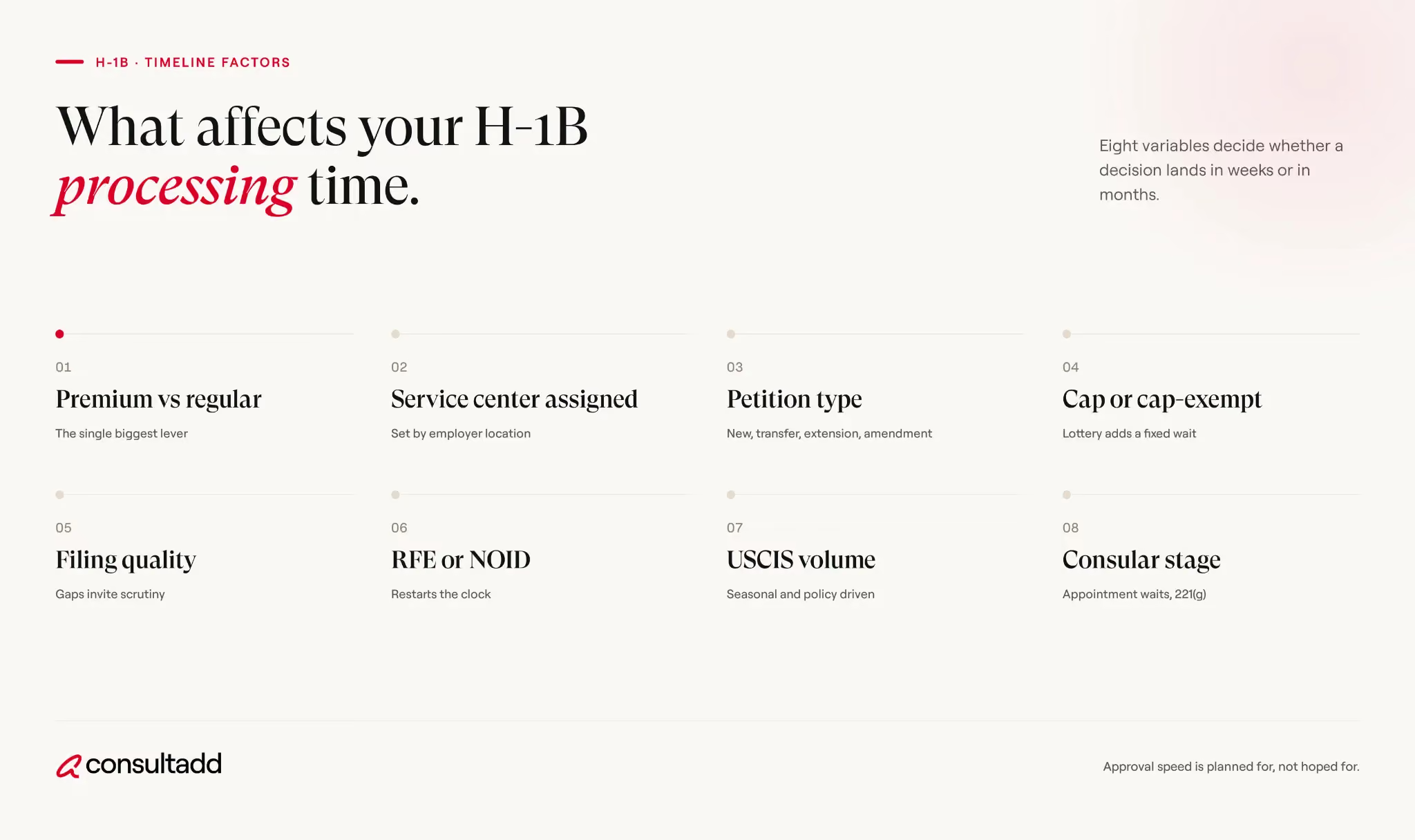
The practical takeaway: you control documentation quality and whether you pay for premium. You don't control your service center or embassy backlogs, so build slack into your plans for the parts you can't influence.
Recent changes that affect timing in 2026
The H1B rules have shifted noticeably over the past two years, and a few changes touch cost and planning.
A 2025 modernization rule reshaped several mechanics, including a beneficiary-centric selection system for the lottery and clarified adjudication standards.
On the fee side, premium processing rose to $2,965 under a Department of Homeland Security final rule effective March 1, 2026, and the H1B registration fee climbed sharply compared with prior years.
The most talked-about change is a September 2025 measure introducing a $100,000 fee tied to certain new H1B petitions. Reporting indicates it targets specific new filings rather than extensions, transfers, amendments, or changes of status, and the policy has faced legal challenges.
Because a rule like this can shift quickly, confirm its current status and scope on the official USCIS H1B page or with an immigration attorney before you rely on it.
None of these directly change the 15-business-day premium promise, but they affect the cost and strategy around your filing.
How to plan around H1B processing times
Since you can't control every variable, good planning is about managing the ones you can and building a buffer for the rest.
Start early and file a clean petition.
- Complete documentation is the single best way to avoid an RFE, which is the most common cause of a blown timeline.
- Decide on premium processing deliberately: if a hard start date, travel, or a cap-gap issue is in play, the extra fee often buys peace of mind worth far more than its cost.
For companies and workers using staffing arrangements, the employment model shapes both compliance and planning.
Consultadd's guide to corp-to-corp visa sponsorship for H1B jobs explains how that structure works, and its breakdown of W2 versus C2C for visa holders covers who carries responsibility in each setup.
A closing reminder, because this is immigration and the details move. Processing times, fees, and rules change frequently, sometimes mid-year.
Treat this guide as a map, verify current figures on uscis.gov, and consult a qualified attorney for advice on your specific case. Plan for the timeline you can't control, and the wait becomes manageable rather than nerve-wracking.
Start Strong With Consultadd
With 15 years in business and 5,000+ successful staffing engagements, we don't just fill roles, we build reliability into your process. We've supported 65 staffing companies in the past year alone and maintain MSAs with industry leaders like Robert Half and TEKsystems.
Here's what working with Consultadd looks like:
- Talent sourced in under 24 hours
- Ready-to-deploy candidates, vetted for experience and compliance
- Lower turnover risk: we match long-term goals, not just short-term needs
- Seamless compliance: visa, documentation, onboarding? Handled.
- Dedicated 1:1 account managers for responsive, personalized support
- Top 100 candidate matches delivered in the past year
- Strong partnerships with universities to tap into fresh, committed talent
- Post-placement support so your investment grows beyond day one
For candidates, your next opportunity is more than just a job title, it's a chance to build skills, gain experience, and move your career forward. At Consultadd, we connect technology professionals with projects and employers that align with their goals, whether they're looking for contract, contract-to-hire, or long-term opportunities.
The tech job market moves fast, but the right guidance can make all the difference. Ready to take the next step in your career journey? Explore Opportunities >>
Key takeaways
- H1B processing time splits into premium (15 business days) and regular (several months), with regular timelines varying widely by service center.
- Premium processing costs $2,965 in 2026 and guarantees USCIS action within 15 business days, but that action can be an approval, denial, or request for evidence.
- Always check the official USCIS processing times tool for your form and service center, since general ranges shift often.
- USCIS processing is only one segment; consular visa stamping adds weeks, while a change of status inside the US avoids it.
- Fees and rules changed in 2025 and 2026, so verify current figures on uscis.gov and treat this as general information, not legal advice.
FAQs
How long does H1B processing take in 2026?
It depends on your processing type and service center. Premium processing delivers a decision in 15 business days, about three weeks. Regular processing takes months and varies significantly by service center and case type. Check the official USCIS processing times tool for the current estimate on your specific form and location.
What is H1B premium processing and how much does it cost?
Premium processing is an optional service where USCIS commits to acting on your I-129 petition within 15 business days. In 2026, it costs an additional $2,965, filed using Form I-907. It's popular when an employer has a firm start date, because it removes uncertainty about when USCIS will respond.
Does premium processing guarantee approval?
No. Premium processing guarantees only that USCIS will take action within 15 business days. That action could be an approval, a denial, or a request for evidence. If an RFE is issued, the clock pauses and restarts once you respond, so premium speeds up the timeline, not the outcome.
Why do H1B processing times vary so much?
The biggest reason is service center assignment, since different USCIS facilities process the same petition type at different speeds, and you can't choose which one handles your case. Requests for evidence, case complexity, and whether you need consular processing also affect the total time. This is why a single average can be misleading.
Can I work while my H1B petition is pending?
Generally, you can only begin H1B employment once the petition is approved and you've reached your authorized start date, which for cap-subject cases is usually October 1. Some workers already in the US on another status may have specific bridging options, so check your exact situation with an immigration attorney.
How can I check my H1B case processing time?
Use the official USCIS "Check Case Processing Times" tool online, selecting Form I-129 and your assigned service center. You can also track your specific case status with your receipt number. These official tools are more reliable than general estimates, since USCIS updates them regularly.
.avif)
How Long Before Graduation Can I Apply for OPT?
Introduction
If you're an F-1 student staring at your calendar and wondering when you're allowed to start your OPT paperwork, you're asking the right question at the right time. Timing is the part students get wrong most often, and it's the part that can cost you weeks of work eligibility.
So how long before graduation can you apply for OPT?
For post-completion OPT, you can file your application as early as 90 days before your program end date, and as late as 60 days after it. That 90-day mark is a hard line. File even one day early and USCIS will reject the application.
The catch is that "graduation" and "program end date" aren't always the same thing, and there's a second deadline tied to your school that can sneak up on you.
This guide lays out the full timeline, explains why applying early is your best protection, and walks through what happens after you hit submit.
TL;DR
- You can apply for post-completion OPT up to 90 days before your I-20 program end date and up to 60 days after it.
- Your program end date is on your I-20. It's often close to graduation but is not the ceremony date.
- There's a second deadline: USCIS must receive your application within 30 days of your school issuing your OPT recommendation I-20.
- Apply as early in the 90-day window as you can, because 2026 processing times run long and you can't work until your EAD arrives.
- Always confirm your exact dates with your DSO and check current rules on uscis.gov, since fees and timelines change.
The short answer: 90 days before your program end date
Here's the rule in one line. For post-completion OPT, the earliest you can file Form I-765 is 90 days before your program end date.
The window then stays open until 60 days after that program end date. So you have a stretch of roughly five months during which USCIS will accept your application. Miss the front edge and it's rejected for being early. Miss the back edge and you lose your chance entirely.
Most advisors, including at schools like Yale, Georgetown, and USC, give the same advice: file as early in that 90-day window as you reasonably can. There's almost no upside to waiting and a real downside if processing drags.
One thing to keep straight. The 90 days counts back from your program end date, not from the day you want to start working and not from your graduation ceremony. That distinction matters enough to get its own section.
Your program end date is not your graduation ceremony
This trips up a lot of students, so it's worth slowing down on.
Your program end date is the date printed on your Form I-20. It reflects when your school expects you to finish your degree requirements, which is usually the last day of exams or the end of your final term. Your graduation ceremony might be days or even weeks later, and it doesn't drive your OPT timeline.
Count your 90 days back from the I-20 program end date, not the commencement date on the invitation. If you're not sure which date applies to you, that's exactly the kind of thing your Designated School Official, or DSO, exists to confirm.
For students finishing a thesis or dissertation, the completion date can be more flexible, and PhD students often have room to file before they officially finish. Again, your DSO is the person who sets that date in your record, so talk to them early.
Pre-completion vs post-completion OPT
Most people asking this question mean post-completion OPT, the work authorization you use after you finish your degree. But there's a second type, and the timing rules differ.
Pre-completion OPT lets you work while you're still enrolled, part-time when classes are in session and full-time during breaks.
You can apply for it as early as 90 days before your requested employment start date. Any time you use on pre-completion OPT gets deducted from your post-completion total, so most students skip it.
Post-completion OPT is the 12 months of work authorization most graduates use. It's the one tied to the 90-days-before-program-end rule.
OPT students weighing job offers often run into questions about W2 versus corp-to-corp arrangements, which Consultadd unpacks in its guide to W2 vs C2C for visa holders.
The full OPT application timeline
The 90-day window is the headline, but there's a second deadline that catches students off guard. Your application must reach USCIS within 30 days of the date your DSO issues your OPT recommendation I-20.
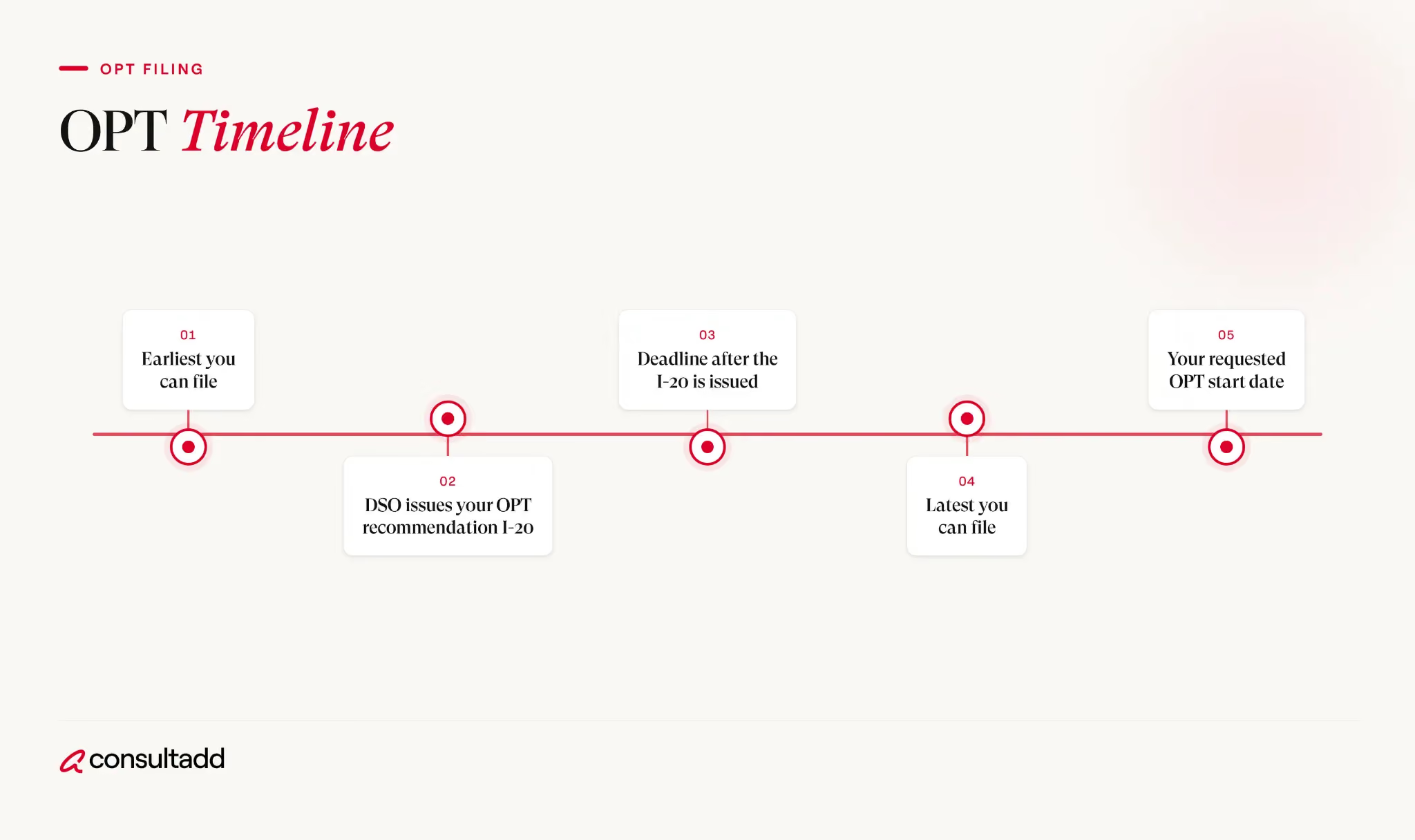
If your DSO signs the I-20 and you sit on it too long, USCIS can deny the application even though you're still inside the 90-day window.
So two clocks run at once, and you have to satisfy both. Here's the full picture.
The practical read: request the OPT recommendation I-20 from your school, then file with USCIS promptly once you have it. Don't let the 30-day clock run out while you gather documents.
Why you should apply as early as possible
Filing early isn't just cautious advice. It's the difference between working the day after graduation and sitting idle for months.
The reason is processing time. In 2026, standard OPT processing has been running long, often three to five months, with a backlog that has left many students waiting past published estimates.
You cannot legally begin work until you have the physical EAD card in hand and your start date has arrived. An unopened approval doesn't count.
There's also a lesser-known trap:
- Post-completion OPT can't be authorized beyond 14 months after your program end date.
- So if delays push your start date back, you don't get that time back at the end.
- Late filing plus slow processing can quietly shrink your 12 months to ten or eleven.
If you're in a genuine time crunch, premium processing is an option. For an extra fee, USCIS commits to taking action within 30 business days.
Here are the current numbers to plan around:
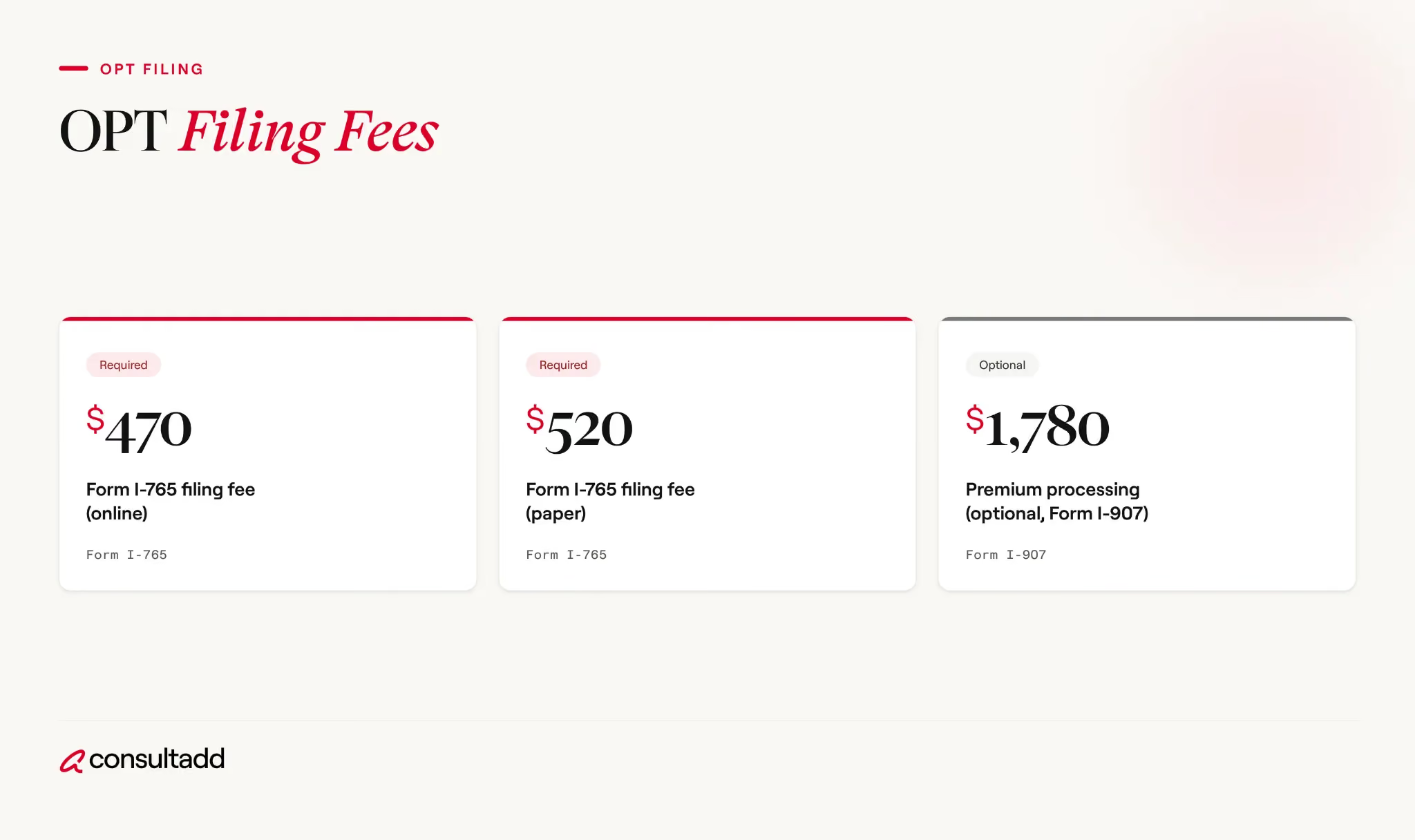
For most students who file early and on time, premium processing isn't necessary. It earns its cost mainly when you have a rigid job start date, urgent travel, or a case that's stuck. Fees change, so confirm the current amounts on uscis.gov before you pay.
What happens after you apply
Once USCIS receives your application, a few things unfold, and knowing the order helps you plan.
You'll get a receipt notice confirming your case is in the system. You can track its status online with the receipt number. When it's approved, USCIS mails your EAD card to the address on file, so keep your address current. A returned card causes serious delays.
Your OPT start date is the date printed on the EAD, and you can only begin working on or after that date, card in hand. If your requested start date arrives before the card does, you still have to wait.
Two rules to hold onto once OPT begins.
- You can accumulate no more than 90 days of unemployment during your 12 months.
- And when your OPT period ends, you get a 60-day grace period to remain in the U.S. and prepare your next step.
One caution worth flagging: if you leave the country during the post-graduation grace period before you've applied, you can forfeit your OPT eligibility, so plan travel carefully and check with your DSO first.
Life after OPT: STEM extension and H-1B
OPT is often the bridge to something longer, so it helps to think a step ahead while you're planning.
If your degree is on the DHS STEM list, you can apply once for a 24-month STEM extension, bringing your total to 36 months of work authorization.
You file for it up to 90 days before your current OPT EAD expires, and it must be received before that expiration. Your employer has to be enrolled in E-Verify for you to qualify.
Beyond OPT, many students aim for H-1B sponsorship. That path has its own timeline and rules, and the employment model you choose matters.
If you're thinking about the jump to H-1B, Consultadd's breakdown of corp-to-corp visa sponsorship for H-1B jobs is a useful next read.
A closing reminder, because this is immigration and the details matter. Rules, fees, and processing times shift, sometimes mid-year.
Treat this guide as a map, confirm your specific dates with your DSO, and check the official USCIS OPT page before you file. Get the timing right, and OPT becomes the smooth start to your career that it's meant to be.
Start Strong With Consultadd
With 15 years in business and 5,000+ successful staffing engagements, we don't just fill roles, we build reliability into your process. We've supported 65 staffing companies in the past year alone and maintain MSAs with industry leaders like Robert Half and TEKsystems.
Here's what working with Consultadd looks like:
- Talent sourced in under 24 hours
- Ready-to-deploy candidates, vetted for experience and compliance
- Lower turnover risk: we match long-term goals, not just short-term needs
- Seamless compliance: visa, documentation, onboarding? Handled.
- Dedicated 1:1 account managers for responsive, personalized support
- Top 100 candidate matches delivered in the past year
- Strong partnerships with universities to tap into fresh, committed talent
- Post-placement support so your investment grows beyond day one
For candidates, your next opportunity is more than just a job title, it's a chance to build skills, gain experience, and move your career forward. At Consultadd, we connect technology professionals with projects and employers that align with their goals, whether they're looking for contract, contract-to-hire, or long-term opportunities.
The tech job market moves fast, but the right guidance can make all the difference. Ready to take the next step in your career journey? Explore Opportunities >>
Key takeaways
- You can apply for post-completion OPT as early as 90 days before your I-20 program end date and as late as 60 days after it.
- Your program end date is on your I-20 and is usually not the same as your graduation ceremony date.
- A second deadline applies: USCIS must receive your application within 30 days of your DSO issuing the OPT recommendation I-20.
- File early in the 90-day window, since 2026 processing runs long and you can't work until your EAD arrives and its start date passes.
- Confirm your exact dates with your DSO and check uscis.gov, because fees and timelines change.
FAQs
What is the earliest I can apply for OPT?
For post-completion OPT, the earliest you can file is 90 days before your program end date, which is the date on your I-20. The window is a hard rule, so an application received even a day early is rejected. Most advisors recommend filing as close to that 90-day mark as you can.
Is the OPT deadline based on my graduation date or my program end date?
It's based on your program end date, not your graduation ceremony. The program end date is printed on your Form I-20 and usually reflects when you finish your degree requirements. If you're unsure which date applies, ask your DSO to confirm it before you count your 90 days.
Can I apply for OPT after I graduate?
Yes. You can file up to 60 days after your program end date. That said, waiting is risky because processing takes months and you can't work until your EAD arrives. Applying before you finish gives you the best shot at starting work without a gap.
How long does OPT take to process?
In 2026, standard processing has commonly run three to five months, and some students have waited longer due to backlogs. You can pay for premium processing, which commits USCIS to act within 30 business days. Always check the current processing times on uscis.gov before you file.
Can I work while my OPT application is pending?
No. You can only begin working once you have the physical EAD card in hand and your OPT start date has arrived. A pending application or even an approval notice without the card does not authorize you to work.
What happens if I miss the OPT application deadline?
If USCIS doesn't receive your application within the window, meaning within 60 days of your program end date and within 30 days of your OPT recommendation I-20, your application will be denied. If that happens, speak with your DSO right away about your remaining options and your status.