
Contracts

Machine Learning Engineer Job: Contract Vs Full-Time Guide
Introduction
Most advice about finding a machine learning engineer job assumes you want a salaried role at a big tech company. Plenty of ML engineers don't, or can't wait six months for one.
Contract, corp-to-corp, and contract-to-hire roles make up a large share of the market, and the pay, paperwork, and hiring process work differently for each.
This guide explains what today's ML engineer postings ask for, how each employment type works, how pay compares across them, and what recruiters check before they submit your profile.
There's plenty to choose from. A LinkedIn job search for the title shows more than 144,000 results in the U.S.
The Bureau of Labor Statistics projects 20 percent employment growth from 2024 to 2034 for computer and information research scientists, the federal category closest to ML research work (BLS Occupational Outlook Handbook).
TL;DR
- Most ML engineer job postings fall into three groups: production ML, MLOps and platform, and LLM applications.
- Full-time, W-2 contract, C2C, and contract-to-hire roles differ in taxes, benefits, and risk.
- A contract hourly rate isn't directly comparable to a salary until you account for benefits and unpaid time off.
- H-1B holders can usually start with a new employer once that employer files a new petition, without waiting for approval.
- Recruiters submit candidates who can prove production experience and confirm availability quickly.
What a machine learning engineer job looks like in 2026
The title "ML engineer" covers several different jobs, and postings usually signal which one they mean. Current listings on Built In show the range. One asks for someone to own the ML lifecycle from training through deployment.
Another wants production models plus monitoring for model drift. A third centers on deploying LLMs and optimizing RAG pipelines.
Read the responsibilities section, not just the title. A role titled "ML engineer" that's all RAG and prompting is closer to a generative AI engineer role.
Our guide to hiring generative AI engineers explains how employers draw that line. For a broader look at skills and career paths, see our overview of AI/ML engineer jobs.
Full-time, contract, C2C, or contract-to-hire
The same ML work can be offered in four different employment arrangements. Know which one you're looking at before you negotiate.
Some contract roles are offered on a 1099 basis instead. Under U.S. rules, the difference between an employee and an independent contractor depends on how much control the company has over the work, not on what the contract calls you.
The IRS explains the test in its guide to independent contractor vs employee status.
If you're curious how conversions usually work, our explainer on contract-to-hire roles covers the typical timelines and terms.
How machine learning engineer salary and rates compare
Pay depends on seniority, location, and whether your experience is in production systems or research. Published ranges vary a lot by source, so treat any single number as a rough guide.
- Full-time salaries: Salary data compiled by HeroHunt.ai from sources including KORE1's 2026 salary guide puts entry-level ML engineers at about $90,000 to $135,000 in base pay. Senior engineers reach roughly $180,000 to $280,000 before equity.
- Freelance rates: On Upwork, ML engineers charge about $50 to $200 an hour.
- Premium over software engineering: Consultadd's own IT staffing trends analysis found that ML engineers earn 20 to 40 percent more than software engineers at a comparable level.
A contract hourly rate and a salary aren't directly comparable. A full-time year is about 2,080 working hours, so a contract rate needs to cover the benefits, paid time off, and gaps between projects that a salary includes.
Before you accept, estimate those costs for yourself and subtract them from the contract total. On C2C, also subtract any fees your corporation or employer takes, plus insurance and accounting costs.
Work authorization for ML engineer roles
Many ML engineers in the U.S. work on visas, and work authorization affects which employment types are open to you.
If you're on an H-1B and changing jobs, AC21 portability rules let you start with a new employer as soon as that employer files a non-frivolous H-1B petition, without waiting for approval.
If the petition is denied, that work authorization ends. USCIS explains the program's requirements on its H-1B specialty occupations page.
Our plain-English guide to the H-1B visa walks through the basics.
H-1B holders usually can't set up their own corporation to bill clients. Their C2C work goes through the H-1B employer, which acts as the corporation. Green card holders, U.S. citizens, and many EAD holders have more flexibility.
Confirm your status at the start of the process, not at the offer stage.
At Consultadd, for example, work authorization is verified before a consultant is ever presented to a client. That lets status be confirmed when the shortlist is built, instead of becoming a surprise after an offer.
What recruiters check before submitting you
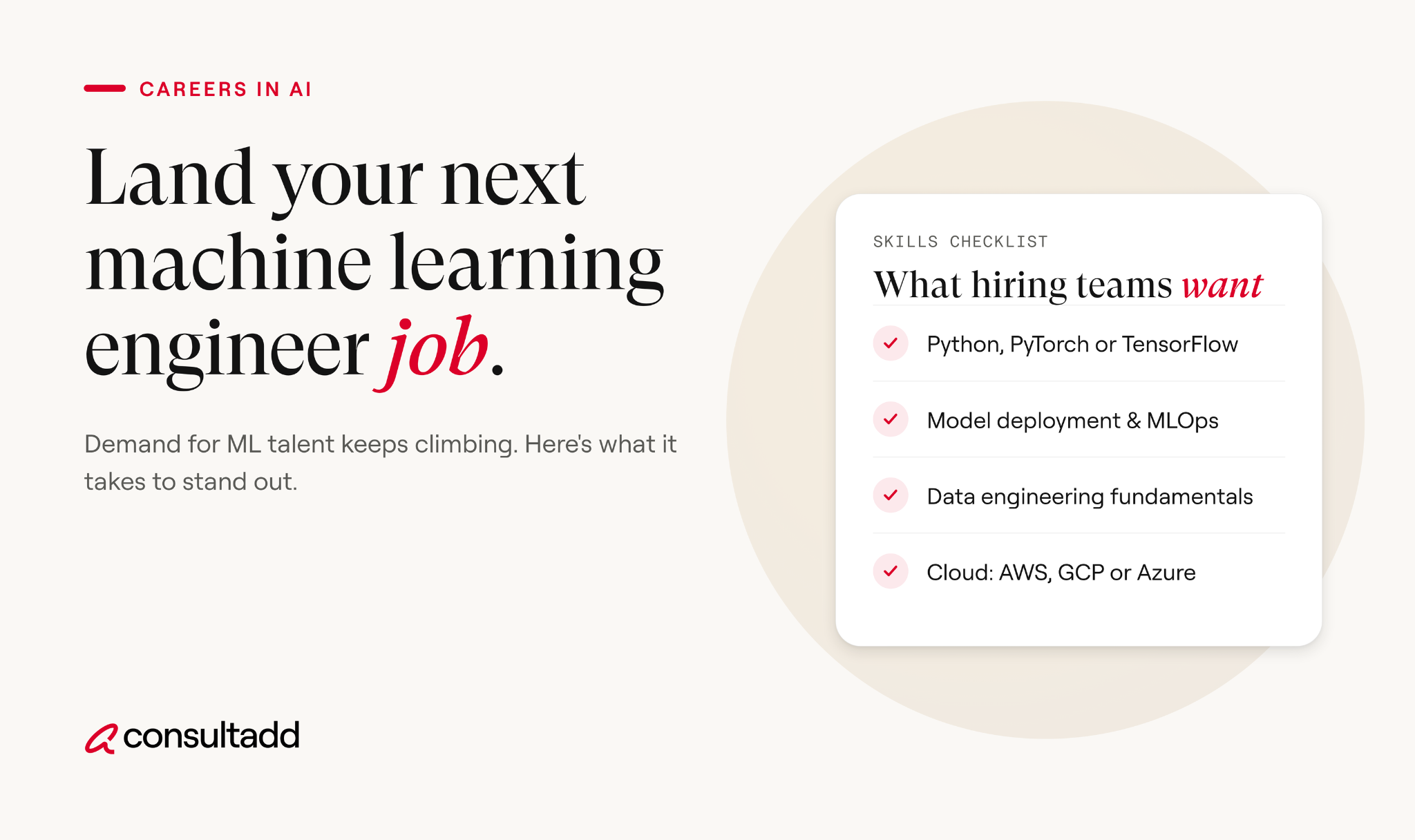
Recruiters filling contract ML roles have limited submission slots and tight deadlines, so they screen for proof, not potential. From the screening we do, these are the things that decide whether a profile goes to a client:
- Production evidence. Name a model you deployed, the traffic it served, and what broke after launch. "Built a churn model" isn't enough. "Deployed a churn model on SageMaker, monitored drift, and retrained monthly" is.
- Specific project details. Recruiters and client managers ask follow-up questions. If your resume says "improved accuracy," expect to be asked by how much, measured against what, and on which data.
- Availability and notice period. A candidate who can start in a week often beats a slightly stronger one who needs a month.
- A clear rate or salary expectation. Vague answers slow everything down. Know your number for each employment type.
- References. Contract roles move fast, and clients often ask for references before they'll even schedule an interview.
Consultadd's recruiters confirm work authorization, notice period, availability, and prior project details for every consultant before presentation. Most well-run staffing desks screen the same way.
The technical interview comes next.
Our guide to mastering the coding interview covers the practice habits that carry over well to ML loops.
How to land your first contract ML role
If you've only worked full-time, the first contract is the hardest one to get. These steps shorten the search:
- Pick one of the three posting types from the table above and tailor your resume to it. A resume that tries to cover production ML, MLOps, and LLM work reads as unfocused.
- Lead with one deployed project, described in two or three lines with a measurable result.
- Register with two or three staffing firms that specialize in tech, and be upfront about your status, rate, and start date.
- Answer recruiter calls and messages the same day. Contract roles often close within days of opening.
- Treat the first contract as a reference-builder. Delivering well on a six-month contract usually makes the next one easier to land and better paid.
Final thoughts on your next machine learning engineer job
The best machine learning engineer job for you depends as much on the employment type as on the employer. Full-time roles offer stability. Contract and C2C roles pay more per hour but put more risk on you. Contract-to-hire lets both sides test the fit before committing.
Decide which trade-off you want, check that your work authorization fits it, and prepare a production story you can explain in detail.
Start Strong With Consultadd
With 15 years in business and 5,000+ successful staffing engagements, we don't just fill roles, we build reliability into your process. We've supported 65 staffing companies in the past year alone and maintain MSAs with industry leaders like Robert Half and TEKsystems.
Here's what working with Consultadd looks like:
- Talent sourced in under 24 hours
- Ready-to-deploy candidates, vetted for experience and compliance
- Lower turnover risk: we match long-term goals, not just short-term needs
- Seamless compliance: visa, documentation, onboarding? Handled.
- Dedicated 1:1 account managers for responsive, personalized support
- Top 100 candidate matches delivered in the past year
- Strong partnerships with universities to tap into fresh, committed talent
- Post-placement support so your investment grows beyond day one
For candidates, your next opportunity is more than just a job title, it's a chance to build skills, gain experience, and move your career forward. At Consultadd, we connect technology professionals with projects and employers that align with their goals, whether they're looking for contract, contract-to-hire, or long-term opportunities.
The tech job market moves fast, but the right guidance can make all the difference. Ready to take the next step in your career journey? Explore Opportunities >>
Key takeaways
- A machine learning engineer job usually means production ML, MLOps, or LLM application work. Read the responsibilities, not just the title.
- Full-time, W-2 contract, C2C, and contract-to-hire roles differ in taxes, benefits, and risk.
- Compare contract rates with salaries only after accounting for benefits, time off, and gaps between contracts.
- H-1B portability lets many visa holders start a new role once the new employer files a petition.
- Recruiters submit candidates who can show deployed work, confirm availability, and state a clear rate.
FAQs
What does a machine learning engineer do day to day?
Most ML engineers spend more time on data pipelines, deployment, and monitoring than on building new models. Typical tasks include preparing training data, serving models through APIs, tracking performance, and retraining when accuracy drops. LLM-focused roles add retrieval, prompting, and evaluation work.
Are contract machine learning engineer jobs worth it?
They can be, especially for experienced engineers who want higher hourly pay and variety. The trade-off is fewer benefits and possible gaps between projects. Contract-to-hire roles are a middle option if you eventually want a permanent job.
What is a C2C machine learning engineer job?
In a corp-to-corp arrangement, your corporation bills the client's staffing vendor directly instead of you going on someone's payroll. You handle more of your own taxes, insurance, and paperwork. H-1B holders usually work C2C through their H-1B employer rather than their own company.
Can I get a machine learning engineer job without a master's degree?
Yes, many employers hire based on demonstrated skills and deployed projects rather than degrees. A bachelor's degree plus strong production experience often competes well against a master's with no deployments. Research-focused roles are the main exception, since they tend to prefer advanced degrees.
How long does it take to get hired for an ML engineer role?
Contract roles can move from first call to start date in a week or two when you're pre-screened and available. Full-time roles at large companies often take much longer because they involve more interview rounds. Being ready with references and a clear rate speeds up both.
Are remote machine learning engineer jobs common?
Remote and hybrid ML roles are widely available, particularly for contract and platform work. Some roles in regulated industries or with security clearance requirements still require on-site work. Check the location and time zone requirements in each posting before you apply.

What Is H1 Visa? A Plain-English Guide to the H-1B Visa
Introduction
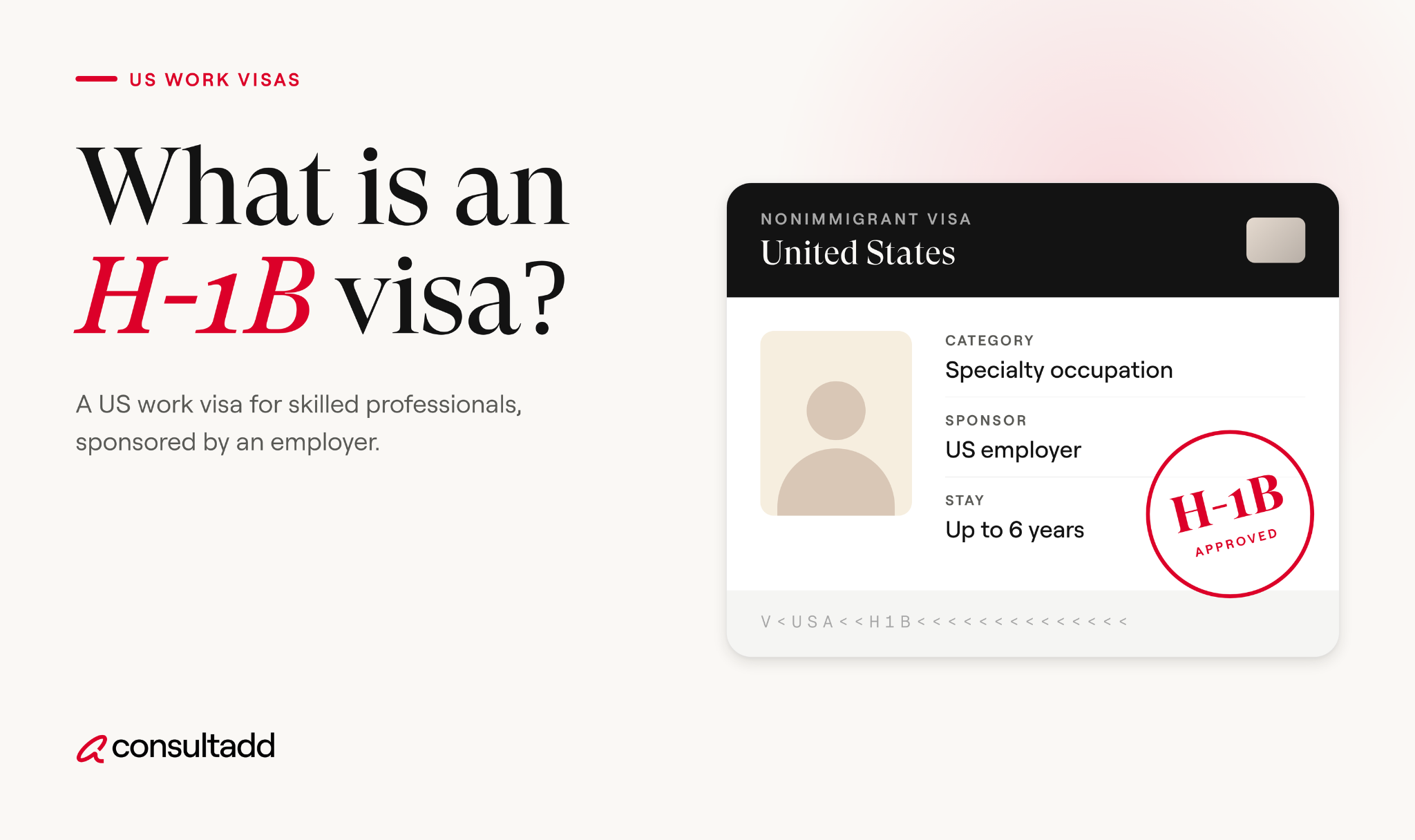
If you've searched "what is H1 visa," you're almost certainly asking about the H-1B. It's the U.S. work visa that lets American employers hire foreign professionals for jobs that need at least a bachelor's degree, like software engineering, data analysis, finance and healthcare roles.
You can't apply for it on your own. An employer has to sponsor you.
This guide explains what the H-1B is, what it lets you do once you have it, how it compares to other work visas and what's changing right now.
It's written for tech professionals and the people who hire them. It's general information, not legal advice, so talk to an immigration attorney about your specific case.
TL;DR
- "H1 visa" is common shorthand for the H-1B, a temporary U.S. work visa for specialty occupations that require a degree.
- An employer must sponsor you, and most new H-1Bs are limited by an annual cap of 85,000, filled through a yearly selection.
- H-1B status usually lasts three years at first and can be extended to six, with longer extensions possible during the green card process.
- You can work only for the employer or employers that sponsored you, but you can change jobs, bring family on H-4 status and pursue a green card.
- Several rules are in motion in 2026, including the $100,000 fee, a proposed cap-subject fee and a proposal to end the 60-day grace period.
What is H1 visa, exactly?
The H-1B is a nonimmigrant work visa. "Nonimmigrant" means it's temporary, though it can lead to permanent residency, which we'll get to.
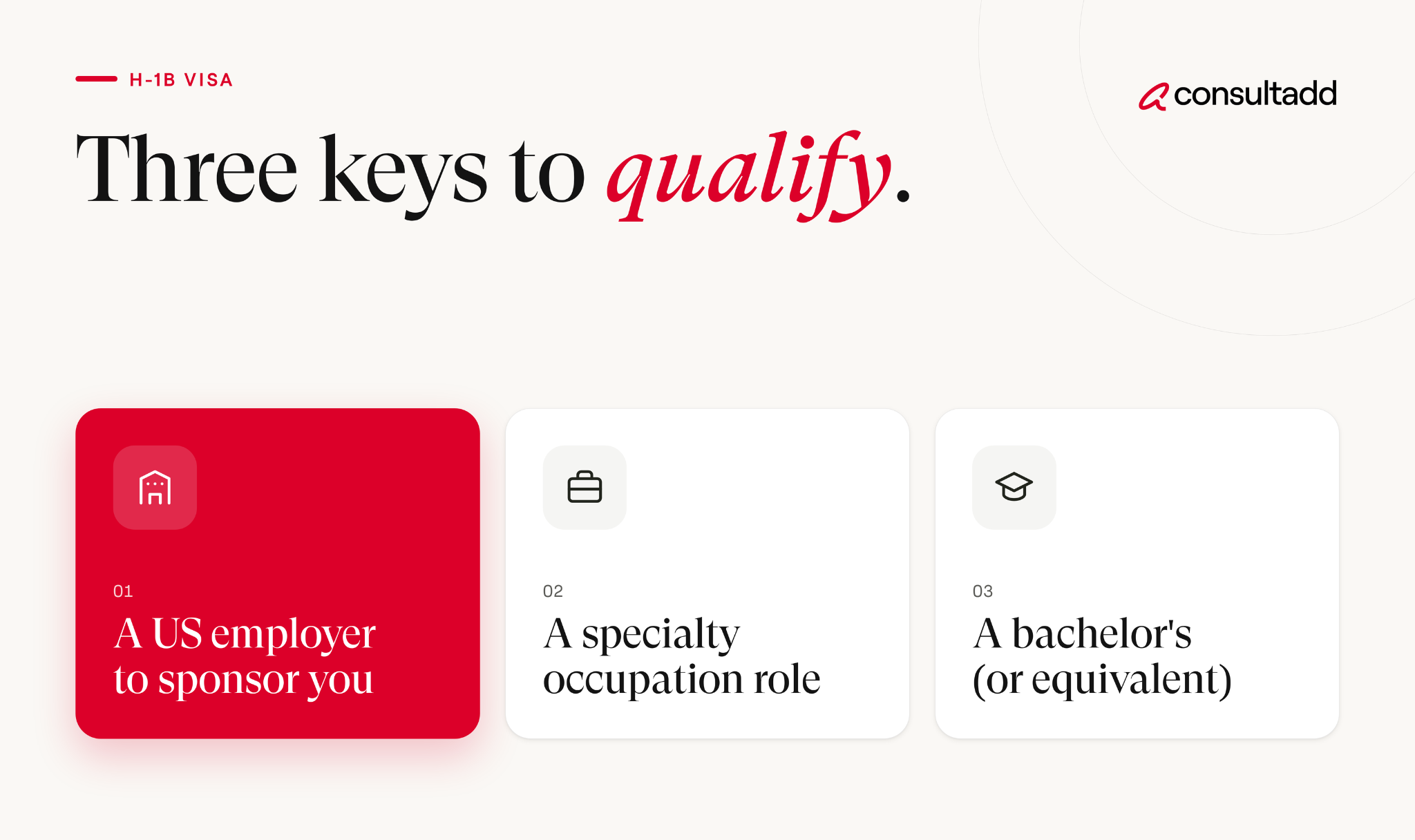
U.S. law defines a specialty occupation as a job that requires applying a body of highly specialized knowledge and at least a bachelor's degree, or its equivalent, in a specific field.
Software developer, systems analyst, data engineer, accountant and physician are common examples. A general admin or support role usually doesn't qualify, even with an impressive title.
Why people say "H1" instead of "H-1B"
The H-1 label goes back to the Immigration and Nationality Act of 1952. The H-1B as we know it came from the Immigration Act of 1990. Over the years, the H-1 group has had a few subcategories:
Visa stamp vs H-1B status
These two terms trip people up.
The visa is the stamp in your passport that lets you travel to a U.S. port of entry. Status is your legal permission to be in the country and work. You can hold H-1B status while in the U.S. without having a physical H-1B visa stamp.
For example, an F-1 student who changes to H-1B inside the U.S. gets the status first and only needs the stamp before traveling abroad and returning.
How the H-1B visa works, start to finish
Here's the short version of the journey. Each step has its own detailed guide if you need more.
- An employer decides to sponsor you. This is the real starting point.
Our guide to sponsoring an H-1B visa as a tech professional covers what that looks like in practice.
- You, the job and the employer all have to qualify. You need the right degree or equivalent experience, the job must be a specialty occupation, and the employer must meet wage rules.
We break these down in H-1B visa prerequisites: who qualifies and how.
- The employer registers you for the annual selection, if the job is subject to the cap.
- If you're selected, the employer files the full petition with a certified Labor Condition Application from the U.S. Department of Labor.
- USCIS decides the petition. Timelines vary a lot depending on whether premium processing is used.
This we explain in our H-1B processing time guide.
The cap, and who skips it
Each fiscal year allows 65,000 new H-1Bs, plus 20,000 more for people with a master's degree or higher from a U.S. school, for 85,000 in total.
Demand is far higher than that, so there's a selection process each spring.
Not everyone goes through it. Universities, nonprofits connected to universities, and nonprofit or government research organizations are exempt from the cap.
Extensions and job changes for people already counted under the cap don't go back through the selection either.
How long you can stay
An H-1B usually starts with a three-year stay and allows up to six years in total. After certain green card milestones, you can extend beyond six years.
What you can and can't do on an H-1B
This is the part most first-time H-1B holders wish they'd understood sooner. The visa comes with real freedoms and some strict limits.
Changing jobs on an H-1B
People often call this an H-1B transfer. Technically, the new employer files a new petition.
Once it's properly filed, you can usually start working for the new employer while USCIS reviews it, as long as you're in valid H-1B status. You generally won't go through the cap selection again.
What happens if you lose your job
Right now, workers whose job ends can generally use a grace period of up to 60 days to find a new sponsor, change status or leave the U.S.
That grace period is under review, as explained in the 2026 changes section below.
Dual intent and green cards
Most temporary visas require you to prove you plan to go home. The H-1B is different.
Dual intent is allowed, so you can be on an H-1B while an employer sponsors you for permanent residency. It's the most common route to a green card for tech professionals in the U.S.
H-1B vs other U.S. work visas
The H-1B isn't the only option. Depending on your nationality, employer and career stage, another visa may fit better.
Many international graduates start on OPT and move to an H-1B later. Our comparison of H-1B vs OPT explains how the two fit together.
H-1B changes in 2026: what's final and what's pending
H-1B rules have changed more in the past year than in a long time. Here's where things stand as of September 23, 2026.
Some of these are still in court or open for public comment, so check USCIS before making decisions.
The $100,000 fee
A September 2025 presidential proclamation added a $100,000 payment for certain H-1B petitions, mainly for workers outside the U.S.
On June 8, 2026, a federal judge in Massachusetts struck the fee down as an unlawful tax. The First Circuit declined to pause that ruling on July 24, and USCIS hasn't collected the payment since.
On September 18, 2026, the President extended the proclamation through September 21, 2027. Legal analysts say the extension doesn't override the court order, so employers currently aren't required to pay the fee.
That could change if the government wins on appeal. We covered the case in depth in our breakdown of the H-1B $100K fee ruling.
Other changes to know about
You can read the proposed cap-subject fee in the Federal Register, and USCIS posts current alerts on its H-1B specialty occupations page.
For the grace period proposal, the current 60-day window still applies until DHS publishes a final rule. If it's finalized as written, workers would generally fall out of status the day after their job ends unless they have another lawful basis to stay.
How the H-1B works with staffing and consulting employers
A large share of H-1B tech professionals work through IT consulting and staffing firms. The sponsoring employer is the firm, and the day-to-day work often happens at a client's site or on a client's project.
That setup is allowed, but it gets extra attention. The sponsor has to show a genuine employer-employee relationship: it pays you, supervises your work and can control your assignment.
Clear client letters, contracts and itineraries make a big difference in how smoothly a petition goes.
From a recruiter's side, the questions H-1B candidates ask most often are practical ones. Who files my petition? What happens between projects? Who handles my extension? A good sponsor answers these before you sign, not after.
If you're weighing different employment setups, our guide to corp-to-corp visa sponsorship for H-1B jobs explains how the models differ.
Is the H1 visa the right path for you?
So, what is H1 visa in practical terms? It's the most common way for a degree-holding tech professional to work in the U.S. for a U.S. employer, with a realistic path to a green card.
The trade-off is less flexibility. Your status is tied to your sponsor, the cap makes timing unpredictable, and the rules are changing quickly in 2026.
The H-1B tends to work well if you have a relevant degree, a solid job offer and an employer with immigration experience. If you're a Canadian or Mexican citizen, an internal transferee or a student still on OPT, compare your other options first.
Whatever route you take, pick a sponsor that explains each step clearly, and keep an eye on the pending rules above.
Start Strong With Consultadd
With 15 years in business and 5,000+ successful staffing engagements, we don't just fill roles, we build reliability into your process. We've supported 65 staffing companies in the past year alone and maintain MSAs with industry leaders like Robert Half and TEKsystems.
Here's what working with Consultadd looks like:
- Talent sourced in under 24 hours
- Ready-to-deploy candidates, vetted for experience and compliance
- Lower turnover risk: we match long-term goals, not just short-term needs
- Seamless compliance: visa, documentation, onboarding? Handled.
- Dedicated 1:1 account managers for responsive, personalized support
- Top 100 candidate matches delivered in the past year
- Strong partnerships with universities to tap into fresh, committed talent
- Post-placement support so your investment grows beyond day one
For candidates, your next opportunity is more than just a job title, it's a chance to build skills, gain experience, and move your career forward. At Consultadd, we connect technology professionals with projects and employers that align with their goals, whether they're looking for contract, contract-to-hire, or long-term opportunities.
The tech job market moves fast, but the right guidance can make all the difference. Ready to take the next step in your career journey? Explore Opportunities >>
Key takeaways
- The "H1 visa" people talk about is the H-1B, a temporary U.S. work visa for degree-level specialty occupations that requires employer sponsorship.
- Most new H-1Bs fall under an 85,000 annual cap, while universities and certain research organizations are exempt.
- H-1B holders can change employers, bring family on H-4 status and pursue a green card, but can't work outside their approved petitions.
- The $100,000 fee is currently not being enforced because of a court order, even though the proclamation was extended to September 2027.
- Proposals to add a new cap-subject fee and end the 60-day grace period aren't final yet, so check USCIS before making plans.
FAQs
Is an H1 visa the same as an H-1B visa?
In everyday use, yes. "H1 visa" is shorthand for the H-1B, the main U.S. work visa for specialty occupations. There's also the H-1B1 for citizens of Chile and Singapore, and the older H-1A and H-1C nurse categories no longer exist.
What is the H1 visa used for?
It lets U.S. employers hire foreign professionals for jobs that normally require at least a bachelor's degree in a specific field. Common H-1B roles include software developers, data analysts, engineers, accountants and physicians. The employer must sponsor the worker and meet wage requirements.
Can I apply for an H1 visa without an employer?
No. A U.S. employer has to file the petition for you, and you can't sponsor yourself for a standard H-1B. Your first step is finding an employer willing to sponsor, whether that's a direct employer or an IT staffing and consulting firm.
How long can you stay in the U.S. on an H1 visa?
The first approval usually covers up to three years, and it can be extended to a maximum of six. You can extend beyond six years if you've reached certain milestones in the green card process.
Can my spouse work if I'm on an H-1B?
Your spouse and unmarried children under 21 can live in the U.S. on H-4 status. H-4 spouses can apply for a work permit only in certain situations, such as when the H-1B holder has an approved immigrant petition. Rules in this area have been changing, so check current USCIS guidance.
Do I have to pay the $100,000 H-1B fee?
Workers never pay it directly, because the fee falls on the sponsoring employer. As of September 2026, employers aren't required to pay it because a federal court vacated the policy and the appeals court declined to pause that ruling. The proclamation has been extended, so the fee could return if the government wins on appeal.
.avif)
H1-B 2026: Every Rule Change And Where It Stands Now
Introduction
H1B 2026 has been the most eventful year the program has seen in a long time, and it isn't over. A wage-weighted lottery replaced the random draw.
A $100,000 fee was imposed, struck down in court, then extended by proclamation four days ago. A separate six-figure fee is sitting in proposed rulemaking. And on September 18, a new executive order told three federal agencies to factor employer layoffs into H-1B decisions.
Keeping track of what's actually in effect versus what's proposed versus what's blocked has become the hard part.
This piece is a status snapshot, current as of September 22, 2026. It covers what changed, where each change sits legally right now, and what employers and candidates should be doing before the next cap season.
Immigration policy is moving quickly this year and some of this will shift again. Verify current requirements with USCIS and with immigration counsel before making any filing decision.
TL;DR
- The wage-weighted lottery is live. It ran for the first time in the FY 2027 cap season and replaced random selection with 1 to 4 entries based on the offered wage level.
- Registrations fell about 38 percent year over year, to 211,600, and 71.5 percent of selected beneficiaries held US advanced degrees.
- The $100,000 proclamation fee was vacated by a federal court in June 2026 and cannot currently be collected, though it was extended by a new proclamation on September 18, 2026.
- DHS has separately proposed a $103,265 fee on cap-subject petitions through normal rulemaking. That one is not final.
- A September 18, 2026 executive order directs DOS, DOL, and DHS to weigh employer layoffs when reviewing H-1B filings.
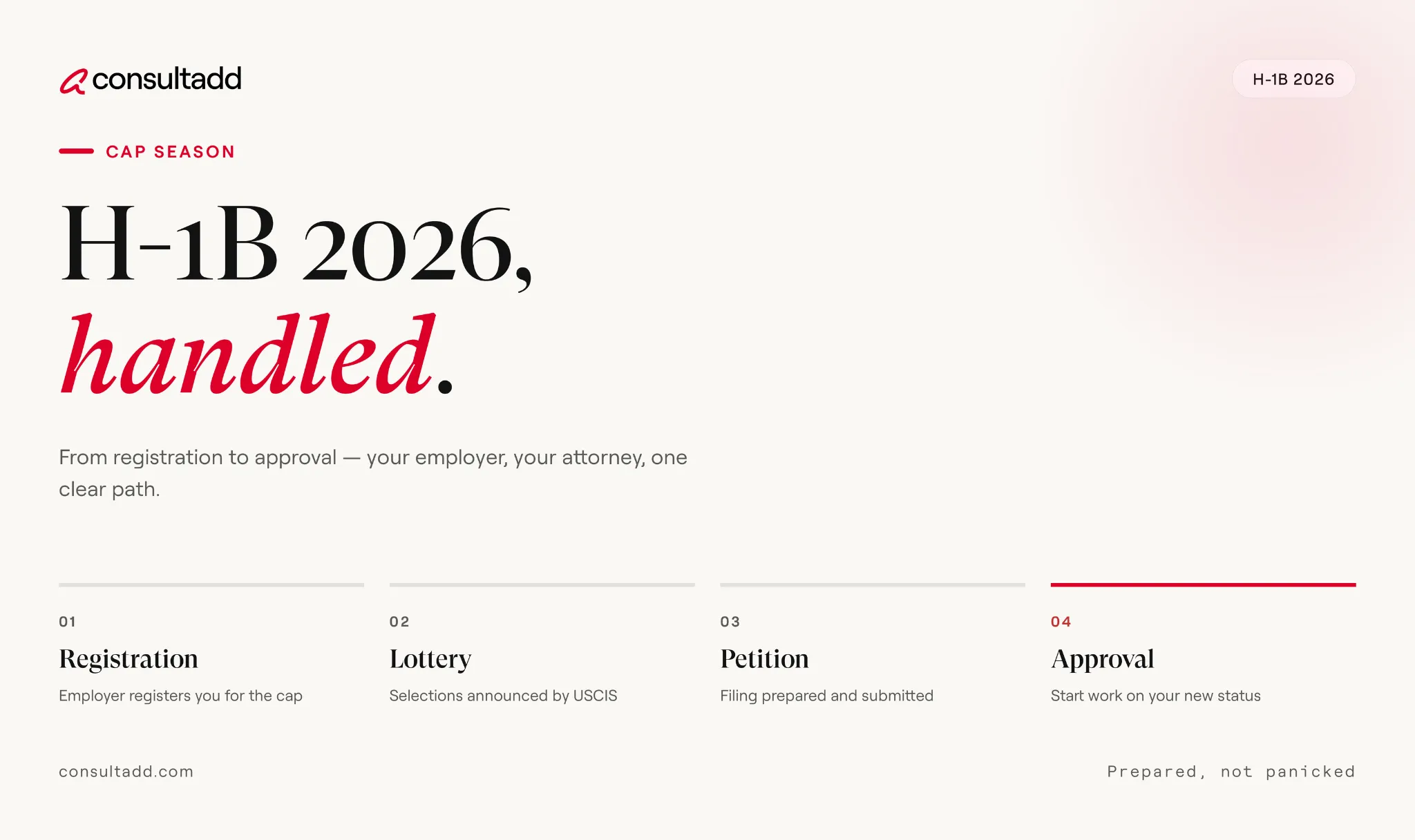
Where Things Stand Today
The pattern worth noticing: most of what's in effect affects selection odds and cost forecasting. Most of what's proposed affects what happens to workers already here.
The Weighted Lottery Changed Who Gets Picked
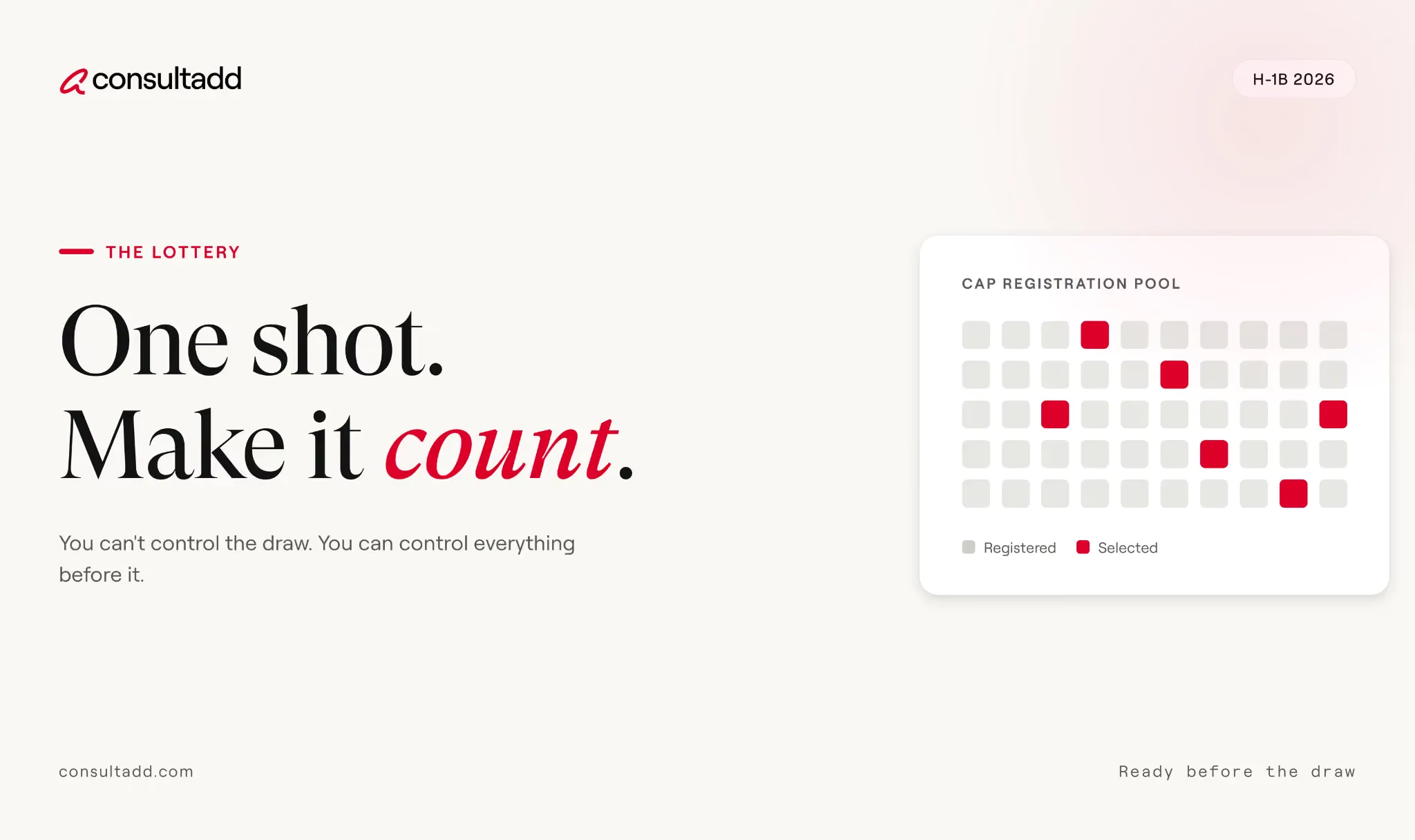
DHS published the weighted selection final rule on December 29, 2025, effective February 27, 2026. It replaced the random lottery with a system that gives more entries to registrations tied to higher wage levels.
Every beneficiary still gets at least one entry, and the beneficiary-centric system from 2024 still applies, meaning one entry per person regardless of how many employers register them.
Two practical consequences.
- Employers now have to enter the OEWS wage level at registration, which means wage decisions happen earlier in the process than they used to.
- Cap petitions have to include the source material supporting the wage level claimed in the registration, so the number has to be defensible.
The rule hits early-career candidates hardest. A recent graduate at a Level I wage now competes against Level IV registrations holding four times the entries. In the final rule, DHS projected selection chances above 61 percent for Level IV and above 45 percent for Level III.
What The FY 2027 Numbers Showed
FY 2027 was the first season run under the new system, and the data is now in.
The timeline ran March 4 to 19, 2026 for registration, selections by March 31, filing from April 1 to June 30, and employment start dates from October 1, 2026.
Two things stand out:
- Registration volume dropped sharply, which was partly the weighted rule discouraging Level I filings and partly the $100,000 fee hanging over the season.
- The advanced degree share jumped 14 points, because graduate degrees correlate with higher offered wages.
The absence of a second lottery matters for planning. In several recent years, unselected registrations got a second chance in summer. That didn't happen this year, so candidates not picked in March had no further path through the FY 2027 cap.
The $100,000 Fee: Imposed, Blocked, Extended
This one has moved more than anything else, so the timeline is the clearest way through it.
The net position right now: the policy exists on paper and has been extended, but the court order vacating it remains in effect, so the payment is not currently being collected. Employers should treat enforceability as unsettled rather than resolved in either direction.
Scope has been narrower than the headline number suggests. The fee applies to petitions for beneficiaries outside the US, those requiring consular processing, and those not eligible for a change of status.
Most F-1 students converting from OPT inside the US were never covered. Extensions, transfers, and amendments were not covered.
Reporting by Forbes puts real-world usage in perspective: just over 700 payments were made in the year the fee was nominally live, which reflects both the narrow scope and the deterrent effect on covered filings.
Consultadd's earlier breakdown of the $100,000 fee ruling covers the litigation reasoning in more depth.
The Proposed $103,265 Cap Fee
On August 25, 2026, DHS published a notice of proposed rulemaking that would impose a $103,265 fee on cap-subject H-1B petitions.
Three things to understand about it:
It is a proposal, not a rule. Notice-and-comment rulemaking takes time, and the final version can differ from the proposal or not arrive at all.
It is legally distinct from the proclamation fee. The proclamation relied on presidential entry authority, which is what the Massachusetts court rejected. This one goes through agency rulemaking, a different legal route with different vulnerabilities.
DHS has indicated that if both were somehow in effect at once, employers would owe both. That's a scenario worth modeling on a budget even if it doesn't come to pass.
The September 2026 Executive Order On Layoffs
Alongside the fee extension, a September 18, 2026 executive order titled "Enhancing Program Integrity and Interagency Coordination in the Administration of the H-1B Nonimmigrant Visa Program" directs the State Department, Labor Department, and DHS to coordinate more closely and to consider an employer's layoff activity when reviewing H-1B-related filings.
The order points at layoffs conducted directly or indirectly in the preceding year, and planned future layoffs, as factors in decisions on labor condition applications and petitions.
Implementation details aren't public yet, so the practical effect is uncertain. What employers can reasonably expect is more scrutiny of companies that have recently reduced headcount while filing new H-1B petitions, and more attention to how contractor and vendor arrangements are described.
Other Proposals Worth Tracking
None of these are final. All would meaningfully change the picture if they were.
Removal of the 60-day grace period. DHS has proposed eliminating the discretionary period that currently lets H-1B, L-1, O-1, TN, and other status holders remain in the US for up to 60 days after employment ends. This would compress the window to find new sponsorship after a layoff.
H-4 work authorization. A pending proposal would end employment authorization for certain H-4 spouses, affecting household income for many H-1B families.
Automatic EAD extensions. Already changed. The automatic extension for EAD renewals was eliminated for applications filed on or after October 30, 2025, making early renewal filing more important than it used to be.
Prevailing wage increases. A DOL proposed rule would raise the wage levels used across the four-tier system. Combined with the weighted lottery, that would raise both the cost of sponsorship and the wage required to be competitive in selection.
For candidates currently on OPT trying to map the path forward, Consultadd's guide to OPT and CPT covers the timing rules that feed into an H-1B filing.
What To Do Before The FY 2028 Cap Season
Registration for FY 2028 is expected in March 2027. That's roughly five months out, and the work that matters happens now.
For candidates, the practical advice has shifted. Wage level now drives selection odds more than anything else you control, which makes negotiating the offered salary an immigration decision as much as a compensation one.
Consultadd's guide to H-1B sponsorship for tech professionals covers how to find sponsoring employers and what cap-exempt placements can offer.
Start Strong With Consultadd
With 15 years in business and 5,000+ successful staffing engagements, we don't just fill roles, we build reliability into your process. We've supported 65 staffing companies in the past year alone and maintain MSAs with industry leaders like Robert Half and TEKsystems.
Here's what working with Consultadd looks like:
- Talent sourced in under 24 hours
- Ready-to-deploy candidates, vetted for experience and compliance
- Lower turnover risk: we match long-term goals, not just short-term needs
- Seamless compliance: visa, documentation, onboarding? Handled.
- Dedicated 1:1 account managers for responsive, personalized support
- Top 100 candidate matches delivered in the past year
- Strong partnerships with universities to tap into fresh, committed talent
- Post-placement support so your investment grows beyond day one
For candidates, your next opportunity is more than just a job title, it's a chance to build skills, gain experience, and move your career forward. At Consultadd, we connect technology professionals with projects and employers that align with their goals, whether they're looking for contract, contract-to-hire, or long-term opportunities.
The tech job market moves fast, but the right guidance can make all the difference. Ready to take the next step in your career journey? Explore Opportunities >>
Key Takeaways
- H1B 2026 delivered one structural change that is fully in effect, the wage-weighted lottery, plus several fee and enforcement changes still working through courts and rulemaking.
- Wage level now drives selection odds. Level IV registrations get four entries, Level I gets one, and the FY 2027 data shows the shift toward higher-paid and advanced-degree candidates.
- The $100,000 proclamation fee was extended through September 2027 but remains blocked by a court order, so it is not currently collectible.
- A separate $103,265 fee on cap-subject petitions is proposed, not final, and would reach the same money through a different legal route.
- Preparation for the March 2027 registration window should start now, beginning with wage level mapping for every intended registration.
FAQs
What changed most for H-1B in 2026?
The selection process. Starting with the FY 2027 cap season, USCIS replaced the random lottery with a weighted system that gives registrations one to four entries based on the offered wage level. That single change reshaped who gets selected more than any fee proposal has so far.
Is the $100,000 H-1B fee currently being charged?
No. A federal court vacated the September 2025 proclamation in June 2026, and the First Circuit declined to pause that ruling in July. A new proclamation on September 18, 2026 extended the policy through September 2027, but the court order blocking collection remains in effect. Confirm current status with counsel before filing.
Did the $100,000 fee apply to students moving from OPT to H-1B?
Generally no. The fee targeted petitions for beneficiaries outside the United States and those requiring consular processing. Most F-1 students filing a change of status from inside the country were outside its scope, and USCIS guidance confirmed that amendments, extensions, and change of status petitions were not covered.
How many H-1B registrations were filed for FY 2027?
USCIS reported 211,600 properly submitted registrations, down about 38 percent from 343,981 the previous year. The cap was reached without a second lottery, which USCIS announced on July 17, 2026.
When is the next H-1B cap registration?
Registration for FY 2028 is expected around March 2027, following the recent pattern of a two-week window in early March. USCIS announces exact dates at least 30 days in advance, so watch for the announcement in late January or February.
Does a higher salary actually improve H-1B selection odds now?
Yes, through the wage level it maps to. A registration whose offered wage reaches Level IV gets four entries versus one at Level I. The level depends on the SOC code and geographic area as much as the raw number, so the classification matters alongside the salary.
.avif)
CPT Job Guide: How F-1 Students Find And Land One
Introduction
A CPT job is the first real US work experience most F-1 students get, and it's also the first time the immigration paperwork becomes your problem instead of a slide in an orientation deck.
The search itself is not harder than any other internship search. What makes it different is a second approval layer: you need an employer to say yes, and then you need your school's Designated School Official to authorize the role before you can work a single hour.
Getting the sequence wrong is what causes trouble, not the job hunt.
This guide is about the practical side. When to start, where openings actually come from, how to explain your status to a hiring manager who has never seen the letters CPT, how long authorization really takes, and which offers you should walk away from.
If you need the underlying rules first, Consultadd's full breakdown of how OPT and CPT work covers eligibility, the 12-month trap, and the 2026 regulatory changes in detail.
TL;DR
- A CPT job has to be part of your curriculum and directly related to your major. Interest in the field isn't enough.
- You need the job offer before your DSO can authorize anything. Authorization is tied to one employer and one date range.
- Start searching roughly three months ahead of the semester you want to work in, because the authorization step sits on top of the hiring timeline.
- Employers don't file anything or pay any fee for a CPT job, which is a genuine selling point worth saying out loud in interviews.
- SEVP flagged a rise in questionable CPT authorizations in an August 2026 broadcast message to schools, so programs promising immediate full-time CPT deserve real scrutiny.
What Counts As A CPT Job, And What Doesn't
Curricular Practical Training is work authorization for training that's built into your degree. According to ICE's practical training guidance, the experience has to be integral to your major and part of your program of study.
In practice, that means the role either satisfies a required internship or practicum, or you're earning credit for it through a course your school lists in its catalog.
Two conditions do most of the filtering:
The "directly related" test is the one students underestimate. Study in the States lists it as a condition your DSO checks before authorizing.
If you'll have to argue the connection, expect your DSO to ask for a written explanation linking the job duties to your coursework. Write that before you apply, not after you get an offer.
Paid and unpaid roles can both qualify. Authorization is still required either way, and an unpaid internship without CPT authorization is still a status violation.
When To Start Looking
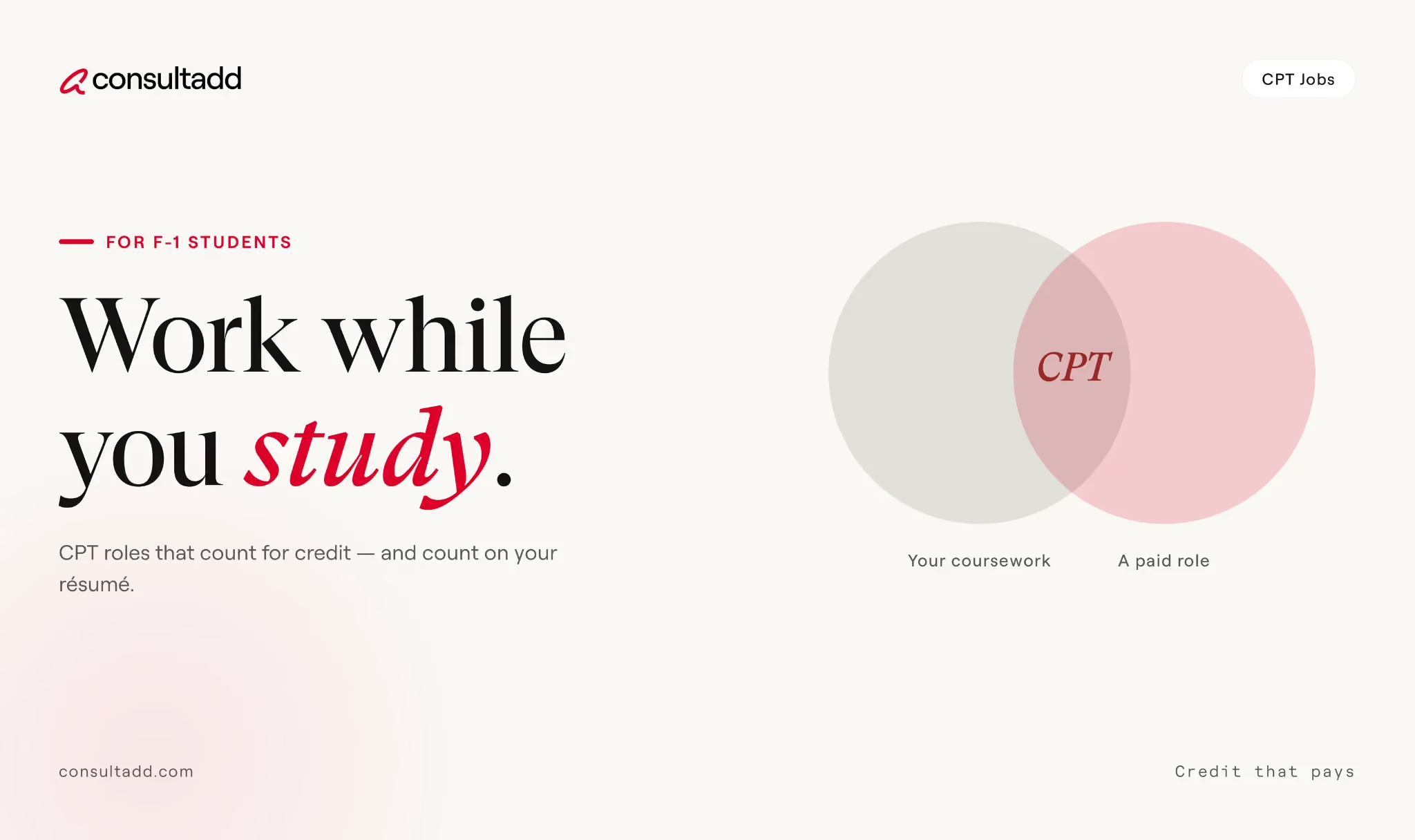
Work backwards from the semester you want to work in.
Most students underestimate the tail end of the process. The hiring cycle is one timeline and the authorization is another, and they don't overlap much.
A company that takes five weeks to make a decision plus a school that takes two weeks to process CPT means seven weeks between your first application and your legal start date, assuming nothing goes wrong.
For a summer CPT job, that means starting in January or February. For a fall semester role, starting in late spring.
There's one more reason to start early. Some programs only allow CPT registration during a specific window before the semester begins. Miss it and you wait a full term, regardless of how good the offer is. Ask your international student office for that deadline now.
Where CPT Jobs Actually Come From
Public job boards are the slowest channel for international students, because most postings never mention work authorization and you find out at the screening stage.
The alumni channel is underused and it's the highest-yield one. A message that says you're in the same program they graduated from, and you're looking for a CPT internship in a specific area, gets answered far more often than a cold application does.
Staffing firms are worth a direct mention here because of a mismatch most students never see.
Recruiters who place contract technology talent every day already know what an I-20 is. You spend zero time educating them.
Consultadd's guide to what the best IT staffing firms actually do for candidates covers how that relationship works.
How To Explain CPT To An Employer Who Hasn't Heard Of It
Plenty of hiring managers hear "visa" and assume cost, lawyers, and delay. For a CPT job, none of that applies, and saying so plainly is the single most useful thing you can do in an interview.
Here's the short version, which fits in three sentences:
"I'm on an F-1 student visa, and CPT is work authorization my university approves. There's no filing, no fee, and nothing for you to sponsor. I just need an offer letter with the role, dates, hours, and work address so my school can authorize it."
That's it. Don't over-explain, and don't apologize for the paperwork.
What the employer does need to give you, and what's worth requesting in writing as soon as you have a verbal offer:
- Job title and a short description of duties
- Start and end dates
- Hours per week, stated clearly as part-time or full-time
- Physical work address, including remote arrangements
- Supervisor name and contact details
- Whether the role is paid, and at what rate
Get all six in one letter. Chasing a recruiter for a missing work address in week three is how students lose their start date.
Also be ready for the interview itself to be the actual barrier. Authorization makes you eligible, not hired.
If you're heading into technical rounds, the 2026 coding interview playbook is a reasonable place to prepare.
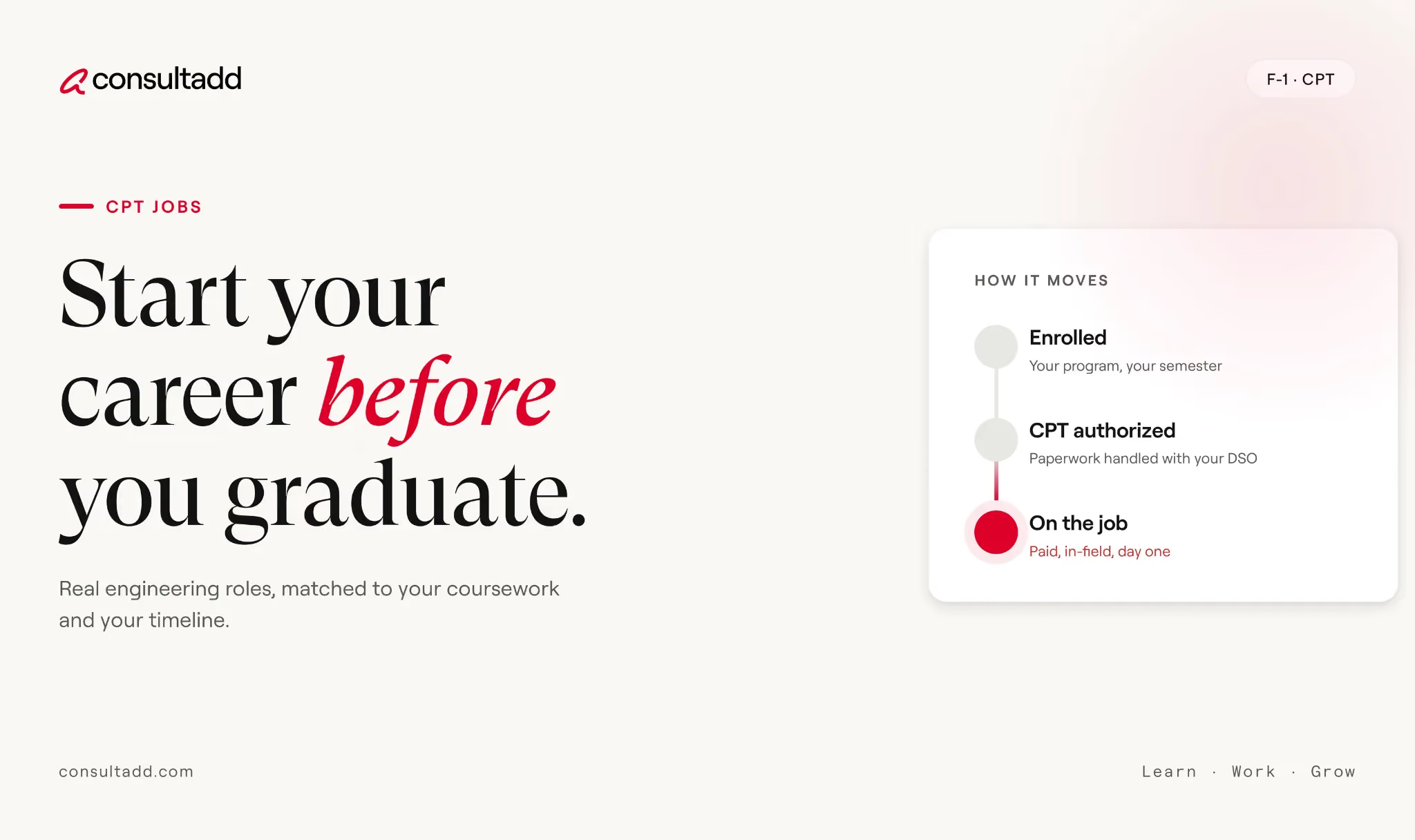
From Offer Letter To First Day: The Real Timeline
That last row is not flexible. Starting even one day early, including unpaid onboarding or training, is a status violation.
If your employer wants you to start Monday and your I-20 says Wednesday, you start Wednesday. Tell them that directly; most will simply move the date.
If you switch employers mid-way, you need a new authorization for the new company. CPT doesn't transfer.
Red Flags That Can Cost You Your Status
This section matters more in 2026 than it did a few years ago.
In an August 2026 broadcast message to schools, SEVP told Designated School Officials it had observed a rise in CPT authorizations that appear to violate the requirement that training be an integral part of an established curriculum, and reminded schools that non-compliance can cost an institution its certification to enroll foreign students.
The students at these schools are the ones who carry the consequences. A few things to watch:
A program that offers full-time CPT from the first semester. The regulatory exception for immediate CPT exists only for graduate programs that genuinely require the training as part of the curriculum. A program advertising day-one CPT as a selling point, rather than as an academic requirement, is worth questioning carefully.
A job with no real connection to your coursework. If you can't write two sentences linking the duties to your major, your DSO shouldn't authorize it and you shouldn't want them to.
An employer who wants you to start before the I-20 date. Not negotiable, and an employer who pushes on it is telling you something about how they handle rules generally.
Anyone charging you a fee for a CPT job. A legitimate employer or staffing partner does not charge candidates for placement.
Stacking full-time CPT across semesters without counting. Twelve or more cumulative months of full-time CPT at one degree level eliminates your post-completion OPT, per USCIS policy. Ask your DSO to pull the running total from SEVIS once a semester.
If something about an arrangement feels off, your DSO is the first call and an immigration attorney is the second. Neither conversation costs you anything close to what a status violation does.
Making A CPT Job Count Toward What Comes Next
A CPT job is short. The value is what it sets up.
Three things make the difference between an internship that ends and one that turns into something:
Keep part-time CPT part-time where you can. Part-time CPT, meaning 20 hours a week or less, never touches your OPT eligibility no matter how much you use. Full-time CPT is the one with the 12-month ceiling. Many students use part-time CPT during semesters and save full-time for a single summer.
Document the work as you go. Keep the offer letter, your I-20 copies, and a short record of projects and tools. You'll want this for OPT applications, future employers, and any status question that comes up later.
Have the conversation before the last week. Ask your manager around the halfway mark whether a return offer or a longer-term role is realistic. If the company sponsors H-1B, you want to know early.
Consultadd's guide to H-1B sponsorship for tech professionals explains what employers are weighing on their side, and the $100K H-1B fee ruling covers the cost question many of them are now asking.
Start Strong With Consultadd
With 15 years in business and 5,000+ successful staffing engagements, we don't just fill roles, we build reliability into your process. We've supported 65 staffing companies in the past year alone and maintain MSAs with industry leaders like Robert Half and TEKsystems.
Here's what working with Consultadd looks like:
- Talent sourced in under 24 hours
- Ready-to-deploy candidates, vetted for experience and compliance
- Lower turnover risk: we match long-term goals, not just short-term needs
- Seamless compliance: visa, documentation, onboarding? Handled.
- Dedicated 1:1 account managers for responsive, personalized support
- Top 100 candidate matches delivered in the past year
- Strong partnerships with universities to tap into fresh, committed talent
- Post-placement support so your investment grows beyond day one
For candidates, your next opportunity is more than just a job title, it's a chance to build skills, gain experience, and move your career forward. At Consultadd, we connect technology professionals with projects and employers that align with their goals, whether they're looking for contract, contract-to-hire, or long-term opportunities.
The tech job market moves fast, but the right guidance can make all the difference. Ready to take the next step in your career journey? Explore Opportunities >>
Key Takeaways
- A CPT job has to be tied to your curriculum and directly related to your major, and you need the offer in hand before your DSO can authorize anything.
- Build roughly three months into your plan, because hiring time and authorization time stack rather than overlap.
- Faculty, program alumni, and staffing firms that place visa-holding candidates beat general job boards by a wide margin.
- Tell employers plainly that CPT involves no sponsorship, no filing, and no fee on their side. Most objections come from not knowing that.
- Never work before the CPT start date on your I-20, and track cumulative full-time CPT so you don't lose post-completion OPT.
FAQs
Can I start a CPT job before my updated I-20 arrives?
No. Work has to begin on or after the CPT start date printed on your authorized I-20. That includes unpaid onboarding, training sessions, and shadowing. If the employer needs you sooner, ask them to move the start date rather than starting early.
Does a CPT job have to be paid?
No, CPT covers paid and unpaid training, including required practicums and unpaid internships. The authorization requirement is the same either way. An unpaid role without CPT authorization is still a violation of your status.
Can I hold two CPT jobs at the same time?
Yes, concurrent CPT authorizations are possible, but each employer needs its own separate authorization on your I-20. Your combined hours also determine whether you're part-time or full-time for the 12-month full-time CPT rule, so count them together.
Can I do a CPT job remotely for a company in another state?
Usually yes, though your DSO needs the work location documented and some schools have their own rules about remote placements. Ask before you accept. CPT authorization is only needed for training that takes place inside the United States.
Does an employer have to sponsor anything for a CPT job?
No. Your school authorizes CPT, not the government and not the employer. The company provides an offer letter with the role details and nothing else, which is why CPT roles are often easier to secure than positions requiring sponsorship.
Will a CPT job help me get H-1B later?
Indirectly, yes. CPT gives you US work experience and a relationship with an employer who may later sponsor you, which matters because H-1B petitions are filed by companies rather than individuals. The authorization itself doesn't carry over, so the value is in the experience and the connection.
.avif)
Work for hire contract: what it covers and what it misses
Introduction
Here is the uncomfortable part. A work for hire contract with an independent contractor who builds software usually does not transfer ownership of that software. The clause is there, both parties signed it, the invoice was paid, and the contractor still owns the copyright.
This is not a drafting technicality. It is how the statute is written, and it catches companies at the worst possible moment: during due diligence, in an acquisition, or when a former contractor's counsel sends a letter about the codebase.
If you engage contract developers, designers, or consultants through any arrangement, the next fifteen minutes are worth it.
This article is general information, not legal advice. Have counsel review your actual agreements.
TL;DR
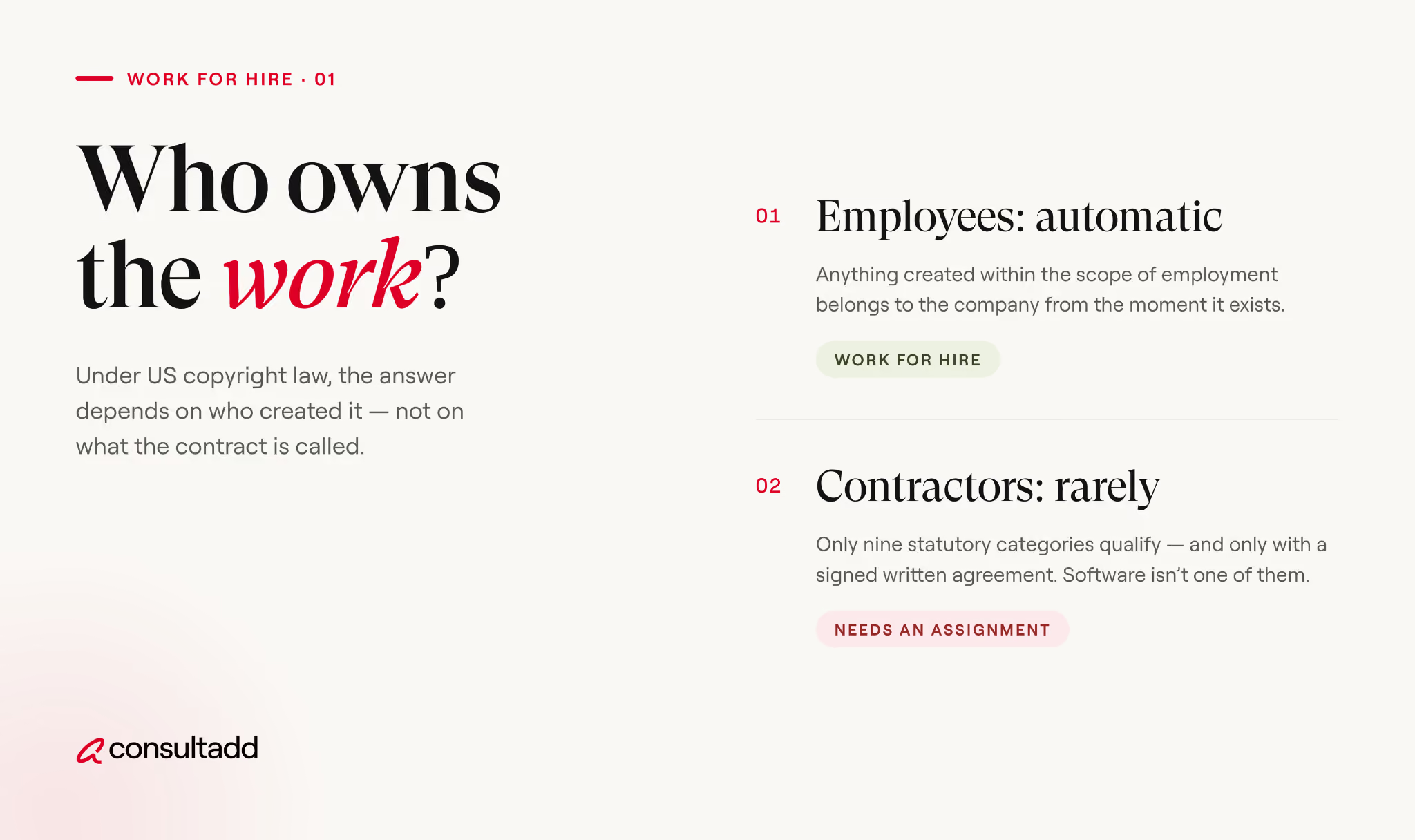
- A work for hire contract only creates work-for-hire status in two situations. Everything else is a clause without legal effect.
- For independent contractors, the work must fall into one of nine statutory categories listed in 17 U.S.C. Section 101. Software is not one of them.
- Without a separate present assignment clause, the contractor keeps the copyright regardless of payment.
- Work-for-hire status still matters because it cannot be terminated after 35 years the way an assignment can.
- Patents, trademarks, and trade secrets are outside the doctrine entirely and need their own clauses.
What a work for hire contract actually does
Copyright vests in the author the moment a work is fixed in tangible form. The author is normally the person who created it.
Work made for hire is the exception. As the U.S. Copyright Office puts it, when a work is a work made for hire, the author is not the individual who actually created it, and the party that hired the individual is considered both the author and the copyright owner.
That distinction between author and owner does real work later, and most people skip past it. An assignment moves ownership but leaves authorship with the creator. Work-for-hire status moves both.
Under Section 201(b), in the case of a work made for hire the employer or other person for whom the work was prepared is considered the author, and owns all rights in the copyright unless the parties expressly agreed otherwise in a signed writing.
One more thing the Copyright Office is clear about: whether a work is a work made for hire is determined by facts in existence at the time the work is created. You cannot decide afterward.
The two ways a work for hire contract can succeed
The statute gives exactly two pathways. There is no third.
Prong one: employees, and who counts as one
Work prepared by an employee within the scope of employment is a work made for hire automatically. No contract required.
The catch is that the Copyright Act does not define "employee." In Community for Creative Non-Violence v. Reid, 490 U.S. 730 (1989), the Supreme Court held the term carries its common-law agency meaning.
Courts then weigh a list of factors:
The hiring party's right to control how the work is done, the skill required, who supplies the tools and workspace, the duration of the relationship, whether the hiring party can assign additional projects, control over working hours, method of payment, whether the work is part of the hiring party's regular business, whether benefits are provided, and how the worker is treated for tax purposes.
Those last two carry unusual weight in practice. A worker who gets a 1099, no benefits, and sets their own hours is going to be an independent contractor no matter what your agreement calls them.
Prong two: the nine categories
For anyone who is not an employee, a commissioned work qualifies only if the parties expressly agree in a signed written instrument and the work was specially ordered for use as one of these nine things:
- A contribution to a collective work
- A part of a motion picture or other audiovisual work
- A translation
- A supplementary work
- A compilation
- An instructional text
- A test
- Answer material for a test
- An atlas
Read that list again with your actual contractor deliverables in mind.
The written agreement is necessary but not sufficient. The work must independently fit one of the nine categories, and no amount of contract language can put it there.
Why software is the biggest gap in most work for hire contracts
Software is not on the list. Neither are most of the things companies commission.
Code developed by an independent contractor under a project agreement does not fit any of the nine categories, which means the contractor retains copyright absent a separate assignment. That is a recurring source of disputes in technology.
Compare that to a salaried in-house developer writing the same code during normal working hours. That is prong one, it is automatic, and no clause is needed.
Same code. Completely different ownership outcome, decided by employment classification rather than by anything in your contract.
The assignment backstop, and why you still want the work for hire label
The fix is not complicated once you see it. You use both.
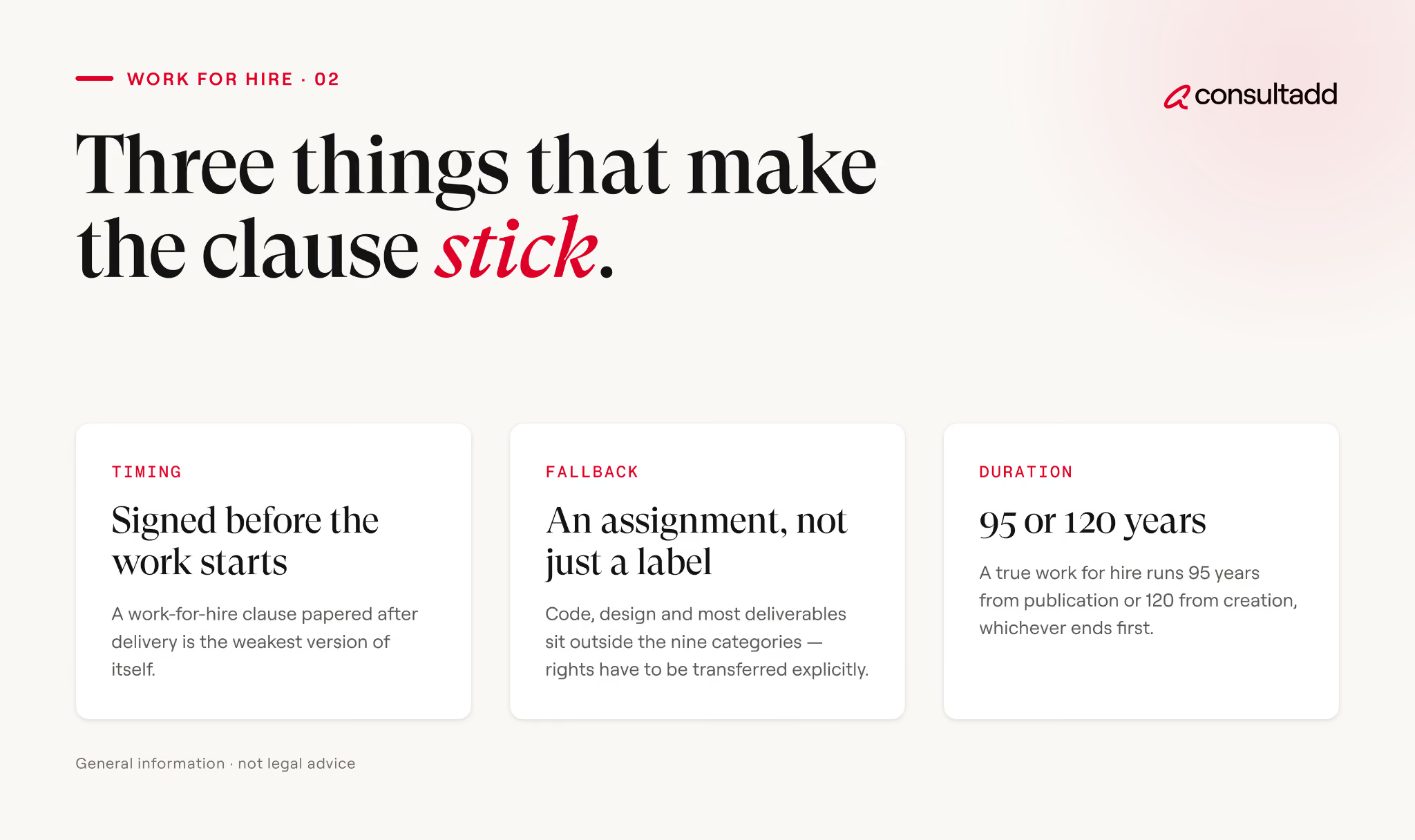
The standard construction reads something like: all deliverables are works made for hire under 17 U.S.C. Section 101, and to the extent any deliverable is not a work made for hire, Contractor hereby irrevocably assigns all right, title and interest in it to Company.
Note "hereby assigns," present tense. An agreement to assign in the future is a promise that can be breached. A present assignment transfers on execution.
So why keep the work for hire language at all if the assignment does the heavy lifting?
Because the two are not equivalent over time.
That termination right is the reason sophisticated buyers still want work-for-hire designation where it can legitimately apply.
An assignment can be terminated by the author or their heirs decades later. A genuine work made for hire cannot be clawed back.
For most contractor software, you will not get work-for-hire status. You take the assignment and you accept the 35-year exposure, because the alternative is owning nothing at all.
What a complete IP section contains
A work for hire contract that only says "work for hire" is doing about a third of the job. Here is what the full section needs.
The background IP carve-out is the one teams forget. Contractors routinely reuse their own libraries and modules rather than rebuilding from scratch.
If the agreement assigns everything with no carve-out, the contractor has technically assigned tools they use with every other client, which makes the clause commercially unrealistic and sometimes unenforceable in practice.
Handle it explicitly: they keep the library, you get a perpetual license.
Staffing chains and the ownership gap nobody checks
This is where contract IT work gets genuinely messy.
A typical engagement runs through several parties. End client hires a prime staffing firm. The prime subcontracts to a supplier. The supplier engages a consultant, sometimes on corp-to-corp terms through the consultant's own entity.
Now the code gets written. For the client to own it, ownership has to travel the entire chain, and every link needs a valid assignment.
The break usually happens at the last link. The client's MSA has a thorough IP section. The prime-to-supplier agreement has a decent one. The supplier's agreement with the consultant's LLC says "work for hire" and nothing else, which for software transfers nothing.
Worse, the consultant is often an employee of their own corp-to-corp entity. That entity may own the copyright under prong one, and the entity never assigned it to anyone.
Three checks worth running on any contract engagement:
- Does every agreement in the chain contain a present assignment, not just a work for hire label?
- If the consultant operates through an entity, does the entity assign, and is the individual bound too?
- Is the assignment effective on execution rather than conditioned on final payment?
Understanding which engagement model you are actually using matters here, since the ownership chain differs between staff augmentation, contract-to-hire, and direct placement.
Our breakdown of IT staffing models and how each one works covers where the contractual lines sit in each.
When you are evaluating a partner, IP paperwork belongs on the diligence list alongside candidate quality, which our guide to choosing an IT staffing agency touches on.
Traps that quietly void a work for hire contract
1. Signing after work started.
Whether a work is made for hire is determined at the time of creation, and courts have rejected attempts to apply the designation retroactively. Get signatures before the first line of code.
2. The California statutory employee problem.
Under California Labor Code § 3351.5(c) and related unemployment insurance provisions, designating an independent contractor's output as a work made for hire can make that contractor a statutory employee for workers' compensation and unemployment insurance purposes.
A clause meant to protect IP can create a payroll liability. This is one reason some California-facing agreements lead with assignment language rather than work for hire.
3. Assuming it travels internationally.
Work made for hire is a U.S. doctrine. India does not have it. The EU generally does not recognize it either.
A court applying foreign law may treat the designation as meaningless, which matters a great deal if your development team sits offshore. Assignment language plus a governing law clause does more work than a work-for-hire label ever will.
4. Forgetting that patents are separate.
Copyright and patent are different systems. Inventors own patent rights by default, and no work for hire clause changes that. If contractor work could produce anything patentable, you need express patent assignment and a cooperation obligation.
5. Treating the contract as the classification.
Calling someone a contractor does not make them one, and calling them an employee does not either. Courts look at the agency factors. If you control the work closely, supply the equipment, set the hours, and the person looks like staff, misclassification exposure exists independently of your IP clause.
Start Strong With Consultadd
With 15 years in business and 5,000+ successful staffing engagements, we don't just fill roles, we build reliability into your process. We've supported 65 staffing companies in the past year alone and maintain MSAs with industry leaders like Robert Half and TEKsystems.
Here's what working with Consultadd looks like:
- Talent sourced in under 24 hours
- Ready-to-deploy candidates, vetted for experience and compliance
- Lower turnover risk: we match long-term goals, not just short-term needs
- Seamless compliance: visa, documentation, onboarding? Handled.
- Dedicated 1:1 account managers for responsive, personalized support
- Top 100 candidate matches delivered in the past year
- Strong partnerships with universities to tap into fresh, committed talent
- Post-placement support so your investment grows beyond day one
For candidates, your next opportunity is more than just a job title, it's a chance to build skills, gain experience, and move your career forward. At Consultadd, we connect technology professionals with projects and employers that align with their goals, whether they're looking for contract, contract-to-hire, or long-term opportunities.
The tech job market moves fast, but the right guidance can make all the difference. Ready to take the next step in your career journey? Explore Opportunities >>
Key takeaways
- A work for hire contract creates work-for-hire status in only two situations: employee works, and nine narrow categories of commissioned works.
- Software, websites, logos, and most contractor deliverables fall outside those nine categories, so the clause alone transfers nothing.
- Pair the designation with a present assignment ("hereby assigns") signed before work begins.
- Keep the work for hire label anyway, because genuine work-for-hire status avoids the 35-year termination right that applies to assignments.
- In multi-party staffing chains, verify that every link has a valid assignment, especially the last one to a corp-to-corp consultant.
FAQs
Does a work for hire contract mean I own everything my contractor creates?
Not by itself. For independent contractors, work-for-hire status applies only when the deliverable fits one of nine categories in 17 U.S.C. § 101 and both parties signed an agreement saying so. Most commissioned work, including software, falls outside those categories, so you need a separate assignment clause.
Who owns software written by an independent contractor?
The contractor, unless they assigned the copyright to you in writing. Software is not one of the nine statutory categories, so a work for hire designation does not transfer it. Payment does not transfer copyright either.
What is the difference between work for hire and a copyright assignment?
Work for hire makes the hiring party the legal author from the moment of creation, and it cannot be terminated later. An assignment transfers ownership but leaves authorship with the creator, who can terminate the grant roughly 35 years on. Well-drafted contracts use both.
Does a work for hire contract need to be signed before the work starts?
Yes, as a practical matter. Whether a work is made for hire is determined by the facts at the time of creation, and courts have rejected retroactive designations. Get the agreement signed before any work begins.
Does work for hire cover patents and trademarks?
No. The doctrine is part of copyright law only. Inventors own patent rights by default, so patentable output requires express patent assignment plus a cooperation clause for filings. Trade secrets and trademarks need their own provisions.
Do work for hire clauses work with offshore contractors?
Often not. Work made for hire is a U.S. concept, and jurisdictions including India and most of the EU do not recognize it. For offshore engagements, a present assignment paired with a clear governing law and jurisdiction clause is the more reliable approach.
.avif)
What Is a C2C Contract? Key Clauses Before You Sign
Introduction
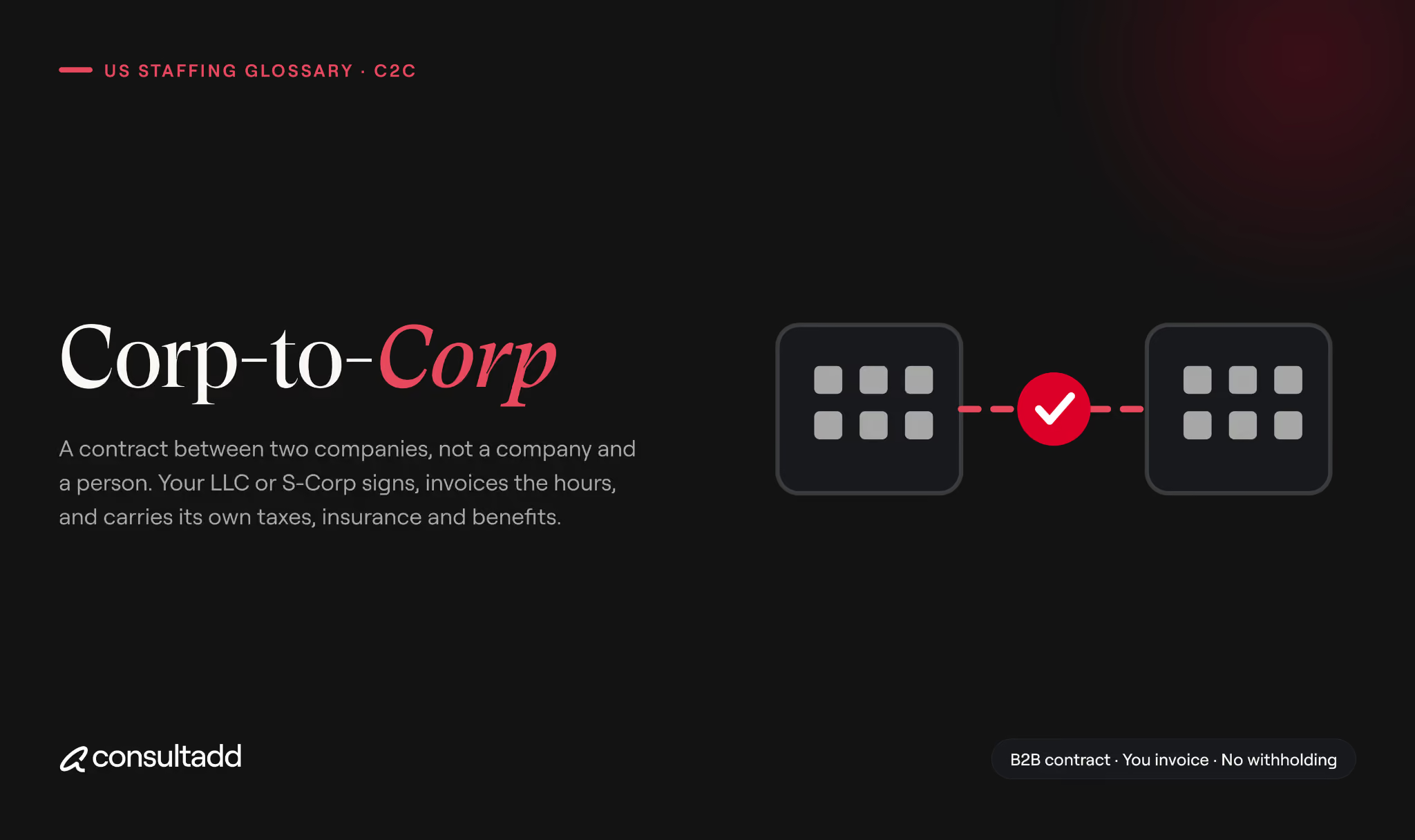
A C2C contract is the services agreement signed between two business entities when one company engages another company's worker. Your corporation signs it. Not you.
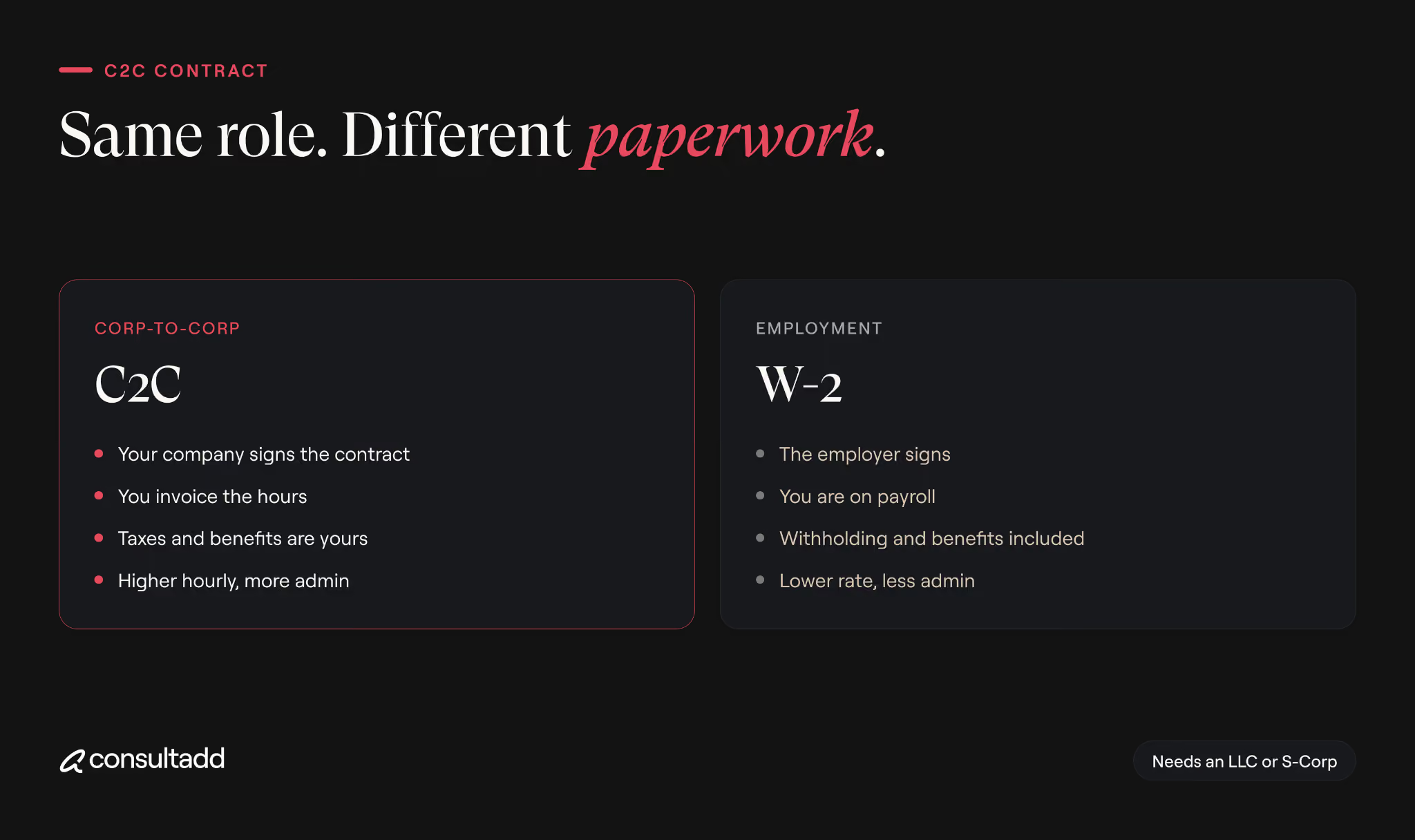
That's the short version, and if you want the full breakdown of the arrangement itself, our guide to what C2C employment means covers how it compares to W2 and 1099 and who it suits.
This piece is about something else: the document. Most people asking what is a C2C contract have one sitting in their inbox with a signature request attached, and what they actually need to know is which clauses matter and which ones are worth pushing back on.
Because here's the thing. The rate is the part everyone reads. The payment trigger, the non-solicit radius, and the indemnification cap are the parts that cost people money later.
TL;DR
- A C2C contract is usually three documents, not one: a master agreement, a work order, and a payment mechanism.
- Payment language matters more than the rate. "Pay when paid" delays you; "pay if paid" can mean you're never paid at all.
- Non-solicitation and conversion fee clauses decide whether you can take a full-time offer from the end client later.
- Insurance requirements and indemnification caps are where a bad contract quietly transfers risk onto the smaller party.
- The FTC's nationwide non-compete ban is dead as of 2026, so state law governs what a restrictive covenant can do to you.
The three documents in a C2C contract
A corp-to-corp engagement rarely lives in one file. Signing only the first document and assuming you've seen the deal is a common mistake.
The MSA carries almost all the risk. The work order carries the money. A lot of people negotiate hard on the work order and sign the MSA without reading it, which is backwards.
Watch for flow-down clauses in the MSA too. These say the terms of the upstream contract between the agency and the end client automatically apply to you, including terms you've never seen. Ask for a copy of what's flowing down. If the answer is no, you're agreeing to obligations you can't evaluate.
For how the parties stack up in a typical chain, our complete guide to corp to corp staffing maps the flow from end client to contractor.
The payment clauses
This is the section to read twice.
Net terms and what triggers the clock
Net 30, net 45, and net 60 are standard in staffing. What varies is when the clock starts: on invoice submission, on timesheet approval, or on the agency receiving payment from the client. Those are three very different deals wearing similar language.
Timesheet approval as the trigger is the one that causes disputes, because approval sits with someone who isn't a party to your contract. If the client manager is on vacation, your payment date moves.
Ask for a deemed-approval clause: if the timesheet isn't rejected within a set number of days, it's treated as approved.
Contingent payment language
Some C2C agreements condition your payment on the agency getting paid first. There are two versions and they are not the same thing.
Courts generally treat pay-if-paid clauses as requiring clear, unambiguous language to be enforceable, and some states void them entirely as against public policy.
Vague wording often gets read as pay-when-paid instead. But you don't want to be discovering which interpretation applies while you're litigating for three months of unpaid invoices.
The practical ask: convert any contingent language into pay-when-paid with an outside date, so there's a hard deadline by which you get paid regardless.
One thing contingent payment never overrides
If you're an H-1B worker employed by a consulting firm that holds a C2C agreement upstream, none of this changes your employer's wage obligation to you.
The Department of Labor's guidance on nonproductive time requires payment at the LCA wage rate for time in nonproductive status caused by employment-related conditions.
A client payment dispute between two companies isn't a reason for your paycheck to stop.
Restrictive covenants: non-solicit, non-compete, and conversion fees
These clauses determine what you can do after the engagement ends. They're also where 2026 changed things.
1. The non-compete landscape shifted
The FTC's 2024 rule banning most non-competes never took effect. A federal court vacated it in August 2024, the FTC withdrew its appeals in September 2025, and the agency formally removed the rule from the Code of Federal Regulations in February 2026.
So there's no federal ban. State law governs, and state law is moving fast in the other direction. Several states enacted new restrictions in 2026, including compensation thresholds below which non-competes are unenforceable.
Whether the clause in front of you holds up depends heavily on which state's law the contract selects, which is why the governing law provision deserves more attention than it usually gets.
2. Non-solicitation is the clause that actually binds
In staffing, non-solicit matters more than non-compete. A typical version prevents you from working directly with the end client, or with any client you were introduced to, for 12 to 24 months after the engagement ends.
What to check:
- Scope. Does it cover the specific end client, or every client the agency has? The second is overbroad and worth negotiating.
- Duration. Twelve months is normal. Twenty-four is aggressive.
- Trigger. Does it apply if the client approaches you, or only if you approach them? Mutual-approach language is fairer and more common in well-drafted agreements.
3. Conversion and right-to-hire fees
If the end client wants to bring you on permanently, someone owes the agency a fee. This is standard and reasonable. What varies is the size and whether it declines over time.
A buyout schedule that decreases with each month worked is the fair structure: the agency has already earned margin on your hours, so the fee should shrink.
A flat fee that stays at 25 percent of first-year salary whether you've been there two months or eighteen is worth questioning.
Our breakdown of C2C and contract-to-hire opportunities covers how conversion usually plays out in practice.
Insurance, indemnification, and liability caps
This is the section that gets skimmed and shouldn't:
Certificate of insurance requirements. Most agencies require the contractor entity to carry general liability, and many require professional liability or errors and omissions coverage as well. Workers' compensation is often required even for single-member entities, and some states mandate it regardless. Cyber liability shows up increasingly in technology engagements. Get quotes before you sign, because the premiums are a real cost that should factor into your rate.
Indemnification. Read whether it runs one way or both. A one-way clause where you indemnify the agency for everything, including their own negligence, is not a normal commercial term. Mutual indemnification, each party covering claims arising from its own conduct, is the reasonable version.
Limitation of liability. Look for a cap. A common structure limits liability to the fees paid under the agreement, or some multiple of them. An agreement with an indemnity obligation and no liability cap means your exposure is theoretically unlimited on an engagement worth a fixed amount of money. That asymmetry is worth raising.
Termination, IP, and the clauses people skim
A few more that matter:
Termination for convenience. Most C2C agreements let either side end the engagement with notice. Check that the notice period is symmetric. A contract where the agency can terminate with two days' notice and you owe thirty is a one-sided deal.
Intellectual property. Standard language assigns work product to the client. Fine. What you want is a carve-out for pre-existing IP: tools, libraries, and frameworks you built before the engagement. Without it, you can technically sign away code you use across every client.
Assignment and subcontracting. Many agreements bar you from subcontracting the work. If you run a small firm and intended to staff the engagement with an employee, confirm that's permitted before signing.
Background checks and drug screening. Usually required, usually at your cost. Minor, but budget for it.
Governing law and venue. If the contract selects a state you've never been to, any dispute means litigating there. For a small contractor, that alone can make enforcement impractical, which is sometimes the point.
Red flags before you sign
None of this makes a contract unsignable. Plenty of standard agreements contain one or two of these and the counterparty will fix them if you ask. The mistake is not asking.
Worth saying plainly: this is general information, not legal advice. For an agreement with real money attached, an hour with a contracts attorney costs far less than the clause you didn't catch.
And if the engagement involves visa sponsorship, the documentation requirements go further than what's covered here, which our guide to corp to corp visa sponsorship for H-1B jobs walks through.
Start Strong With Consultadd
With 15 years in business and 5,000+ successful staffing engagements, we don't just fill roles, we build reliability into your process. We've supported 65 staffing companies in the past year alone and maintain MSAs with industry leaders like Robert Half and TEKsystems.
Here's what working with Consultadd looks like:
- Talent sourced in under 24 hours
- Ready-to-deploy candidates, vetted for experience and compliance
- Lower turnover risk: we match long-term goals, not just short-term needs
- Seamless compliance: visa, documentation, onboarding? Handled.
- Dedicated 1:1 account managers for responsive, personalized support
- Top 100 candidate matches delivered in the past year
- Strong partnerships with universities to tap into fresh, committed talent
- Post-placement support so your investment grows beyond day one
For candidates, your next opportunity is more than just a job title, it's a chance to build skills, gain experience, and move your career forward. At Consultadd, we connect technology professionals with projects and employers that align with their goals, whether they're looking for contract, contract-to-hire, or long-term opportunities.
The tech job market moves fast, but the right guidance can make all the difference. Ready to take the next step in your career journey? Explore Opportunities >>
Key takeaways
- A C2C contract is normally a master agreement plus a work order plus a payment mechanism, and the master agreement carries most of the risk.
- Check what triggers the payment clock before you check the rate.
- Pay-if-paid language shifts the end client's credit risk onto you and deserves pushback.
- Non-solicitation scope and conversion fee structure decide whether a permanent offer is possible later.
- With the FTC rule gone as of February 2026, the governing law clause determines whether a restrictive covenant is enforceable at all.
FAQs
What is a C2C contract in simple terms?
It's a services agreement between two companies covering work performed by one company's worker for the other's client. The contractor's registered entity signs it, invoices under it, and gets paid under it. The individual doing the work is not a party to the contract.
What should I look for in a C2C contract before signing?
Start with payment terms: the net period, what triggers the clock, and whether payment is contingent on the agency being paid first. Then check the non-solicitation scope, the indemnification and liability cap, the termination notice periods, and which state's law governs. Those seven items cover most of the risk.
Is a non-compete in a C2C contract enforceable?
It depends entirely on state law. The FTC's nationwide ban was vacated and formally removed from federal regulations in February 2026, so there's no federal rule. Several states restrict or void non-competes outright, and others enforce them only within narrow limits on duration and geography.
What are typical payment terms in a C2C contract?
Net 30 to net 60 is standard in US IT staffing, measured from invoice submission or approved timesheet. The important detail is whether the terms are unconditional or contingent on upstream payment, since that determines whether a delay upstream becomes a delay for you.
Can I negotiate a C2C contract, or is it take it or leave it?
Most agencies will adjust specific clauses, particularly non-solicit scope, liability caps, and notice periods, if you ask with a clear reason. Rate is often less flexible than legal terms because the margin is set upstream. Asking costs nothing and the answer tells you something about the counterparty either way.
Do I need a lawyer to review a C2C contract?
For a first master service agreement, it's worth it, since that document governs every future engagement with that agency. Subsequent work orders under an already-reviewed MSA usually don't need the same scrutiny. Budget a single review rather than one per assignment.