
Career Growth

Best Way to Learn JavaScript: A Realistic Step-by-Step Plan
Introduction
Most people who quit JavaScript don't quit because it's too hard. They quit because they spent weeks watching tutorials and still couldn't build anything on their own.
The best way to learn JavaScript is to learn a small concept, use it right away in a tiny project, and repeat. Courses and videos help, but you learn the language by writing code, breaking it, and fixing it.
This guide gives you a clear learning order, realistic timelines, beginner projects that teach real skills, and free resources worth your time.
It also covers what recruiters actually check when they review JavaScript candidates. That way, you're learning toward a job and not just a certificate.
TL;DR
- The best way to learn JavaScript is project-based: learn one concept, build something small with it, then move on.
- Follow a clear order: fundamentals, DOM and events, async code and APIs, Git and tooling, then one framework.
- Expect about 3 to 6 months of steady practice to reach job-ready basics, depending on your schedule and background.
- Free resources like MDN Web Docs and Harvard's CS50 Web are enough to get started. You don't need a paid course on day one.
- Recruiters care more about projects you can explain than the number of courses you've finished.
What is the best way to learn JavaScript?
The short answer is to build things from the first week. Reading about loops is not the same as writing a loop that filters a real list of data.
JavaScript is also worth the effort. Stack Overflow's 2025 Developer Survey, which drew more than 49,000 responses, again places JavaScript as the most-used language, with about 66% of respondents using it.
That means plenty of jobs, plenty of tutorials, and answers to almost any error you'll hit.
Here's how the common learning methods compare.
The strongest approach mixes these. Use a course or interactive lessons to meet a concept, MDN to understand it properly, and a small project to make it stick.
Is JavaScript hard to learn for beginners?
The basics are approachable. You can write working code in your browser console within an hour, with no installs.
The harder parts come later. Asynchronous code, the this keyword, closures, and how the event loop works confuse almost everyone at first. That's normal, and it doesn't mean you're bad at programming.
JavaScript is also forgiving in ways that can hurt you. It often runs code that has a mistake in it instead of throwing an error, so bugs can hide. Learning to use the browser's developer tools early makes this much easier.
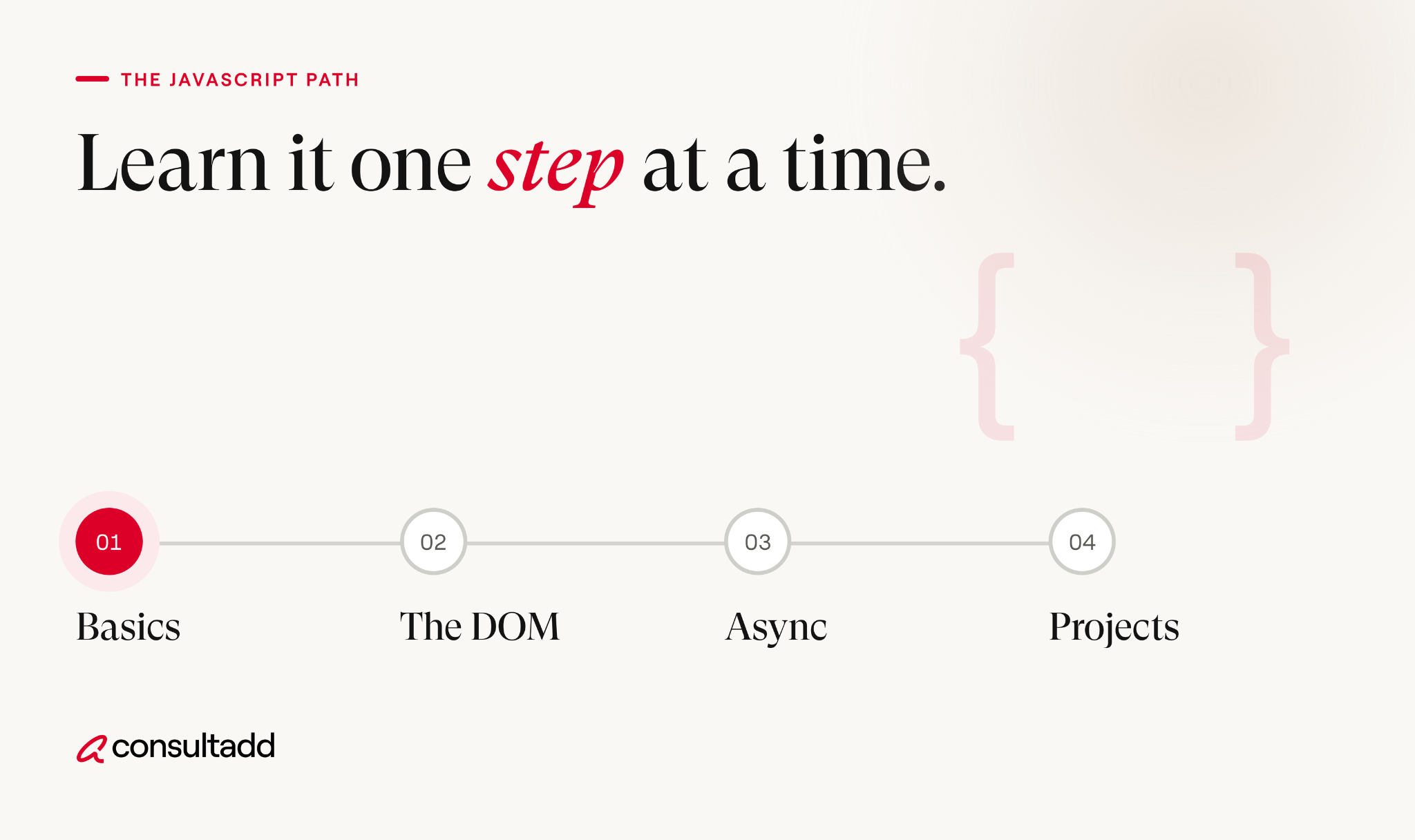
A step-by-step JavaScript learning roadmap
This JavaScript learning roadmap assumes you know basic HTML and a little CSS. If you don't, spend a week or two on those first, since JavaScript mostly works with web pages.
Step 1: Set up a simple environment
Install VS Code and a modern browser like Chrome or Firefox. Learn to open the developer console and run a line of code there.
Keep it simple. You don't need build tools, frameworks, or packages yet.
Step 2: Learn JavaScript fundamentals
This is the foundation everything else sits on. Focus on:
- Variables with let and const
- Data types, including strings, numbers, booleans, arrays, and objects
- Conditionals and loops
- Functions, including arrow functions
- Array methods like map, filter, and reduce
Don't rush this stage. Most of the confusion people feel later with frameworks comes from weak fundamentals.
Step 3: Work with the DOM and events
The DOM is how JavaScript reads and changes a web page. This is where coding starts to feel real, because you click a button and something happens.
Learn to select elements, change text and styles, create new elements, and respond to clicks, typing, and form submissions.
Step 4: Understand async JavaScript and APIs
Real apps fetch data from servers. Learn callbacks briefly, then focus on promises and async/await. Use fetch to pull data from a free public API and display it on a page.
Expect this step to take longer than the others. It's the point where many learners stall, so give it time.
Step 5: Learn Git and modern tooling
Start tracking your projects with Git and pushing them to GitHub. Employers look at commit history, so this matters more than it seems.
After that, learn the basics of npm, ES modules, and a code formatter like Prettier.
Step 6: Pick one framework, after the basics
Once you can build a small app in plain JavaScript, choose one framework.
React is the most common in job postings, and our post on the most in-demand software engineering skills explains why recruiters keep asking for it.
Pick one and stick with it. Jumping between React, Vue, and Angular is one of the fastest ways to stop making progress.
How long does it take to learn JavaScript?
It depends on how much time you put in and whether you've coded before. The timeline below assumes about 10 to 15 hours a week for someone starting from scratch. Treat it as a rough guide, not a deadline.
Added up, that's roughly 3 to 6 months to reach job-ready basics. Learning full time can shorten it. Learning in small pockets of time stretches it out, and that's fine.
JavaScript projects for beginners that teach real skills
A good beginner project forces you to use a specific skill. Copying a 3-hour tutorial line by line doesn't count, but rebuilding it afterward without the video does.
Two or three finished, polished projects beat ten half-done ones. Write a short README for each one explaining what it does and what you'd improve.
Where to learn JavaScript online for free
You can learn JavaScript online for free and reach a strong level. Paid courses are optional.
- MDN Web Docs JavaScript Guide: Mozilla's reference is the most reliable place to check how something actually works.
- Harvard CS50's Web Programming with Python and JavaScript: A free university course that teaches JavaScript as part of building full web apps.
- javascript.info: A free, well-organized text tutorial that goes from basics to advanced topics.
- freeCodeCamp and The Odin Project: Free, structured curriculums with built-in projects.
Choose one main course and use MDN alongside it. Switching between several courses at once usually means repeating the same beginner material.
Common mistakes that slow beginners down
Tutorial hell is the big one. If you've finished several courses but freeze in front of an empty file, stop watching and start building.
Other common mistakes include:
- Jumping into React before understanding arrays, objects, and functions
- Copying code from AI tools without being able to explain it line by line
- Avoiding error messages instead of reading them
- Learning alone with no feedback on your code
- Skipping Git until "later"
AI coding assistants are useful for explaining errors and concepts. Just make sure you can rewrite the code yourself, because interviewers will ask you to.
What recruiters look for in JavaScript candidates
Learning JavaScript is one thing. Getting hired with it is another, and the demand is there.
The U.S. Bureau of Labor Statistics reports a median annual wage of $92,650 for web developers in May 2025, and projects 5% employment growth for web developers and digital designers from 2025 to 2035, which it classifies as faster than average.
You can review the details in the BLS Occupational Outlook Handbook.
When our recruiters screen candidates for front-end and full stack roles, a few patterns come up again and again.
Candidates who walk through their own project, explain a bug they fixed, and describe what they'd change tend to move forward. Candidates who list ten technologies but can't explain one project in depth usually don't.
Here's what we see employers checking at the entry level:
- Solid JavaScript fundamentals, including async code
- At least one framework, most often React
- Git habits and a readable GitHub profile
- The ability to talk through code clearly
For a broader view, see our guide to software developer qualifications employers actually require.
When you're ready for interviews, our posts on how to prepare for a full stack developer interview and the coding interview playbook pick up where this guide ends.
Conclusion
The best way to learn JavaScript is unglamorous: small concepts, small projects, and a lot of repetition. Get the fundamentals solid before touching a framework, and treat async code as its own stage instead of something to rush past.
If you're still deciding where to start, open a blank file today and build a to-do list with no tutorial. Where you get stuck tells you exactly what to study next.
Start Strong With Consultadd
With 15 years in business and 5,000+ successful staffing engagements, we don't just fill roles, we build reliability into your process. We've supported 65 staffing companies in the past year alone and maintain MSAs with industry leaders like Robert Half and TEKsystems.
Here's what working with Consultadd looks like:
- Talent sourced in under 24 hours
- Ready-to-deploy candidates, vetted for experience and compliance
- Lower turnover risk: we match long-term goals, not just short-term needs
- Seamless compliance: visa, documentation, onboarding? Handled.
- Dedicated 1:1 account managers for responsive, personalized support
- Top 100 candidate matches delivered in the past year
- Strong partnerships with universities to tap into fresh, committed talent
- Post-placement support so your investment grows beyond day one
For candidates, your next opportunity is more than just a job title, it's a chance to build skills, gain experience, and move your career forward. At Consultadd, we connect technology professionals with projects and employers that align with their goals, whether they're looking for contract, contract-to-hire, or long-term opportunities.
The tech job market moves fast, but the right guidance can make all the difference. Ready to take the next step in your career journey? Explore Opportunities >>
Key takeaways
- Learning by building small projects works better than watching courses back to back.
- Follow the order: fundamentals, DOM, async and APIs, Git, then one framework.
- Plan for about 3 to 6 months of consistent practice to reach job-ready basics.
- Free resources like MDN and CS50 Web cover everything a beginner needs.
- Recruiters favor candidates who can explain their own projects in depth.
FAQs
1. Can I learn JavaScript in 3 months?
You can learn the fundamentals and build a few small projects in 3 months with steady daily practice. Becoming job-ready usually takes a bit longer, since you'll also need Git, async code, and a framework. Focus on finishing projects rather than racing through topics.
2. Should I learn HTML and CSS before JavaScript?
Yes, at least the basics. JavaScript on the web mostly changes HTML elements and their styles, so you need to know what you're changing. One to two weeks of HTML and CSS is enough before you start.
3. Can I learn JavaScript on my own without a bootcamp?
Many working developers are self-taught. Free resources like MDN, javascript.info, and The Odin Project cover the full path. The hard part is accountability, so set a weekly schedule and share your projects for feedback.
4. Should I learn JavaScript or Python first?
Pick JavaScript if you want to build websites or work in front-end or full stack roles. Pick Python if you're leaning toward data, automation, or AI work. Both are good first languages, and learning the second one gets much easier after the first.
5. Can I get a job knowing only JavaScript?
JavaScript alone is rarely enough. Most entry-level roles expect HTML, CSS, Git, and at least one framework like React. Back-end roles using Node.js also expect some database knowledge.
6. Is JavaScript still worth learning with AI coding tools around?
Yes. AI tools can write JavaScript, but someone still has to review it, debug it, and fit it into a real codebase. Developers who understand the fundamentals get far more out of these tools than those who don't.

Programming Certifications Worth Getting (and When to Skip)
Introduction
A candidate once sent us a resume with eleven certifications on it and no projects. Another sent one Python certificate and a link to a data pipeline she'd built for a local nonprofit. The second one got the interview.
That doesn't mean programming certifications are useless. They help in specific situations: switching careers, working with enterprise Java, moving into cloud roles, or proving fundamentals when you don't have a computer science degree.
The trick is knowing which ones carry weight for the job you want and which ones just cost you a weekend and an exam fee.
This guide breaks down the main certifications by language, what each one proves, how to choose, and how to prepare.
TL;DR
- Programming certifications prove you know a language's rules and features. They don't prove you can ship working software.
- The most recognized language certifications come from the Python Institute (PCEP, PCAP, PCPP) and Oracle (Java SE Developer).
- Cloud developer certifications from AWS and Microsoft often carry more hiring weight than language-only certifications.
- Beginners get the most value from one entry-level certification paired with two or three real projects.
- Check the official exam page before you start studying, since vendors update and retire exams regularly.
What are programming certifications?
Programming certifications are credentials you earn by passing a proctored exam on a language or platform. They confirm you understand syntax, core libraries, and common behaviors at a defined level.
People use the term loosely, though. Three different things often get called a certification, and employers don't treat them the same way.
When this guide says "certification," it means the first two: an exam you sit, not a course you complete.
Are programming certifications worth it?
Sometimes. It depends on where you are in your career and what kind of company you're targeting.
From the hiring side, a certification rarely gets someone a job on its own. What it does is get a resume past an early filter, especially at enterprises and government contractors that list specific credentials in job descriptions.
Our guide to software developer qualifications employers actually require covers where certifications sit next to degrees and experience.
Certifications tend to help most when:
- You're changing careers and need structured proof of fundamentals
- You don't have a computer science degree
- The target role is in enterprise Java, cloud, or a platform-specific stack
- Your employer pays for it or ties it to a promotion
They help least when you already have strong work history in the language. A senior Python developer with five years of production code gains very little from a PCAP.
Best programming certifications by language
These are the best programming certifications by language, focused on credentials that are current, proctored, and recognized outside a single training provider.
1. Python certifications
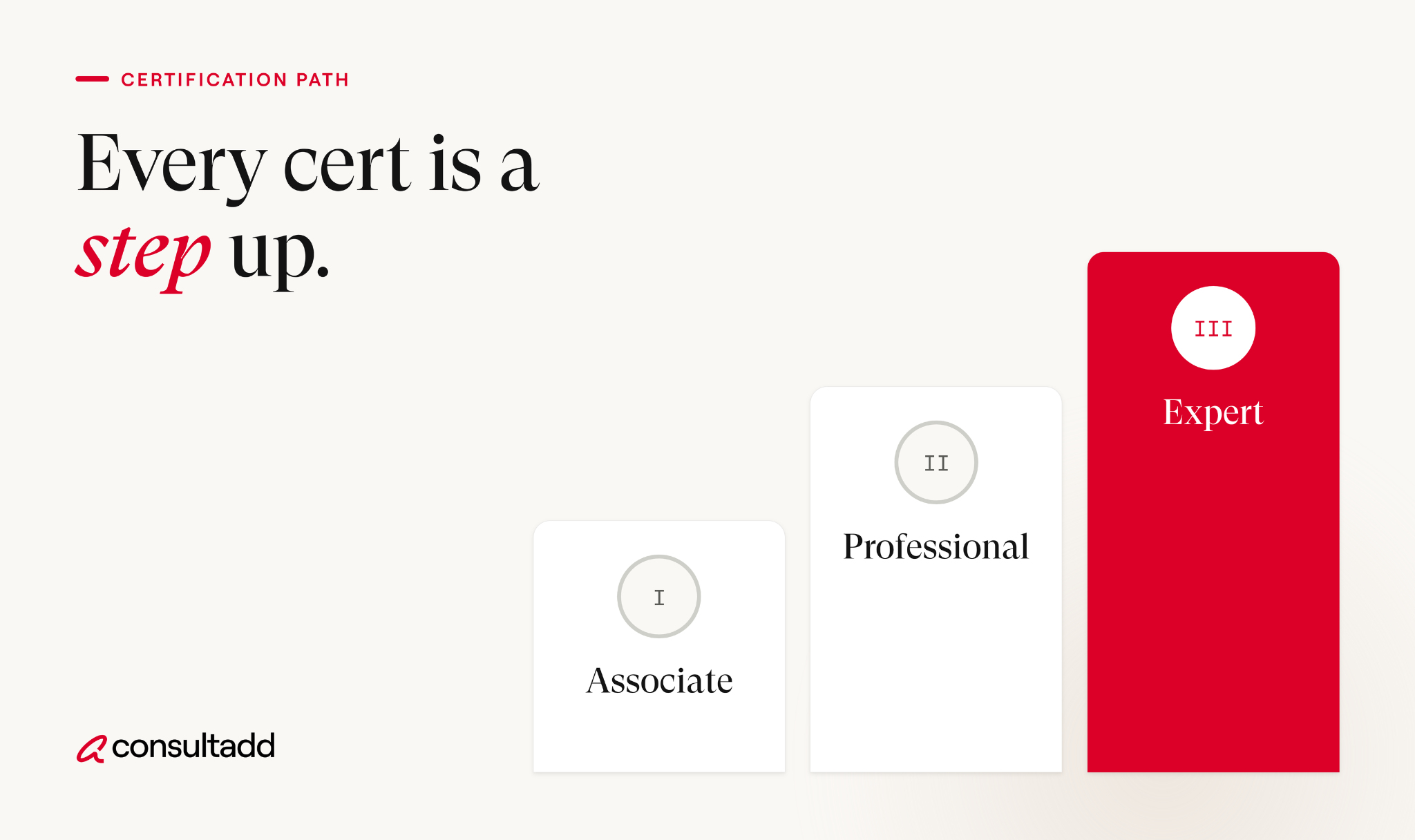
The Python Institute runs a tiered, vendor-neutral path. It starts with PCEP, then moves to PCAP, then PCPP. The Python Institute lists PCEP at $59 and PCAP at $295.
PCEP covers basics like data types, loops, and functions. PCAP goes further into modules, object-oriented programming, and exceptions, and it's the one most worth putting on a resume.
PCPP is aimed at experienced developers and is less commonly requested by employers.
You can review the exam objectives on the Python Institute's PCEP page.
2. Java certifications
Oracle owns Java and runs the most recognized Java certification. The current version is the Oracle Certified Professional 1Z0-830 exam, which tests Java SE 21 skills including object-oriented concepts, APIs, and features new to that release.
This one is hard. Experienced Java developers regularly fail it on the first try because it tests edge cases you rarely hit at work. It carries the most weight in banking, insurance, and large enterprises running Java back ends.
If you're aiming for those roles, our breakdown of Java full stack developer skills shows what else employers expect alongside the credential.
3. C and C++ certifications
The C++ Institute offers tiered certifications for both C and C++, from entry level to professional. They're vendor-neutral and run on the same OpenEDG testing platform as the Python Institute.
These certifications are less commonly listed in job postings than Python or Java credentials.
They're most useful for students and early-career developers targeting embedded systems, game development, or performance-heavy work.
4. JavaScript certifications
JavaScript has no official certification from a language owner. The JS Institute, also part of OpenEDG, offers entry and associate-level exams.
In practice, employers rarely ask for a JavaScript certification. For front-end and full stack roles, a deployed project and a clean GitHub profile do far more work than any JavaScript credential.
5. Cloud developer certifications
Cloud certifications aren't language certifications, but many developers find they carry more hiring weight.
The AWS Certified Developer – Associate covers building, deploying, and debugging applications on AWS. AWS certifications stay valid for 3 years, after which you need to recertify.
Microsoft's path changed this year. The AZ-204 exam and Azure Developer Associate certification retired on July 31, 2026, with exam AI-200 suggested as the replacement, which leads to the Azure AI Cloud Developer Associate.
If you see AZ-204 in a study guide, check Microsoft Learn's credentials page for the current exam.
For a hiring manager's view of what AWS credentials do and don't prove, see our post on screening AWS developers.
Here's how the main options compare:
Exam prices change and vary by region, so confirm the cost on the official page before you budget for it.
Coding certifications for beginners
If you're new, start with one language and one entry-level exam. PCEP is the most common starting point because Python is beginner-friendly and the exam fee is low.
Professional certificates from learning platforms, like the ones Google, IBM, and Meta offer through Coursera, are also popular with beginners. They're useful for structure and motivation. Just know that most hiring teams see them as course completions, not proctored proof of skill.
A practical beginner path looks like this:
- Learn one language well enough to build small programs on your own.
- Take the entry-level exam for that language.
- Build two or three projects that use what the exam covered.
- Move to the associate-level exam only if your target jobs ask for it.
Skip the urge to collect entry-level certificates in five languages. Depth in one language reads better to a recruiter than five surface-level badges.
How to choose the right certification
Start from the job you want, then work backward. Pull ten job postings for your target role and note which credentials show up. If none of them mention a certification, your time is better spent on projects.
Also check whether your current employer offers exam vouchers or training budgets. Many do, and it changes the math on which certification is worth your time.
How to prepare for a programming certification exam
Start with the official exam objectives. Every recognized certification publishes a list of topics and their weightings, and that list should drive your study plan more than any course outline.
A few preparation habits make a real difference:
- Write code for every exam topic instead of only reading about it
- Take official or well-reviewed practice tests under timed conditions
- Track which topics you miss and go back to those, not the ones you already know
- Read the exam rules on retakes, time limits, and online proctoring before you book
Language exams love tricky questions about edge cases, like what a piece of code prints or whether it compiles at all. Practice reading code carefully, line by line, because skimming is the most common way people lose points.
Book the exam date early. A fixed date keeps study time from drifting for months.
Certifications vs projects: what recruiters actually check
When our recruiters review developer candidates, certifications and projects answer different questions. Certifications show you studied a defined body of knowledge. Projects show you can apply it when nobody hands you the questions.
The strongest profiles we see combine both: one relevant certification and a few projects the candidate can talk through in detail.
Once you're getting interviews, our coding interview playbook covers the next stage.
Conclusion
Programming certifications are a tool, not a finish line. Pick one that matches the jobs you're actually applying for, prepare against the official objectives, and pair it with work you can show and explain.
If you're unsure where to start, look at ten job postings this week. The certifications that keep appearing are the ones worth your time. If none appear, put that exam fee toward building something instead.
Start Strong With Consultadd
With 15 years in business and 5,000+ successful staffing engagements, we don't just fill roles, we build reliability into your process. We've supported 65 staffing companies in the past year alone and maintain MSAs with industry leaders like Robert Half and TEKsystems.
Here's what working with Consultadd looks like:
- Talent sourced in under 24 hours
- Ready-to-deploy candidates, vetted for experience and compliance
- Lower turnover risk: we match long-term goals, not just short-term needs
- Seamless compliance: visa, documentation, onboarding? Handled.
- Dedicated 1:1 account managers for responsive, personalized support
- Top 100 candidate matches delivered in the past year
- Strong partnerships with universities to tap into fresh, committed talent
- Post-placement support so your investment grows beyond day one
For candidates, your next opportunity is more than just a job title, it's a chance to build skills, gain experience, and move your career forward. At Consultadd, we connect technology professionals with projects and employers that align with their goals, whether they're looking for contract, contract-to-hire, or long-term opportunities.
The tech job market moves fast, but the right guidance can make all the difference. Ready to take the next step in your career journey? Explore Opportunities >>
Key takeaways
- Programming certifications prove knowledge of a language, not the ability to build and ship software.
- Python Institute and Oracle Java credentials are the most recognized language certifications.
- Cloud developer certifications often carry more hiring weight than language-only exams.
- Choose a certification based on what your target job postings actually list.
- Pair any certification with real projects you can explain in an interview.
FAQs
1. Which programming certification is best for beginners?
PCEP from the Python Institute is a common first choice. It's affordable, covers core programming concepts, and leads into the more respected PCAP. Pair it with a few small Python projects so you have something to show alongside it.
2. Do employers care about programming certifications?
Some do, especially enterprises, government contractors, and companies hiring for cloud roles. Most tech employers weigh projects and work experience more heavily. A certification works best as a tiebreaker or a way through early resume screening.
3. How long does it take to get a programming certification?
It depends on the level and your starting point. An entry-level exam may take a few weeks of focused study if you already code a little. Professional-level exams like Oracle's Java certification often take a few months, even for working developers.
4. Do programming certifications expire?
It varies by issuer. AWS certifications need renewal every 3 years, and Microsoft's role-based certifications require a yearly online renewal. Many language certifications don't expire but are tied to a specific language version, so they age as new versions ship.
5. Can a programming certification replace a degree?
Not on its own, but it can help close the gap. Many developers get hired without a degree by combining a recognized certification with a strong portfolio and relevant experience. Some employers and roles still require a degree regardless.
6. Is it better to get a language certification or a cloud certification?
For most developers with some experience, a cloud certification has more market value. Language certifications make more sense early on or for roles that list them directly, like enterprise Java. If you're unsure, check which one appears more often in your target job postings.
.png)
Software Developer Qualifications: What Employers Require
Introduction
Read ten software developer job postings and you'll see ten versions of the same list: a computer science degree, three to five years of experience, a handful of languages, and "strong communication skills." Some of those lines are firm requirements. Others are wishes.
Software developer qualifications usually come down to four things: education, proven programming ability, relevant experience for the level, and sometimes a certification for cloud or platform-heavy roles.
This guide breaks down what each one means in practice, which ones employers actually hold firm on, and how candidates without a traditional background can still qualify.
It also covers how hiring teams should write qualifications so they attract the right people.
TL;DR
- Most employers list a bachelor's degree in computer science or a related field, but many accept equivalent experience or a strong portfolio.
- Experience requirements scale with level, and what you've built matters more than the number of years.
- Certifications are optional for most developer roles but carry weight for cloud, platform, and security-focused work.
- Employers test qualifications through technical interviews and code reviews, not just resumes.
- Job descriptions work best when they separate a short list of real requirements from preferred extras.
What software developer qualifications employers ask for
Here's how the common qualifications usually show up in postings, and how much weight they tend to carry in a real hiring decision.
Demand for qualified developers is still growing. The U.S. Bureau of Labor Statistics projects software developer employment to grow 10 percent from 2025 to 2035, much faster than the average for all occupations, and reports a median annual wage of $135,980 for software developers in May 2025.
Software developer education requirements
Computer science and related degrees
The traditional route is still the most common. BLS notes that software developers typically need a bachelor's degree in computer and information technology or a related field such as engineering or mathematics, and that some employers prefer a master's degree.
O*NET, the Labor Department's occupation database, places software developers in Job Zone Four, meaning most of these jobs require a four-year degree, but some do not. That "some do not" is where a lot of developers enter the field.
A degree helps in three practical ways:
- It covers fundamentals like data structures, algorithms, and operating systems that come up in technical interviews.
- It gets past automated resume filters at large employers.
- And for candidates who need an H-1B, a bachelor's degree or its equivalent in a related field is generally part of the legal requirement for the visa, not just an employer preference.
Our guide on sponsoring an H-1B visa explains how that works.
Paths without a computer science degree
Plenty of working developers studied something else or skipped college entirely. Each path proves something different and leaves a different gap to close.
From the recruiting side, the pattern is consistent.
Candidates without a CS degree who get shortlisted almost always have something concrete to point to: a deployed app, a meaningful open source contribution, or a previous job where they wrote production code under a different title.
Software developer certifications worth having
Certifications aren't required for most developer roles. They matter most when the job is tied to a specific platform.
AWS describes its Developer – Associate exam as intended for people already in a developer role, covering development, testing, deployment, and debugging of AWS applications.
That's a useful signal. A certification works best as proof of skills you're already using, not a substitute for them.
Hiring managers tend to treat certifications as a reason to ask deeper questions, not a reason to skip them.
Our post on AWS developers for hire shows how employers probe certified candidates in interviews.
Experience requirements by level
Years of experience in a posting are a rough proxy for scope. What employers really want to know is what you've owned.
These ranges vary by company. A developer with three years at a small startup may have owned more than someone with six years on a narrow slice of a large system.
If your scope fits the role but your years fall short, say so directly in your resume and cover letter with examples.
Technical and soft skill qualifications
Technical skills deserve their own deep dive, so we've covered them separately in our lists of the most in-demand software engineering skills and key IT skills employers want.
At the qualifications level, most employers expect:
- Strong command of at least one programming language used in the role
- Working knowledge of data structures and algorithms
- Version control, usually Git
- Testing practices and debugging
- Databases and APIs relevant to the stack
The soft skills are just as real. BLS lists analytical, communication, creativity, detail orientation, interpersonal, and problem-solving skills among the important qualities for the occupation. In interviews, these show up as how clearly you explain a design decision and how you handle a question you can't immediately answer.
How candidates can show their qualifications
A qualification only counts if the hiring team can see it. Recruiters review a lot of resumes quickly, so make the evidence easy to find.
- Lead with outcomes. "Built a payment retry service in Java that cut failed transactions" says more than "Responsible for backend development."
- Link to real work. A GitHub profile with two well-documented projects beats twenty abandoned repositories.
- Match the stack. If the posting lists Spring Boot and PostgreSQL, make sure those words appear where you actually used them.
- Explain gaps in formal qualifications. If you don't have a CS degree, put your strongest project or work experience near the top.
- Prepare to prove it live. Expect a coding exercise or a walkthrough of code you've written.
For role-specific examples, see our breakdown of Java full stack developer skills, which includes expectations by experience level.
Writing software developer qualifications in a job description
For hiring teams, the qualifications section of a job description does more filtering than any interview. Long lists of requirements push away qualified people who don't check every box.
Keep required qualifications to what the person truly needs on day one. Everything else goes under preferred. Then test those requirements directly with a practical assessment.
Our guide on how to hire the best software engineers walks through skills-based assessments that do this well.
Meeting software developer qualifications without every box checked
Most software developer qualifications are more flexible than job postings make them look. Education and years of experience open doors, but demonstrated ability is what gets the offer.
For candidates, that means building proof: projects, contributions, and work you can explain in detail. For hiring teams, it means writing requirements that describe the work and testing for it directly.
Both sides end up in the same place, a developer who can do the job, judged on evidence rather than a checklist.
Start Strong With Consultadd
With 15 years in business and 5,000+ successful staffing engagements, we don't just fill roles, we build reliability into your process. We've supported 65 staffing companies in the past year alone and maintain MSAs with industry leaders like Robert Half and TEKsystems.
Here's what working with Consultadd looks like:
- Talent sourced in under 24 hours
- Ready-to-deploy candidates, vetted for experience and compliance
- Lower turnover risk: we match long-term goals, not just short-term needs
- Seamless compliance: visa, documentation, onboarding? Handled.
- Dedicated 1:1 account managers for responsive, personalized support
- Top 100 candidate matches delivered in the past year
- Strong partnerships with universities to tap into fresh, committed talent
- Post-placement support so your investment grows beyond day one
For candidates, your next opportunity is more than just a job title, it's a chance to build skills, gain experience, and move your career forward. At Consultadd, we connect technology professionals with projects and employers that align with their goals, whether they're looking for contract, contract-to-hire, or long-term opportunities.
The tech job market moves fast, but the right guidance can make all the difference. Ready to take the next step in your career journey? Explore Opportunities >>
Key takeaways
- Most software developer roles list a bachelor's degree in computer science or a related field, but many accept equivalent experience.
- Programming ability is the one qualification employers almost never bend on, and they test it directly.
- Certifications add the most value for cloud, platform, and security-focused roles.
- Experience is judged by scope and ownership more than by the number of years.
- Hiring teams attract better candidates by separating a short list of true requirements from preferred extras.
FAQs
What qualifications do you need to be a software developer?
Most employers look for a bachelor's degree in computer science or a related field, strong programming skills in at least one language, and experience building working software. Many accept equivalent experience or a solid portfolio in place of a degree. Communication and problem-solving skills are also expected.
Can you become a software developer without a degree?
Yes. Many developers come from bootcamps, self-study, or unrelated degrees. The key is proving your ability through real projects, open source work, or previous jobs where you wrote production code. Some employers and visa categories do still require a degree or its equivalent.
Which certifications are best for software developers?
It depends on the role. Cloud developer certifications from AWS, Microsoft, or Google are the most widely recognized for cloud-focused work. Language and platform certifications, such as Oracle Java or Salesforce, help for enterprise roles. For most general developer jobs, certifications are a plus rather than a requirement.
How many years of experience do software developers need?
Entry-level roles often ask for zero to two years, mid-level roles two to five, and senior roles five or more. These ranges vary by company. Employers care more about what you've built and owned than the exact number of years.
What is the difference between software developer and software engineer qualifications?
The titles are often used interchangeably, and the qualifications overlap heavily. Some companies expect engineers to have more focus on system design and the broader architecture. Read the responsibilities in each posting rather than relying on the title.
What qualifications do entry-level software developers need?
Entry-level candidates usually need a degree or equivalent training, a working knowledge of one programming language, and familiarity with Git, testing, and basic data structures. A few well-documented projects make a big difference. Internships or freelance work help show you can work on a real codebase.
.webp)
How do you become a computer software engineer in 2026?
Introduction
Most people who ask how do you become a computer software engineer want the honest version: what you actually need, how long it takes, and whether you need a degree. Here it is.
You need solid programming skills, a few real projects that prove you can build working software, and some kind of experience a hiring manager can trust. A computer science degree is the most common route, but it isn't the only one.
This guide breaks the path into six steps, with realistic timelines, current pay data, and what recruiters look for when they review entry-level candidates.
TL;DR
- Most software engineers have a bachelor's degree in computer science or a related field, but bootcamps and self-study can work if your projects are strong.
- Learn one language well, plus the basics every team expects: data structures, Git, SQL and testing.
- Two or three finished, deployed projects count for more than ten tutorials.
- Internships, open source, QA roles and contract work are all valid ways to get your first experience.
- The BLS reports a May 2025 median wage of $135,980 for software developers, with employment projected to grow 10% from 2025 to 2035.
What a computer software engineer actually does
Software engineers design, build, test and maintain software. On a normal week, that means writing code, reviewing other people's code, fixing bugs, and talking with product managers or users about what needs to be built next.
Software developer vs software engineer
The titles overlap a lot, and many companies use them interchangeably. The Bureau of Labor Statistics draws a light distinction.
It describes software engineers as taking a broad view of a project's requirements, planning its scope and order of work, and sometimes directing developers and testers.
In practice, an entry-level "software engineer" and an entry-level "software developer" do very similar work. Apply for both titles.
Software engineer requirements: degree, bootcamp or self-taught?
The BLS lists a bachelor's degree in computer and information technology, or a related field like engineering or math, as the typical entry-level education. That's the most common route, and some employers still screen for it.
That said, plenty of working engineers came in through bootcamps or self-study. Recruiters placing contract developers often care more about what you've built and whether you can explain it than about where you learned.
If you go the bootcamp route, ask for outcomes data: how many graduates got developer jobs, and in what time frame. A program that can't answer that clearly isn't worth the money.
How do you become a computer software engineer: six steps
Step 1: Pick a learning path you can actually finish
The best route is the one you'll complete. A degree you drop out of halfway doesn't help, and neither does a self-study plan you abandon after two months. Be honest about your time, money and how much structure you need.
Step 2: Learn one language well, then the fundamentals
Pick one language and get comfortable with it before switching. Python, JavaScript and Java are all common first choices with plenty of job demand. Depth beats breadth here. An interviewer would rather see you handle one language confidently than list five you've barely used.
Then add the things every engineering team expects:
- Data structures and algorithms (arrays, hash maps, trees, sorting, Big O)
- Git and GitHub for version control
- SQL and basic database design
- Writing tests for your own code
- Reading error messages and debugging
Once you have those, our list of the most in-demand software engineering skills can help you pick what to learn next, like cloud platforms or containers.
Step 3: Build two or three real projects
This is where most candidates fall short. A to-do app copied from a tutorial doesn't tell a hiring manager much. A project that solves a real problem, uses a database, has tests, and is deployed somewhere people can use it tells them a lot.
A good portfolio project usually has:
- A clear problem it solves, written in the README
- A working live version or demo video
- Clean commit history showing how you built it
- At least some automated tests
- A short note on what you'd do differently next time
Step 4: Get experience before your first engineering job
"Entry-level job, three years of experience required" is a real frustration. There are ways around it:
- Internships: The most direct route for students. Many employers hire interns into full-time roles.
- Open source: Fixing small bugs or improving docs in real projects shows you can work in someone else's codebase.
- Adjacent roles: QA, technical support and IT roles can lead to engineering jobs, especially inside the same company.
- Contract roles: Short contracts through staffing firms often have lower barriers than full-time roles and give you real production experience.
Contract work is underrated for first jobs. A three-to-six-month contract on a real team gives you something concrete to talk about in every interview after it.
If you're considering this route, our guide to getting placed through staffing agencies explains how the process works.
International students on F-1 visas can often use CPT or OPT for this experience. Our guide to what OPT and CPT are covers the rules.
Step 5: Prepare for technical interviews
Most software engineer interviews include some mix of coding problems, a discussion of your projects, and behavioral questions. Senior roles add system design, but entry-level candidates usually get a lighter version.
Practice coding problems out loud, not just on paper. Interviewers want to hear how you think.
Be ready to walk through one of your projects in detail: why you chose that stack, what broke, and how you fixed it.
For examples of what gets asked, see our guides to full stack developer interview questions and Python job interview questions.
Step 6: Land the role, then keep learning
Your first job is a starting point. The BLS notes that developers must keep up with new tools and languages throughout their careers. Certifications can help in specific areas.
For example, AWS certifications are widely recognized for cloud work, but they work best alongside real experience, not instead of it.
How long it takes to become a software engineer
It depends on your starting point and how many hours you can put in each week. These are typical ranges, not guarantees.
The job search itself is part of the timeline. Many people underestimate it. Plan for a few months of applying, interviewing and improving your portfolio between rounds.
Software engineer salary and job outlook
Pay is one of the main reasons people choose this field. According to the BLS, the median annual wage for software developers was $135,980 in May 2025.
The lowest 10% earned less than $82,460, and the top 10% earned more than $214,670. Entry-level pay usually starts toward the lower end and depends heavily on location and industry.
Demand looks steady. The BLS projects employment for software developers, QA analysts and testers to grow 10% from 2025 to 2035, much faster than the 3% average for all occupations.
It expects about 106,100 openings a year, on average, many from replacing people who change careers or retire.
For a closer look at the tasks, tools and skills employers list for this role, the Department of Labor's O*NET profile for software developers is a useful reference.
Where to go from here
So, how do you become a computer software engineer?
Pick a learning path you can finish, get good at one language and the core fundamentals, build a few projects that actually work, and find a way to get real experience, even if it starts as an internship or a short contract. Then prepare for interviews the way you'd prepare for an exam.
None of these steps is complicated. The hard part is sticking with them long enough. Pick the step you're on today, and focus on finishing that one.
Start Strong With Consultadd
With 15 years in business and 5,000+ successful staffing engagements, we don't just fill roles, we build reliability into your process. We've supported 65 staffing companies in the past year alone and maintain MSAs with industry leaders like Robert Half and TEKsystems.
Here's what working with Consultadd looks like:
- Talent sourced in under 24 hours
- Ready-to-deploy candidates, vetted for experience and compliance
- Lower turnover risk: we match long-term goals, not just short-term needs
- Seamless compliance: visa, documentation, onboarding? Handled.
- Dedicated 1:1 account managers for responsive, personalized support
- Top 100 candidate matches delivered in the past year
- Strong partnerships with universities to tap into fresh, committed talent
- Post-placement support so your investment grows beyond day one
For candidates, your next opportunity is more than just a job title, it's a chance to build skills, gain experience, and move your career forward. At Consultadd, we connect technology professionals with projects and employers that align with their goals, whether they're looking for contract, contract-to-hire, or long-term opportunities.
The tech job market moves fast, but the right guidance can make all the difference. Ready to take the next step in your career journey? Explore Opportunities >>
Key takeaways
- A bachelor's degree is the most common route, but bootcamp and self-taught engineers get hired when their projects are strong.
- Depth in one language plus data structures, Git, SQL and testing covers what most entry-level interviews check.
- Two or three deployed, tested projects with clear READMEs do more for your resume than a long list of tutorials.
- Internships, open source, QA roles and contract work all count as real experience for a first engineering job.
- BLS data shows a May 2025 median wage of $135,980 for software developers and 10% projected growth from 2025 to 2035.
FAQs
Can you become a software engineer without a degree?
Yes. Many engineers come from bootcamps or teach themselves, and plenty of employers hire based on skills and projects. A degree still helps at companies that filter resumes by education, so without one, your portfolio and experience have to do more of the work.
What degree is best for a software engineer?
Computer science is the most common and most widely accepted. Software engineering, computer engineering, math and related fields also work, especially if you add programming projects. The BLS lists computer and information technology, engineering and mathematics as typical fields.
What programming language should I learn first?
Python, JavaScript and Java are all strong first choices. Python is often easiest to start with, JavaScript is essential for web work, and Java is common in large companies. Pick one based on the kind of jobs you want and stick with it until you're comfortable.
How hard is it to become a software engineer?
The concepts are learnable for most people, but it takes sustained practice over months or years. The harder part for many is the job search, especially without experience. Building real projects and getting any form of hands-on experience makes that part much easier.
Do software engineers need certifications?
Usually not for a first job. Certifications in cloud platforms like AWS can help for specific roles, especially in DevOps or cloud engineering. They work best as a supplement to projects and experience, not a replacement.
What does an entry-level software engineer do?
Most entry-level engineers fix bugs, build small features, write tests and learn the team's codebase. They work under more experienced engineers and get their code reviewed regularly. Over time, they take on larger features and more design decisions.
.webp)
Questions for interviewer that reveal the job behind the ad
Introduction
Most candidates treat "Do you have any questions for me?" as a polite way to end the interview. It's actually the only part of the interview where you collect evidence instead of giving it.
Good questions for interviewer conversations do more than make you look prepared. They show you how many hours the team really works, whether the manager coaches people or blames them, and why the last person in the role left.
This guide gives you those questions, along with what a healthy answer sounds like and what should make you pause.
If you want advice on what to ask a recruiter versus a hiring manager at each round, our guide to questions to ask the interviewer at every interview stage covers that. This guide is about reading the answers.
TL;DR
- The answer matters more than the question. Listen for specific names, dates and numbers, not general reassurance.
- Ask about the last busy stretch, not "work-life balance." Past events are harder to dress up.
- Questions about feedback and the previous person in the role tell you how the hiring manager actually manages.
- Technical candidates should ask how code reaches production and how many on-call pages a typical shift gets.
- When an answer is vague, use a follow-up that asks for a recent example.
Why the answers matter more than the questions
Both sides are selling during an interview. The company wants you to see its best side, and the person across the table may well be your future manager.
That matters more than most candidates think. Gallup estimates that managers account for at least 70% of the variance in employee engagement across business units. Your experience of the job will depend heavily on the person answering your questions.
The time you'll spend in the role also makes the effort worth it. The U.S. Bureau of Labor Statistics found that median tenure for workers aged 25 to 34 was 2.7 years in January 2024.
Ten minutes of sharp questions to vet a job you might hold for nearly three years is a good trade.
What evidence sounds like in an interview answer
A useful answer usually includes at least one concrete detail: a month, a project name, a number, or a person. "Last March we had a big release and the team worked two weekends, so we moved the next deadline" is evidence.
"We really value balance here" is not. It may be true, but it gives you nothing to check.
Questions for interviewer about workload and hours
Asking "How's the work-life balance?" almost always gets a positive answer. Nobody says "terrible." Ask about something that already happened instead.
"What did the team's last really busy stretch look like?"
A healthy answer names a cause and an end. Something like "the Q2 migration, about three weeks of long days, then we gave people time back."
Pay attention if the interviewer can't point to one stretch because every stretch is busy. "It's a startup, it's always like this" tells you the pace isn't a phase.
"How often do people work outside normal hours, and what happens when they do?"
You're listening for a policy or a habit. Comp time, rotating coverage, or a manager who pushes back on unrealistic deadlines are all good signs.
If the answer is a laugh followed by "you'll see," take that seriously.
Questions to ask a hiring manager about how they manage
These are the questions that make some hiring managers uncomfortable. That discomfort is useful information, so ask them in a friendly, curious tone.
"Can you tell me about the last time you gave someone on the team critical feedback?"
Good managers can usually remember a recent example. They'll describe a private conversation, a clear expectation, and some kind of follow-up.
Watch for two weak answers. One is "I can't really think of one," which often means feedback doesn't happen until it's a problem. The other is a story that makes the employee look foolish, which tells you how you'd be talked about.
"How did the person who had this role before do, and where are they now?"
If they were promoted or moved to another team, that's a strong sign the role leads somewhere. If they left the company, a manager who explains why in plain terms is usually being straight with you.
A long pause or a quick topic change doesn't prove anything on its own. It does mean you should ask the recruiter or a future teammate the same question.
Questions about team stability and turnover
Turnover isn't always bad. Teams lose people to promotions, relocations and better offers. What you want to know is whether the reasons make sense.
"How long have the people on the team been here?"
A mix of long-timers and recent hires is normal for a growing team. A team where nobody has been around longer than a year deserves a follow-up, unless the team itself is new.
"Why is this role open right now?"
The best answers are specific: a new project, a budget approved for growth, or someone moving up. Be cautious if the answer is "it's been open for a while" with no reason, or if different interviewers give you different stories.
Staffing recruiters see this often. A candidate accepts a role described as a "modernization project," then learns in week two that the job is mostly keeping an old system running. Asking every interviewer the same "why is this open" question is a simple way to catch that early.
Questions to ask a technical interviewer
Engineers on the panel tend to give the most honest answers about daily work. They're not selling the role in the same way, and they live with the codebase.
"Walk me through how code gets from a pull request to production."
You want named steps: code review, automated tests, a CI pipeline, a release schedule. The specific tools matter less than whether the process exists.
"It depends on who's around" or "we usually just push it" points to a team that fixes problems by hand, often late at night.
"What does on-call look like, and how many pages does a typical shift get?"
Ask for a number. Google's Site Reliability Engineering team, for reference, aims to keep on-call work under 25% of an engineer's time and incidents to about two per 12-hour shift. Most teams aren't Google, but a team that tracks its page volume at all is usually trying to keep it sane.
"It's not too bad" with no number is worth one more question: "How many pages did the last person on call get?"
"How much of the work is new features versus maintaining what's already there?"
There's no right ratio. Some people enjoy maintenance work. The point is to make sure the split matches what you expect, and what the job description implied.
Reverse interview questions about growth
"Is there room for growth?" gets a yes every time. These versions ask for proof.
"What has someone on this team learned or moved into in the past year?"
A real answer names a person or a role change: "Ana moved from QA into a data engineering role after we paid for her cloud certification." A vague answer sounds like "there's lots of opportunity here."
"How are raises and promotions decided?"
You're not negotiating yet. You're checking whether there's a process, like a review cycle or a leveling guide, or whether it depends on who asks loudest. Asking this as one of your questions to ask at the end of an interview is usually fine if you keep it about process, not your own number.
How to read the answers: a quick reference
Use this table during prep, then jot notes against it right after each interview while the answers are fresh.
Red flag or normal growing pains?
Not every imperfect answer is one of the interview red flags you should walk away over. Here's how to tell the difference.
Follow-up questions when the answer is vague
A vague answer isn't a dead end. It's a cue to ask for one recent example. Keep your tone curious, not skeptical.
One follow-up is usually enough. If the second answer is still vague, note it and move on. Pressing three times turns a conversation into a cross-examination.
When you're interviewing through a recruiter or staffing firm
If a staffing firm placed you in the process, your recruiter is a second source for checking answers. Many recruiters have placed people with the same client before and know how those placements went.
After each round, ask your recruiter: "The manager said the role is open because of a new project. Does that match what you've heard?" A good recruiter will tell you if past contractors left early or extended.
Contract and contract-to-hire setups come with their own questions about who employs you and how conversion works.
Our breakdown of the pros and cons of working with staffing companies explains that arrangement before you get to the offer stage.
Putting your questions for interviewer prep together
You don't need to ask everything in this guide. Pick two or three questions for interviewer rounds based on what you're most unsure about.
If you left your last job because of burnout, lead with workload. If you've had a bad manager, lead with the feedback question.
Write down the answers right after each call. Patterns show up across rounds, especially when two people describe the same team very differently.
Before you start, it helps to know what each round will look like.
Our interview format guide walks through common round types. When you reach the last stage, our list of final round interview questions to ask before an offer picks up where this guide leaves off.
Start Strong With Consultadd
With 15 years in business and 5,000+ successful staffing engagements, we don't just fill roles, we build reliability into your process. We've supported 65 staffing companies in the past year alone and maintain MSAs with industry leaders like Robert Half and TEKsystems.
Here's what working with Consultadd looks like:
- Talent sourced in under 24 hours
- Ready-to-deploy candidates, vetted for experience and compliance
- Lower turnover risk: we match long-term goals, not just short-term needs
- Seamless compliance: visa, documentation, onboarding? Handled.
- Dedicated 1:1 account managers for responsive, personalized support
- Top 100 candidate matches delivered in the past year
- Strong partnerships with universities to tap into fresh, committed talent
- Post-placement support so your investment grows beyond day one
For candidates, your next opportunity is more than just a job title, it's a chance to build skills, gain experience, and move your career forward. At Consultadd, we connect technology professionals with projects and employers that align with their goals, whether they're looking for contract, contract-to-hire, or long-term opportunities.
The tech job market moves fast, but the right guidance can make all the difference. Ready to take the next step in your career journey? Explore Opportunities >>
Key takeaways
- Treat your closing questions as research. The goal is evidence about the job, not just a good impression.
- Ask about specific past events, like the last busy stretch or the last feedback conversation, instead of asking for opinions.
- Concrete details in an answer (names, dates, numbers) are a good sign. Repeated general reassurance is not.
- Technical interviewers usually give the clearest picture of daily work, so ask them about deployment and on-call.
- One calm follow-up turns most vague answers into useful ones. If it doesn't, write it down and compare notes across rounds.
FAQs
What are three good questions to ask an interviewer?
Try "What did the team's last busy stretch look like?", "Why is this role open right now?" and "What has someone on this team moved into in the past year?" Together they cover workload, stability and growth. Each one asks about real events, so the answers are harder to polish.
What are red flags in a job interview?
Common warning signs include interviewers who describe the role differently, no clear reason for the opening, and vague answers about hours or on-call. Discomfort when you ask about the previous person in the role is another one. A single odd answer isn't a dealbreaker, but a pattern across rounds usually is.
What questions should you not ask in an interview?
Skip anything you could answer from the job posting or the company website. Avoid leading with pay and time off in a first conversation unless the interviewer raises it. Questions that sound like accusations, such as "Is this place a sweatshop?", also tend to backfire even when your concern is valid.
Is it OK to ask about turnover in an interview?
Yes, if you frame it with curiosity. "How long have people on the team been here?" or "Where is the person who had this role before?" gets the same information without sounding confrontational. Most good managers expect the question and answer it directly.
What is a reverse interview?
A reverse interview is when the candidate actively evaluates the employer by asking pointed questions about management, workload and growth. It's less about flipping the power dynamic and more about making sure you have enough information to make a real decision. Most interviewers respect a candidate who does it politely.
How do you ask about work-life balance without sounding lazy?
Ask about a past situation instead of the concept. "How did the team handle the last big deadline?" tells you about hours and how the manager protects people. It also sounds like you're planning for real work, not trying to avoid it.

Technical Writing Skills: What Employers Actually Check
Introduction
Two engineers interview for the same contract role. Their code is about equally good. One explains a design decision in a clear, short pull request description. The other sends three paragraphs that never quite say what changed.
That difference gets noticed. Technical writing skills are the ability to explain technical information so a specific reader can understand it and act on it.
That covers READMEs, runbooks, API docs, design docs, release notes, and status updates.
This guide covers the 10 skills that matter most, how employers test them, and how to show them on a resume. It's written for engineers, analysts, and consultants who write as part of their job, and for anyone moving into a technical writer role.
TL;DR
- Technical writing skills come down to knowing your reader, structuring information, and writing accurate, plain instructions.
- Employers rarely ask about writing directly. They test it through take-home READMEs, pull request descriptions, design questions, and writing samples.
- The 10 skills that matter most range from audience analysis to docs-as-code tools like Markdown and Git.
- On a resume, show the documents you wrote and what changed because of them, not the phrase "excellent communication skills."
- Google's free technical writing courses, built for engineers, are a practical place to start improving.
Why technical writing skills matter in tech hiring
Every technical job produces writing. Engineers write commit messages, pull requests, and design docs. Data engineers document pipelines.
Cloud engineers write runbooks someone else will follow at 2 a.m. Google puts it bluntly on its developer site: every engineer is also a writer.
The company built its own courses to teach that, and since introducing them in 2015, thousands of its software engineers and product managers have taken them, with the courses released publicly in February 2020.
Why it matters more for contract roles
In contract and staff augmentation work, writing carries extra weight. A contractor joins mid-project, often remotely, and leaves when the work is done.
What they leave behind is mostly written: handoff notes, runbooks, and documentation. Teams that skip this end up paying to bring people back just to explain their own work.
Our guide to planning a team augmentation exit covers why clients now treat documentation as a deliverable.
What the technical writer job market looks like
For dedicated technical writers, the picture is steady rather than booming. BLS lists a 2025 median pay of $90,390 a year and projects employment to grow 1 percent from 2025 to 2035, with about 3,200 openings a year on average.
BLS also notes that AI tools that make these workers more productive may slow employment growth.
In practice, that raises the bar. Writers who can test what they document, work in code repositories, and edit AI drafts for accuracy stand out.
You can read the full outlook on the BLS technical writers page.
The 10 technical writing skills employers look for
These aren't ranked. Some matter more for engineers, others for full-time writers.
1. Audience analysis
Know who will read the document and what they already know. A runbook for on-call engineers and a setup guide for new customers can describe the same system and look nothing alike.
Before writing, answer two questions: who is reading this, and what do they need to do after reading it?
2. Structure and information architecture
Readers scan before they read. Good technical writers put the most important information first, use headings that describe the content, and split long procedures into numbered steps.
3. Plain language
Short sentences, active voice, and common words. Write "Run the script" instead of "The script should then be executed by the user."
Plain language doesn't mean dumbing things down. It means removing anything that slows the reader without adding meaning.
4. Technical accuracy
A clear document that's wrong is worse than no document. Strong writers test every command, confirm version numbers, and check that screenshots match the current interface.
5. Writing procedures and instructions
Step-by-step instructions are their own skill. Each step should contain one action, list prerequisites up front, and say what the reader should see when it worked.
6. Code samples and examples
Developers often skip the explanation and copy the example. That means the example has to run, use realistic values, and show the most common case first.
7. Visual communication
Some ideas are faster to show than describe. Architecture diagrams, sequence diagrams, and annotated screenshots belong in a writer's toolkit, along with the judgment to know when a table beats a paragraph.
8. Editing and self-review
First drafts are long. Good writers cut them down, check terms for consistency, and read the document as the target reader would.
9. Working with subject matter experts
Technical writers spend a lot of time interviewing engineers, product managers, and support teams. Asking specific questions and confirming details in writing saves rework later.
10. Docs-as-code tools
More teams store documentation next to the code. That means Markdown, Git, pull request reviews, and static site generators. Writers who can open a pull request and handle a merge conflict fit into engineering teams much faster.
Skills summary
Which skills matter for which documents
Different documents test different skills. Knowing which one you're writing tells you what to focus on.
From the staffing side, status reports deserve a special mention. Contractors who send short, clear weekly updates with blockers at the top tend to get extended. Clients rarely say this out loud, but they notice.
How employers test technical writing skills
Most job descriptions say "strong communication skills" and leave it there. The actual testing happens in quieter ways.
1. Take-home projects
Many coding take-homes are partly a writing test. The README you submit, explaining how to run your project and why you made certain choices, often gets read before the code.
2. Pull request and code review discussions
In live interviews, you may be asked to review a pull request or explain a change. How clearly you describe a problem matters as much as spotting it.
3. System design interviews
Design rounds test whether you can lay out a problem, compare options, and explain trade-offs in a logical order. That's the same skill as writing a design doc, just spoken.
Our interview format guide covers how these rounds usually run.
4. Writing samples and editing tests
Technical writer roles almost always ask for samples. Some add an editing test: here's a messy draft, fix it in an hour.
How to show technical writing skills on your resume
"Excellent written and verbal communication skills" appears on almost every resume, which is why recruiters skip it. Show the documents instead.
1. Name the document and the result
The strongest bullets say what you wrote, who used it, and what changed.
Only use numbers you can back up in an interview. A specific bullet without a number beats a vague one with an invented figure.
2. Link to real samples
If your work is public, link to it: a GitHub README, a published API guide, or a technical blog post. If it's internal, write a short sample on a public tool or open-source project you've used.
3. Match the job's language
If the posting mentions Confluence, OpenAPI, or docs-as-code, say where you've used them. Recruiters search for those terms.
Our list of technology terms every recruiter should know shows the vocabulary many screeners work from.
How to improve your technical writing
You don't need a degree in English. You need practice and feedback.
1. Take a structured course
Google's free technical writing courses are a good starting point.
They're aimed at software engineers, computer science students, and similar roles, and they focus on technical communication rather than general English writing.
The set covers fundamentals, intermediate topics, accessibility, and writing helpful error messages. Course details are on Google's technical writing overview.
2. Practice on real documents
Pick a README in a project you use and try to follow it from scratch. Note every point where you got stuck, then fix it and open a pull request.
Open-source maintainers usually welcome documentation fixes, and you get a public sample out of it.
3. Get someone else to follow your instructions
The fastest test of a procedure is handing it to someone who has never done the task. Watch where they hesitate. That's where your writing failed, not them.
4. Use AI tools carefully
AI tools can draft a first version quickly, but they also produce confident errors, outdated commands, and filler.
Treat any AI draft the way you'd treat a junior colleague's: check every command, cut the padding, and confirm it matches how your system actually works. That editing judgment is now part of the job.
A simple self-review checklist
Bottom line
Technical writing skills show up in places most candidates don't think of as writing: a README, a pull request, a weekly status update. Employers notice them there long before they ask about them.
Start with the reader, structure the information so it can be scanned, test everything you document, and edit hard. Then show that work on your resume through real documents and real results.
For engineers and consultants, that's often what separates two otherwise equal candidates. For technical writers, it's the job.
Start Strong With Consultadd
With 15 years in business and 5,000+ successful staffing engagements, we don't just fill roles, we build reliability into your process. We've supported 65 staffing companies in the past year alone and maintain MSAs with industry leaders like Robert Half and TEKsystems.
Here's what working with Consultadd looks like:
- Talent sourced in under 24 hours
- Ready-to-deploy candidates, vetted for experience and compliance
- Lower turnover risk: we match long-term goals, not just short-term needs
- Seamless compliance: visa, documentation, onboarding? Handled.
- Dedicated 1:1 account managers for responsive, personalized support
- Top 100 candidate matches delivered in the past year
- Strong partnerships with universities to tap into fresh, committed talent
- Post-placement support so your investment grows beyond day one
For candidates, your next opportunity is more than just a job title, it's a chance to build skills, gain experience, and move your career forward. At Consultadd, we connect technology professionals with projects and employers that align with their goals, whether they're looking for contract, contract-to-hire, or long-term opportunities.
The tech job market moves fast, but the right guidance can make all the difference. Ready to take the next step in your career journey? Explore Opportunities >>
Key takeaways
- Technical writing skills mean explaining technical information so a specific reader can act on it, and every tech role uses them.
- The core skills are audience analysis, structure, plain language, accuracy, procedures, code samples, visuals, editing, SME collaboration, and docs-as-code tools.
- Employers test writing indirectly through take-home READMEs, pull request reviews, design rounds, and writing samples.
- Resume bullets should name the document and the result instead of claiming "strong communication skills."
- Free courses, real documentation fixes, and having others follow your instructions are the fastest ways to improve.
FAQs
What are technical writing skills?
Technical writing skills are the abilities you need to explain technical information clearly to a specific audience. They include audience analysis, structuring content, writing plain instructions, keeping details accurate, and editing. Both technical writers and engineers use them in documents like READMEs, runbooks, and design docs.
What are the most important skills for a technical writer?
Audience analysis, clear structure, and technical accuracy matter most, because a document fails if it's aimed at the wrong reader, hard to scan, or wrong. Editing and the ability to work with subject matter experts come close behind. For developer documentation, Markdown and Git skills are increasingly expected.
Do software engineers need technical writing skills?
Yes. Engineers write pull request descriptions, design docs, code comments, and runbooks as part of everyday work. Clear writing makes reviews faster and handoffs smoother, and it often comes up indirectly in interviews through take-home projects and system design rounds.
How can I improve my technical writing skills?
Take a structured course, such as Google's free technical writing courses for engineers. Then practice on real documents by fixing a README in a project you use. Ask someone unfamiliar with the task to follow your instructions and watch where they get stuck.
How do I show technical writing skills on a resume?
Name the specific documents you wrote, who used them, and what changed as a result. Link to public samples like GitHub READMEs or published guides if you have them. Avoid generic phrases like "excellent communication skills," which recruiters tend to skip.
Is technical writing still a good career with AI tools?
It can be, but the role is changing. BLS projects slow employment growth for technical writers and notes that AI tools may make writers more productive. Writers who test what they document, work in code repositories, and can catch errors in AI drafts are likely to be in the strongest position.