
Career Growth
.avif)
Last Minute Interview Tips: A 60-Minute Prep Plan
Introduction
Your interview is in an hour, or tomorrow morning, and you have done almost nothing to get ready. The good news is that most last minute interview tips people search for at this point are useless to you, because they assume a week of runway.
You do not have a week. You have a narrow window, and the right move is to spend it on the two or three things that actually change how the conversation goes.
This is a triage guide. Pick the section that matches the time you have and ignore the rest.
TL;DR
- With one hour, spend it on the job description, three prepared stories, and two questions to ask. Skip everything else.
- Behavioral answers work best in the STAR format, and a strong one runs one to two minutes, with most of that time on what you personally did.
- Have five answers loosely ready: tell me about yourself, why this role, a hard problem you solved, a conflict or failure, and what you want to ask them.
- With 15 minutes, reread the posting, pick one story you can tell cold, and test your camera and audio.
- Do not cram. Reading 40 sample answers an hour before an interview makes you sound rehearsed, not prepared.
Start here: how much time do you actually have
Be honest about the number, then work from this table.
The pattern holds at every tier: understanding the role beats accumulating facts. Preparation is the thing hiring managers respond to, and the U.S. Department of Labor makes the same point in its own interview guidance, that resumes do not hire people, hiring managers do.
The 60-minute prep plan
One hour, four blocks. Set a timer for each one so you do not sink 45 minutes into company research and arrive with no stories.
Minutes 0 to 15: reread the job description properly
Pull up the posting and go through it requirement by requirement. Next to each one, write down what you have actually done that matches. CareerOneStop, the U.S. Department of Labor's career site, recommends exactly this exercise, because it does two things at once. It surfaces your strongest evidence, and it shows you where you are thin.
Where you are thin, do not panic. Decide in advance how you will address the gap: what adjacent experience you have, and how quickly you have picked up similar things before. Interviewers rarely expect a perfect match. They do notice when a candidate has clearly never thought about the gap.
Minutes 15 to 35: build three stories, not thirty
This is the highest-value block, so protect it.
Pick three specific situations from your work, study, or volunteering. One where you solved a hard technical or analytical problem. One where you worked through friction with a person or a team. One where something went wrong and you handled it.
Write each as four short bullets, not a paragraph. Situation, task, action, result. You are not writing a script, you are laying down the shape of a story so you do not lose the thread while talking.
Reuse is fine. Three well-shaped stories can cover a dozen different questions, because most behavioral questions are asking about the same handful of underlying traits.
Minutes 35 to 50: research just enough
Fifteen minutes is enough to find four things:
- What the company sells, and to whom
- One recent, specific thing they did (a product launch, a funding round, an expansion, a partnership)
- The team or function the role sits in
- Who you are speaking with, and what their role is
Stop there. You are not preparing a market analysis. You are preparing to sound like someone who bothered to look, and to have one non-generic thing to reference when they ask if you have questions.
Minutes 50 to 60: your questions and your logistics
Write down three questions. When an interview winds down and you are asked whether you have any, saying no reads as disinterest or a lack of curiosity, which CareerOneStop flags directly.
Good ones that need no research:
- What does a typical week look like in this role?
- How is performance measured here, and by whom?
- What would you want the person in this role to have accomplished in the first three months?
- What is the biggest challenge the team is dealing with right now?
Then handle the boring things. Confirm the time and time zone. Confirm the meeting link or the address and how long it takes to get there. Charge your laptop. Put a printed or open copy of your resume where you can see it.
If you are interviewing for contract or contract-to-hire work, also have your availability, notice period, and work authorization status ready in one sentence each. Recruiters ask these in the first five minutes, and fumbling them makes the rest of the call feel shakier than it is.
How to answer behavioral questions on short notice
Anything that starts with "tell me about a time when" is a behavioral question, and the STAR format is the standard answer structure that career centers across universities teach for them.
STAR stands for situation, task, action, and result. The proportions matter more than most people realize:
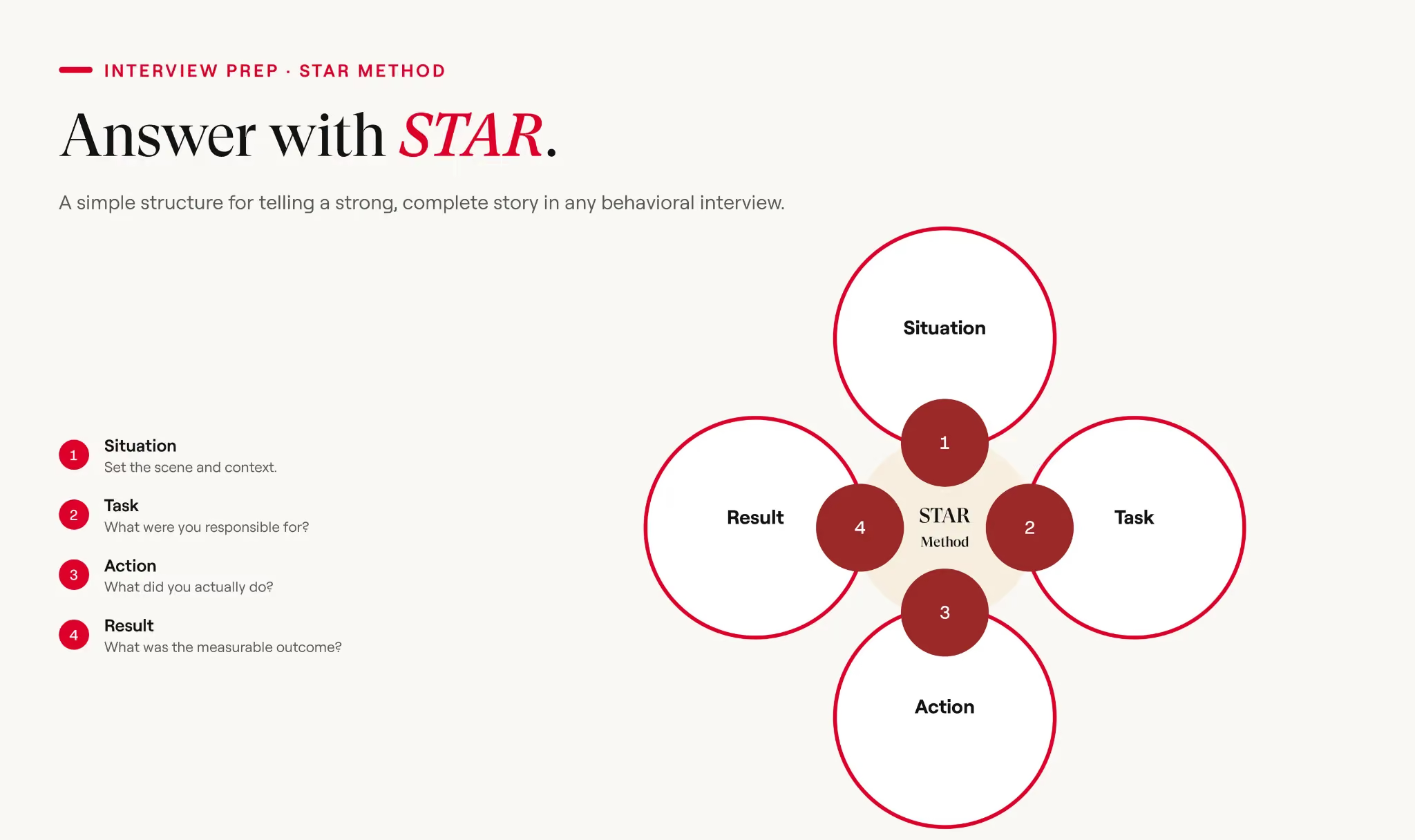
Duke's career team puts a strong STAR answer at one to two minutes. That is shorter than most people's instinct under pressure.
Three things that go wrong when people prepare in a rush:
Drifting into "we." The University of Iowa's career guide makes the point bluntly: describe what you did, not what the group did. Interviewers cannot evaluate a team.
Overloading the setup. Two minutes of background and fifteen seconds of action is the most common failure mode. Cut the setup.
Dropping the result. Students routinely have to be prompted for it, according to the same guide. Land it yourself, and use a number if one exists.
One more thing worth saying: do not embellish. A story built on a weak foundation falls apart the moment someone asks a follow-up question, and follow-up questions are the entire point of behavioral interviewing.
Five answers to have loosely ready
Loosely is the operative word. Bullets, not sentences.
For technical roles, the format of the interview matters as much as the content. If your interview involves live coding or a system design discussion, our guide on how to stand out in a full stack developer interview covers what interviewers are actually scoring, which is your reasoning out loud more than your final answer.
There is one more question that catches candidates cold, and it has nothing to do with skills: whether you will require sponsorship. Answer it accurately, not strategically, because it gets verified at the I-9 stage anyway.
If you are unsure what the right answer is for your status, who counts as legally authorized to work in the U.S. explains the difference between being authorized and needing sponsorship.
The 15-minute version
If the interview starts in a quarter of an hour, do only this:
- Reread the job posting. Two minutes.
- Pick the one story you could tell right now with no notes. Write four bullets for it. Five minutes.
- Find one specific recent thing about the company. Three minutes.
- Write down two questions to ask. Two minutes.
- Test your camera, mic, and link. Three minutes.
That is a genuinely functional interview. It is not a great one, but it will not read as unprepared, which is the actual risk you are managing.
Virtual interview checks that take five minutes
Most interviews are still remote, and most avoidable disasters here are technical.
Keep your notes on a second screen or on paper beside you, not in a window you have to alt-tab to. Eyes darting off-camera is more noticeable than you think.
What to skip when time is short
This part matters as much as the plan.
Skip sample answer roundups. Reading 30 model responses an hour before an interview does not build fluency. It builds a vague sense that your own answers are wrong. Career centers consistently advise paraphrasing your notes rather than memorizing them, and cramming pushes you the other way.
Skip deep company research. Revenue figures and org charts almost never come up. One specific recent thing does more work than ten data points.
Skip rewriting your resume. They already have it. If something on it is weak, prepare how you will talk about it instead.
Skip trying to eliminate nerves. Some anxiety is normal and does not read the way it feels from the inside. Preparation reduces it more reliably than any breathing trick.
The last five minutes before you join
Close your notes. Drink water. Reread only your three story bullets, nothing new.
Join about two minutes early. Let the interviewer open the conversation rather than filling the silence with a pitch.
Listen to the whole question before answering, and ask for clarification if you did not follow it, which the Department of Labor explicitly recommends rather than guessing at what was meant.
If you go blank, say so plainly and buy a moment: "Let me think about that for a second." A short pause reads as considered. A rambling non-answer does not.
After the interview
Send a short thank-you email within 24 hours. MIT's career office recommends that window, and the content is simple: thank them for the time, mention one specific thing from the conversation, restate your interest. Three or four sentences.
Then write down what came up while it is fresh, especially any question that caught you out. That is the prep for your next one, and it takes five minutes now versus an hour of guessing later.
Worth knowing what the other side of the table is doing, too. Structured hiring processes usually run resume screening, skills assessments, a video or live interview, and reference or background checks in sequence, each stage filtering for something different.
Our breakdown of the online candidate vetting process walks through how employers sequence those stages, which makes it easier to read where you are in a process and what the next conversation is likely to test.
For official, non-commercial preparation resources, the Department of Labor's interview tips and CareerOneStop's get-ready guide are both free and practical.
For behavioral questions specifically, MIT's STAR method walkthrough and the University of Washington's version include worksheets you can fill in quickly.
Start Strong With Consultadd
With 15 years in business and 5,000+ successful staffing engagements, we don't just fill roles, we build reliability into your process. We've supported 65 staffing companies in the past year alone and maintain MSAs with industry leaders like Robert Half and TEKsystems.
Here's what working with Consultadd looks like:
- Talent sourced in under 24 hours
- Ready-to-deploy candidates, vetted for experience and compliance
- Lower turnover risk: we match long-term goals, not just short-term needs
- Seamless compliance: visa, documentation, onboarding? Handled.
- Dedicated 1:1 account managers for responsive, personalized support
- Top 100 candidate matches delivered in the past year
- Strong partnerships with universities to tap into fresh, committed talent
- Post-placement support so your investment grows beyond day one
For candidates, your next opportunity is more than just a job title, it's a chance to build skills, gain experience, and move your career forward. At Consultadd, we connect technology professionals with projects and employers that align with their goals, whether they're looking for contract, contract-to-hire, or long-term opportunities.
The tech job market moves fast, but the right guidance can make all the difference. Ready to take the next step in your career journey? Explore Opportunities >>
Key takeaways
- The most useful last minute interview tips are subtractive: with an hour left, the job description, three stories, and two questions beat everything else you could do with the time.
- Behavioral answers follow STAR, run one to two minutes, and spend most of that time on your own actions rather than the setup or the team's contribution.
- Five loosely prepared answers cover most interviews, and the same three stories can be reused across many questions.
- Technical failures cause more avoidable damage in remote interviews than weak answers do, so test the link, audio, and lighting before anything else.
- Cramming sample answers, deep company research, and resume edits are the three things to cut when you are short on time.
FAQs
Can I really prepare for an interview in one hour?
Yes, for most non-technical interviews. An hour is enough to understand the role, shape three stories, find one specific thing about the company, and prepare questions. What an hour cannot do is build a skill you do not have, so technical assessments and case interviews still reward longer preparation.
What should I do the night before an interview?
Run the 60-minute plan, say your three stories out loud once, then stop. Career centers recommend practicing aloud or recording yourself rather than reading silently, because the gap between how an answer looks on paper and how it sounds is where most people get caught. Then sleep, because being alert matters more than one extra hour of prep.
How do I answer "tell me about yourself" with no preparation?
Keep it to about 90 seconds and structure it as present, past, and why here. Two sentences on what you do now, one or two on the experience that led there, and one on why this specific role interests you. Do not narrate your resume chronologically from your first job.
Is it obvious to interviewers when a candidate has not prepared?
Usually, though not in the way candidates fear. It shows up as vague answers with no specific examples, no questions at the end, and no apparent knowledge of what the role involves. Nerves and stumbles are not the giveaway. Emptiness is.
What questions should I ask if I did not have time to research?
Ask about the work itself, which needs no research. What a typical week looks like, how performance is measured, what the biggest challenge facing the team is right now, and what success in the first three months would look like all work in any interview and signal real interest.
Should I still send a thank-you email if the interview went badly?
Yes. Send it within 24 hours regardless. Keep it to a few sentences, and if there was a question you handled poorly, one short line adding the answer you wished you had given is fair. Do not apologize at length or relitigate the whole conversation.

Good Questions to Ask at Interview as Interviewee: Strategy and Examples
Introduction
Most job interviews feel one-directional. The interviewer asks questions. You answer. Then it ends. But that's a missed opportunity. The best candidates flip the dynamic. They ask thoughtful questions that demonstrate intelligence, reveal what they actually care about, and extract critical information to make an informed decision.
Asking good questions at an interview isn't just polite. It signals competence. It shows you're seriously considering the role, not just desperate for any job. It lets you assess whether the company, team, and role actually fit your career goals. Most importantly, it shifts the conversation from "hire me" to "let's see if we're a good fit."
According to the Society for Human Resource Management (SHRM), 60% of candidates don't ask meaningful questions during interviews. They either ask nothing or ask generic questions like "What's the vacation policy?" Those candidates miss the chance to gather critical information and demonstrate their strategic thinking. The candidates who ask thoughtful questions stand out.
This guide covers what makes a good interview question, when to ask questions, what to avoid, and specific examples you can adapt for any interview.
TL;DR
- Asking good questions at interview demonstrates intelligence, seriousness, and strategic thinking
- The best questions gather information about role, team, company culture, and growth potential
- Ask questions throughout the interview, not just at the end when prompted
- Avoid transactional questions early (vacation, salary, benefits) unless they're genuine dealbreakers
- Ask follow-up questions that dig deeper into interviewer responses
Why asking good questions at interview matters
Most candidates approach interviews defensively. They worry about saying the wrong thing. They focus on answering questions perfectly. They forget that interviews are two-way conversations. You're evaluating them as much as they're evaluating you.
This mindset shift is critical. You're considering a big life decision: spending 40+ hours weekly with this team, potentially relocating, learning new systems, and betting years of your career on this role. This decision should matter more to you than the company's decision to hire you. Yet many candidates treat it casually.
Asking good questions signals that you're taking this seriously. It shows you're thinking strategically about your career. It demonstrates that you're evaluating fit, not just seeking employment. This actually makes interviewers respect you more. They want to hire someone who cares about the decision, not someone who'll accept any offer and quit in 3 months when they realize they made a mistake.
There's also a practical benefit:
- Asking good questions helps you make an informed decision.
- If you don't ask about team dynamics, you might join a toxic team.
- If you don't ask about growth potential, you might stagnate in a dead-end role.
- If you don't ask about decision-making processes, you might work for a chaotic company.
- The information you gather through questions directly impacts your career satisfaction.
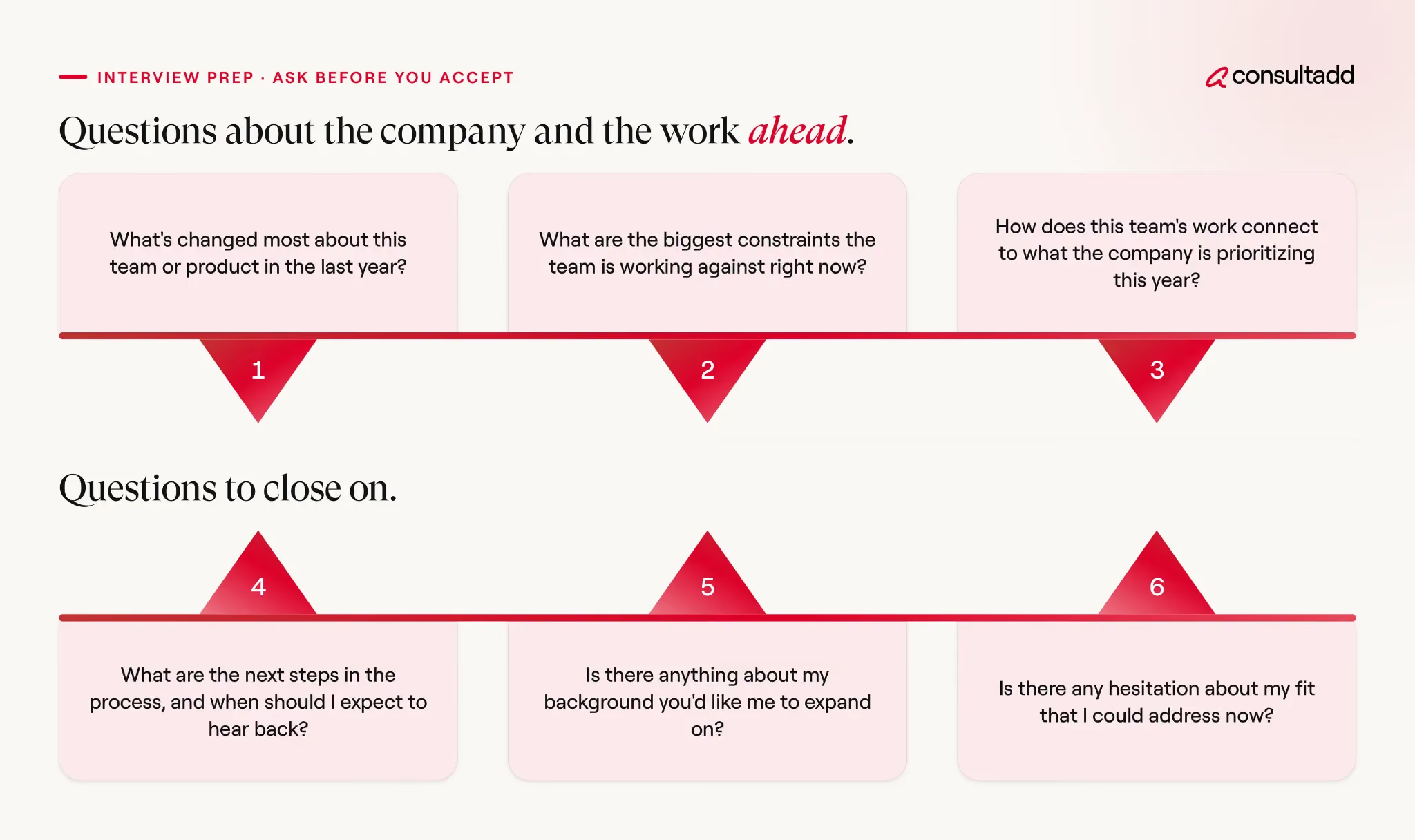
What makes a good interview question
Not all questions are equal. Some questions are insightful and strategic. Others are lazy or self-centered. Understanding what separates good questions from bad ones helps you ask the right things.
Good interview questions are strategic.
Good questions demonstrate that you're thinking about long-term fit and impact. They show you understand the role beyond the job description. They reveal what you value and care about. Examples: "What does success look like in this role after 90 days?" or "How do you measure impact?" or "What's the biggest challenge your team is facing?"
These questions show you're thinking beyond immediate employment. You're evaluating whether this role aligns with your values, skills, and goals.
Bad interview questions are transactional.
Transactional questions focus on what the company provides rather than what you'll contribute. They signal that you're primarily motivated by benefits, not meaningful work. Examples: "How much vacation do I get?" or "When do I get my first raise?" or "What's the 401k match?"
These questions aren't inherently wrong, but asking them early signals the wrong priorities. You'll have plenty of time to discuss benefits during offer negotiation. Asking about vacation in your first interview sends a message: you're counting days off before you've even started.
Good interview questions show you've done research.
Candidates who ask informed questions demonstrate that they care enough to prepare. They've read the company website. They understand the industry. They know something about the company's recent news or direction.
Example: "I noticed you recently launched product X. How is that impacting your engineering roadmap?" or "Your company operates in a competitive market. What's your competitive advantage?"
These questions show engagement and preparation. They make you memorable because most candidates don't ask anything this thoughtful.
Bad interview questions show you haven't prepared.
Generic questions that could apply to any company signal that you haven't done homework. Examples: "What does your company do?" or "How many people work here?" or "What's the company culture like?" These questions could have been answered by spending 5 minutes on the company website.
Good interview questions dig deeper.
After an interviewer answers your first question, follow up. Ask "why?" or "can you give me an example?" These follow-up questions show you're genuinely curious and thinking critically. They also give you richer information than surface-level answers.
Bad interview questions end conversations.
Asking a question and accepting a one-sentence answer signals disinterest. Good conversations involve dialogue, not interrogation.
When to ask questions: Timing and strategy
Timing matters when asking interview questions. Different questions fit different moments in the interview.
During the interview (not just at the end):
Many candidates wait until the end when the interviewer says "do you have any questions?" That's the absolute worst time because:
- You're both tired
- The interviewer is mentally wrapping up
- You don't have time for meaningful conversation
- It signals you weren't engaged throughout
Instead, ask questions naturally throughout the interview. When the interviewer describes the role, ask clarifying questions. When they mention the team, ask about team dynamics. When they discuss company direction, ask for strategic follow-ups.
Example: Interviewer says "You'd be working on our cloud migration project." You ask: "How long has the migration been planned?" or "What's the biggest challenge you're facing with the migration?" These questions flow naturally and show engagement.
Early in the interview (but not immediately):
In the first 5-10 minutes, ask lighter questions about the role or interviewer's background. These build rapport without being presumptuous. Example: "How long have you been with the company?" or "What drew you to this team?" These questions show interest in the person, not just the job.
In the middle (dig deeper):
Once you've established rapport, ask more substantial questions about role expectations, team dynamics, and company culture. Example: "What does success look like in this role?" or "How would you describe your management style?" These require more thoughtful answers and signal you're evaluating fit seriously.
At the end (final strategic questions):
When the interviewer asks if you have questions, save your most important ones for this moment. Use this time to ask about next steps, timeline, or anything critical you haven't covered. Example: "What's your timeline for hiring?" or "What would you like to know from me to move forward?"
Questions to ask about the role
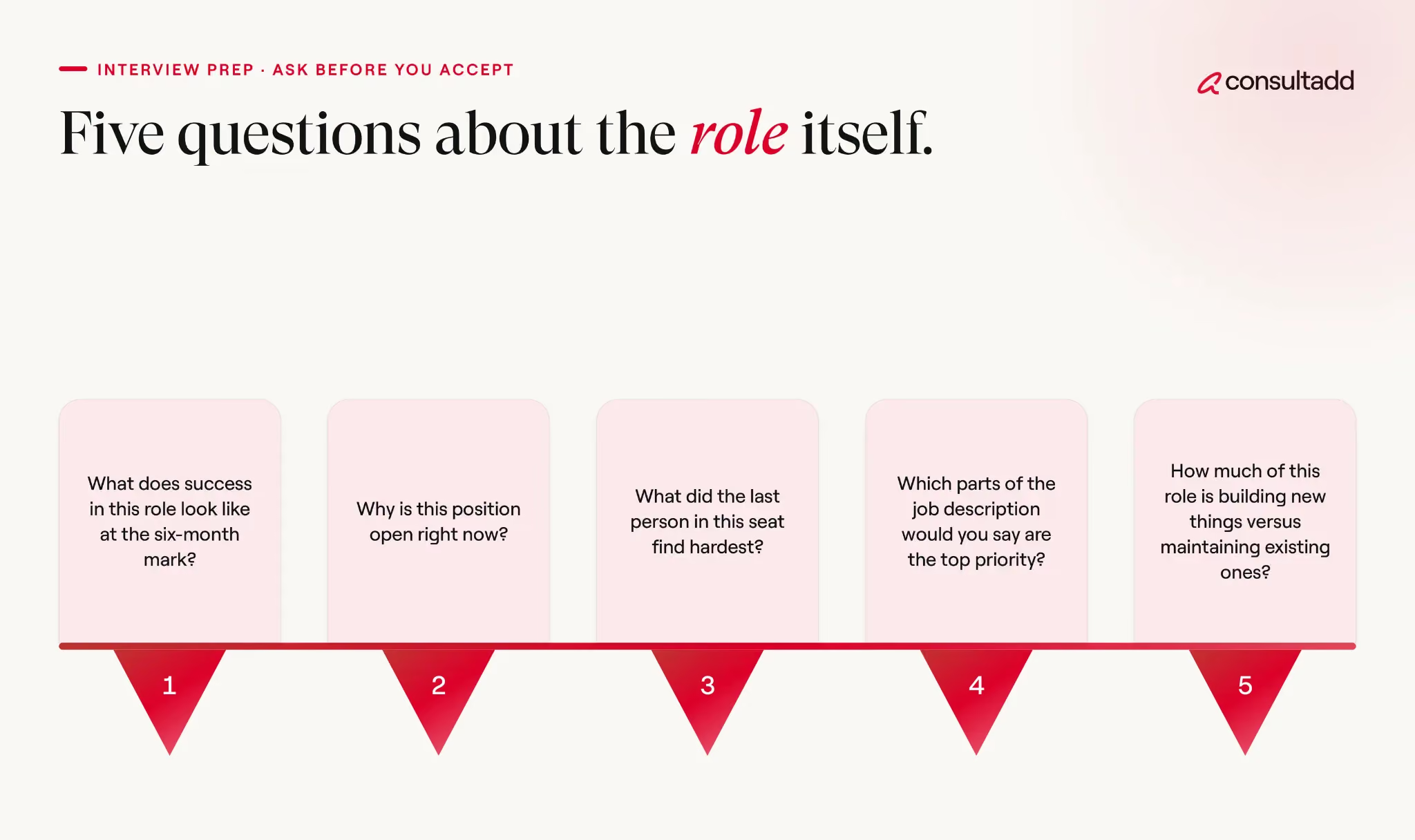
These questions help you understand what you'd actually be doing day-to-day.
"What does success look like in this role after 90 days, six months, and one year?"
This question reveals what the company actually prioritizes in the role. Most job descriptions are generic. This question forces them to be specific about metrics, deliverables, and expectations. The answer tells you what you'll actually be measured on.
"What would a typical day or week look like in this role?"
Job descriptions describe responsibilities abstractly. This question gets concrete details. "You'd spend 40% of your time on feature development, 30% on code review, 20% on documentation, and 10% on meetings." Now you know what you're actually signing up for.
"What's the biggest challenge I'd face in this role?"
This is a harder question for interviewers because it requires honesty. But their answer is revealing. They might say "onboarding to our codebase takes 6 weeks" or "the legacy system requires constant maintenance" or "product requirements change frequently." This is critical information that helps you decide if you can handle the actual role.
"Who would I report to, and what's their management style?"
Your direct manager is one of the most important factors in job satisfaction. This question helps you understand how they operate. Do they micromanage or delegate heavily? Are they hands-on or hands-off? Do they invest in their team's growth? Their answer (and how they answer it) tells you a lot.
"How does this role interact with other teams?"
Some roles are siloed. Others require constant cross-team collaboration. Understanding how your role fits into the broader organization tells you about work environment and collaboration style. If you love collaboration, siloed roles are wrong. If you prefer focused work, highly collaborative roles might frustrate you.
"What tools and technologies would I be using?"
This is practical but strategic. If the role requires technologies you don't know, ask about training and support. If you specifically wanted to work with certain tools, confirm they use them. Example: "I'm interested in working with Kubernetes. Does this role involve Kubernetes work?"
Questions to ask about the team
Team dynamics significantly impact job satisfaction. These questions help you assess whether the team is right for you.
"How would you describe your team culture?"
This is open-ended and reveals what the interviewer thinks is important. A product-focused interviewer might describe culture around shipping features. A quality-focused interviewer might emphasize testing rigor. Their answer tells you the team's values.
"What's the size of the team, and what's the composition?"
Team size affects dynamics significantly. A team of 3 is very different from a team of 15. A team with 50% junior engineers behaves differently than a team with all senior engineers. This question gives you concrete information about who you'd actually work with.
"How does the team handle disagreement or conflict?"
This is a revealing question. Do they have healthy debate? Do they sweep disagreement under the rug? Do they escalate everything to management? The way a team handles conflict affects work environment significantly. Their answer shows team maturity.
"What's the team's biggest weakness or area for improvement?"
This requires honesty and self-awareness from the interviewer. A good team acknowledges weaknesses. An answer like "we need to improve our documentation" or "we're working on better communication across time zones" shows self-awareness. An answer like "we're perfect" or "we have no weaknesses" is a red flag.
"How long have team members been here on average?"
High turnover is a warning sign. If the average tenure is 1-2 years, people are leaving relatively quickly. If it's 5+ years, people stay. This tells you something about whether the team is actually a good place to work.
"What happened to the last person in this role?"
This is a tactical question. Did they get promoted? Did they leave the company? Did they move to a different role? Their answer reveals whether this role is a stepping stone (good) or a dead end (bad). If they say "they left for a competitor," that's concerning. If they say "they got promoted to team lead," that's promising.
Questions to ask about the company
These questions help you understand company direction, culture, and whether it's a place where you want to invest years.
"Where does the company see itself in 3-5 years?"
This reveals company vision and ambition. Are they aiming to be an industry leader? Going public? Building sustainable profitability? Targeting acquisition? Their answer tells you whether company direction aligns with your goals.
"What's the company's biggest competitive advantage?"
This forces them to articulate what makes the company different. A strong answer shows strategic clarity. A weak answer ("we have great people" or "our culture is good") suggests unclear positioning. This question also reveals whether they actually think strategically about business.
"How has the company navigated [recent industry trend]?"
Research a recent industry development (AI adoption, market shift, regulatory change) and ask how they're handling it. This shows you're paying attention to their industry. Their answer reveals whether they're adapting or resisting change.
"What does success look like for the company this year?"
This is forward-looking and strategic. A clear answer shows alignment around priorities. A vague answer suggests unclear leadership or strategic confusion. You want to work somewhere with clear goals.
"How does the company invest in employee development?"
This reveals whether they're building careers or just hiring labor. Do they offer training? Mentorship? Internal mobility? Career development? Their answer shows whether they're investing in people or just extracting value.
"What's the most important thing you wish candidates understood about working here?"
This is a great concluding question. It gives them a chance to communicate something they think matters. Their answer often reveals the real culture. If they say "we work hard but it's incredibly fulfilling," that's telling. If they say "benefits are competitive," that's different.
Questions to ask about company culture and fit
Culture is subjective, but these questions help you assess whether you'd fit.
"How would you describe the company culture?"
Listen for specific examples, not generic descriptions. A good answer includes concrete behaviors or stories. A bad answer is buzzwords: "we're innovative," "we're customer-focused," "we're collaborative."
"How much autonomy do individual contributors have?"
Some people thrive with high autonomy. Others prefer more structure and guidance. Understanding autonomy level helps you know if you'll thrive. If you prefer independence and they have high control, it's a bad fit.
"How are decisions typically made here? Is it top-down or collaborative?"
This reveals decision-making culture. Do executives decide and cascade down? Do teams have input? Do decisions happen through consensus? Your preferred decision-making style should align with theirs.
"How flexible is remote work or work-from-home?"
Even if you don't care about WFH now, circumstances change. Understanding their actual flexibility (not just stated policy) helps you know if you'll have options in the future.
"What's the work-life balance like here?"
Listen carefully to their answer. If they emphasize that people "work hard" but don't mention balance, that's telling. If they emphasize boundaries and time off, that's different. Pay attention to hesitation or vague answers, those often indicate burnout culture.
Questions to ask about growth and development
Career growth is important to most people. These questions assess whether the role offers development.
"How would you describe the career path for someone in this role?"
Is there a clear path upward? Lateral moves? Can people grow without leaving the company? A good answer shows there's growth. A vague answer suggests limited opportunities.
"How often do you see people from this role get promoted?"
This reveals whether the role is a stepping stone or a trap. If people regularly get promoted from this role, it's good. If people stay in the same role for years, that's limiting.
"What does professional development look like? Are there training opportunities, conferences, or mentorship?"
This shows whether they invest in people. Companies serious about development offer learning opportunities. Companies treating engineers like interchangeable resources don't invest.
"Who would be my mentor or coach if I took this role?"
Good companies assign mentors or have structured onboarding. This question reveals whether they have systems supporting new hires. A positive answer (specific mentor, structured program) is encouraging. A vague answer is concerning.
"What skills would I develop in this role?"
This is both a learning question and a negotiation signal. You're asking what you'd gain. Their answer tells you whether the role offers growth or stagnation.
Questions to avoid at interview
Not all questions help your candidacy. Some questions damage your chances.
"What does your company do?"
You should know this before the interview. Asking shows you didn't prepare.
"When will I get a raise or promotion?"
Asking this early signals you're counting raises before you've started. Save this for offer negotiation.
"How much vacation do I get?" or "What's the 401k match?"
Again, these are valid questions but not for early interviews. These are benefits questions for HR, not cultural questions for hiring managers.
"Did the last person in this role quit or get fired?"
This is too direct and comes across as aggressive or suspicious. A softer version: "What happened to the last person in this role?" is better.
"How much will the job stress me out?"
Obviously no interviewer will say "extremely stressful." This question is pointless.
"Is your company stable or are you going to lay people off?"
This signals you're worried about job security from the start. Asking it early damages candidacy. You can research stability through company news and financials.
"How much will I actually work?" or "Can I do this job part-time?"
Unless you have specific circumstances, asking about reduced commitment signals you're not fully committed.
"Will I need to work with [a specific person/team you heard is difficult]?"
This signals you've been researching negative aspects or have preconceived judgments.
Examples of good interview questions by role
Here are specific questions tailored to common roles:
For engineering roles:
- "What's your current tech stack and why did you choose it?"
- "How do you approach technical debt and refactoring?"
- "What's your testing culture like? How much of the codebase is covered?"
- "How often does the team ship to production?"
- "What's the biggest technical challenge your team is facing right now?"
- "How does the team stay current with technology trends?"
For product management roles:
- "How do you prioritize features against technical debt?"
- "What's your product discovery process?"
- "How do you measure success for product initiatives?"
- "How much time do you spend talking to users?"
- "What's the relationship like between product and engineering?"
For sales roles:
- "What's your sales methodology or framework?"
- "How much support does the sales team get from marketing and enablement?"
- "What's the average sales cycle?"
- "What's your customer retention rate?"
- "How is quota structured? Individual or team-based?"
For marketing roles:
- "How do you measure marketing impact on revenue?"
- "What's your content strategy?"
- "How do you handle attribution across channels?"
- "What's the relationship between demand gen and sales?"
- "How much budget flexibility do you have for experiments?"
For leadership roles:
- "What's the culture like at the senior leadership level?"
- "How much autonomy do you have in this role?"
- "What are the biggest organizational challenges?"
- "How does the CEO view this function's role?"
- "What's your leadership philosophy?"
Preparing for good interview questions
Asking good questions requires preparation.
Research the company thoroughly.
Spend time on their website. Read recent news. Understand their products, market position, and direction. Follow their social media. This research enables you to ask informed questions. It also prevents you from asking questions that are answered on their website.
Research the team and role.
Look up the team on LinkedIn. Understand their background and experience. Read any company blog posts about engineering or product philosophy. This helps you ask specific questions that show you care about the actual team.
Prepare 5-7 questions you want to ask.
Don't wing it. Prepare questions in advance. Write them down if it helps. But prepare thoughtfully so you know what you want to learn.
Ask questions naturally, not from a list.
While you should prepare, don't just read from a written list. That's awkward. Instead, integrate questions naturally into conversation. When the interviewer mentions the team, that's a natural moment to ask about team dynamics.
Listen carefully and follow up.
The best conversations aren't about your prepared questions. They're about genuine dialogue. Listen carefully to answers. When they say something interesting, follow up. Ask "why?" or "can you give me an example?" This shows genuine curiosity.
Pay attention to non-verbal communication.
How do they answer questions? With enthusiasm or reluctance? With specificity or vagueness? Their communication style reveals how they actually think about the company and role.
Using interview questions to evaluate fit
The goal of asking good questions isn't just to impress. It's to gather information so you can make a good decision.
After your interview, evaluate what you learned:
- Do the role and responsibilities align with what you want to do?
- Does the team seem like people you'd want to work with?
- Is the manager someone you'd respect and trust?
- Does the company's direction match your goals?
- Is the culture something you'd thrive in?
- Does the role offer growth and development?
- Did the interviewer seem engaged and thoughtful when answering your questions?
If you answer yes to most of these, the role is probably worth pursuing. If you answer no to several, reconsider whether you actually want this job or whether you're just desperate for employment.
The best candidates treat interviews as two-way conversations where both parties are evaluating fit. You're not just trying to get hired. You're trying to get hired somewhere you'll actually thrive.
Consultadd's support for interview preparation
Consultadd doesn't just match candidates with jobs. They prepare candidates to interview successfully and ask good questions.
Consultadd provides interview coaching that covers:
- Understanding what interviewers are actually looking for
- Preparing strong stories and examples
- Asking questions that demonstrate strategic thinking
- Reading dynamics and adapting your approach
- Evaluating company fit based on what you learn in interviews
Their full cycle recruiting approach includes candidate support beyond job matching. They understand that great placements require candidates who interview well and ask thoughtful questions. Candidates who work with Consultadd are better prepared, more confident, and more likely to land offers at companies where they'll actually succeed.
Consultadd's dedication extends to post-placement support. They don't just care if you get hired. They care if you thrive in the role. This means helping you ask the right questions during interviews to assess genuine fit. With 15 years in business and 5,000+ successful placements, Consultadd understands what questions matter most and how to prepare candidates to ask them effectively.
When you work with Consultadd, you're not just getting job matches. You're getting interview preparation, coaching, and support that ensures you ask good questions and make informed decisions about your career.
Start Strong With Consultadd
With 15 years in business and 5,000+ successful staffing engagements, we don't just fill roles, we build reliability into your process. We've supported 65 staffing companies in the past year alone and maintain MSAs with industry leaders like Robert Half and TEKsystems.
Here's what working with Consultadd looks like:
- Talent sourced in under 24 hours
- Ready-to-deploy candidates, vetted for experience and compliance
- Lower turnover risk: we match long-term goals, not just short-term needs
- Seamless compliance: visa, documentation, onboarding? Handled.
- Dedicated 1:1 account managers for responsive, personalized support
- Top 100 candidate matches delivered in the past year
- Strong partnerships with universities to tap into fresh, committed talent
- Post-placement support so your investment grows beyond day one
For candidates, your next opportunity is more than just a job title, it's a chance to build skills, gain experience, and move your career forward. At Consultadd, we connect technology professionals with projects and employers that align with their goals, whether they're looking for contract, contract-to-hire, or long-term opportunities.
The tech job market moves fast, but the right guidance can make all the difference. Ready to take the next step in your career journey? Explore Opportunities >>
Key takeaways
- Good interview questions demonstrate strategic thinking, genuine interest, and career intentionality
- The best questions assess role expectations, team dynamics, growth potential, and cultural fit
- Ask questions throughout the interview, not just at the end when prompted
- Avoid transactional questions early; save benefits discussions for offer negotiation
- Research the company beforehand so your questions show preparation and genuine interest
FAQs
When should I ask questions during an interview?
Ask questions naturally throughout the interview, not just at the end. When the interviewer describes the role, ask clarifying questions. When they mention the team, ask about team dynamics. This shows engagement and creates natural dialogue. Save your most important questions for when they ask if you have questions, but don't save all questions for that moment. A natural back-and-forth conversation is better than waiting until the end to interrogate them.
What if the interviewer doesn't ask if I have questions?
If they don't explicitly ask, take the initiative. As the conversation is wrapping up, say something like "I have a few questions if you have time" or "I'd love to ask you about..." Most interviewers appreciate candidates who take initiative and ask thoughtful questions. If time is limited, ask 1-2 most important questions rather than dumping a list on them.
Should I ask questions if I'm interviewing with someone junior who might not know the answers?
Yes, but adjust your questions. Junior team members can answer questions about day-to-day work and team dynamics. They might not answer strategic questions about company direction. Ask what they can speak to: "What's a typical day like?" "How's the team to work with?" "What's the onboarding process?" Senior interviewers answer strategic questions; junior team members answer practical ones.
Is it bad to ask questions that reveal I haven't done research?
Yes. Don't ask "What does your company do?" or "Where are you located?" if that information is on your website. It signals you didn't prepare. If you forgot something despite preparing, better to say "I want to make sure I understand correctly" than to ask a question that shows you didn't research.
What if my question puts the interviewer on the spot?
Good questions sometimes require thoughtful answers. That's okay. If they can't answer a question about their team or role, that's informative. It might suggest they haven't thought about it deeply or that there's dysfunction. Questions that reveal discomfort or require reflection are actually valuable because they show what the interviewer finds difficult.
Should I ask salary or benefits questions at interview?
Not in first-round interviews. Asking about vacation or salary early signals wrong priorities. Wait until you have an offer or until the hiring manager brings up compensation. Then you can discuss benefits and salary confidently. In first interviews, focus on role, team, and company fit.
.avif)
Tech Interview Prep: What Actually Gets You Hired
Introduction
Most tech interview prep advice tells you to "practice more" without saying what to practice or in what order. That's how candidates end up grinding 200 random coding problems while ignoring the system design round that's about to sink them.
Good tech interview prep means matching your preparation to the actual stages of the process: coding, system design, and behavioral. Each one tests something different, and cramming for one doesn't help with the others.
This guide breaks down what each stage looks like, how to prepare for it without wasting weeks, and where candidates usually lose points without realizing it.
TL;DR
- Most tech interviews run through three distinct stages: coding, system design, and behavioral, each requiring different prep.
- Practicing coding patterns beats memorizing solutions to specific problems.
- System design rounds reward structured thinking over encyclopedic knowledge of every architecture pattern.
- Behavioral interviews now take up a larger share of total interview time than they did a few years ago.
- Mock interviews close the gap between knowing the material and performing under time pressure.
Know what you're actually being tested on
A tech interview isn't one test, it's several tests stacked together. Recruiters typically start with a resume screen, then move candidates through a mix of the following:
- A coding or algorithm round, testing problem-solving under time pressure.
- A system design round, testing how you structure and reason about large systems.
- A behavioral round, testing communication, collaboration, and judgment.
Skipping prep for any one of these because you're strong in another is one of the most common reasons candidates make it to the final round and still don't get an offer.
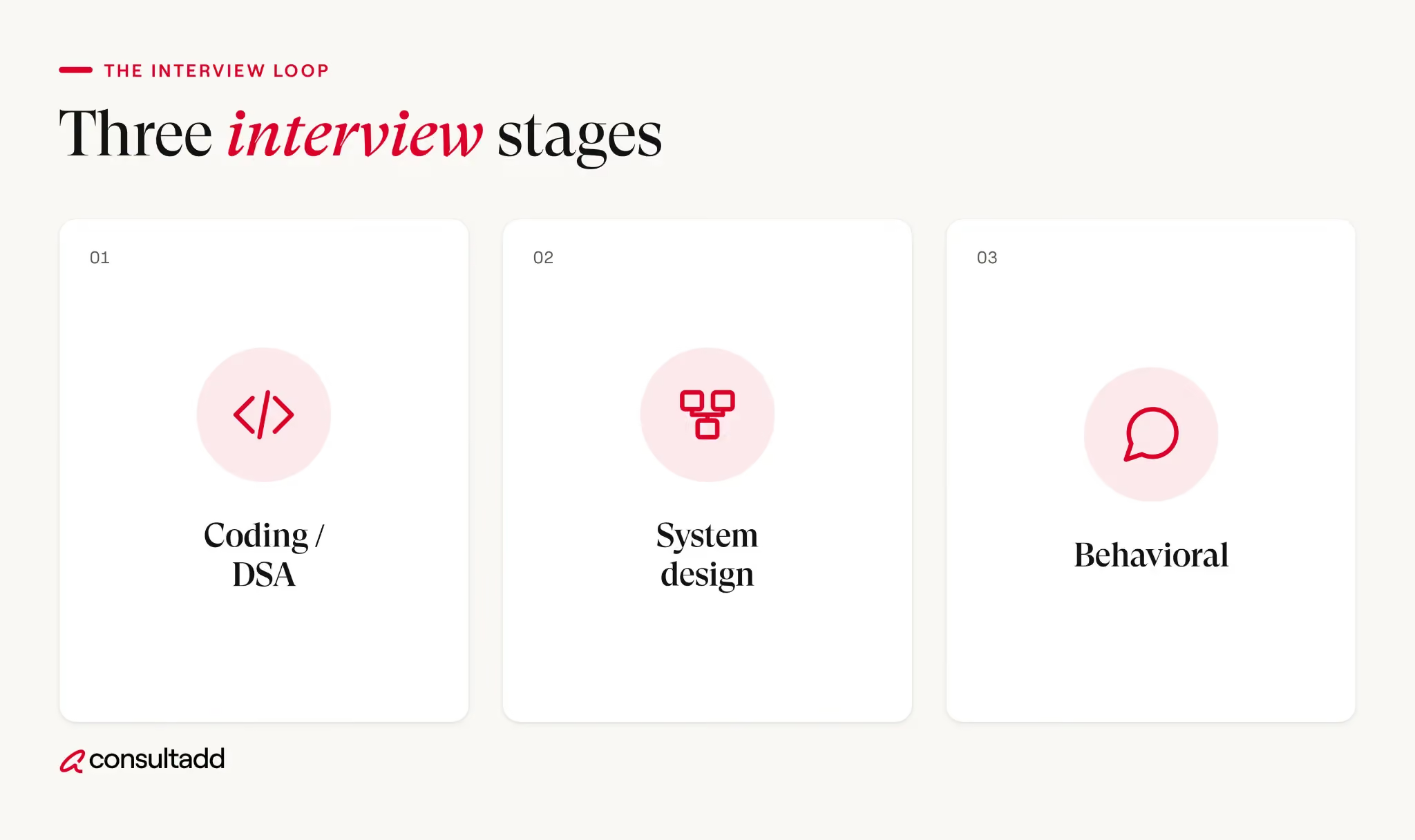
The three interview stages compared
Coding interviews: practice patterns, not problems
Coding interviews reward pattern recognition more than raw problem count. Someone who deeply understands five patterns, like two pointers, sliding window, and recursion, will usually outperform someone who's grinded 300 problems without noticing the patterns repeating.
When you sit down with a new problem, walk through it the same way every time:
- Restate the problem in your own words and ask clarifying questions.
- Work through two or three examples, including edge cases.
- Describe your approach out loud before writing any code.
- Write clean code with meaningful variable names.
- Trace through your solution against the examples and fix what breaks.
Interviewers are grading your thought process as much as your final answer. Silence while you code tells them nothing about how you think.
System design: structure beats memorization
System design interviews are open-ended by nature, which makes them intimidating if you've never practiced the format. The goal isn't to recite every pattern you've read about. It's to show you can reason through trade-offs out loud.
A workable structure for most system design questions:
- Clarify the requirements and scale before proposing anything.
- Sketch a high-level design first, then go deeper on the components that matter most.
- Call out trade-offs explicitly. Nothing in system design is free.
- Leave room to discuss bottlenecks and how the design would evolve under more load.
Practicing this with a peer, even informally, matters more than reading another article about distributed systems. The skill being tested is explaining your reasoning clearly, not just having the reasoning.
Behavioral interviews are carrying more weight than they used to
The behavioral round isn't a formality anymore. Companies use it to evaluate ownership, communication, and how candidates handle ambiguity, and it's taking up a larger share of total interview time at many tech companies than it did several years ago.
Prepare 4 to 5 STAR stories (Situation, Task, Action, Result) that cover different scenarios: a conflict you navigated, a project that didn't go as planned, a time you influenced a decision without formal authority.
Reusing the same one or two stories for every question makes interviewers question how much range you actually have.
Company-specific prep still matters
Generic prep gets you in the door. Company-specific prep is what separates candidates in a close decision.
Google's own candidate preparation guide for software engineering roles walks through what their interviewers evaluate at each stage, and reading it directly from the source beats relying on secondhand summaries.
If you're targeting a specific company, spend at least an hour understanding their product, recent technical decisions, and what their engineering culture actually values day to day.
It shows in how you answer both technical and behavioral questions.
Mock interviews close the performance gap
Knowing the material and performing it under interview conditions are two different skills.
- A mock interview, with a peer, a mentor, or a structured practice platform, exposes the gap between understanding a concept and explaining it clearly while someone is watching the clock.
- Record yourself if you can.
- Most candidates are surprised by how often they trail off mid-sentence or skip the clarifying questions they know they should ask.
This is a fixable problem, but only if you notice it before the real interview.
Why demand for prepared candidates keeps climbing
Employment in computing occupations is projected to keep growing much faster than the average across all occupations through the next decade, according to the U.S. Bureau of Labor Statistics.
More openings means more competition for the roles candidates actually want, not less, since companies can afford to be selective when the applicant pool is large.
That's also reflected in how universities are formalizing interview prep.
Yale's Office of Career Strategy treats the technical interview as a distinct skill separate from general interviewing, worth practicing on its own rather than folding into generic interview advice.
Putting a prep plan together
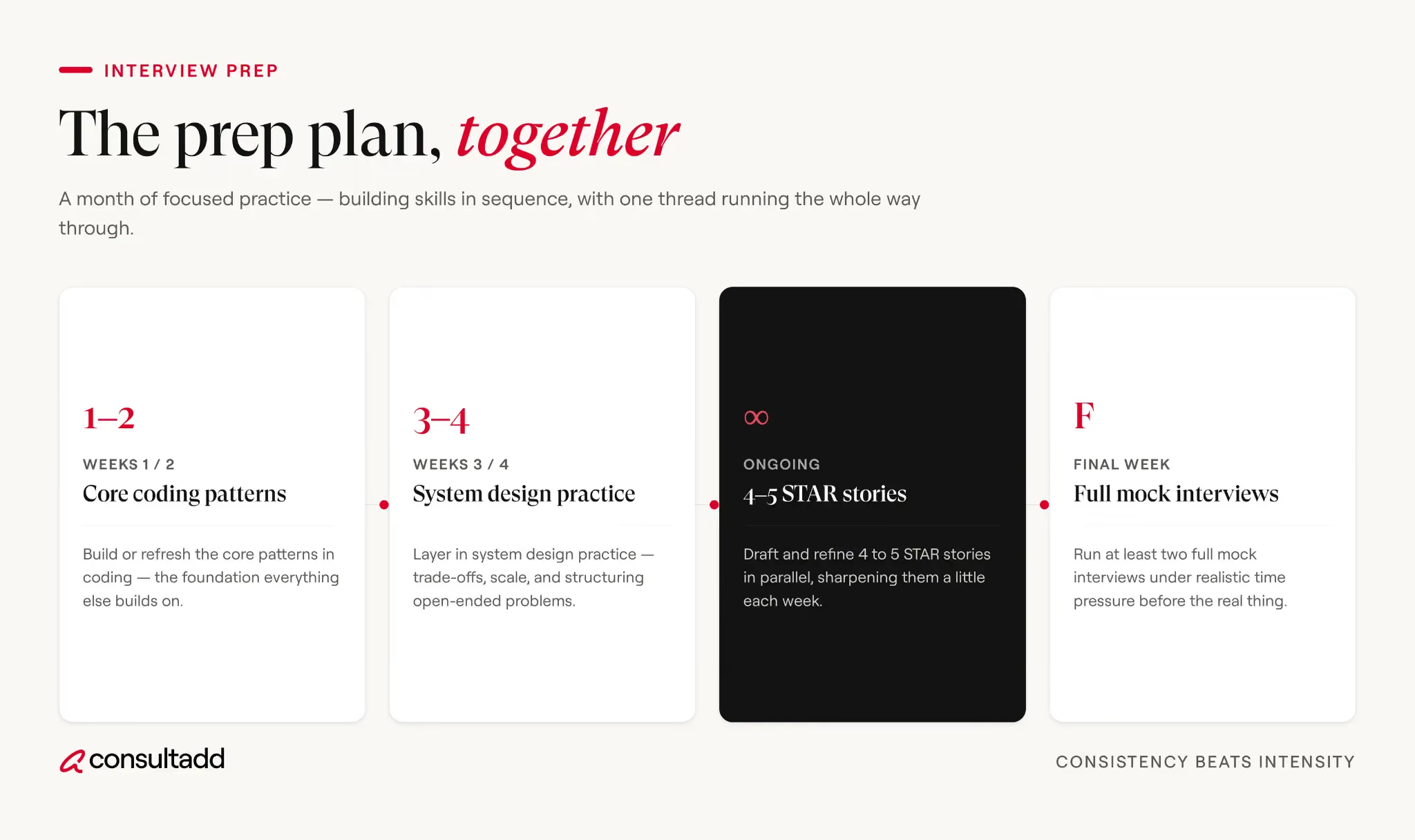
A reasonable timeline for someone with 4 to 6 weeks before an interview:
- Weeks 1/2: Build or refresh core patterns in coding, focusing on the patterns you're weakest in.
- Weeks 3/4: Add system design practice, one problem at a time, explained out loud.
- Ongoing: Draft and refine 4 to 5 STAR stories, testing them on a friend or mentor for clarity.
- Final week: Run at least two full mock interviews under realistic time pressure.
Candidates working with a staffing partner often get access to structured mock interviews and role-specific coaching as part of the placement process, which is worth asking about if you're job hunting through an agency rather than applying cold.
For a broader look at what that kind of support includes, our piece on what candidates should expect from a staffing partner covers the onboarding and prep side of working with a recruiter.
Start Strong With Consultadd
With 15 years in business and 5,000+ successful staffing engagements, we don't just fill roles, we build reliability into your process. We've supported 65 staffing companies in the past year alone and maintain MSAs with industry leaders like Robert Half and TEKsystems.
Here's what working with Consultadd looks like:
- Talent sourced in under 24 hours
- Ready-to-deploy candidates, vetted for experience and compliance
- Lower turnover risk: we match long-term goals, not just short-term needs
- Seamless compliance: visa, documentation, onboarding? Handled.
- Dedicated 1:1 account managers for responsive, personalized support
- Top 100 candidate matches delivered in the past year
- Strong partnerships with universities to tap into fresh, committed talent
- Post-placement support so your investment grows beyond day one
For candidates, your next opportunity is more than just a job title, it's a chance to build skills, gain experience, and move your career forward. At Consultadd, we connect technology professionals with projects and employers that align with their goals, whether they're looking for contract, contract-to-hire, or long-term opportunities.
The tech job market moves fast, but the right guidance can make all the difference. Ready to take the next step in your career journey? Explore Opportunities >>
Key takeaways
- Tech interview prep works best when it's matched to the specific stage: coding, system design, or behavioral.
- Pattern recognition in coding rounds beats memorizing individual problem solutions.
- System design interviews reward structured, out-loud reasoning over encyclopedic knowledge.
- Behavioral prep deserves real time, not last-minute improvisation, since it now carries more weight than before.
- Mock interviews are the fastest way to find the gap between knowing the material and performing it under pressure.
FAQs
How long should tech interview prep take?
Four to six weeks of focused practice is reasonable for most candidates, longer if you're weak in multiple areas or targeting highly competitive companies. Consistency across a shorter window usually beats a longer, unfocused one.
Should I focus more on coding or system design?
It depends on the role and seniority level. Entry-level roles weigh coding rounds more heavily, while senior roles put more emphasis on system design and how you make trade-offs.
What's the best way to practice system design if I've never done it before?
Start by explaining a system you already know well, like a URL shortener or a simple chat app, out loud to another person. The skill being built is verbal reasoning under scrutiny, not just technical knowledge.
How many STAR stories should I prepare?
Four to five well-developed stories usually cover most behavioral questions if you can adapt them to different prompts. More than that becomes hard to keep sharp and specific.
Do mock interviews actually help, or is reading enough?
Mock interviews matter because interviews are a performance skill, not just a knowledge test. Reading about system design or coding patterns builds the knowledge; mock interviews build the ability to communicate it under time pressure.
Is it worth tailoring prep to a specific company?
Yes, especially past the first round. Company-specific research on culture, recent technical decisions, and interview structure shows up in how confidently you answer both technical and behavioral questions.
.avif)
Questions to Ask Interviewer: What Actually Works
Introduction
"Do you have any questions for us?" It's the last few minutes of the interview, and how a candidate handles it says more than most people realize.
Knowing the right questions to ask an interviewer isn't about sounding polished. It's about getting information you actually need before deciding whether to take the job, while showing the interviewer you've been paying attention the whole time.
Saying "no, I think you covered everything" is one of the most common ways candidates undercut themselves in an otherwise good interview.
This guide breaks down which questions work at each stage, which ones to leave out, and why the answers matter as much as the questions themselves.
TL;DR
- Never say "no" when asked if you have questions. It signals disengagement even after a strong interview.
- The strongest questions are specific to the role and the conversation you just had, not generic ones pulled from a list.
- Ask about how success is measured, not just what the job involves day to day.
- Save salary and PTO questions for later rounds unless the interviewer brings them up first.
- A short question about the interviewer's own experience at the company often leaves the best impression.
Why this moment matters more than it seems
Interviewers read the closing questions as a signal of how seriously a candidate is taking the opportunity.
According to the Society for Human Resource Management, job seekers should be asking questions that help them make sound decisions about the role given how much the workplace has shifted in recent years, rather than treating the moment as a formality.
That framing matters: the point isn't to perform curiosity, it's to actually gather what you need.
Skipping the question entirely is worse than asking something imperfect. An interviewer who spends forty-five minutes explaining a role and gets a flat "no" at the end is left wondering whether the candidate was listening, or whether the role matters to them at all.
The right questions depend on where you are in the process
A first-round screening call and a final interview with a hiring manager call for different questions.
Asking a recruiter about equity vesting schedules on a first call, before an offer is even on the table, tends to read as premature. Save it for later.
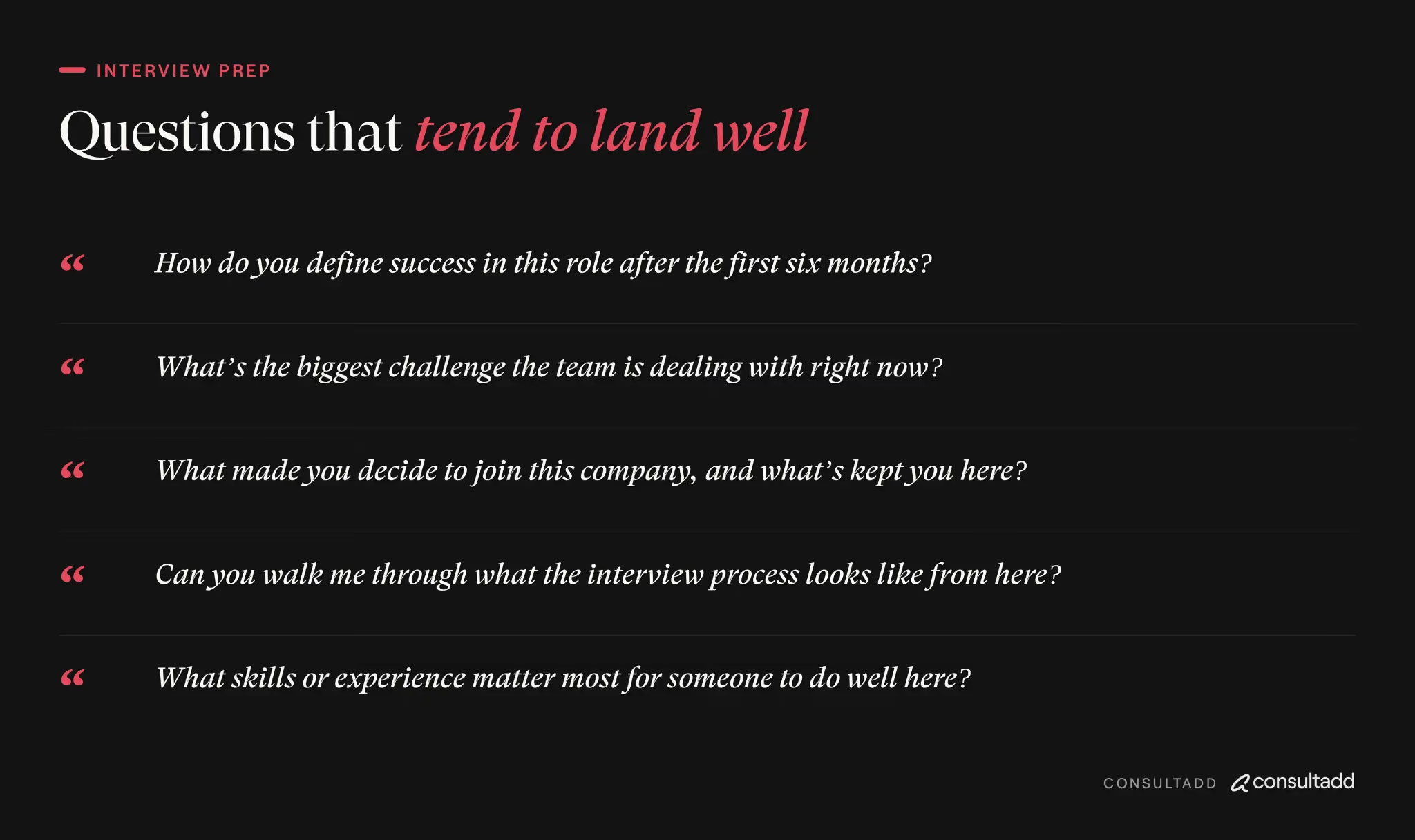
Questions that tend to land well
QUESTION - "How do you define success in this role after the first six months?"
This gets past the job description and into what the manager actually expects. It also gives a candidate something concrete to reference if they get the offer and want to hit the ground running.
QUESTION - "What's the biggest challenge the team is dealing with right now?"
Hiring managers tend to answer this one honestly, since it's a question they'd want answered if they were on the other side of the table. The response often reveals more about the role's real day-to-day than the posted job description does.
QUESTION - "What made you decide to join this company, and what's kept you here?"
This works well because it shifts the conversation to the interviewer as a person, not just a gatekeeper. It's also a question interviewers don't get asked often, which tends to make the exchange feel more genuine on both sides.
QUESTION - "Can you walk me through what the interview process looks like from
Practical and low-risk. It shows the candidate is thinking ahead without sounding pushy about wanting an answer immediately.
QUESTION - "What skills or experience matter most for someone to do well here?"
Job postings often list far more requirements than actually matter day to day. This question gets the interviewer to rank what's genuinely important, which is useful information whether or not the candidate gets the job.
Questions that tend to backfire
Not every question helps. A few patterns come up often enough to be worth naming directly:
- Anything already covered in the job posting or earlier in the conversation. It signals the candidate wasn't listening.
- Questions that are only about personal benefit this early, like vacation days or remote work flexibility, before there's any indication of mutual interest.
- Overly broad questions like "What's the company culture like?" with no follow-up angle. It rarely produces a useful answer and can feel like a box being checked.
- Anything that puts the interviewer on the spot about layoffs, turnover, or leadership drama, unless there's a specific and professional reason to raise it.
None of these are disqualifying on their own. But stacking several of them in one interview tends to leave a flatter impression than asking one or two sharp, specific questions.
How many questions is too many
There's no fixed number, but two or three well-chosen questions usually beat five generic ones.
Interviewers are often running on a tight schedule, and a candidate who asks one strong question and listens carefully to the answer comes across better than one who works through a long list without reacting to what they're told.
SHRM's guidance on structured interviewing makes a similar point from the employer's side:
A short list of well-chosen questions gets more useful answers than a long one asked without follow-up. The same logic applies in reverse when a candidate is the one asking.
It helps to prepare more questions than needed, then adjust in the moment. If the interviewer already answered a planned question earlier in the conversation, cross it off and ask a follow-up instead. This is one of the clearest signals of active listening versus a rehearsed script.
For candidates preparing for technical interviews specifically, the questions worth asking often shift toward the engineering side, like how the team handles code review or what the on-call rotation looks like.
Our guide on standing out in a full stack developer interview covers how technical candidates can adjust their approach for that kind of round.
If you're interviewing through a staffing agency
Working with a recruiter adds a layer worth understanding before the closing-questions moment even comes up.
Some of the terms behind the scenes, like who technically employs you during a contract, how benefits are handled, and how the placement fee affects the negotiation room, aren't always obvious from the outside.
Our breakdown of working with staffing companies covers what candidates should understand about that setup going in.
It also helps to know how the agency vetted you in the first place, since that shapes what the client company already knows before you walk into the room.
Our guide on what candidate vetting actually involves explains what typically happens before a candidate ever reaches the interview stage.
Start Strong With Consultadd
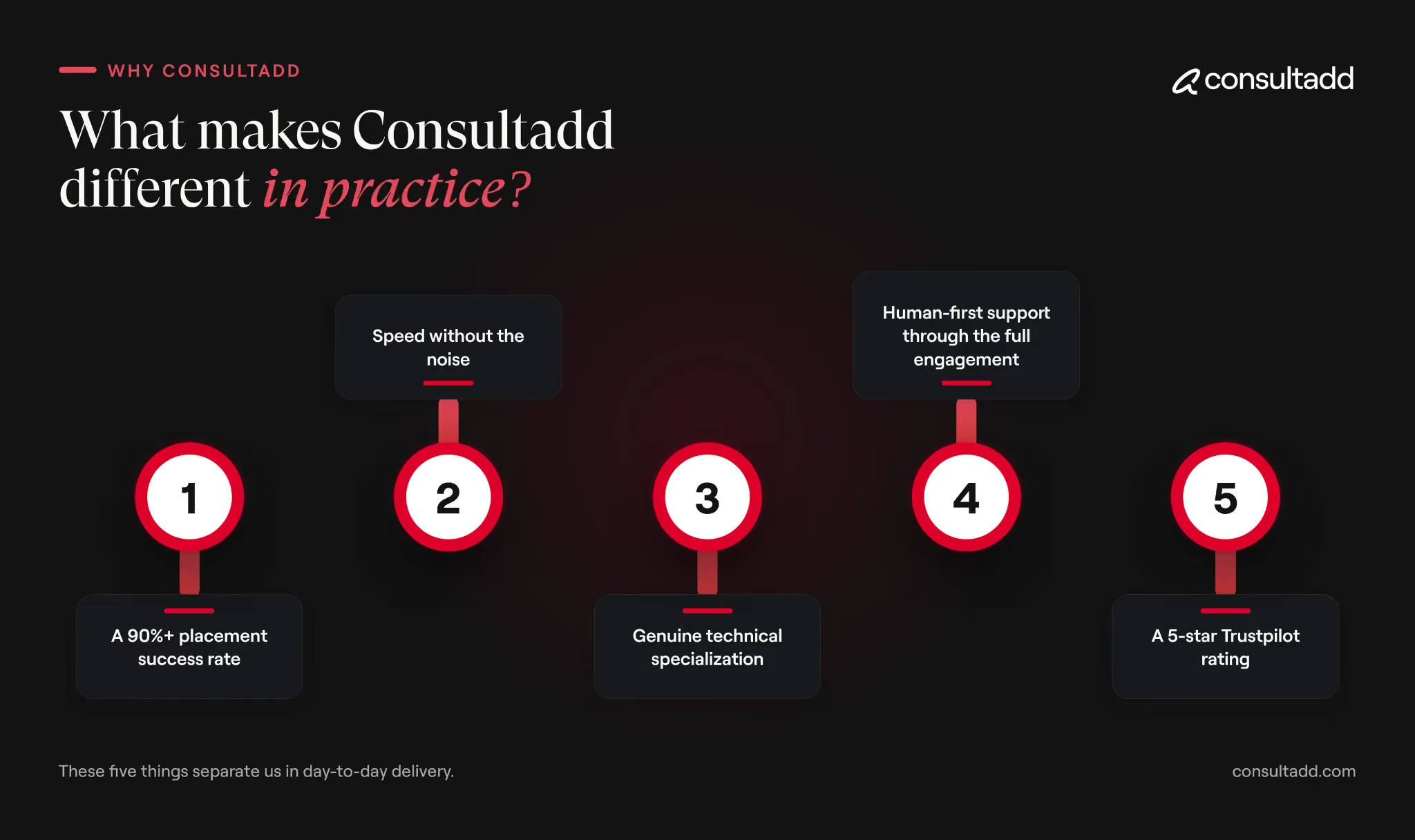
With 15 years in business and 5,000+ successful staffing engagements, we don't just fill roles, we build reliability into your process. We've supported 65 staffing companies in the past year alone and maintain MSAs with industry leaders like Robert Half and TEKsystems.
Here's what working with Consultadd looks like:
- Talent sourced in under 24 hours
- Ready-to-deploy candidates, vetted for experience and compliance
- Lower turnover risk: we match long-term goals, not just short-term needs
- Seamless compliance: visa, documentation, onboarding? Handled.
- Dedicated 1:1 account managers for responsive, personalized support
- Top 100 candidate matches delivered in the past year
- Strong partnerships with universities to tap into fresh, committed talent
- Post-placement support so your investment grows beyond day one
For candidates, your next opportunity is more than just a job title, it's a chance to build skills, gain experience, and move your career forward. At Consultadd, we connect technology professionals with projects and employers that align with their goals, whether they're looking for contract, contract-to-hire, or long-term opportunities.
The tech job market moves fast, but the right guidance can make all the difference. Ready to take the next step in your career journey? Explore Opportunities >>
Key Takeaways
- "No questions" is almost always the wrong answer, even in a strong interview.
- Match your questions to the interview stage. Save compensation and benefits for later rounds.
- Questions that ask the interviewer to define success or rank priorities tend to reveal more than generic culture questions.
- Two or three sharp questions land better than a long rehearsed list.
- Candidates going through a staffing agency should understand the placement structure before negotiation-style questions come up.
FAQs
What's the best question to end an interview with?
There isn't one universal best question, but asking how success will be measured in the first six months tends to work across most roles. It gives the interviewer something concrete to answer and gives the candidate useful information either way.
Is it bad to ask about salary in a first interview?
It depends on who raises it first. If a recruiter brings up compensation, it's fair to engage. If not, it's usually safer to wait until a later round or an offer discussion, since bringing it up too early can come across as the only thing the candidate cares about.
How many questions should I prepare before an interview?
Prepare four or five, but expect to only ask two or three. Some of the prepared ones will likely get answered naturally during the conversation, so having extras avoids running out of things to ask.
Should I ask different questions in a panel interview versus a one-on-one?
Yes. In a panel, it helps to direct a question at a specific person's role rather than asking the group something generic, since it shows attention to who's actually in the room.
What if the interviewer already answered everything I planned to ask?
Ask a follow-up on something they mentioned earlier instead of forcing a prepared question that no longer fits. It shows you were actually listening rather than running through a script.
Is it okay to ask an interviewer about their own experience at the company?
Yes, and it often leaves a strong impression. Interviewers rarely get asked about their own path, and a genuine question about it tends to make the closing minutes feel more like a conversation and less like an evaluation.
.avif)
Analytical Interview Questions and How to Answer Them
Introduction
Analytical interview questions aren't trying to trip you up. They're trying to see how your brain actually works when a problem doesn't have an obvious answer.
Employers ask them for almost every role now, not just data or finance jobs, because the ability to break a messy situation into pieces and reason through it shows up in customer service, operations, engineering, and management just as much as it does in analytics.
The good news is these questions follow patterns. Once you know what an interviewer is actually listening for, and you have a simple structure for telling your answer, they get a lot less intimidating.
This guide breaks down the most common analytical interview questions, what a strong answer sounds like, and a framework you can reuse across almost any version of the question.
TL;DR
- Analytical interview questions test how you break down problems and reason through them, not whether you land on a "perfect" answer.
- Most fall into three types: past-experience questions, hypothetical scenarios, and quantitative or data-based questions.
- The STAR framework, Situation, Task, Action, Result, works well for turning a real example into a clear, structured answer.
- Interviewers care more about your process than your conclusion. Walking through your reasoning out loud matters more than getting to a flawless solution.
- Weak answers are vague and generic. Strong answers use a specific, real example with a measurable outcome.
What interviewers are actually testing
When someone asks an analytical question, they're rarely grading you against one right answer.
What they're watching for is whether you can take an ambiguous problem, identify what actually matters, and walk through a logical path toward a solution, even if the scenario is hypothetical or you don't have all the information.
This matters because it changes how you should prepare. Memorizing a "perfect" response to a specific question doesn't help much, because the interviewer will usually adjust the scenario anyway.
What helps is having a handful of real examples ready, and a structure for walking through your thinking clearly under pressure.
The three types of analytical questions
Past-experience questions.
- These ask you to describe a real situation: "Tell me about a time you had to solve a complex problem."
- They're looking for evidence from your actual work history, not a hypothetical.
Hypothetical scenario questions.
- These present a made-up situation and ask how you'd approach it: "How would you design a system that processes a million requests at once?"
- The specific answer matters less than the reasoning you show while getting there.
Quantitative or data-based questions.
- These involve numbers directly: "How would you evaluate whether a marketing campaign was successful?"
- These test comfort with data and metrics, not necessarily a finance or analyst background.
15 common analytical interview questions
- Tell me about a time you had to solve a complex problem with limited information.
- Walk me through how you'd troubleshoot a process that suddenly stopped working.
- Describe a decision you made that required weighing several conflicting priorities.
- How do you approach a problem when you don't immediately know the solution?
- Tell me about a time your initial analysis turned out to be wrong. What did you do next?
- How would you evaluate whether a new initiative was actually successful?
- Describe a time you had to make a decision quickly without all the data you wanted.
- How do you decide which sources of information to trust when researching a problem?
- Walk me through how you'd approach an unfamiliar problem outside your usual area of expertise.
- Tell me about a time you identified a pattern or trend that others had missed.
- How would you prioritize tasks when everything seems urgent at once?
- Describe a situation where you had to convince others using data or logical reasoning.
- How do you approach a problem that has more than one reasonable solution?
- Tell me about a time you used data to change a decision that had already been made.
- How would you estimate a number you don't have direct data for, like the number of piano tuners in a city?
A framework for structuring any answer
The STAR method, Situation, Task, Action, Result, gives you a consistent shape for answering the past-experience and scenario-based versions of these questions.
Most people naturally spend too much time on Situation and Task and not enough on Action, which is the part interviewers actually care about most. If you're only going to over-prepare one section, make it Action: the specific steps, not just the outcome.
For questions with no real past example to draw on, like the piano tuner estimate above, the same discipline applies without the story wrapper.
Say your assumptions out loud, walk through the math step by step, and don't apologize for the number being a rough estimate. Interviewers are grading the path, not the destination.
Sample answer: complex problem with limited information
Question: Tell me about a time you had to solve a complex problem with limited information.
Weak answer: "I'm pretty good under pressure. I once had a project where things weren't going well, but I figured it out and it worked out fine in the end."
Stronger answer: "In my last role, our team noticed a sudden drop in customer retention, but we didn't have clear data on why. I started by pulling whatever usage data we did have and segmenting it by customer type to see if the drop was concentrated anywhere specific. It turned out to be almost entirely in one plan tier. I interviewed a handful of customers in that segment directly, since the quantitative data alone didn't explain the cause, and found a recent pricing change had confused people about what was included. We clarified the messaging within two weeks, and retention in that segment recovered by about 80% of the original drop the following month."
The difference isn't confidence. It's specificity. The stronger answer names the actual steps, in order, and ends with a concrete result instead of a vague sense that things worked out.
Common mistakes that weaken analytical answers
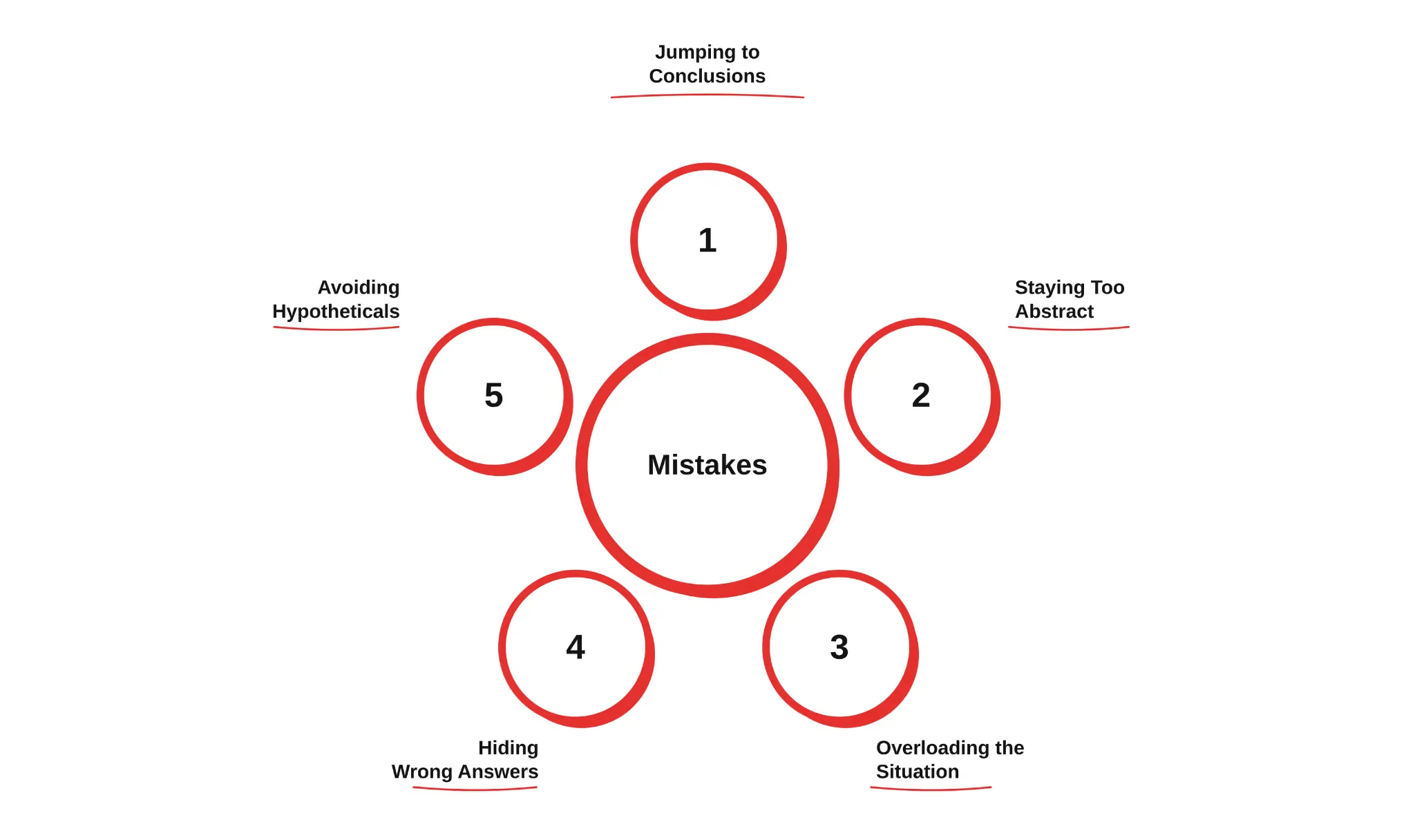
- Jumping straight to the conclusion. Interviewers want the reasoning path, not just the destination. Skipping straight to "and it worked" gives them nothing to evaluate.
- Staying too abstract. Answers that never name a specific project, number, or outcome are hard to distinguish from a rehearsed script.
- Overloading the Situation section. Spending most of your answer on background and rushing the actual steps you took reverses what the interviewer actually wants to hear.
- Treating a wrong initial answer as a failure to hide. If your first analysis turned out to be incomplete, saying so and explaining what you did next is usually a stronger answer than pretending you got it right the first time.
- Refusing to commit to hypothetical questions. With scenario questions, hedging endlessly instead of picking an approach and explaining your reasoning reads as avoidance, not caution.
Preparing before the interview
A little preparation goes a long way, since these questions reward specificity more than eloquence.
- Pull together four or five real examples from your work history that involved solving an ambiguous problem, ideally with a measurable result attached.
- Practice each one out loud using the STAR structure until the shape feels natural rather than memorized.
- For technical or quantitative roles, review basic estimation and back-of-envelope math, since scenario questions in those interviews often expect a rough calculation, not just a description.
- If you're prepping for a coding-heavy technical loop specifically, our step-by-step guide to coding interview prep covers the problem-solving side of that format in more depth.
- Review the general interview preparation basics as well, since analytical questions usually show up alongside standard behavioral ones rather than replacing them entirely.
Start Strong With Consultadd
With 15 years in business and 5,000+ successful staffing engagements, we don't just fill roles, we build reliability into your process. We've supported 65 staffing companies in the past year alone and maintain MSAs with industry leaders like Robert Half and TEKsystems.
Here's what working with Consultadd looks like:
- Talent sourced in under 24 hours
- Ready-to-deploy candidates, vetted for experience and compliance
- Lower turnover risk: we match long-term goals, not just short-term needs
- Seamless compliance: visa, documentation, onboarding? Handled.
- Dedicated 1:1 account managers for responsive, personalized support
- Top 100 candidate matches delivered in the past year
- Strong partnerships with universities to tap into fresh, committed talent
- Post-placement support so your investment grows beyond day one
For candidates, your next opportunity is more than just a job title, it's a chance to build skills, gain experience, and move your career forward. At Consultadd, we connect technology professionals with projects and employers that align with their goals, whether they're looking for contract, contract-to-hire, or long-term opportunities.
The tech job market moves fast, but the right guidance can make all the difference. Ready to take the next step in your career journey? Explore Opportunities >>
Key takeaways
- Analytical interview questions evaluate your reasoning process, not whether you land on one specific correct answer.
- Questions generally fall into three types: past-experience, hypothetical scenarios, and quantitative or data-based problems.
- The STAR framework, Situation, Task, Action, Result, gives a reusable structure, with most of your time spent on Action.
- Strong answers name specific steps and outcomes; weak answers stay vague and generic.
- For hypothetical or estimation questions, walking through your reasoning out loud matters more than the final number.
FAQs
What makes a question "analytical" versus just "behavioral"?
Behavioral questions generally ask about soft skills like teamwork or leadership. Analytical questions specifically focus on how you reason through a problem, whether that's a past situation, a hypothetical scenario, or a data-driven decision.
Is it okay to say I don't know the exact answer to an estimation question?
Yes, as long as you still walk through your reasoning and land on a defensible estimate. Interviewers expect the number to be rough. What they're evaluating is whether your approach to getting there makes sense.
How long should my answer to an analytical question be?
Around 60 to 90 seconds for most STAR-style answers. Longer answers tend to lose the interviewer's attention and bury the useful information under excess context.
Should I use the same example for multiple analytical questions?
You can, if the story genuinely fits more than one question and you adjust which part of it you emphasize. Just be careful not to reuse it so often that it starts to feel rehearsed rather than responsive to the actual question asked.
What if I can't think of a real example for a past-experience question?
Draw from any relevant experience, including school projects, volunteer work, or personal projects, as long as it genuinely demonstrates the reasoning process the question is asking about.
Do analytical questions matter for non-technical roles?
Yes. Employers ask them across operations, marketing, customer service, and management roles, since the ability to reason through an ambiguous problem is relevant well beyond data-specific jobs.
.avif)
STAR Interview Technique: How To Structure Winning Answers
Introduction
The STAR interview technique is a way of answering behavioral interview questions by breaking your response into four parts: Situation, Task, Action, and Result.
It's the difference between rambling through a story an interviewer loses track of and giving them a clear, concrete example they can actually evaluate. If you've ever frozen up on a question like "tell me about a time you dealt with conflict," this is the framework that fixes that.
Below is how each part works, a full example, and where most candidates trip up.
TL;DR
- The STAR interview technique breaks your answer into Situation, Task, Action, and Result so interviewers can follow a clear story instead of a vague summary.
- It's built for behavioral questions, the ones that start with "tell me about a time when" or "describe a situation where."
- The Action and Result sections carry the most weight. Don't rush past them to get back to describing the situation.
- Prepare four or five STAR stories ahead of time that can flex across different question types rather than memorizing answers word for word.
- Quantify the result whenever you can. Numbers make an answer memorable in a way general statements don't.
What the STAR interview technique actually is
Employers ask behavioral questions because they've found that how someone handled something in the past is a decent predictor of how they'll handle something similar in the future.
The Society for Human Resource Management describes behavioral interviewing as a technique that asks candidates for specific examples of how they responded to real situations, rather than hypothetical or general answers.
STAR is the structure that makes those examples land clearly.
Without a framework, most people either ramble through too much backstory or jump straight to "and it worked out great" without explaining how.
STAR forces you to hit both the setup and the payoff.
Breaking down each part of STAR
A common mistake is spending 80 percent of the answer on the situation and rushing the action and result.
Interviewers care most about what you actually did and what came of it. The setup just needs enough detail to make sense.
Common questions that call for a STAR answer
Behavioral questions tend to follow a recognizable pattern. A few examples:
- Tell me about a time you disagreed with a coworker or manager.
- Describe a situation where you had to meet a tight deadline.
- Give an example of a time you made a mistake and how you handled it.
- Tell me about a time you had to learn something quickly.
- Describe a project where you had to work with limited resources.
Each of these is really asking the same underlying question: how do you behave under a specific kind of pressure?
Preparing STAR stories around common themes, conflict, deadlines, mistakes, leadership, covers most of what comes up.
A full STAR interview technique example
Question: Tell me about a time you had to manage a project under a tight deadline.
Situation: Our team was three weeks into a six-week content project when the client moved the launch date up by two weeks.
Task: I needed to figure out how to deliver the same scope of work in roughly half the remaining time without sacrificing quality.
Action: I re-prioritized the content list based on what mattered most for launch, brought in two freelance writers to cover a few of the lower-priority pieces, and set up short daily check-ins to catch any blockers early instead of waiting for a weekly status meeting.
Result: We delivered all fifteen pieces two days ahead of the compressed deadline, and the campaign generated more leads than the client's previous launch. I also wrote up the prioritization approach so the team could reuse it for future rush projects.
Notice the action section is the longest part. That's intentional. It's where the interviewer learns how you actually think and operate.
Mistakes candidates make with the STAR interview technique
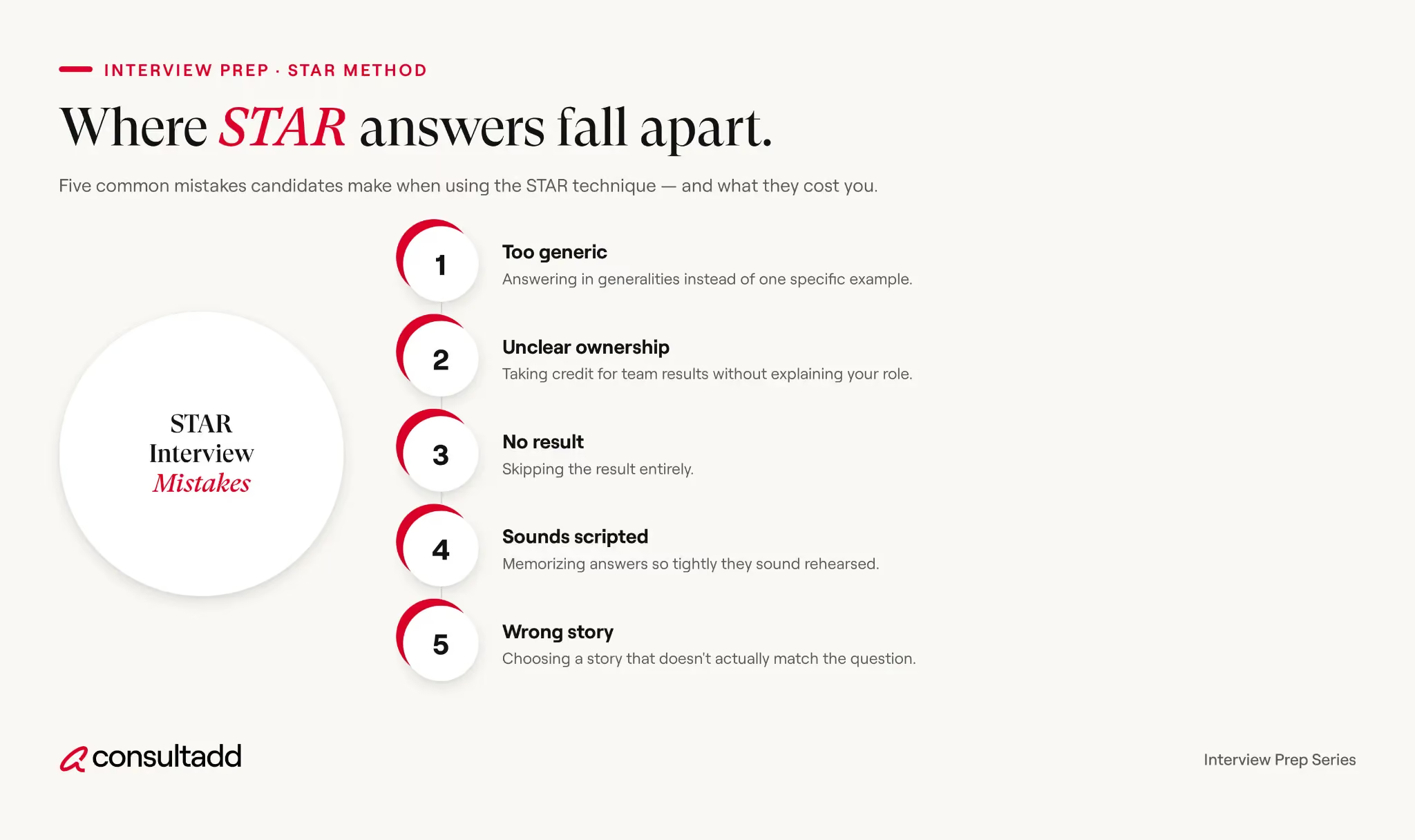
- Answering in generalities instead of one specific example
"I'm usually good under pressure" isn't a STAR answer. Pick one real instance.
- Taking credit for team results without explaining your role
Interviewers want to know what you specifically did, not just what the group accomplished.
- Skipping the result entirely
An answer that ends at "and then we fixed it" leaves the interviewer without the payoff.
- Memorizing answers so tightly they sound scripted
Know your stories well enough to adapt them, not recite them.
- Choosing a story that doesn't actually match the question
If they ask about conflict and you answer with a deadline story, it reads as avoidance.
If you're also preparing for the technical side of an interview process, our guide on standing out in a technical interview covers how to approach problem-solving and communication once the behavioral round is behind you.
How to prepare STAR stories before an interview
- The best approach is building a small bank of stories rather than trying to guess every question in advance.
- Think through four or five situations from recent roles or projects that cover different themes: a conflict you resolved, a deadline you hit, a mistake you corrected, a time you led something without formal authority.
- Write each one out briefly using the STAR structure, then practice saying it out loud rather than just reading it.
- A strong portfolio or project history also gives you more raw material to pull from. If you're still building that out, this guide on building a developer portfolio has practical tips on documenting projects in a way that doubles as interview prep.
- MIT's Career Advising and Professional Development office also offers a useful worksheet for mapping out STAR stories before an interview if you want a structured template to work from.
Start Strong With Consultadd
With 15 years in business and 5,000+ successful staffing engagements, we don't just fill roles, we build reliability into your process. We've supported 65 staffing companies in the past year alone and maintain MSAs with industry leaders like Robert Half and TEKsystems.
Here's what working with Consultadd looks like:
- Talent sourced in under 24 hours
- Ready-to-deploy candidates, vetted for experience and compliance
- Lower turnover risk: we match long-term goals, not just short-term needs
- Seamless compliance: visa, documentation, onboarding? Handled.
- Dedicated 1:1 account managers for responsive, personalized support
- Top 100 candidate matches delivered in the past year
- Strong partnerships with universities to tap into fresh, committed talent
- Post-placement support so your investment grows beyond day one
For candidates, your next opportunity is more than just a job title, it's a chance to build skills, gain experience, and move your career forward. At Consultadd, we connect technology professionals with projects and employers that align with their goals, whether they're looking for contract, contract-to-hire, or long-term opportunities.
The tech job market moves fast, but the right guidance can make all the difference. Ready to take the next step in your career journey? Explore Opportunities >>
Key takeaways
- The STAR interview technique structures answers into Situation, Task, Action, and Result so interviewers get a clear, complete story.
- It's designed for behavioral questions that ask about how you've handled real past situations.
- Action and Result deserve the most detail. Don't let the setup eat all your time.
- Build four or five flexible stories ahead of time instead of trying to script an answer for every possible question.
- A specific number or measurable outcome in the result makes an answer far more memorable than a vague "it went well."
FAQs
What does STAR stand for in an interview?
STAR stands for Situation, Task, Action, and Result. It's a structure for answering behavioral interview questions using a real example from your past experience.
When should I use the STAR method?
Use it whenever you're asked a behavioral question, typically ones that start with "tell me about a time" or "describe a situation where." It's less useful for straightforward technical or factual questions.
How long should a STAR answer be?
Most STAR answers run one to two minutes. Long enough to cover all four parts clearly, short enough that the interviewer doesn't lose the thread.
Can I use the same STAR story for different questions?
Yes, many stories can be adapted to fit different behavioral questions depending on which part of the story you emphasize. Just make sure the story genuinely answers what's being asked.
What if I don't have a perfect example for a question?
Pick the closest real example you have rather than inventing one. Interviewers can usually tell when a story feels manufactured, and an honest, imperfect example is more convincing than a polished fake one.
Do I need to memorize my STAR answers word for word?
No. Memorizing the key points of each story works better than scripting exact sentences, since over-rehearsed answers tend to sound stiff and can fall apart if the question is phrased differently than expected.